



IKZF3
IKZF3 (Aiolos) is a zinc finger transcription factor essential for lymphocyte maturation and transcriptional regulation in hematopoietic cells[1]. Mechanistically, IKZF3 represses the expression of activating ligands such as MICA and PVR/CD155 in multiple myeloma (MM) cells, acting through direct promoter binding and interaction with IRF4. In disease models, IKZF3 expression influences both tumor progression and immune cell function; high IKZF3 in T-cells correlates with superior overall survival in MM patients treated with immunomodulatory drugs (IMiDs)[2]. Loss or degradation of IKZF3 by cereblon-targeting agents like lenalidomide and iberdomide modulates IL-2 production and B cell differentiation, highlighting its role in adaptive immunity[3][4][5]. Compared with IKZF1, IKZF3 exhibits distinct transcriptional targets and is critical for plasmablast differentiation in systemic lupus erythematosus (SLE)[6][5]. Hotspot mutations in IKZF3 (e.g., L162R) alter DNA binding specificity, hyperactivating B cell receptor signaling and promoting chronic lymphocytic leukemia (CLL), distinguishing its oncogenic potential from other Ikaros family members[7]. Experimental inhibition of IKZF3 with small molecules, such as the SMO antagonist SANT-1 or natural compounds like baicalein, demonstrates suppressed tumor cell proliferation and altered cell cycle progression, offering translational relevance for therapeutic targeting[8][9]. Detection of IKZF3 protein using label-free immunosensors enables sensitive monitoring of MM patients under IMiD treatment[10].
References:
- [1]. Fionda C, et al. The IMiDs targets IKZF-1/3 and IRF4 as novel negative regulators of NK cell-activating ligands expression in multiple myeloma. Oncotarget. 2015 Sep 15;6(27):23609-30. [Content Brief]
- [2]. Manou-Stathopoulou S, et al. AB0179 THE TRANSCRIPTION FACTORS IKZF1 AND IKZF3 CONTROL B CELL ACTIVATION AND DIFFERENTIATION IN SYSTEMIC LUPUS ERYTHEMATOSUS[J]. Annals of the Rheumatic Diseases, 2019, 78: 1548.
- [3]. Krönke J, et al. Lenalidomide induces degradation of IKZF1 and IKZF3. Oncoimmunology. 2014 Jul 3;3(7):e941742. [Content Brief]
- [4]. Awwad MHS, et al. The prognostic and predictive value of IKZF1 and IKZF3 expression in T-cells in patients with multiple myeloma. Oncoimmunology. 2018 Aug 1;7(10):e1486356. [Content Brief]
- [5]. Abdulkarim H, et al. Development of Label-Free Impedimetric Immunosensors for IKZF1 and IKZF3 Femtomolar Detection for Monitoring Multiple Myeloma Patients Treated with Lenalidomide. Sci Rep. 2020 Jun 26;10(1):10424. [Content Brief]
- [6]. Ali M, et al. IKZF3 promotes gastric cancer progression via Hedgehog signaling activation and is targetable by SANT-1. Acta Biochim Biophys Sin (Shanghai). 2025 Aug 4;58(2):369-382. [Content Brief]
- [7]. Liu XP, et al. Baicalein Inhibits Proliferation of Myeloma U266 Cells by Downregulating IKZF1 and IKZF3. Med Sci Monit. 2018 May 5;24:2809-2817. [Content Brief]
- [8]. Hermans A, et al. A 3D-Printed and Freely Available Device to Measure the Zebrafish Optokinetic Response Before and After Injury. Zebrafish. 2024 Apr;21(2):144-148. [Content Brief]
- [9]. Manou-Stathopoulou S, et al. 235 IKZF1 and IKZF3 inhibition impairs B cell differentiation and modulates gene expression in systemic lupus erythematosus[J]. 2019.
- [10]. Lazarian G, et al. A hotspot mutation in transcription factor IKZF3 drives B cell neoplasia via transcriptional dysregulation. Cancer Cell. 2021 Mar 8;39(3):380-393.e8. [Content Brief]
-
IKZF3 Related Products (35)
Related Products (35)

- 1
- 2
-
Pomalidomide
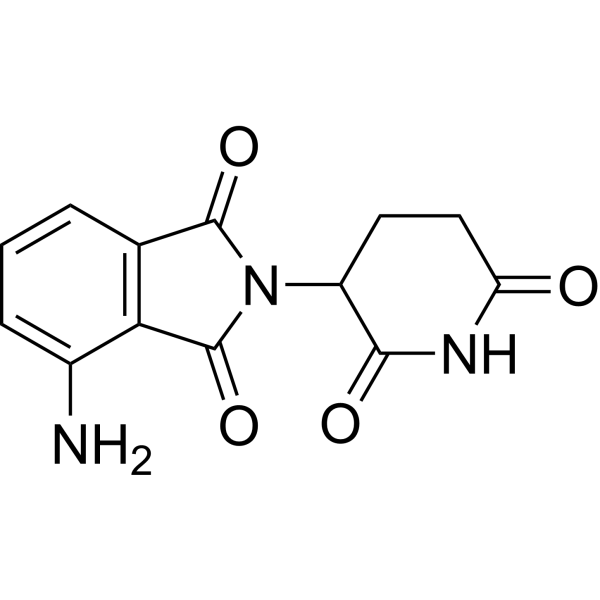 0 ImagesSynonyms: CC-4047Pomalidomide, the third-generation immunomodulatory agent, acts as molecular glue. Pomalidomide interacts with the E3 ligase cereblon and induces degradation of essential Ikaros transcription factors.
-
Lenalidomide
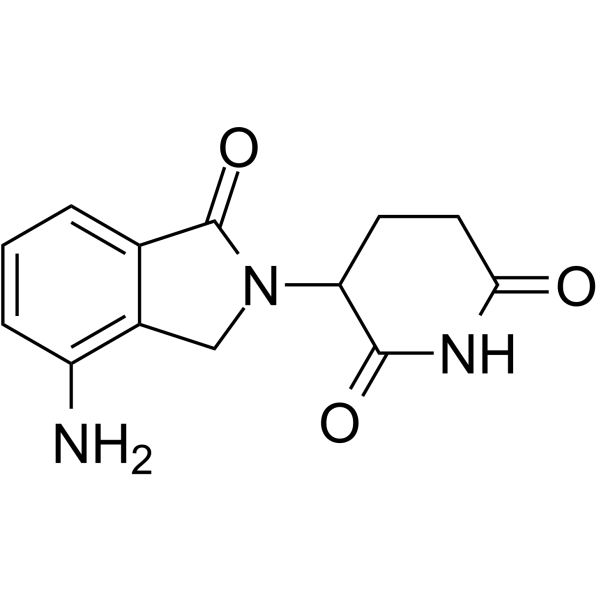 0 ImagesSynonyms: CC-5013Lenalidomide (CC-5013) is an orally active immunomodulatory agent that binds CRBN as a molecular glue to alter substrate specificity, inducing ubiquitination and proteasome-dependent degradation of IKZF1, IKZF3 and CK1α. Lenalidomide induces apoptosis by degrading IKZF1/3, and activates p53 by degrading CK1α. Lenalidomide promotes IL-2 release and effector functions of CD8+ T/NK cells, while inhibiting TNF-α secretion and M1-type pyroptosis. Lenalidomide can be used in research related to hematological malignancies, acute liver failure and acute kidney injury.
-
Golcadomide
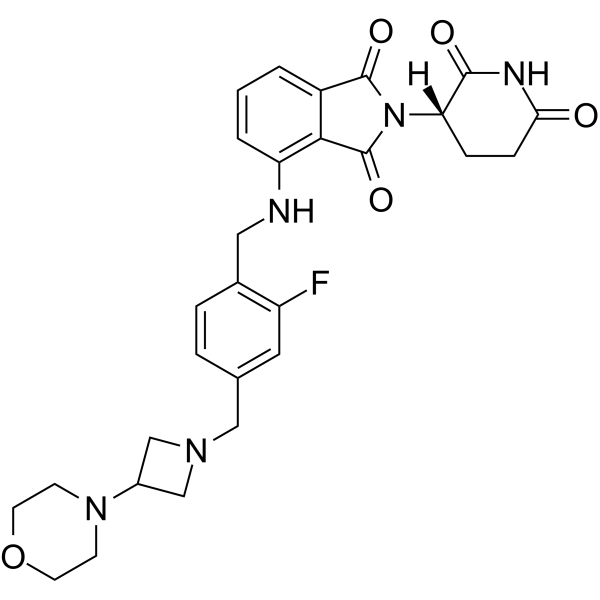 0 ImagesSynonyms: CC-99282Golcadomide (CC-99282) is a blood-brain barrier-permeable, orally active Cereblon (CRBN) E3 ligase modulator. Golcadomide induces Cereblon to form a closed active conformation, thereby recruiting and triggering the ubiquitin-mediated proteasomal degradation of transcription factors IKZF1, IKZF3, Ikaros and Aiolos. Golcadomide is applicable to research related to relapsed or refractory non-Hodgkin lymphoma, chronic lymphocytic leukemia/small lymphocytic lymphoma, and diffuse large B-cell lymphoma.
-
Cemsidomide
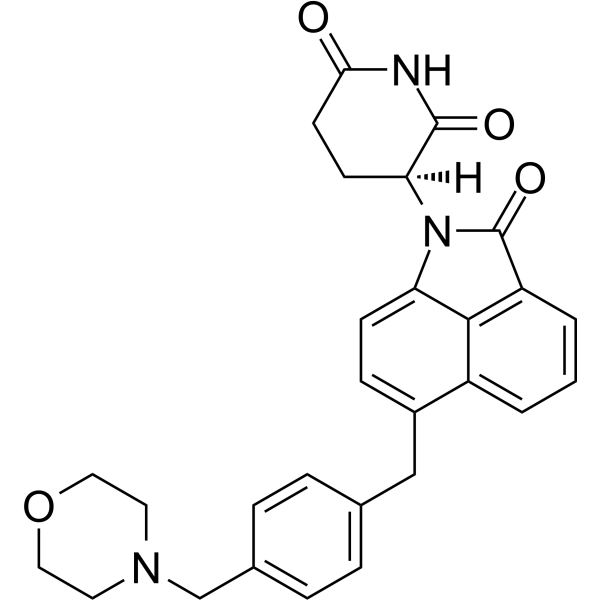 0 ImagesSynonyms: CFT7455Cemsidomide (CFT7455) is a ubiquitin ligase pathway based IKZF1/3 (Ikaros/Aiolos) degrader with molecular glue activity. Cemsidomide has a GI50 of 0.05 nM for NCIH929.1 cells. Cemsidomide is used in the research of multiple myeloma (MM).
-
FPFT-2216
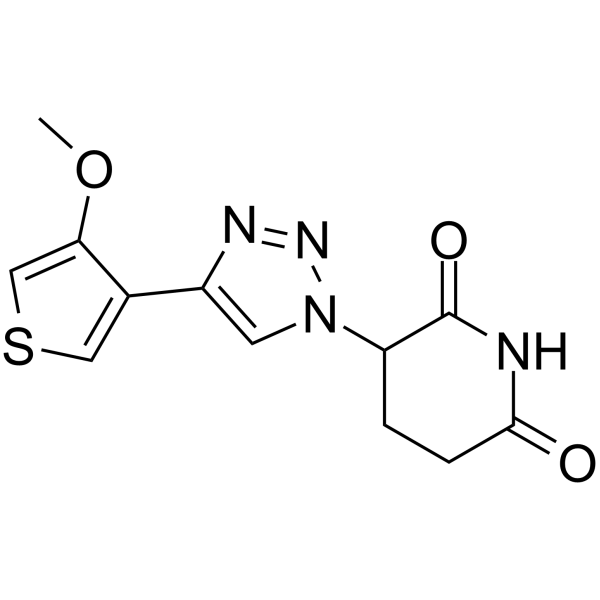 0 ImagesFPFT-2216 is an orally active Molecular glue degrader targeting IKZF1, IKZF3, CK-1α, and PDE6D, with a DC50 of 8 nM against PDE6D. FPFT-2216 mediates ubiquitin-proteasome degradation via the CRL4CRBN E3 ubiquitin ligase complex and interacts with the non-isoprenoid-binding region of PDE6D. FPFT-2216 activates the p53 signaling pathway, inhibits the CBM complex/NF-κB pathway, upregulates IL-2, suppresses IL-1β and IL-6, and induces tumor cell Apoptosis. FPFT-2216 exhibits anticancer activity against multiple myeloma and lymphoma. FPFT-2216 can be used in research related to multiple myeloma, lymphoma, acute lymphoblastic leukemia, acute myeloid leukemia, pancreatic ductal adenocarcinoma, non-small cell lung cancer, and gastric adenocarcinoma.
-
Lenalidomide hemihydrate
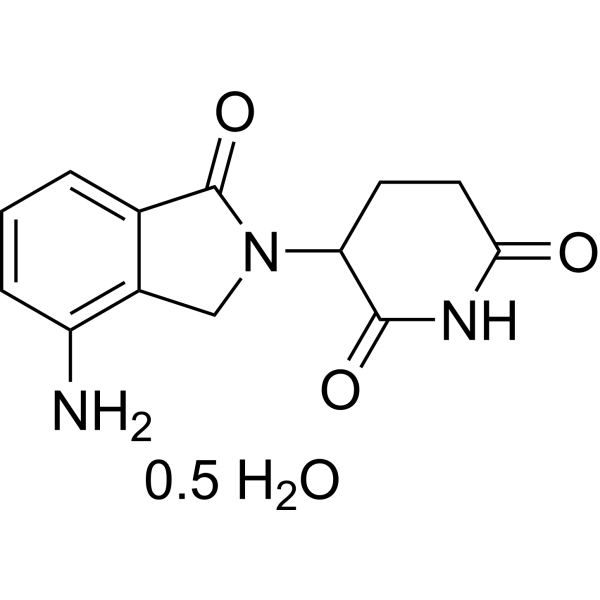 0 ImagesSynonyms: CC-5013 hemihydrateLenalidomide hemihydrate (CC-5013 hemihydrate) is an orally active immunomodulatory agent that binds CRBN as a molecular glue to alter substrate specificity, inducing ubiquitination and proteasome-dependent degradation of IKZF1, IKZF3 and CK1α. Lenalidomide hemihydrate induces apoptosis by degrading IKZF1/3, and activates p53 by degrading CK1α. Lenalidomide hemihydrate promotes IL-2 release and effector functions of CD8+ T/NK cells, while inhibiting TNF-α secretion and M1-type pyroptosis. Lenalidomide hemihydrate can be used in research related to hematological malignancies, acute liver failure and acute kidney injury.
-
SB-405483
 0 ImagesCat. No.: HY-W1135319Purity: 99.33%SB-405483 is a CRBN orthosteric ligand bindign enhancer. SB-405483 potentiates degradation of CRBN substrates including CK1α, Wee1, IKZF1/3. SB-405483 stabilizes CRBN and reduces CRBN autoubiquitination. SB-405483 can be used for the research of cancer, such as multiple myeloma and acute myeloid leukemia.
-
Lenalidomide (Standard)
 0 ImagesSynonyms: CC-5013 (Standard)Lenalidomide (Standard) (CC-5013 (Standard)) is the analytical standard of Lenalidomide (HY-A0003). This product is intended for research and analytical applications. Lenalidomide (CC-5013) is an orally active immunomodulatory agent that binds CRBN as a molecular glue to alter substrate specificity, inducing ubiquitination and proteasome-dependent degradation of IKZF1, IKZF3 and CK1α. Lenalidomide induces apoptosis by degrading IKZF1/3, and activates p53 by degrading CK1α. Lenalidomide promotes IL-2 release and effector functions of CD8+ T/NK cells, while inhibiting TNF-α secretion and M1-type pyroptosis. Lenalidomide can be used in research related to hematological malignancies, acute liver failure and acute kidney injury.
-
BSJ-02-162
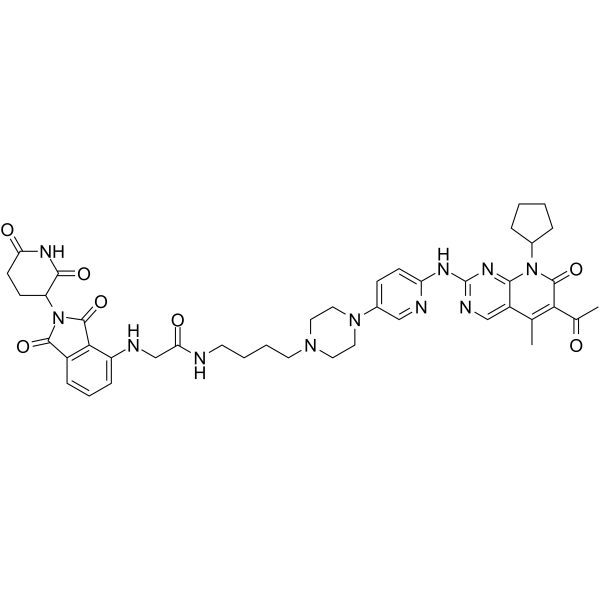 0 ImagesSynonyms: CDK4/6-IN-11BSJ-02-162 (CDK4/6-IN-11) is a CDK4/CDK6 and IKZF1/IKZF3 degrader, with DC50 values of 32 nM and 6.1 nM against CDK4 and CDK6, respectively; its IC50 ranges from 1 to 50 nM. BSJ-02-162 induces G1-phase cell cycle arrest, reduces phosphorylated retinoblastoma protein levels, and exerts antiproliferative activity in mantle cell lymphoma cells. BSJ-02-162 is applicable to research related to mantle cell lymphoma.

-
GSPT1 degrader-19
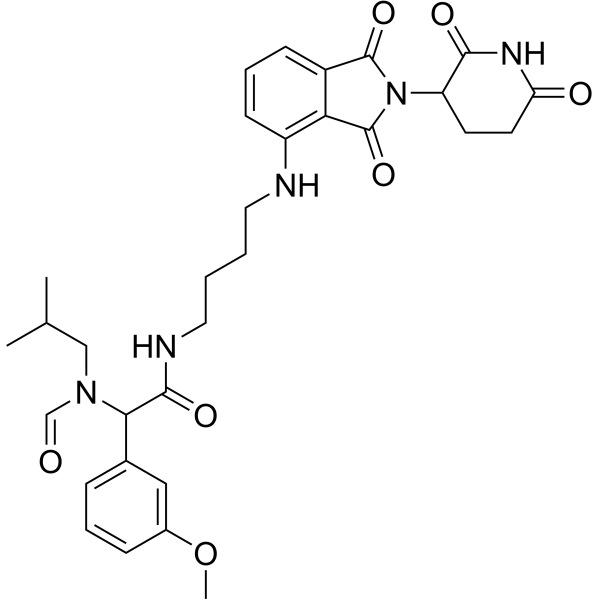 0 ImagesCat. No.: HY-161101Purity: 99.30%GSPT1 degrader-19 is a molecular glue degrader targeting GSPT1, IKZF1 and IKZF3, with DC50 values of 0.88 nM, 11.54 nM and 13.84 nM, respectively, in MM.1S multiple myeloma cells. GSPT1 degrader-19 induces cereblon (CRBN)-dependent ubiquitination and proteasomal degradation of IKZF1, IKZF3, GSPT1 and GSPT2, and also reduces ZFP91 protein levels via a CRBN-dependent pathway. GSPT1 degrader-19 exerts antiproliferative effects on cancer cells, induces global proteomic changes including downregulation of novel substrates, and exhibits activity against multiple myeloma and leukemia cell lines. GSPT1 degrader-19 can be used in research related to multiple myeloma and leukemia.
-
(R)-Zelebrudomide
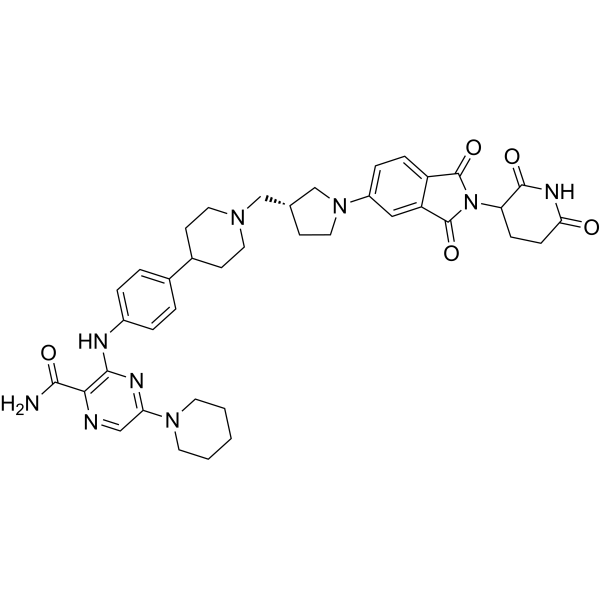 0 ImagesSynonyms: (R)-NX-2127(R)-Zelebrudomide ((R)-NX-2127) is an isomer of Zelebrudomide (HY-153220). Zelebrudomide is an orally active BTK-targeting PROTAC degrader, with DC50 values of 4.5 nM and 31 nM against wild-type BTK and BTKC481S mutant, respectively. Zelebrudomide recruits the cereblon E3 ubiquitin ligase complex to mediate the degradation of BTK. Zelebrudomide also acts as a molecular glue to bind the cereblon E3 ubiquitin ligase complex, mediating the degradation of IKZF1 and IKZF3. Zelebrudomide can be used in the research of B-cell malignancies.
-
MGD-28
 0 ImagesMGD-28 is an orally effective cereblon-dependent molecular glue degrader that potently degrades CK1α, IKZF1, IKZF2, and IKZF3, with respective DC50 values of 7.8, 3.8, 56.3, and 7.1 nM. MGD-28 also induces the degradation of multiple novel substrate proteins including ZFP91, DTWD1, ZNFX1, MBD1, and MBD3 via a CRBN/Cullin- and proteasome-dependent mechanism. MGD-28 induces cell apoptosis. MGD-28 is used in the research of multiple myeloma, acute myeloid leukemia, diffuse large B-cell lymphoma, and related malignancies.
-
FIZ1 degrader 1
 0 ImagesFIZ1 degrader 1 is an IMiD-based molecular glue degrader. FIZ1 degrader 1 induces CRBN-dependent FIZ1 ubiquitination and proteasomal degradation; inhibition of the proteasome, ubiquitination or ubiquitination-like processes blocks this degradation. FIZ1 degrader 1 also induces the degradation of IKZF1, IKZF3 and ZFP91. FIZ1 degrader 1 is applicable to molecular glue-related research.
-
Lenalidomide-d5
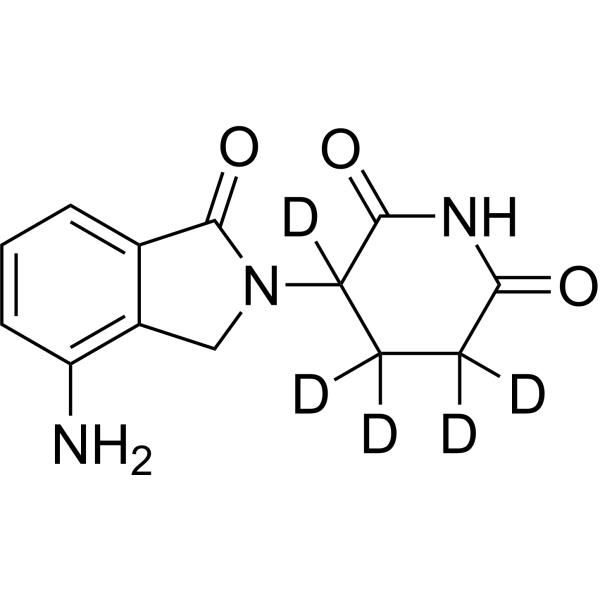 0 ImagesSynonyms: CC-5013-d5Lenalidomide-d5 (CC-5013-d5) is the d5-labeled Lenalidomide (HY-A0003). Lenalidomide (CC-5013) is an orally active immunomodulatory agent that binds CRBN as a molecular glue to alter substrate specificity, inducing ubiquitination and proteasome-dependent degradation of IKZF1, IKZF3 and CK1α. Lenalidomide induces apoptosis by degrading IKZF1/3, and activates p53 by degrading CK1α. Lenalidomide promotes IL-2 release and effector functions of CD8+ T/NK cells, while inhibiting TNF-α secretion and M1-type pyroptosis. Lenalidomide can be used in research related to hematological malignancies, acute liver failure and acute kidney injury.
-
MGD-4
 0 ImagesCat. No.: HY-168614CAS No.: 2991817-99-1MGD-4 is an orally active cereblon-dependent molecular glue degrader with a phthalazinone scaffold. MGD-4 degrades the Ikaros family proteins IKZF1, IKZF2 and IKZF3 in a dose-dependent manner, with DC50 values of 67.2 nM, 918.2 nM and 95.8 nM, respectively. MGD-4 exhibits weak degradation activity against CK1α. MGD-4 inhibits the viability of multiple myeloma (MM) and acute myeloid leukemia (AML) cells and induces cell apoptosis. MGD-4 is used for the research of multiple myeloma, acute myeloid leukemia, diffuse large B-cell lymphoma and related hematological malignancies .
-
Lenalidomide hydrochloride
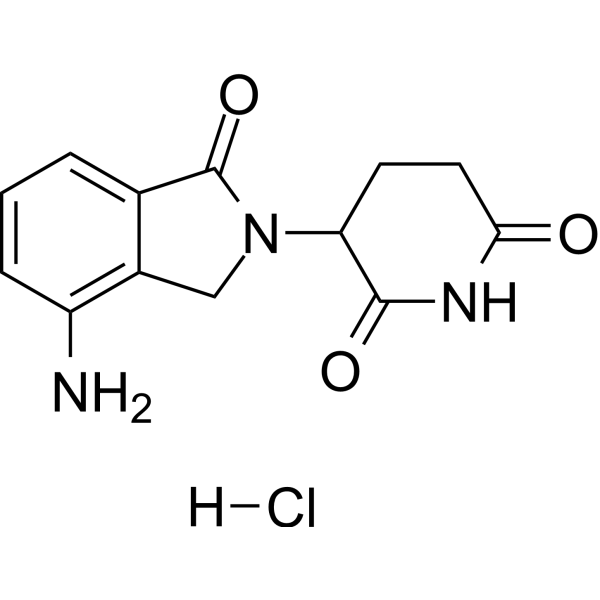 0 ImagesCat. No.: HY-A0003ACAS No.: 1243329-97-6Synonyms: CC-5013 hydrochlorideLenalidomide hydrochloride (CC-5013 hydrochloride) is an orally active immunomodulatory agent that binds CRBN as a molecular glue to alter substrate specificity, inducing ubiquitination and proteasome-dependent degradation of IKZF1, IKZF3 and CK1α. Lenalidomide hydrochloride induces apoptosis by degrading IKZF1/3, and activates p53 by degrading CK1α. Lenalidomide hydrochloride promotes IL-2 release and effector functions of CD8+ T/NK cells, while inhibiting TNF-α secretion and M1-type pyroptosis. Lenalidomide hydrochloride can be used in research related to hematological malignancies, acute liver failure and acute kidney injury.
-
PROTAC BCL6/IKZF1/3 Degrader-1
 0 ImagesCat. No.: HY-179075PROTAC BCL6/IKZF1/3 Degrader-1 is an orally active bifunctional PROTAC‑IMiD protein degrader that targets and degrades BCL6, IKZF1 and IKZF3. PROTAC BCL6/IKZF1/3 Degrader-1 induces ubiquitination and proteasome-mediated degradation of target proteins by recruiting E3 ubiquitin ligase, and triggers cell cycle arrest and apoptosis. PROTAC BCL6/IKZF1/3 Degrader-1 exhibits favorable anti-tumor activity in diffuse large B-cell lymphoma xenograft models. PROTAC BCL6/IKZF1/3 Degrader-1 can be used for the research of diffuse large B-cell lymphoma.
-
IKZF-IN-1
 0 ImagesCat. No.: HY-170518IKZF-IN-1 is a molecular glue and an IKZF protein degrader that mediates the degradation of IKZF1/IKZF2/IKZF3/IKZF4 proteins. IKZF-IN-1 promotes the ubiquitination of target proteins via the CUL4‑CRBN E3 ubiquitin ligase complex, thereby triggering the degradation of target proteins. IKZF-IN-1 can be used in cancer-related research.
-
PROTAC IRAK4 degrader-12
 0 ImagesCat. No.: HY-168586CAS No.: 2919995-09-6PROTAC IRAK4 degrader-12 is an orally active IRAK4 PROTAC degrader with a DC50 of 4.87 nM in K562 IRAK4-HiBiT cells. PROTAC IRAK4 degrader-12 induces protein degradation of IRAK4, IKZF1 and IKZF3. It inhibits the proliferation of diffuse large B-cell lymphoma cells. It suppresses tumor growth in mouse xenograft models of lymphoma cells. PROTAC IRAK4 degrader-12 can be used for the research of B-cell lymphoma and diffuse large B-cell lymphoma.
- 1
- 2



