



FPFT-2216

Based on 1 Customer Validation
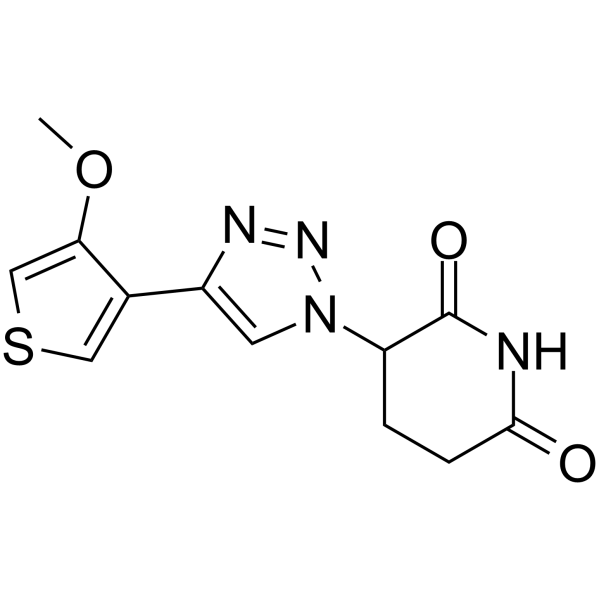
FPFT-2216 is an orally active Molecular glue degrader targeting IKZF1, IKZF3, CK-1α, and PDE6D, with a DC50 of 8 nM against PDE6D. FPFT-2216 mediates ubiquitin-proteasome degradation via the CRL4CRBN E3 ubiquitin ligase complex and interacts with the non-isoprenoid-binding region of PDE6D. FPFT-2216 activates the p53 signaling pathway, inhibits the CBM complex/NF-κB pathway, upregulates IL-2, suppresses IL-1β and IL-6, and induces tumor cell Apoptosis. FPFT-2216 exhibits anticancer activity against multiple myeloma and lymphoma. FPFT-2216 can be used in research related to multiple myeloma, lymphoma, acute lymphoblastic leukemia, acute myeloid leukemia, pancreatic ductal adenocarcinoma, non-small cell lung cancer, and gastric adenocarcinoma.
For research use only. We do not sell to patients.
- Purity : 99.55%
- CAS No.: 2367619-87-0
- Formula: C12H12N4O3S
- Molecular Weight:292.32
-
Storage:Powder -20°C, 3 years , 4°C, 2 years ; In solvent -80°C, 6 months , -20°C, 1 month

To place orders, for customer services and technical support, please contact: MedChemExpress USA
Tel: 609-228-6898 E-mail: [email protected] [email protected]


-
 Biological Activity
-
Chemical Information
-
Solvent & Solubility
- Protocols
- Purity & Documentation
- References
-
 Help & FAQs


-
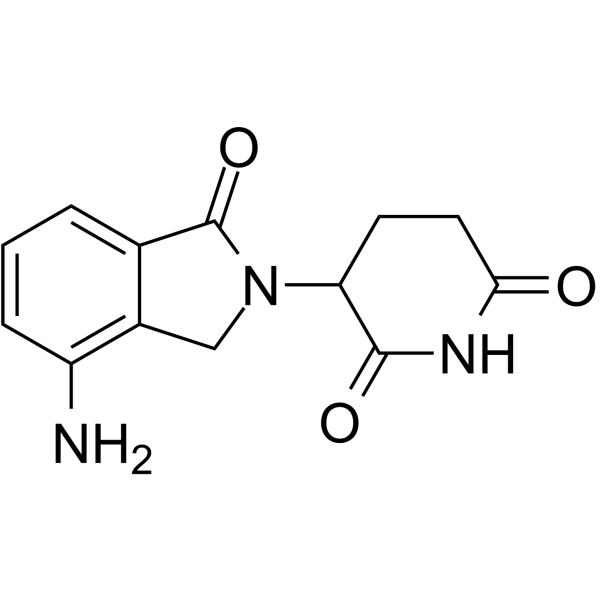
HY-A0003
LenalidomideImmunomodulator -
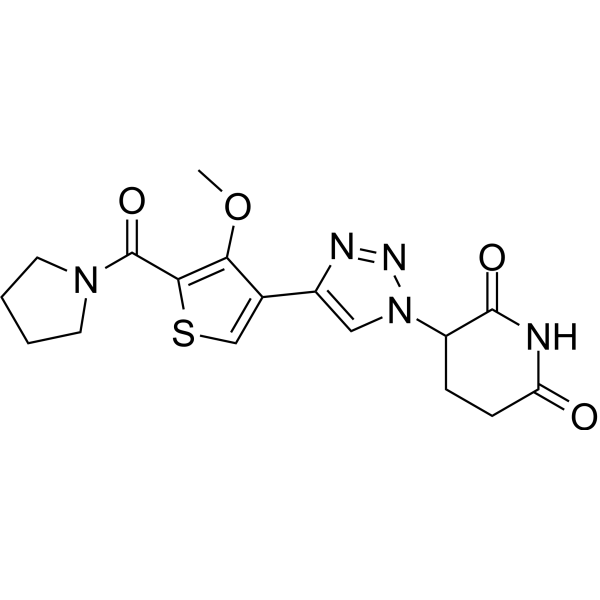
HY-145322
TMX-4116CK1α Degrader -
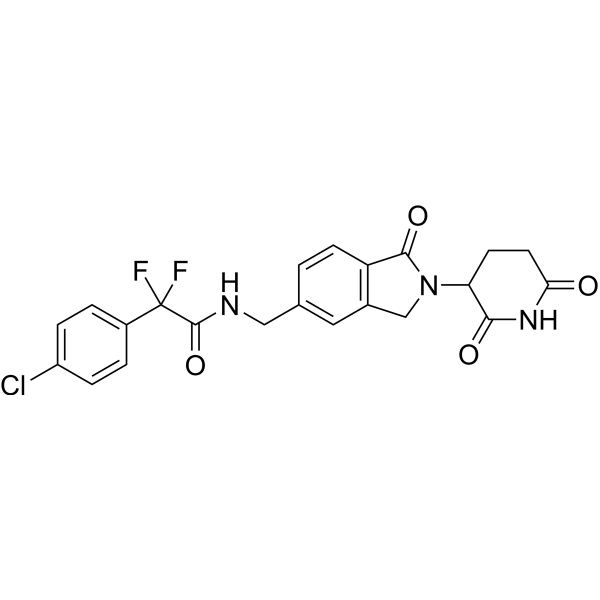
HY-130800
EragidomideGSPT1 Molecular Glue Degrader -
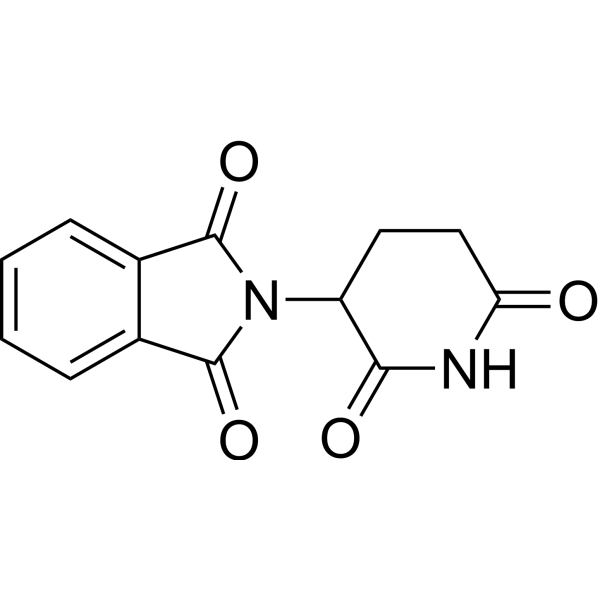
HY-14658
ThalidomideCereblon Inhibitor -
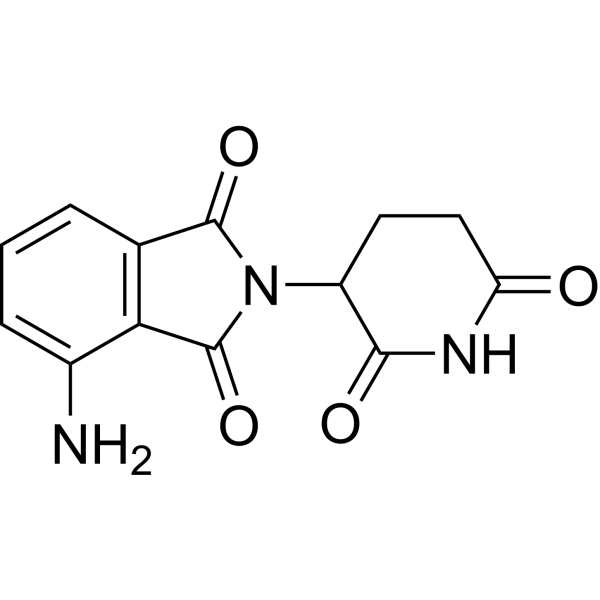
HY-10984
PomalidomideImmunomodulatory Agent -
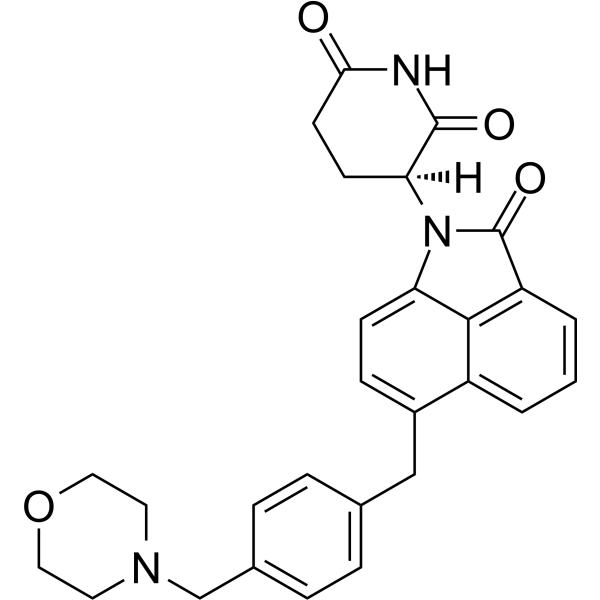
HY-144841
CemsidomidePROTAC IKZF1/3 Degrader -
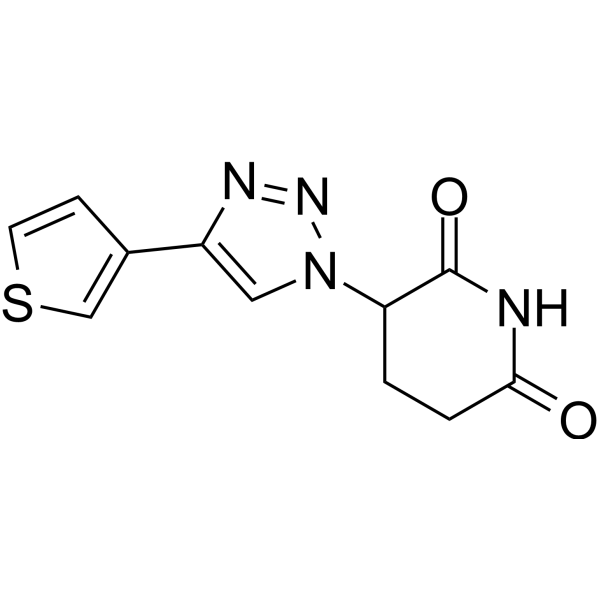
HY-145321
TMX-4100PDE6D Degrader -
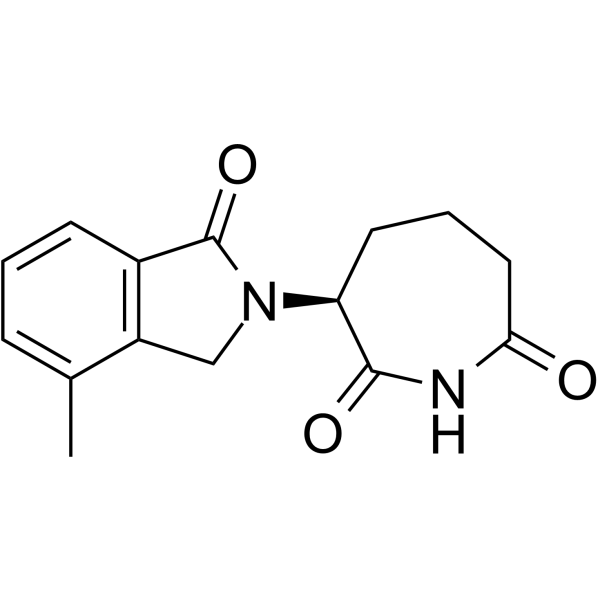
HY-120084
BTX161CK1α Molecular Glue Degrader -
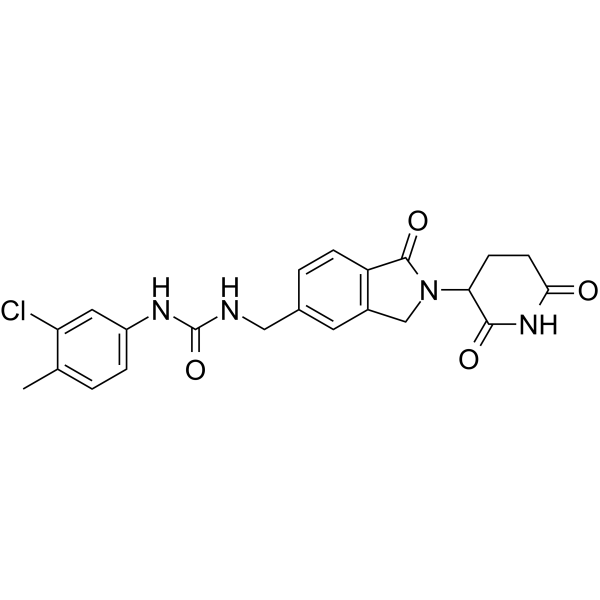
HY-101488
CC-885CRBN Modulator/GSPT1 Molecular Glue Degrader -
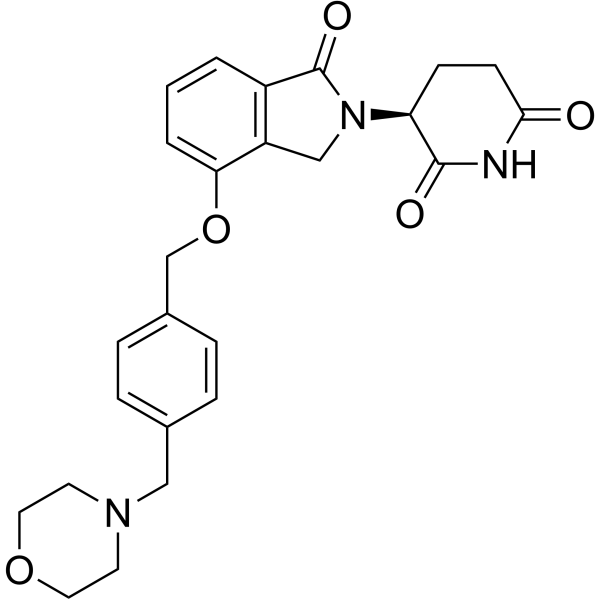
HY-101291
IberdomideCELMoD -

HY-A0003R
Lenalidomide (Standard)Reference Standard -
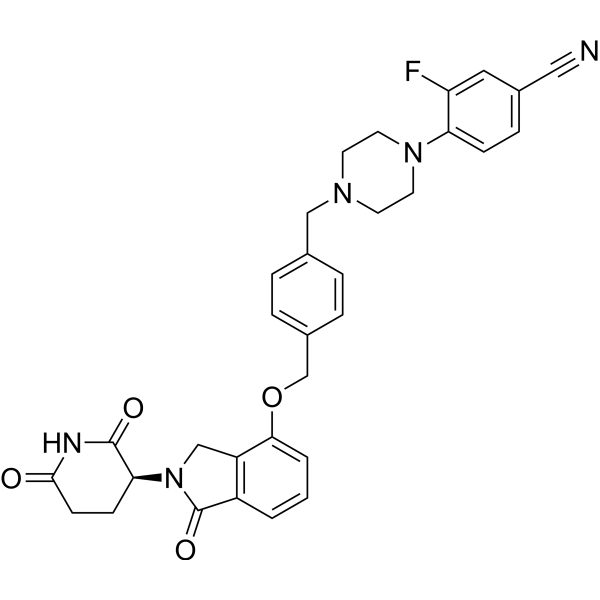
HY-129395
MezigdomideCereblon E3 Ubiquitin Ligase Modulating Agent


Biological Activity
Description
|
PDE6D 8 nM (DC50) |
CK1α |
IKZF1 |
IKZF3 |
IL-2 |
IL-1β |
IL-6 |
Cellular Effect
|
Cell Line

|
Type | Value | Description | References |
|---|---|---|---|---|
| MOLT-4 | DC50 |
8 nM
|
Half-maximal degradation of PDE6D protein in human MOLT4 T-cell acute lymphoblastic leukemia cells measured via immunoblotting.
Half-maximal degradation of PDE6D protein in human MOLT4 T-cell acute lymphoblastic leukemia cells measured via immunoblotting.
|
34965125 |
| MM.1S | IC50 |
0.02 μM
|
Antiproliferative activity against human multiple myeloma MM.1S cells.
Antiproliferative activity against human multiple myeloma MM.1S cells.
|
40127848 |
| NCI-H929 | IC50 |
50 nM
|
Antiproliferative activity against human multiple myeloma NCI-H929 cells.
Antiproliferative activity against human multiple myeloma NCI-H929 cells.
|
40127848 |
| MM.1S | DC50 |
<0.01 μM
|
Induction of IKZF1 and casein kinase 1α (CK1α) protein degradation in human multiple myeloma MM.1S cells following 6 h incubation.
Induction of IKZF1 and casein kinase 1α (CK1α) protein degradation in human multiple myeloma MM.1S cells following 6 h incubation.
|
40127848 |
| PBMC | IC50 |
<1 nM
|
Inhibition of inflammatory cytokine IL-1β production in human peripheral blood mononuclear cells (PBMCs).
Inhibition of inflammatory cytokine IL-1β production in human peripheral blood mononuclear cells (PBMCs).
|
40127848 |
| PBMC | IC50 |
4 nM
|
Inhibition of inflammatory cytokine IL-6 production in human peripheral blood mononuclear cells (PBMCs).
Inhibition of inflammatory cytokine IL-6 production in human peripheral blood mononuclear cells (PBMCs).
|
40127848 |
| OCI-Ly3 | IC50 |
0.090 μM
|
Antiproliferative activity against human OCI-Ly3 non-GCB DLBCL cells assessed as reduction in cell viability incubated for 3 days by WST-8 assay.
Antiproliferative activity against human OCI-Ly3 non-GCB DLBCL cells assessed as reduction in cell viability incubated for 3 days by WST-8 assay.
|
38265263 |
| Z-138 | IC50 |
0.140 μM
|
Antiproliferative activity against human Z-138 MCL cells assessed as reduction in cell viability incubated for 3 days by WST-8 assay.
Antiproliferative activity against human Z-138 MCL cells assessed as reduction in cell viability incubated for 3 days by WST-8 assay.
|
38265263 |
| RS4-11 | IC50 |
0.351 μM
|
Antiproliferative activity against human RS4;11 ALL cells assessed as reduction in cell viability incubated for 3 days by WST-8 assay.
Antiproliferative activity against human RS4;11 ALL cells assessed as reduction in cell viability incubated for 3 days by WST-8 assay.
|
38265263 |
| Daudi | IC50 |
0.038 μM
|
Antiproliferative activity against human Daudi Burkitt lymphoma cells assessed as reduction in cell viability incubated for 3 days by WST-8 assay.
Antiproliferative activity against human Daudi Burkitt lymphoma cells assessed as reduction in cell viability incubated for 3 days by WST-8 assay.
|
38265263 |
| DOHH-2 | IC50 |
0.465 μM
|
Antiproliferative activity against human DOHH-2 FL cells assessed as reduction in cell viability incubated for 3 days by WST-8 assay.
Antiproliferative activity against human DOHH-2 FL cells assessed as reduction in cell viability incubated for 3 days by WST-8 assay.
|
38265263 |
| PBMC | IC50 |
>100 μM
|
Antiproliferative activity against human peripheral blood mononuclear cells assessed as reduction in cell viability incubated for 3 days by WST-8 assay.
Antiproliferative activity against human peripheral blood mononuclear cells assessed as reduction in cell viability incubated for 3 days by WST-8 assay.
|
38265263 |
In Vitro
FPFT-2216 (8 nM-1 µM; 2 h-24 h) potently and rapidly degrades PDE6D, IKZF1, IKZF3, and CK1α in a CRBN-dependent manner in MOLT4 cells, with a DC50 of 8 nM for PDE6D degradation[2].
FPFT-2216 (for 3 days) exerts no inhibitory effect on the growth of cancer cell lines dependent on KRASG12C, KRASG12D or KRASG12V, including MIA PaCa-2, NCI-H358, AGS and PA-TU-8988T[2].
FPFT-2216 inhibits the proliferation of MM.1S multiple myeloma cells via CRBN, with an IC50 value of 0.02 μM[3].
FPFT-2216 inhibits the proliferation of NCI-H929 multiple myeloma cells, with an IC50 of 50 nM[3].
FPFT-2216 (0.001-100 μM; 3 days) potently inhibits the proliferation of various lymphoma cell lines (with an IC50 value as low as 0.012 μM in REC-1 MCL cells) but does not affect the viability of PBMC[4].
FPFT-2216 (0.0001-10 μM; 3 days) potently inhibits the proliferation of various non-germinal center B-cell diffuse large B-cell lymphoma (non-GCB DLBCL) PDX cells, with an IC50 value as low as 0.005 μM in LYXFDLBC 2835 cells[4].
FPFT-2216 inhibits the production of IL-1β (IC50 < 1 nM) and IL-6 (IC50 4 nM), and promotes the production of IL-2 (EC150 0.25 nM) in peripheral blood mononuclear cells (PBMC)[3].
MedChemExpress (MCE) has not independently confirmed the accuracy of these methods. They are for reference only. Further protocols information, click here.
-
Cell Line:MOLT4 human T-cell acute lymphoblastic leukemia cells, CRBN-null MOLT4 cells
-
Concentration:8 nM (4 h); 200 nM (4 h); 1 µM (2 h, 24 h)
-
Incubation Time:2 h; 4 h; 24 h
-
Result:Induced rapid degradation of PDE6D, with complete degradation achieved within 2 h.
Persisted PDE6D degradation for at least 24 h.
Achieved over 50% degradation of PDE6D at 8 nM.
Achieved maximum degradation of PDE6D, IKZF1, IKZF3, and CK1α at 200 nM.
Detected no degradation of PDE6D or IKZF1 in CRBN-null MOLT4 cells.
-
Cell Line:human lymphoid tumor cell lines (DLBCL, MCL, FL, Burkitt lymphoma, ALL), human peripheral blood mononuclear cells (PBMC)
-
Concentration:0.001-100 μM
-
Incubation Time:3-day
-
Result:Suppressed proliferation in a concentration-dependent manner across multiple lymphoid tumor cell types, with stronger activity against non-GCB DLBCL than GCB DLBCL.
Achieved IC50 values of 0.090 μM (OCI-Ly3 non-GCB DLBCL), 0.140 μM (Z-138 MCL), 0.351 μM (RS4;11 ALL), 0.093 μM (Kasumi-10 ALL), 0.012 μM (REC-1 MCL), 0.038 μM (Daudi Burkitt lymphoma), and 0.465 μM (DOHH-2 FL).
Did not inhibit PBMC proliferation, with an IC50 >100 μM.
-
Cell Line:non-GCB DLBCL patient-derived xenograft (PDX) cells
-
Concentration:0.0001-10 μM
-
Incubation Time:3-day
-
Result:Suppressed proliferation of 4 of 6 tested PDX cell models, with IC50 values of 0.104 μM (LYXFDLBC 4009), 0.024 μM (LYXFDLBC 2958), 0.007 μM (LYXFDLBC 2972), and 0.005 μM (LYXFDLBC 2835).
Showed IC50 values >10 μM in the remaining two models.
In Vivo
FPFT-2216 (0.01-1 mg/kg; p.o., once daily for 5 days per week for 4 consecutive weeks) exhibits dose-dependent in vivo antitumor activity against multiple myeloma in NOD SCID mice, with tumor regression (T/C = -1.6%) observed at the 1 mg/kg dose[3].
FPFT-2216 (10 mg/kg; p.o.; once daily for 5 consecutive days per week; for 3 weeks) inhibits the growth of Z-138 mantle cell lymphoma xenografts. When combined with Siremadlin (HY-18658), it induces potent tumor regression and elicits durable responses in most treated mice[4].
FPFT-2216 (0.1 mg/kg; p.o.; once daily for 5 consecutive days per week; for a total of 4 weeks) enhances the antitumor activity of Rituximab (HY-P9913) against DOHH-2 follicular lymphoma xenografts in SCID mice[4].
MedChemExpress (MCE) has not independently confirmed the accuracy of these methods. They are for reference only.
-
Animal Model:BDF1 (humanized cereblon CRBNI391V); BDF1 (wild-type)[1]
-
Dosage:30 mg/kg
-
Administration:p.o.; single dose; i.p.; single dose
-
Result:Induced significant degradation of IKZF1 and CK-1α proteins in CD4+ T cells from humanized cereblon (CRBNI391V) mice.
Showed no degradative response in CD4+ T cells from wild-type BDF1 mice.
Produced similar degradative effect via oral or intraperitoneal administration routes.
-
Animal Model:NOD SCID (subcutaneously transplanted with NCI-H929 cells)[3]
-
Dosage:0.01 mg/kg; 0.03 mg/kg; 0.1 mg/kg; 0.3 mg/kg; 1 mg/kg
-
Administration:p.o.; once daily for 5 days/week; 4 weeks
-
Result:Exhibited a tumor volume ratio (T/C) of 70.2% on day 26 at 0.01 mg/kg.
Exhibited a tumor volume ratio (T/C) of 82.2% on day 26 at 0.03 mg/kg.
Exhibited a tumor volume ratio (T/C) of 43.4% on day 26 at 0.1 mg/kg.
Exhibited a tumor volume ratio (T/C) of 30.7% on day 26 at 0.3 mg/kg.
Induced tumor regression with a tumor volume ratio (T/C) of -1.6% on day 26 at 1 mg/kg.
-
Animal Model:CB17/Icr-Prkdcscid/CrlCrlj (C.B-17 SCID) (male, 5-6 weeks old, 17-25 g, subcutaneous xenograft with Z-138 mantle cell lymphoma cells)[4]
-
Dosage:10 mg/kg
-
Administration:p.o.; once daily for 5 consecutive days per week; 3 weeks
-
Result:Achieved a tumor volume test-over-control (T/C) value of 50.1% on day 18 and a time-to-endpoint (TTE) of 23.1 days.
Combined with siremadlin, yielded a T/C of -16.9% on day 18 and a TTE of 43.0 days, with nearly all tumors disappearing after 10 days and no regrowth observed in 5 of 7 mice up to 24 days after final administration.
Caused no suppression of body weight gain or worsening of general condition.


Chemical Information
-
CAS No. 2367619-87-0
-
Appearance Solid
-
Molecular Weight 292.32
-
Formula C12H12N4O3S
-
Color Light yellow to light brown
-
SMILES
O=C(C(N1N=NC(C2=CSC=C2OC)=C1)CC3)NC3=O
-
Shipping
Room temperature in continental US; may vary elsewhere.
-
Storage
Powder -20°C 3 years 4°C 2 years In solvent -80°C 6 months -20°C 1 month


Solvent & Solubility
In Vitro:
DMSO : 100 mg/mL (342.09 mM; Need ultrasonic; Hygroscopic DMSO has a significant impact on the solubility of product, please use newly opened DMSO)
Please refer to the solubility information to select the appropriate solvent. Once prepared, please aliquot and store the solution to prevent product inactivation from repeated freeze-thaw cycles.
Storage method and period of stock solution: -80°C, 6 months; -20°C, 1 month. When stored at -80°C, please use it within 6 months. When stored at -20°C, please use it within 1 month.
Please refer to the solubility information to select the appropriate solvent. Once prepared, please aliquot and store the solution to prevent product inactivation from repeated freeze-thaw cycles.
Storage method and period of stock solution: -80°C, 6 months; -20°C, 1 month. When stored at -80°C, please use it within 6 months. When stored at -20°C, please use it within 1 month.
Concentration (start) × Volume (start) = Concentration (final) × Volume (final)
In Vivo:
Select the appropriate dissolution method based on your experimental animal and administration route.
- For the following dissolution methods, please ensure to first prepare a clear stock solution using an In Vitro approach and then sequentially add co-solvents:
- To ensure reliable experimental results, the clarified stock solution can be appropriately stored based on storage conditions. As for the working solution for In Vivo experiments, it is recommended to prepare freshly and use it on the same day.
- The percentages shown for the solvents indicate their volumetric ratio in the final prepared solution. If precipitation or phase separation occurs during preparation, heat and/or sonication can be used to aid dissolution.
Add each solvent one by one: 10% DMSO 40% PEG300 5% Tween-80 45% Saline
Solubility: ≥ 2.5 mg/mL (8.55 mM); Clear solution
This protocol yields a clear solution of ≥ 2.5 mg/mL (saturation unknown).
Taking 1 mL working solution as an example, add 100 μL DMSO stock solution (25.0 mg/mL) to 400 μL PEG300, and mix evenly; then add 50 μL Tween-80 and mix evenly; then add 450 μL Saline to adjust the volume to 1 mL.
Preparation of Saline: Dissolve 0.9 g sodium chloride in ddH₂O and dilute to 100 mL to obtain a clear Saline solution.
Add each solvent one by one: 10% DMSO 90% (20% SBE-β-CD in Saline)
Solubility: ≥ 2.5 mg/mL (8.55 mM); Clear solution
This protocol yields a clear solution of ≥ 2.5 mg/mL (saturation unknown).
Taking 1 mL working solution as an example, add 100 μL DMSO stock solution (25.0 mg/mL) to 900 μL 20% SBE-β-CD in Saline, and mix evenly.
Preparation of 20% SBE-β-CD in Saline (4°C, storage for one week): 2 g SBE-β-CD powder is dissolved in 10 mL Saline, completely dissolve until clear.
In Vivo Dissolution Calculator
Please enter the basic information of animal experiments:
-
-
-
-
Recommended: Prepare an additional quantity of animals to account for potential losses during experiments.
Please enter your animal formula composition:
-
%DMSO +
Recommended: Keep the proportion of DMSO in working solution below 2% if your animal is weak.
-
%+
-
+%Tween-80 + +
-
%Saline +
The co-solvents required include: DMSO, . All of co-solvents are available by MedChemExpress (MCE). , Tween 80. All of co-solvents are available by MedChemExpress (MCE).
Working solution concentration: 0.22 mg/mL
Method for preparing stock solution: mg drug dissolved in μL DMSO. Stock solution concentration: mg/mL.
1. Take μL DMSO stock solution;
2. Add μL .
μL , mix evenly;
3. Then add μL Tween 80, mix evenly;
4. Then add μL
Please ensure that the stock solution in the first step is dissolved to a clear state, and add co-solvents in sequence. You can use ultrasonic heating (ultrasonic cleaner, recommended frequency 20-40 kHz), vortexing, etc. to assist dissolution.

Protocols
-
Apoptosis
Apoptosis, also called programmed cell death, is generally characterized by distinct morphological characteristics.
-
TUNEL staining for apoptotic DNA fragmentation
TUNEL staining detects DNA strand breaks by using terminal deoxynucleotidyl transferase to add labeled nucleotides to exposed 3′-OH DNA termini, generating either microscopic staining in fixed cells or tissue sections, or fluorescence/cytometric signal in cell suspensions. TUNEL positivity reflects DNA fragmentation but should not be interpreted alone as definitive apoptosis, because TUNEL can also label necrotic, autolytic, mechanically damaged, or DNA-repair-associated DNA breaks.
-
Annexin V plus membrane-impermeant dye apoptosis staining
Annexin V-based apoptosis assays rely on the detection of phosphatidylserine (PS) externalization from the inner leaflet of the plasma membrane to the outer leaflet, an early biochemical hallmark of apoptosis. Fluorescently labeled Annexin V binds PS in a calcium-dependent manner, enabling identification of early apoptotic cells by flow cytometry or fluorescence microscopy. When combined with a membrane-impermeant DNA-binding dye (e. g. , propidium iodide), this approach allows discrimination between viable (Annexin V−/dye−), early apoptotic (Annexin V+/dye−), and late apoptotic or necrotic (Annexin V+/dye+) cell populations by assessing membrane integrity and PS exposure.
-
Apoptosis Solutions
Apoptosis is a regulated, generally non-lytic cell-death pathway that removes unwanted, damaged, infected, or abnormal cells through coordinated morphological changes, caspase activation, DNA fragmentation, and membrane remodeling. The intrinsic apoptosis pathway is controlled mainly by mitochondrial outer membrane permeabilization, BCL-2 family proteins, cytochrome c release, apoptosome formation, caspase-9 activation, and downstream executioner caspase-3/7 activation. The extrinsic apoptosis pathway is initiated by death receptors such as Fas, TNFR, and TRAIL receptors, which recruit adaptor proteins and activate caspase-8 before engaging executioner caspases or mitochondrial amplification through BID cleavage. Apoptosis is linked to many phenotypes, including cancer cell killing, tissue homeostasis, immune regulation, neurodegeneration, infection response, and treatment-induced cytotoxicity; unresolved questions include how apoptosis interacts with necroptosis, pyroptosis, ferroptos
-
Research Protocol for Inflammation-related Diseases
The NLRP3 inflammasome is a cytosolic innate immune signaling platform that integrates priming signals and danger-signal activation to promote caspase-1 activation, maturation of IL-1β and IL-18, and gasdermin D-mediated pyroptotic cell death. The core experimental logic is to determine whether inflammatory disease phenotypes are driven by increased NLRP3 expression, ASC-containing inflammasome assembly, caspase-1 cleavage, GSDMD cleavage, and extracellular release of IL-1β/IL-18 rather than by nonspecific cell injury alone. The pathway is strongly linked to inflammation-related disease phenotypes because monosodium urate crystals activate NALP3/NLRP3 inflammasome signaling in gout-like crystal inflammation, cholesterol crystals activate NLRP3 inflammasomes in atherogenesis models, and DSS-induced intestinal inflammation has been reported to involve NLRP3 inflammasome activity. However, experimental colitis studies also show context-dependent protective effects of NLRP3 inflammasome co
-
Pyroptosis Solutions
Pyroptosis is a lytic inflammatory cell-death pathway executed by gasdermin pores, most classically through inflammasome-mediated activation of caspase-1, cleavage of gasdermin D, membrane pore formation, LDH release, and secretion of IL-1β and IL-18. The canonical pathway is commonly modeled by priming cells with an inflammatory signal such as LPS to induce pro-IL-1β and inflammasome components, followed by an activation signal such as ATP or nigericin to activate NLRP3, ASC speck formation, caspase-1 cleavage, GSDMD cleavage, cytokine release, and pyroptotic membrane rupture. The non-canonical pathway is triggered when cytosolic LPS activates mouse caspase-11 or human caspase-4/5, leading to GSDMD cleavage and pyroptosis, and this can secondarily activate NLRP3-dependent IL-1β release. Pyroptosis is linked to inflammatory injury, infection, cancer, liver disease, ocular disease, placental inflammation, and other disease phenotypes, but unresolved questions include which gasdermin fam


Purity & Documentation
-
Data Sheet (300 KB)
-
SDS (251 KB)
- English - EN (251 KB)
- Français - FR (251 KB)
- Deutsch - DE (251 KB)
- Norwegian - NO (251 KB)
- Español - ES (251 KB)
- Swedish - SV (251 KB)
- Italian - IT (251 KB)
- Korean - KR (251 KB)
- Portuguese - PT (251 KB)
-
Handling Instructions (2659 KB)
References
[1]. Gemechu Y, et al. Humanized cereblon mice revealed two distinct therapeutic pathways of immunomodulatory drugs. Proceedings of the National Academy of Sciences of the United States of America. 2018 Nov 13;115(46):11802-11807. [Content Brief]
[2]. Teng M, et al. Development of PDE6D and CK1α Degraders through Chemical Derivatization of FPFT-2216. Journal of medicinal chemistry. 2022 Jan 13;65(1):747-756. [Content Brief]
[3]. Ueda Y, et al. Design, synthesis, and evaluation of a novel protein degrader FPFT-2216. Bioorganic & medicinal chemistry letters. 2025 Aug 01;123:130193. [Content Brief]


Complete Stock Solution Preparation Table
Please refer to the solubility information to select the appropriate solvent. Once prepared, please aliquot and store the solution to prevent product inactivation from repeated freeze-thaw cycles.
Storage method and period of stock solution: -80°C, 6 months; -20°C, 1 month. When stored at -80°C, please use it within 6 months. When stored at -20°C, please use it within 1 month.
| Optional Solvent | Concentration Solvent Mass | 1 mg | 5 mg | 10 mg | 25 mg |
|---|---|---|---|---|---|
| DMSO | 1 mM | 3.4209 mL | 17.1045 mL | 34.2091 mL | 85.5227 mL |
| 5 mM | 0.6842 mL | 3.4209 mL | 6.8418 mL | 17.1045 mL | |
| 10 mM | 0.3421 mL | 1.7105 mL | 3.4209 mL | 8.5523 mL | |
| 15 mM | 0.2281 mL | 1.1403 mL | 2.2806 mL | 5.7015 mL | |
| 20 mM | 0.1710 mL | 0.8552 mL | 1.7105 mL | 4.2761 mL | |
| 25 mM | 0.1368 mL | 0.6842 mL | 1.3684 mL | 3.4209 mL | |
| 30 mM | 0.1140 mL | 0.5702 mL | 1.1403 mL | 2.8508 mL | |
| 40 mM | 0.0855 mL | 0.4276 mL | 0.8552 mL | 2.1381 mL | |
| 50 mM | 0.0684 mL | 0.3421 mL | 0.6842 mL | 1.7105 mL | |
| 60 mM | 0.0570 mL | 0.2851 mL | 0.5702 mL | 1.4254 mL | |
| 80 mM | 0.0428 mL | 0.2138 mL | 0.4276 mL | 1.0690 mL | |
| 100 mM | 0.0342 mL | 0.1710 mL | 0.3421 mL | 0.8552 mL |


FPFT-2216 Related Classifications
HY-145319 Related Classifications
 Powered by Bioz
Keywords
- FPFT-2216
- 2367619-87-0
- FPFT2216
- FPFT 2216
- Molecular Glues
- IKZF Family
- Casein Kinase
- Phosphodiesterase (PDE)
- MDM-2/p53
- NF-κB
- Interleukin Related
- Apoptosis
- CK-1α
- cereblon (CRBN)
- multiple myeloma
- lymphoma
- CBM complex/NF-κB pathway
- p53 signaling pathway
- PDE6D
- IKZF1
- IKZF3
- CRL4CRBN E3 ubiquitin ligase complex
- Inhibitor
- inhibitor
- inhibit