



IKZF1
IKZF1 encodes IKAROS, a zinc finger DNA-binding transcription factor that regulates hematopoiesis, lymphoid lineage development, and mature lymphocyte differentiation[1][2]. Mechanistically, IKAROS binds upstream regulatory elements, recruits chromatin-remodeling complexes, and activates or represses transcription in genes controlling proliferation, development, and leukemia progression[3]. In B-cell acute lymphoblastic leukemia (B-ALL), IKZF1 deletions cause loss of normal IKAROS function, confer leukemic stem cell properties, and associate with treatment resistance and inferior outcomes[2]. In BCR-ABL1-positive ALL, recurrent IKZF1 deletions occur frequently and generate dominant-negative isoforms with cytoplasmic localization and oncogenic activity[4]. Compared with DNA-binding IKAROS isoforms, shorter isoforms lacking N-terminal zinc fingers cannot bind transcriptional targets normally but retain dimerization domains and inhibit longer IKAROS partners[1]. The Ik6 isoform is especially relevant because Philadelphia chromosome-positive ALL cells express high levels of non-DNA-binding Ik6 after IKZF1 genomic deletions, and these isoforms localize in the cytoplasm rather than the nucleus[5]. For experimental applications, CK2-mediated phosphorylation impairs IKAROS DNA binding, gene regulation, and tumor-suppressor function, while CK2 inhibitors restore IKAROS activity in preclinical ALL models[6].
References:
- [1]. Mullighan C, et al. Ikaros and acute leukemia. Leuk Lymphoma. 2008 May;49(5):847-9. [Content Brief]
- [2]. Paolino J, et al. IKZF1 Alterations and Therapeutic Targeting in B-Cell Acute Lymphoblastic Leukemia. Biomedicines. 2024 Jan 1;12(1):89. [Content Brief]
- [3]. Dhanyamraju PK, et al. Transcriptional Regulation of Genes by Ikaros Tumor Suppressor in Acute Lymphoblastic Leukemia. Int J Mol Sci. 2020 Feb 18;21(4):1377. [Content Brief]
- [4]. Iacobucci I, et al. Identification and molecular characterization of recurrent genomic deletions on 7p12 in the IKZF1 gene in a large cohort of BCR-ABL1-positive acute lymphoblastic leukemia patients: on behalf of Gruppo Italiano Malattie Ematologiche dell'Adulto Acute Leukemia Working Party (GIMEMA AL WP). Blood. 2009 Sep 3;114(10):2159-67. [Content Brief]
- [5]. Iacobucci I, et al. Identification of different Ikaros cDNA transcripts in Philadelphia-positive adult acute lymphoblastic leukemia by a high-throughput capillary electrophoresis sizing method. Haematologica. 2008 Dec;93(12):1814-21. [Content Brief]
- [6]. Gowda C, et al. Regulation of cellular proliferation in acute lymphoblastic leukemia by Casein Kinase II (CK2) and Ikaros. Adv Biol Regul. 2017 Jan;63:71-80. [Content Brief]
-
IKZF1 Related Products (37)
Related Products (37)

- 1
- 2
-
Pomalidomide
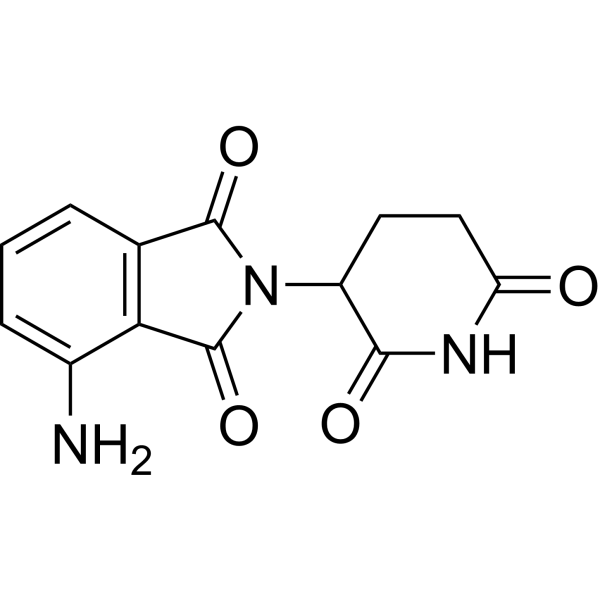 0 ImagesSynonyms: CC-4047Pomalidomide, the third-generation immunomodulatory agent, acts as molecular glue. Pomalidomide interacts with the E3 ligase cereblon and induces degradation of essential Ikaros transcription factors.
-
Lenalidomide
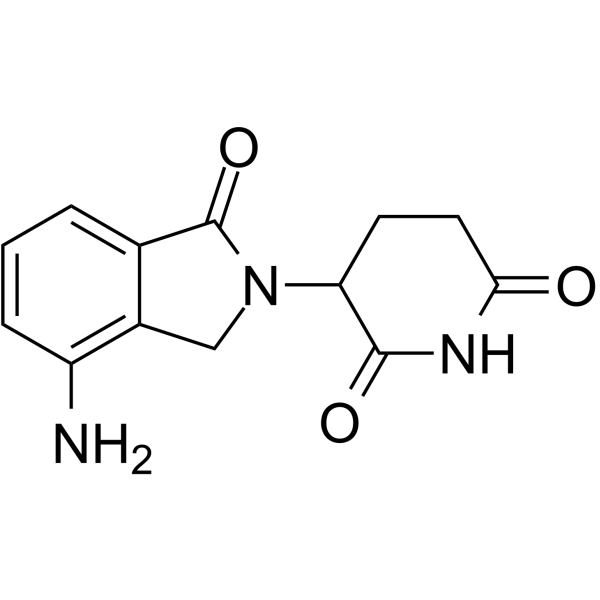 0 ImagesSynonyms: CC-5013Lenalidomide (CC-5013) is an orally active immunomodulatory agent that binds CRBN as a molecular glue to alter substrate specificity, inducing ubiquitination and proteasome-dependent degradation of IKZF1, IKZF3 and CK1α. Lenalidomide induces apoptosis by degrading IKZF1/3, and activates p53 by degrading CK1α. Lenalidomide promotes IL-2 release and effector functions of CD8+ T/NK cells, while inhibiting TNF-α secretion and M1-type pyroptosis. Lenalidomide can be used in research related to hematological malignancies, acute liver failure and acute kidney injury.
-
Golcadomide
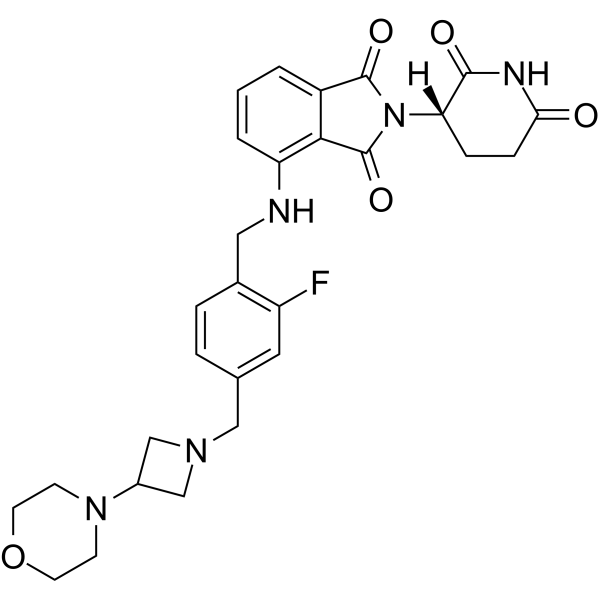 0 ImagesSynonyms: CC-99282Golcadomide (CC-99282) is a blood-brain barrier-permeable, orally active Cereblon (CRBN) E3 ligase modulator. Golcadomide induces Cereblon to form a closed active conformation, thereby recruiting and triggering the ubiquitin-mediated proteasomal degradation of transcription factors IKZF1, IKZF3, Ikaros and Aiolos. Golcadomide is applicable to research related to relapsed or refractory non-Hodgkin lymphoma, chronic lymphocytic leukemia/small lymphocytic lymphoma, and diffuse large B-cell lymphoma.
-
Cemsidomide
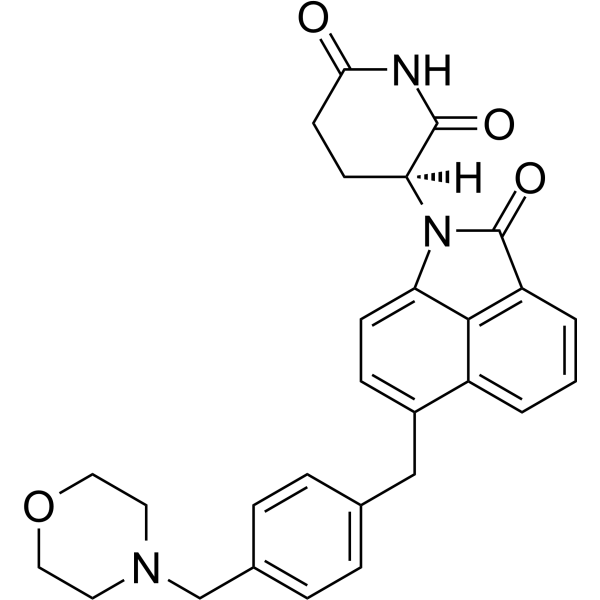 0 ImagesSynonyms: CFT7455Cemsidomide (CFT7455) is a ubiquitin ligase pathway based IKZF1/3 (Ikaros/Aiolos) degrader with molecular glue activity. Cemsidomide has a GI50 of 0.05 nM for NCIH929.1 cells. Cemsidomide is used in the research of multiple myeloma (MM).
-
FPFT-2216
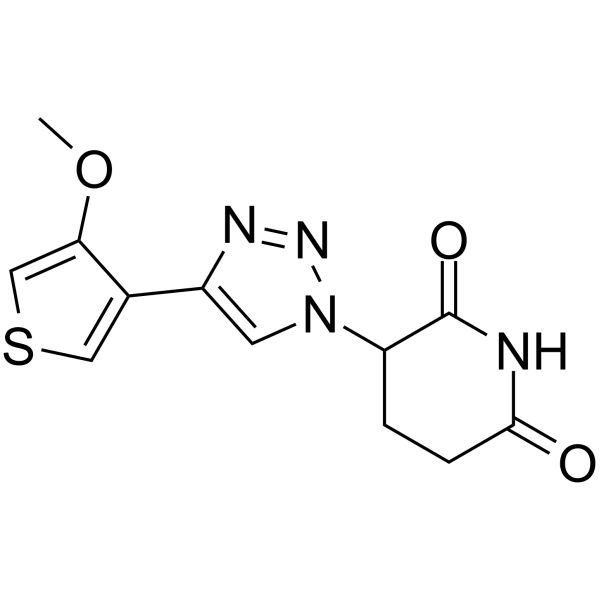 0 ImagesFPFT-2216 is an orally active Molecular glue degrader targeting IKZF1, IKZF3, CK-1α, and PDE6D, with a DC50 of 8 nM against PDE6D. FPFT-2216 mediates ubiquitin-proteasome degradation via the CRL4CRBN E3 ubiquitin ligase complex and interacts with the non-isoprenoid-binding region of PDE6D. FPFT-2216 activates the p53 signaling pathway, inhibits the CBM complex/NF-κB pathway, upregulates IL-2, suppresses IL-1β and IL-6, and induces tumor cell Apoptosis. FPFT-2216 exhibits anticancer activity against multiple myeloma and lymphoma. FPFT-2216 can be used in research related to multiple myeloma, lymphoma, acute lymphoblastic leukemia, acute myeloid leukemia, pancreatic ductal adenocarcinoma, non-small cell lung cancer, and gastric adenocarcinoma.
-
Lenalidomide hemihydrate
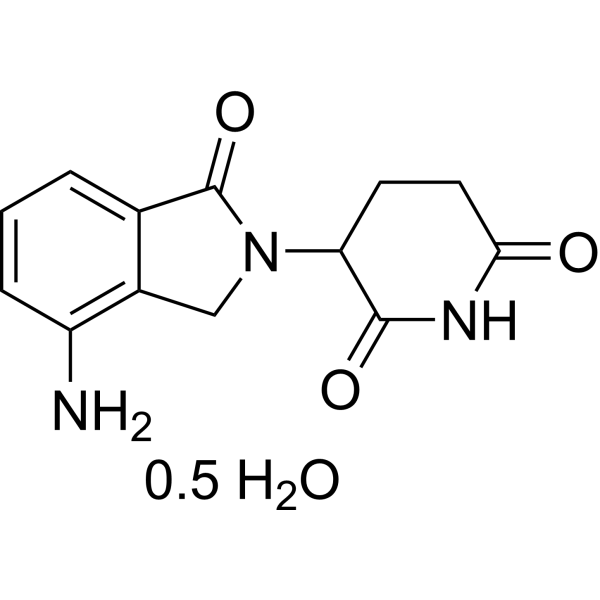 0 ImagesSynonyms: CC-5013 hemihydrateLenalidomide hemihydrate (CC-5013 hemihydrate) is an orally active immunomodulatory agent that binds CRBN as a molecular glue to alter substrate specificity, inducing ubiquitination and proteasome-dependent degradation of IKZF1, IKZF3 and CK1α. Lenalidomide hemihydrate induces apoptosis by degrading IKZF1/3, and activates p53 by degrading CK1α. Lenalidomide hemihydrate promotes IL-2 release and effector functions of CD8+ T/NK cells, while inhibiting TNF-α secretion and M1-type pyroptosis. Lenalidomide hemihydrate can be used in research related to hematological malignancies, acute liver failure and acute kidney injury.
-
SB-405483
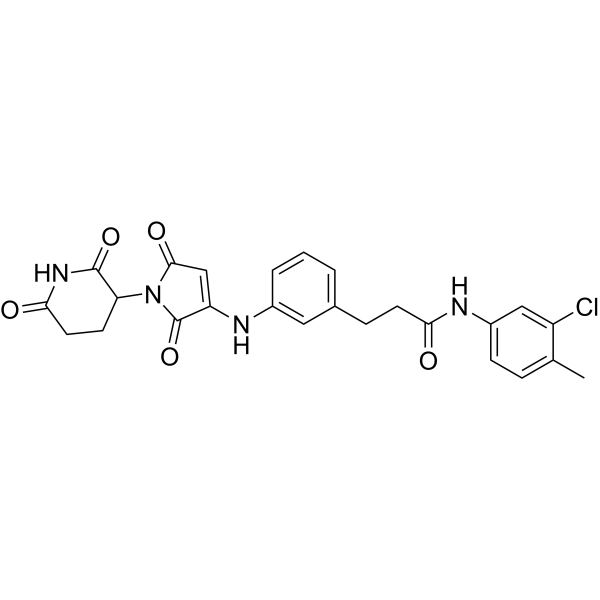
 0 ImagesCat. No.: HY-W1135319Purity: 99.33%SB-405483 is a CRBN orthosteric ligand bindign enhancer. SB-405483 potentiates degradation of CRBN substrates including CK1α, Wee1, IKZF1/3. SB-405483 stabilizes CRBN and reduces CRBN autoubiquitination. SB-405483 can be used for the research of cancer, such as multiple myeloma and acute myeloid leukemia.
-
Lenalidomide (Standard)
 0 ImagesSynonyms: CC-5013 (Standard)Lenalidomide (Standard) (CC-5013 (Standard)) is the analytical standard of Lenalidomide (HY-A0003). This product is intended for research and analytical applications. Lenalidomide (CC-5013) is an orally active immunomodulatory agent that binds CRBN as a molecular glue to alter substrate specificity, inducing ubiquitination and proteasome-dependent degradation of IKZF1, IKZF3 and CK1α. Lenalidomide induces apoptosis by degrading IKZF1/3, and activates p53 by degrading CK1α. Lenalidomide promotes IL-2 release and effector functions of CD8+ T/NK cells, while inhibiting TNF-α secretion and M1-type pyroptosis. Lenalidomide can be used in research related to hematological malignancies, acute liver failure and acute kidney injury.
-
BSJ-02-162
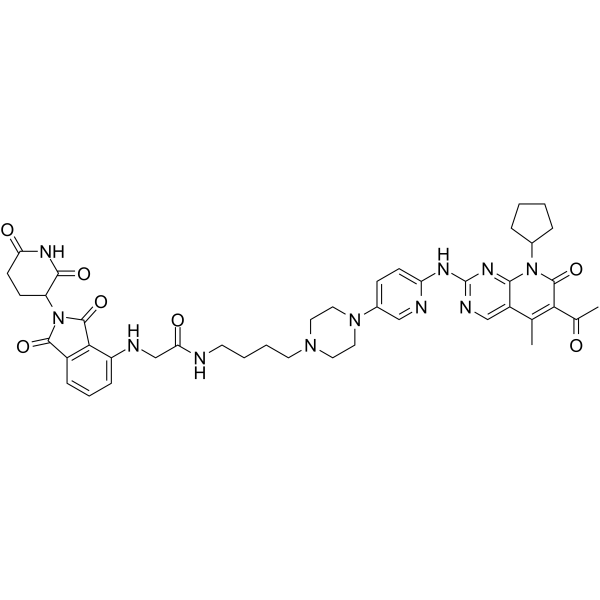 0 ImagesSynonyms: CDK4/6-IN-11BSJ-02-162 (CDK4/6-IN-11) is a CDK4/CDK6 and IKZF1/IKZF3 degrader, with DC50 values of 32 nM and 6.1 nM against CDK4 and CDK6, respectively; its IC50 ranges from 1 to 50 nM. BSJ-02-162 induces G1-phase cell cycle arrest, reduces phosphorylated retinoblastoma protein levels, and exerts antiproliferative activity in mantle cell lymphoma cells. BSJ-02-162 is applicable to research related to mantle cell lymphoma.
-
Sontigidomide
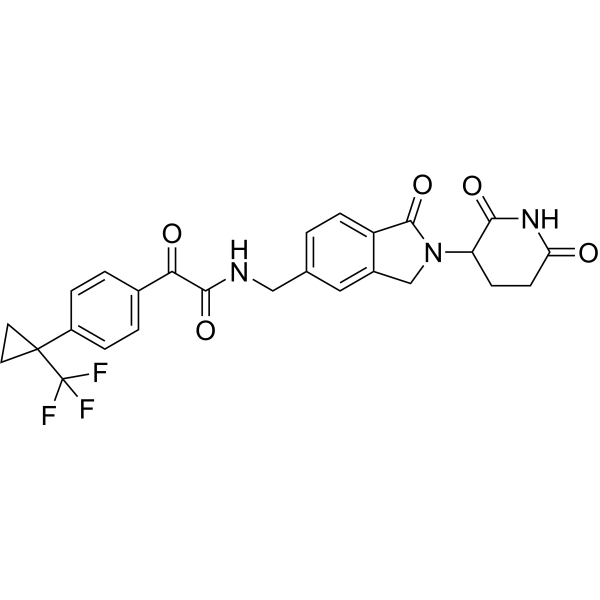 0 ImagesSontigidomide is a protein molecular glue degrader that can effectively degrade IKZF1/3 and GSPT1 proteins. Sontigidomide can be used to study inflammatory and immune system diseases. GSPT1/IKZF1/3 Molecular Glue Degrader
-
GSPT1 degrader-19
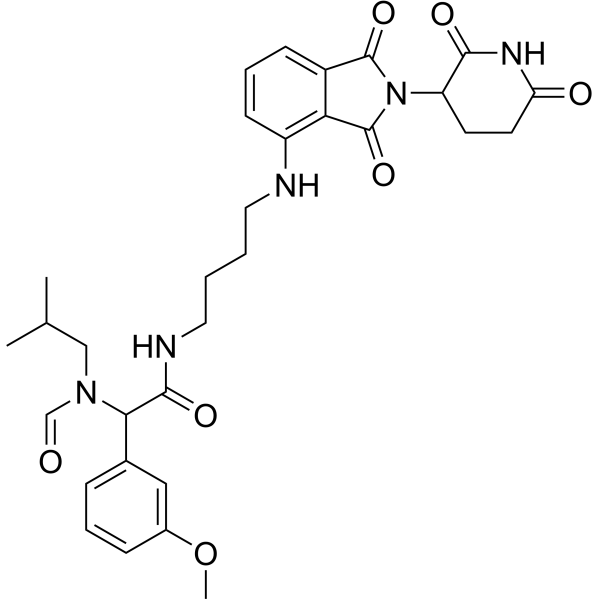 0 ImagesCat. No.: HY-161101Purity: 99.30%GSPT1 degrader-19 is a molecular glue degrader targeting GSPT1, IKZF1 and IKZF3, with DC50 values of 0.88 nM, 11.54 nM and 13.84 nM, respectively, in MM.1S multiple myeloma cells. GSPT1 degrader-19 induces cereblon (CRBN)-dependent ubiquitination and proteasomal degradation of IKZF1, IKZF3, GSPT1 and GSPT2, and also reduces ZFP91 protein levels via a CRBN-dependent pathway. GSPT1 degrader-19 exerts antiproliferative effects on cancer cells, induces global proteomic changes including downregulation of novel substrates, and exhibits activity against multiple myeloma and leukemia cell lines. GSPT1 degrader-19 can be used in research related to multiple myeloma and leukemia.
-
(R)-Zelebrudomide
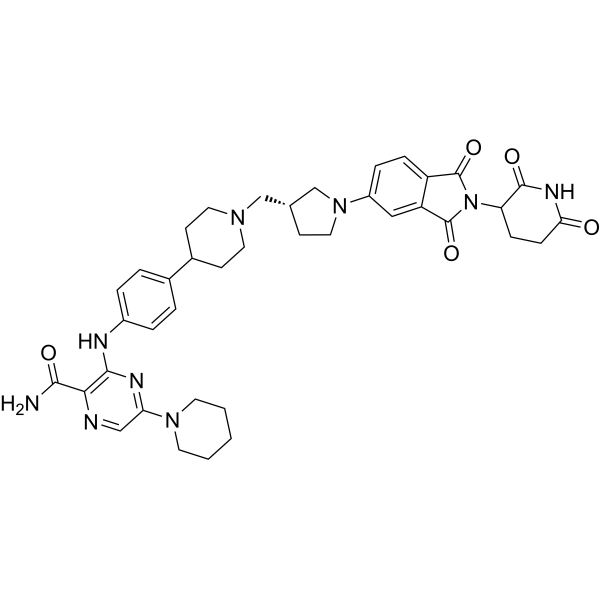 0 ImagesSynonyms: (R)-NX-2127(R)-Zelebrudomide ((R)-NX-2127) is an isomer of Zelebrudomide (HY-153220). Zelebrudomide is an orally active BTK-targeting PROTAC degrader, with DC50 values of 4.5 nM and 31 nM against wild-type BTK and BTKC481S mutant, respectively. Zelebrudomide recruits the cereblon E3 ubiquitin ligase complex to mediate the degradation of BTK. Zelebrudomide also acts as a molecular glue to bind the cereblon E3 ubiquitin ligase complex, mediating the degradation of IKZF1 and IKZF3. Zelebrudomide can be used in the research of B-cell malignancies.
-
MGD-28
 0 ImagesMGD-28 is an orally effective cereblon-dependent molecular glue degrader that potently degrades CK1α, IKZF1, IKZF2, and IKZF3, with respective DC50 values of 7.8, 3.8, 56.3, and 7.1 nM. MGD-28 also induces the degradation of multiple novel substrate proteins including ZFP91, DTWD1, ZNFX1, MBD1, and MBD3 via a CRBN/Cullin- and proteasome-dependent mechanism. MGD-28 induces cell apoptosis. MGD-28 is used in the research of multiple myeloma, acute myeloid leukemia, diffuse large B-cell lymphoma, and related malignancies.
-
FIZ1 degrader 1
 0 ImagesFIZ1 degrader 1 is an IMiD-based molecular glue degrader. FIZ1 degrader 1 induces CRBN-dependent FIZ1 ubiquitination and proteasomal degradation; inhibition of the proteasome, ubiquitination or ubiquitination-like processes blocks this degradation. FIZ1 degrader 1 also induces the degradation of IKZF1, IKZF3 and ZFP91. FIZ1 degrader 1 is applicable to molecular glue-related research.
-
Lenalidomide-d5
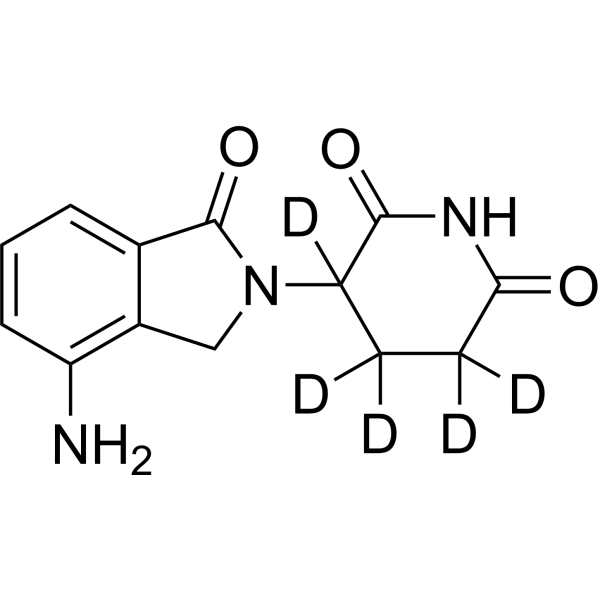 0 ImagesSynonyms: CC-5013-d5Lenalidomide-d5 (CC-5013-d5) is the d5-labeled Lenalidomide (HY-A0003). Lenalidomide (CC-5013) is an orally active immunomodulatory agent that binds CRBN as a molecular glue to alter substrate specificity, inducing ubiquitination and proteasome-dependent degradation of IKZF1, IKZF3 and CK1α. Lenalidomide induces apoptosis by degrading IKZF1/3, and activates p53 by degrading CK1α. Lenalidomide promotes IL-2 release and effector functions of CD8+ T/NK cells, while inhibiting TNF-α secretion and M1-type pyroptosis. Lenalidomide can be used in research related to hematological malignancies, acute liver failure and acute kidney injury.
-
MGD-4
 0 ImagesCat. No.: HY-168614CAS No.: 2991817-99-1MGD-4 is an orally active cereblon-dependent molecular glue degrader with a phthalazinone scaffold. MGD-4 degrades the Ikaros family proteins IKZF1, IKZF2 and IKZF3 in a dose-dependent manner, with DC50 values of 67.2 nM, 918.2 nM and 95.8 nM, respectively. MGD-4 exhibits weak degradation activity against CK1α. MGD-4 inhibits the viability of multiple myeloma (MM) and acute myeloid leukemia (AML) cells and induces cell apoptosis. MGD-4 is used for the research of multiple myeloma, acute myeloid leukemia, diffuse large B-cell lymphoma and related hematological malignancies .
-
Lenalidomide hydrochloride
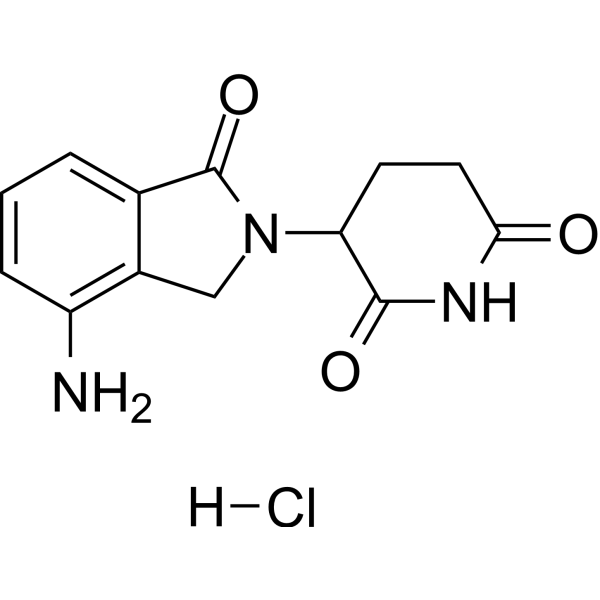 0 ImagesCat. No.: HY-A0003ACAS No.: 1243329-97-6Synonyms: CC-5013 hydrochlorideLenalidomide hydrochloride (CC-5013 hydrochloride) is an orally active immunomodulatory agent that binds CRBN as a molecular glue to alter substrate specificity, inducing ubiquitination and proteasome-dependent degradation of IKZF1, IKZF3 and CK1α. Lenalidomide hydrochloride induces apoptosis by degrading IKZF1/3, and activates p53 by degrading CK1α. Lenalidomide hydrochloride promotes IL-2 release and effector functions of CD8+ T/NK cells, while inhibiting TNF-α secretion and M1-type pyroptosis. Lenalidomide hydrochloride can be used in research related to hematological malignancies, acute liver failure and acute kidney injury.
-
PROTAC BCL6/IKZF1/3 Degrader-1
 0 ImagesCat. No.: HY-179075PROTAC BCL6/IKZF1/3 Degrader-1 is an orally active bifunctional PROTAC‑IMiD protein degrader that targets and degrades BCL6, IKZF1 and IKZF3. PROTAC BCL6/IKZF1/3 Degrader-1 induces ubiquitination and proteasome-mediated degradation of target proteins by recruiting E3 ubiquitin ligase, and triggers cell cycle arrest and apoptosis. PROTAC BCL6/IKZF1/3 Degrader-1 exhibits favorable anti-tumor activity in diffuse large B-cell lymphoma xenograft models. PROTAC BCL6/IKZF1/3 Degrader-1 can be used for the research of diffuse large B-cell lymphoma.
-
IKZF-IN-1
 0 ImagesCat. No.: HY-170518IKZF-IN-1 is a molecular glue and an IKZF protein degrader that mediates the degradation of IKZF1/IKZF2/IKZF3/IKZF4 proteins. IKZF-IN-1 promotes the ubiquitination of target proteins via the CUL4‑CRBN E3 ubiquitin ligase complex, thereby triggering the degradation of target proteins. IKZF-IN-1 can be used in cancer-related research.
- 1
- 2



