



Sepsis
-
Sepsis (27)

- 1
- 2
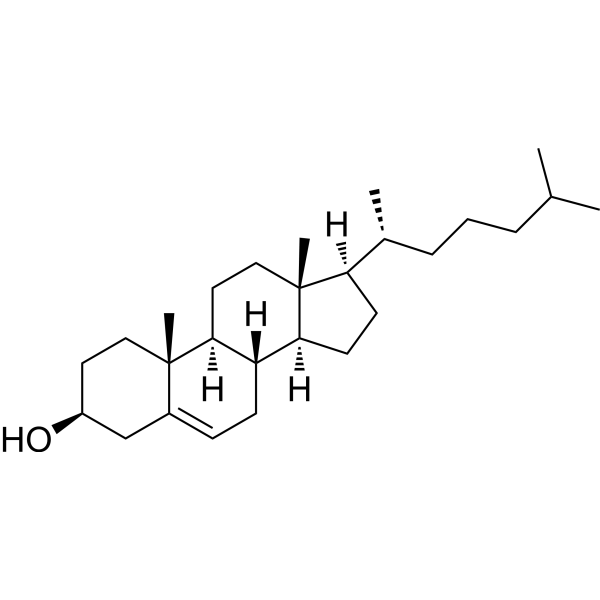
- Formula: C27H46O
- Molecular Weight: 386.65
Cholesterol (from animal) is the major sterol in mammals. It is making up 20-25% of structural component of the plasma membrane. Plasma membranes are highly permeable to water but relatively impermeable to ions and protons. Cholesterol (from animal) plays an important role in determining the fluidity and permeability characteristics of the membrane as well as the function of both the transporters and signaling proteins. Cholesterol (from animal) is also an endogenous estrogen-related receptor α (ERRα) agonist.
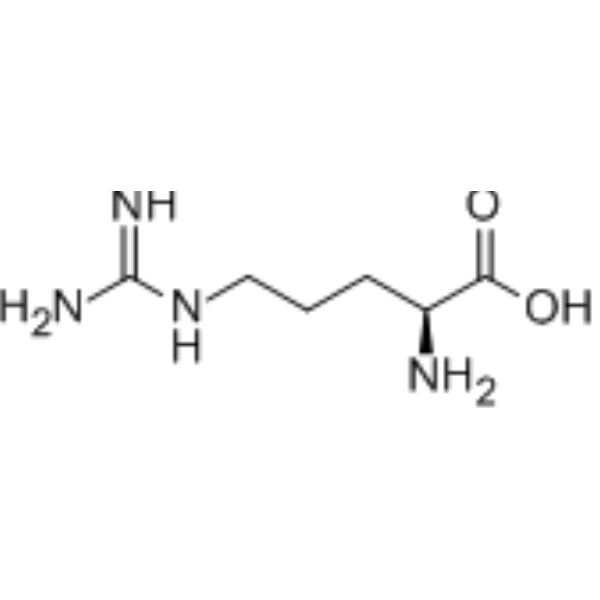
- Formula: C6H14N4O2
- Molecular Weight: 174.20
L-Arginine ((S)-(+)-Arginine) is the substrate for the endothelial nitric oxide synthase (eNOS) to generate NO. L-Arginine is transported into vascular smooth muscle cells by the cationic amino acid transporter family of proteins where it is metabolized to nitric oxide (NO), polyamines, or L-proline. L-Arginine is a potent vasodilator, and can be used to induce experimental acute pancreatitis.
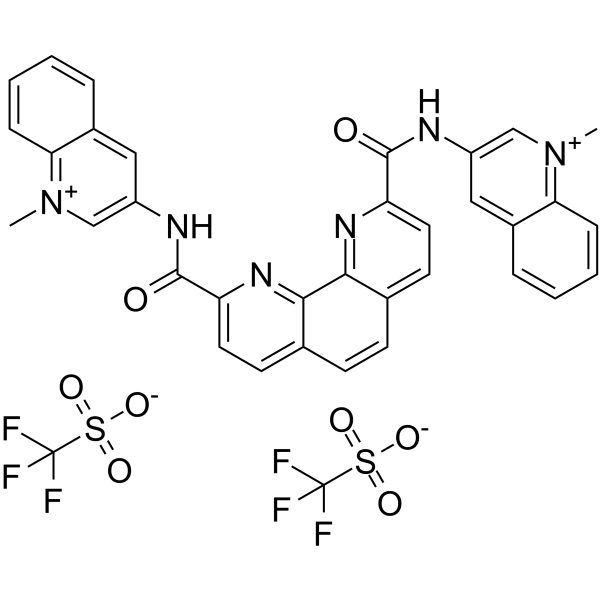
- Formula: C36H26F6N6O8S2
- Molecular Weight: 848.75
Phen-DC3 Trifluoromethanesulfonate is a bisquinolinium G-quadruplex (G4) ligand. Phen-DC3 Trifluoromethanesulfonate selectively binds to and stabilizes the hybrid quadruplex-duplex hybrid (QDH) derived from the PIM1 promoter. Phen-DC3 Trifluoromethanesulfonate also binds to the c-myc promoter Pu24T G4 via extensive π-stacking, and induces polymerase stalling at α-synuclein DNA and RNA G4 sequences. Phen-DC3 Trifluoromethanesulfonate downregulates LPS (HY-D1056)-induced TNFRSF21, RIPK3 and p-MLKL in VECs, and ameliorates CLP-induced pulmonary vascular leakage in septic rats. Phen-DC3 Trifluoromethanesulfonate can be used in studies related to neurodegenerative diseases and sepsis-associated vascular injury.
- Molecular Weight: 150 kDa
Anti-Mouse TIGIT Antibody (1G9) is a mouse-derived agonistic TIGIT IgG1 κ type antibody. Anti-Mouse TIGIT Antibody (1G9) blocks CD155 binding to TIGIT. Anti-Mouse TIGIT Antibody (1G9) shows potent anti-infection and anti-immune effects in septic and experimental autoimmune encephalomyelitis.
- Molecular Weight: 150 kDa
Anti-Mouse CD47/IAP Antibody (MIAP301) is an anti-mouse CD47/IAP IgG2a monoclonal antibody. Anti-Mouse CD47/IAP Antibody (MIAP301) can effectively block CD47 signaling and enhance macrophage phagocytic function. Anti-Mouse CD47/IAP Antibody (MIAP301) can increase the infiltration of immune cells. Anti-Mouse CD47/IAP Antibody (MIAP301) restores the phagocytic function of myeloid cells and alleviate B cell inhibition. Anti-Mouse CD47/IAP Antibody (MIAP301) may interfere with wound healing. Anti-Mouse CD47/IAP Antibody (MIAP301) can be used for researches on cancer, inflammation and infection conditions such as melanoma, intestinal mucosal repair and sepsis.
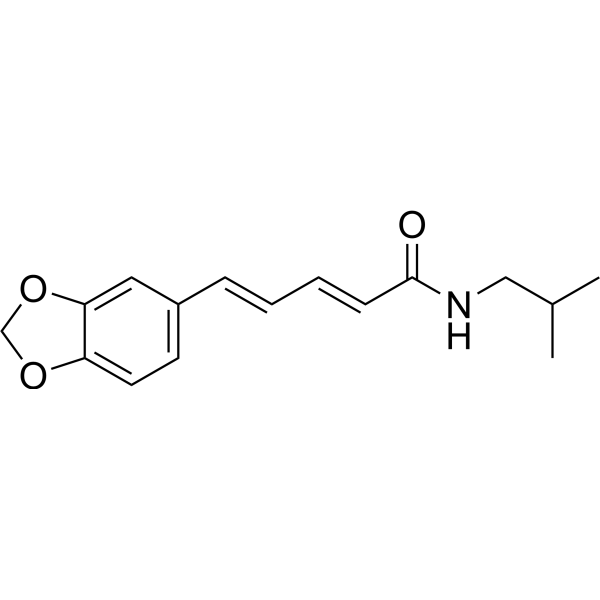
- Formula: C16H19NO3
- Molecular Weight: 273.33
Piperlonguminine is a cytochrome P450 (CYP450) inhibitor. Piperlonguminine also inhibits the growth of epimastigotes and intracellular amastigotes of Trypanosoma cruzi, with IC50 values of 53.8 and 33.9 μM, respectively. Piperlonguminine regulates HMGB1/TLR4-NF-κB/MAPK-related inflammatory responses, endothelial protein C receptor (EPCR) shedding, melanogenesis, glycolipid metabolism, ischemic brain injury and tumor growth. Piperlonguminine can be used in research on hyperlipidemia, sepsis, Chagas disease, ischemic stroke, sarcoma and severe acute pancreatitis-associated lung injury.

- Formula: C35H57N3O3
- Molecular Weight: 567.85
DPM-1003 is a modulator of protein tyrosine phosphatase 1B (PTP1B) and C-X-C chemokine receptor 4 (CXCR4). DPM-1003 binds to the non-catalytic disordered C-terminal fragment of PTP1B. DPM-1003 inhibits the PI3Kγ-mediated AKT/mTOR signaling pathway downstream of CXCR4. DPM-1003 improves the survival rate of mice in a transfusion-related acute lung injury model, and exerts a lung injury protective effect in preclinical mouse models of acute lung injury and sepsis. DPM-1003 can be used in research related to acute lung injury, acute respiratory distress syndrome, transfusion-related acute lung injury and sepsis.

- Formula: C27H30ClN5O5
- Molecular Weight: 540.01
AM-8722 is an orally active inhibitor of bacterial DNA gyrase and topoisomerase IV. AM-8722 inhibits bacterial DNA synthesis and exhibits broad-spectrum antibacterial activity against Gram-positive and Gram-negative pathogens. AM-8722 can be used for research on bacterial septicemia and bacterial infections.
- Formula: C27H33N3O8
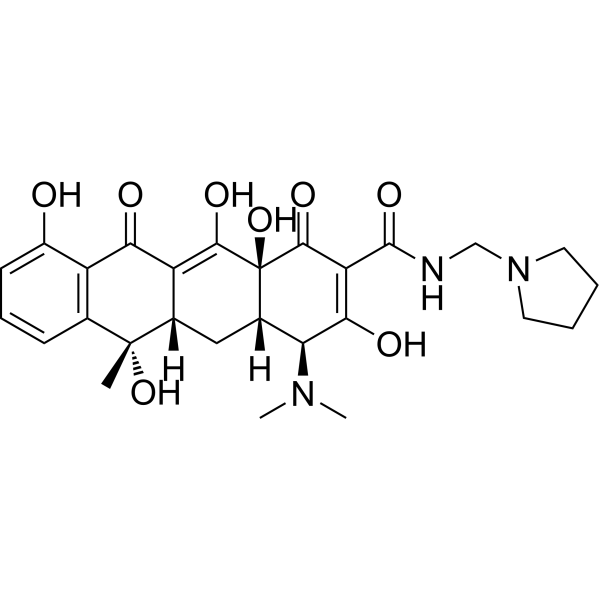
- Molecular Weight: 527.57
Rolitetracycline is a highly soluble, broad-spectrum antibiotic derived from tetracycline. Rolitetracycline binds to and stabilizes bovine serum albumin, and also inhibits HIV-1 integrase, blocks Aβ fibril formation and suppresses dengue virus proliferation. Rolitetracycline mediates the inhibition of Aβ fibrils via a specific three-dimensional pharmacophore conformation, and exerts bacteriostatic and bactericidal activities. Rolitetracycline acts synergistically with Penicillin G (HY-N7139) or Cephalothin (HY-B1275A) to alter the effects on microbial growth. Rolitetracycline serves as an important tool compound for the study of bacterial infections (urinary tract infections, sepsis), HIV-1 and dengue virus infections, as well as Alzheimer's disease.

- Formula: C17H38N10O2
- Molecular Weight: 414.55
LCC-12 formate is a mitochondria-targeted Copper2+ -selective binder and metabolic/epigenetic reprogramming agent. LCC-12 formate inhibits NAD (H) redox cycling and reduces the NAD (H) pool. LCC-12 formate downregulates the expression of inflammatory genes and improves outcomes in mouse models of bacterial sepsis, endotoxemia, and SARS-CoV-2 infection. LCC-12 formate can be used in research related to acute inflammation, endotoxemia, sepsis, and SARS-CoV-2 infection.

Sphingomyelin phosphodiesterase, Bacillus cereus is a sphingomyelin hydrolase and Insecticide. Sphingomyelin phosphodiesterase, Bacillus cereus catalyzes the decomposition of sphingomyelin into ceramide and phosphorylcholine. Sphingomyelin phosphodiesterase, Bacillus cereus causes rapid paralysis and death in injected insects, including German cockroaches and black cutworms. Sphingomyelin phosphodiesterase, Bacillus cereus reduces H2O2 production. Sphingomyelin phosphodiesterase, Bacillus cereus can be used in studies related to sepsis and endophthalmitis.

- Formula: C27H46O
- Molecular Weight: 386.65
Cholesterol (synthetic) is the major sterol in mammals. It is making up 20-25% of structural component of the plasma membrane. Plasma membranes are highly permeable to water but relatively impermeable to ions and protons. Cholesterol (synthetic) plays an important role in determining the fluidity and permeability characteristics of the membrane as well as the function of both the transporters and signaling proteins. Cholesterol (synthetic) is also an endogenous estrogen-related receptor α (ERRα) agonist.

- Formula: C27H46O
- Molecular Weight: 386.65
Cholesterol (from plant) is the major sterol in mammals. It is making up 20-25% of structural component of the plasma membrane. Plasma membranes are highly permeable to water but relatively impermeable to ions and protons. Cholesterol (from plant) plays an important role in determining the fluidity and permeability characteristics of the membrane as well as the function of both the transporters and signaling proteins. Cholesterol (from plant) is also an endogenous estrogen-related receptor α (ERRα) agonist.

- Formula: C39H36N8O8
- Molecular Weight: 744.75
LC-MI-3 is an orally active IRAK4 PROTAC degrader with an IC50 of 57.2 nM and high selectivity among human protein kinases. LC-MI-3 eliminates IRAK4 kinase and scaffolding functions via the cereblon E3 ubiquitin ligase and ubiquitin-proteasome systems. LC-MI-3 inhibits downstream nuclear factor-κB and IRAK4-mediated inflammatory signaling pathways. LC-MI-3 can be used for the research of acute lung injury, sepsis, psoriasis, and inflammatory diseases.

- Formula: C16H19NO3
- Molecular Weight: 273.33
Piperlonguminine (Standard) is the analytical standard of Piperlonguminine (HY-126562). This product is intended for research and analytical applications. Piperlonguminine is a cytochrome P450 (CYP450) inhibitor. Piperlonguminine also inhibits the growth of epimastigotes and intracellular amastigotes of Trypanosoma cruzi, with IC50 values of 53.8 and 33.9 μM, respectively. Piperlonguminine regulates HMGB1/TLR4-NF-κB/MAPK-related inflammatory responses, endothelial protein C receptor (EPCR) shedding, melanogenesis, glycolipid metabolism, ischemic brain injury and tumor growth. Piperlonguminine can be used in research on hyperlipidemia, sepsis, Chagas disease, ischemic stroke, sarcoma and severe acute pancreatitis-associated lung injury.

- Formula: C16H16N4O2S
- Molecular Weight: 328.39
Sulfamethylphenazole (Sulfapyrazole; Vesulong) is a long-acting sulfonamide antibacterial agent. Sulfamethylphenazole maintains effective chemotherapeutic blood concentrations through the slow release of free sulfonamide from a protein-binding reservoir and can be used in combination with antibiotics such as Terramycin for bovine hemorrhagic septicemia. Sulfamethylphenazole exhibits moderate antimycobacterial activity against Mycobacterium tuberculosis H37Rv (MIC = 15.38 μg/mL) and inhibitory activity against CYP 2C9. Sulfamethylphenazole can be used in studies related to tuberculosis and hemorrhagic septicemia.

- Formula: C18H21N7O2S
- Molecular Weight: 399.47
JAK-IN-44 is an orally active and selective JAK2 inhibitor, with IC50 values of 0.2 nM, 7.3 nM, 21 nM and 27 nM against JAK2, TYK2, JAK1 and JAK3, respectively. JAK-IN-44 inhibits disease phenotypes in adjuvant-induced arthritis, systemic lupus erythematosus and experimental autoimmune uveitis models, and improves the survival rate of mice in LPS (HY-D1056)-induced sepsis models. JAK-IN-44 can be used in the research of autoimmune and inflammatory diseases such as systemic lupus erythematosus, uveitis, rheumatoid arthritis and sepsis.

- Formula: C25H32N2Na10O45S8
- Molecular Weight: 1566.93
HPA-IN-3 (compound 5) is a heparanase (HPA) inhibitor with an IC50 of 11.27 μM against human targets. HPA-IN-3 binds to the active site of HPA, and its structural features enhance binding stability and affinity. HPA-IN-3 reduces the levels of proinflammatory cytokines. HPA-IN-3 maintains organ morphology. HPA-IN-3 improves the survival rate of mice with sepsis induced by cecal ligation and puncture. HPA-IN-3 can be used in studies related to sepsis.

- Formula: C30H34N8O3
- Molecular Weight: 554.64
FXIIa-IN-6 is a potent, selective, and irreversible covalent inhibitor of Factor XIIa (FXIIa) with an IC50 of 2 nM. FXIIa-IN-6 exhibits ≥2,500-fold selectivity over related serine proteases. FXIIa-IN-6 exhibits favorable anticoagulant and anti-inflammatory activities and can be used in sepsis research.

- Formula: C29H30N4O4
- Molecular Weight: 498.57
- 1
- 2



