



Rolitetracycline

Based on 1 Customer Validation
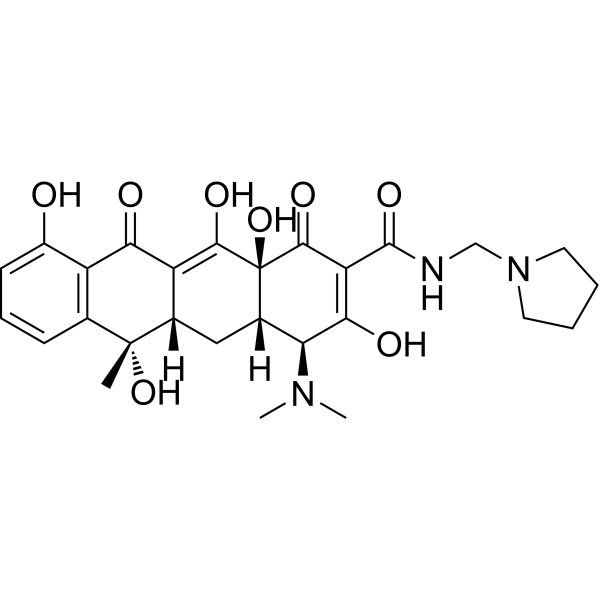
Rolitetracycline is a highly soluble, broad-spectrum antibiotic derived from tetracycline. Rolitetracycline binds to and stabilizes bovine serum albumin, and also inhibits HIV-1 integrase, blocks Aβ fibril formation and suppresses dengue virus proliferation. Rolitetracycline mediates the inhibition of Aβ fibrils via a specific three-dimensional pharmacophore conformation, and exerts bacteriostatic and bactericidal activities. Rolitetracycline acts synergistically with Penicillin G (HY-N7139) or Cephalothin (HY-B1275A) to alter the effects on microbial growth. Rolitetracycline serves as an important tool compound for the study of bacterial infections (urinary tract infections, sepsis), HIV-1 and dengue virus infections, as well as Alzheimer's disease.
For research use only. We do not sell to patients.
- Purity : 95.0%
- CAS No.: 751-97-3
- Formula: C27H33N3O8
- Molecular Weight:527.57
-
Storage:Powder -20°C, 3 years ; In solvent -80°C, 6 months , -20°C, 1 month

To place orders, for customer services and technical support, please contact: MedChemExpress USA
Tel: 609-228-6898 E-mail: [email protected] [email protected]


-
 Biological Activity
-
Chemical Information
-
Solvent & Solubility
- Protocols
- Purity & Documentation
- References
-
 Help & FAQs


-
HY-17412
Minocycline hydrochlorideHIF-1α/Glutamate Inhibitor -
HY-106339
Lymecycline -
HY-118660
Anhydrotetracycline hydrochlorideTetracycline Destructase Enzymes Inhibitor -
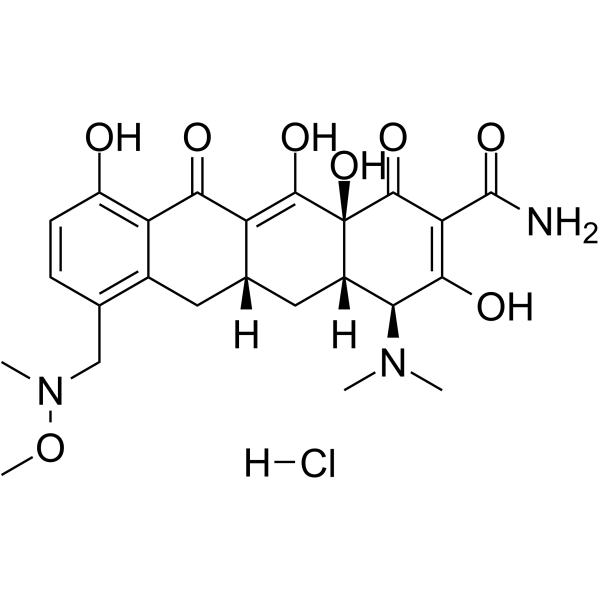
HY-13858A
Sarecycline hydrochlorideTetracycline derivatives of antibiotic -
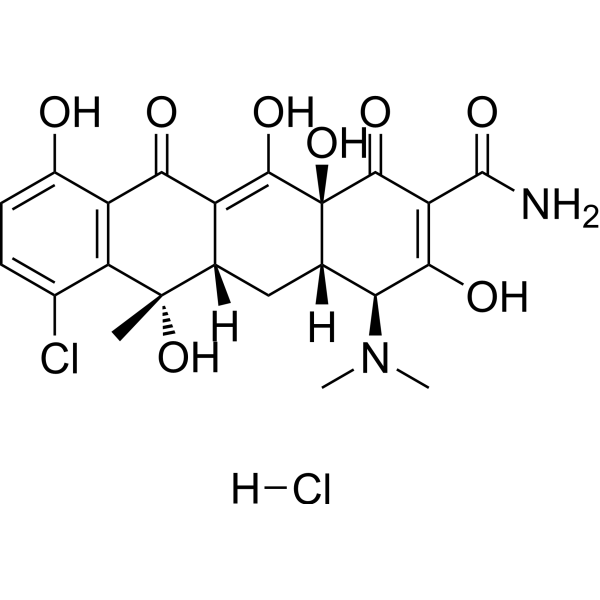
HY-B1327
Chlortetracycline hydrochlorideCalcium Ionophore Antibiotic, Methanogenic Bacteria Inhibitor -
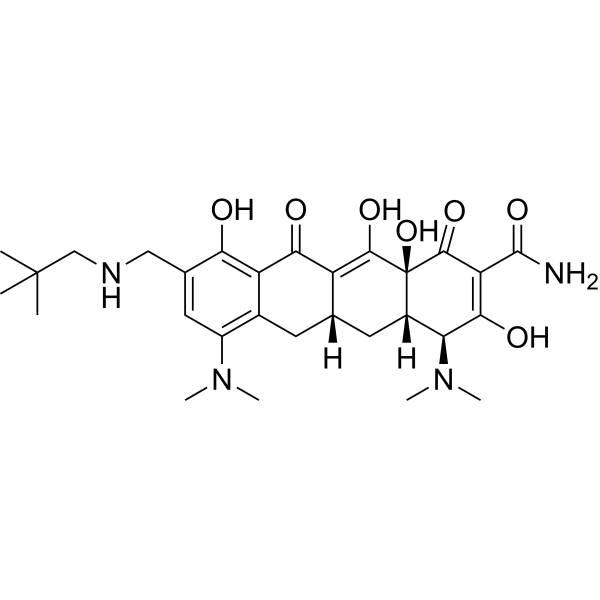
HY-14865
OmadacyclineAntimicrobial Agent -
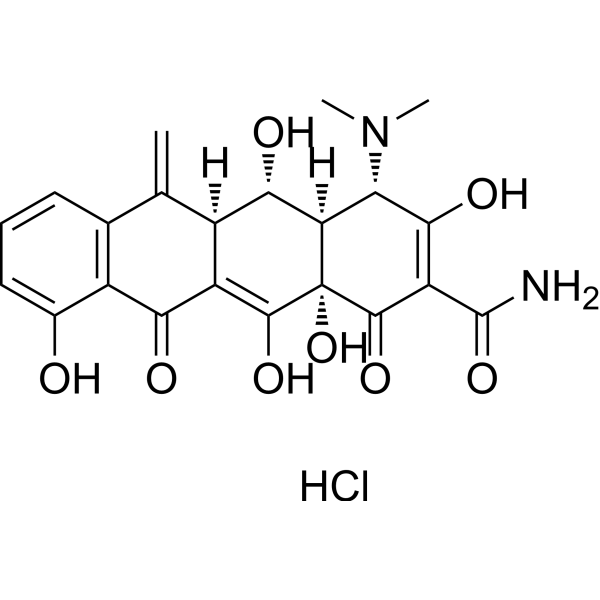
HY-B0449
Methacycline hydrochlorideBacterial Inhibitor -
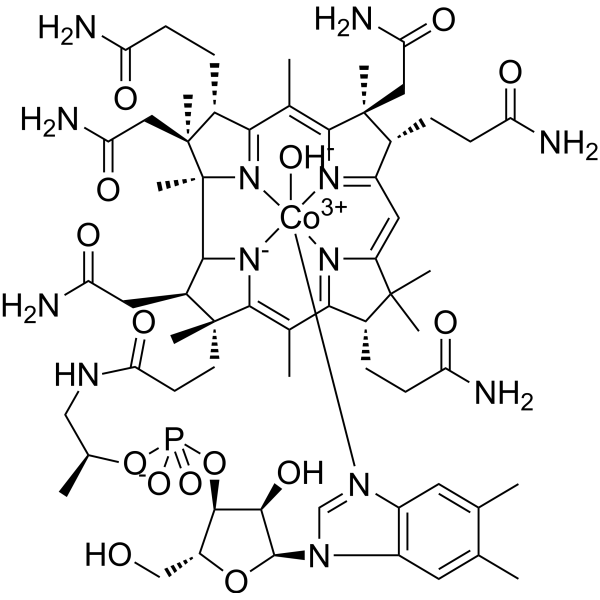
HY-B2209
HydroxocobalaminCyanide Antidote -
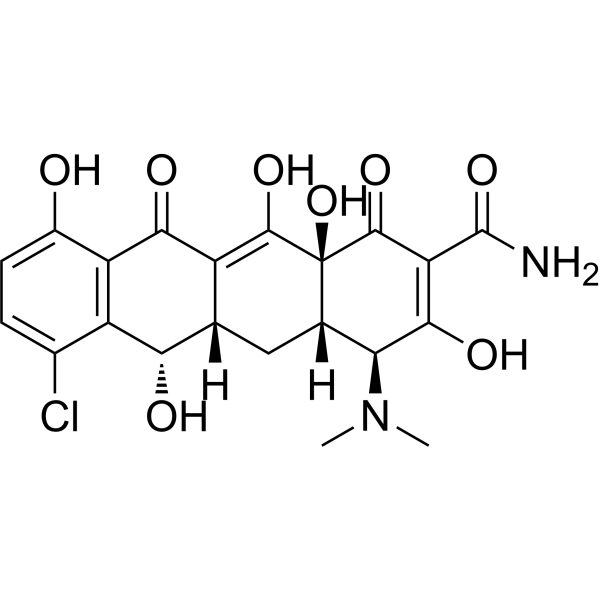
HY-121268
DemeclocyclineTetracycline Antibiotic -
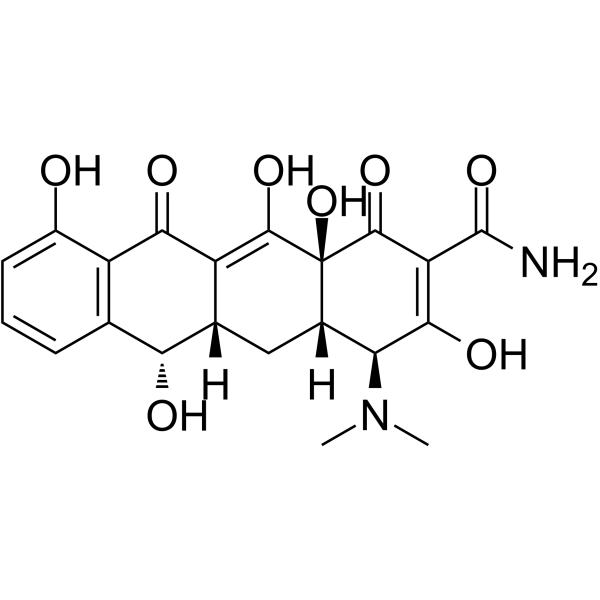
HY-108971
DemecyclineTetracycline Antibiotic
All Antibiotic Isoforms
More

Biological Activity
Description
IC50 & Target
|
Tetracycline |
Cellular Effect
|
Cell Line

|
Type | Value | Description | References |
|---|---|---|---|---|
| CCRF-CEM | CC50 |
45.5 μM
Compound: rolitetracycline
|
Cytotoxicity against CEM cells after 5 days by MTT method
Cytotoxicity against CEM cells after 5 days by MTT method
|
[PMID: 17376679] |
| CCRF-CEM | EC50 |
>45.5 μM
Compound: rolitetracycline
|
Antiviral activity against HIV1 3B in CEM cells assessed as inhibition of viral-induced cytopathicity
Antiviral activity against HIV1 3B in CEM cells assessed as inhibition of viral-induced cytopathicity
|
[PMID: 17376679] |
In Vitro
Rolitetracycline (0.09-2.5 μg/mL, overnight; 0.02-3.12 μg/mL, overnight) exhibits additive or synergistic activity (no antagonism) when combined with penicillin G or cephalothin against 20 E. coli and 14 S. aureus nosocomial strains, with a mean MIC of 1.61 μg/mL for E. coli and 0.28 μg/mL for S. aureus[1].
Rolitetracycline (0.45-1000 μg/mL, 24-72 h) is significantly more active against stable staphylococcal L-forms (cell wall-defective) than their corresponding parent S. aureus strains, with MICs ranging from 0.45 to 3.9 μg/mL for L-forms versus 1.9 to 500 μg/mL for parent strains[1].
Rolitetracycline (250 μM; 18 h) inhibits Aβ 1-40 fibril formation by 34% in a cell-free immunoassay following co-incubation with 11.6 μM Aβ 1-40[2].
Rolitetracycline (20 μM; 18 h) reduces the biological activity of Aβ 1-40 (as measured by MTT reduction inhibition) by 10-20% in IMR32 human neuroblastoma cells following pre-incubation with 11.6 μM Aβ 1-40[2].
MedChemExpress (MCE) has not independently confirmed the accuracy of these methods. They are for reference only.
-
Cell Line:IMR32 human neuroblastoma cells
-
Concentration:20 μM
-
Incubation Time:18 h (pre-incubation with Aβ1-40); 24 h (cell incubation)
-
Result:Inhibited the Aβ-induced reduction of MTT by 10-20%.


Chemical Information
-
CAS No. 751-97-3
-
Appearance Solid
-
Molecular Weight 527.57
-
Formula C27H33N3O8
-
Color Light yellow to brown
-
SMILES
O=C(C(C1=O)=C(O)[C@@H](N(C)C)[C@]2([H])C[C@]3([H])[C@](C)(O)C4=C(C(C3=C(O)[C@@]21O)=O)C(O)=CC=C4)NCN5CCCC5
-
Shipping
Room temperature in continental US; may vary elsewhere.
-
Storage
Powder -20°C 3 years In solvent -80°C 6 months -20°C 1 month


Solvent & Solubility
In Vitro:
H2O : 10 mg/mL (18.95 mM; Need ultrasonic and warming)
DMSO : 10 mg/mL (18.95 mM; Need ultrasonic; Hygroscopic DMSO has a significant impact on the solubility of product, please use newly opened DMSO)
Please refer to the solubility information to select the appropriate solvent. Once prepared, please aliquot and store the solution to prevent product inactivation from repeated freeze-thaw cycles.
Storage method and period of stock solution: -80°C, 6 months; -20°C, 1 month. When stored at -80°C, please use it within 6 months. When stored at -20°C, please use it within 1 month.
* Note: If you choose water as the stock solution, please dilute it to the working solution, then filter and sterilize it with a 0.22 μm filter before use.
Please refer to the solubility information to select the appropriate solvent. Once prepared, please aliquot and store the solution to prevent product inactivation from repeated freeze-thaw cycles.
Storage method and period of stock solution: -80°C, 6 months; -20°C, 1 month. When stored at -80°C, please use it within 6 months. When stored at -20°C, please use it within 1 month.
* Note: If you choose water as the stock solution, please dilute it to the working solution, then filter and sterilize it with a 0.22 μm filter before use.
Concentration (start) × Volume (start) = Concentration (final) × Volume (final)


Purity & Documentation
-
Data Sheet (277 KB)
-
SDS (394 KB)
- English - EN (394 KB)
- Français - FR (394 KB)
- Deutsch - DE (394 KB)
- Norwegian - NO (394 KB)
- Español - ES (394 KB)
- Swedish - SV (394 KB)
- Italian - IT (394 KB)
- Korean - KR (394 KB)
- Portuguese - PT (394 KB)
-
Handling Instructions (2659 KB)
References
[1]. Daschner FD, et al. Combination of bacteriostatic and bactericidal drugs: lack of significant in vitro antagonism between penicillin, cephalothin, and rolitetracycline. Antimicrob Agents Chemother. 1976;10(5):802-808. [Content Brief]
[2]. Howlett DR, et al. Common structural features determine the effectiveness of carvedilol, daunomycin and rolitetracycline as inhibitors of Alzheimer beta-amyloid fibril formation. Biochem J. 1999;343 Pt 2(Pt 2):419-423. [Content Brief]
[3]. Choudhary S, et al. Unraveling the energetics and mode of the recognition of antibiotics tetracycline and rolitetracycline by bovine serum albumin. Chem Biol Drug Des. 2012;80(5):693-705. [Content Brief]


Complete Stock Solution Preparation Table
Please refer to the solubility information to select the appropriate solvent. Once prepared, please aliquot and store the solution to prevent product inactivation from repeated freeze-thaw cycles.
Storage method and period of stock solution: -80°C, 6 months; -20°C, 1 month. When stored at -80°C, please use it within 6 months. When stored at -20°C, please use it within 1 month.
| Optional Solvent | Concentration Solvent Mass | 1 mg | 5 mg | 10 mg | 25 mg |
|---|---|---|---|---|---|
| H2O / DMSO | 1 mM | 1.8955 mL | 9.4774 mL | 18.9548 mL | 47.3871 mL |
| 5 mM | 0.3791 mL | 1.8955 mL | 3.7910 mL | 9.4774 mL | |
| 10 mM | 0.1895 mL | 0.9477 mL | 1.8955 mL | 4.7387 mL | |
| 15 mM | 0.1264 mL | 0.6318 mL | 1.2637 mL | 3.1591 mL |
* Note: If you choose water as the stock solution, please dilute it to the working solution, then filter and sterilize it with a 0.22 μm filter before use.


Rolitetracycline Related Classifications
HY-18257 Related Classifications
 Powered by Bioz
Keywords
- Rolitetracycline
- 751-97-3
- Antibiotic
- Bacterial
- Dengue Virus
- Amyloid-β
- HIV Integrase
- Aβ fibril
- human immunodeficiency virus type I integrase
- Alzheimer's disease
- human immunodeficiency virus type I
- E. coli
- S. aureus
- bacterial infections
- dengue virus
- bovine serum albumin
- IMR32 human neuroblastoma cells
- Inhibitor
- inhibitor
- inhibit