



Lipopeptide
Lipopeptides are amphiphilic molecules composed of a lipid moiety linked to a short peptide chain, and they function as membrane-active metabolites with broad roles in microbial physiology and host-microbe interactions[1][2]. Mechanistically, their biological activity is closely associated with interactions with phospholipid membranes, where membrane permeabilization and pore formation can disrupt transmembrane ion balance and contribute to antimicrobial effects[1]. Beyond direct antimicrobial activity, lipopeptides participate in key biological processes including biofilm formation, surface attachment, colonization, and swarming motility, thereby influencing microbial adaptation and ecological fitness[1][3]. In experimental systems, lipopeptides produced by Bacillus and Pseudomonas species exhibit activity against bacteria, fungi, oomycetes, and other microorganisms, supporting their use as model compounds for investigating microbial competition and host-microbe interactions[1]. Compared with individual lipopeptide families such as surfactin, iturin, and fengycin, which differ in peptide composition and lipid-chain structure, the broader lipopeptide class displays substantial structural diversity that contributes to distinct biological functions and target specificities[1][2]. For research applications, naturally occurring and engineered lipopeptides are widely investigated as antimicrobial agents and as tools for studying membrane-associated biological processes because structural modifications can influence bioactivity and functional properties[2][3].
References:
- [1]. Raaijmakers JM, et al. Natural functions of lipopeptides from Bacillus and Pseudomonas: more than surfactants and antibiotics. FEMS Microbiol Rev. 2010 Nov;34(6):1037-62. [Content Brief]
- [2]. Cui Z, et al. The upregulation of CLGN in hepatocellular carcinoma is potentially regulated by hsa-miR-194-3p and associated with patient progression. Front Oncol. 2023 Jan 9;12:1081510. [Content Brief]
- [3]. Lo Cascio E, et al. Structural determinants driving the binding process between PDZ domain of wild type human PALS1 protein and SLiM sequences of SARS-CoV E proteins. Comput Struct Biotechnol J. 2021;19:1838-1847. [Content Brief]
-
Lipopeptide Related Products (7)
Related Products (7)

-
Daptomycin
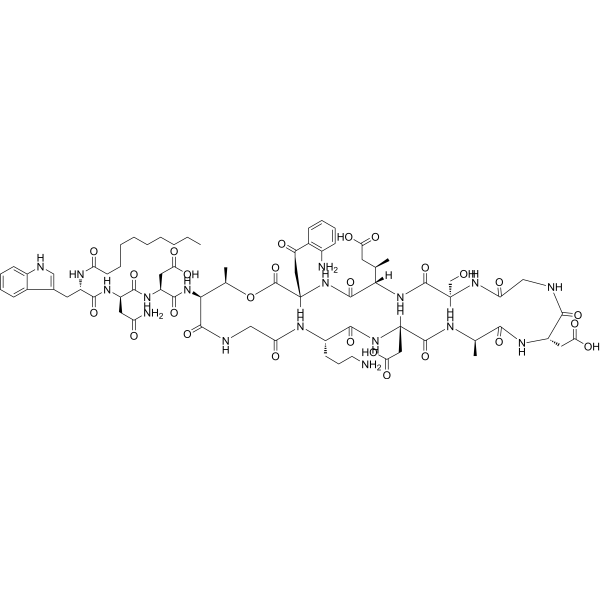 0 ImagesSynonyms: LY146032Daptomycin is a lipopeptide antibiotic with rapid in vitro bactericidal activity against gram-positive organisms.
-
Surfactin
 0 ImagesSurfactin is a potent cyclic lipopeptide biosurfactants consists of four isomers (Surfactin A, B, C and D), which mediates flux of mono-and divalent cations, such as calcium, across lipid bilayer membranes. Surfactin can act as an antimicrobial adjuvant with anti-bacterial, anti-fungal, antimycoplasma and hemolytic effects. Surfactin also has antiviral activity against a variety of enveloped viruses.
-
Arylomycin A2
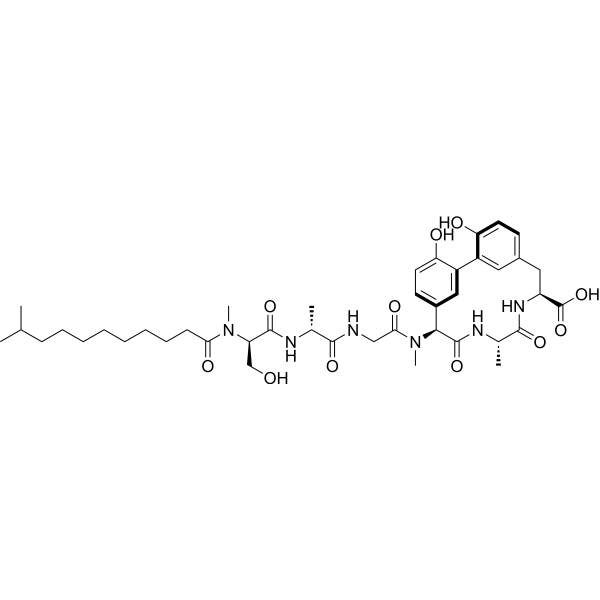 0 ImagesCat. No.: HY-P3884CAS No.: 459844-20-3Arylomycin A2, an antibiotic (Antibiotic), is a lipopeptide type I signal peptidase (SPase I) inhibitor. Arylomycin A2 has antibacterial effects.
-
Amphomycin
 0 ImagesAmphomycin is a lipopeptide antibiotic that inhibits peptidoglycan synthesis and blocks cell wall development. Amphomycin exhibits potent antibacterial activities against methicillin-resistant S. aureus (MRSA), vancomycin-resistant enterococci (VRE), penicillin-gentamicin-erythromycin-resistant S. pneumonia, and linezolid-quinupristin-dalfopristin-resistant enterococci.
-
Globomycin
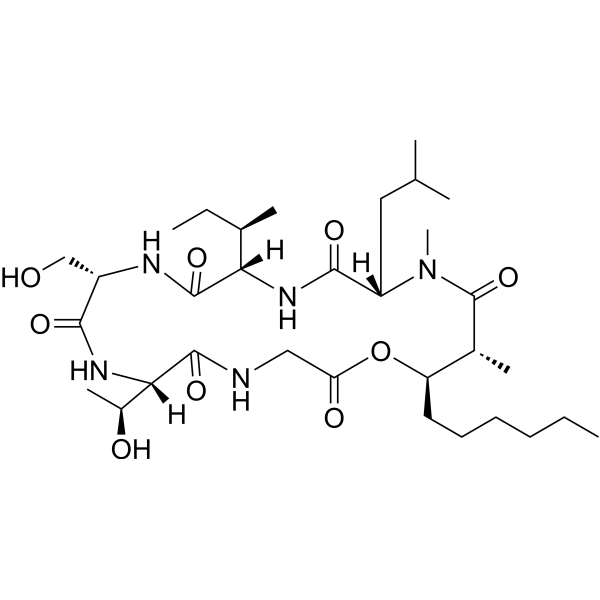 0 ImagesCat. No.: HY-P2233CAS No.: 67076-74-8Globomycin is a lipopeptide antibiotic and a signal peptidase II (LspA) inhibitor. Globomycin inhibits processing of the prolipoprotein by binding irreversibly to the peptidase. Globomycin has toxic for the mollicute Spiroplasma melliferum with a MIC in the range 6.25-12.5 μM.
-
Muraminomicin F
 0 ImagesCat. No.: HY-N21881CAS No.: 695226-94-9Muraminomicin F is a lipopeptide nucleoside antibiotic and MraY inhibitor (IC50 = 8.9 ng/mL). Muraminomicin F exerts antibacterial effects by inhibiting MraY, an essential key enzyme in bacterial cell wall peptidoglycan biosynthesis. Muraminomicin F can be used in research on bacterial infections.
-
Malacidin B
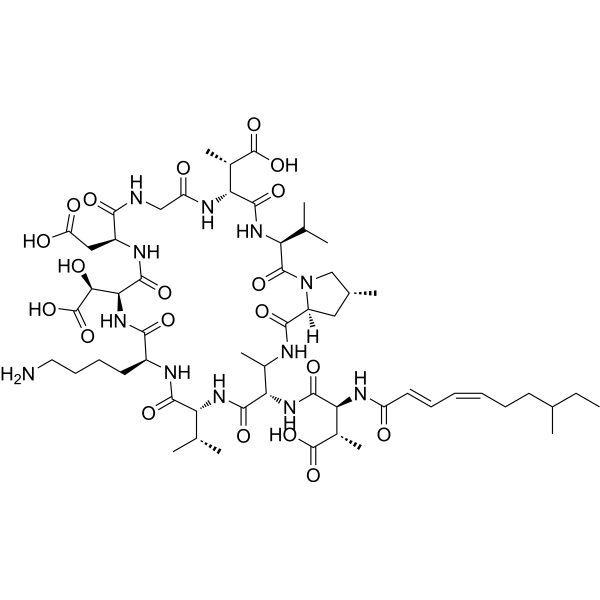 0 ImagesCat. No.: HY-N10585CAS No.: 2254483-96-8Malacidin B is a macrocyclic lipopeptide antibiotic that shows antibacterial activity in a calcium-dependent manner.



