



Cholesterol (from plant)
Based on 14 publication(s) in Google Scholar
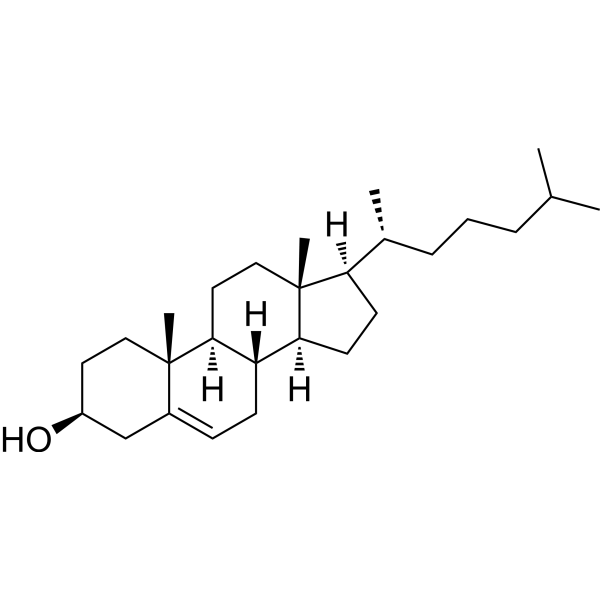
Cholesterol (from plant) is the major sterol in mammals. It is making up 20-25% of structural component of the plasma membrane. Plasma membranes are highly permeable to water but relatively impermeable to ions and protons. Cholesterol (from plant) plays an important role in determining the fluidity and permeability characteristics of the membrane as well as the function of both the transporters and signaling proteins. Cholesterol (from plant) is also an endogenous estrogen-related receptor α (ERRα) agonist.
Nos produits utilisent uniquement pour la recherche. Nous ne vendons pas aux patients.
- Pureté : 99.76%
- CAS No.: 57-88-5
- Formule: C27H46O
- Masse moléculaire:386.65
-
Stockage:Powder -20°C, 3 years ; In solvent -80°C, 6 months , -20°C, 1 month


To place orders, for customer services and technical support, please contact: MedChemExpress USA
Tel: 609-228-6898 E-mail: [email protected] [email protected]


-
 Activité biologique
-
Chemical Information
-
Solvant et solubilité
- Protocole
- Pureté et documentation
- Références
-
 Help & FAQs


-
HY-N0322
Cholesterol (from animal)ERRα Agonist -
HY-N0322R
Cholesterol (Standard) -

HY-N0322E
Cholesterol (synthetic)ERRα Agonist -

HY-N0322GL
Cholesterol (GMP Like, synthetic)GMP Like Cholesterol -
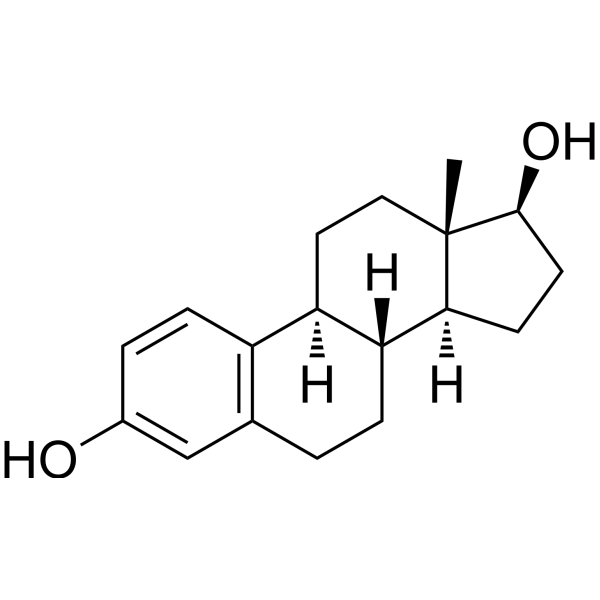
HY-B0141
EstradiolHuman Endogenous Metabolite -
HY-N0437
ProgesteroneEndogenous Metabolite -
HY-B0141R
Estradiol (Standard) -
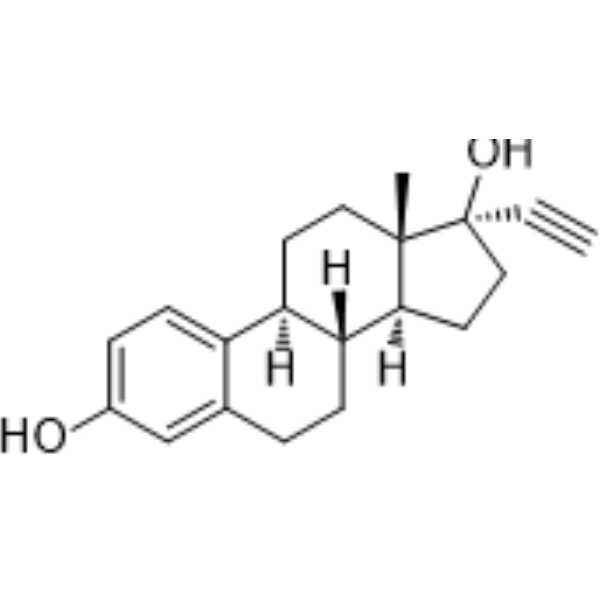
HY-B0216
EthinylestradiolEndogenous Metabolite -
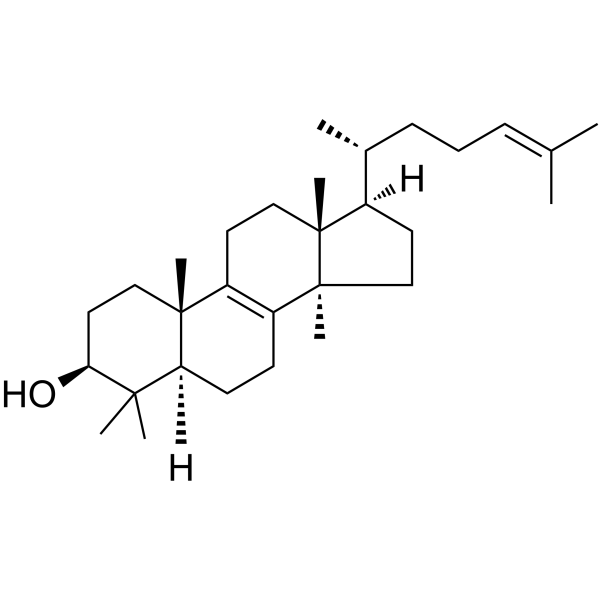
HY-W020033
Lanosterol -
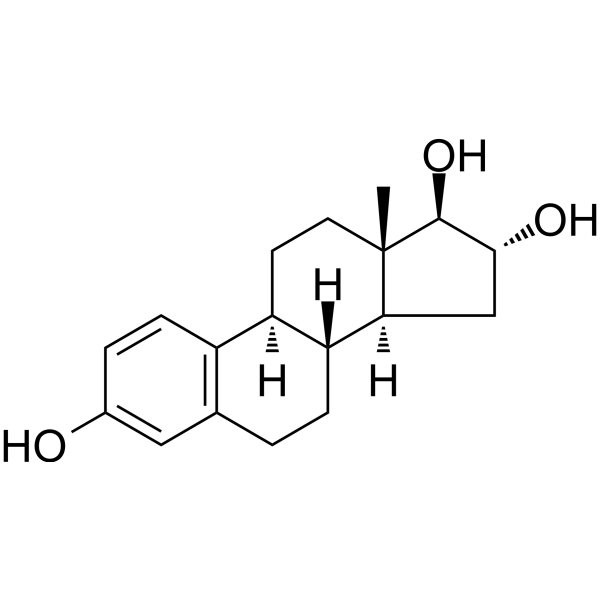
HY-B0412
EstriolEstrogen -
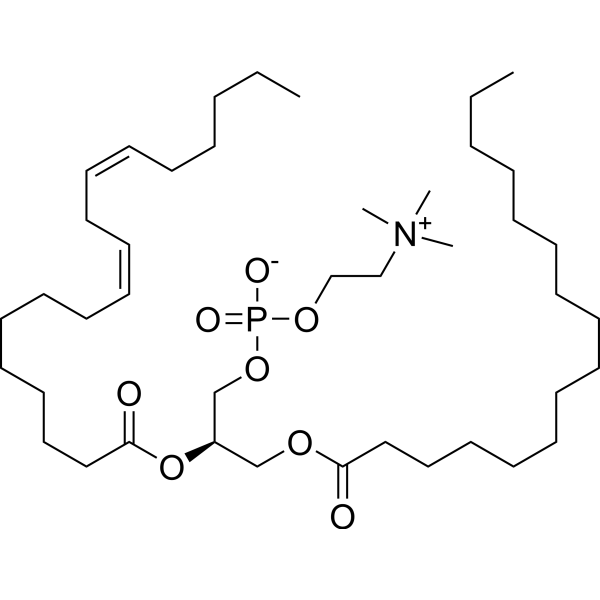
HY-B2235
LecithinEndogenous Metabolite -
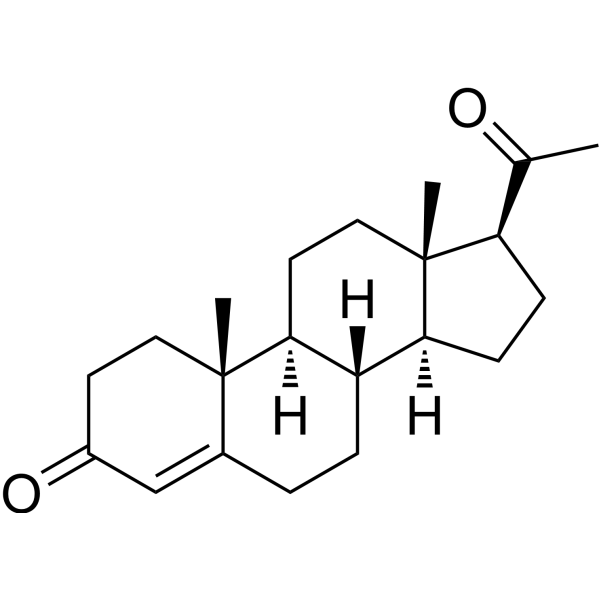
HY-N0437R
Progesterone (Standard)
Publications Citing Use of MedChemExpress (MCE) Cholesterol (from plant)
More- Immunity. 2026 May 13:S1074-7613(26)00171-8. [Abstract]
- Immunity. 2024 May 14;57(5):1087-1104.e7. [Abstract]
- Cancer Commun (Lond). 2025 Aug;45(8):1010-1037. [Abstract]
- Nat Biomed Eng. 2025 Feb;9(2):215-233. [Abstract]
- Nat Aging. 2025 Aug 26. [Abstract]
- Exp Mol Med. 2025 May;57(5):1089-1105. [Abstract]
- Redox Biol. 2025 Jul:84:103693. [Abstract]
- Adv Sci (Weinh). 2026 Jun 19:e76165. [Abstract]
- Adv Sci (Weinh). 2023 Sep;10(27):e2206878. [Abstract]
- Cell Rep Med. 2026 Feb 17;7(2):102591. [Abstract]
- Cell Biosci. 2025 Jul 4;15(1):95. [Abstract]
- Commun Biol. 2024 Nov 9;7(1):1476. [Abstract]
- Sci Rep. 2025 May 26;15(1):18364. [Abstract]
- SSRN. 2026 Jul 16.
 Customer Validation & Images

-
Cell Proliferation/Viability Assay
-
IP
Voir tous les produits spécifiques à Isoform Endogenous Metabolite
More

Activité biologique
Description
Cellular Effect
|
Cell Line

|
Type | Value | Description | References |
|---|---|---|---|---|
| A549 | IC50 |
20 μM
Compound: b1
|
Antiproliferative activity against human A549 cells assessed as reduction in cell viability incubated for 48 hrs by MTS assay
Antiproliferative activity against human A549 cells assessed as reduction in cell viability incubated for 48 hrs by MTS assay
|
[PMID: 30822712] |
In Vitro
GT1-7 hypothalamic cells subjected to Cholesterol depletion in vitro produced 20-31% reductions in cellular Cholesterol content. All Cholesterol-depleted neuron-derived cells, exhibit decreased phosphorylation/activation of IRS-1 and AKT following stimulation by insulin, insulin-like growth factor-1, or the neurotrophins (NGF and BDNF). Reduction in cellular Cholesterol also results in increased basal autophagy and impairment of induction of autophagy by glucose deprivation[1].
MedChemExpress (MCE) has not independently confirmed the accuracy of these methods. They are for reference only.
In Vivo
Administration: 2% cholesterol; diet • 8 weeks
(2) Wistar rats were always chosen for hyperlipidemia studies since this species shows a moderate increase in serum cholesterol and triglyceride level due to a high-cholesterol diet and no substantial atherosclerosis develops; therefore, the direct myocardial effect of hyperlipidemia, independent from atherosclerosis, can be studied in this model.
Administration: 0.3% cholesterol and 3% soybean oil; diet • 16 weeks
(2) As the absorption of dietary cholesterol requires fat, you must add oil into the diet. Otherwise, rabbits will use their internal fat, which makes them lean or sick. In addition, using soybean oil, which consists of unsaturated fatty acids, can prevent the levels of plasma cholesterol from becoming too high. Other vegetable oils, such as peanut oil or corn oil, can be used because they are all unsaturated fatty acids. Animal fat (saturated fatty acids) like tallow and lard is not recommended.
(3) 0.3-0.5% cholesterol diet is recommended for most experiments. Rabbits cannot tolerate a 1-2% cholesterol diet for a month as they develop severe liver dysfunction.
(4) Adult rabbits at 4 months or older can consume approximately ~150 g a day. You can either feed ab libitum or restricted (100-150 g/day/adult rabbit).
(5) Plasma lipids should be measured weekly, especially for the first 4 weeks, because you need to determine whether plasma levels of cholesterol are elevated in each animal. Non-responder rabbits can be excluded from the experiments if their plasma cholesterol levels do not increase after cholesterol diet feeding.
(6) Plasma lipoproteins can be measured at 8 and 16 weeks when the plasma levels of cholesterol are stable.
(7) The age of rabbits should be considered because young rabbits are more susceptible to aortic atherosclerosis than old rabbits even though they have similar plasma cholesterol levels. 4-6-month-old rabbits are usually used for cholesterol feeding experiments.
(8) Male and female rabbits are different in terms of response to a cholesterol diet and atherosclerosis. In our experience, female rabbits develop higher hypercholesterolemia and greater aortic lesions than their counterpart male rabbits. In general, male rabbits are recommended for experiments because estrogen may influence the results.
MedChemExpress (MCE) has not independently confirmed the accuracy of these methods. They are for reference only.


Chemical Information
-
CAS No. 57-88-5
-
Appearance Solid
-
Masse moléculaire 386.65
-
Formule C27H46O
-
Color White to off-white
-
SMILES
O[C@H](C1)CC[C@@]2(C)C1=CC[C@]3([H])[C@]2([H])CC[C@@]4(C)[C@@]3([H])CC[C@]4([H])[C@@H](CCCC(C)C)C
-
Structure Classification
-
Initial Source
-
Livraison
Room temperature in continental US; may vary elsewhere.
-
Stockage
Powder -20°C 3 years In solvent -80°C 6 months -20°C 1 month


Publications (14)
-
Journal Impact Factor
-
Most Recent
-
Immunity
Modulation of the mevalonate pathway by TCR engagement regulates T follicular helper cell generation in homeostasis and autoimmunity. [Abstract]2026 May 13:S1074-7613(26)00171-8. PMID: 42134327 -
Immunity
25-Hydroxycholesterol regulates lysosome AMP kinase activation and metabolic reprogramming to educate immunosuppressive macrophages. [Abstract]2024 May 14;57(5):1087-1104.e7. PMID: 38640930 -
Cancer Commun (Lond)
Lipid metabolism reprograming by SREBP1-PCSK9 targeting sensitizes pancreatic cancer to immunochemotherapy. [Abstract]2025 Aug;45(8):1010-1037. PMID: 40439109 -
Nat Biomed Eng
Potent prophylactic cancer vaccines harnessing surface antigens shared by tumour cells and induced pluripotent stem cells. [Abstract]2025 Feb;9(2):215-233. PMID: 39730914 -
Nat Aging
2025 Aug 26. PMID: 40858817 -
Exp Mol Med
Cholesterol biosynthesis induced by radiotherapy inhibits cGAS-STING activation and contributes to colorectal cancer treatment resistance. [Abstract]2025 May;57(5):1089-1105. PMID: 40355720 -
Redox Biol
Dysregulated lipids homeostasis disrupts CHAC1-mediated ferroptosis driving fibroblast growth factor receptor tyrosine kinase inhibitor AZD4547 resistance in gastric cancer. [Abstract]2025 Jul:84:103693. PMID: 40460553 -
Adv Sci (Weinh)
Targeting the HSPA8-CMA-ATP6V1A Axis Triggers Lysosomal Hyperacidification and Catastrophic Vacuolation in Prostate Cancer. [Abstract]2026 Jun 19:e76165. PMID: 42318659 -
Adv Sci (Weinh)
Targeting Squalene Epoxidase Confers Metabolic Vulnerability and Overcomes Chemoresistance in HNSCC. [Abstract]2023 Sep;10(27):e2206878. PMID: 37490552
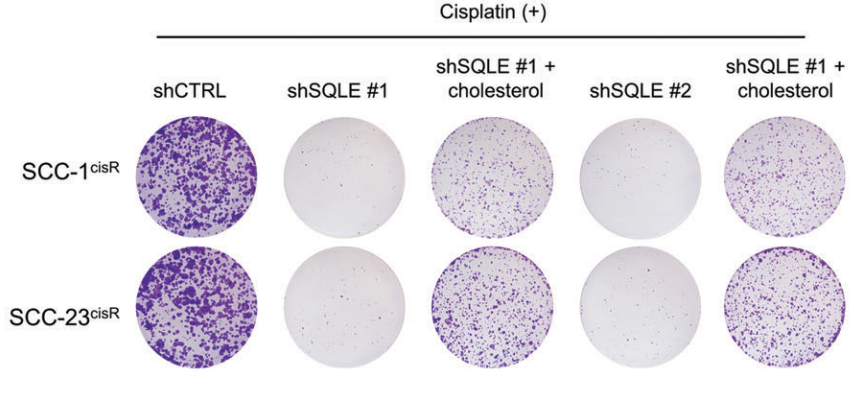
Cholesterol (from plant) purchased from MedChemExpress. Usage Cited in: Adv Sci (Weinh). 2023 Sep;10(27):e2206878. [Abstract]
Effects of cholesterol repletion (20 μg/mL; 4 days) on colony formation potential in SCC-1cisR and SCC-23cisR cells with SQLE depletion in the presence of cisplatin (n = 4) were assessed.
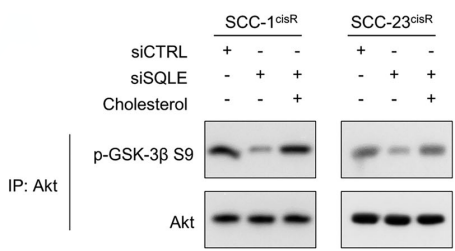
Cholesterol (from plant) purchased from MedChemExpress. Usage Cited in: Adv Sci (Weinh). 2023 Sep;10(27):e2206878. [Abstract]
SCC-1cisR and SCC-23cisR cells transfected with siCTRL or siSQLE were incubated in medium with or without 20 μg/mL Cholesterol for 24 h.
-
Cell Rep Med
Synergistic mechanical and therapeutic modulation of engineered tumor cell-derived microparticles for enhanced cancer treatment. [Abstract]2026 Feb 17;7(2):102591. PMID: 41666924 -
Cell Biosci
2025 Jul 4;15(1):95. PMID: 40615893 -
Commun Biol
Mevalonate pathway inhibition reduces bladder cancer metastasis by modulating RhoB protein stability and integrin β1 localization. [Abstract]2024 Nov 9;7(1):1476. PMID: 39521858 -
Sci Rep
Serum starvation-induced cholesterol reduction increases melanoma cell susceptibility to cytotoxic T lymphocyte killing. [Abstract]2025 May 26;15(1):18364. PMID: 40419522 -


Solvant et solubilité
In Vitro:
Ethanol : 4 mg/mL (10.35 mM; ultrasonic and warming and heat to 60°C)
Please refer to the solubility information to select the appropriate solvent. Once prepared, please aliquot and store the solution to prevent product inactivation from repeated freeze-thaw cycles.
Storage method and period of stock solution: -80°C, 6 months; -20°C, 1 month. When stored at -80°C, please use it within 6 months. When stored at -20°C, please use it within 1 month.
Please refer to the solubility information to select the appropriate solvent. Once prepared, please aliquot and store the solution to prevent product inactivation from repeated freeze-thaw cycles.
Storage method and period of stock solution: -80°C, 6 months; -20°C, 1 month. When stored at -80°C, please use it within 6 months. When stored at -20°C, please use it within 1 month.
Concentration (start) × Volume (start) = Concentration (final) × Volume (final)


Pureté et documentation
-
Fiche technique (293 KB)
-
SDS (252 KB)
- English - EN (252 KB)
- Français - FR (252 KB)
- Deutsch - DE (252 KB)
- Norwegian - NO (252 KB)
- Español - ES (252 KB)
- Swedish - SV (252 KB)
- Italian - IT (252 KB)
- Korean - KR (252 KB)
- Portuguese - PT (252 KB)
-
Instruction de manipulation (2659 KB)
Références
[1]. Casaburi I, et al. Cholesterol as an Endogenous ERRα Agonist: A New Perspective to Cancer Treatment. Front Endocrinol (Lausanne). 2018 Sep 11;9:525. [Content Brief]
[2]. Dietschy JM, et al. Thematic review series: brain Lipids. Cholesterol metabolism in the central nervous system during early development and in the mature animal. J Lipid Res. 2004 Aug;45(8):1375-97. [Content Brief]
[3]. Fukui K, et al. Effect of Cholesterol Reduction on Receptor Signaling in Neurons. J Biol Chem. 2015 Sep 14. [Content Brief]
[4]. Puskás LG, et al. Cholesterol diet-induced hyperlipidemia influences gene expression pattern of rat hearts: a DNA microarray study. FEBS Lett. 2004 Mar 26;562(1-3):99-104. [Content Brief]
[5]. Onody A, et al. Hyperlipidemia induced by a cholesterol-rich diet leads to enhanced peroxynitrite formation in rat hearts. Cardiovasc Res. 2003 Jun 1;58(3):663-70. [Content Brief]
[6]. Baumer Y, et al. Hyperlipidemia-induced cholesterol crystal production by endothelial cells promotes atherogenesis. Nat Commun. 2017 Oct 24;8(1):1129. [Content Brief]
[7]. Finking G, et al. Nikolaj Nikolajewitsch Anitschkow (1885-1964) established the cholesterol-fed rabbit as a model for atherosclerosis research. Atherosclerosis. 1997 Nov;135(1):1-7. [Content Brief]
[8]. Fan J, et al. Use of Rabbit Models to Study Atherosclerosis. Methods Mol Biol. 2022;2419:413-431. [Content Brief]


Complete Stock Solution Preparation Table
Please refer to the solubility information to select the appropriate solvent. Once prepared, please aliquot and store the solution to prevent product inactivation from repeated freeze-thaw cycles.
Storage method and period of stock solution: -80°C, 6 months; -20°C, 1 month. When stored at -80°C, please use it within 6 months. When stored at -20°C, please use it within 1 month.
| Optional Solvent | Concentration Solvent Mass | 1 mg | 5 mg | 10 mg | 25 mg |
|---|---|---|---|---|---|
| Ethanol | 1 mM | 2.5863 mL | 12.9316 mL | 25.8632 mL | 64.6580 mL |
| 5 mM | 0.5173 mL | 2.5863 mL | 5.1726 mL | 12.9316 mL | |
| 10 mM | 0.2586 mL | 1.2932 mL | 2.5863 mL | 6.4658 mL |


Cholesterol (from plant) Related Classifications
HY-N0322D Related Classifications
 Powered by Bioz