



Hyperlipidemia
-
Hyperlipidemia (17)

- 1
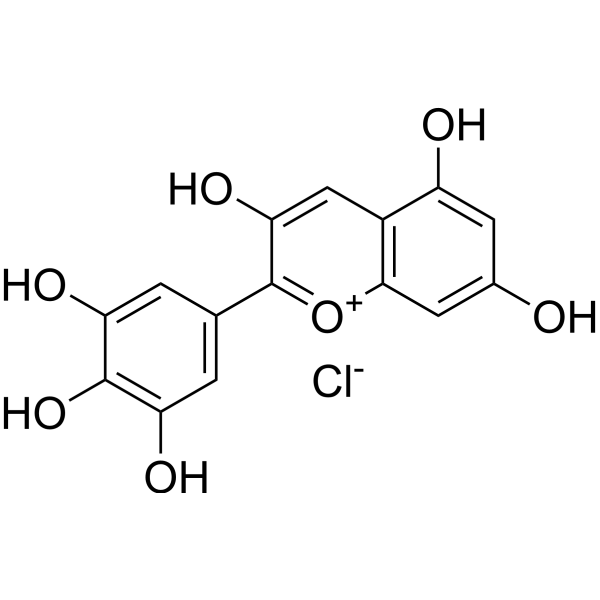
- 分子式: C15H11ClO7
- 分子量: 338.70
Delphinidin chloride is an anthocyanin isolated from berries and red wine. Delphinidin chloride exhibits endothelium-dependent vasodilation and anticancer activity. Delphinidin chloride also modulates JAK/STAT3 and MAPK signaling, thereby inducing apoptosis in HCT116 cells. Delphinidin chloride is also a potent inhibitor of EGFR (IC50: 1.3 μM), shutting down downstream signaling cascades.
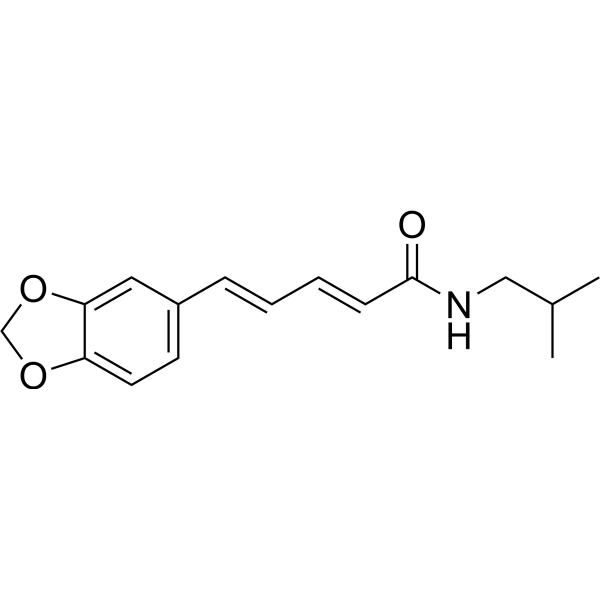
- 分子式: C16H19NO3
- 分子量: 273.33
Piperlonguminine is a cytochrome P450 (CYP450) inhibitor. Piperlonguminine also inhibits the growth of epimastigotes and intracellular amastigotes of Trypanosoma cruzi, with IC50 values of 53.8 and 33.9 μM, respectively. Piperlonguminine regulates HMGB1/TLR4-NF-κB/MAPK-related inflammatory responses, endothelial protein C receptor (EPCR) shedding, melanogenesis, glycolipid metabolism, ischemic brain injury and tumor growth. Piperlonguminine can be used in research on hyperlipidemia, sepsis, Chagas disease, ischemic stroke, sarcoma and severe acute pancreatitis-associated lung injury.
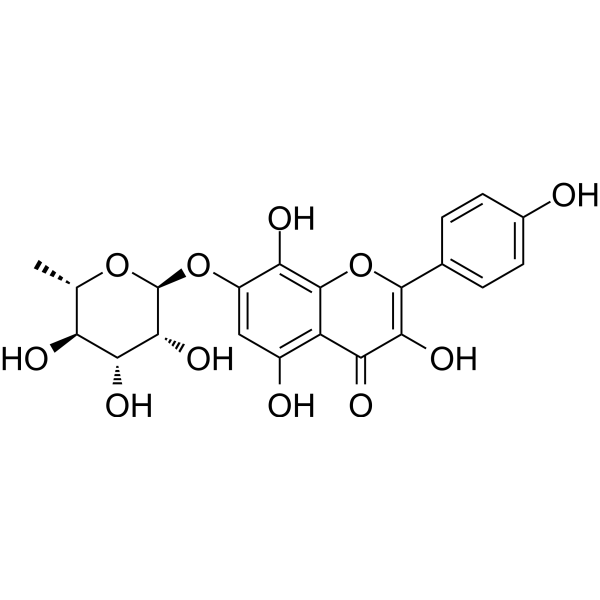
- 分子式: C21H20O11
- 分子量: 448.38
Rhodionin is an orally active, multifunctional antivirulence and cytoprotective agent that targets and inhibits Lipase, sortase A (SrtA), CYP2D6 (IC50=0.761 μM), AChE (IC50=2.43-57.5 μM), and DPPH free radicals (IC50=19.49 μM). Rhodionin is isolable from the roots of Rhodiola crenulata. Rhodionin reduces postprandial serum triglyceride levels in mice by inhibiting lipase activity. Rhodionin also binds directly to SrtA to inhibit its transpeptidase activity, thereby reducing the fibrinogen adhesion and surface protein A levels of MRSA, effectively inhibiting biofilm formation and protecting against MRSA-induced cell damage. Rhodionin improves the survival rate of infected mice without affecting MRSA growth, and finds wide application in studies related to hyperlipidemia, exogenous obesity, and pneumonia induced by methicillin-resistant Staphylococcus aureus (MRSA).

- 分子量: 148.42 kDa
Recaticimab (SHR-1209) is a humanized IgG1 mAb that selectively targets PCSK9. Recaticimab reduces low-density lipoprotein cholesterol (LDL-C), non-high-density lipoprotein cholesterol (non-HDL-C), apolipoprotein B (ApoB), triglyceride (TG), and lipoprotein(a) levels. Recaticimab can be used for hyperlipidemia research.
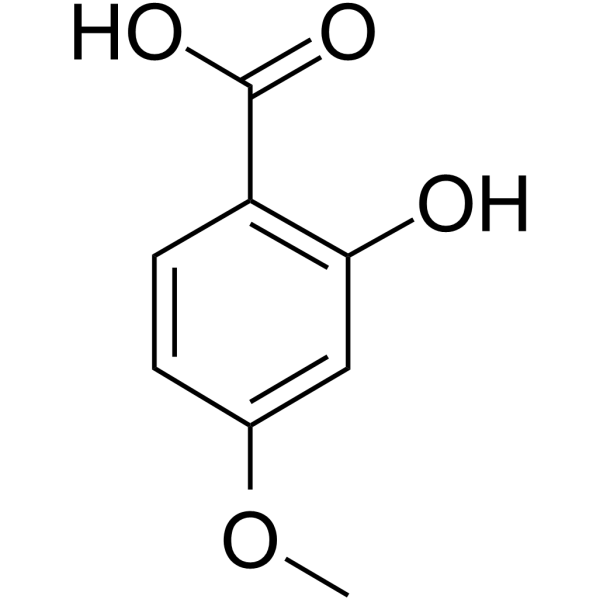
- 分子式: C8H8O4
- 分子量: 168.15
2-Hydroxy-4-methoxybenzoic acid is an orally active inhibitor of MCT-1 and MCT-4, as well as a plant biomarker. 2-Hydroxy-4-methoxybenzoic acid can be isolated from roots. 2-Hydroxy-4-methoxybenzoic acid induces Apoptosis and loss of mitochondrial membrane potential. 2-Hydroxy-4-methoxybenzoic acid exhibits anticancer activity against breast cancer. 2-Hydroxy-4-methoxybenzoic acid normalizes lactic acid levels. 2-Hydroxy-4-methoxybenzoic acid neutralizes viper venom and attenuates its lethal, hemorrhagic, coagulant and anticoagulant activities in male albino mice. 2-Hydroxy-4-methoxybenzoic acid possesses antihyperlipidemic, antidiabetic and hepatoprotective activities.

- 分子式: C16H19NO3
- 分子量: 273.33
Piperlonguminine (Standard) is the analytical standard of Piperlonguminine (HY-126562). This product is intended for research and analytical applications. Piperlonguminine is a cytochrome P450 (CYP450) inhibitor. Piperlonguminine also inhibits the growth of epimastigotes and intracellular amastigotes of Trypanosoma cruzi, with IC50 values of 53.8 and 33.9 μM, respectively. Piperlonguminine regulates HMGB1/TLR4-NF-κB/MAPK-related inflammatory responses, endothelial protein C receptor (EPCR) shedding, melanogenesis, glycolipid metabolism, ischemic brain injury and tumor growth. Piperlonguminine can be used in research on hyperlipidemia, sepsis, Chagas disease, ischemic stroke, sarcoma and severe acute pancreatitis-associated lung injury.

- 分子式: C14H30O2S2
- 分子量: 294.52
Tiadenol is an orally effective lipid-lowering compound and peroxisome proliferator. Tiadenol promotes peroxisome-associated fatty acid metabolism, and its induction of the activities of enzymes such as palmitoyl-CoA hydrolase, carnitine acetyl-transferase and catalase is mainly associated with de novo protein synthesis. The triglyceride-lowering effect of Tiadenol is not accompanied by increased activities of lipoprotein lipase (LPL) and hepatic lipase (HL), and it reduces VLDL Apo E. Tiadenol can be used in studies related to lipid metabolism, peroxisome proliferation and hyperlipoproteinemia.

- 分子式: C16H19N3O3
- 分子量: 301.34
E28362 is an orally active lipid-lowering agent and a selective PCSK9 antagonist. E28362 blocks the interaction between PCSK9 and LDLR, and induces PCSK9 degradation via the ubiquitin-proteasome pathway. E28362 significantly increases the levels of cell surface and total LDLR proteins, enhances low-density lipoprotein uptake, thereby effectively reducing plasma lipids, hepatic cholesterol and triglyceride levels. E28362 shows no obvious cytotoxicity at high concentrations, and significantly attenuates atherosclerotic lesions in animal models. E28362 is an important molecule in research of hyperlipidemia and atherosclerosis.

- 分子式: C27H25ClN2O6S2
- 分子量: 573.08
F44-S101 is an orally active, potent, and selective gut-restricted FXR antagonist with an IC50 of 0.48 μM and lipid-lowering activity. F44-S101 selectively antagonizes intestinal FXR, feedback-activates hepatic FXR, promotes cholesterol metabolism and reduces lipid accumulation. F44-S101 decreases total cholesterol, triglyceride and low-density lipoprotein cholesterol levels. F44-S101 can be used in studies related to hyperlipidemia.

- 分子式: C53H77N5O9S
- 分子量: 960.27
PROTAC HMGCR Degrader-1 is an orally active HMGCR PROTAC degrader with IC50 of 1.32 μM. PROTAC HMGCR Degrader-1 is a lactone prodrug of PROTAC HMGCR Degrader-2 (HY-181134). PROTAC HMGCR Degrader-1 achieves high plasma exposure of the active ingredient leading to robust HMGCR degradation and demonstrating promising cholesterol-lowering efficacy in vivo. PROTAC HMGCR Degrader-1 can be used for hyperlipidemia research.

- 分子式: C14H18O3
- 分子量: 234.29
(2R,3S)-Pterosin C is a sesquiterpene compound that inhibits triglyceride formation. (2R,3S)-Pterosin C significantly reduces triglyceride levels in 3T3-L1 cells and is used in hyperlipidemia research.

- 分子式: C6H7N5O
- 分子量: 165.15
Pyrazinoylguanidine (PZG) is an analogue of the potassium sparing diuretic, Amiloride (HY-B0285). Pyrazinoylguanidine can lower the systolic and diastolic blood pressure of patients with primary hypertension, has a certain effect on reducing heart rate, and does not affect the concentrations of electrolytes such as sodium, potassium, and chloride in the blood serum. Pyrazinoylguanidine can reduce the hyperglycemia and hyperinsulinemia in type 2 diabetes, reduce the levels of triglycerides, cholesterol, and free fatty acids, and reverse the hyperglycemia and hyperlipidemia induced by thiazide diuretics, such as Hydrochlorothiazide (HY-B0252). Pyrazinoylguanidine ican nhibit the reabsorption of urea by the renal tubules, thereby increasing the clearance rate and excretion volume of urea, reducing the serum urea concentration, and minimizing its toxic accumulation.

- 分子式: C25H40CaO6
- 分子量: 476.66
Tenivastatin calcium is a HMG-CoA reductase inhibitor. Tenivastatin calcium can reduce blood lipid level can be used for the research of hyperlipidemia.

- 分子式: C14H17ClN4
- 分子量: 276.76
Lodinixil is a cholesterol inhibitor. Lodinixil can be used in research on endocrine and metabolic diseases such as hyperlipidemia.

- 分子式: C27H26FNO3
- 分子量: 431.50
Glenvastatin (HR 780) is an orally active 3-hydroxy-3-methylglutaryl coenzyme A (HMG-CoA) reductase inhibitor. Glenvastatin can reduces plasma total cholesterol and phospholipid levels and liver cholesterol contents. Glenvastatin does not increase the contents of cholesterol and total bile acid in the gallbladder bile. Glenvastatin can be used for the research of hyperlipemia

- 分子式: C23H21F4NO3S2
- 分子量: 499.54
Sodelglitazar (GW 677954) is a pan-PPAR agonist with potential applications in the treatment of hyperlipidemia and type 2 diabetes.
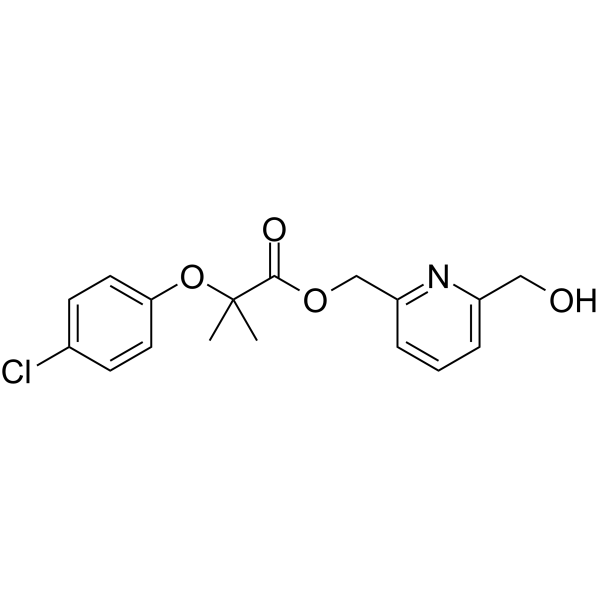
- 分子式: C17H18ClNO4
- 分子量: 335.78
Pirifibrate (EL-466) is a lipid-lowering compound. Pirifibrate slightly increases α-lipoprotein levels. Pirifibrate can be used for the research of type IIa, IIb and IV hyperlipoproteinemia.
- 1



