



Delphinidin chloride
Based on 3 publication(s) in Google Scholar
Delphinidin chloride is an anthocyanin isolated from berries and red wine. Delphinidin chloride exhibits endothelium-dependent vasodilation and anticancer activity. Delphinidin chloride also modulates JAK/STAT3 and MAPK signaling, thereby inducing apoptosis in HCT116 cells. Delphinidin chloride is also a potent inhibitor of EGFR (IC50: 1.3 μM), shutting down downstream signaling cascades.
For research use only. We do not sell to patients.
- Purity : 98.0%
- CAS No.: 528-53-0
- Formula: C15H11ClO7
- Molecular Weight:338.70
-
Storage:
4°C, sealed storage, away from moisture and light
* The compound is unstable in solutions, freshly prepared is recommended.

To place orders, for customer services and technical support, please contact: MedChemExpress USA
Tel: 609-228-6898 E-mail: [email protected] [email protected]


-
 Biological Activity
-
Chemical Information
-
Solvent & Solubility
- Protocols
- Purity & Documentation
- References
-
 Help & FAQs


-
HY-N0499
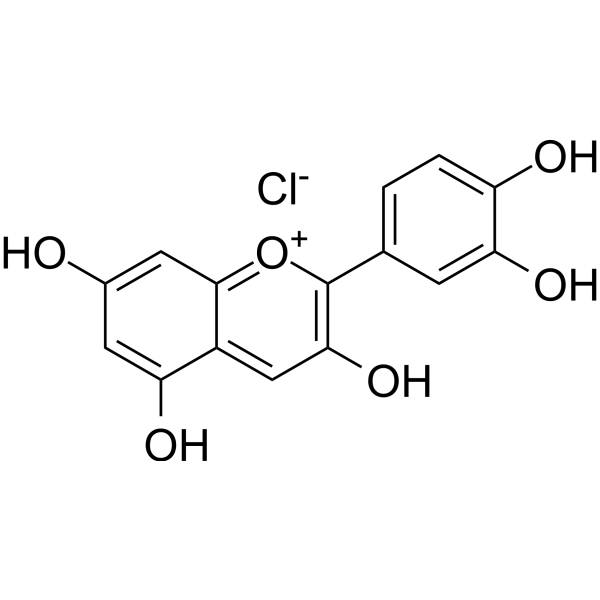
Cyanidin ChlorideAntioxidant -
HY-N0162
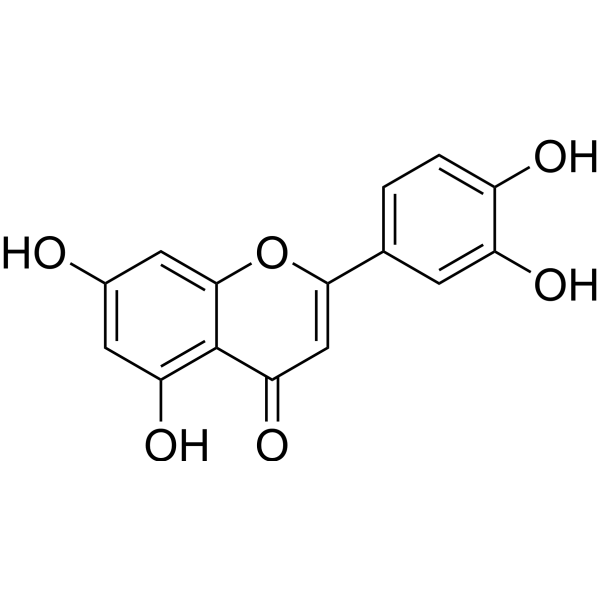
LuteolinNrf2 Inhibitor -
HY-W011370
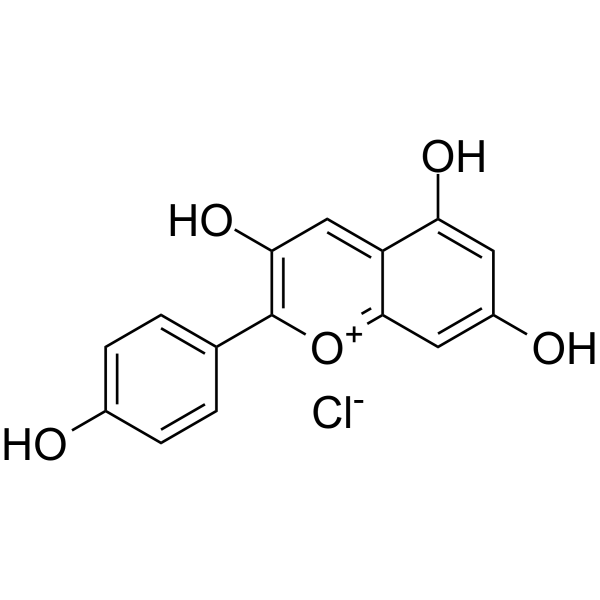
Pelargonidin chlorideAntioxidant Agent -
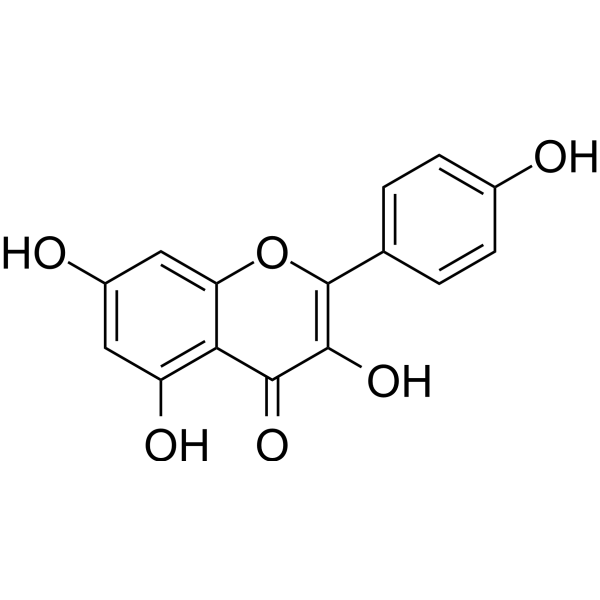
HY-14590
KaempferolEstrogen Receptor α Inhibitor -
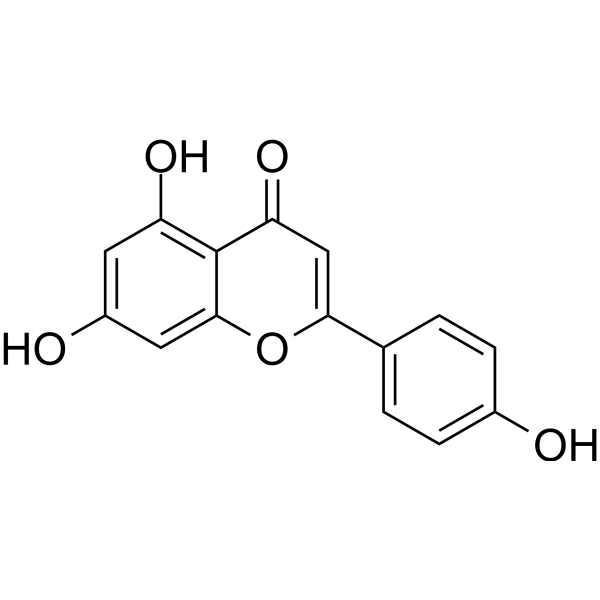
HY-N1201
ApigeninCytochrome P450 Inhibitor -
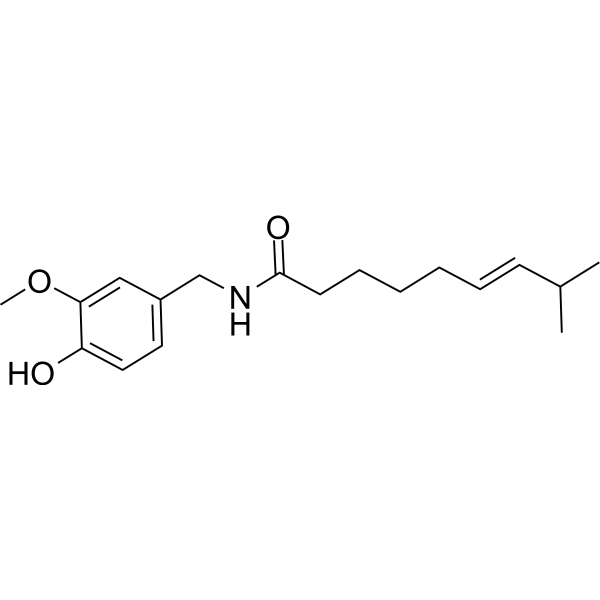
HY-10448
CapsaicinTRPV1 Agonist -
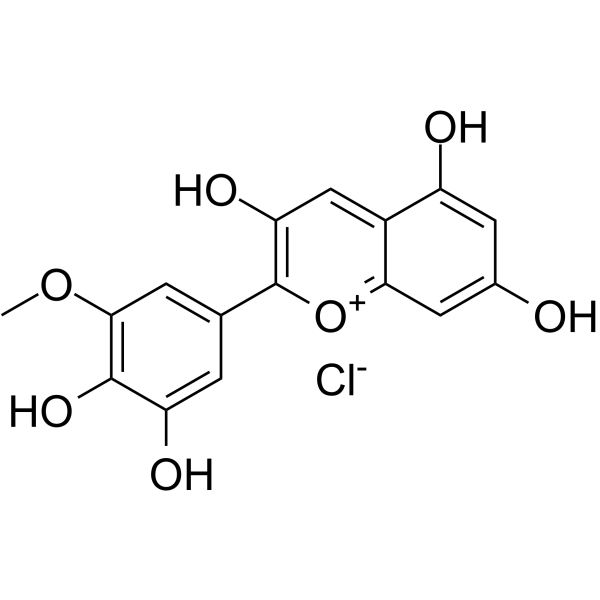
HY-126410
Petunidin chloridePEN Inhibitor -
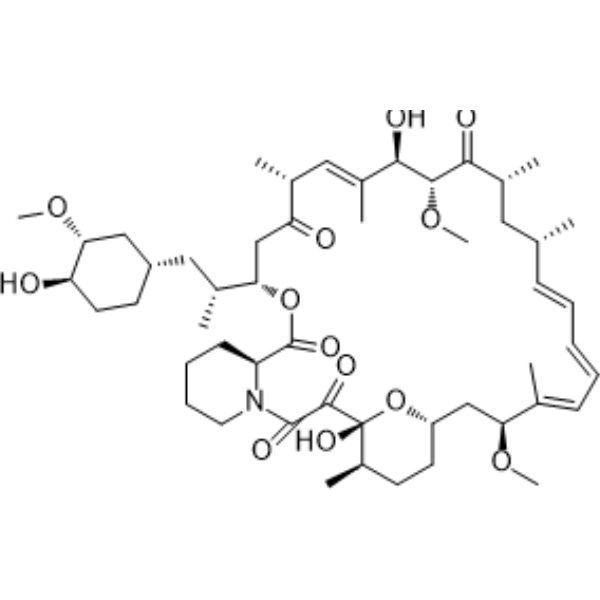
HY-10219
RapamycinmTOR Inhibitor -
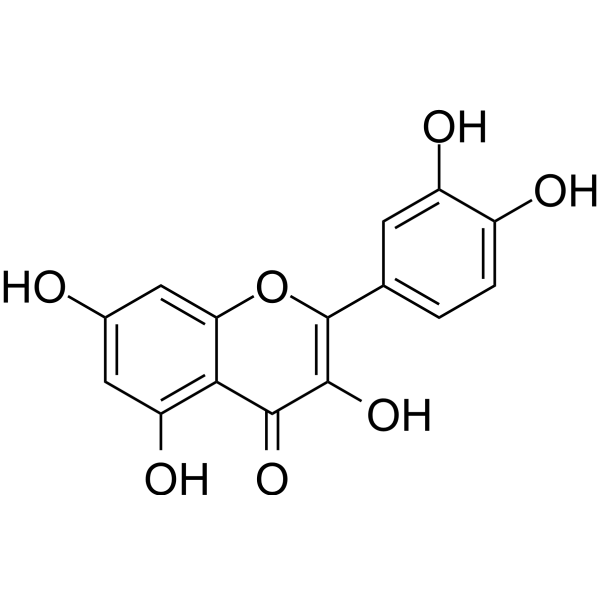
HY-18085
QuercetinFlavonoid Antioxidant -
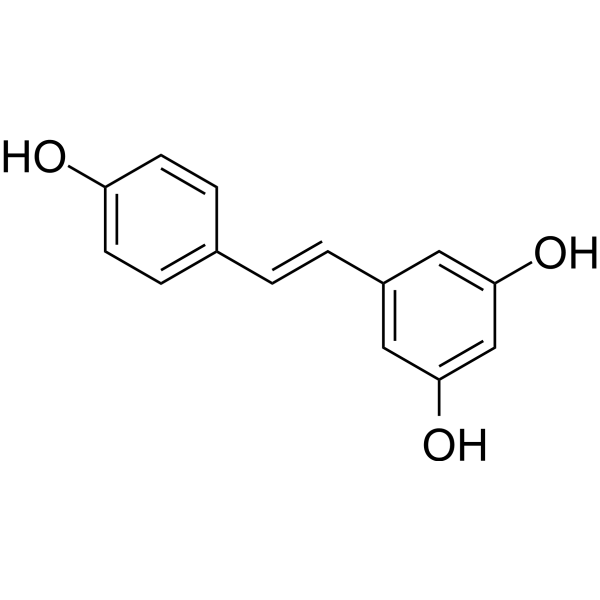
HY-16561
ResveratrolPolyphenolic Phytoalexin -
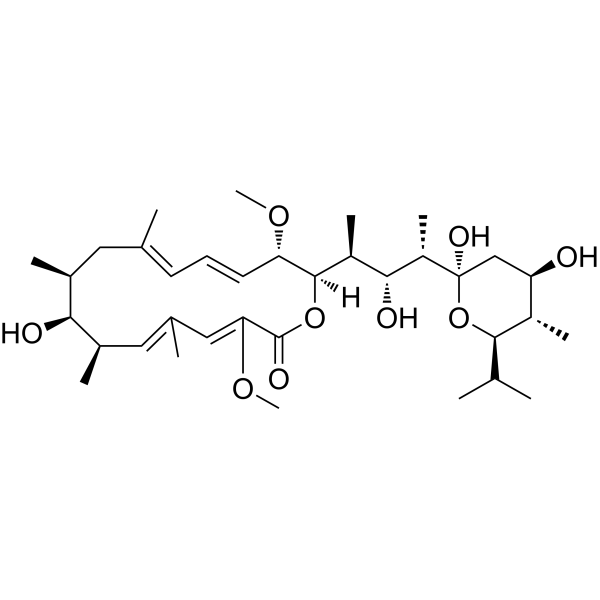
HY-100558
Bafilomycin A1V-ATPase Inhibitor -
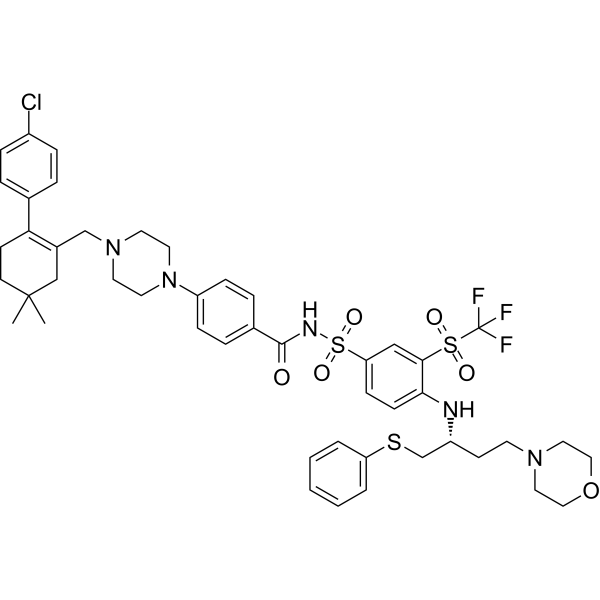
HY-10087
NavitoclaxBcl-2 Inhibitor
Publications Citing Use of MedChemExpress (MCE) Delphinidin chloride
More Customer Validation & Images

-
Cell Proliferation/Viability Assay

-
Flow Cytometry

All EGFR Isoforms
More

Biological Activity
Description
Cellular Effect
|
Cell Line

|
Type | Value | Description | References |
|---|---|---|---|---|
| HL-60 | IC50 |
40 μM
Compound: Delphinidin
|
Antiproliferative activity against human HL60 cells after 48 hrs by MTS assay
Antiproliferative activity against human HL60 cells after 48 hrs by MTS assay
|
[PMID: 20801663] |
| HL-60 | IC50 |
80 μM
Compound: Delphinidin
|
Antiproliferative activity against human HL60 cells after 24 hrs by MTS assay
Antiproliferative activity against human HL60 cells after 24 hrs by MTS assay
|
[PMID: 20801663] |
In Vitro
The IC50s of Delphinidin chloride against cancer cells LXFL529L and A431 are 33 μM and 18 μMs respectively[4].
MedChemExpress (MCE) has not independently confirmed the accuracy of these methods. They are for reference only. Further protocols information, click here.
Clinical Trial
| NCT Number | Sponsor | Condition | Start Date |
Phase
|
|---|---|---|---|---|
| NCT01329991 | Plexxikon| | 2011-05 | PHASE1 |


Chemical Information
-
CAS No. 528-53-0
-
Appearance Solid
-
Molecular Weight 338.70
-
Formula C15H11ClO7
-
Color Brown to black
-
SMILES
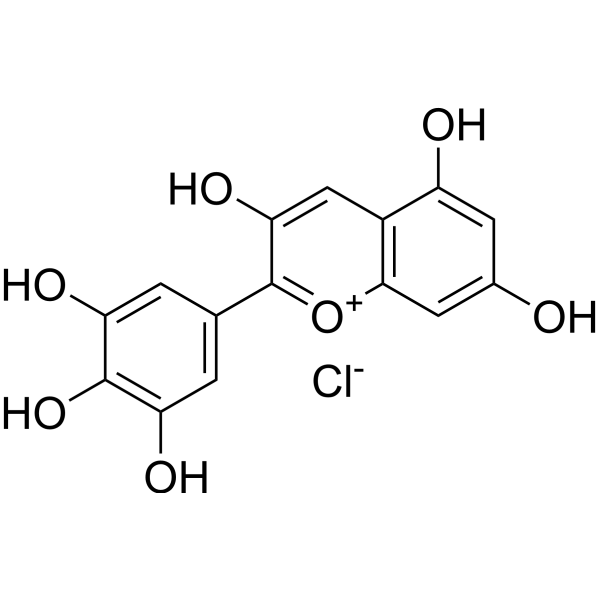
OC1=CC2=C(C=C(C(C3=CC(O)=C(O)C(O)=C3)=[O+]2)O)C(O)=C1.[Cl-]
-
Structure Classification
-
Initial Source
-
Shipping
Room temperature in continental US; may vary elsewhere.
-
Storage
4°C, sealed storage, away from moisture and light
* The compound is unstable in solutions, freshly prepared is recommended.


Publications (3)
-
Journal Impact Factor
-
Most Recent
-
Nat Prod Bioprospect
Exploring anti-SARS-CoV-2 natural products: dual-viral target inhibition by delphinidin and the anti-coronaviral efficacy of deapio platycodin D. [Abstract]2025 Jun 13;15(1):39. PMID: 40512442
Delphinidin chloride purchased from MedChemExpress. Usage Cited in: Nat Prod Bioprospect. 2025 Jun 13;15(1):39. [Abstract]
The cytotoxicity of Hesperidin, Sennoside A, Sennoside B, Luteolin 7-O-glucuronide, Gallic acid, Deapio platycodin D (DPD), Protocatechuic acid, Sennoside C, D-glucuronic acid, Delphinidin (5, 50 μM) and the positive compound niclosamide.
Delphinidin chloride purchased from MedChemExpress. Usage Cited in: Nat Prod Bioprospect. 2025 Jun 13;15(1):39. [Abstract]
Flow cytometry determined the effecy of 100 µM Delphinidin and 10 µM DPD disrupting the binding of soluble His-S-RBD to Vero-E6 cells.
-
-


Solvent & Solubility
In Vitro:
DMSO : 62.5 mg/mL (184.53 mM; Need ultrasonic; Hygroscopic DMSO has a significant impact on the solubility of product, please use newly opened DMSO)
Please refer to the solubility information to select the appropriate solvent. The compound is unstable in solutions, freshly prepared is recommended.
Please refer to the solubility information to select the appropriate solvent. The compound is unstable in solutions, freshly prepared is recommended.
Concentration (start) × Volume (start) = Concentration (final) × Volume (final)
In Vivo:
Select the appropriate dissolution method based on your experimental animal and administration route.
- For the following dissolution methods, please ensure to first prepare a clear stock solution using an In Vitro approach and then sequentially add co-solvents:
- To ensure reliable experimental results, the clarified stock solution can be appropriately stored based on storage conditions. As for the working solution for In Vivo experiments, it is recommended to prepare freshly and use it on the same day.
- The percentages shown for the solvents indicate their volumetric ratio in the final prepared solution. If precipitation or phase separation occurs during preparation, heat and/or sonication can be used to aid dissolution.
Add each solvent one by one: 10% DMSO 90% (20% SBE-β-CD in Saline)
Solubility: 2.5 mg/mL (7.38 mM); Suspended solution; Need ultrasonic
This protocol yields a suspended solution of 2.5 mg/mL. Suspended solution can be used for oral and intraperitoneal injection.
Taking 1 mL working solution as an example, add 100 μL DMSO stock solution (25.0 mg/mL) to 900 μL 20% SBE-β-CD in Saline, and mix evenly.
Preparation of 20% SBE-β-CD in Saline (4°C, storage for one week): 2 g SBE-β-CD powder is dissolved in 10 mL Saline, completely dissolve until clear.
Add each solvent one by one: 10% DMSO 40% PEG300 5% Tween-80 45% Saline
Solubility: ≥ 2.08 mg/mL (6.14 mM); Clear solution
This protocol yields a clear solution of ≥ 2.08 mg/mL (saturation unknown).
Taking 1 mL working solution as an example, add 100 μL DMSO stock solution (20.8 mg/mL) to 400 μL PEG300, and mix evenly; then add 50 μL Tween-80 and mix evenly; then add 450 μL Saline to adjust the volume to 1 mL.
Preparation of Saline: Dissolve 0.9 g sodium chloride in ddH₂O and dilute to 100 mL to obtain a clear Saline solution.
In Vivo Dissolution Calculator
Please enter the basic information of animal experiments:
-
-
-
-
Recommended: Prepare an additional quantity of animals to account for potential losses during experiments.
Please enter your animal formula composition:
-
%DMSO +
Recommended: Keep the proportion of DMSO in working solution below 2% if your animal is weak.
-
%+
-
+%Tween-80 + +
-
%Saline +
The co-solvents required include: DMSO, . All of co-solvents are available by MedChemExpress (MCE). , Tween 80. All of co-solvents are available by MedChemExpress (MCE).
Working solution concentration: 0.22 mg/mL
Method for preparing stock solution: mg drug dissolved in μL DMSO. Stock solution concentration: mg/mL. * The compound is unstable in solutions, freshly prepared is recommended.
1. Take μL DMSO stock solution;
2. Add μL .
μL , mix evenly;
3. Then add μL Tween 80, mix evenly;
4. Then add μL
Please ensure that the stock solution in the first step is dissolved to a clear state, and add co-solvents in sequence. You can use ultrasonic heating (ultrasonic cleaner, recommended frequency 20-40 kHz), vortexing, etc. to assist dissolution.

Protocols
-
Apoptosis
Apoptosis, also called programmed cell death, is generally characterized by distinct morphological characteristics.
-
TUNEL staining for apoptotic DNA fragmentation
TUNEL staining detects DNA strand breaks by using terminal deoxynucleotidyl transferase to add labeled nucleotides to exposed 3′-OH DNA termini, generating either microscopic staining in fixed cells or tissue sections, or fluorescence/cytometric signal in cell suspensions. TUNEL positivity reflects DNA fragmentation but should not be interpreted alone as definitive apoptosis, because TUNEL can also label necrotic, autolytic, mechanically damaged, or DNA-repair-associated DNA breaks.
-
Cell Cytotoxicity Assay
Cytotoxicity assays are usually based on the assessment of cell membrane damage, which can also be indirectly detected by measuring cell viability. Detection methods include MTT assay, CKK-8 assay, LDH assay and ATP assay, etc.
-
Annexin V plus membrane-impermeant dye apoptosis staining
Annexin V-based apoptosis assays rely on the detection of phosphatidylserine (PS) externalization from the inner leaflet of the plasma membrane to the outer leaflet, an early biochemical hallmark of apoptosis. Fluorescently labeled Annexin V binds PS in a calcium-dependent manner, enabling identification of early apoptotic cells by flow cytometry or fluorescence microscopy. When combined with a membrane-impermeant DNA-binding dye (e. g. , propidium iodide), this approach allows discrimination between viable (Annexin V−/dye−), early apoptotic (Annexin V+/dye−), and late apoptotic or necrotic (Annexin V+/dye+) cell populations by assessing membrane integrity and PS exposure.
-
Apoptosis Solutions
Apoptosis is a regulated, generally non-lytic cell-death pathway that removes unwanted, damaged, infected, or abnormal cells through coordinated morphological changes, caspase activation, DNA fragmentation, and membrane remodeling. The intrinsic apoptosis pathway is controlled mainly by mitochondrial outer membrane permeabilization, BCL-2 family proteins, cytochrome c release, apoptosome formation, caspase-9 activation, and downstream executioner caspase-3/7 activation. The extrinsic apoptosis pathway is initiated by death receptors such as Fas, TNFR, and TRAIL receptors, which recruit adaptor proteins and activate caspase-8 before engaging executioner caspases or mitochondrial amplification through BID cleavage. Apoptosis is linked to many phenotypes, including cancer cell killing, tissue homeostasis, immune regulation, neurodegeneration, infection response, and treatment-induced cytotoxicity; unresolved questions include how apoptosis interacts with necroptosis, pyroptosis, ferroptos


Purity & Documentation
-
Data Sheet (276 KB)
-
SDS (254 KB)
- English - EN (254 KB)
- Français - FR (254 KB)
- Deutsch - DE (254 KB)
- Norwegian - NO (254 KB)
- Español - ES (254 KB)
- Swedish - SV (254 KB)
- Italian - IT (254 KB)
- Korean - KR (254 KB)
- Portuguese - PT (254 KB)
-
Handling Instructions (2659 KB)
References
[1]. Nyman NA, et, al. Determination of anthocyanidins in berries and red wine by high-performance liquid chromatography. J Agric Food Chem. 2001 Sep;49(9):4183-7. [Content Brief]
[2]. Andriambeloson E, et, al. Natural dietary polyphenolic compounds cause endothelium-dependent vasorelaxation in rat thoracic aorta. J Nutr. 1998 Dec;128(12):2324-33. [Content Brief]
[3]. Zhang Z, et, al. Delphinidin modulates JAK/STAT3 and MAPKinase signaling to induce apoptosis in HCT116 cells. Environ Toxicol. 2021 May 6. [Content Brief]
[4]. Meiers S, et al. The anthocyanidins cyanidin and delphinidin are potent inhibitors of the epidermal growth-factor receptor. J Agric Food Chem. 2001 Feb;49(2):958-62. [Content Brief]


Complete Stock Solution Preparation Table
Please refer to the solubility information to select the appropriate solvent. The compound is unstable in solutions, freshly prepared is recommended.
| Optional Solvent | Concentration Solvent Mass | 1 mg | 5 mg | 10 mg | 25 mg |
|---|---|---|---|---|---|
| DMSO | 1 mM | 2.9525 mL | 14.7623 mL | 29.5247 mL | 73.8116 mL |
| 5 mM | 0.5905 mL | 2.9525 mL | 5.9049 mL | 14.7623 mL | |
| 10 mM | 0.2952 mL | 1.4762 mL | 2.9525 mL | 7.3812 mL | |
| 15 mM | 0.1968 mL | 0.9842 mL | 1.9683 mL | 4.9208 mL | |
| 20 mM | 0.1476 mL | 0.7381 mL | 1.4762 mL | 3.6906 mL | |
| 25 mM | 0.1181 mL | 0.5905 mL | 1.1810 mL | 2.9525 mL | |
| 30 mM | 0.0984 mL | 0.4921 mL | 0.9842 mL | 2.4604 mL | |
| 40 mM | 0.0738 mL | 0.3691 mL | 0.7381 mL | 1.8453 mL | |
| 50 mM | 0.0590 mL | 0.2952 mL | 0.5905 mL | 1.4762 mL | |
| 60 mM | 0.0492 mL | 0.2460 mL | 0.4921 mL | 1.2302 mL | |
| 80 mM | 0.0369 mL | 0.1845 mL | 0.3691 mL | 0.9226 mL | |
| 100 mM | 0.0295 mL | 0.1476 mL | 0.2952 mL | 0.7381 mL |


Delphinidin chloride Related Classifications
HY-N2409 Related Classifications
 Powered by Bioz