



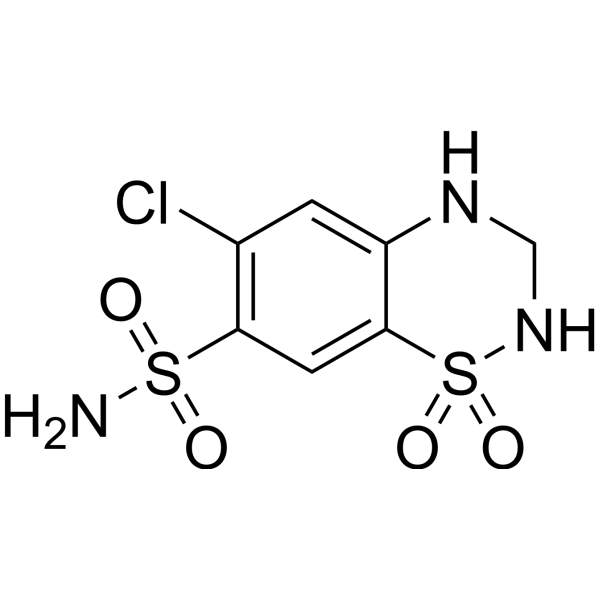
Hydrochlorothiazide
Based on 8 publication(s) in Google Scholar
Hydrochlorothiazide (HCTZ), an orally active diuretic agent of the thiazide class, inhibits transforming TGF-β/Smad signaling pathway. Hydrochlorothiazide has direct vascular relaxant effects via opening of the calcium-activated potassium (KCA) channel. Hydrochlorothiazide improves cardiac function, reduces fibrosis and has antihypertensive effect.
Nur für Forschungszwecke. Wir verkaufen nicht an Patienten.
- Reinheit : 99.46%
- CAS. Nr.: 58-93-5
- Formel: C7H8ClN3O4S2
- Molecular Weight:297.75
-
Speicherung:Powder -20°C, 3 years , 4°C, 2 years
* The compound is unstable in solutions, freshly prepared is recommended.

To place orders, for customer services and technical support, please contact: MedChemExpress USA
Tel: 609-228-6898 E-mail: [email protected] [email protected]


-
 Biologische Aktivität
-
Chemical Information
-
Lösungsmittel & Löslichkeit
- Protokoll
- Reinheit & Dokumentation
- Verweise
-
 Help & FAQs


-
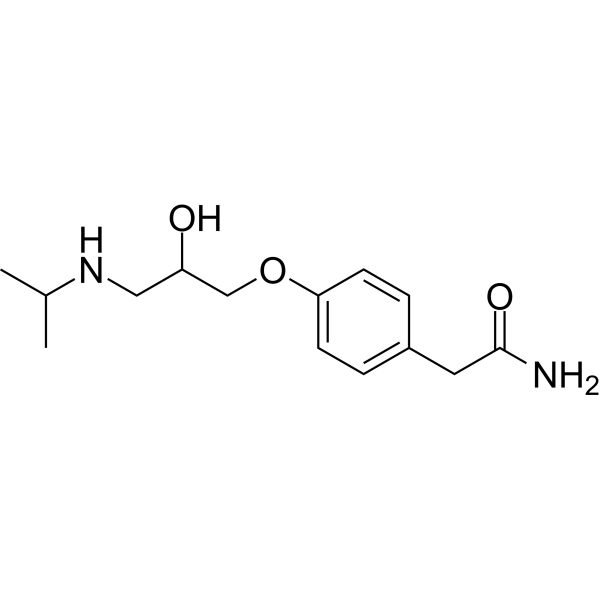
HY-17498
Atenololβ1-Adrenergic Receptor Blocker -
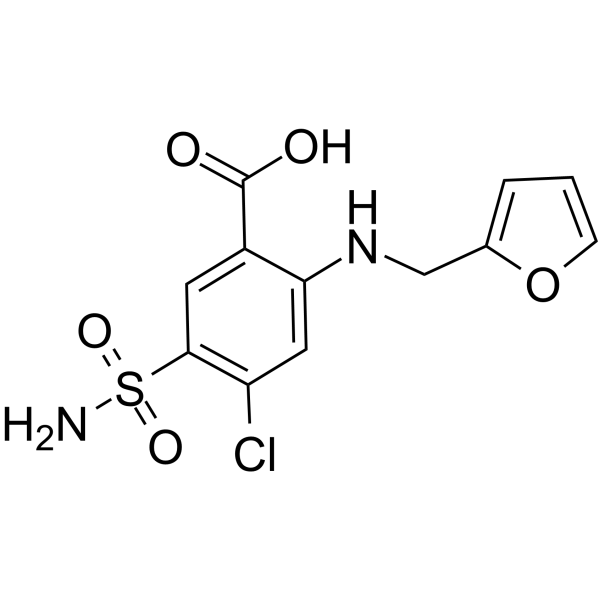
HY-B0135
FurosemideGABAA Receptor Antagonist -
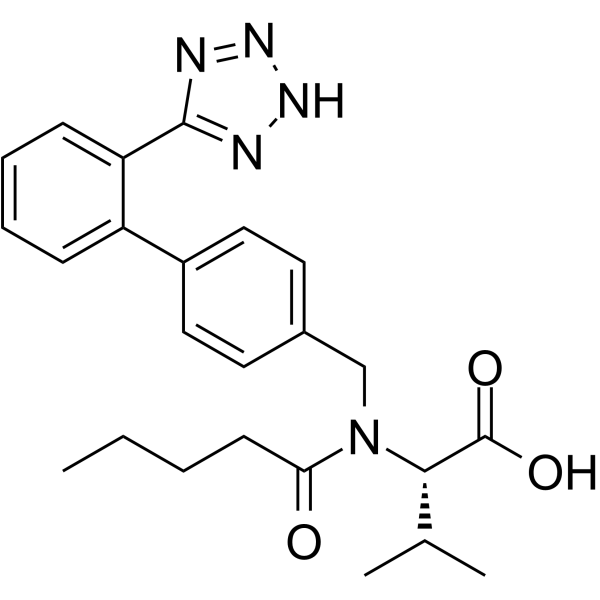
HY-18204
ValsartanAngiotensin II Receptor Antagonist -
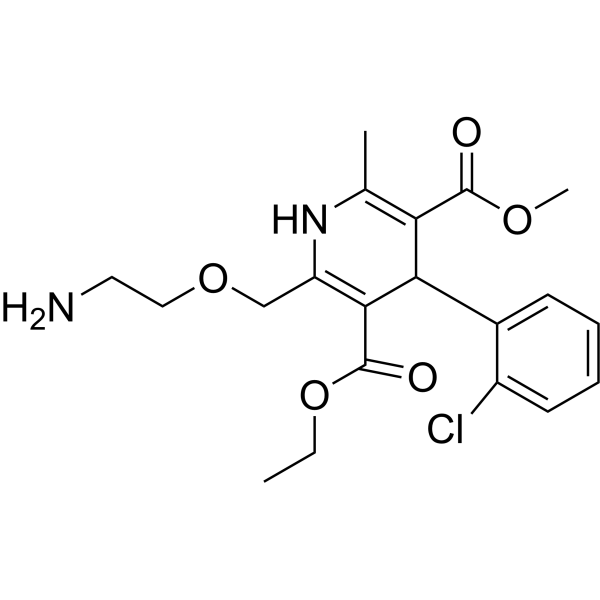
HY-B0317
AmlodipineCalcium Channel Blocker -
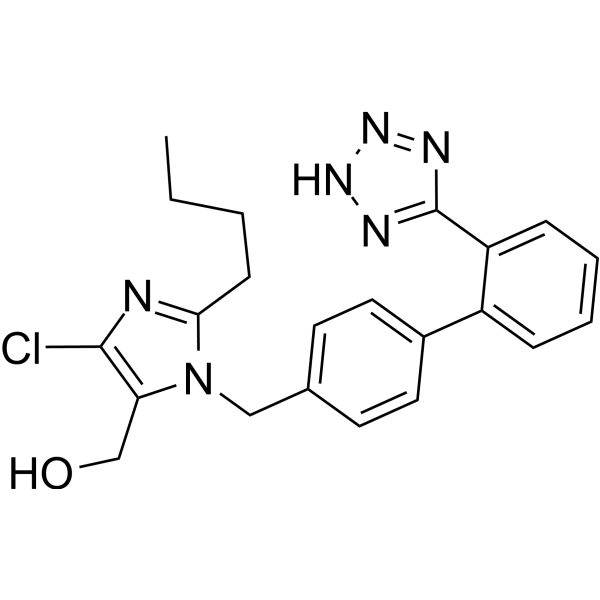
HY-17512
LosartanAngiotensin II Receptor Antagonist -
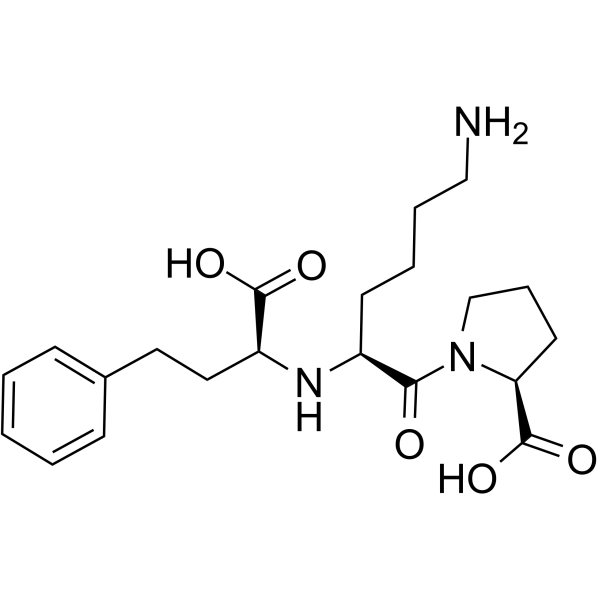
HY-18206
LisinoprilACE Inhibitor -
HY-B0284
NifedipineCalcium Channel Antagonist -
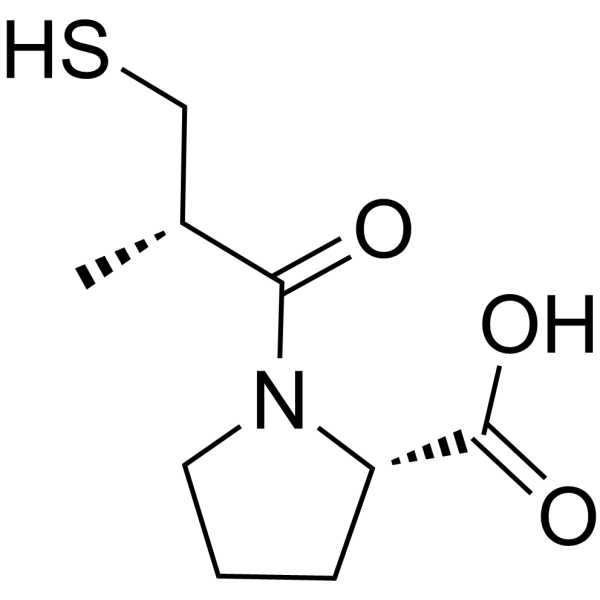
HY-B0368
CaptoprilACE Inhibitor -
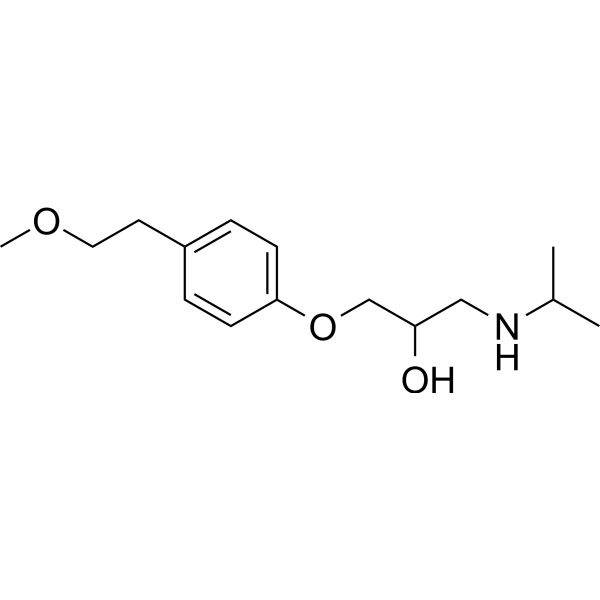
HY-17503
MetoprololBeta1-adrenoceptor Antagonist -
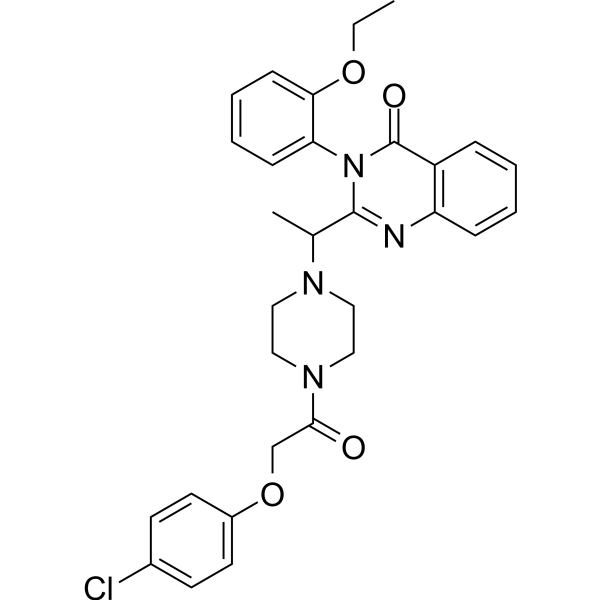
HY-15763
ErastinFerroptosis Inducer -
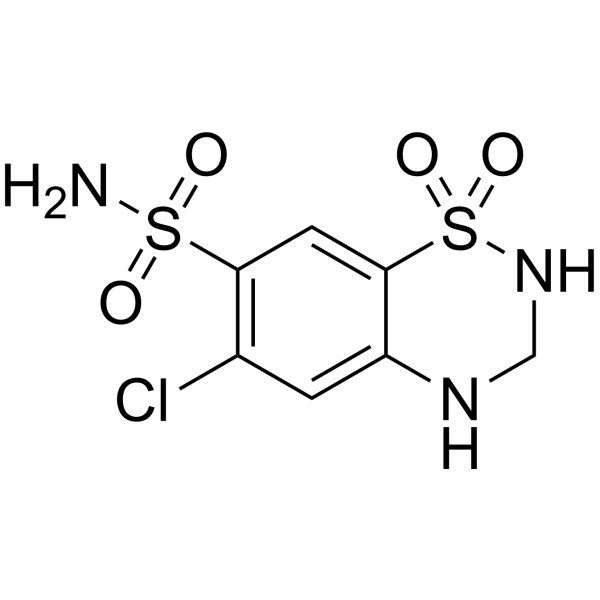
HY-B0252R
Hydrochlorothiazide (Standard) -
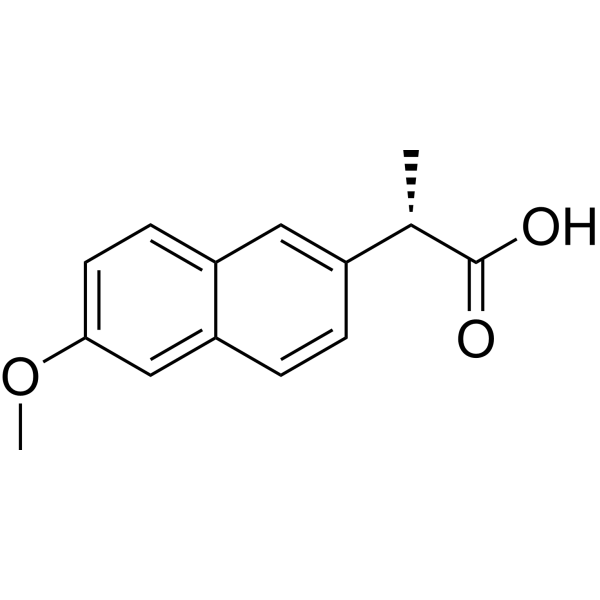
HY-15030
NaproxenCOX Inhibitor
Publications Citing Use of MedChemExpress (MCE) Hydrochlorothiazide
More- Hypertension. 2021 Mar 3;77(3):868-881. [Abstract]
- Emerg Contam. 2026 Feb 23.
- Ecotoxicol Environ Saf. 2025 Sep 15:303:119014. [Abstract]
- Ecotoxicol Environ Saf. 2024 Nov 15:287:117314. [Abstract]
- Cell Rep Methods. 2023 Oct 23;3(10):100599. [Abstract]
- Microchem J. 2025 Nov 24;220:116331.
- Cell Calcium. 2026 May 23:136:103155. [Abstract]
- J Orthop Surg Res. 2024 Feb 19;19(1):147. [Abstract]
 Customer Validation & Images

-
In Vivo Efficacy Study

-
IHC

-
IHC

-
Flow Cytometry

-
WB


Biologische Aktivität
Beschreibung
In Vitro
Hydrochlorothiazide belongs to thiazide class of diuretics. It reduces blood volume by acting on the kidneys to reduce sodium (Na) reabsorption in the distal convoluted tubule. The major site of action in the nephron appears on an electroneutral Na+-Cl co-transporter by competing for the chloride site on the transporter. By impairing Na transport in the distal convoluted tubule, hydrochlorothiazide induces a natriuresis and concomitant water loss. Thiazides increase the reabsorption of calcium in this segment in a manner unrelated to sodium transport. Additionally, by other mechanisms, Hydrochlorothiazide is believed to lower peripheral vascular resistance[1].
MedChemExpress (MCE) has not independently confirmed the accuracy of these methods. They are for reference only.
In Vivo
MedChemExpress (MCE) has not independently confirmed the accuracy of these methods. They are for reference only.
Clinical Trial
| NCT Number | Sponsor | Condition | Start Date |
Phase

|
|---|---|---|---|---|
| NCT01329991 | Plexxikon| | 2011-05 | PHASE1 |


Chemical Information
-
CAS. Nr. 58-93-5
-
Appearance Solid
-
Molecular Weight 297.75
-
Formel C7H8ClN3O4S2
-
Color White to off-white
-
SMILES
O=S(C1=C(Cl)C=C(C2=C1)NCNS2(=O)=O)(N)=O
-
Synonyms
HCTZ
-
Versand
Room temperature in continental US; may vary elsewhere.
-
Speicherung
Powder -20°C 3 years 4°C 2 years * The compound is unstable in solutions, freshly prepared is recommended.


Publications (8)
-
Journal Impact Factor
-
Most Recent
-
Hypertension
Renal Natriuretic Peptide Receptor-C Deficiency Attenuates NaCl Cotransporter Activity in Angiotensin II-Induced Hypertension. [Abstract]2021 Mar 3;77(3):868-881. PMID: 33486984
Hydrochlorothiazide purchased from MedChemExpress. Usage Cited in: Hypertension. 2021 Mar 3;77(3):868-881. [Abstract]
Hydrochlorothiazide (25 mg/kg; i.p.; once) showed an increase of urinary Na+ levels in wild-type (WT) mice in response to Ang II (angiotensin II).
-
-
Ecotoxicol Environ Saf
Combined effects of nanoplastics and 3-BHA at environmentally relevant concentrations significantly aggravated kidney injury via TGF-β/SMAD signaling pathway in mice. [Abstract]2025 Sep 15:303:119014. PMID: 40914085 -
Ecotoxicol Environ Saf
2024 Nov 15:287:117314. PMID: 39541700
Hydrochlorothiazide purchased from MedChemExpress. Usage Cited in: Ecotoxicol Environ Saf. 2024 Nov 15:287:117314. [Abstract]
Hydrochlorothiazide (HCTZ; 90, 150 mg/kg; i.g.; daily for 14 days) exacerbated acute UVB-induced erythema, desquamation, and bullae formation on mouse skin in a dose-dependent manner.
Hydrochlorothiazide purchased from MedChemExpress. Usage Cited in: Ecotoxicol Environ Saf. 2024 Nov 15:287:117314. [Abstract]
Hydrochlorothiazide (HCTZ; 90, 150 mg/kg; i.g.; daily for 14 days) induced dose-dependent epidermal thickening upon UVB exposure.
Hydrochlorothiazide purchased from MedChemExpress. Usage Cited in: Ecotoxicol Environ Saf. 2024 Nov 15:287:117314. [Abstract]
Hydrochlorothiazide (HCTZ; 90, 150 mg/kg; i.g.; daily for 14 days) promoted keratinocyte proliferation following UVB irradiation in a dose-dependent manner.
Hydrochlorothiazide purchased from MedChemExpress. Usage Cited in: Ecotoxicol Environ Saf. 2024 Nov 15:287:117314. [Abstract]
Hydrochlorothiazide (HCTZ;600 μM; 4+24 h) inhibited UVB irradiation-induced increase in G0/G1 phase and promoted an increase in S-phase in HaCaT cells.
Hydrochlorothiazide purchased from MedChemExpress. Usage Cited in: Ecotoxicol Environ Saf. 2024 Nov 15:287:117314. [Abstract]
Hydrochlorothiazide (HCTZ;600 μM; 4+24 h) significantly upregulated cell-cycle activators cyclin D1, CDK2, and CDK4 in HaCaT cells.

Hydrochlorothiazide purchased from MedChemExpress. Usage Cited in: Ecotoxicol Environ Saf. 2024 Nov 15:287:117314. [Abstract]
Hydrochlorothiazide (HCTZ;600 μM; 4+24 h) significantly inhibited phosphorylated p53 at Ser15 and p21 expression in HaCaT cells.
-
Cell Rep Methods
RECOVER identifies synergistic drug combinations in vitro through sequential model optimization. [Abstract]2023 Oct 23;3(10):100599. PMID: 37797618 -
-
Cell Calcium
Drug repurposing DMSO from an old solvent to a new candidate for the treatment of colitis and sepsis in male mice. [Abstract]2026 May 23:136:103155. PMID: 42235215 -
J Orthop Surg Res
Several first-line anti-hypertensives act on fibrosarcoma progression and PD1ab blockade therapy. [Abstract]2024 Feb 19;19(1):147. PMID: 38373964


Lösungsmittel & Löslichkeit
In Vitro:
DMSO : 50 mg/mL (167.93 mM; Need ultrasonic; Hygroscopic DMSO has a significant impact on the solubility of product, please use newly opened DMSO)
Please refer to the solubility information to select the appropriate solvent. The compound is unstable in solutions, freshly prepared is recommended.
Please refer to the solubility information to select the appropriate solvent. The compound is unstable in solutions, freshly prepared is recommended.
Konzentration (Stammlösung) × Volumen (Stammlösung) = Konzentration (Ziellösung) × Volumen (Ziellösung)
In Vivo:
Select the appropriate dissolution method based on your experimental animal and administration route.
- For the following dissolution methods, please ensure to first prepare a clear stock solution using an In Vitro approach and then sequentially add co-solvents:
- To ensure reliable experimental results, the clarified stock solution can be appropriately stored based on storage conditions. As for the working solution for In Vivo experiments, it is recommended to prepare freshly and use it on the same day.
- The percentages shown for the solvents indicate their volumetric ratio in the final prepared solution. If precipitation or phase separation occurs during preparation, heat and/or sonication can be used to aid dissolution.
Add each solvent one by one: 10% DMSO 40% PEG300 5% Tween-80 45% Saline
Solubility: ≥ 2.5 mg/mL (8.40 mM); Clear solution
This protocol yields a clear solution of ≥ 2.5 mg/mL (saturation unknown).
Taking 1 mL working solution as an example, add 100 μL DMSO stock solution (25.0 mg/mL) to 400 μL PEG300, and mix evenly; then add 50 μL Tween-80 and mix evenly; then add 450 μL Saline to adjust the volume to 1 mL.
Preparation of Saline: Dissolve 0.9 g sodium chloride in ddH₂O and dilute to 100 mL to obtain a clear Saline solution.
Add each solvent one by one: 10% DMSO 90% (20% SBE-β-CD in Saline)
Solubility: ≥ 2.5 mg/mL (8.40 mM); Clear solution
This protocol yields a clear solution of ≥ 2.5 mg/mL (saturation unknown).
Taking 1 mL working solution as an example, add 100 μL DMSO stock solution (25.0 mg/mL) to 900 μL 20% SBE-β-CD in Saline, and mix evenly.
Preparation of 20% SBE-β-CD in Saline (4°C, storage for one week): 2 g SBE-β-CD powder is dissolved in 10 mL Saline, completely dissolve until clear.
In Vivo Dissolution Calculator
Please enter the basic information of animal experiments:
-
-
-
-
Recommended: Prepare an additional quantity of animals to account for potential losses during experiments.
Please enter your animal formula composition:
-
%DMSO +
Recommended: Keep the proportion of DMSO in working solution below 2% if your animal is weak.
-
%+
-
+%Tween-80 + +
-
%Saline +
The co-solvents required include: DMSO, . All of co-solvents are available by MedChemExpress (MCE). , Tween 80. All of co-solvents are available by MedChemExpress (MCE).
Working solution concentration: 0.22 mg/mL
Method for preparing stock solution: mg drug dissolved in μL DMSO. Stock solution concentration: mg/mL. * The compound is unstable in solutions, freshly prepared is recommended.
1. Take μL DMSO stock solution;
2. Add μL .
μL , mix evenly;
3. Then add μL Tween 80, mix evenly;
4. Then add μL
Please ensure that the stock solution in the first step is dissolved to a clear state, and add co-solvents in sequence. You can use ultrasonic heating (ultrasonic cleaner, recommended frequency 20-40 kHz), vortexing, etc. to assist dissolution.


Reinheit & Dokumentation
-
Data Sheet (279 KB)
-
SDS (420 KB)
- English - EN (420 KB)
- Français - FR (420 KB)
- Deutsch - DE (420 KB)
- Norwegian - NO (420 KB)
- Español - ES (420 KB)
- Swedish - SV (420 KB)
- Italian - IT (420 KB)
- Korean - KR (420 KB)
- Portuguese - PT (420 KB)
-
Handling Instructions (2659 KB)
Verweise
[1]. Duarte, J.D. and R.M. Cooper-DeHoff, Mechanisms for blood pressure lowering and metabolic effects of thiazide and thiazide-like diuretics. Expert Rev Cardiovasc Ther, 2010. 8(6): p. 793-802. [Content Brief]
[2]. Jinghong Luo, et al. Hydrochlorothiazide modulates ischemic heart failure-induced cardiac remodeling via inhibiting angiotensin II type 1 receptor pathway in rats. Cardiovasc Ther. 2017 Apr;35(2). [Content Brief]
[3]. Magdy M Abdelquader, et al. Inhibition of Co-Crystallization of Olmesartan Medoxomil and Hydrochlorothiazide for Enhanced Dissolution Rate in Their Fixed Dose Combination. AAPS PharmSciTech. 2018 Dec 17;20(1):3. [Content Brief]


Complete Stock Solution Preparation Table
Please refer to the solubility information to select the appropriate solvent. The compound is unstable in solutions, freshly prepared is recommended.
| Optional Solvent | Concentration Solvent Mass | 1 mg | 5 mg | 10 mg | 25 mg |
|---|---|---|---|---|---|
| DMSO | 1 mM | 3.3586 mL | 16.7929 mL | 33.5858 mL | 83.9645 mL |
| 5 mM | 0.6717 mL | 3.3586 mL | 6.7172 mL | 16.7929 mL | |
| 10 mM | 0.3359 mL | 1.6793 mL | 3.3586 mL | 8.3964 mL | |
| 15 mM | 0.2239 mL | 1.1195 mL | 2.2391 mL | 5.5976 mL | |
| 20 mM | 0.1679 mL | 0.8396 mL | 1.6793 mL | 4.1982 mL | |
| 25 mM | 0.1343 mL | 0.6717 mL | 1.3434 mL | 3.3586 mL | |
| 30 mM | 0.1120 mL | 0.5598 mL | 1.1195 mL | 2.7988 mL | |
| 40 mM | 0.0840 mL | 0.4198 mL | 0.8396 mL | 2.0991 mL | |
| 50 mM | 0.0672 mL | 0.3359 mL | 0.6717 mL | 1.6793 mL | |
| 60 mM | 0.0560 mL | 0.2799 mL | 0.5598 mL | 1.3994 mL | |
| 80 mM | 0.0420 mL | 0.2099 mL | 0.4198 mL | 1.0496 mL | |
| 100 mM | 0.0336 mL | 0.1679 mL | 0.3359 mL | 0.8396 mL |


Hydrochlorothiazide Related Classifications
HY-B0252 Related Classifications
 Powered by Bioz