



Hepatitis B Virus Infection
-
Hepatitis B Virus Infection (40)

- 1
- 2
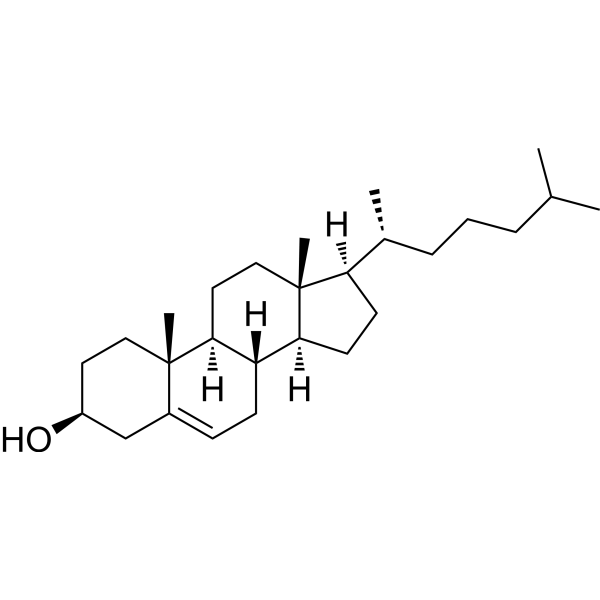
- Formula: C27H46O
- Molecular Weight: 386.65
Cholesterol (from animal) is the major sterol in mammals. It is making up 20-25% of structural component of the plasma membrane. Plasma membranes are highly permeable to water but relatively impermeable to ions and protons. Cholesterol (from animal) plays an important role in determining the fluidity and permeability characteristics of the membrane as well as the function of both the transporters and signaling proteins. Cholesterol (from animal) is also an endogenous estrogen-related receptor α (ERRα) agonist.
- Molecular Weight: 7699 (free acid)
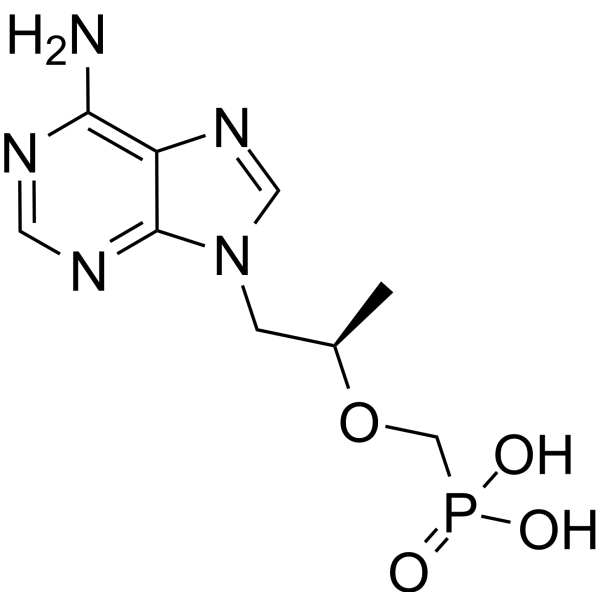
- Formula: C9H14N5O4P
- Molecular Weight: 287.21
Tenofovir (GS 1278; PMPA) is a nucleotide reverse transcriptase inhibitor to treat HIV and chronic Hepatitis B (HBV).

- Formula: C5H10O5
- Molecular Weight: 150.13
L-Ribose is the enantiomer of D-ribose (HY-113375). L-Ribose replaces D-ribose to synthesize L-ribonucleic acid in cells, leading to erroneous gene transcription. L-Ribose serves as a starting material for L-nucleoside analogs, glycoconjugates and oligonucleotides. L-Ribose can be used in research related to hepatitis B virus infection, hepatitis C virus infection, hepatitis D virus infection, Epstein-Barr virus infection and cytomegalovirus infection.

- Formula: C664H814F17N231Na57O415P57S6
- Molecular Weight: 21009.2 (free acid)
Xalnesiran (RO7445482) sodium is a small interfering RNA molecule that targets a conserved region of the
hepatitis B virus (HBV) genome. Xalnesiran sodium can be used for the research of chronic hepatitis B infection.

- Formula: C9H16N5O5P
- Molecular Weight: 305.23
Tenofovir hydrate (Standard) (GS 1278 hydrate (Standard); PMPA hydrate (Standard)) is the analytical standard of Tenofovir hydrate (HY-13910A). This product is intended for research and analytical applications. Tenofovir hydrate (GS 1278 hydrate; PMPA hydrate) is a nucleotide reverse transcriptase inhibitor to treat HIV and chronic Hepatitis B (HBV).
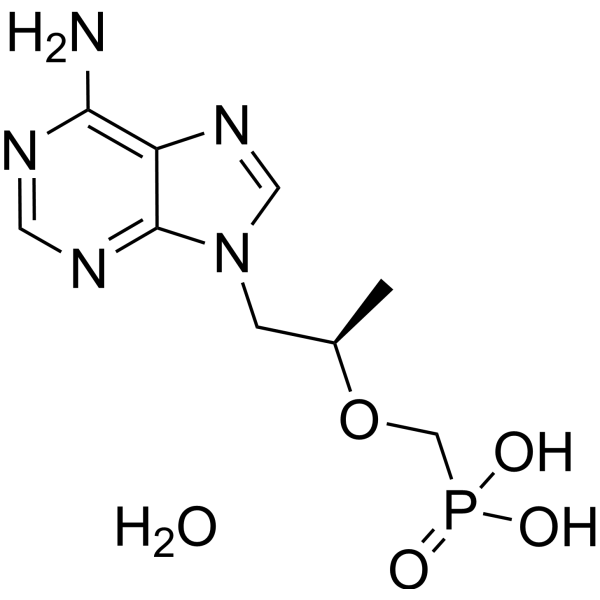
- Formula: C9H16N5O5P
- Molecular Weight: 305.23
Tenofovir hydrate (GS 1278 hydrate; PMPA hydrate) is a nucleotide reverse transcriptase inhibitor to treat HIV and chronic Hepatitis B (HBV).

- Formula: C36H40O19
- Molecular Weight: 776.70
Ciliatoside A is a naturally bioactive compound that exhibits significant anti-inflammatory, antiviral, and neuroprotective activities. Ciliatoside A serves as a mitophagy inducer and NLRP3 inflammasome inhibitor, activating AMPK, SIRT1, and the PINK1/Parkin axis, and inhibiting pyroptosis and apoptosis. Ciliatoside A promotes autophagic flux, autophagosome-lysosome fusion, mTOR inhibition, and p62-dependent HBc degradation; reduces Aβ aggregation, plaque deposition, microglial/astrocyte activation, and bacterial load; and maintains neuronal integrity, mitochondrial membrane potential, and ATP production. Ciliatoside A is used in research on Alzheimer's disease, Klebsiella pneumoniae-induced pneumonia, hepatitis B virus infection, and inflammation.

- Formula: C22H26O6
- Molecular Weight: 386.44
Neglschisandrin E is a lignan. Neglschisandrin E is isolated from S. neglecta. Neglschisandrin E exhibits no anticancer activity against colorectal cancer and lung cancer. Neglschisandrin E can be used for research on colorectal cancer and hepatitis B.
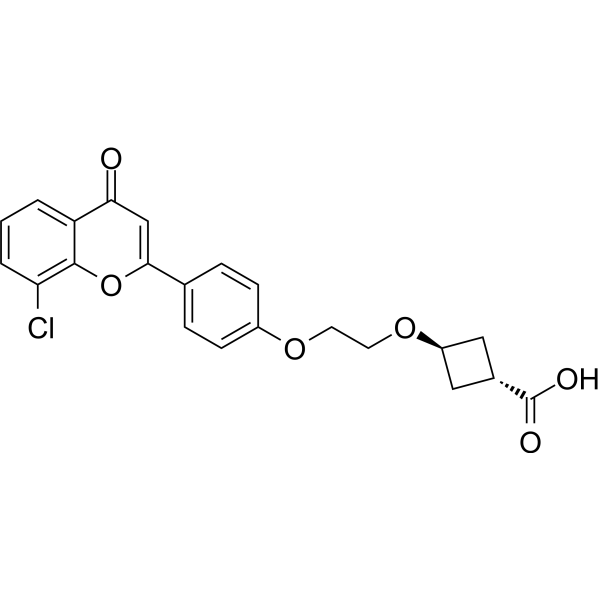
- Formula: C22H19ClO6
- Molecular Weight: 414.84
trans-ccc_R08 (Compound 1-B) is a cccDNA inhibitor with anti-HBV activity, with an IC50 of 0.14 μM for HBeAg and an IC50 of 0.08 μM for HBsAg in in vitro assays. trans-ccc_R08 inhibits covalently closed circular DNA (cccDNA). trans-ccc_R08 is applicable to research related to hepatitis B virus infection.

- Molecular Weight: 150 kDa
Anti-Mouse CD8α Antibody (YTS169.4) is an IgG2 monoclonal antibody targeting mouse CD8α. Anti-Mouse CD8α Antibody (YTS169.4) rapidly depletes or downregulates CD8+ T cells in the spleens of Biozzi AB/H mice. Anti-Mouse CD8α Antibody (YTS169.4) is applicable to research related to hepatitis B virus infection. Recommended isotype control: Rat IgG2b kappa, Isotype Control (HY-P990682).
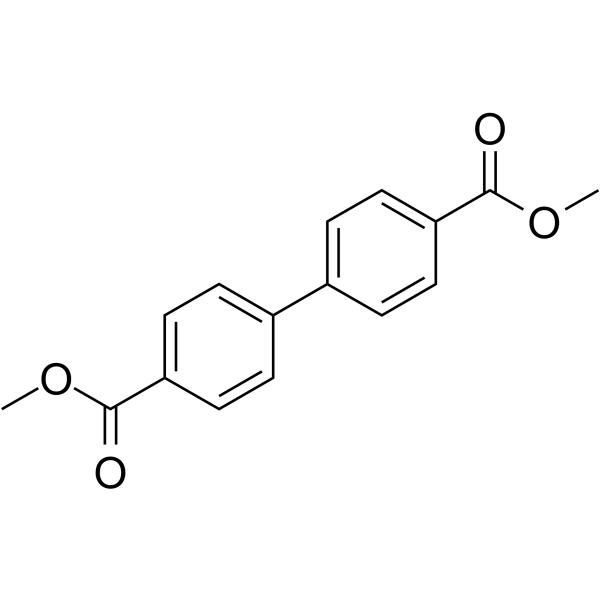
- Formula: C16H14O4
- Molecular Weight: 270.28
Dimethyl biphenyl-4,4'-dicarboxylate (Biphenyl dimethyl dicarboxylate) is a hepatoprotective agent. Dimethyl biphenyl-4,4'-dicarboxylate stimulates the Jak/Stat signaling pathway and induces the expression of IFN-α-stimulated genes, particularly 6-16 and ISG12. Dimethyl biphenyl-4,4'-dicarboxylate inhibits the replication of pregenomic RNA and HBeAg. Polymer micelles loaded with Dimethyl biphenyl-4,4'-dicarboxylate can serve as carriers for the compound. Dimethyl biphenyl-4,4'-dicarboxylate can be used as an auxiliary improving agent for chronic hepatitis. Dimethyl biphenyl-4,4'-dicarboxylate is applicable to research related to chronic hepatitis B.
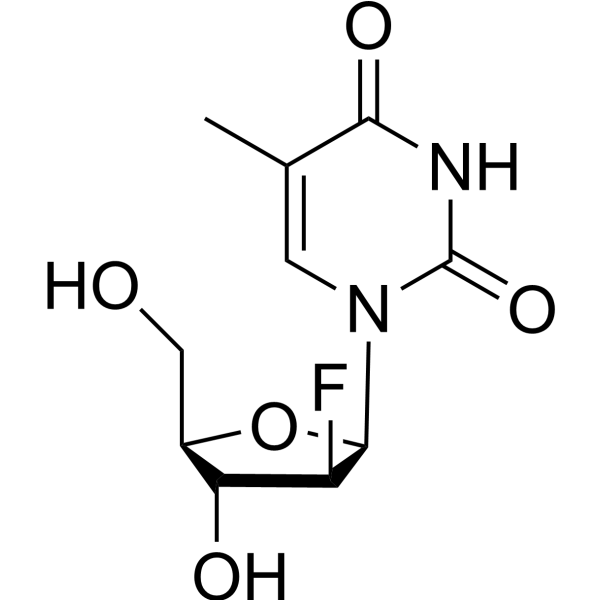
- Formula: C10H13FN2O5
- Molecular Weight: 260.22
FMAU is a nucleoside analog and cell proliferation marker that can be phosphorylated by human thymidine kinase and subsequently incorporated into DNA. FMAU is applicable to research related to herpes simplex virus infection, various cancers, hepatitis B virus infection, and Epstein-Barr virus infection.
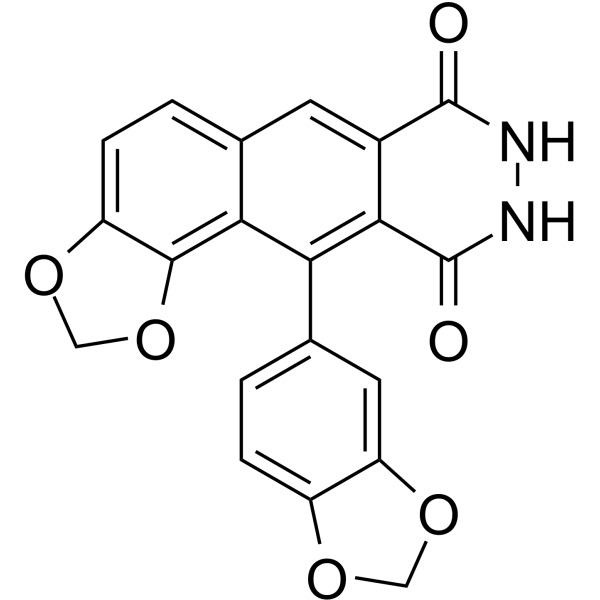
- Formula: C20H12N2O6
- Molecular Weight: 376.32
Helioxanthin 8-1(Helioxanthin analogue 8-1) is an anti-HBV agent. Helioxanthin 8-1 exhibits anti-hepatitis B virus activity in both in vitro human hepatitis B virus models and animal models. Helioxanthin 8-1 inhibits the synthesis of duck hepatitis B virus (DHBV) DNA, covalently closed circular DNA, RNA and proteins, thereby blocking DHBV replication. Helioxanthin 8-1 shows higher cytotoxicity in virus-induced cells than in non-induced cells. Helioxanthin 8-1 can be used in studies related to hepatitis B virus infection.

Peginterferon alfa-2a (Ro 25-8310/000) is a 40 kDa branched pegylated IFN alfa-2a with antiviral and immunomodulatory activities. Peginterferon alfa-2a binds to the Interferon Receptor on the surface of target cells, induces the formation of ISGF3, and promotes the expression of effector proteins such as interferon-stimulated genes (ISGs) and Mx proteins, thereby exerting sustained antiviral effects. Peginterferon alfa-2a is applicable to research on virus infections associated with chronic hepatitis C and chronic hepatitis B.

- Formula: C27H46O
- Molecular Weight: 386.65
Cholesterol (synthetic) is the major sterol in mammals. It is making up 20-25% of structural component of the plasma membrane. Plasma membranes are highly permeable to water but relatively impermeable to ions and protons. Cholesterol (synthetic) plays an important role in determining the fluidity and permeability characteristics of the membrane as well as the function of both the transporters and signaling proteins. Cholesterol (synthetic) is also an endogenous estrogen-related receptor α (ERRα) agonist.

- Formula: C27H46O
- Molecular Weight: 386.65
Cholesterol (from plant) is the major sterol in mammals. It is making up 20-25% of structural component of the plasma membrane. Plasma membranes are highly permeable to water but relatively impermeable to ions and protons. Cholesterol (from plant) plays an important role in determining the fluidity and permeability characteristics of the membrane as well as the function of both the transporters and signaling proteins. Cholesterol (from plant) is also an endogenous estrogen-related receptor α (ERRα) agonist.

- Formula: C5H10O5
- Molecular Weight: 150.13
L-Ribose (Standard) is the analytical standard of L-Ribose (HY-W008351). This product is intended for research and analytical applications. L-Ribose is the enantiomer of D-ribose (HY-113375). L-Ribose replaces D-ribose to synthesize L-ribonucleic acid in cells, leading to erroneous gene transcription. L-Ribose serves as a starting material for L-nucleoside analogs, glycoconjugates and oligonucleotides. L-Ribose can be used in research related to hepatitis B virus infection, hepatitis C virus infection, hepatitis D virus infection, Epstein-Barr virus infection and cytomegalovirus infection.

- Formula: C85H147ClN26O21
- Molecular Weight: 1904.69
Tertomotide hydrochloride (GV-1001 hydrochloride) is a 16-amino acid peptide derived from hTERT, with both cell-penetrating and immunostimulatory activities, and it can cross the blood-brain barrier. Tertomotide hydrochloride binds to STING, HO-1, eHSP70, eHSP90, bradykinin receptor 1, VEGFR-2, NF-κB, p38 MAPK and Smad2. Tertomotide hydrochloride induces type I interferon production, mitochondrial DNA stress and T-cell responses; inhibits HBV replication, angiogenesis, TGF-β signaling pathway, NF-κB activation, endothelial-mesenchymal transition (EndMT) and fibrosis; regulates microglia; and exerts neuroprotective, anti-inflammatory, antioxidant, anti-apoptotic and anti-tumor effects. Tertomotide hydrochloride can be used in research related to hepatitis B virus infection, Alzheimer's disease, non-small cell lung cancer, atherosclerosis and depression.

- Formula: C9H14N5O4P
- Molecular Weight: 287.21
- 1
- 2



