



Prochlorperazine dimaleate

Based on 1 Customer Validation
Prochlorperazine dimaleate is an orally active phenothiazine-type dopamine D2 receptor (D2R) antagonist. Prochlorperazine exhibits anti-cancer activity in vitro against various cancer cell lines. Prochlorperazine dimaleate exhibits IC50 values of 6.4 μM, 4.5 μM and 2.3 μM for NOX1, NOX2 and NOX5, respectively. Prochlorperazine dimaleate has antedesmosidic activity against dengue virus (DENV). Prochlorperazine dimaleate can be used for research on nausea, vomiting, migraine, and schizophrenia.
Nos produits utilisent uniquement pour la recherche. Nous ne vendons pas aux patients.
- Pureté : 98.0%
- CAS No.: 84-02-6
- Formule: C28H32ClN3O8S
- Masse moléculaire:606.09
-
Stockage:
4°C, stored under nitrogen, away from moisture
* In solvent : -80°C, 6 months; -20°C, 1 month (stored under nitrogen, away from moisture)


To place orders, for customer services and technical support, please contact: MedChemExpress USA
Tel: 609-228-6898 E-mail: [email protected] [email protected]


-
 Activité biologique
-
Chemical Information
-
Solvant et solubilité
- Pureté et documentation
- Références
-
 Help & FAQs


-
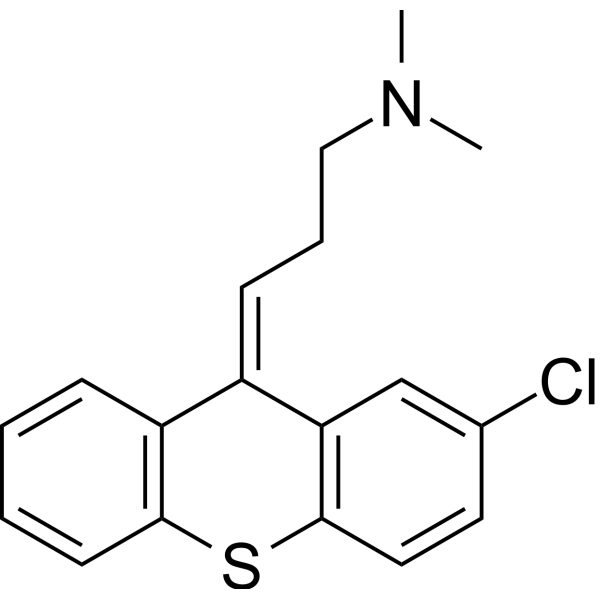
HY-B0274
ChlorprothixeneNeuroprotective Agent -
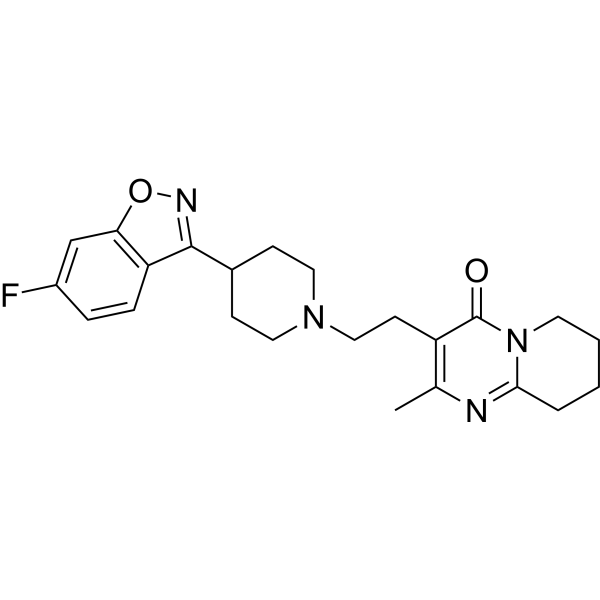
HY-11018
Risperidone5-HT2 Receptor Blocker -

HY-B1225
Promazine hydrochlorideDopamine Receptor D2 Antagonist -
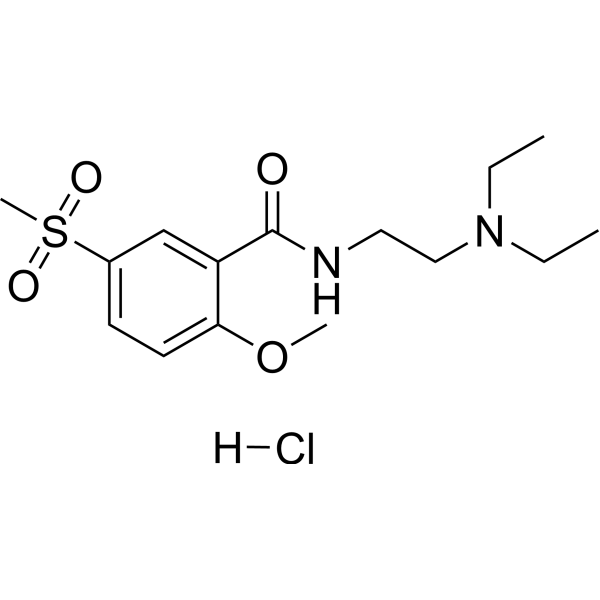
HY-B1196
Tiapride hydrochlorideD2/D3 Dopamine Receptor Antagonist -
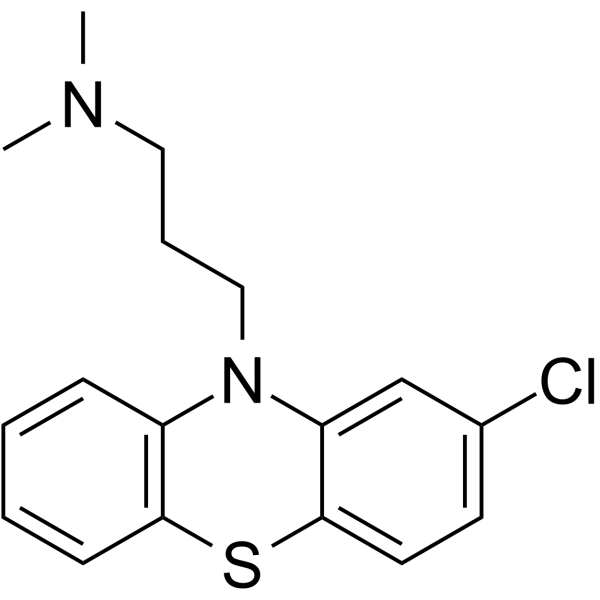
HY-12708
ChlorpromazineAntipsychotic Agent -
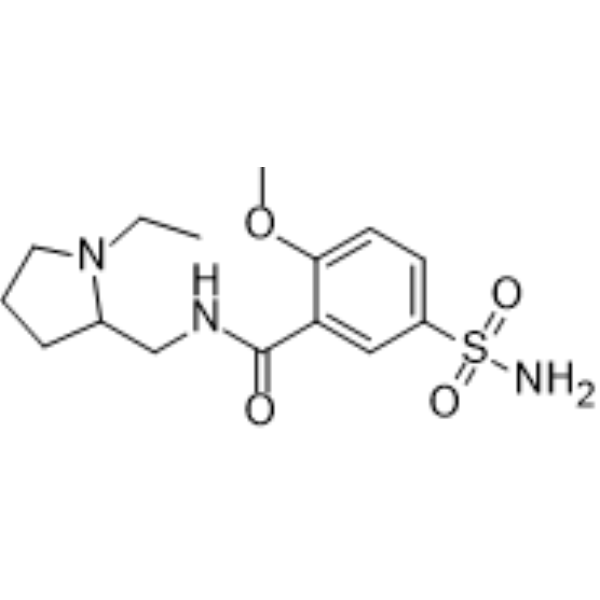
HY-B1019
SulpirideD2/D3 Receptor Antagonist -
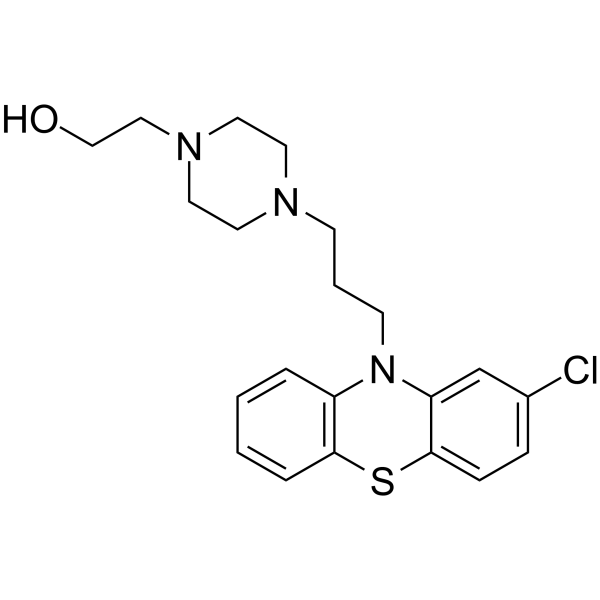
HY-A0077
PerphenazineDopamine Receptor Antagonist -
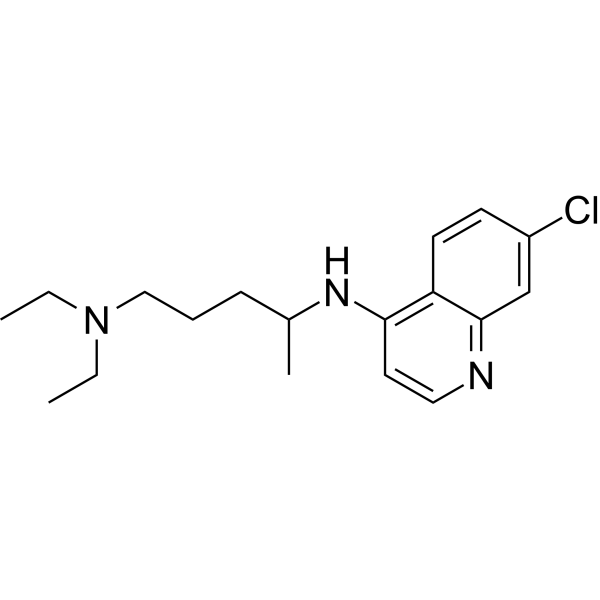
HY-17589A
ChloroquineAntimalarial Agent -
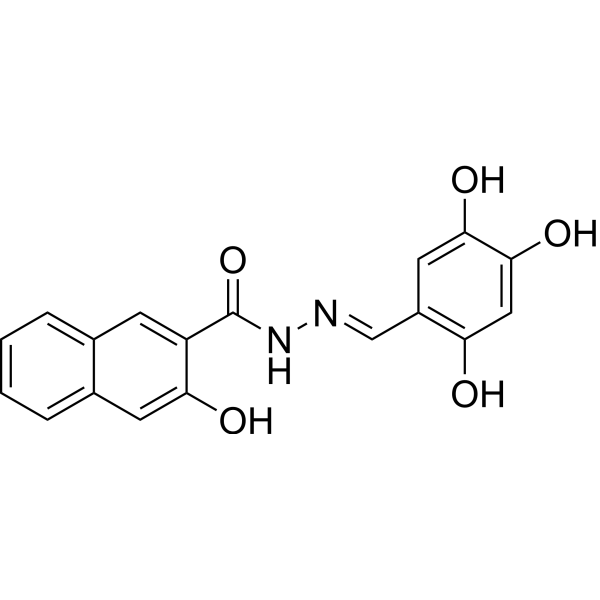
HY-13863
Hydroxy-DynasoreDynamin I/II Inhibitor -
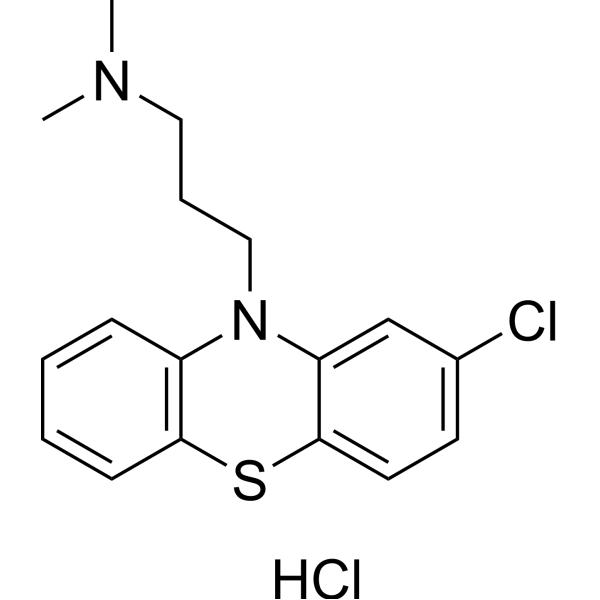
HY-B0407A
Chlorpromazine hydrochlorideAntipsychotic Agent -
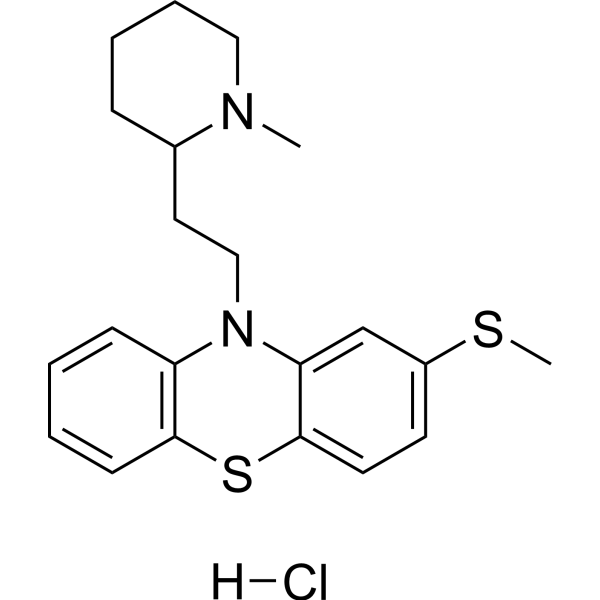
HY-B0965
Thioridazine hydrochlorideDopamine Receptor Antagonist -
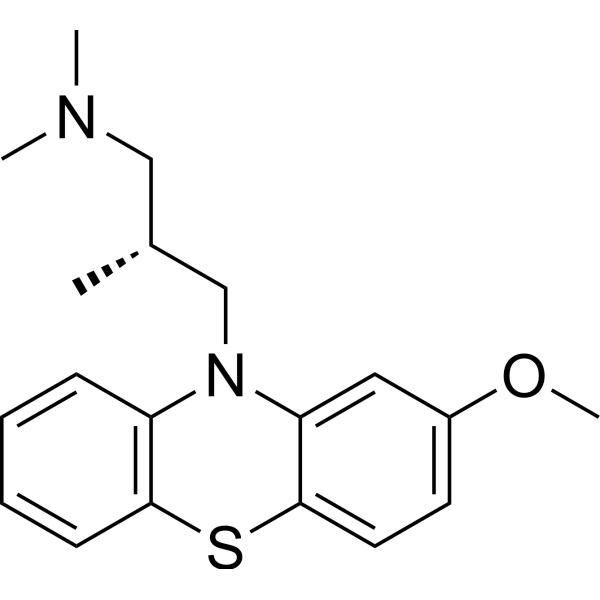
HY-B1693
LevomepromazineAntipsychotic Agent
Voir tous les produits spécifiques à Isoform Dopamine Receptor
More

Activité biologique
Description
|
D2 Receptor |
NOX1 6.4 μM () |
NOX2 4.5 μM () |
NOX5 2.3 μM () |
In Vitro
Prochlorperazine dimaleate exhibits anticancer potential against various human cancer cell lines (including human glioblastoma GBM8401, U87-MG cells, brain cancer BT478 cells, breast cancer MCF-7 cells, colon cancer SW620 cells, leukemia PLB-985 cells, melanoma COLO829, C32 cells, etc.)[2].
Prochlorperazine dimaleate (0-30 μM, 26-50 h) significantly inhibited the expression of DENV-2 viral protein (NS3) and viral replication, with an EC₅₀ of 137 nM; it also had inhibitory effects on DENV-1 and Japanese encephalitis virus (JEV), indicating broad-spectrum antiflavin activity[3].
MedChemExpress (MCE) has not independently confirmed the accuracy of these methods. They are for reference only.
In Vivo
MedChemExpress (MCE) has not independently confirmed the accuracy of these methods. They are for reference only.
-
Animal Model:DENV-2 Infection model established in Stat1−/− mice[3]
-
Dosage:1 and 5 mg/kg
-
Administration:Intraperitoneal injection (i.p.) first, followed by oral administration (p.o.) once daily for 10 days
-
Result:Completely protected the mice from death, even with a 6-hour delay in administration at 5 mg/kg, still managed to increase the survival rate.


Chemical Information
-
CAS No. 84-02-6
-
Appearance Solid
-
Masse moléculaire 606.09
-
Formule C28H32ClN3O8S
-
Color White to light yellow
-
SMILES
O=C(O)/C=C\C(O)=O.CN1CCN(CCCN2C3=C(C=CC=C3)SC4=CC=C(Cl)C=C24)CC1.O=C(O)/C=C\C(O)=O
-
Livraison
Room temperature in continental US; may vary elsewhere.
-
Stockage
4°C, stored under nitrogen, away from moisture
* In solvent : -80°C, 6 months; -20°C, 1 month (stored under nitrogen, away from moisture)


Solvant et solubilité
In Vitro:
DMSO : 35.71 mg/mL (58.92 mM; Need ultrasonic; Hygroscopic DMSO has a significant impact on the solubility of product, please use newly opened DMSO)
H2O : < 0.1 mg/mL (insoluble)
Please refer to the solubility information to select the appropriate solvent. Once prepared, please aliquot and store the solution to prevent product inactivation from repeated freeze-thaw cycles.
Storage method and period of stock solution: -80°C, 6 months; -20°C, 1 month (stored under nitrogen, away from moisture). When stored at -80°C, please use it within 6 months. When stored at -20°C, please use it within 1 month.
Please refer to the solubility information to select the appropriate solvent. Once prepared, please aliquot and store the solution to prevent product inactivation from repeated freeze-thaw cycles.
Storage method and period of stock solution: -80°C, 6 months; -20°C, 1 month (stored under nitrogen, away from moisture). When stored at -80°C, please use it within 6 months. When stored at -20°C, please use it within 1 month.
Concentration (start) × Volume (start) = Concentration (final) × Volume (final)
In Vivo:
Select the appropriate dissolution method based on your experimental animal and administration route.
- For the following dissolution methods, please ensure to first prepare a clear stock solution using an In Vitro approach and then sequentially add co-solvents:
- To ensure reliable experimental results, the clarified stock solution can be appropriately stored based on storage conditions. As for the working solution for In Vivo experiments, it is recommended to prepare freshly and use it on the same day.
- The percentages shown for the solvents indicate their volumetric ratio in the final prepared solution. If precipitation or phase separation occurs during preparation, heat and/or sonication can be used to aid dissolution.
Add each solvent one by one: 10% DMSO 40% PEG300 5% Tween-80 45% Saline
Solubility: ≥ 2.08 mg/mL (3.43 mM); Clear solution
This protocol yields a clear solution of ≥ 2.08 mg/mL (saturation unknown).
Taking 1 mL working solution as an example, add 100 μL DMSO stock solution (20.8 mg/mL) to 400 μL PEG300, and mix evenly; then add 50 μL Tween-80 and mix evenly; then add 450 μL Saline to adjust the volume to 1 mL.
Preparation of Saline: Dissolve 0.9 g sodium chloride in ddH₂O and dilute to 100 mL to obtain a clear Saline solution.
Add each solvent one by one: 10% DMSO 90% (20% SBE-β-CD in Saline)
Solubility: ≥ 2.08 mg/mL (3.43 mM); Clear solution
This protocol yields a clear solution of ≥ 2.08 mg/mL (saturation unknown).
Taking 1 mL working solution as an example, add 100 μL DMSO stock solution (20.8 mg/mL) to 900 μL 20% SBE-β-CD in Saline, and mix evenly.
Preparation of 20% SBE-β-CD in Saline (4°C, storage for one week): 2 g SBE-β-CD powder is dissolved in 10 mL Saline, completely dissolve until clear.
In Vivo Dissolution Calculator
Please enter the basic information of animal experiments:
-
-
-
-
Recommended: Prepare an additional quantity of animals to account for potential losses during experiments.
Please enter your animal formula composition:
-
%DMSO +
Recommended: Keep the proportion of DMSO in working solution below 2% if your animal is weak.
-
%+
-
+%Tween-80 + +
-
%Saline +
The co-solvents required include: DMSO, . All of co-solvents are available by MedChemExpress (MCE). , Tween 80. All of co-solvents are available by MedChemExpress (MCE).
Working solution concentration: 0.22 mg/mL
Method for preparing stock solution: mg drug dissolved in μL DMSO. Stock solution concentration: mg/mL. * In solvent : -80°C, 6 months; -20°C, 1 month (stored under nitrogen, away from moisture)
1. Take μL DMSO stock solution;
2. Add μL .
μL , mix evenly;
3. Then add μL Tween 80, mix evenly;
4. Then add μL
Please ensure that the stock solution in the first step is dissolved to a clear state, and add co-solvents in sequence. You can use ultrasonic heating (ultrasonic cleaner, recommended frequency 20-40 kHz), vortexing, etc. to assist dissolution.


Pureté et documentation
-
Fiche technique (279 KB)
-
SDS (394 KB)
- English - EN (394 KB)
- Français - FR (394 KB)
- Deutsch - DE (394 KB)
- Norwegian - NO (394 KB)
- Español - ES (394 KB)
- Swedish - SV (394 KB)
- Italian - IT (394 KB)
- Korean - KR (394 KB)
- Portuguese - PT (394 KB)
-
Instruction de manipulation (2659 KB)
Références
[1]. Hoy SM, Scott LJ. Indomethacin/prochlorperazine/caffeine: a review of its use in the acute treatment of migraine and in the treatment of episodic tension-type headache. CNS Drugs. 2011 Apr;25(4):343-58. [Content Brief]
[2]. Michał Otręba, et al. In vitro anticancer activity of fluphenazine, perphenazine and prochlorperazine. A review. J Appl Toxicol. 2021 Jan;41(1):82-94. [Content Brief]
[3]. Simanjuntak Y, et al. Repurposing of prochlorperazine for use against dengue virus infection. J Infect Dis. 2015 Feb 1;211(3):394-404. [Content Brief]


Complete Stock Solution Preparation Table
Please refer to the solubility information to select the appropriate solvent. Once prepared, please aliquot and store the solution to prevent product inactivation from repeated freeze-thaw cycles.
Storage method and period of stock solution: -80°C, 6 months; -20°C, 1 month (stored under nitrogen, away from moisture). When stored at -80°C, please use it within 6 months. When stored at -20°C, please use it within 1 month.
| Optional Solvent | Concentration Solvent Mass | 1 mg | 5 mg | 10 mg | 25 mg |
|---|---|---|---|---|---|
| DMSO | 1 mM | 1.6499 mL | 8.2496 mL | 16.4992 mL | 41.2480 mL |
| 5 mM | 0.3300 mL | 1.6499 mL | 3.2998 mL | 8.2496 mL | |
| 10 mM | 0.1650 mL | 0.8250 mL | 1.6499 mL | 4.1248 mL | |
| 15 mM | 0.1100 mL | 0.5500 mL | 1.0999 mL | 2.7499 mL | |
| 20 mM | 0.0825 mL | 0.4125 mL | 0.8250 mL | 2.0624 mL | |
| 25 mM | 0.0660 mL | 0.3300 mL | 0.6600 mL | 1.6499 mL | |
| 30 mM | 0.0550 mL | 0.2750 mL | 0.5500 mL | 1.3749 mL | |
| 40 mM | 0.0412 mL | 0.2062 mL | 0.4125 mL | 1.0312 mL | |
| 50 mM | 0.0330 mL | 0.1650 mL | 0.3300 mL | 0.8250 mL |


Prochlorperazine dimaleate Related Classifications
HY-B0807A Related Classifications
 Powered by Bioz