



Migraine
- [1]. Migraine. diseasedb.
-
Migraine (36)

- 1
- 2
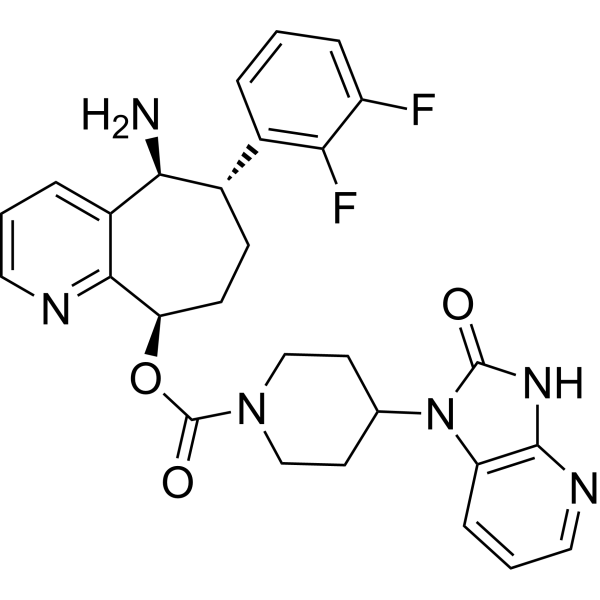
- Formula: C28H28F2N6O3
- Molecular Weight: 534.56
Rimegepant (BMS-927711; BHV-3000) is an orally bioavailable and blood-brain barrier permeable antagonist of CGRP and AMY1 receptors, with a pIC50 of 8.01 and a Ki of 0.027 nM for human CGRP receptors. Rimegepant antagonizes cAMP production induced by αCGRP, βCGRP and amylin at CGRP and AMY1 receptors in humans, rats and mice, as well as at rat AMY3 receptors. Rimegepant can be used in research related to migraine .

- Formula: C33H37N5O5
- Molecular Weight: 583.68
Dihydroergotamine (DFN-19) is a blood-brain barrier-permeable semi-synthetic ergot alkaloid, acting as a full agonist of 5-HT1B/1D receptors (Ki values of 0.3 nM and 2.5 nM, respectively; functional IC50 values of 2 nM and 2.2 nM, respectively). Dihydroergotamine inhibits Forskolin (HY-15371)-stimulated cAMP accumulation, possesses α-adrenergic receptor antagonistic activity and weak dopaminergic agonistic activity. It mediates intracranial cerebrovascular contraction, inhibits the release of neuropeptides such as CGRP/substance P, and suppresses neurogenic inflammation by activating 5-HT1B/1D receptors in the trigeminovascular system. Dihydroergotamine binds to the catalytic site of Trypanosoma cruzi trypanothione reductase and exhibits trypanocidal activity in vitro. Dihydroergotamine can be used in studies related to migraine and trypanosome infections.
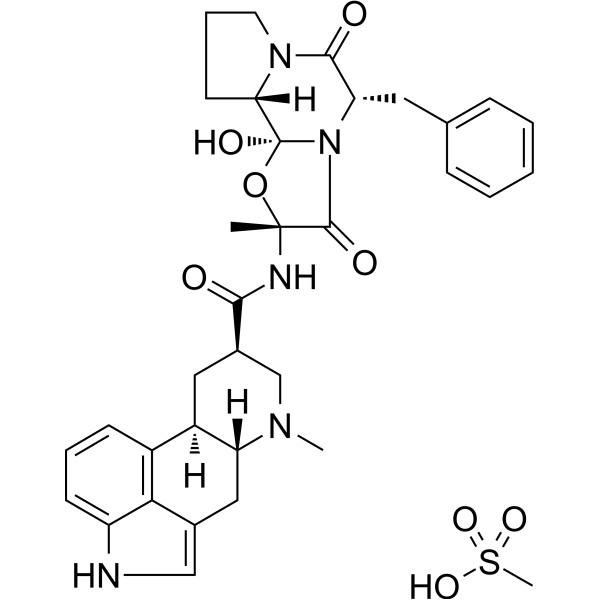
- Formula: C34H41N5O8S
- Molecular Weight: 679.78
Dihydroergotamine mesylate is a blood-brain barrier-permeable semi-synthetic ergot alkaloid, acting as a full agonist of 5-HT1B/1D receptors (Ki values of 0.3 nM and 2.5 nM, respectively; functional IC50 values of 2 nM and 2.2 nM, respectively). Dihydroergotamine mesylate inhibits Forskolin (HY-15371)-stimulated cAMP accumulation, possesses α-adrenergic receptor antagonistic activity and weak dopaminergic agonistic activity. It mediates intracranial cerebrovascular contraction, inhibits the release of neuropeptides such as CGRP/substance P, and suppresses neurogenic inflammation by activating 5-HT1B/1D receptors in the trigeminovascular system. Dihydroergotamine mesylate binds to the catalytic site of Trypanosoma cruzi trypanothione reductase and exhibits trypanocidal activity in vitro. Dihydroergotamine mesylate can be used in studies related to migraine and trypanosome infections.

- Molecular Weight: 145.5 kDa
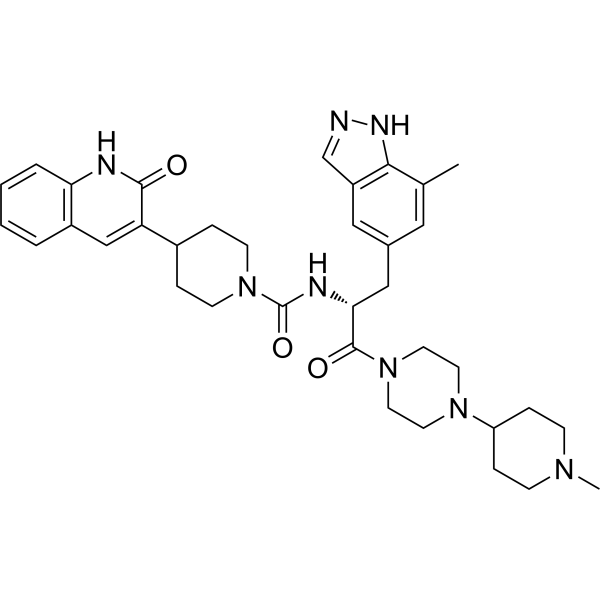
- Formula: C36H46N8O3
- Molecular Weight: 638.80
Vazegepant (Zavegepant; BHV-3500) is an orally active calcitonin gene-related peptide (CGRP) receptor antagonist with a Ki of 23 pM for human CGRP receptor and an EC50 of 880 pM for reversing CGRP-induced vasodilation in human intracranial arteries. Vazegepant can block CGRP-mediated vasodilation in the trigeminal vascular system and inhibit neuronal circuit sensitization. Vazegepant can be used in migraine-related research.

- Molecular Weight: 145.5 kDa
Erenumab (AMG-334) is a fully human monoclonal antibody. Erenumab inhibits the calcitonin gene-related peptide (CGRP) receptor. Erenumab prevents the increase in dermal blood flow in cynomolgus monkeys. Erenumab can be used in the research of episodic migraine.
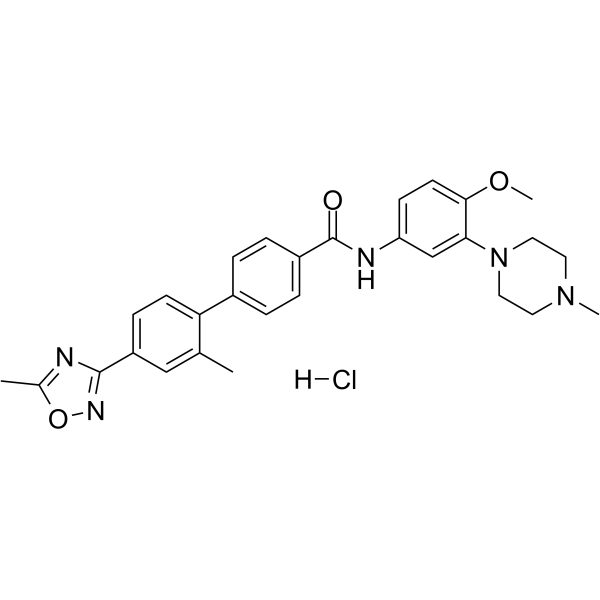
- Formula: C29H32ClN5O3
- Molecular Weight: 534.05
GR127935 hydrochloride is a selective and orally active 5-HT1D and 5-HT1B receptor antagonist with pKi values of 8.5 for both receptors. GR127935 hydrochloride impairs memory acquisition and Serotonin (HY-B1473A)-mediated vasodilation. GR127935 hydrochloride can be used for research on amnesia, neuroendocrine cancer, and migraine.

- Formula: C29H31N5O3
- Molecular Weight: 497.59
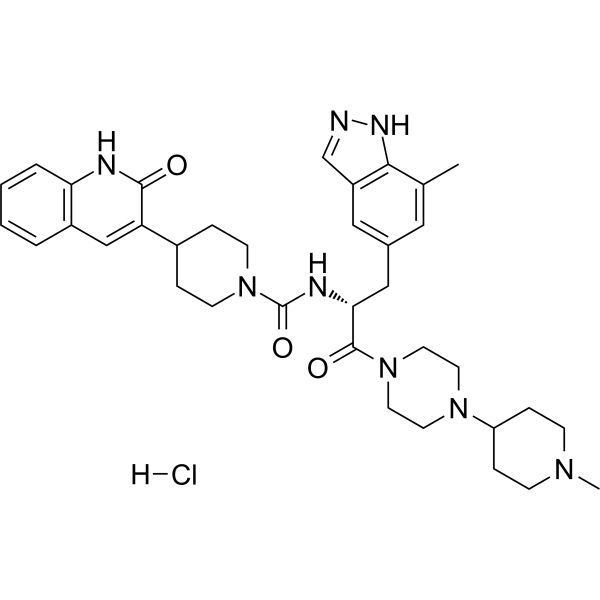
- Formula: C36H47ClN8O3
- Molecular Weight: 675.26
Vazegepant (Zavegepant hydrochloride; BHV-3500 hydrochloride) hydrochloride is an orally active calcitonin gene-related peptide (CGRP) receptor antagonist with a Ki of 23 pM for human CGRP receptor and an EC50 of 880 pM for reversing CGRP-induced vasodilation in human intracranial arteries. Vazegepant hydrochloride can block CGRP-mediated vasodilation in the trigeminal vascular system and inhibit neuronal circuit sensitization. Vazegepant hydrochloride can be used in migraine-related research.
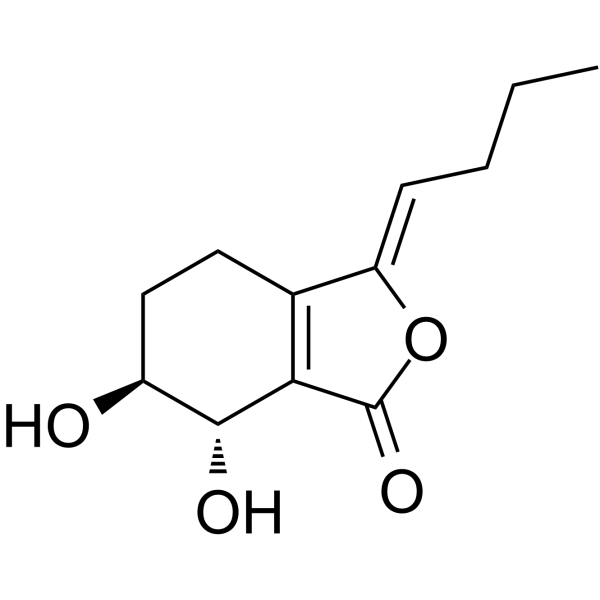
- Formula: C12H16O4
- Molecular Weight: 224.26
Senkyunolide I is an orally active, blood-brain barrier-permeable metabolite of Z-ligustilide (HY-N0401A). Senkyunolide I is isolated from Ligusticum chuanxiong. Senkyunolide I upregulates p-Erk1/2 and Nrf2/HO-1, and inhibits Caspase 3. Senkyunolide I alleviates Apoptosis. Senkyunolide I increases the pain threshold in mice and reduces acetic acid-induced writhing responses in mice. Senkyunolide I improves neurological deficits, reduces infarct volume and alleviates cerebral edema in rats with focal cerebral ischemia-reperfusion injury. Senkyunolide I protects renal function and structural integrity in a mouse model of renal ischemia-reperfusion injury. Senkyunolide I is applicable to research related to focal cerebral ischemia-reperfusion injury, migraine, and renal ischemia-reperfusion injury.

- Molecular Weight: 143.36 kDa
Eptinezumab (ALD-403) is a human monoclonal antibody targeting the α and β subtypes of human calcitonin gene-related peptide (CGRP). Eptinezumab binds to the CGRP ligand and blocks its binding to endogenous CGRP receptors, thereby inhibiting receptor activation. Eptinezumab can be used in research related to migraine.

- Formula: C28H32F2N6O3.1/2H2O4S.3/2H2O
- Molecular Weight: 610.26
Rimegepant (BMS-927711) sulfate hydrate is a potent, orally active, selective and competitive calcitonin gene-related peptide (CGRP) receptor antagonist with a Ki of 0.027 nM and an IC50 of 0.14 nM for hCGRP receptor. Rimegepant sulfate hydrate can be used for migraine research.
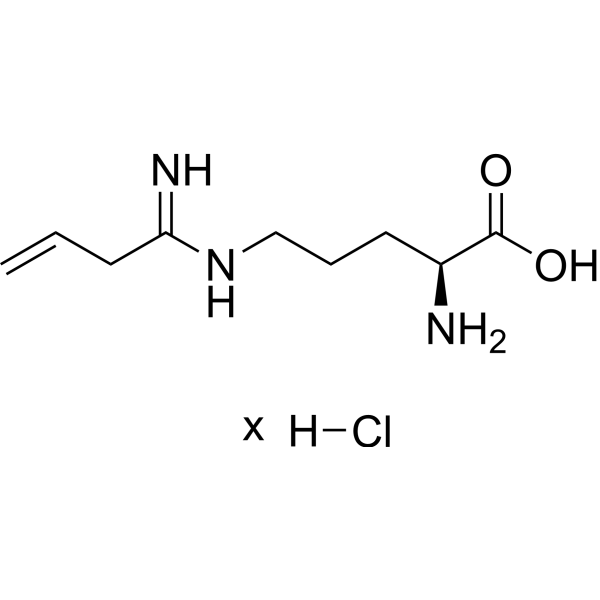
- Formula: C9H17N3O2.xHCl
Vinyl-L-NIO (L-VNIO) hydrochloride is a neuronal nitric oxide synthase (NOS) inhibitor with a rat Ki of 0.10 μM. Vinyl-L-NIO hydrochloride inhibits NADPH oxidase activity, attenuates renal fibrosis, inflammation, oxidative stress indices, and albuminuria. Vinyl-L-NIO hydrochloride can be used for the research of parkinson's disease, migraine headache, and hypertension.

- Formula: C22H34N2O6S3
- Molecular Weight: 518.71
PL37 (Debio-0827) is an orally active, blood-brain barrier permeable dual enkephalinase inhibitor. PL37 inhibits aminopeptidase N, neprilysin, and metalloproteases, thereby blocking the degradation of endogenous enkephalins, elevating enkephalin levels, and activating peripheral μ- and δ-opioid receptors. PL37 induces mitochondrial dysfunction, mitophagy, and apoptosis, inhibits endothelial cell proliferation, migration, invasion, and tube formation, and suppresses hemangioma tumor growth and angiogenesis. PL37 can be used in research related to peripheral neuropathic pain, osteosarcoma-induced hyperalgesia, painful diabetic neuropathy, migraine, bone cancer pain, neuroinflammatory pain, and infantile hemangioma.

- Formula: C15H20O4
- Molecular Weight: 264.32
Tanacetin is a sesquiterpenoid compound discovered in the whole herb of Crossostephium chinense (L.) Makino. Sesquiterpene lactones, the class to which Tanacetin belongs (e.g., constituents of plants in the Tanacetum genus), inhibit the inflammatory mediators prostaglandins and leukotrienes. Tanacetin crosses intestinal cell monolayers primarily via transcellular passive diffusion, and no significant first-pass metabolism occurs during its intestinal absorption. Tanacetin is used in research related to diabetes, migraine, and rheumatoid arthritis.
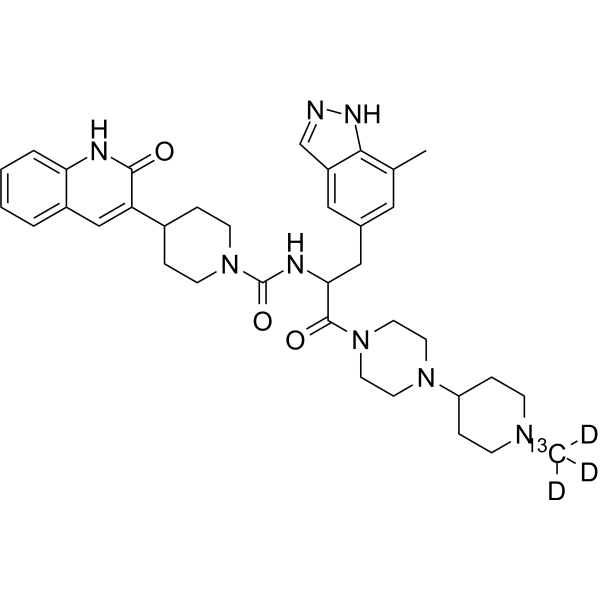
- Formula: C3513CH43D3N8O3
- Molecular Weight: 642.81
(Rac)-Vazegepant-13C,d3 ((Rac)-Zavegepant-13C,d3; (Rac)-BHV-3500-13C,d3) is the deuterated, 13C-labeled Vazegepant (HY-134992). Vazegepant (Zavegepant; BHV-3500) is an orally active calcitonin gene-related peptide (CGRP) receptor antagonist with a Ki of 23 pM for human CGRP receptor and an EC50 of 880 pM for reversing CGRP-induced vasodilation in human intracranial arteries. Vazegepant can block CGRP-mediated vasodilation in the trigeminal vascular system and inhibit neuronal circuit sensitization. Vazegepant can be used in migraine-related research.

- Formula: C66H88N16O16S2
- Molecular Weight: 1425.63
Fonagepant (FE 205030) is a calcitonin gene-related peptide (CGRP) receptor antagonist with an IC50 of 0.2 nM. Fonagepant selectively blocks CGRP receptor activity, inhibits CGRP-induced vasodilation, attenuates capsaicin-induced increase in skin blood flow, and blocks CGRP-induced vasodilation in isolated human mesenteric resistance arteries. Fonagepant can be used in studies related to acute migraine attacks.

- Formula: C33H34D3N5O5
- Molecular Weight: 586.70
Dihydroergotamine-d3 is the d3-labeled Dihydroergotamine (HY-B0670). Dihydroergotamine (DFN-19) is a blood-brain barrier-permeable semi-synthetic ergot alkaloid, acting as a full agonist of 5-HT1B/1D receptors (Ki values of 0.3 nM and 2.5 nM, respectively; functional IC50 values of 2 nM and 2.2 nM, respectively). Dihydroergotamine inhibits Forskolin (HY-15371)-stimulated cAMP accumulation, possesses α-adrenergic receptor antagonistic activity and weak dopaminergic agonistic activity. It mediates intracranial cerebrovascular contraction, inhibits the release of neuropeptides such as CGRP/substance P, and suppresses neurogenic inflammation by activating 5-HT1B/1D receptors in the trigeminovascular system. Dihydroergotamine binds to the catalytic site of Trypanosoma cruzi trypanothione reductase and exhibits trypanocidal activity in vitro. Dihydroergotamine can be used in studies related to migraine and trypanosome infections.

- Formula: C26H26O6
- Molecular Weight: 434.49
(Rac)-LY-2300559 is a positive allosteric modulator of metabotropic glutamate receptor 2 (mGlu2) and an antagonist of cysteinyl leukotriene 1 (CysLT1) receptor, with both EC50 and IC50 values less than 12.5 μM. (Rac)-LY-2300559 enhances glutamate-induced mGlu2 receptor signaling while exerting antagonistic activity against the CysLT1 receptor. (Rac)-LY-2300559 can be used in migraine-related research.

- Formula: C15H23NO2
- Molecular Weight: 249.35
Mabuprofen (Aminoprofen) is an amide derivative of Ibuprofen (HY-78131) and a COX inhibitor. Mabuprofen inhibits prostaglandin biosynthesis, thereby reducing inflammation, relieving pain and lowering body temperature. Mabuprofen is applicable to research related to arthritis, muscle pain, inflammatory diseases, headache and toothache.
- 1
- 2



