



Dihydroergotamine
Based on 6 publication(s) in Google Scholar
Dihydroergotamine (DFN-19) is a blood-brain barrier-permeable semi-synthetic ergot alkaloid, acting as a full agonist of 5-HT1B/1D receptors (Ki values of 0.3 nM and 2.5 nM, respectively; functional IC50 values of 2 nM and 2.2 nM, respectively). Dihydroergotamine inhibits Forskolin (HY-15371)-stimulated cAMP accumulation, possesses α-adrenergic receptor antagonistic activity and weak dopaminergic agonistic activity. It mediates intracranial cerebrovascular contraction, inhibits the release of neuropeptides such as CGRP/substance P, and suppresses neurogenic inflammation by activating 5-HT1B/1D receptors in the trigeminovascular system. Dihydroergotamine binds to the catalytic site of Trypanosoma cruzi trypanothione reductase and exhibits trypanocidal activity in vitro. Dihydroergotamine can be used in studies related to migraine and trypanosome infections.
For research use only. We do not sell to patients.
- CAS No.: 511-12-6
- Formula: C33H37N5O5
- Molecular Weight:583.68
-
Storage:
Please store the product under the recommended conditions in the Certificate of Analysis.


To place orders, for customer services and technical support, please contact: MedChemExpress USA
Tel: 609-228-6898 E-mail: [email protected] [email protected]


-
 Biological Activity
-
Chemical Information
- Protocols
- Purity & Documentation
- References
-
 Help & FAQs


Publications Citing Use of MedChemExpress (MCE) Dihydroergotamine
More Customer Validation & Images

-
Cell Imaging/Staining
-
WB
-
WB
-
IP
-
Bio/Physico-chemical Assay
All Adrenergic Receptor Isoforms
MoreAll 5-HT Receptor Isoforms
MoreAll Dopamine Receptor Isoforms
MoreAll Parasite Isoforms
More

Biological Activity
Description
|
α adrenergic receptor |
human 5-HT1B Receptor 0.3 nM (Ki) |
human 5-HT1D Receptor 2.5 nM (Ki) |
Cellular Effect
|
Cell Line

|
Type | Value | Description | References |
|---|---|---|---|---|
| HEK293 | IC50 |
12.6 μM
Compound: dihydroergotamine
|
Inhibition of human MATE2K-mediated ASP+ uptake expressed in HEK293 cells after 1.5 mins by fluorescence assay
Inhibition of human MATE2K-mediated ASP+ uptake expressed in HEK293 cells after 1.5 mins by fluorescence assay
|
[PMID: 23241029] |
| HEK293 | IC50 |
2.8 μM
Compound: dihydroergotamine
|
Inhibition of human MATE1-mediated ASP+ uptake expressed in HEK293 cells after 1.5 mins by fluorescence assay
Inhibition of human MATE1-mediated ASP+ uptake expressed in HEK293 cells after 1.5 mins by fluorescence assay
|
[PMID: 23241029] |
| HEK293 | IC50 |
49.9 μM
Compound: dihydroergotamine
|
Inhibition of human OCT2-mediated ASP+ uptake expressed in HEK293 cells after 3 mins by fluorescence assay
Inhibition of human OCT2-mediated ASP+ uptake expressed in HEK293 cells after 3 mins by fluorescence assay
|
[PMID: 23241029] |
In Vitro
Dihydroergotamine binds with high affinity to human 5-HT1B receptors in butyrate-treated HEK293 cells (Ki = 0.3 nM), human 5-HT1B receptors in mIFNβ-induced L929sA cells (Ki = 0.5 nM), and human 5-HT1D receptors in butyrate-treated C6 glioma cells (Ki = 0.7 nM)[1].
Dihydroergotamine (20 min) fully inhibits Forskolin (HY-15371)-stimulated cAMP accumulation in L929sA and HEK 293 cells expressing human 5-HT1B receptors, with IC50 values of 0.4 nM and 2.0 nM, respectively[1].
Dihydroergotamine (20 min) completely inhibits Forskolin-stimulated cyclic AMP accumulation in mIFNβ-induced L929sA cells expressing human 5-HT1B receptors, with an IC50 of 0.4 nM[1].
Dihydroergotamine (20 min) completely inhibits Forskolin (IC50 = 2.2 nM)- and isoproterenol-stimulated cyclic AMP accumulation in C6 glioma cells expressing the human 5-HT1D receptor[1].
Dihydroergotamine (0.01-1 μM; 24 h) mesylate protects Neuro-2a neuronal cells against oxygen-glucose deprivation-induced injury, with a significant increase in cell viability observed[3].
Dihydroergotamine binds to the catalytic site of Trypanosoma cruzi trypanothione reductase, with a docking score of -9.536 kcal/mol[4].
Dihydroergotamine (6.25-100 μg/mL; 24 h) exhibits an LC50 of 28.1 μM against the trypomastigote form of Trypanosoma cruzi strain NINOA and an LC50 of 57 μM against strain INC-5 in vitro, showing superior trypanocidal activity compared with reference trypanocidal drugs[4].
MedChemExpress (MCE) has not independently confirmed the accuracy of these methods. They are for reference only. Further protocols information, click here.
-
Cell Line:Neuro-2a neuron cell line
-
Concentration:0.01 μM, 0.1 μM, 1 μM
-
Incubation Time:24 h
-
Result:Exerted no significant effect on the viability of untreated Neuro-2a cells.
Significantly increased Neuro-2a cell viability compared to the OGD-only group at 0.1 μM and 1 μM following OGD-induced injury.
In Vivo
Dihydroergotamine (10 mg/kg/day; i.p.; daily; 14 days) improves survival, neurological function, and reduces brain injury in MCAO mice by inhibiting pro-inflammatory cytokine production and promoting microglial/macrophage polarization toward the neuroprotective M2 phenotype[3].
Dihydroergotamine (100 mg/kg; single dose) mesylate reduces blood parasite survival to 62.44% at 8 hours post-administration in a short-term murine model of acute Chagas disease, with less efficacy than benznidazole[4].
MedChemExpress (MCE) has not independently confirmed the accuracy of these methods. They are for reference only.
-
Animal Model:C57BL/6J (male, 2-month-old, 22-25 g, middle cerebral artery occlusion induced via intraluminal filament method)[3]
-
Dosage:10 mg/kg/day
-
Administration:i.p.; daily; 14 days
-
Result:Improved 14-day survival rates in MCAO mice.
Reduced contact time and removal time in the adhesive removal test.
Improved motor function scores in the beam walking test compared to untreated MCAO mice.
Reduced cerebral infarct volume from ~50% to ~30% of contralateral hemisphere volume 3 days after MCAO.
Reduced brain tissue loss from ~16% to ~7% of contralateral hemisphere volume 14 days after MCAO.
Decreased ischemic hemisphere levels of IL-1β from ~0.005 pg/μg to ~0.003 pg/μg.
Decreased ischemic hemisphere levels of TNF-α from ~0.015 pg/μg to ~0.008 pg/μg.
Reduced the ratio of TNF-α/NeuN and IL-1β/NeuN positive neurons.
Decreased the relative level of M1 microglial/macrophage marker CD16 from ~3 to ~1.
Increased the relative level of M2 marker CD206 from ~0.7 to ~2.3 compared to untreated MCAO mice.
-
Animal Model:CD1 mice (female, 30-40 g, inoculated intraperitoneally with 1×10⁵ Trypanosoma cruzi NINOA strain trypomastigotes/mL)[4]
-
Dosage:100 mg/kg
-
Administration:single dose
-
Result:Reduced blood parasite survival to 62.44% at 8 hours post-treatment.
Clinical Trial
| NCT Number | Sponsor | Condition | Start Date |
Phase
|
|---|---|---|---|---|
| NCT01329991 | Plexxikon| | 2011-05 | PHASE1 |


Chemical Information
-
CAS No. 511-12-6
-
Molecular Weight 583.68
-
Formula C33H37N5O5
-
SMILES
O[C@@]([C@@](CCC1)([H])N1C2=O)(O[C@](NC([C@@H](CN(C)[C@]3([H])C4)C[C@]3([H])C5=C6C4=CNC6=CC=C5)=O)(C)C7=O)N7[C@H]2CC8=CC=CC=C8
-
Synonyms
DFN-19
-
Shipping
Room temperature in continental US; may vary elsewhere.
-
Storage
Please store the product under the recommended conditions in the Certificate of Analysis.


Publications (6)
-
Journal Impact Factor
-
Most Recent
-
Science
2025 Feb 21;387(6736):892-900. PMID: 39977508 -
Nat Commun
2024 Sep 3;15(1):7654. PMID: 39227578
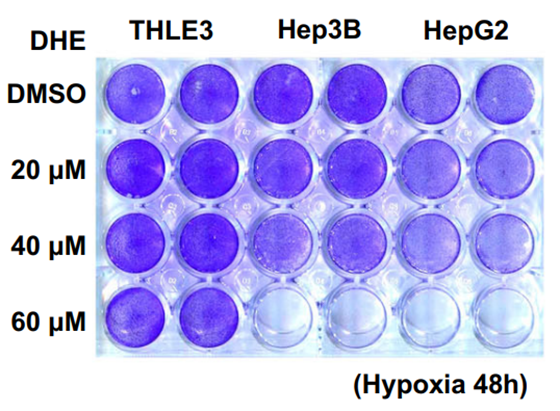
Dihydroergotamine purchased from MedChemExpress. Usage Cited in: Nat Commun. 2024 Sep 3;15(1):7654. [Abstract]
THLE3, Hep3B and HepG2 cells were treated with DMSO or DHE (20, 40, 60 μM) as indicated concentration for 48 h under hypoxia, followed by crystal violet staining assay.
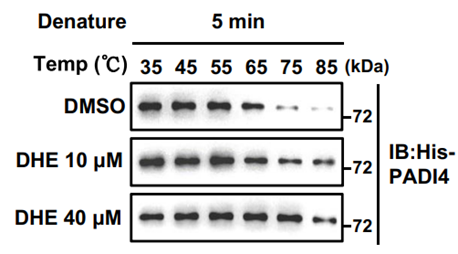
Dihydroergotamine purchased from MedChemExpress. Usage Cited in: Nat Commun. 2024 Sep 3;15(1):7654. [Abstract]
His-PADI4 proteins were incubated with DMSO or DHE (10, 60 μM) under the indicated temperature before western blotting analysis.
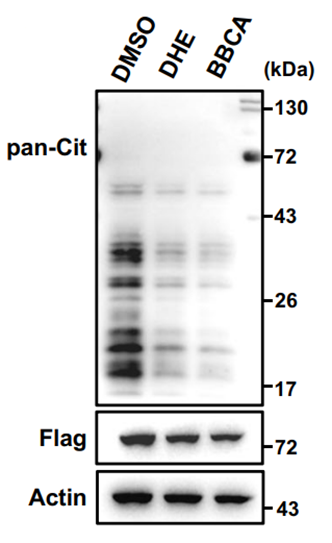
Dihydroergotamine purchased from MedChemExpress. Usage Cited in: Nat Commun. 2024 Sep 3;15(1):7654. [Abstract]
Cell lysates of Hep3B-Flag-PADI4 cells were incubated with DMSO, 50 μM DHE, or 50 μM BBCA at 37 °C for 20 min before western blotting analysis. The samples were derived from the same experiment, but different gels for pan-Cit, another for Flag, Actin were processed in parallel.
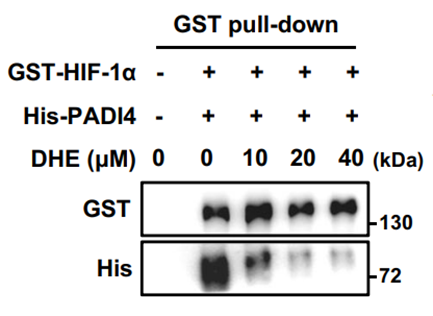
Dihydroergotamine purchased from MedChemExpress. Usage Cited in: Nat Commun. 2024 Sep 3;15(1):7654. [Abstract]
Pull-down of His-PADI4 by GST-HIF-1α in the presence of DMSO or DHE as indicated concentration. g An in vitro citrullination assay of GST-HIF-1α was performed in the presence of DMSO or DHE as indicated concentration. The samples were derived from the same experiment, but different gels for R698Cit, His, another for GST were processed in parallel.
Dihydroergotamine purchased from MedChemExpress. Usage Cited in: Nat Commun. 2024 Sep 3;15(1):7654. [Abstract]
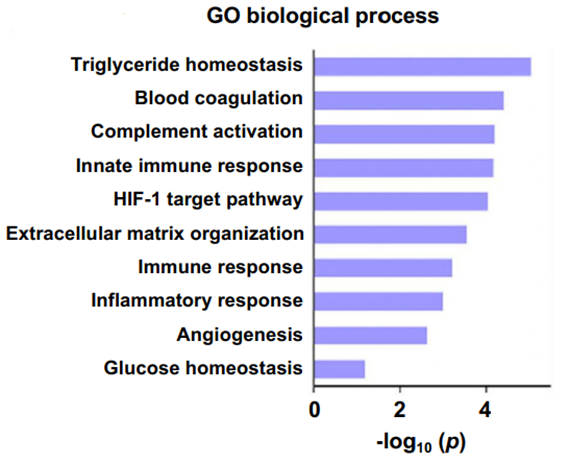
Total mRNA in Hep3B cells treated with DMSO or 20 μM, or 40 μM DHE under hypoxic conditions for 24 h were subjected to RNA-sequencing, followed by GO biological processes analysis.
Dihydroergotamine purchased from MedChemExpress. Usage Cited in: Nat Commun. 2024 Sep 3;15(1):7654. [Abstract]
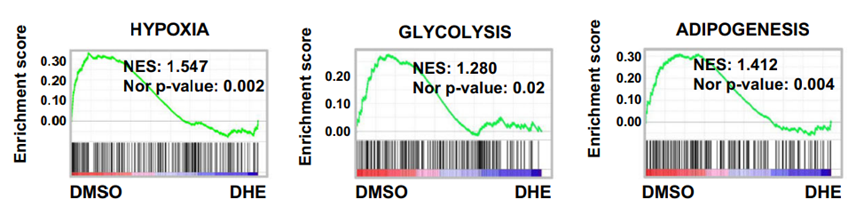
Total mRNA in Hep3B cells treated with DMSO or 20 μM, or 40 μM DHE under hypoxic conditions for 24 h were subjected to RNA-sequencing, followed by GSEA analysis.
Dihydroergotamine purchased from MedChemExpress. Usage Cited in: Nat Commun. 2024 Sep 3;15(1):7654. [Abstract]
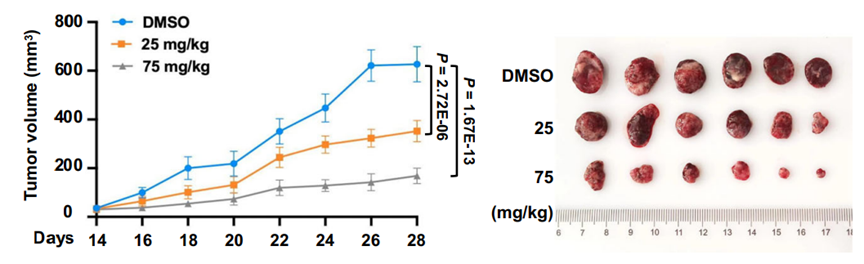
Parental Hep3B cells were injected subcutaneously into the flanks of BALB/c nude mice (n = 6 per group). After 12 days, the mice were treated with DMSO or DHE (25 mg/kg or 75 mg/kg) by i.g every 2 days. Tumour volume was determined starting on Day 14 and photographs show xenografts at the end of the experiment.
Dihydroergotamine purchased from MedChemExpress. Usage Cited in: Nat Commun. 2024 Sep 3;15(1):7654. [Abstract]
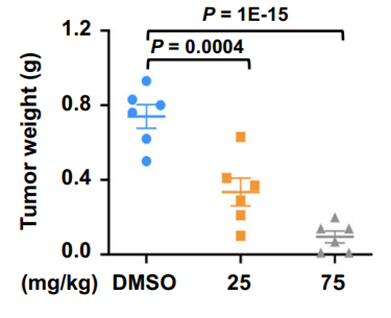
Parental Hep3B cells were injected subcutaneously into the flanks of BALB/c nude mice (n = 6 per group). After 12 days, the mice were treated with DMSO or DHE (25 mg/kg or 75 mg/kg) by i.g every 2 days. Tumour weight was measured.
-
Free Radic Biol Med
Targeted delivery of nebivolol via lactoferrin-modified liposomes inhibits NEK7-mediated pyroptosis to ameliorate inflammatory bowel disease. [Abstract]2026 Aug 16:252:493-508. PMID: 42061481 -
Biofactors
GRHL2/SENP1/VDR Signaling Axis: A Key Regulator of SUMOylation and Calcitriol Resistance in SHPT. [Abstract]2026 Mar-Apr;52(2):e70086. PMID: 41760369 -
Biomed Pharmacother
Identification of nsp16 inhibitors of SARS -CoV-2, SARS -CoV-1 and MERS-CoV from FDA-approved drugs using in silico and in vitro methods. [Abstract]2025 Aug:189:118246. PMID: 40543162 -
Elife
2020 Dec 7:9:e61405. PMID: 33284104

Protocols
-
Cell Cytotoxicity Assay
Cytotoxicity assays are usually based on the assessment of cell membrane damage, which can also be indirectly detected by measuring cell viability. Detection methods include MTT assay, CKK-8 assay, LDH assay and ATP assay, etc.
-
Research Protocol for Inflammation-related Diseases
The NLRP3 inflammasome is a cytosolic innate immune signaling platform that integrates priming signals and danger-signal activation to promote caspase-1 activation, maturation of IL-1β and IL-18, and gasdermin D-mediated pyroptotic cell death. The core experimental logic is to determine whether inflammatory disease phenotypes are driven by increased NLRP3 expression, ASC-containing inflammasome assembly, caspase-1 cleavage, GSDMD cleavage, and extracellular release of IL-1β/IL-18 rather than by nonspecific cell injury alone. The pathway is strongly linked to inflammation-related disease phenotypes because monosodium urate crystals activate NALP3/NLRP3 inflammasome signaling in gout-like crystal inflammation, cholesterol crystals activate NLRP3 inflammasomes in atherogenesis models, and DSS-induced intestinal inflammation has been reported to involve NLRP3 inflammasome activity. However, experimental colitis studies also show context-dependent protective effects of NLRP3 inflammasome co


Purity & Documentation
References

Calculators
Concentration (start) × Volume (start) = Concentration (final) × Volume (final)


Dihydroergotamine Related Classifications
HY-B0670 Related Classifications
 Powered by Bioz
Keywords