



5-HT5 Receptor
5-HT5A receptor (5-hydroxytryptamine receptor 5A, HTR5A) is a serotonin receptor subtype that couples to Gi/Go proteins and inhibits adenylate cyclase signaling, supporting its role as an inhibitory modulator of neurotransmission and intracellular cAMP regulation[1]. Compared with other serotonin receptor isoforms that predominantly activate Gs- or Gq-dependent pathways, 5-HT5A receptor signaling is characterized by suppression of cAMP production and distinct pharmacological properties, indicating a specialized regulatory function within serotonergic networks[1][2]. Mechanistically, structural studies have resolved inactive and active conformations of the human 5-HT5A receptor and provided a framework for understanding ligand recognition and receptor-selective modulation[2]. In disease-related experimental models, selective 5-HT5A receptor antagonists improved scopolamine-induced working memory deficits in mice and reference memory impairment in aged rats, supporting investigation of this receptor in cognitive dysfunction[3]. Additional preclinical studies showed that the antagonist ASP5736 ameliorated positive symptoms and cognitive impairment in animal models of schizophrenia, further linking 5-HT5A signaling to neuropsychiatric disease mechanisms[4]. For experimental applications, both agonists and antagonists have been developed, and recent structure-guided approaches have enabled the design of more selective pharmacological tools for dissecting 5-HT5A-specific functions in the central nervous system[2][3][4].
References:
- [1]. Pozza M, et al. Is neuronal nitric oxide involved in adjuvant-induced joint inflammation? Eur J Pharmacol. 1998 Oct 16;359(1):87-93. [Content Brief]
- [2]. Kiros M, et al. Trends in HIV-1 pretreatment drug resistance and HIV-1 variant dynamics among antiretroviral therapy-naive Ethiopians from 2003 to 2018: a pooled sequence analysis. Virol J. 2023 Oct 25;20(1):243. [Content Brief]
- [3]. Zhang JG, et al. Antihyperglycemic activity of Anoectochilus roxburghii polysaccharose in diabetic mice induced by high-fat diet and streptozotocin. J Ethnopharmacol. 2015 Apr 22;164:180-5. [Content Brief]
- [4]. Bartemes KR, et al. Enhanced innate type 2 immune response in peripheral blood from patients with asthma. J Allergy Clin Immunol. 2014 Sep;134(3):671-678.e4. [Content Brief]
-
5-HT5 Receptor Related Products (14)
Related Products (14)

- 1
-
Methiothepin mesylate
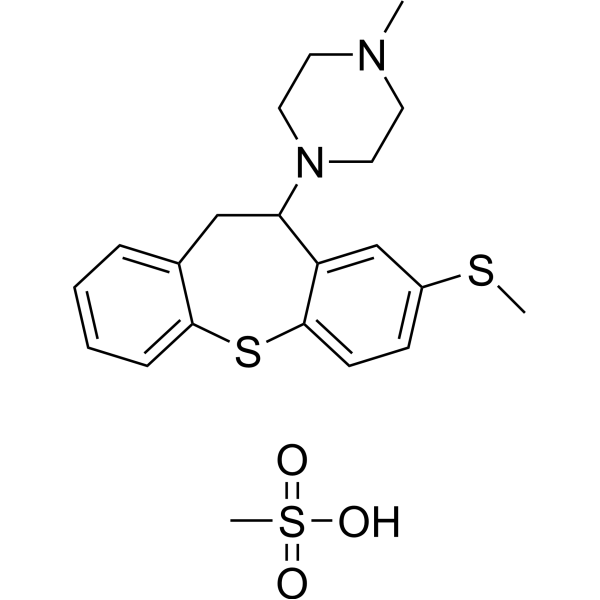 0 ImagesSynonyms: Metitepine mesylate; Ro 8-6837 mesylateMethiothepin (Metitepine) mesylate is a potent and non-selective 5-HT2 receptor antagonist, with pKds of 7.10 (5-HT1A), 7.28 (5HT1B), 7.56 (5HT1C), 6.99 (5HT1D), 7.0 (5-HT5A), 7.8 (5-HT5B), 8.74 (5-HT6), and 8.99 (5-HT7), and pKis of 8.50 (5HT2A), 8.68 (5HT2B), and 8.35 (5HT2C).
-
SB-699551
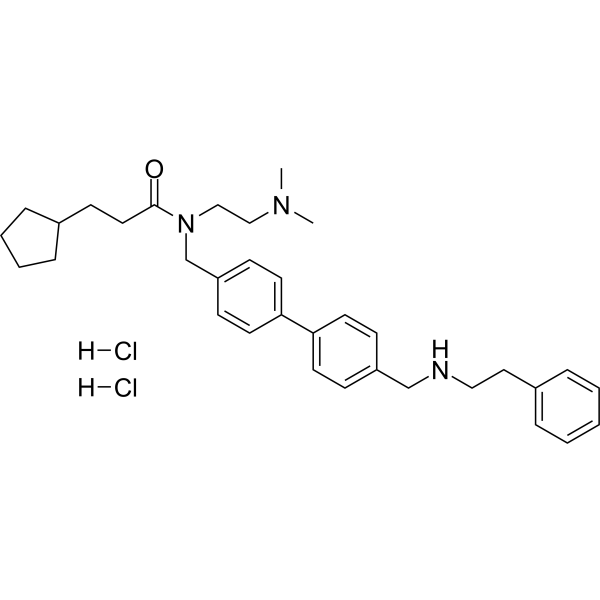 0 ImagesSB-699551 is a selective and brain penetrant 5-HT5A receptor antagonist with a pKi of 8.2 nM. SB-699551 shows high selectivity over most other 5-HT receptor subtypes, dopamine receptors, and α1B adrenoceptor. SB-699551 disrupts Gαi/o-coupled and PI3K/AKT/mTOR signaling pathways, alters CREB, ATF1, AKT, PRAS40, S6K, and FOXO1 phosphorylation in breast tumor cells. SB-699551 can be used for the research of anxiety, breast cancer, and Alzheimer's disease.
-
AS19
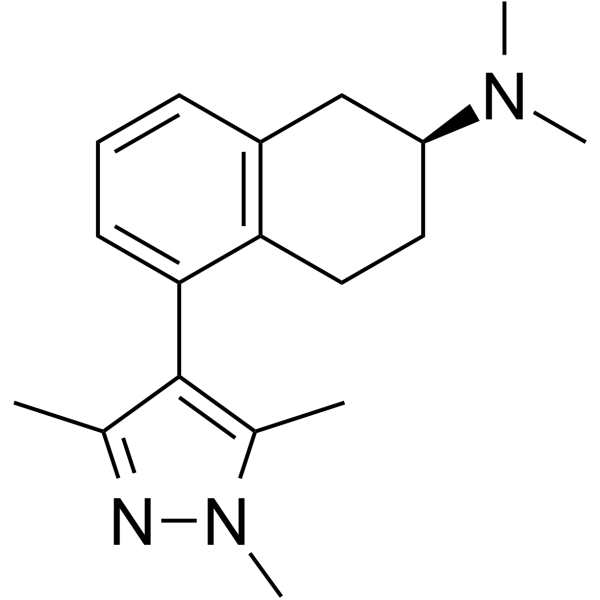 0 ImagesAS19 is a potent, selective 5-HT7 receptor agonist with an IC50 value of 0.83 nM and a Ki of 0.6 nM. AS19 is selective for 5-HT7 over 5-HT1A, 5-HT1B, 5-HT1D, and 5-HT5A receptors (Kis = 89.7 nM, 490 nM, 6.6 nM and 98.5 nM, respectively). AS19 enhances memory consolidation and reverses Scopolamine- or Dizocilpine-induced amnesia.
-
Valerenic acid
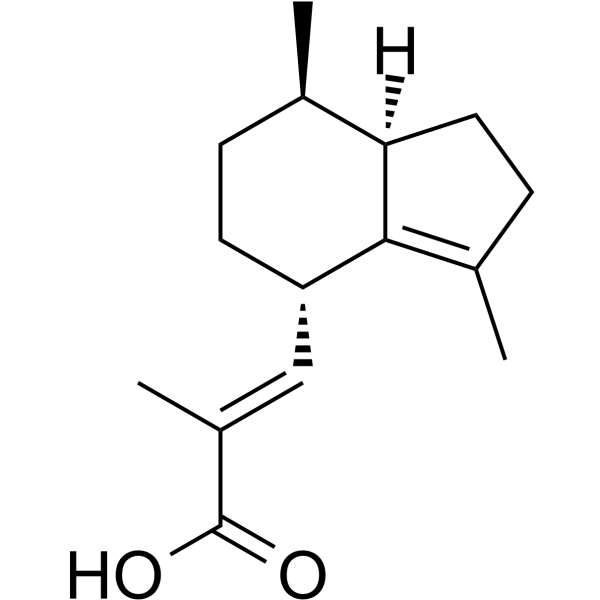 0 ImagesValerenic acid ((-)-Valerenic Acid), a sesquiterpenoid, is an orally active positive allosteric modulator of GABAA receptors. Valerenic acid is also a partial agonist of the 5-HT5a receptor. Valerenic acid mediates anxiolytic activity via GABAA receptors containing the β3 subunit. Valerenic acid also exhibits potent antioxidant properties.
-
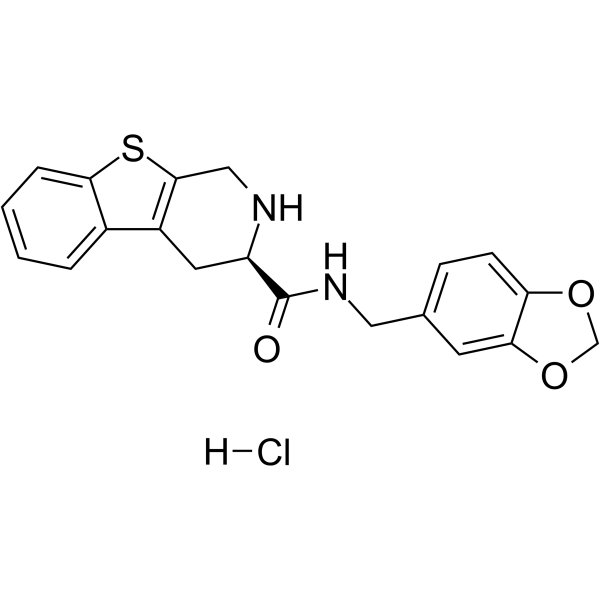
5-Carboxamidotryptamine
 0 ImagesSynonyms: 5-CT5-Carboxamidotryptamine (5-CT) is a 5-HT1A, 5-HT1B, 5-HT1D, 5-HT5A, 5-HT7 receptor agonist. 5-Carboxamidotryptamine has a Ki value of 4.6 nM for cloned human 5-HT5A receptor. 5-Carboxamidotryptamine causes a dose-dependent reduction in rectal temperature of mice.
-
Norpsilocin
 0 ImagesCat. No.: HY-N20747CAS No.: 28363-70-4Synonyms: 4-Hydroxy-N-methyltryptamine; 4-HO-NMTNorpsilocin (4-hydroxy-N-methyltrypt amine; 4-HO-NMT) is a natural tryptamine alkaloid isolated from the hallucinogenic mushroom Psilocybe cubensis. Norpsilocin activates human 5-HT2 receptors (5-HT2A: EC50 = 8.4 nM; 5-HT2B = 12.8 nM; 5-HT2C = 39.6 nM) and displays binding affinity toward 5-HT1 receptors (5-HT1B: Ki = 212 nM; 5-HT1D = 48.9 nM; 5-HT1E = 81.7 nM). Norpsilocin induces β-arrestin recruitment at the 5-HT1B receptor. Norpsilocin fails to produce psychedelic-like effects in mice, whereas high doses can induce hypothermia in vivo. Norpsilocin acts as an important research tool for exploring the structure–activity relationship of tryptamine hallucinogens and the pharmacology of serotonin receptors.
-
Valerenic acid (Standard)
 0 ImagesCat. No.: HY-103524RCAS No.: 3569-10-6Synonyms: (-)-Valerenic Acid (Standard)Valerenic acid (Standard) is the analytical standard of Valerenic acid. This product is intended for research and analytical applications. Valerenic acid ((-)-Valerenic Acid), a sesquiterpenoid, is an orally active positive allosteric modulator of GABAA receptors. Valerenic acid is also a partial agonist of the 5-HT5a receptor. Valerenic acid mediates anxiolytic activity via GABAA receptors containing the β3 subunit. Valerenic acid also exhibits potent antioxidant properties.
-
UCSF648
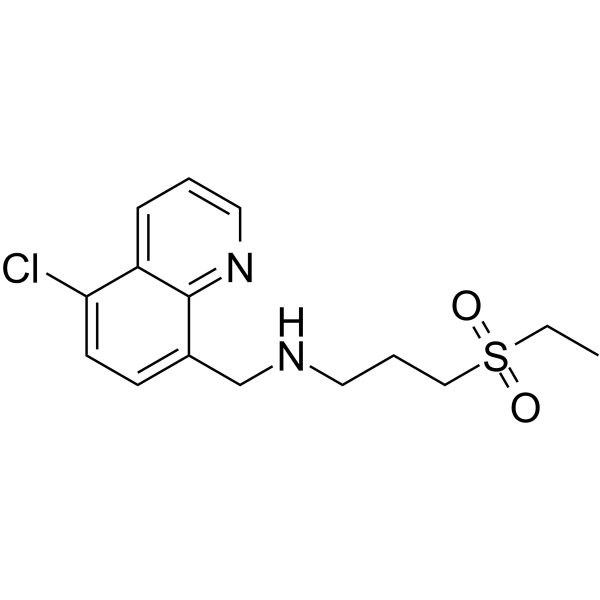 0 ImagesCat. No.: HY-145700CAS No.: 2637090-55-0UCSF648 (Compound 5A6-48) is a chemical probe for the 5-HT5A serotonin receptor. UCSF648 weakly activates ADRA2A and MTNR1A.
-
Methiothepin
 0 ImagesCat. No.: HY-111491CAS No.: 20229-30-5Synonyms: Metitepine; Ro 8-6837Methiothepin (Metitepine; Ro 8-6837) is a potent and non-selective 5-HT2 receptor antagonist, with pKds of 7.10 (5-HT1A), 7.28 (5HT1B), 7.56 (5HT1C), 6.99 (5HT1D), 7.0 (5-HT5A), 7.8 (5-HT5B), 8.74 (5-HT6), and 8.99 (5-HT7), and pKis of 8.50 (5HT2A), 8.68 (5HT2B), and 8.35 (5HT2C).
-
UCSF686
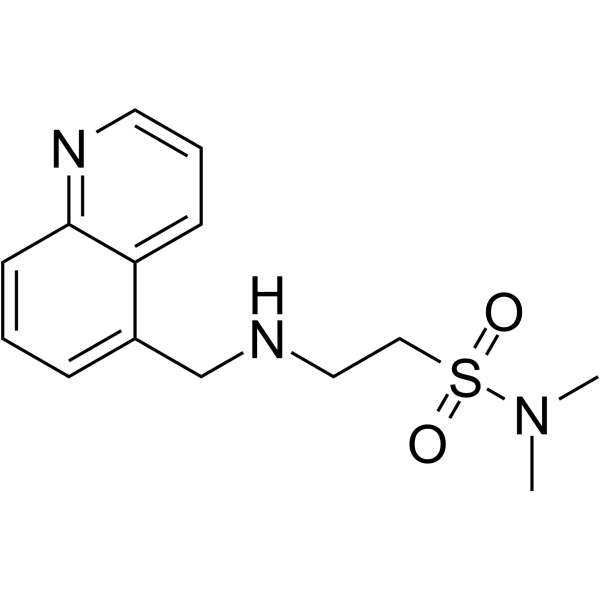 0 ImagesCat. No.: HY-145699CAS No.: 2248852-19-7UCSF686 is a probe with which to study the function of the 5-HT5AR. UCSF686 loses affinity at 5-HT5AR (>10 000 nM) but not at 5-HT1AR, 5-HT2BR, and 5-HT7R. UCSF686 controls for off-target effects.
-
Methiothepin maleate
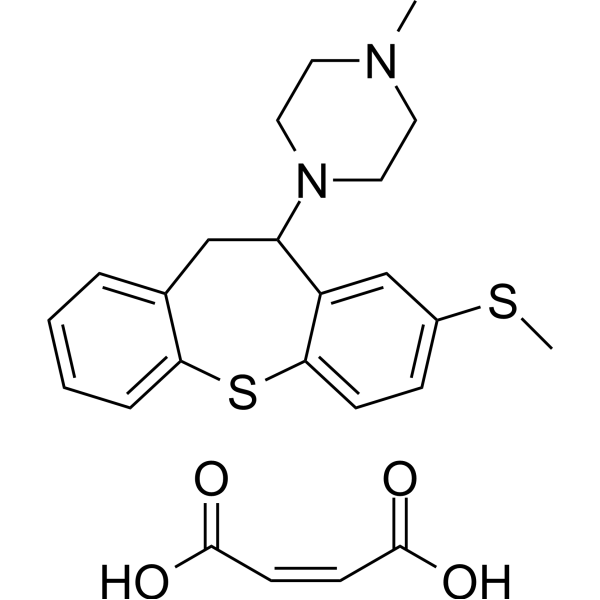 0 ImagesCat. No.: HY-101009CAS No.: 19728-88-2Synonyms: Metitepine maleate; Ro-8-6837 maleateMethiothepin maleate is a potent and non-selective 5-HT2 receptor antagonist, with pKds of 7.10 (5-HT1A), 7.28 (5HT1B), 7.56 (5HT1C), 6.99 (5HT1D), 7.0 (5-HT5A), 7.8 (5-HT5B), 8.74 (5-HT6), and 8.99 (5-HT7), and pKis of 8.50 (5HT2A), 8.68 (5HT2B), and 8.35 (5HT2C).
-
5-HT5AR/5-HT6R ligand-1
 0 ImagesCat. No.: HY-1730455-HT5AR/5-HT6R ligand-1 (Compound PP10) is a ligand for serotonin receptors, showing high affinity for 5-HT5A and 5-HT6 receptors, with Ki values of 59 nM and 96 nM, respectively. 5-HT5AR/5-HT6R ligand-1 exhibits certain antiproliferative activity against tumor cells and can be used in the study of cancer.
-
SB-699551 free base
 0 ImagesCat. No.: HY-136700CAS No.: 791789-61-2SB-699551 free base is a selective and brain penetrant 5-HT5A receptor antagonist with a pKi of 8.2 nM. SB-699551 free base shows high selectivity over most other 5-HT receptor subtypes, dopamine receptors, and α1B adrenoceptor. SB-699551 free base disrupts Gαi/o-coupled and PI3K/AKT/mTOR signaling pathways, alters CREB, ATF1, AKT, PRAS40, S6K, and FOXO1 phosphorylation in breast tumor cells. SB-699551 free base can be used for the research of anxiety, breast cancer, and Alzheimer's disease.
- 1



