



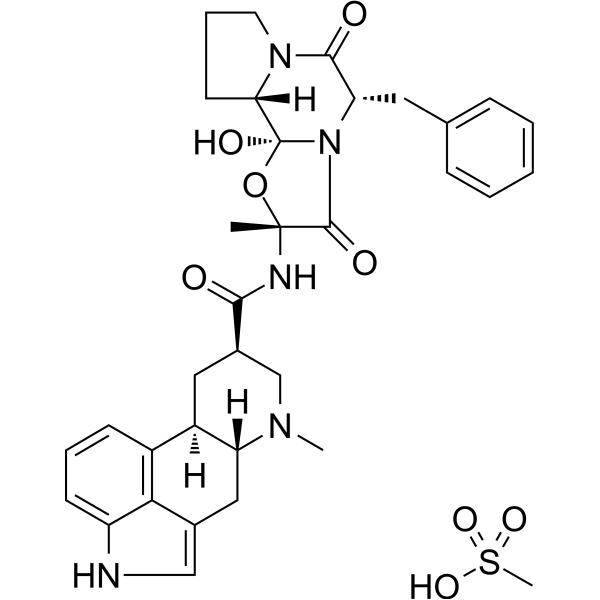
Dihydroergotamine mesylate
Based on 6 publication(s) in Google Scholar
Dihydroergotamine mesylate is a blood-brain barrier-permeable semi-synthetic ergot alkaloid, acting as a full agonist of 5-HT1B/1D receptors (Ki values of 0.3 nM and 2.5 nM, respectively; functional IC50 values of 2 nM and 2.2 nM, respectively). Dihydroergotamine mesylate inhibits Forskolin (HY-15371)-stimulated cAMP accumulation, possesses α-adrenergic receptor antagonistic activity and weak dopaminergic agonistic activity. It mediates intracranial cerebrovascular contraction, inhibits the release of neuropeptides such as CGRP/substance P, and suppresses neurogenic inflammation by activating 5-HT1B/1D receptors in the trigeminovascular system. Dihydroergotamine mesylate binds to the catalytic site of Trypanosoma cruzi trypanothione reductase and exhibits trypanocidal activity in vitro. Dihydroergotamine mesylate can be used in studies related to migraine and trypanosome infections.
商品は「研究用試薬」です。人や動物の医療用・臨床診断用・食品用の製品ではありません。
研究用途以外に使用した場合、当社は一切の責任を負いかねます。
- 純度 : 99.94%
- CAS 番号: 6190-39-2
- 分子式: C34H41N5O8S
- 分子量:679.78
-
保管条件:
4°C, sealed storage, away from moisture and light
* In solvent : -80°C, 1 year; -20°C, 6 months (sealed storage, away from moisture and light)

To place orders, for customer services and technical support, please contact: MedChemExpress USA
Tel: 609-228-6898 E-mail: [email protected] [email protected]


-
 生物活性
生物活性
-
化学情報
-
溶剤 & 溶解度
- プロトコル
- 純度とドキュメンテーション
- 参考文献
-
 Help & FAQs


-
HY-10159
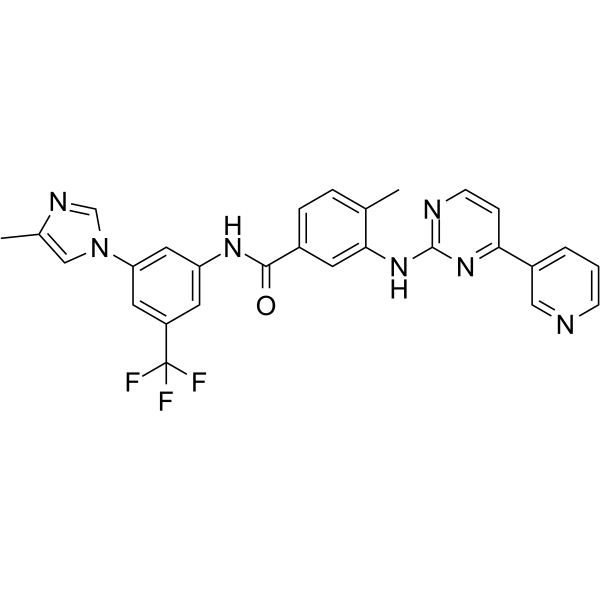
NilotinibBcr-Abl Inhibitor -
HY-15306
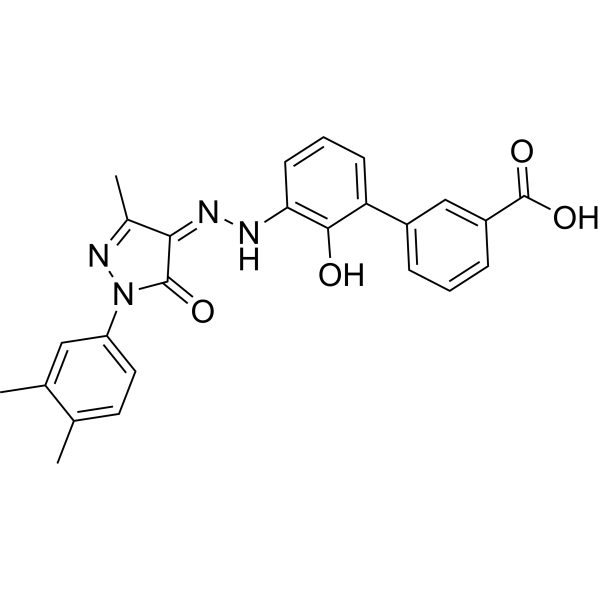
EltrombopagTPO Receptor Agonist -
HY-16562
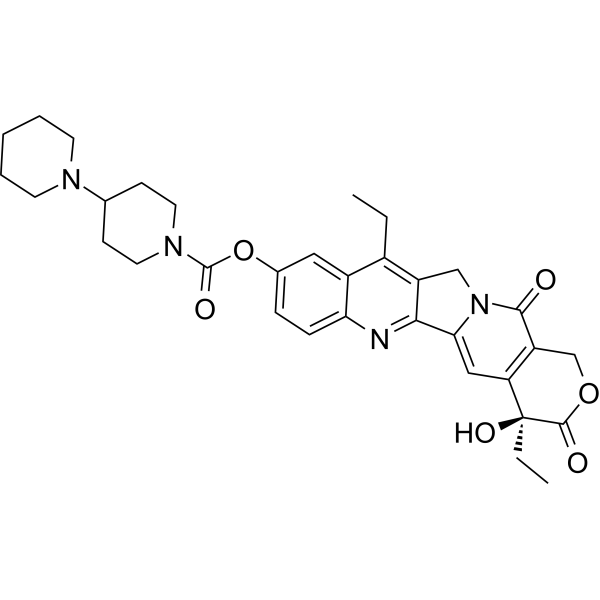
IrinotecanTopoisomerase I Inhibitor -
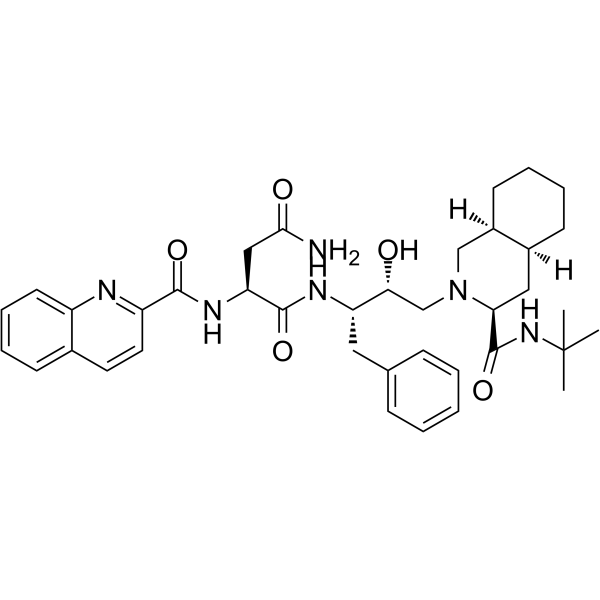
HY-17007
SaquinavirHIV Protease Inhibitor -
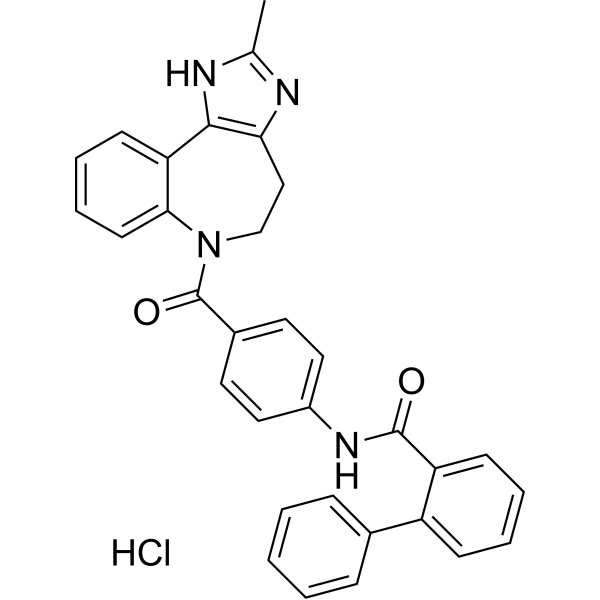
HY-18347A
Conivaptan hydrochlorideVasopressin V1a/V2 Receptor Antagonist -
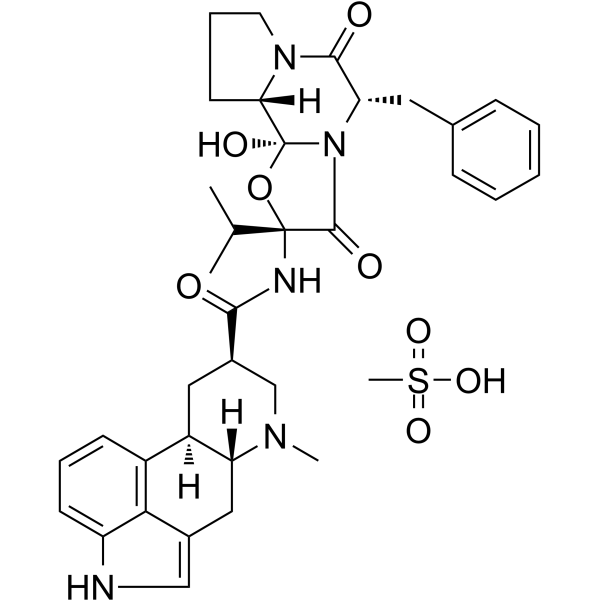
HY-N2319
Dihydroergocristine mesylateAmyloid-β Inhibitor -
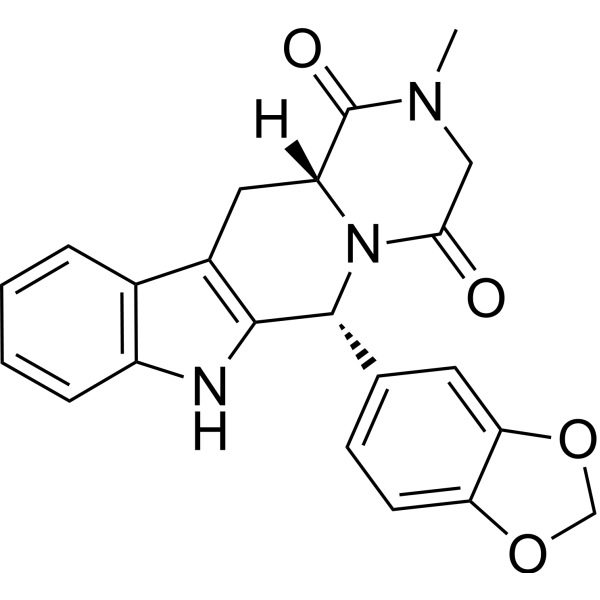
HY-90009A
TadalafilPDE5 Inhibitor -
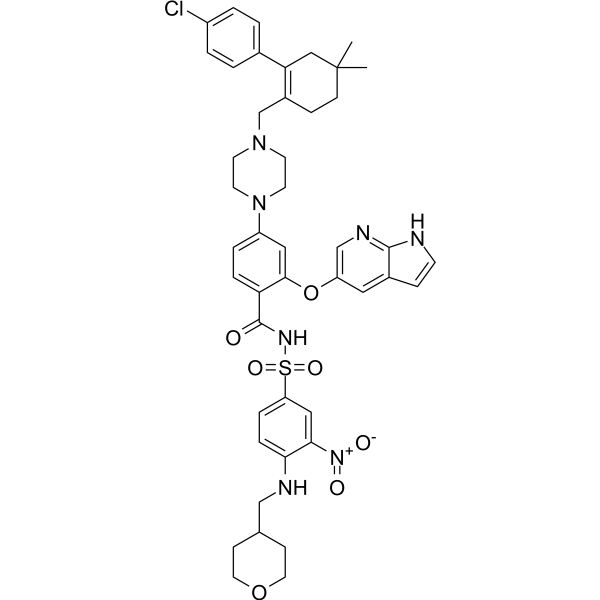
HY-15531
VenetoclaxBCL-2 Inhibitor -
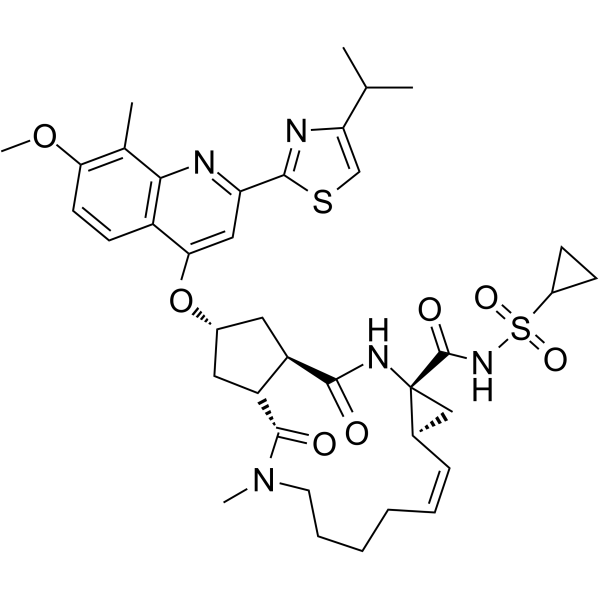
HY-10241
SimeprevirHCV NS3/4A Inhibitor -
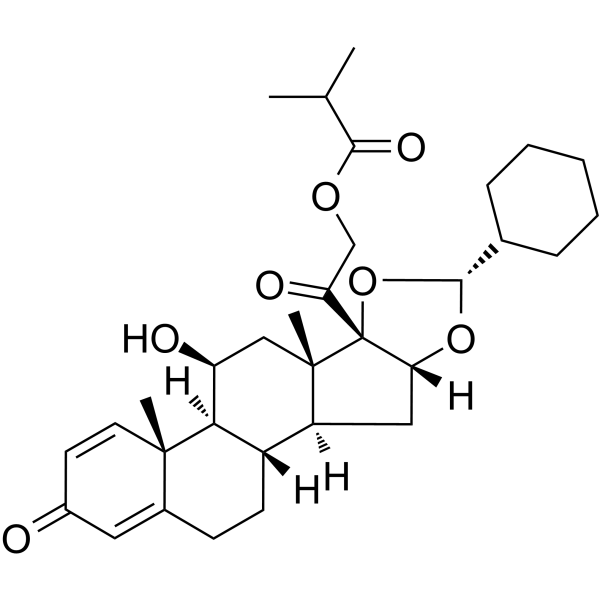
HY-B0625
CiclesonideGlucocorticoid -
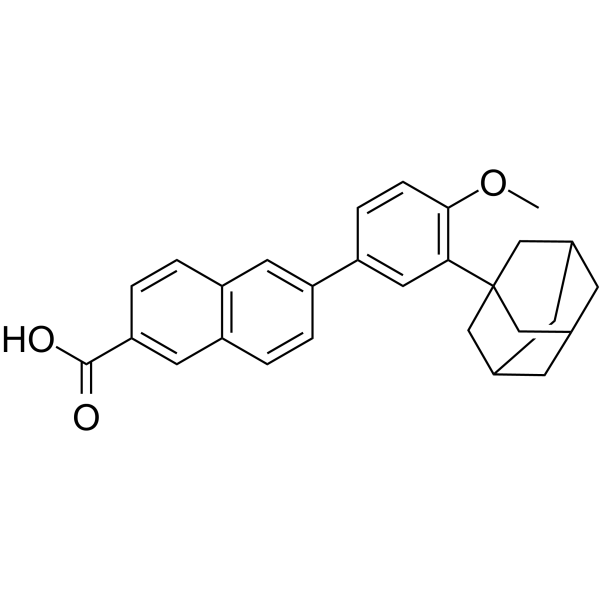
HY-B0091
AdapaleneRAR Agonist -
HY-12987
PimozideDopamine Receptor Antagonist
MedChemExpress(MCE)の使用を引用している文献 Dihydroergotamine mesylate
More Customer Validation & Images

-
Cell Imaging/Staining
-
WB
-
WB
-
IP
-
Bio/Physico-chemical Assay
Adrenergic Receptor アイソフォーム固有の製品をすべて表示
More5-HT Receptor アイソフォーム固有の製品をすべて表示
MoreDopamine Receptor アイソフォーム固有の製品をすべて表示
MoreParasite アイソフォーム固有の製品をすべて表示
More

生物活性
製品説明
IC50 & Target
|
α adrenergic receptor |
human 5-HT1B Receptor 0.3 nM (Ki) |
human 5-HT1D Receptor 2.5 nM (Ki) |
体外実験
Dihydroergotamine mesylate binds with high affinity to human 5-HT1B receptors in butyrate-treated HEK293 cells (Ki = 0.3 nM), human 5-HT1B receptors in mIFNβ-induced L929sA cells (Ki = 0.5 nM), and human 5-HT1D receptors in butyrate-treated C6 glioma cells (Ki = 0.7 nM)[1].
Dihydroergotamine (20 min) mesylate fully inhibits Forskolin (HY-15371)-stimulated cAMP accumulation in L929sA and HEK 293 cells expressing human 5-HT1B receptors, with IC50 values of 0.4 nM and 2.0 nM, respectively[1].
Dihydroergotamine (20 min) mesylate completely inhibits Forskolin-stimulated cyclic AMP accumulation in mIFNβ-induced L929sA cells expressing human 5-HT1B receptors, with an IC50 of 0.4 nM[1].
Dihydroergotamine (20 min) mesylate completely inhibits Forskolin (IC50 = 2.2 nM)- and isoproterenol-stimulated cyclic AMP accumulation in C6 glioma cells expressing the human 5-HT1D receptor[1].
Dihydroergotamine (0.01-1 μM; 24 h) mesylate protects Neuro-2a neuronal cells against oxygen-glucose deprivation-induced injury, with a significant increase in cell viability observed[3].
Dihydroergotamine mesylate binds to the catalytic site of Trypanosoma cruzi trypanothione reductase, with a docking score of -9.536 kcal/mol[4].
Dihydroergotamine (6.25-100 μg/mL; 24 h) mesylate exhibits an LC50 of 28.1 μM against the trypomastigote form of Trypanosoma cruzi strain NINOA and an LC50 of 57 μM against strain INC-5 in vitro, showing superior trypanocidal activity compared with reference trypanocidal drugs[4].
MedChemExpress (MCE) has not independently confirmed the accuracy of these methods. They are for reference only. Further protocols information, click here.
-
Cell Line:Neuro-2a neuron cell line
-
Concentration:0.01 μM, 0.1 μM, 1 μM
-
Incubation Time:24 h
-
Result:Exerted no significant effect on the viability of untreated Neuro-2a cells.
Significantly increased Neuro-2a cell viability compared to the OGD-only group at 0.1 μM and 1 μM following OGD-induced injury.
体内実験
Dihydroergotamine (10 mg/kg/day; i.p.; daily; 14 days) mesylate improves survival, neurological function, and reduces brain injury in MCAO mice by inhibiting pro-inflammatory cytokine production and promoting microglial/macrophage polarization toward the neuroprotective M2 phenotype[3].
Dihydroergotamine (100 mg/kg; single dose) mesylate reduces blood parasite survival to 62.44% at 8 hours post-administration in a short-term murine model of acute Chagas disease, with less efficacy than benznidazole[4].
MedChemExpress (MCE) has not independently confirmed the accuracy of these methods. They are for reference only.
-
Animal Model:C57BL/6J (male, 2-month-old, 22-25 g, middle cerebral artery occlusion induced via intraluminal filament method)[3]
-
Dosage:10 mg/kg/day
-
Administration:i.p.; daily; 14 days
-
Result:Improved 14-day survival rates in MCAO mice.
Reduced contact time and removal time in the adhesive removal test.
Improved motor function scores in the beam walking test compared to untreated MCAO mice.
Reduced cerebral infarct volume from ~50% to ~30% of contralateral hemisphere volume 3 days after MCAO.
Reduced brain tissue loss from ~16% to ~7% of contralateral hemisphere volume 14 days after MCAO.
Decreased ischemic hemisphere levels of IL-1β from ~0.005 pg/μg to ~0.003 pg/μg.
Decreased ischemic hemisphere levels of TNF-α from ~0.015 pg/μg to ~0.008 pg/μg.
Reduced the ratio of TNF-α/NeuN and IL-1β/NeuN positive neurons.
Decreased the relative level of M1 microglial/macrophage marker CD16 from ~3 to ~1.
Increased the relative level of M2 marker CD206 from ~0.7 to ~2.3 compared to untreated MCAO mice.
-
Animal Model:CD1 mice (female, 30-40 g, inoculated intraperitoneally with 1×10⁵ Trypanosoma cruzi NINOA strain trypomastigotes/mL)[4]
-
Dosage:100 mg/kg
-
Administration:single dose
-
Result:Reduced blood parasite survival to 62.44% at 8 hours post-treatment.


化学情報
-
CAS 番号 6190-39-2
-
性状 Solid
-
分子量 679.78
-
分子式 C34H41N5O8S
-
Color White to off-white
-
SMILES
O[C@@]([C@@](CCC1)([H])N1C2=O)(O[C@](NC([C@@H](CN(C)[C@]3([H])C4)C[C@]3([H])C5=C6C4=CNC6=CC=C5)=O)(C)C7=O)N7[C@H]2CC8=CC=CC=C8.CS(=O)(O)=O
-
別名
メシル酸ジヒドロエルゴタミン
-
輸送条件
Room temperature in continental US; may vary elsewhere.
-
保管条件
4°C, sealed storage, away from moisture and light
* In solvent : -80°C, 1 year; -20°C, 6 months (sealed storage, away from moisture and light)


Publications (6)
-
Journal Impact Factor
-
Most Recent
-
Science
2025 Feb 21;387(6736):892-900. PMID: 39977508 -
Nat Commun
2024 Sep 3;15(1):7654. PMID: 39227578
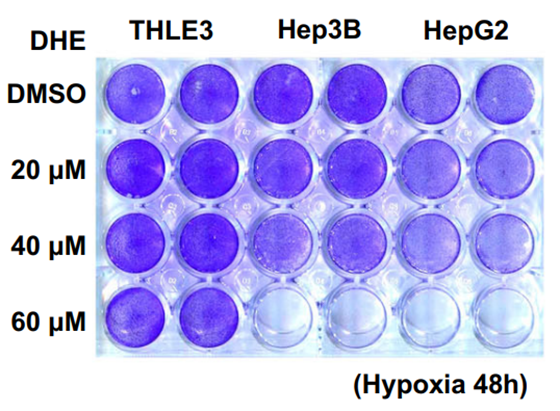
Dihydroergotamine mesylate purchased from MedChemExpress. Usage Cited in: Nat Commun. 2024 Sep 3;15(1):7654. [Abstract]
THLE3, Hep3B and HepG2 cells were treated with DMSO or DHE (20, 40, 60 μM) as indicated concentration for 48 h under hypoxia, followed by crystal violet staining assay.
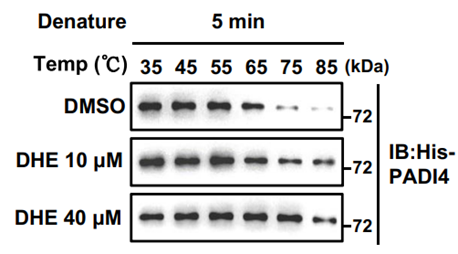
Dihydroergotamine mesylate purchased from MedChemExpress. Usage Cited in: Nat Commun. 2024 Sep 3;15(1):7654. [Abstract]
His-PADI4 proteins were incubated with DMSO or DHE (10, 60 μM) under the indicated temperature before western blotting analysis.
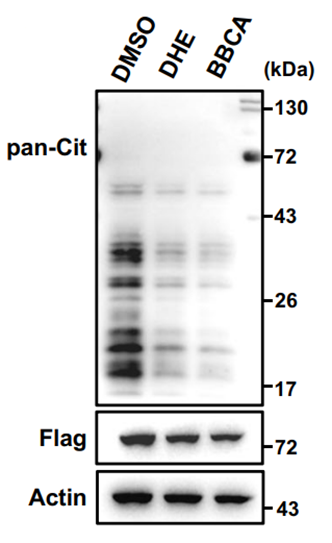
Dihydroergotamine mesylate purchased from MedChemExpress. Usage Cited in: Nat Commun. 2024 Sep 3;15(1):7654. [Abstract]
Cell lysates of Hep3B-Flag-PADI4 cells were incubated with DMSO, 50 μM DHE, or 50 μM BBCA at 37 °C for 20 min before western blotting analysis. The samples were derived from the same experiment, but different gels for pan-Cit, another for Flag, Actin were processed in parallel.
Dihydroergotamine mesylate purchased from MedChemExpress. Usage Cited in: Nat Commun. 2024 Sep 3;15(1):7654. [Abstract]
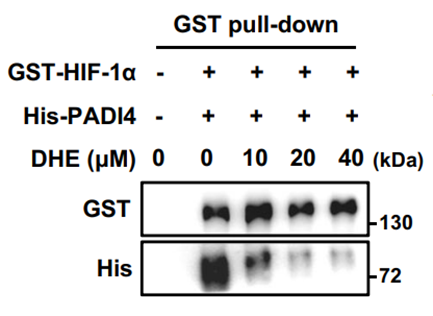
Pull-down of His-PADI4 by GST-HIF-1α in the presence of DMSO or DHE as indicated concentration. g An in vitro citrullination assay of GST-HIF-1α was performed in the presence of DMSO or DHE as indicated concentration. The samples were derived from the same experiment, but different gels for R698Cit, His, another for GST were processed in parallel.
Dihydroergotamine mesylate purchased from MedChemExpress. Usage Cited in: Nat Commun. 2024 Sep 3;15(1):7654. [Abstract]
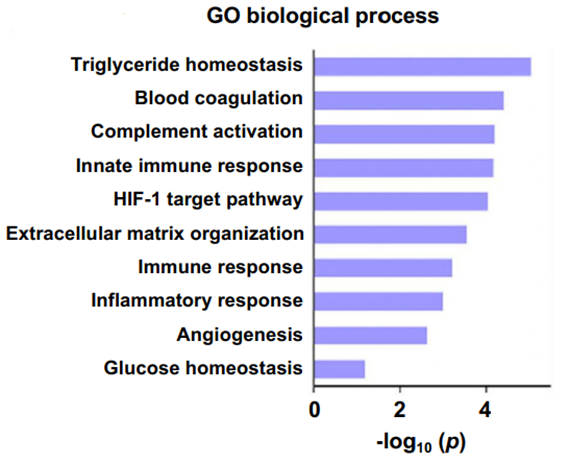
Total mRNA in Hep3B cells treated with DMSO or 20 μM, or 40 μM DHE under hypoxic conditions for 24 h were subjected to RNA-sequencing, followed by GO biological processes analysis.
Dihydroergotamine mesylate purchased from MedChemExpress. Usage Cited in: Nat Commun. 2024 Sep 3;15(1):7654. [Abstract]
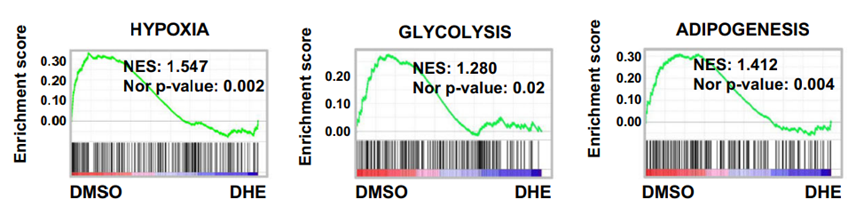
Total mRNA in Hep3B cells treated with DMSO or 20 μM, or 40 μM DHE under hypoxic conditions for 24 h were subjected to RNA-sequencing, followed by GSEA analysis.
Dihydroergotamine mesylate purchased from MedChemExpress. Usage Cited in: Nat Commun. 2024 Sep 3;15(1):7654. [Abstract]
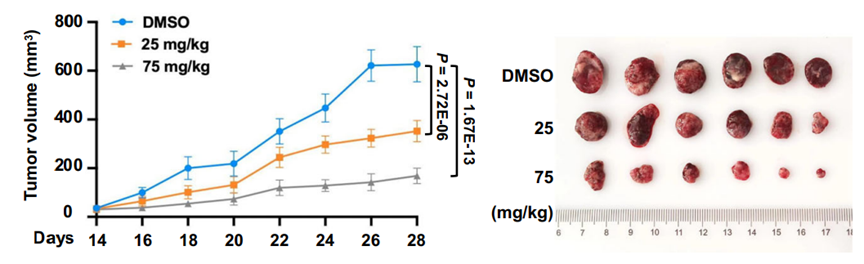
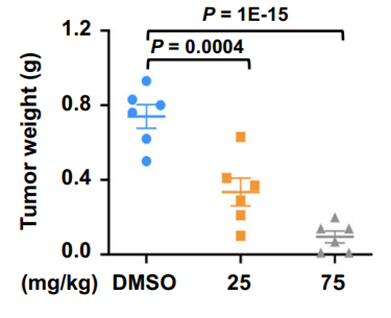
Parental Hep3B cells were injected subcutaneously into the flanks of BALB/c nude mice (n = 6 per group). After 12 days, the mice were treated with DMSO or DHE (25 mg/kg or 75 mg/kg) by i.g every 2 days. Tumour volume was determined starting on Day 14 and photographs show xenografts at the end of the experiment.
Dihydroergotamine mesylate purchased from MedChemExpress. Usage Cited in: Nat Commun. 2024 Sep 3;15(1):7654. [Abstract]
Parental Hep3B cells were injected subcutaneously into the flanks of BALB/c nude mice (n = 6 per group). After 12 days, the mice were treated with DMSO or DHE (25 mg/kg or 75 mg/kg) by i.g every 2 days. Tumour weight was measured.
-
Free Radic Biol Med
Targeted delivery of nebivolol via lactoferrin-modified liposomes inhibits NEK7-mediated pyroptosis to ameliorate inflammatory bowel disease. [Abstract]2026 Aug 16:252:493-508. PMID: 42061481 -
Biofactors
GRHL2/SENP1/VDR Signaling Axis: A Key Regulator of SUMOylation and Calcitriol Resistance in SHPT. [Abstract]2026 Mar-Apr;52(2):e70086. PMID: 41760369 -
Biomed Pharmacother
Identification of nsp16 inhibitors of SARS -CoV-2, SARS -CoV-1 and MERS-CoV from FDA-approved drugs using in silico and in vitro methods. [Abstract]2025 Aug:189:118246. PMID: 40543162 -
Elife
2020 Dec 7:9:e61405. PMID: 33284104


溶剤 & 溶解度
体外:
DMSO : 50 mg/mL (73.55 mM; Need ultrasonic; Hygroscopic DMSO has a significant impact on the solubility of product, please use newly opened DMSO)
H2O : < 0.1 mg/mL (insoluble)
Please refer to the solubility information to select the appropriate solvent. Once prepared, please aliquot and store the solution to prevent product inactivation from repeated freeze-thaw cycles.
Storage method and period of stock solution: -80°C, 1 year; -20°C, 6 months (sealed storage, away from moisture and light). When stored at -80°C, please use it within 1 year. When stored at -20°C, please use it within 6 months.
Please refer to the solubility information to select the appropriate solvent. Once prepared, please aliquot and store the solution to prevent product inactivation from repeated freeze-thaw cycles.
Storage method and period of stock solution: -80°C, 1 year; -20°C, 6 months (sealed storage, away from moisture and light). When stored at -80°C, please use it within 1 year. When stored at -20°C, please use it within 6 months.
濃度 (開始) × 体積 (開始) = 濃度 (終了) × 体積 (終了)
体内:
Select the appropriate dissolution method based on your experimental animal and administration route.
- For the following dissolution methods, please ensure to first prepare a clear stock solution using an In Vitro approach and then sequentially add co-solvents:
- To ensure reliable experimental results, the clarified stock solution can be appropriately stored based on storage conditions. As for the working solution for In Vivo experiments, it is recommended to prepare freshly and use it on the same day.
- The percentages shown for the solvents indicate their volumetric ratio in the final prepared solution. If precipitation or phase separation occurs during preparation, heat and/or sonication can be used to aid dissolution.
Add each solvent one by one: 50% PEG400 50% Saline
Solubility: 25 mg/mL (36.78 mM); Clear solution; Need ultrasonic
Add each solvent one by one: 10% DMSO 40% PEG300 5% Tween-80 45% Saline
Solubility: ≥ 2.5 mg/mL (3.68 mM); Clear solution
This protocol yields a clear solution of ≥ 2.5 mg/mL (saturation unknown).
Taking 1 mL working solution as an example, add 100 μL DMSO stock solution (25.0 mg/mL) to 400 μL PEG300, and mix evenly; then add 50 μL Tween-80 and mix evenly; then add 450 μL Saline to adjust the volume to 1 mL.
Preparation of Saline: Dissolve 0.9 g sodium chloride in ddH₂O and dilute to 100 mL to obtain a clear Saline solution.
Add each solvent one by one: 10% DMSO 90% (20% SBE-β-CD in Saline)
Solubility: ≥ 2.5 mg/mL (3.68 mM); Clear solution
This protocol yields a clear solution of ≥ 2.5 mg/mL (saturation unknown).
Taking 1 mL working solution as an example, add 100 μL DMSO stock solution (25.0 mg/mL) to 900 μL 20% SBE-β-CD in Saline, and mix evenly.
Preparation of 20% SBE-β-CD in Saline (4°C, storage for one week): 2 g SBE-β-CD powder is dissolved in 10 mL Saline, completely dissolve until clear.
In Vivo Dissolution Calculator
Please enter the basic information of animal experiments:
-
-
-
-
Recommended: Prepare an additional quantity of animals to account for potential losses during experiments.
Please enter your animal formula composition:
-
%DMSO +
Recommended: Keep the proportion of DMSO in working solution below 2% if your animal is weak.
-
%+
-
+%Tween-80 + +
-
%Saline +
The co-solvents required include: DMSO, . All of co-solvents are available by MedChemExpress (MCE). , Tween 80. All of co-solvents are available by MedChemExpress (MCE).
Working solution concentration: 0.22 mg/mL
Method for preparing stock solution: mg drug dissolved in μL DMSO. Stock solution concentration: mg/mL. * In solvent : -80°C, 1 year; -20°C, 6 months (sealed storage, away from moisture and light)
1. Take μL DMSO stock solution;
2. Add μL .
μL , mix evenly;
3. Then add μL Tween 80, mix evenly;
4. Then add μL
Please ensure that the stock solution in the first step is dissolved to a clear state, and add co-solvents in sequence. You can use ultrasonic heating (ultrasonic cleaner, recommended frequency 20-40 kHz), vortexing, etc. to assist dissolution.

プロトコル
-
Cell Cytotoxicity Assay
Cytotoxicity assays are usually based on the assessment of cell membrane damage, which can also be indirectly detected by measuring cell viability. Detection methods include MTT assay, CKK-8 assay, LDH assay and ATP assay, etc.
-
Research Protocol for Inflammation-related Diseases
The NLRP3 inflammasome is a cytosolic innate immune signaling platform that integrates priming signals and danger-signal activation to promote caspase-1 activation, maturation of IL-1β and IL-18, and gasdermin D-mediated pyroptotic cell death. The core experimental logic is to determine whether inflammatory disease phenotypes are driven by increased NLRP3 expression, ASC-containing inflammasome assembly, caspase-1 cleavage, GSDMD cleavage, and extracellular release of IL-1β/IL-18 rather than by nonspecific cell injury alone. The pathway is strongly linked to inflammation-related disease phenotypes because monosodium urate crystals activate NALP3/NLRP3 inflammasome signaling in gout-like crystal inflammation, cholesterol crystals activate NLRP3 inflammasomes in atherogenesis models, and DSS-induced intestinal inflammation has been reported to involve NLRP3 inflammasome activity. However, experimental colitis studies also show context-dependent protective effects of NLRP3 inflammasome co


純度とドキュメンテーション
-
データシート (296 KB)
-
SDS (453 KB)
- English - EN (453 KB)
- Français - FR (453 KB)
- Deutsch - DE (453 KB)
- Norwegian - NO (453 KB)
- Español - ES (453 KB)
- Swedish - SV (453 KB)
- Italian - IT (453 KB)
- Korean - KR (453 KB)
- Portuguese - PT (453 KB)
-
取扱説明書 (2659 KB)
参考文献


Complete Stock Solution Preparation Table
Please refer to the solubility information to select the appropriate solvent. Once prepared, please aliquot and store the solution to prevent product inactivation from repeated freeze-thaw cycles.
Storage method and period of stock solution: -80°C, 1 year; -20°C, 6 months (sealed storage, away from moisture and light). When stored at -80°C, please use it within 1 year. When stored at -20°C, please use it within 6 months.
| Optional Solvent | Concentration Solvent Mass | 1 mg | 5 mg | 10 mg | 25 mg |
|---|---|---|---|---|---|
| DMSO | 1 mM | 1.4711 mL | 7.3553 mL | 14.7106 mL | 36.7766 mL |
| 5 mM | 0.2942 mL | 1.4711 mL | 2.9421 mL | 7.3553 mL | |
| 10 mM | 0.1471 mL | 0.7355 mL | 1.4711 mL | 3.6777 mL | |
| 15 mM | 0.0981 mL | 0.4904 mL | 0.9807 mL | 2.4518 mL | |
| 20 mM | 0.0736 mL | 0.3678 mL | 0.7355 mL | 1.8388 mL | |
| 25 mM | 0.0588 mL | 0.2942 mL | 0.5884 mL | 1.4711 mL | |
| 30 mM | 0.0490 mL | 0.2452 mL | 0.4904 mL | 1.2259 mL | |
| 40 mM | 0.0368 mL | 0.1839 mL | 0.3678 mL | 0.9194 mL | |
| 50 mM | 0.0294 mL | 0.1471 mL | 0.2942 mL | 0.7355 mL | |
| 60 mM | 0.0245 mL | 0.1226 mL | 0.2452 mL | 0.6129 mL |


Dihydroergotamine mesylate 関連分類
HY-B0670A 関連分類
 Powered by Bioz