



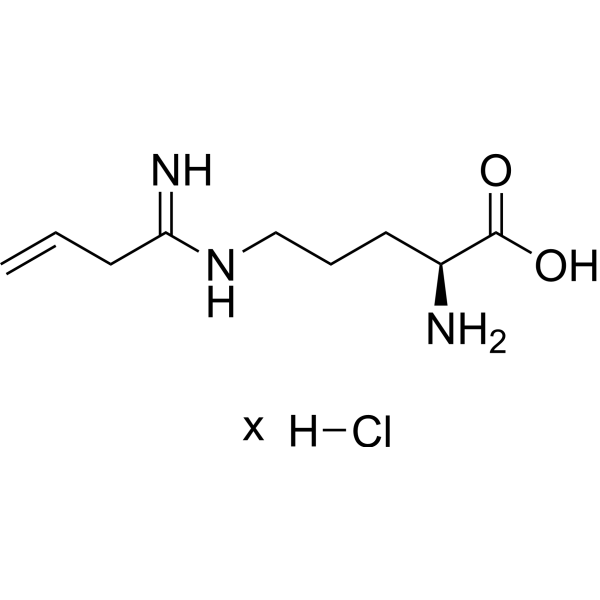
Vinyl-L-NIO hydrochloride

Based on 1 Customer Validation
Vinyl-L-NIO (L-VNIO) hydrochloride is a neuronal nitric oxide synthase (NOS) inhibitor with a rat Ki of 0.10 μM. Vinyl-L-NIO hydrochloride inhibits NADPH oxidase activity, attenuates renal fibrosis, inflammation, oxidative stress indices, and albuminuria. Vinyl-L-NIO hydrochloride can be used for the research of parkinson's disease, migraine headache, and hypertension.
For research use only. We do not sell to patients.
- Purity: 95%
- CAS No.: 728944-69-2
- Formula: C9H17N3O2.xHCl
-
Storage:
-20°C, stored under nitrogen, away from moisture
* In solvent : -80°C, 6 months; -20°C, 1 month (stored under nitrogen, away from moisture)

To place orders, for customer services and technical support, please contact: MedChemExpress USA
Tel: 609-228-6898 E-mail: [email protected] [email protected]


-
 Biological Activity
-
Chemical Information
-
Solvent & Solubility
- Purity & Documentation
- References
-
 Help & FAQs


-
HY-101175
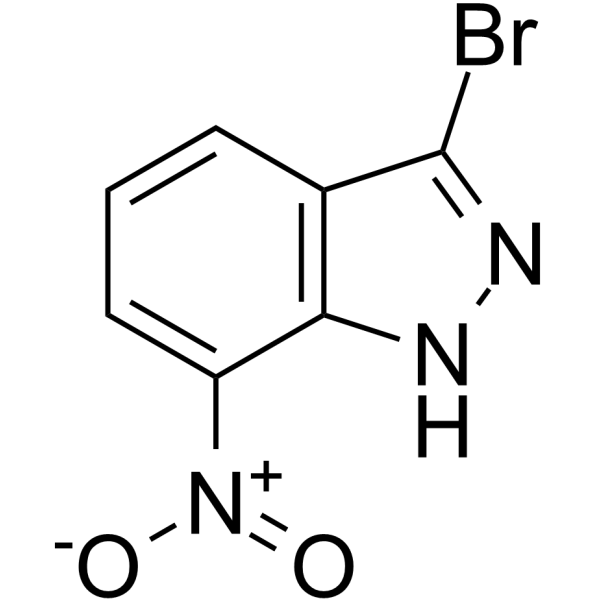
3-Bromo-7-nitroindazole -
HY-138564
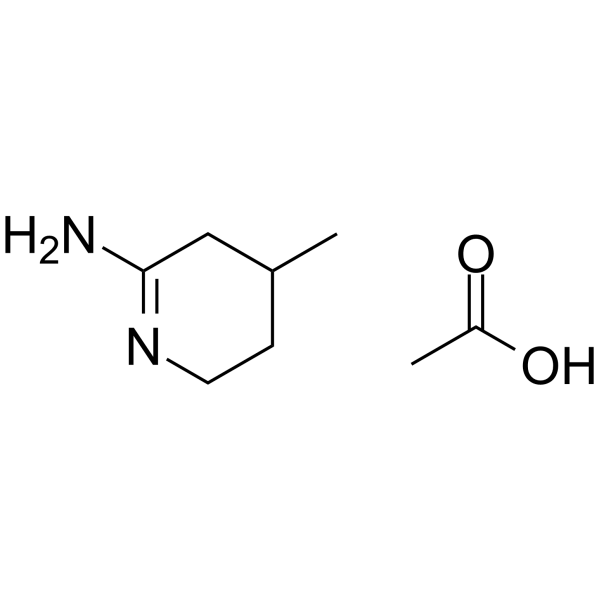
NOS-IN-1 -
HY-101316
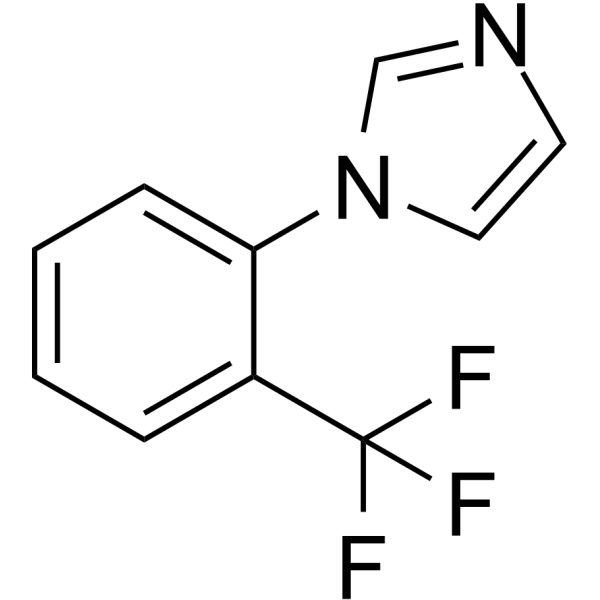
TRIM -
HY-U00432A
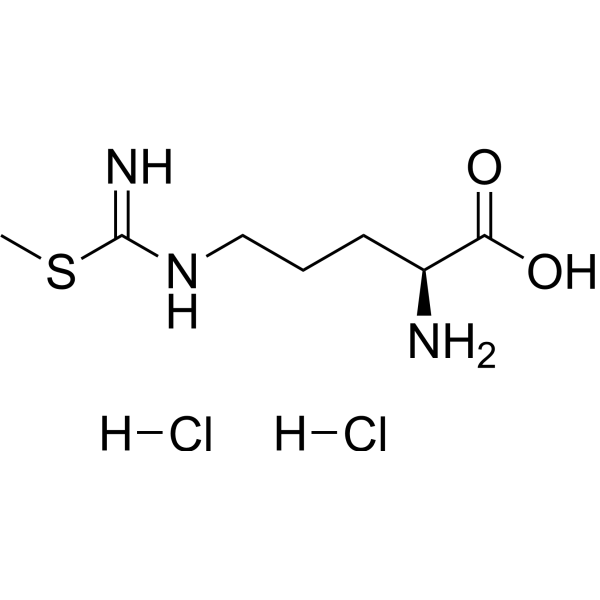
S-MTC dihydrochloride -
HY-18732A
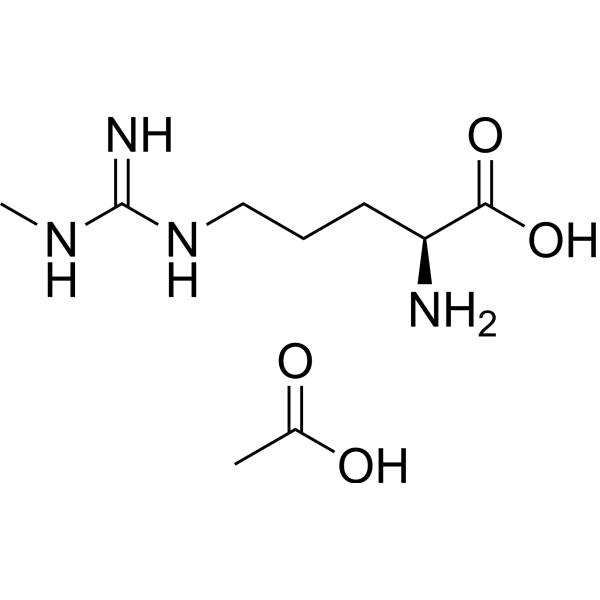
L-NMMA acetate -
HY-100986B
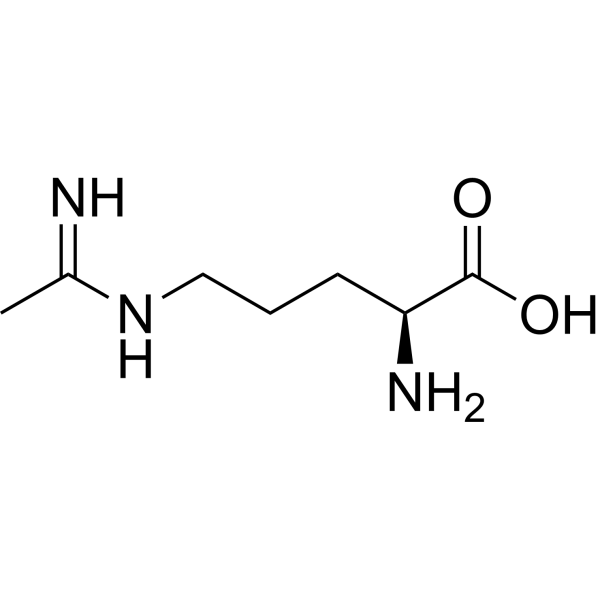
L-NIO -
HY-79457
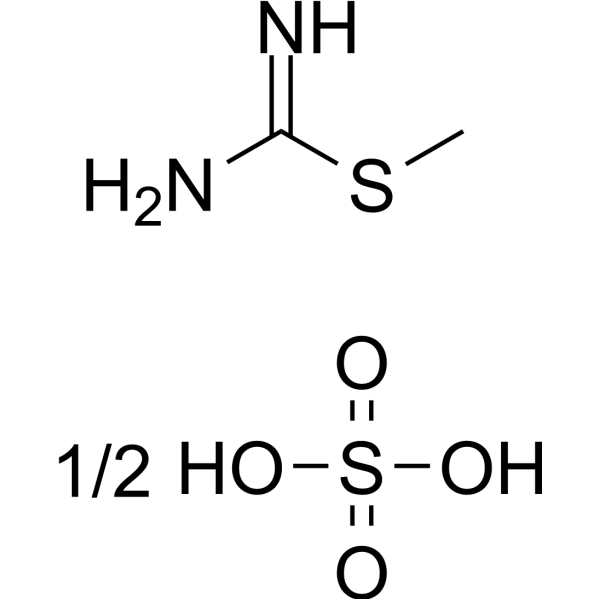
S-Methylisothiourea sulfate -
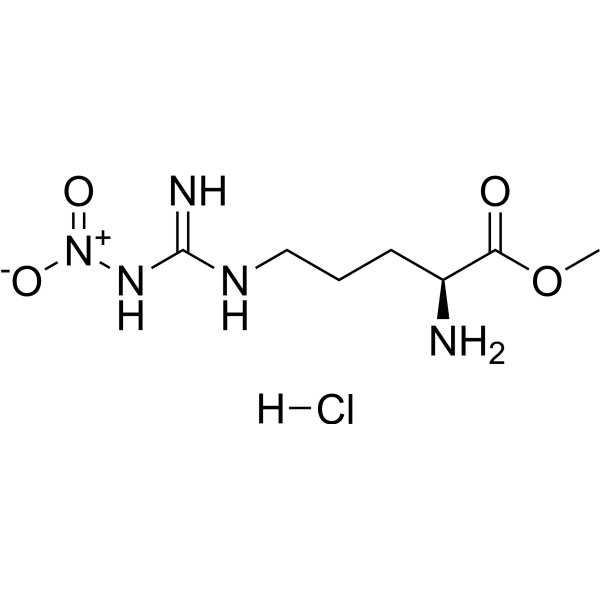
HY-18729A
L-NAME hydrochloride -
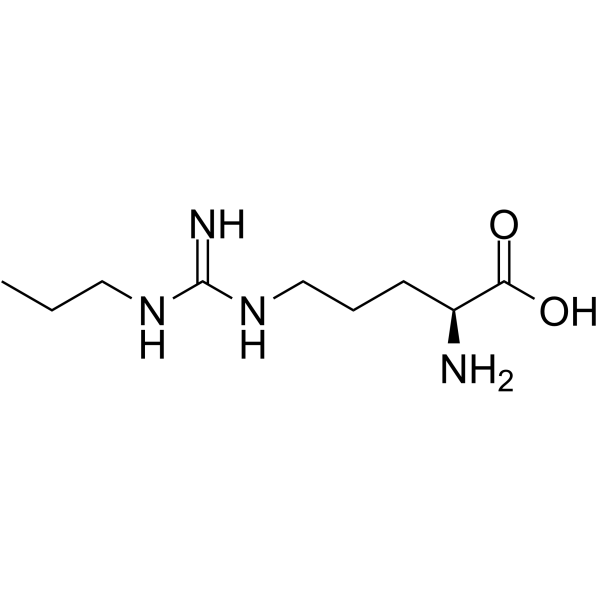
HY-102062
Nω-Propyl-L-arginine -
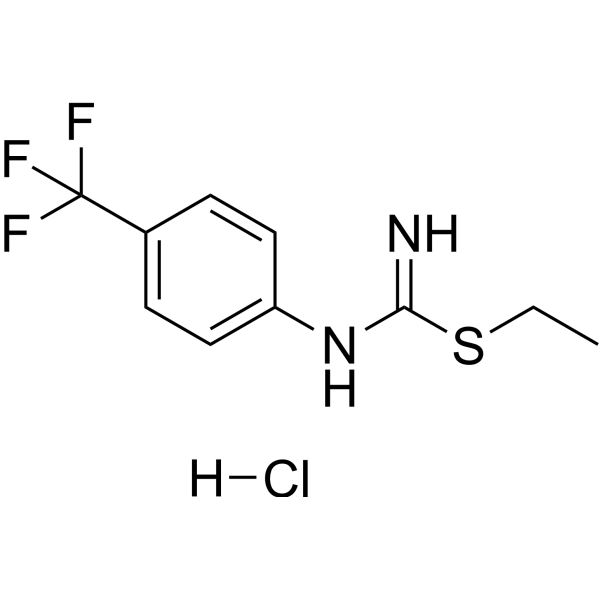
HY-W484263
hnNOS-IN-3 -
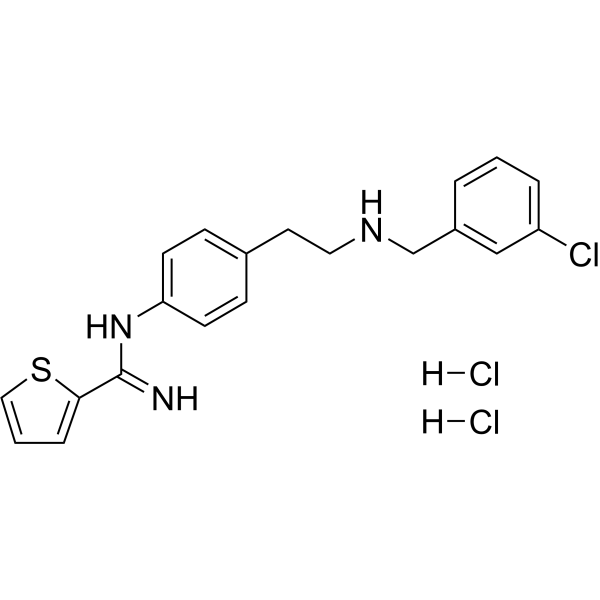
HY-107720
ARL 17477 -
HY-130325
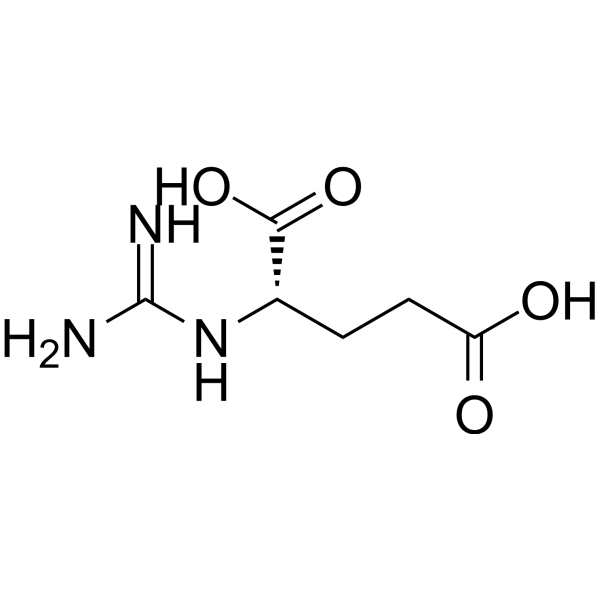
α-Guanidinoglutaric acid


Biological Activity
Description
In Vitro
Vinyl-L-NIO (40-160 nM; 4 h) hydrochloride potently and competitively inhibits neuronal NOS (Ki = 100 nM) with 120-fold and 600-fold lower potency against endothelia NOS and inducible NOS, respectively, demonstrating marked neuronal NOS selectivity in reversible binding[1].
Vinyl-L-NIO (0.1-1.0 μM) hydrochloride irreversibly inactivates purified neuronal NOS in a NADPH-, O2-, and Ca2+/calmodulin-dependent manner, with kinact = 0.078/min and Ki = 90 nM[1].
Vinyl-L-NIO (10 μM) hydrochloride potently inhibits the oxygenase domain-dependent NADPH oxidase activity of purified neuronal NOS but does not affect the reductase domain-specific cytochrome c reduction activity[1].
Vinyl-L-NIO (500 μM; 20 minutes) hydrochloride incubation of NOS1+/+ murine left ventricular myocytes significantly prolongs time to 50% relaxation at 1, 3, and 6 Hz, and potentiates the contractile response to β-adrenergic stimulation at 3 and 6 Hz[4].
MedChemExpress (MCE) has not independently confirmed the accuracy of these methods. They are for reference only.
In Vivo
MedChemExpress (MCE) has not independently confirmed the accuracy of these methods. They are for reference only.
-
Animal Model:mRen2.Lewis (female, 4 weeks old, 90-100 g at study start, high-salt diet induced hypertension and renal injury)[2]
-
Dosage:0.5 mg/kg/day
-
Administration:i.p.; daily; 28 days
-
Result:Significantly reduced systolic blood pressure at week 13 (P < 0.05), with no significant difference at weeks 12, 14, or 15 (week 15: 212 mmHg vs. untreated high-salt group 206 mmHg, P > 0.05).
Reduced albuminuria to 7.9 mg·kg-1·d-1 (vs. untreated high-salt group 109.4 mg·kg-1·d-1, P < 0.05).
Normalized creatinine clearance to 0.9 mL/min (vs. untreated high-salt group 0.4 mL/min, P < 0.05).
Significantly reduced renal injury scores: interstitial fibrosis (56 vs. untreated high-salt group 150, P < 0.05), glomerulosclerosis (6.3 vs. untreated high-salt group 150, P < 0.05), tubular dilation (6.3 vs. untreated high-salt group 125, P < 0.05), and interstitial inflammation (56 vs. untreated high-salt group 150, P < 0.05); vascular smooth muscle cell hyperplasia was unchanged.
Significantly reduced total renal cortical collagen area (collagen/field ratio ~0.007 vs. untreated high-salt group ~0.014, P < 0.05).
Reduced kidney-to-body-weight ratio to 4.4 g (vs. untreated high-salt group 5.3 g, P < 0.05).
Significantly reduced CD68-positive cell abundance to 7.7 cells per 200× area (vs. untreated high-salt group 36.8 cells per 200× area, P < 0.05).
Reduced 4-HNE relative intensity to 0.49 units (vs. untreated high-salt group 0.60 units, P < 0.05).
Reduced 8-OHdG-positive cell count to 432 cells per 200× area (vs. untreated high-salt group 929 cells per 200× area, P < 0.05).


Chemical Information
-
CAS No. 728944-69-2
-
Appearance Oil
-
Formula C9H17N3O2.xHCl
-
Color Off-white to light yellow
-
SMILES
N[C@@H](CCCNC(CC=C)=N)C(O)=O.Cl.[x]
-
Synonyms
L-VNIO hydrochloride
-
Shipping
Room temperature in continental US; may vary elsewhere.
-
Storage
-20°C, stored under nitrogen, away from moisture
* In solvent : -80°C, 6 months; -20°C, 1 month (stored under nitrogen, away from moisture)


Solvent & Solubility
In Vitro:
DMSO : 50 mg/mL (Need ultrasonic and warming; Hygroscopic DMSO has a significant impact on the solubility of product, please use newly opened DMSO)


Purity & Documentation
-
Data Sheet (273 KB)
-
SDS (252 KB)
- English - EN (252 KB)
- Français - FR (252 KB)
- Deutsch - DE (252 KB)
- Norwegian - NO (252 KB)
- Español - ES (252 KB)
- Swedish - SV (252 KB)
- Italian - IT (252 KB)
- Korean - KR (252 KB)
- Portuguese - PT (252 KB)
-
Handling Instructions (2659 KB)
References
[1]. Babu BR, et al. N5-(1-Imino-3-butenyl)-L-ornithine. A neuronal isoform selective mechanism-based inactivator of nitric oxide synthase. J Biol Chem. 1998 Apr 10;273(15):8882-9. [Content Brief]
[2]. Yamaleyeva LM, et al. Amelioration of renal injury and oxidative stress by the nNOS inhibitor L-VNIO in the salt-sensitive mRen2.Lewis congenic rat. J Cardiovasc Pharmacol. 2012;59(6):529-538. [Content Brief]
[3]. Hatanaka Y, et al. Neuronal nitric-oxide synthase inhibition facilitates adrenergic neurotransmission in rat mesenteric resistance arteries. J Pharmacol Exp Ther. 2006;316(2):490-497. [Content Brief]
[4]. Ashley EA, et al. Cardiac nitric oxide synthase 1 regulates basal and beta-adrenergic contractility in murine ventricular myocytes. Circulation. 2002;105(25):3011-3016. [Content Brief]

Calculators
Concentration (start) × Volume (start) = Concentration (final) × Volume (final)


Vinyl-L-NIO hydrochloride Related Classifications
HY-130579 Related Classifications
 Powered by Bioz