



Antipyrine
Based on 4 publication(s) in Google Scholar
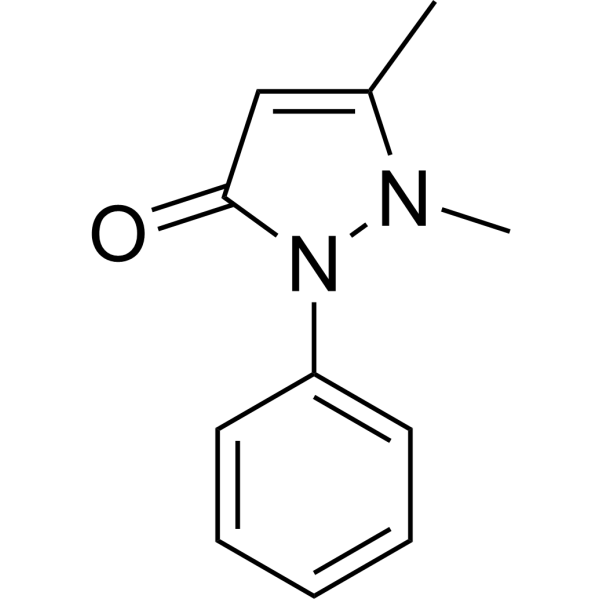
Antipyrine (Phenazone) is an orally active antipyretic and analgesic. Antipyrine can be used as a probe agent for oxidative agent metabolism. Antipyrine also delays gastric emptying (GE) in rats.
For research use only. We do not sell to patients.
- Purity : 99.93%
- CAS No.: 60-80-0
- Formula: C11H12N2O
- Molecular Weight:188.23
-
Storage:Powder -20°C, 3 years , 4°C, 2 years ; In solvent -80°C, 2 years , -20°C, 1 year

To place orders, for customer services and technical support, please contact: MedChemExpress USA
Tel: 609-228-6898 E-mail: [email protected] [email protected]


-
 Biological Activity
-
Chemical Information
-
Solvent & Solubility
- Purity & Documentation
- References
-
 Help & FAQs


-
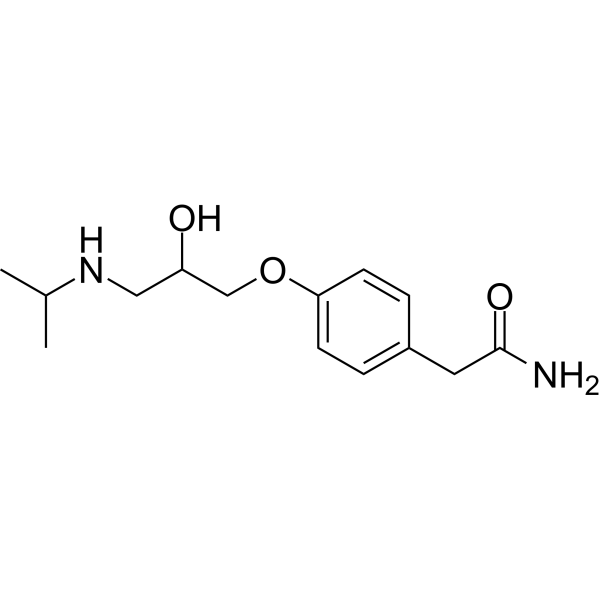
HY-17498
Atenololβ1-Adrenergic Receptor Blocker -
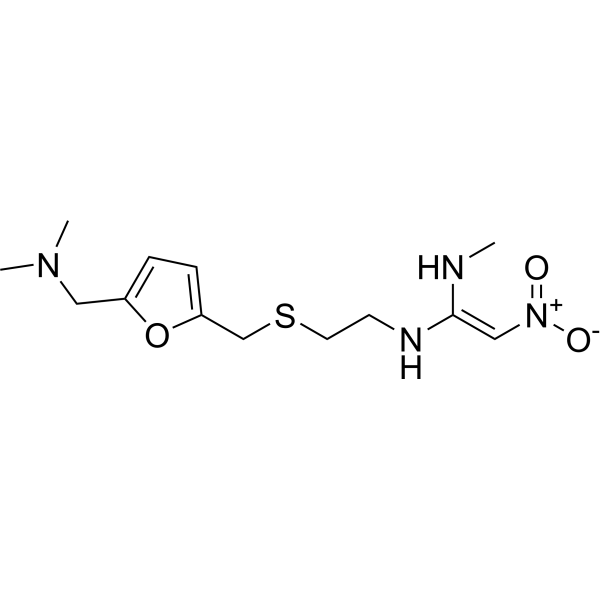
HY-B0693
RanitidineHistamine H2 Receptor Antagonist -
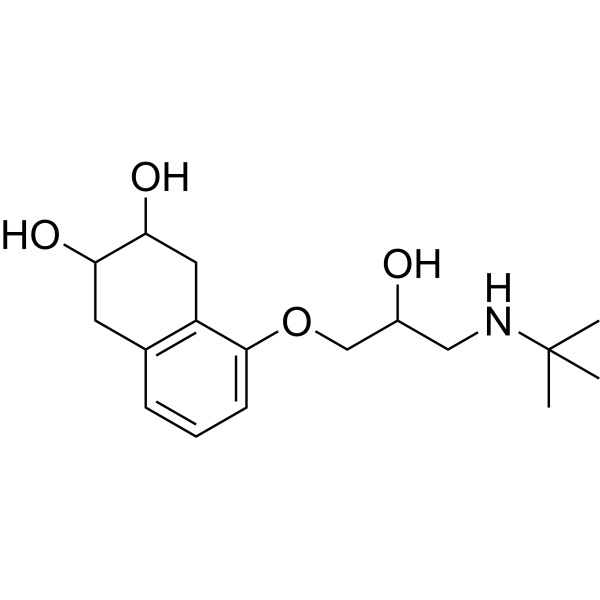
HY-B0804
Nadololβ-adrenergic Receptors Blocker -
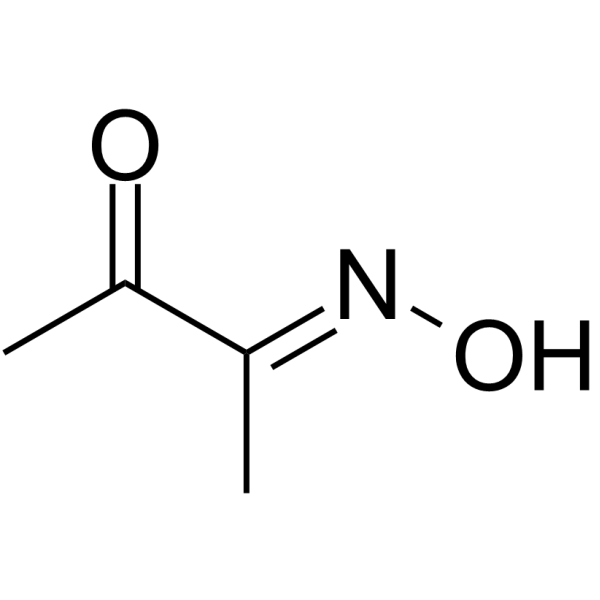
HY-Y0413
Biacetyl monoximeATPase Inhibitor -
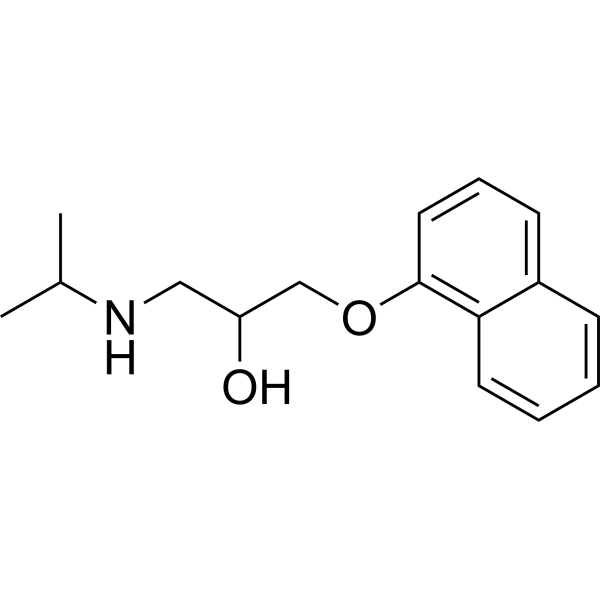
HY-B0573B
Propranololβ-Adrenoceptor Blocker -
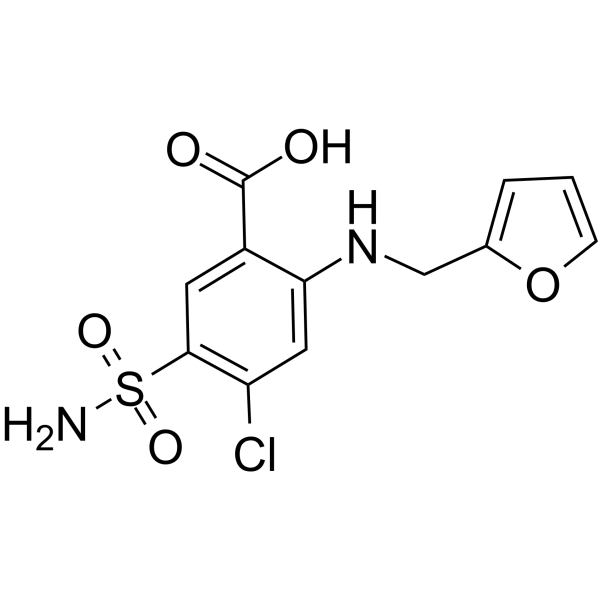
HY-B0135
FurosemideGABAA Receptor Antagonist -
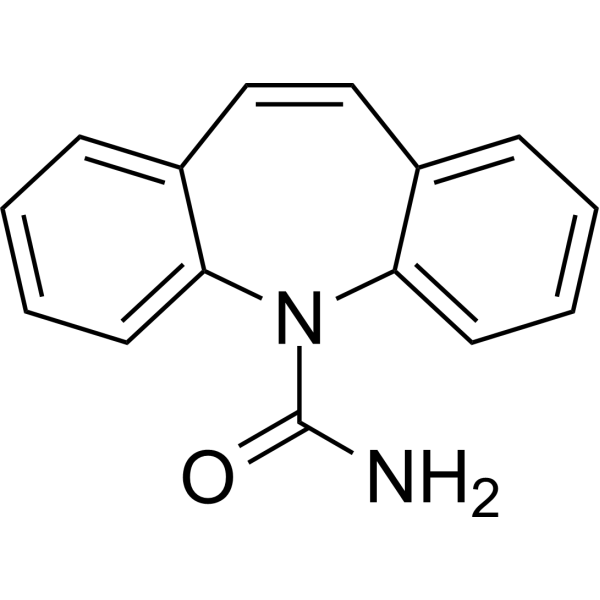
HY-B0246
CarbamazepineAnticonvulsant -

HY-B0171R
Antipyrine (Standard)Antipyretic/Analgesic -
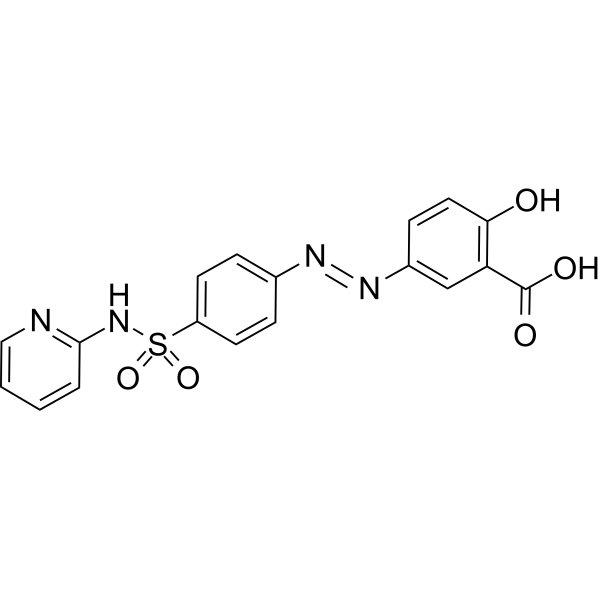
HY-14655
SulfasalazineAnti-rheumatic Agent -
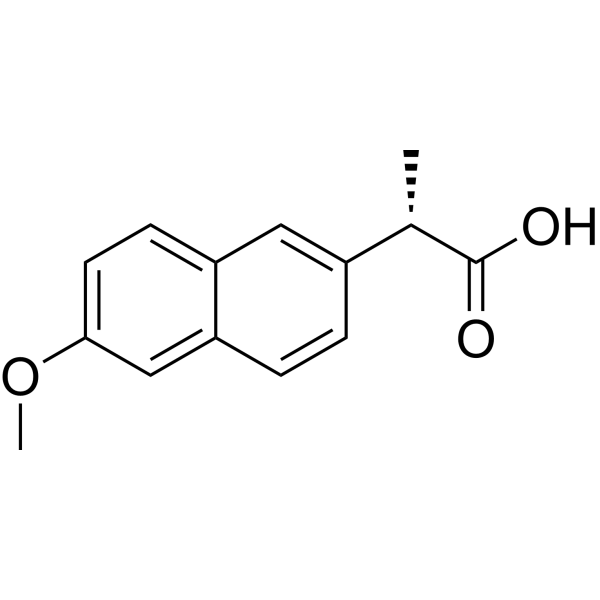
HY-15030
NaproxenCOX Inhibitor -
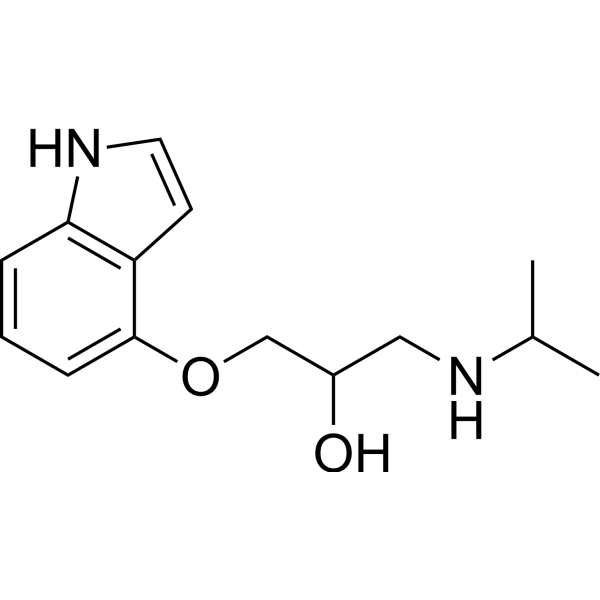
HY-B0982
PindololStable Isotope -
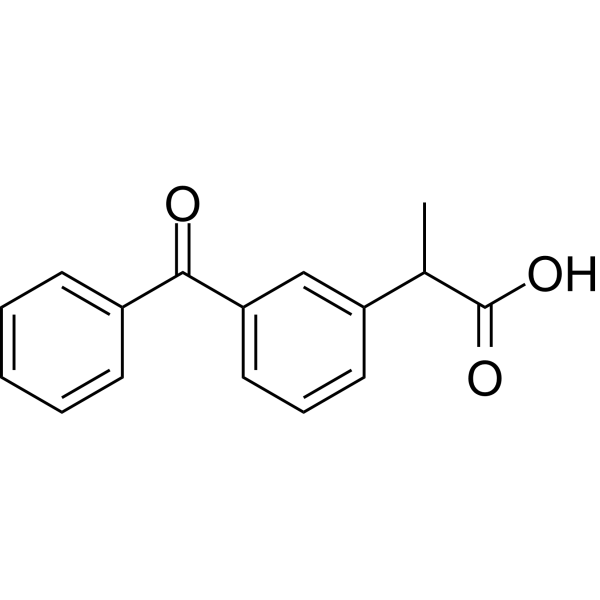
HY-B0227
KetoprofenAnti-inflammatory agent
Publications Citing Use of MedChemExpress (MCE) Antipyrine
More

Biological Activity
Description
In Vitro
In Vivo
MedChemExpress (MCE) has not independently confirmed the accuracy of these methods. They are for reference only.
-
Animal Model:Wistar rats[4]
-
Dosage:45.17 mg/kg
-
Administration:i.v., 10 minutes before the evaluation of gastric retention
-
Result:Presented a significantly more elevated %GR in rats.
Clinical Trial
| NCT Number | Sponsor | Condition | Start Date |
Phase

|
|---|---|---|---|---|
| NCT01329991 | 2011-05 | PHASE1 |


Chemical Information
-
CAS No. 60-80-0
-
Appearance Solid
-
Molecular Weight 188.23
-
Formula C11H12N2O
-
Color White to off-white
-
SMILES
O=C1N(C2=CC=CC=C2)N(C)C(C)=C1
-
Synonyms
Phenazone; Phenazon
-
Shipping
Room temperature in continental US; may vary elsewhere.
-
Storage
Powder -20°C 3 years 4°C 2 years In solvent -80°C 2 years -20°C 1 year


Publications (4)
-
Journal Impact Factor
-
Most Recent
-
-
Pharmacol Res Perspect
Effects of membrane transport activity and cell metabolism on the unbound drug concentrations in the skeletal muscle and liver of drugs: A microdialysis study in rats. [Abstract]2021 Oct;9(5):e00879. PMID: 34628723 -
Pharmacol Res Perspect
Applicability of free drug hypothesis to drugs with good membrane permeability that are not efflux transporter substrates: A microdialysis study in rats. [Abstract]2020 Apr;8(2):e00575. PMID: 32266794 -


Solvent & Solubility
In Vitro:
DMSO : 100 mg/mL (531.26 mM; Need ultrasonic; Hygroscopic DMSO has a significant impact on the solubility of product, please use newly opened DMSO)
H2O : ≥ 100 mg/mL (531.26 mM)
* "≥" means soluble, but saturation unknown.
Please refer to the solubility information to select the appropriate solvent. Once prepared, please aliquot and store the solution to prevent product inactivation from repeated freeze-thaw cycles.
Storage method and period of stock solution: -80°C, 2 years; -20°C, 1 year. When stored at -80°C, please use it within 2 years. When stored at -20°C, please use it within 1 year.
* Note: If you choose water as the stock solution, please dilute it to the working solution, then filter and sterilize it with a 0.22 μm filter before use.
Please refer to the solubility information to select the appropriate solvent. Once prepared, please aliquot and store the solution to prevent product inactivation from repeated freeze-thaw cycles.
Storage method and period of stock solution: -80°C, 2 years; -20°C, 1 year. When stored at -80°C, please use it within 2 years. When stored at -20°C, please use it within 1 year.
* Note: If you choose water as the stock solution, please dilute it to the working solution, then filter and sterilize it with a 0.22 μm filter before use.
Concentration (start) × Volume (start) = Concentration (final) × Volume (final)
In Vivo:
Select the appropriate dissolution method based on your experimental animal and administration route.
- For the following dissolution methods, please ensure to first prepare a clear stock solution using an In Vitro approach and then sequentially add co-solvents:
- To ensure reliable experimental results, the clarified stock solution can be appropriately stored based on storage conditions. As for the working solution for In Vivo experiments, it is recommended to prepare freshly and use it on the same day.
- The percentages shown for the solvents indicate their volumetric ratio in the final prepared solution. If precipitation or phase separation occurs during preparation, heat and/or sonication can be used to aid dissolution.
Add each solvent one by one: 10% DMSO 40% PEG300 5% Tween-80 45% Saline
Solubility: ≥ 2.5 mg/mL (13.28 mM); Clear solution
This protocol yields a clear solution of ≥ 2.5 mg/mL (saturation unknown).
Taking 1 mL working solution as an example, add 100 μL DMSO stock solution (25.0 mg/mL) to 400 μL PEG300, and mix evenly; then add 50 μL Tween-80 and mix evenly; then add 450 μL Saline to adjust the volume to 1 mL.
Preparation of Saline: Dissolve 0.9 g sodium chloride in ddH₂O and dilute to 100 mL to obtain a clear Saline solution.
Add each solvent one by one: 10% DMSO 90% (20% SBE-β-CD in Saline)
Solubility: ≥ 2.5 mg/mL (13.28 mM); Clear solution
This protocol yields a clear solution of ≥ 2.5 mg/mL (saturation unknown).
Taking 1 mL working solution as an example, add 100 μL DMSO stock solution (25.0 mg/mL) to 900 μL 20% SBE-β-CD in Saline, and mix evenly.
Preparation of 20% SBE-β-CD in Saline (4°C, storage for one week): 2 g SBE-β-CD powder is dissolved in 10 mL Saline, completely dissolve until clear.
For the following dissolution methods, please prepare the working solution directly:
It is recommended to prepare fresh solutions and use them promptly within a short period of time.
The percentages shown for the solvents indicate their volumetric ratio in the final prepared solution. If precipitation or phase separation occurs during preparation, heat and/or sonication can be used to aid dissolution.
Add each solvent one by one: PBS
Solubility: 110 mg/mL (584.39 mM); Clear solution; Need ultrasonic
In Vivo Dissolution Calculator
Please enter the basic information of animal experiments:
-
-
-
-
Recommended: Prepare an additional quantity of animals to account for potential losses during experiments.
Working solution concentration: 0.22 mg/mL
This product has good water solubility, please refer to the measured solubility data in water/PBS/Saline for details.


Purity & Documentation
-
Data Sheet (276 KB)
-
SDS (393 KB)
- English - EN (393 KB)
- Français - FR (393 KB)
- Deutsch - DE (393 KB)
- Norwegian - NO (393 KB)
- Español - ES (393 KB)
- Swedish - SV (393 KB)
- Italian - IT (393 KB)
- Korean - KR (393 KB)
- Portuguese - PT (393 KB)
-
Handling Instructions (2659 KB)
References
[1]. Stevenson, I.H., Factors influencing antipyrine elimination. Br J Clin Pharmacol, 1977. 4(3): p. 261-5. [Content Brief]
[2]. Engel G, et, al. Antipyrine as a probe for human oxidative drug metabolism: identification of the cytochrome P450 enzymes catalyzing 4-hydroxyantipyrine, 3-hydroxymethylantipyrine, and norantipyrine formation. Clin Pharmacol Ther. 1996 Jun;59(6):613-23. [Content Brief]
[3]. RENKIN EM. Capillary and cellular permeability to some compounds related to antipyrine. Am J Physiol. 1953 Apr;173(1):125-30. [Content Brief]
[4]. Soares AC, et al. Effect of antipyrine on the gastric emptying of liquid in rats. Braz J Med Biol Res. 2006 Nov;39(11):1507-12. [Content Brief]


Complete Stock Solution Preparation Table
Please refer to the solubility information to select the appropriate solvent. Once prepared, please aliquot and store the solution to prevent product inactivation from repeated freeze-thaw cycles.
Storage method and period of stock solution: -80°C, 2 years; -20°C, 1 year. When stored at -80°C, please use it within 2 years. When stored at -20°C, please use it within 1 year.
| Optional Solvent | Concentration Solvent Mass | 1 mg | 5 mg | 10 mg | 25 mg |
|---|---|---|---|---|---|
| DMSO / H2O | 1 mM | 5.3126 mL | 26.5632 mL | 53.1265 mL | 132.8162 mL |
| 5 mM | 1.0625 mL | 5.3126 mL | 10.6253 mL | 26.5632 mL | |
| 10 mM | 0.5313 mL | 2.6563 mL | 5.3126 mL | 13.2816 mL | |
| 15 mM | 0.3542 mL | 1.7709 mL | 3.5418 mL | 8.8544 mL | |
| 20 mM | 0.2656 mL | 1.3282 mL | 2.6563 mL | 6.6408 mL | |
| 25 mM | 0.2125 mL | 1.0625 mL | 2.1251 mL | 5.3126 mL | |
| 30 mM | 0.1771 mL | 0.8854 mL | 1.7709 mL | 4.4272 mL | |
| 40 mM | 0.1328 mL | 0.6641 mL | 1.3282 mL | 3.3204 mL | |
| 50 mM | 0.1063 mL | 0.5313 mL | 1.0625 mL | 2.6563 mL | |
| 60 mM | 0.0885 mL | 0.4427 mL | 0.8854 mL | 2.2136 mL | |
| 80 mM | 0.0664 mL | 0.3320 mL | 0.6641 mL | 1.6602 mL | |
| 100 mM | 0.0531 mL | 0.2656 mL | 0.5313 mL | 1.3282 mL |
* Note: If you choose water as the stock solution, please dilute it to the working solution, then filter and sterilize it with a 0.22 μm filter before use.


Antipyrine Related Classifications
HY-B0171 Related Classifications
 Powered by Bioz