



Diosmin
Based on 21 publication(s) in Google Scholar
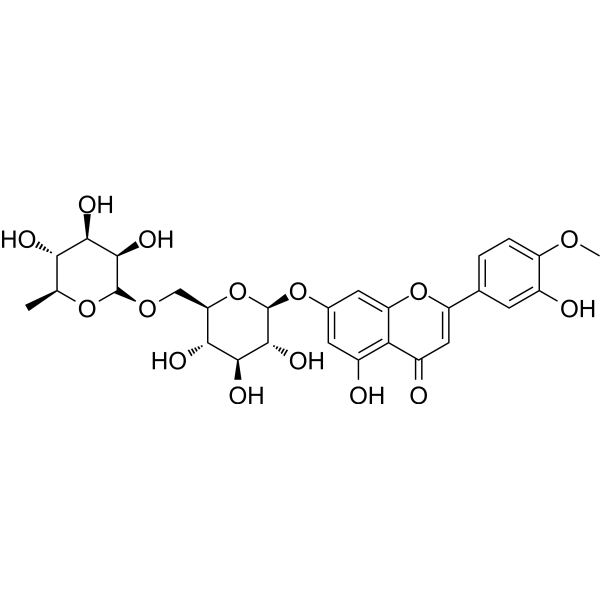
Diosmin is a flavonoid found in a variety of citrus fruits and also an agonist of the aryl hydrocarbon receptor (AhR).
For research use only. We do not sell to patients.
- Purity : 98.62%
- CAS No.: 520-27-4
- Formula: C28H32O15
- Molecular Weight:608.54
-
Storage:Powder -20°C, 3 years , 4°C, 2 years ; In solvent -80°C, 2 years , -20°C, 1 year

To place orders, for customer services and technical support, please contact: MedChemExpress USA
Tel: 609-228-6898 E-mail: [email protected] [email protected]


-
 Biological Activity
-
Chemical Information
-
Solvent & Solubility
- Purity & Documentation
- References
-
 Help & FAQs


-
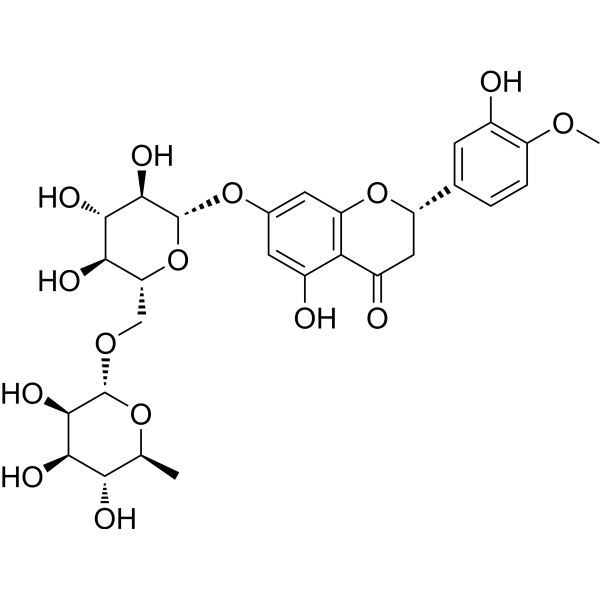
HY-15337
HesperidinAntioxidant -

HY-N0178R
Diosmin (Standard)Aryl Hydrocarbon Receptor Agonist -
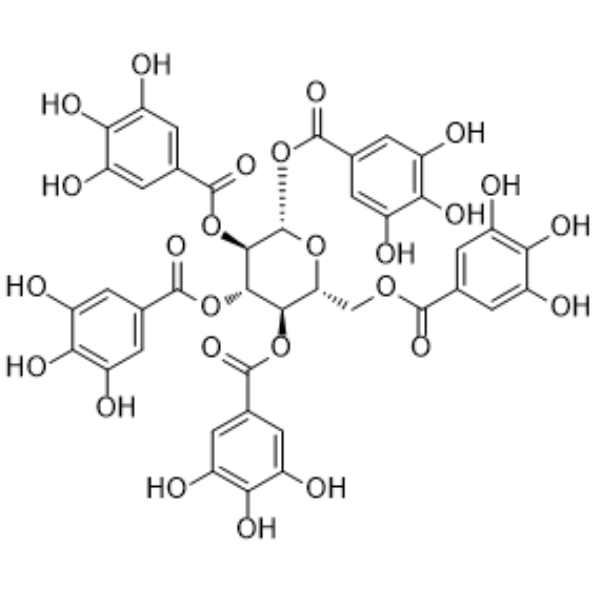
HY-N0527
PentagalloylglucoseAntioxidant -
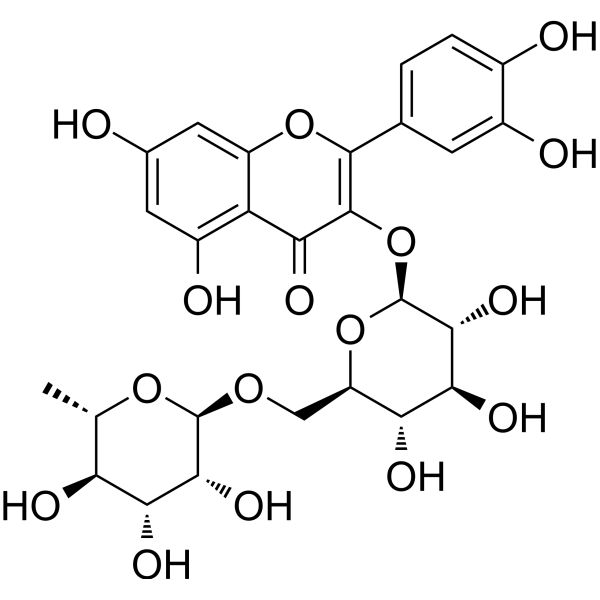
HY-N0148
RutinCBR1 Inhibitor -
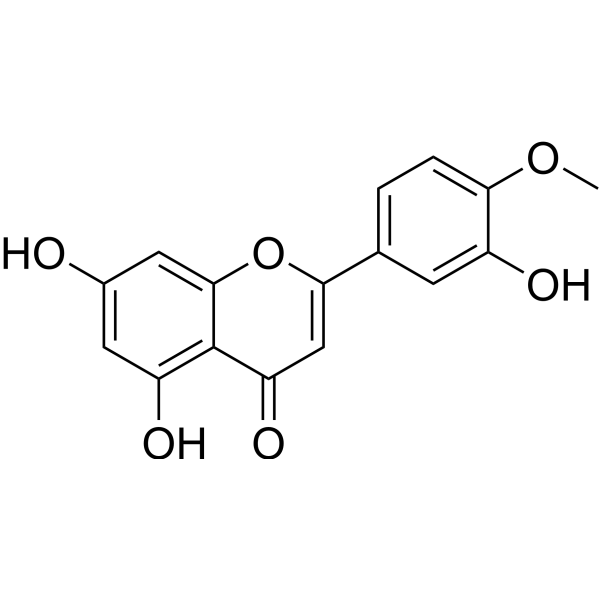
HY-N0125
DiosmetinCytochrome P450 Inhibitor -
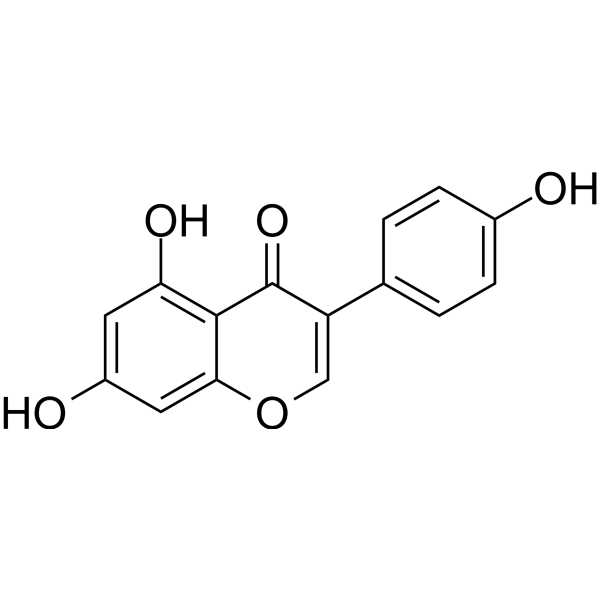
HY-14596
GenisteinAutophagy Inducer -
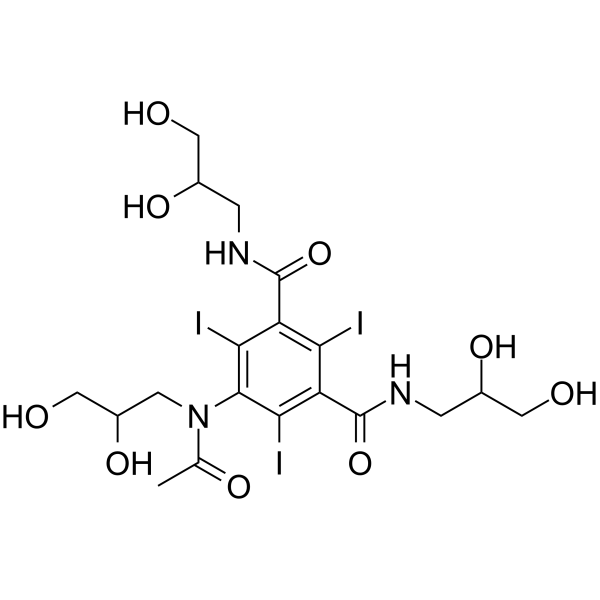
HY-B0594
IohexolContrast Agent -
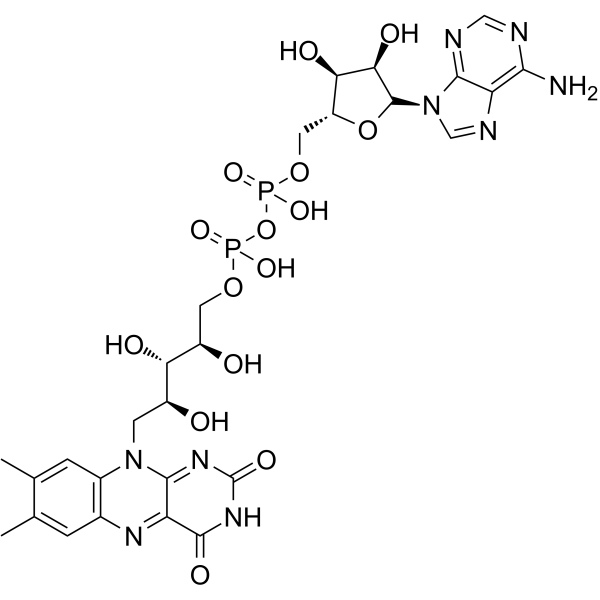
HY-B1654
Flavin adenine dinucleotideRedox Cofactor -
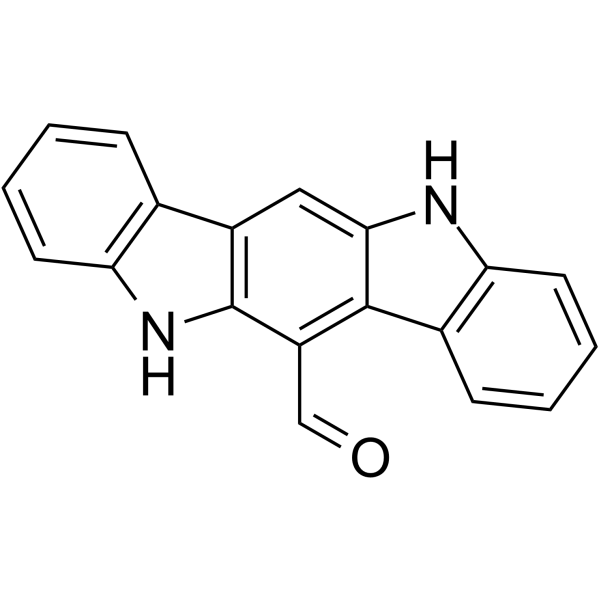
HY-12451
FICZAhR Agonist -
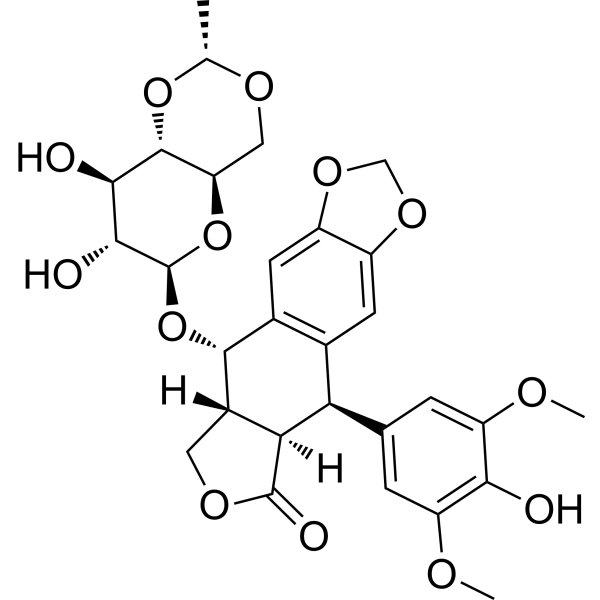
HY-13629
EtoposideTopoisomerase II Inhibitor -
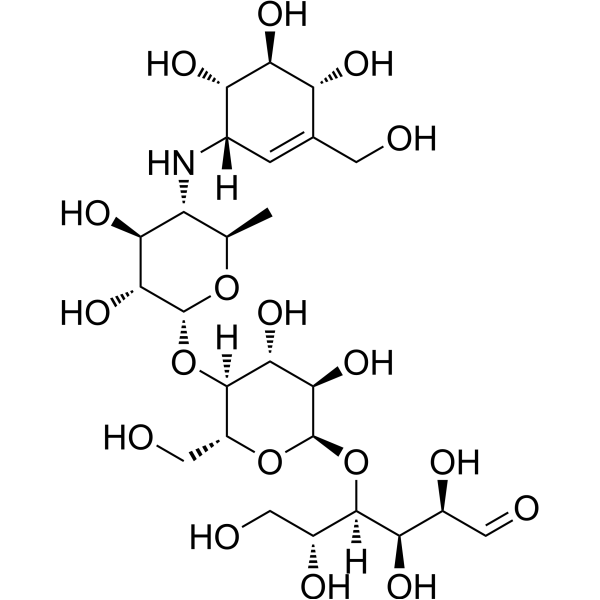
HY-B0089
AcarboseAlpha-Glucosidase Inhibitor -
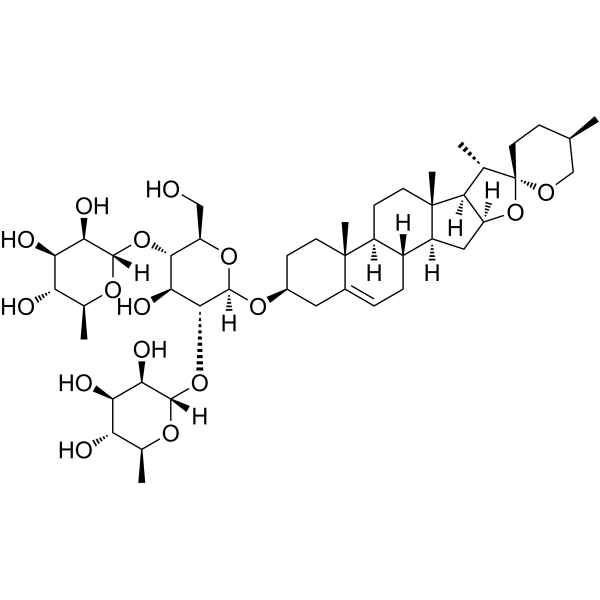
HY-N0124
DioscinAnticancer Agent
Publications Citing Use of MedChemExpress (MCE) Diosmin
More- Signal Transduct Target Ther. 2026 Mar 26;11(1):113. [Abstract]
- Cell Metab. 2026 Apr 1:S1550-4131(26)00097-5. [Abstract]
- Autophagy. 2025 Oct 25. [Abstract]
- Theranostics. 2021 Aug 11;11(18):8797-8812. [Abstract]
- Acta Pharm Sin B. 2021 Jan;11(1):143-155. [Abstract]
- Phytomedicine. 2025 Jun:141:156671. [Abstract]
- Phytomedicine. 2025 Jun:141:156738. [Abstract]
- Phytomedicine. 2024 Dec:135:156135. [Abstract]
- Food Chem. 2025 Dec 30:497:146992. [Abstract]
- Food Chem. 2025 Oct 15:489:144992. [Abstract]
- Aging Cell. 2025 May;24(5):e14469. [Abstract]
- Ind Crops Prod. 2026 May 8;246:123392.
- Ind Crops Prod. 2025 Dec 11;239:122458.
- Food Funct. 2026 Jun 22;17(12):5521-5537. [Abstract]
- Foods. 2026 Apr 9;15(8):1293. [Abstract]
- BMC Complement Med Ther. 2024 Jan 9;24(1):29. [Abstract]
- Naunyn Schmiedebergs Arch Pharmacol. 2025 Feb;398(2):1973-1989. [Abstract]
- Metab Brain Dis. 2024 Oct;39(7):1405-1415. [Abstract]
- Brain Res. 2025 Feb 1:1848:149336. [Abstract]
- In Silico Research in Biomedicine 2025 Nov 6;1:100116.
- Research Square Print. 2023 Mar 1.
 Customer Validation & Images

-
WB
-
ELISA
-
RT-PCR
-
WB
-
In Vivo Efficacy Study


Biological Activity
Description
IC50 & Target
AhR[1]
Cellular Effect
|
Cell Line

|
Type | Value | Description | References |
|---|---|---|---|---|
| A549 | IC50 |
>40 μM
Compound: Diosmin
|
Antiproliferative activity against human A549 cells after 72 hrs by Alamar blue assay
Antiproliferative activity against human A549 cells after 72 hrs by Alamar blue assay
|
[PMID: 27374881] |
| C2C12 | IC50 |
19.97 μg/mL
Compound: 5
|
Cytotoxicity against mouse C2C12 cells assessed as reduction in cell viability by MTT assay
Cytotoxicity against mouse C2C12 cells assessed as reduction in cell viability by MTT assay
|
[PMID: 33412152] |
| MDA-MB-231 | IC50 |
70 μM
Compound: Diosmin
|
Antiproliferative activity against human MDA-MB-231 cells assessed as inhibition of cell growth measured after 24 hrs by MTT assay
Antiproliferative activity against human MDA-MB-231 cells assessed as inhibition of cell growth measured after 24 hrs by MTT assay
|
[PMID: 27374881] |
| Monocyte | IC50 |
>200 μM
Compound: Diosmin
|
Inhibition of TNFalpha expression in LPS-stimulated human monocytes treated 30 mins before LPS challenge measured after 14 hrs by ELISA
Inhibition of TNFalpha expression in LPS-stimulated human monocytes treated 30 mins before LPS challenge measured after 14 hrs by ELISA
|
[PMID: 10096854] |
| SK-BR-3 | IC50 |
>100 μM
Compound: Diosmin
|
Antiproliferative activity against human SK-BR-3 cells assessed as inhibition of cell growth measured after 24 hrs by MTT assay
Antiproliferative activity against human SK-BR-3 cells assessed as inhibition of cell growth measured after 24 hrs by MTT assay
|
[PMID: 27374881] |
| T47D | IC50 |
>100 μM
Compound: Diosmin
|
Antiproliferative activity against human T47D cells assessed as inhibition of cell growth measured after 24 hrs by MTT assay
Antiproliferative activity against human T47D cells assessed as inhibition of cell growth measured after 24 hrs by MTT assay
|
[PMID: 27374881] |
In Vitro
Treatment with Diosmin causes a dose dependent increase in the amount of adducts formed (up to a 7-fold increase in adducts at 5 μM Diosmin). At 5 μM, Diosmin increases the cytotoxicity of 7,12-dimethylbenz(a)anthracene, shifting the IC50 from an estimated 1.2 μM? to 400 nM. Diosmin is not cytotoxic in itself at the concentrations tested. Diosmin causes an increase in CYPIAI activity in MCF-7 cells in a time- and dose-dependent fashion. Diosmin causes a dose-dependent increase in CYPIAI mRNA after 24 h of incubation, causes a long-lasting increase in CYPIAI mRNA accumulation that reaches its peak after 48 h of incubation[1].
MedChemExpress (MCE) has not independently confirmed the accuracy of these methods. They are for reference only.
In Vivo
MedChemExpress (MCE) has not independently confirmed the accuracy of these methods. They are for reference only.
Clinical Trial
| NCT Number | Sponsor | Condition | Start Date |
Phase
|
|---|---|---|---|---|
| NCT01329991 | 2011-05 | PHASE1 |


Chemical Information
-
CAS No. 520-27-4
-
Appearance Solid
-
Molecular Weight 608.54
-
Formula C28H32O15
-
Color Light yellow to light brown
-
SMILES
O=C1C=C(C2=CC=C(OC)C(O)=C2)OC3=CC(O[C@H]4[C@@H]([C@H]([C@@H]([C@@H](CO[C@H]5[C@@H]([C@@H]([C@H]([C@H](C)O5)O)O)O)O4)O)O)O)=CC(O)=C13
-
Structure Classification
-
Initial Source
-
Shipping
Room temperature in continental US; may vary elsewhere.
-
Storage
Powder -20°C 3 years 4°C 2 years In solvent -80°C 2 years -20°C 1 year


Publications (21)
-
Journal Impact Factor
-
Most Recent
-
Signal Transduct Target Ther
Short-chain acyl-CoA dehydrogenase initiates mtDNA demethylation and leakage to fuel antitumor immunity in colorectal cancer. [Abstract]2026 Mar 26;11(1):113. PMID: 41888107 -
Cell Metab
Gut microbial metabolism via hippocampal indole-AhR signaling regulates emotional symptoms. [Abstract]2026 Apr 1:S1550-4131(26)00097-5. PMID: 41928504 -
Autophagy
XIAP-ULK1-Mediated mitophagy modulates carnitine metabolism to mitigate diabetic kidney disease. [Abstract]2025 Oct 25. PMID: 41139215 -
Theranostics
Activating AhR alleviates cognitive deficits of Alzheimer's disease model mice by upregulating endogenous Aβ catabolic enzyme Neprilysin. [Abstract]2021 Aug 11;11(18):8797-8812. PMID: 34522212
Diosmin purchased from MedChemExpress. Usage Cited in: Theranostics. 2021 Aug 11;11(18):8797-8812. [Abstract]
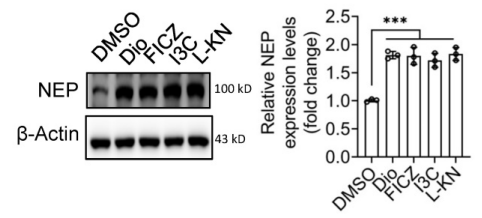
N2a cells were treated with DMSO, Diosmin (Dio; 40 μM), FICZ (250 nM), Indole-3-acetamide (I3C; 10 μM) or L-KN (3 μM) for 12 h. Whole cell extracts were examined by western blotting with the indicated antibodies. NEP expression was adjusted to that of β-actin, which was used as the loading control. n = 3.
Diosmin purchased from MedChemExpress. Usage Cited in: Theranostics. 2021 Aug 11;11(18):8797-8812. [Abstract]
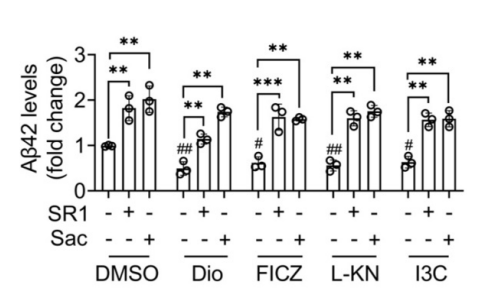
N2a-APP cells were treated with Diosmin (Dio; 80 μM), FICZ (250 nM), L-KN (3 μM) or Indole-3-acetamide (I3C; 10 μM) with or without SR1 (2 μM) or Sacubitril (Sac; 1 μM) for 24 h, the supernatant was collected and the Aβ42 levels were determined by ELISA.
Diosmin purchased from MedChemExpress. Usage Cited in: Theranostics. 2021 Aug 11;11(18):8797-8812. [Abstract]
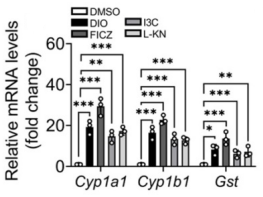
N2a cells were treated with DMSO or Diosmin (Dio; 40 µM) for 6 h, the total mRNA was extracted and the mRNA levels of Cyp1a1, Cyp1b1 and Gst were determined by qRT-PCR.
Diosmin purchased from MedChemExpress. Usage Cited in: Theranostics. 2021 Aug 11;11(18):8797-8812. [Abstract]
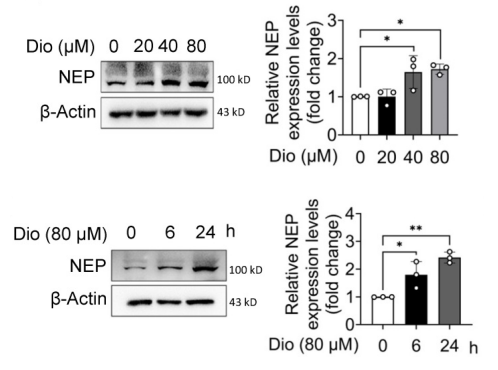
Diosmin (Dio; 0, 20, 40, 80 μM; 12 h/ 80 μM; 0, 6, 24 h) promoted NEP expression in a dose and time-dependent manner.
Diosmin purchased from MedChemExpress. Usage Cited in: Theranostics. 2021 Aug 11;11(18):8797-8812. [Abstract]
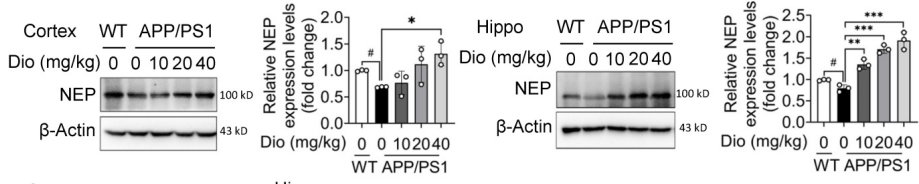
Diosmin (Dio; 10, 20, 40 mg/kg; PO; daily for 4 weeks) showed the NEP protein levels in the cortex and hippocampus of the APP/PS1 mice were increased by the diosmin treatment compared with the vehicle control.
Diosmin purchased from MedChemExpress. Usage Cited in: Theranostics. 2021 Aug 11;11(18):8797-8812. [Abstract]
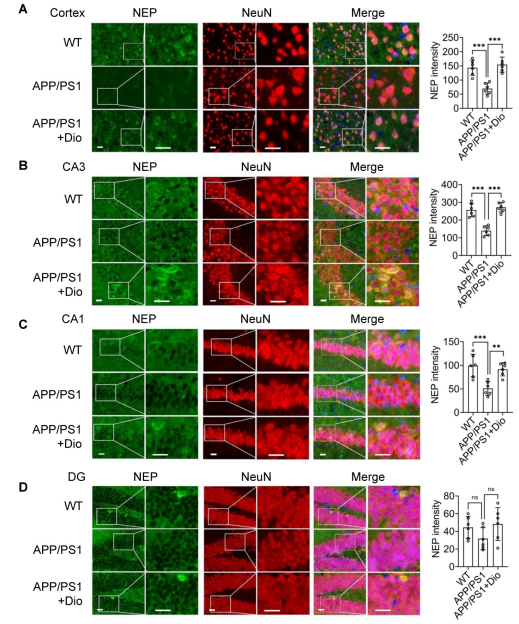
Diosmin (Dio; PO; daily for 4 weeks) significantly elevated in the neuron cell bodies in the cortex (Figure A), cornus ammonis 3 (CA3) (Figure B), CA1 (Figure C), and dentate gyrus (DG) (Figure D).
-
Acta Pharm Sin B
Chrysin serves as a novel inhibitor of DGK α/FAK interaction to suppress the malignancy of esophageal squamous cell carcinoma (ESCC). [Abstract]2021 Jan;11(1):143-155. PMID: 33532186 -
Phytomedicine
Diosmin alleviates colitis by inhibiting PANoptosis of intestinal epithelial cells and regulating gut microbiota and metabolites. [Abstract]2025 Jun:141:156671. PMID: 40138774 -
Phytomedicine
Diosmin attenuates UUO-induced renal ferroptosis and fibrosis by inhibiting the HIF-1α/FABP4 signaling axis. [Abstract]2025 Jun:141:156738. PMID: 40233506 -
Phytomedicine
Diosmin reduces the stability of Snail and Cyclin D1 by targeting FAK to inhibit NSCLC progression. [Abstract]2024 Dec:135:156135. PMID: 39405613 -
Food Chem
Effects of sun drying combined with baking processes on the flavor quality of Chongqing Tuocha raw tea. [Abstract]2025 Dec 30:497:146992. PMID: 41285060 -
Food Chem
Flavonoid-mediated metabolic underpinning quality variation in red bud-sport pear mutants. [Abstract]2025 Oct 15:489:144992. PMID: 40466530 -
Aging Cell
Investigating the Role of TRPV4 and GPR35 Interaction in Endothelial Dysfunction in Aging Mice. [Abstract]2025 May;24(5):e14469. PMID: 39744893 -
-
-
Food Funct
Integrated RNA-seq and network pharmacology analyses suggest PI3K-Akt and NF-κB pathway modulation in the protective effects of diosmin against experimental colitis. [Abstract]2026 Jun 22;17(12):5521-5537. PMID: 42191164 -
Foods
Design of a Plant-Based Smoothie: Exploiting Ingredient Complementarity for a Diversified (Poly)phenolic Profile Quantified by Targeted LC-MS/MS Analysis. [Abstract]2026 Apr 9;15(8):1293. PMID: 42073181 -
BMC Complement Med Ther
Diosmin ameliorates renal fibrosis through inhibition of inflammation by regulating SIRT3-mediated NF-κB p65 nuclear translocation. [Abstract]2024 Jan 9;24(1):29. PMID: 38195573 -
Naunyn Schmiedebergs Arch Pharmacol
Uncovering the mechanisms of diosmin in treating obesity-related kidney injury based on network pharmacology, molecular docking, and in vitro validation. [Abstract]2025 Feb;398(2):1973-1989. PMID: 39222242 -
Metab Brain Dis
Diosmin ameliorates inflammation, apoptosis and activates PI3K/AKT pathway in Alzheimer's disease rats. [Abstract]2024 Oct;39(7):1405-1415. PMID: 39105973 -
Brain Res
Diosmin alleviates NLRP3 inflammasome-dependent cellular pyroptosis after stroke through RSK2/CREB pathway. [Abstract]2025 Feb 1:1848:149336. PMID: 39547499 -
-


Solvent & Solubility
In Vitro:
DMSO : 100 mg/mL (164.33 mM; Need ultrasonic; Hygroscopic DMSO has a significant impact on the solubility of product, please use newly opened DMSO)
Please refer to the solubility information to select the appropriate solvent. Once prepared, please aliquot and store the solution to prevent product inactivation from repeated freeze-thaw cycles.
Storage method and period of stock solution: -80°C, 2 years; -20°C, 1 year. When stored at -80°C, please use it within 2 years. When stored at -20°C, please use it within 1 year.
Please refer to the solubility information to select the appropriate solvent. Once prepared, please aliquot and store the solution to prevent product inactivation from repeated freeze-thaw cycles.
Storage method and period of stock solution: -80°C, 2 years; -20°C, 1 year. When stored at -80°C, please use it within 2 years. When stored at -20°C, please use it within 1 year.
Concentration (start) × Volume (start) = Concentration (final) × Volume (final)
In Vivo:
Select the appropriate dissolution method based on your experimental animal and administration route.
- For the following dissolution methods, please ensure to first prepare a clear stock solution using an In Vitro approach and then sequentially add co-solvents:
- To ensure reliable experimental results, the clarified stock solution can be appropriately stored based on storage conditions. As for the working solution for In Vivo experiments, it is recommended to prepare freshly and use it on the same day.
- The percentages shown for the solvents indicate their volumetric ratio in the final prepared solution. If precipitation or phase separation occurs during preparation, heat and/or sonication can be used to aid dissolution.
Add each solvent one by one: 10% DMSO 90% (20% SBE-β-CD in Saline)
Solubility: ≥ 2.5 mg/mL (4.11 mM); Clear solution
This protocol yields a clear solution of ≥ 2.5 mg/mL (saturation unknown).
Taking 1 mL working solution as an example, add 100 μL DMSO stock solution (25.0 mg/mL) to 900 μL 20% SBE-β-CD in Saline, and mix evenly.
Preparation of 20% SBE-β-CD in Saline (4°C, storage for one week): 2 g SBE-β-CD powder is dissolved in 10 mL Saline, completely dissolve until clear.
In Vivo Dissolution Calculator
Please enter the basic information of animal experiments:
-
-
-
-
Recommended: Prepare an additional quantity of animals to account for potential losses during experiments.
Please enter your animal formula composition:
-
%DMSO +
Recommended: Keep the proportion of DMSO in working solution below 2% if your animal is weak.
-
%+
-
+%Tween-80 + +
-
%Saline +
The co-solvents required include: DMSO, . All of co-solvents are available by MedChemExpress (MCE). , Tween 80. All of co-solvents are available by MedChemExpress (MCE).
Working solution concentration: 0.22 mg/mL
Method for preparing stock solution: mg drug dissolved in μL DMSO. Stock solution concentration: mg/mL.
1. Take μL DMSO stock solution;
2. Add μL .
μL , mix evenly;
3. Then add μL Tween 80, mix evenly;
4. Then add μL
Please ensure that the stock solution in the first step is dissolved to a clear state, and add co-solvents in sequence. You can use ultrasonic heating (ultrasonic cleaner, recommended frequency 20-40 kHz), vortexing, etc. to assist dissolution.


Purity & Documentation
-
Data Sheet (278 KB)
-
SDS (396 KB)
- English - EN (396 KB)
- Français - FR (396 KB)
- Deutsch - DE (396 KB)
- Norwegian - NO (396 KB)
- Español - ES (396 KB)
- Swedish - SV (396 KB)
- Italian - IT (396 KB)
- Korean - KR (396 KB)
- Portuguese - PT (396 KB)
-
Handling Instructions (2659 KB)
References
[1]. Ciolino HP, et al. Diosmin and diosmetin are agonists of the aryl hydrocarbon receptor that differentially affectcytochrome P450 1A1 activity. Cancer Res. 1998 Jul 1;58(13):2754-60. [Content Brief]
[2]. Tong N, et al. Diosmin protects rat retina from ischemia/reperfusion injury. J Ocul Pharmacol Ther. 2012 Oct;28(5):459-66. [Content Brief]


Complete Stock Solution Preparation Table
Please refer to the solubility information to select the appropriate solvent. Once prepared, please aliquot and store the solution to prevent product inactivation from repeated freeze-thaw cycles.
Storage method and period of stock solution: -80°C, 2 years; -20°C, 1 year. When stored at -80°C, please use it within 2 years. When stored at -20°C, please use it within 1 year.
| Optional Solvent | Concentration Solvent Mass | 1 mg | 5 mg | 10 mg | 25 mg |
|---|---|---|---|---|---|
| DMSO | 1 mM | 1.6433 mL | 8.2164 mL | 16.4328 mL | 41.0819 mL |
| 5 mM | 0.3287 mL | 1.6433 mL | 3.2866 mL | 8.2164 mL | |
| 10 mM | 0.1643 mL | 0.8216 mL | 1.6433 mL | 4.1082 mL | |
| 15 mM | 0.1096 mL | 0.5478 mL | 1.0955 mL | 2.7388 mL | |
| 20 mM | 0.0822 mL | 0.4108 mL | 0.8216 mL | 2.0541 mL | |
| 25 mM | 0.0657 mL | 0.3287 mL | 0.6573 mL | 1.6433 mL | |
| 30 mM | 0.0548 mL | 0.2739 mL | 0.5478 mL | 1.3694 mL | |
| 40 mM | 0.0411 mL | 0.2054 mL | 0.4108 mL | 1.0270 mL | |
| 50 mM | 0.0329 mL | 0.1643 mL | 0.3287 mL | 0.8216 mL | |
| 60 mM | 0.0274 mL | 0.1369 mL | 0.2739 mL | 0.6847 mL | |
| 80 mM | 0.0205 mL | 0.1027 mL | 0.2054 mL | 0.5135 mL | |
| 100 mM | 0.0164 mL | 0.0822 mL | 0.1643 mL | 0.4108 mL |


Diosmin Related Classifications
HY-N0178 Related Classifications
 Powered by Bioz