



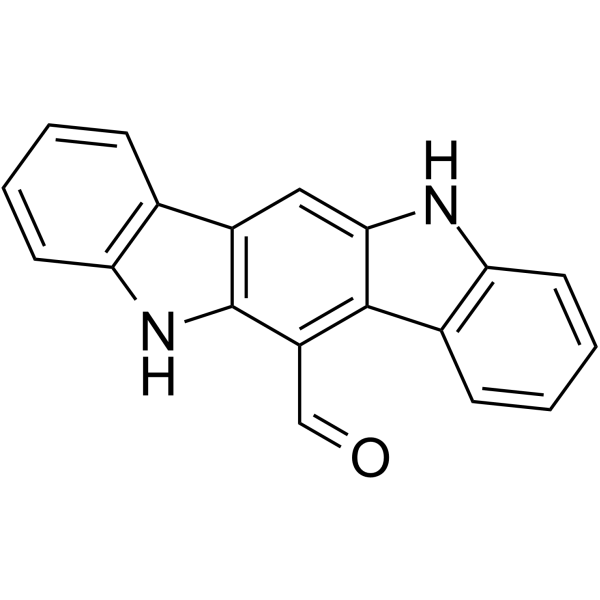
FICZ
Based on 36 publication(s) in Google Scholar
FICZ is a potent aryl hydrocarbon receptor (AhR) agonist with a Kd of 70 pM.
Nur für Forschungszwecke. Wir verkaufen nicht an Patienten.
- Reinheit : 99.23%
- CAS. Nr.: 172922-91-7
- Formel: C19H12N2O
- Molecular Weight:284.31
-
Speicherung:Powder -20°C, 3 years , 4°C, 2 years ; In solvent -80°C, 2 years , -20°C, 1 year

To place orders, for customer services and technical support, please contact: MedChemExpress USA
Tel: 609-228-6898 E-mail: [email protected] [email protected]


-
 Biologische Aktivität
-
Chemical Information
-
Lösungsmittel & Löslichkeit
- Reinheit & Dokumentation
- Verweise
-
 Help & FAQs


-
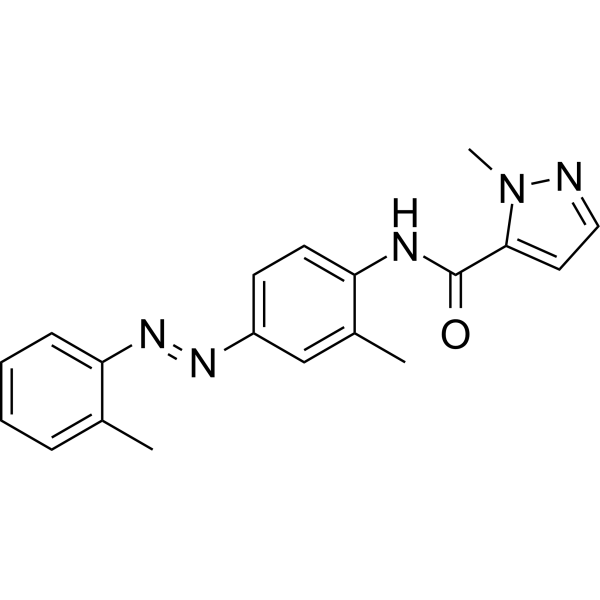
HY-12684
CH-223191AhR Antagonist -
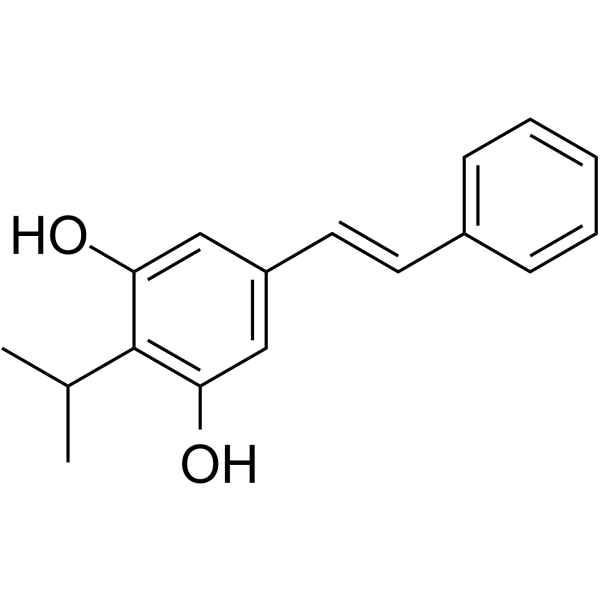
HY-109044
TapinarofAhR Agonist -
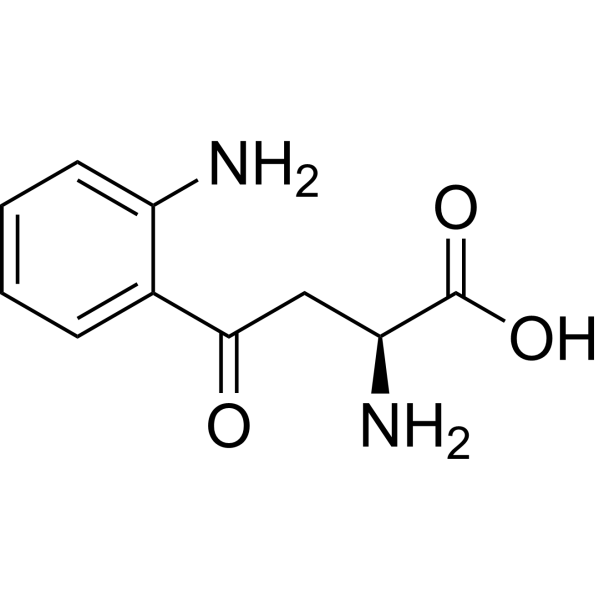
HY-104026
L-KynurenineAryl Hydrocarbon Receptor Agonist -
HY-19317
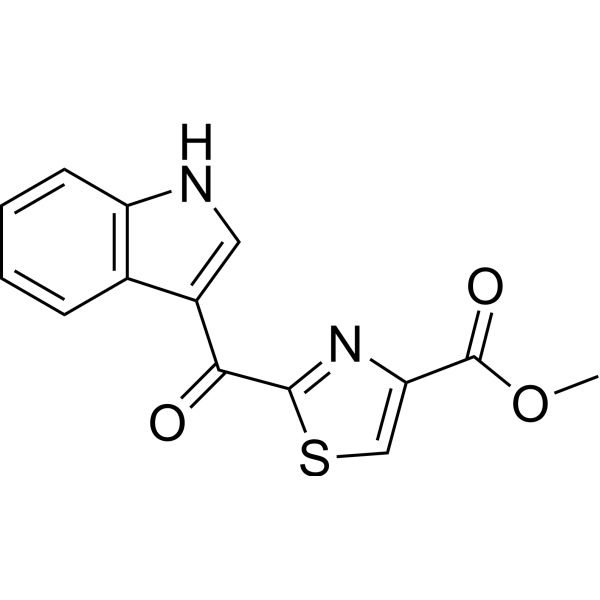
ITEAryl Hydrocarbon Receptor Agonist -
HY-102023
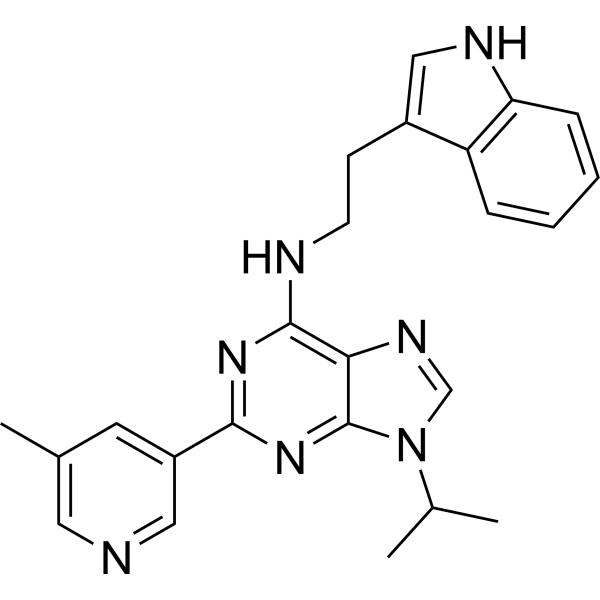
GNF351AHR Antagonist -
HY-15001
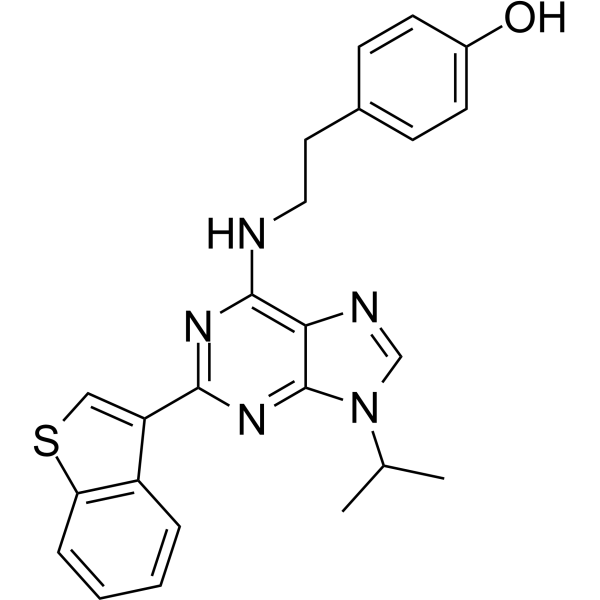
Stemregenin 1AhR Antagonist -
HY-104026R
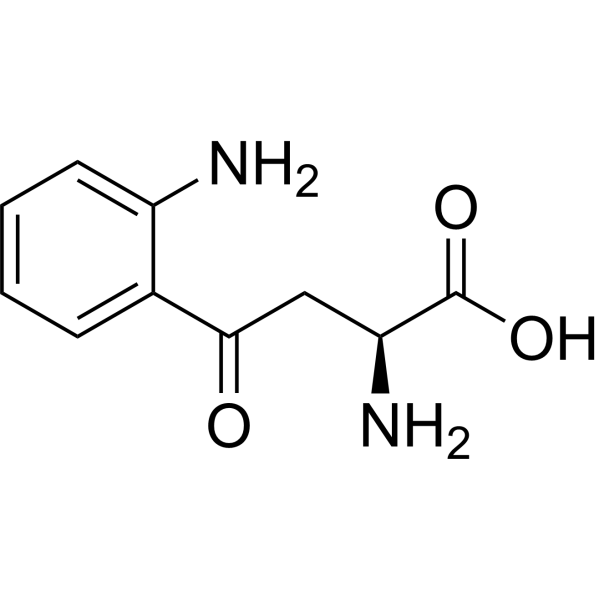
L-Kynurenine (Standard)Aryl Hydrocarbon Receptor Agonist -
HY-112627
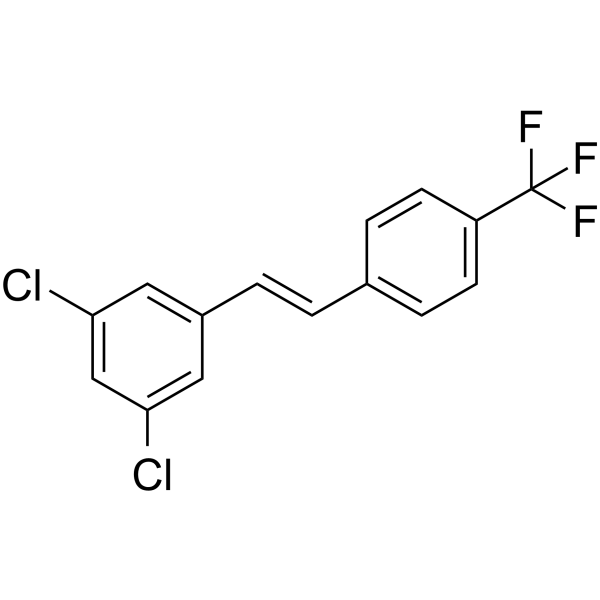
CAY 10465Aryl Hydrocarbon Receptor Agonist -
HY-113099
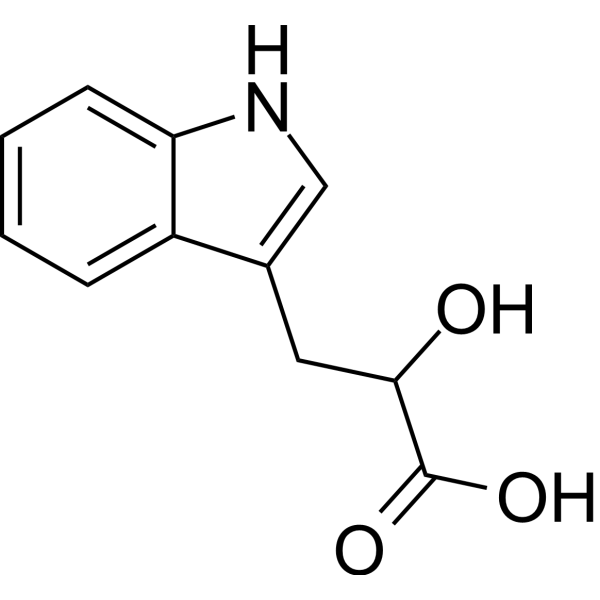
Indolelactic acidTryptophan Catabolite -
HY-13259
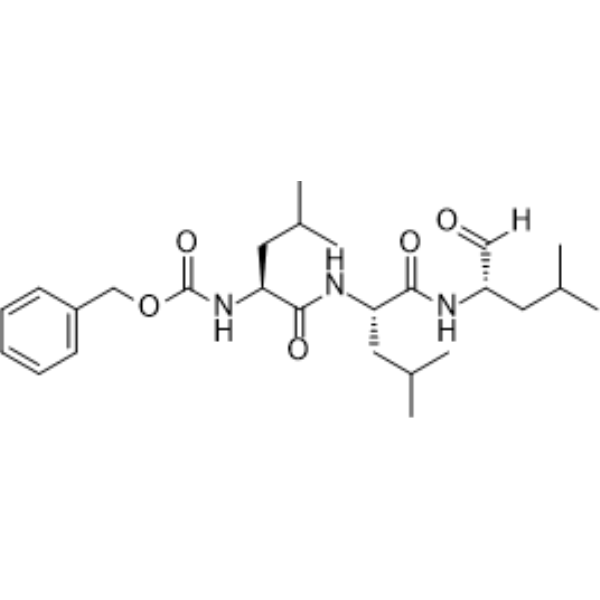
MG-132Proteasome Inhibitor -
HY-135829
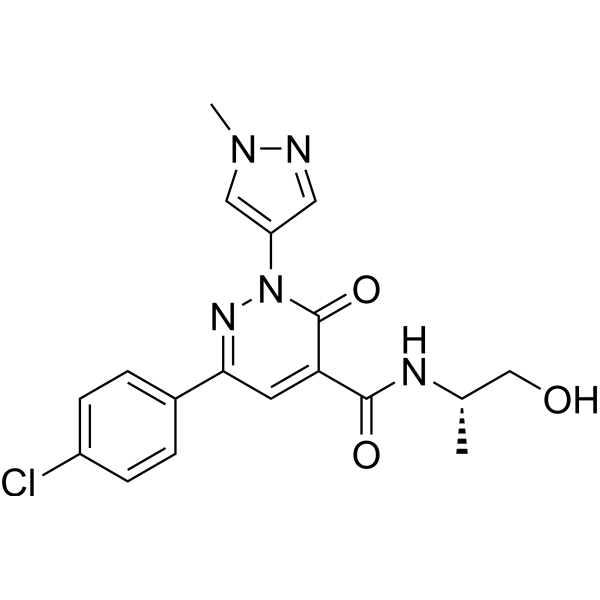
BAY 2416964AHR Antagonist -
HY-18569
3-Indoleacetic acidPlant Growth Regulator
Publications Citing Use of MedChemExpress (MCE) FICZ
More- Cell Mol Immunol. 2026 May;23(5):491-504. [Abstract]
- Cell Mol Immunol. 2025 Mar;22(3):300-315. [Abstract]
- Nat Commun. 2026 Aug 21;17(1):10006.
- Gut Microbes. 2025 Dec;17(1):2508949. [Abstract]
- Gut Microbes. 2023 Jan-Dec;15(1):2221485. [Abstract]
- Theranostics. 2021 Aug 11;11(18):8797-8812. [Abstract]
- Theranostics. 2020 Oct 25;10(26):12011-12025. [Abstract]
- MedComm (2020). 2025 Jun 6;6(6):e70212. [Abstract]
- Cell Rep Med. 2026 Jun 23:102882. [Abstract]
- Cell Rep Med. 2023 Mar 21;4(3):100979. [Abstract]
- Phytomedicine. 2025 May:140:156633. [Abstract]
- Phytomedicine. 2025 Apr:139:156445. [Abstract]
- J Transl Med. 2023 Feb 2;21(1):71. [Abstract]
- BMC Med. 2022 Oct 19;20(1):365. [Abstract]
- Phytother Res. 2024 Jan;38(1):253-264. [Abstract]
- EMBO Mol Med. 2022 Dec 7;14(12):e15677. [Abstract]
- Blood Adv. 2025 Jun 24;9(12):2935-2952. [Abstract]
- Clin Sci. 2023 Nov 29;137(22):1753-1769. [Abstract]
- J Invest Dermatol. 2024 Apr;144(4):862-873.e4.
- Mol Cancer Ther. 2025 Jan 2;24(1):56-68. [Abstract]
- J Ethnopharmacol. 2023 Feb 10;302(Pt B):115919. [Abstract]
- Ecotoxicol Environ Saf. 2026 Sep 1:322:120588.
- Cell Biosci. 2023 Jul 8;13(1):127. [Abstract]
- Inflamm Res. 2025 Jun 30;74(1):98. [Abstract]
- RSC Adv. 2022 Apr 13;12(18):11505-11516. [Abstract]
- Cell Rep Methods. 2025 Oct 17:101207. [Abstract]
- Int Immunopharmacol. 2026 Jun 12:185:117011. [Abstract]
- Int Immunopharmacol. 2022 Nov:112:109255. [Abstract]
- Bioorg Chem. 2025 Dec:167:109256. [Abstract]
- Sci Rep. 2026 Aug 26.
- J Inflamm Res. 2024 Aug 13:17:5293-5309. [Abstract]
- Dis Colon Rectum. 2025 Jan 1;68(1):77-90. [Abstract]
- Cell Physiol Biochem. 2026 Jan 30;60(1):44-62. [Abstract]
- University of Szeged. 2025.
- bioRxiv. 2025 Jan 24:2025.01.24.634694. [Abstract]
- SSRN. 2024 Jan 9.
 Customer Validation & Images

-
RT-PCR
-
In Vivo Efficacy Study
-
Histological Imaging/Staining
-
WB
-
ELISA


Biologische Aktivität
Beschreibung
Cellular Effect
|
Cell Line

|
Type | Value | Description | References |
|---|---|---|---|---|
| HepG2 | EC50 |
2.04 nM
Compound: 2; FICZ
|
Agonist activity at AhR in human HepG2 cells assessed as induction of CYP1A1 expression after 24 hrs by ethoxyresorufin-O-deethylase assay
Agonist activity at AhR in human HepG2 cells assessed as induction of CYP1A1 expression after 24 hrs by ethoxyresorufin-O-deethylase assay
|
[PMID: 31952965] |
In Vitro
FICZ (0.01 nM-1 µM) alone or in combination with 50 nM MNF induces sustained CYP1A1 activity and leads to oxidative stress and activation of apoptosis via a mitochondrial-dependent pathway. In HepG2 cells, FICZ stimulates cell growth at low concentrations but inhibits cell growth at high concentrations[1]. FICZ (10,000-30,000 nM) significantly decreases CEH viability with an estimated LC50 (95% confidence intervals) of 14,000 nM. FICZ shows concentration-dependent effects on EROD activity in CEH cultures, with the mean EC50 values at 3, 8, and 24 h of 0.016 nM, 0.80 nM, and 11 nM, respectively[2]. FICZ treatment increases transcript expression of CYP1A1 in a dose-dependent manner in both the parental iPSC line and the CYP1A1 targeted clone[3]. CYP1 inhibition in the presence of FICZ results in enhanced AHR activation, suggesting that FICZ accumulates in the cell when its metabolism is blocked. CYP1 enzymes plays a role in regulating biological effects of FICZ[4].
Nuclear export and degradation of the AHR protein are two additional steps in the AHR-mediated signal transduction pathway[5].
Exposure to AhR agonists causes AhR-expressing cells to downregulate the receptor through the ubiquitin/proteasome degradation pathway[6].
MedChemExpress (MCE) has not independently confirmed the accuracy of these methods. They are for reference only.


Chemical Information
-
CAS. Nr. 172922-91-7
-
Appearance Solid
-
Molecular Weight 284.31
-
Formel C19H12N2O
-
Color Light yellow to yellow
-
SMILES
O=CC1=C2C(NC3=C2C=CC=C3)=CC4=C1NC5=C4C=CC=C5
-
Synonyms
6-Formylindolo[3,2-b]carbazole
-
Versand
Room temperature in continental US; may vary elsewhere.
-
Speicherung
Powder -20°C 3 years 4°C 2 years In solvent -80°C 2 years -20°C 1 year


Publications (36)
-
Journal Impact Factor
-
Most Recent
-
Cell Mol Immunol
MAIT cell plasticity generates CD4+ MAIT cells that promote HCC progression via metabolic crosstalk with tumor cells. [Abstract]2026 May;23(5):491-504. PMID: 41974917 -
Cell Mol Immunol
The AhR-Ovol1-Id1 regulatory axis in keratinocytes promotes epidermal and immune homeostasis in atopic dermatitis-like skin inflammation. [Abstract]2025 Mar;22(3):300-315. PMID: 39939818
FICZ purchased from MedChemExpress. Usage Cited in: Cell Mol Immunol. 2025 Mar;22(3):300-315. [Abstract]
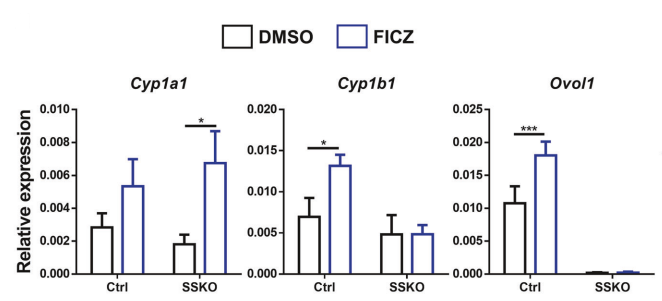
RT-qPCR results of the indicated genes in whole skin on day 11 of SSKO (K14-Cre;Ovol1f/-) mice and control littermates mice treated with FICZ (i.p.; 0.1 mg/kg ; daily for 10 days). Data are presented as the means ± SEMs. n = 4 mice per group.
FICZ purchased from MedChemExpress. Usage Cited in: Cell Mol Immunol. 2025 Mar;22(3):300-315. [Abstract]
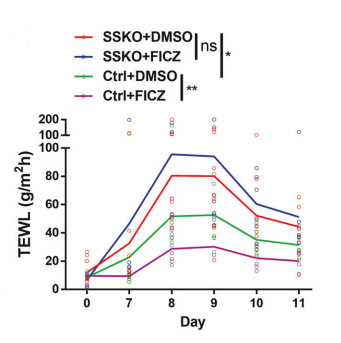
Time course showing TEWL measurements in SSKO (K14-Cre;Ovol1f/-) mice and control littermates mice treated with FICZ (i.p.; 0.1 mg/kg ; daily for 10 days). n = 5–9 mice per group.
FICZ purchased from MedChemExpress. Usage Cited in: Cell Mol Immunol. 2025 Mar;22(3):300-315. [Abstract]
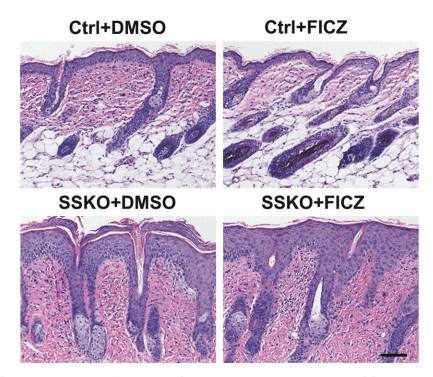
Representative skin histology (H&E staining) on day 11 of SSKO (K14-Cre;Ovol1f/-) mice and control littermates mice treated with FICZ (i.p.; 0.1 mg/kg ; daily for 10 days). Scale bar = 100 μm.
-
-
Gut Microbes
2025 Dec;17(1):2508949. PMID: 40409349 -
Gut Microbes
Akkermansia muciniphila inhibits nonalcoholic steatohepatitis by orchestrating TLR2-activated γδT17 cell and macrophage polarization. [Abstract]2023 Jan-Dec;15(1):2221485. PMID: 37345844 -
Theranostics
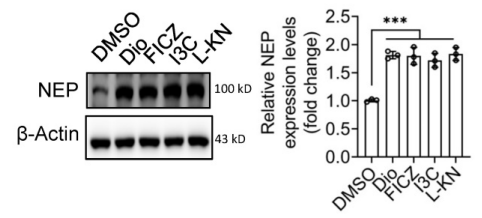
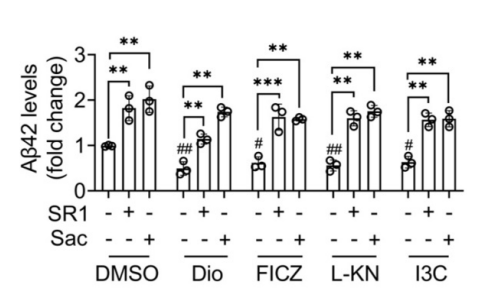
Activating AhR alleviates cognitive deficits of Alzheimer's disease model mice by upregulating endogenous Aβ catabolic enzyme Neprilysin. [Abstract]2021 Aug 11;11(18):8797-8812. PMID: 34522212
FICZ purchased from MedChemExpress. Usage Cited in: Theranostics. 2021 Aug 11;11(18):8797-8812. [Abstract]
N2a cells were treated with DMSO, Diosmin (Dio; 40 μM), FICZ (250 nM), Indole-3-acetamide (I3C; 10 μM) or L-KN (3 μM) for 12 h. Whole cell extracts were examined by western blotting with the indicated antibodies. NEP expression was adjusted to that of β-actin, which was used as the loading control. n = 3.
FICZ purchased from MedChemExpress. Usage Cited in: Theranostics. 2021 Aug 11;11(18):8797-8812. [Abstract]
N2a-APP cells were treated with Diosmin (Dio; 80 μM), FICZ (250 nM), L-KN (3 μM) or Indole-3-acetamide (I3C; 10 μM) with or without SR1 (2 μM) or Sacubitril (Sac; 1 μM) for 24 h, the supernatant was collected and the Aβ42 levels were determined by ELISA.
-
Theranostics
AhR activation attenuates calcium oxalate nephrocalcinosis by diminishing M1 macrophage polarization and promoting M2 macrophage polarization. [Abstract]2020 Oct 25;10(26):12011-12025. PMID: 33204326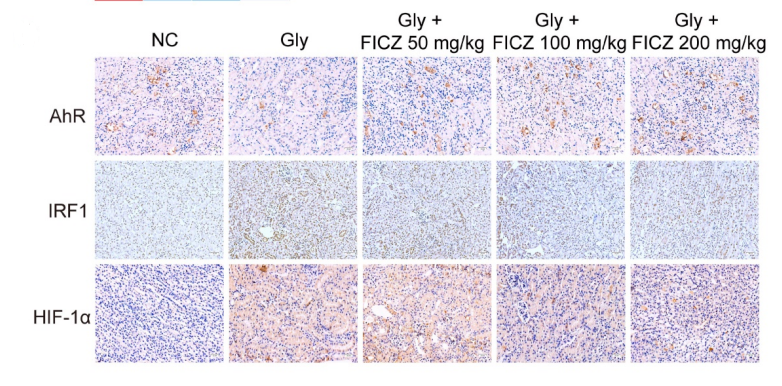
FICZ purchased from MedChemExpress. Usage Cited in: Theranostics. 2020 Oct 25;10(26):12011-12025. [Abstract]
IHC staining for AhR, IRF1, and HIF-1α in the kidneys of FICZ (i.p.; 50-mg/kg/d for 10 days)-treated mice with CaOx nephrocalcinosis (200×; scale bar: 20 µm).
-
MedComm (2020)
Loss of Adenosine Deaminase Acting on RNA 1 Induces Panoptosis and Immune Response in Ulcerative Colitis Gut Mucosa. [Abstract]2025 Jun 6;6(6):e70212. PMID: 40487746 -
Cell Rep Med
Commensal Cutibacterium acnes-derived indolelactic acid safeguards skin barrier function through the aryl hydrocarbon receptor. [Abstract]2026 Jun 23:102882. PMID: 42335903 -
Cell Rep Med
2023 Mar 21;4(3):100979. PMID: 36948152 -
Phytomedicine
Quercetin protected the gut barrier in ulcerative colitis by activating aryl hydrocarbon receptor. [Abstract]2025 May:140:156633. PMID: 40088746 -
Phytomedicine
3-Hydroxypropionaldehyde modulates tryptophan metabolism to activate AhR signaling and alleviate ethanol-induced liver injury. [Abstract]2025 Apr:139:156445. PMID: 39922148 -
J Transl Med
The soluble epoxide hydrolase inhibitor TPPU improves comorbidity of chronic pain and depression via the AHR and TSPO signaling. [Abstract]2023 Feb 2;21(1):71. PMID: 36732752 -
BMC Med
NUPR1 contributes to radiation resistance by maintaining ROS homeostasis via AhR/CYP signal axis in hepatocellular carcinoma. [Abstract]2022 Oct 19;20(1):365. PMID: 36258210 -
Phytother Res
Quercetin ameliorates ulcerative colitis by activating aryl hydrocarbon receptor to improve intestinal barrier integrity. [Abstract]2024 Jan;38(1):253-264. PMID: 37873559 -
EMBO Mol Med
2022 Dec 7;14(12):e15677. PMID: 36305167 -
Blood Adv
AhR activation mitigates graft-versus-host disease of the central nervous system by reducing microglial NF-κB signaling. [Abstract]2025 Jun 24;9(12):2935-2952. PMID: 40163754 -
Clin Sci
PE (0:0/14:0)an endogenous metabolite of the gut microbiota, exerts protective effects against sepsis-induced intestinal injury by modulating the AhR/CYP1A1 pathway. [Abstract]2023 Nov 29;137(22):1753-1769. PMID: 37921121 -
-
Mol Cancer Ther
PARP7 Inhibitors and AHR Agonists Act Synergistically across a Wide Range of Cancer Models. [Abstract]2025 Jan 2;24(1):56-68. PMID: 39313957 -
J Ethnopharmacol
Gegen Qinlian decoction activates AhR/IL-22 to repair intestinal barrier by modulating gut microbiota-related tryptophan metabolism in ulcerative colitis mice. [Abstract]2023 Feb 10;302(Pt B):115919. PMID: 36356716 -
-
Cell Biosci
Gut microbiota-derived tryptophan metabolites alleviate liver injury via AhR/Nrf2 activation in pyrrolizidine alkaloids-induced sinusoidal obstruction syndrome. [Abstract]2023 Jul 8;13(1):127. PMID: 37422682 -
Inflamm Res
Aryl hydrocarbon receptor (AhR) alleviates the LPS-induced inflammatory responses in IPEC-J2 cells by activating PINK1/Parkin-mediated mitophagy. [Abstract]2025 Jun 30;74(1):98. PMID: 40583101 -
RSC Adv
Beneficial roles of the AhR ligand FICZ on the regenerative potentials of BMSCs and primed cartilage templates. [Abstract]2022 Apr 13;12(18):11505-11516. PMID: 35425032 -
Cell Rep Methods
2025 Oct 17:101207. PMID: 41109218 -
Int Immunopharmacol
Stabilization of MHCII on dendritic cells via AhR-mediated blockade of proteasomal degradation drives Th17 responses to exogenous antigens. [Abstract]2026 Jun 12:185:117011. PMID: 42284760 -
Int Immunopharmacol
Ameliorative effect of the probiotic peptide against benzo(α)pyrene-induced inflammatory damages in enterocytes. [Abstract]2022 Nov:112:109255. PMID: 36152539 -
Bioorg Chem
2025 Dec:167:109256. PMID: 41253061 -
-
J Inflamm Res
Pretreatment with Indole-3-Propionic Acid Attenuates Lipopolysaccharide-Induced Cardiac Dysfunction and Inflammation Through the AhR/NF-κB/NLRP3 Pathway. [Abstract]2024 Aug 13:17:5293-5309. PMID: 39157586 -
Dis Colon Rectum
Tryptophan Metabolites Improve Intestinal Mucosal Barrier via the Aryl Hydrocarbon Receptor-Interleukin-22 Pathway in Murine Dextran Sulfate Sodium-Induced Pouchitis. [Abstract]2025 Jan 1;68(1):77-90. PMID: 39440869 -
Cell Physiol Biochem
Evidence For a Fibrogenic Interaction Between the Aryl Hydrocarbon Receptor and the Wnt/β-Catenin Pathways in Human Keratinocytes and Fibroblasts. [Abstract]2026 Jan 30;60(1):44-62. PMID: 41668603 -
-
bioRxiv
2025 Jan 24:2025.01.24.634694. PMID: 39896569 -


Lösungsmittel & Löslichkeit
In Vitro:
DMSO : 10 mg/mL (35.17 mM; Need ultrasonic and warming; Hygroscopic DMSO has a significant impact on the solubility of product, please use newly opened DMSO)
Please refer to the solubility information to select the appropriate solvent. Once prepared, please aliquot and store the solution to prevent product inactivation from repeated freeze-thaw cycles.
Storage method and period of stock solution: -80°C, 2 years; -20°C, 1 year. When stored at -80°C, please use it within 2 years. When stored at -20°C, please use it within 1 year.
Please refer to the solubility information to select the appropriate solvent. Once prepared, please aliquot and store the solution to prevent product inactivation from repeated freeze-thaw cycles.
Storage method and period of stock solution: -80°C, 2 years; -20°C, 1 year. When stored at -80°C, please use it within 2 years. When stored at -20°C, please use it within 1 year.
Konzentration (Stammlösung) × Volumen (Stammlösung) = Konzentration (Ziellösung) × Volumen (Ziellösung)
In Vivo:
Select the appropriate dissolution method based on your experimental animal and administration route.
- For the following dissolution methods, please ensure to first prepare a clear stock solution using an In Vitro approach and then sequentially add co-solvents:
- To ensure reliable experimental results, the clarified stock solution can be appropriately stored based on storage conditions. As for the working solution for In Vivo experiments, it is recommended to prepare freshly and use it on the same day.
- The percentages shown for the solvents indicate their volumetric ratio in the final prepared solution. If precipitation or phase separation occurs during preparation, heat and/or sonication can be used to aid dissolution.
For the following dissolution methods, please prepare the working solution directly:
It is recommended to prepare fresh solutions and use them promptly within a short period of time.
The percentages shown for the solvents indicate their volumetric ratio in the final prepared solution. If precipitation or phase separation occurs during preparation, heat and/or sonication can be used to aid dissolution.
Add each solvent one by one: 15% Solutol HS 15 10% Cremophor EL 35% PEG400 40% Water
Solubility: 3.33 mg/mL (11.71 mM); Suspended solution; Need ultrasonic
In Vivo Dissolution Calculator
Please enter the basic information of animal experiments:
-
-
-
-
Recommended: Prepare an additional quantity of animals to account for potential losses during experiments.
Please enter your animal formula composition:
-
%DMSO +
Recommended: Keep the proportion of DMSO in working solution below 2% if your animal is weak.
-
%+
-
+%Tween-80 + +
-
%Saline +
The co-solvents required include: DMSO, . All of co-solvents are available by MedChemExpress (MCE). , Tween 80. All of co-solvents are available by MedChemExpress (MCE).
Working solution concentration: 0.22 mg/mL
Method for preparing stock solution: mg drug dissolved in μL DMSO. Stock solution concentration: mg/mL.
1. Take μL DMSO stock solution;
2. Add μL .
μL , mix evenly;
3. Then add μL Tween 80, mix evenly;
4. Then add μL
Please ensure that the stock solution in the first step is dissolved to a clear state, and add co-solvents in sequence. You can use ultrasonic heating (ultrasonic cleaner, recommended frequency 20-40 kHz), vortexing, etc. to assist dissolution.


Reinheit & Dokumentation
-
Data Sheet (285 KB)
-
SDS (396 KB)
- English - EN (396 KB)
- Français - FR (396 KB)
- Deutsch - DE (396 KB)
- Norwegian - NO (396 KB)
- Español - ES (396 KB)
- Swedish - SV (396 KB)
- Italian - IT (396 KB)
- Korean - KR (396 KB)
- Portuguese - PT (396 KB)
-
Handling Instructions (2659 KB)
Verweise
[1]. Mohammadi-Bardbori A, et al. The highly bioactive molecule and signal substance 6-formylindolo[3,2-b]carbazole (FICZ) plays bi-functional roles in cell growth and apoptosis in vitro. Arch Toxicol. 2017 Mar 13 [Content Brief]
[2]. Farmahin R, et al. Time-dependent transcriptomic and biochemical responses of 6-formylindolo[3,2-b]carbazole (FICZ) and 2,3,7,8-tetrachlorodibenzo-p-dioxin (TCDD) are explained by AHR activation time. Biochem Pharmacol. 2016 Sep 1;115:134-43 [Content Brief]
[3]. Smith BW, et al. Genome Editing of the CYP1A1 Locus in iPSCs as a Platform to Map AHR Expression throughout Human Development. Stem Cells Int. 2016;2016:2574152. [Content Brief]
[4]. Wincent E, et al. Biological effects of 6-formylindolo[3,2-b]carbazole (FICZ) in vivo are enhanced by loss of CYP1A function in an Ahr2-dependent manner. Biochem Pharmacol. 2016 Jun 15;110-111:117-29. [Content Brief]
[5]. N A Davarinos, et al. Aryl Hydrocarbon Receptor Imported Into the Nucleus Following Ligand Binding Is Rapidly Degraded via the Cytosplasmic Proteasome Following Nuclear Export. J Biol Chem. 1999 Oct 1;274(40):28708-15. [Content Brief]
[6]. Riccardo Sibilano, et al. The Aryl Hydrocarbon Receptor Modulates Acute and Late Mast Cell Responses. J Immunol. 2012 Jul 1;189(1):120-7. [Content Brief]


Complete Stock Solution Preparation Table
Please refer to the solubility information to select the appropriate solvent. Once prepared, please aliquot and store the solution to prevent product inactivation from repeated freeze-thaw cycles.
Storage method and period of stock solution: -80°C, 2 years; -20°C, 1 year. When stored at -80°C, please use it within 2 years. When stored at -20°C, please use it within 1 year.
| Optional Solvent | Concentration Solvent Mass | 1 mg | 5 mg | 10 mg | 25 mg |
|---|---|---|---|---|---|
| DMSO | 1 mM | 3.5173 mL | 17.5864 mL | 35.1729 mL | 87.9322 mL |
| 5 mM | 0.7035 mL | 3.5173 mL | 7.0346 mL | 17.5864 mL | |
| 10 mM | 0.3517 mL | 1.7586 mL | 3.5173 mL | 8.7932 mL | |
| 15 mM | 0.2345 mL | 1.1724 mL | 2.3449 mL | 5.8621 mL | |
| 20 mM | 0.1759 mL | 0.8793 mL | 1.7586 mL | 4.3966 mL | |
| 25 mM | 0.1407 mL | 0.7035 mL | 1.4069 mL | 3.5173 mL | |
| 30 mM | 0.1172 mL | 0.5862 mL | 1.1724 mL | 2.9311 mL |


FICZ Related Classifications
HY-12451 Related Classifications
 Powered by Bioz