



Pranlukast
Based on 3 publication(s) in Google Scholar
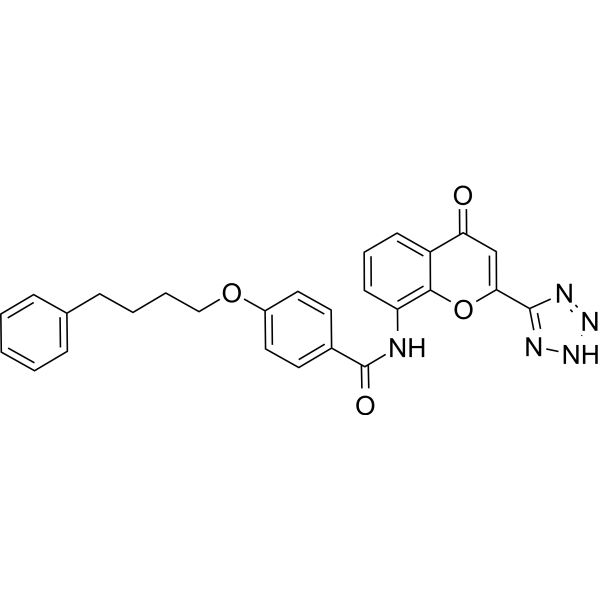
Pranlukast is a highly potent, selective and competitive antagonist of peptide leukotrienes. Pranlukast inhibits [3H]LTE4, [3H]LTD4, and [3H]LTC4 bindings to lung membranes with Kis of 0.63±0.11, 0.99±0.19, and 5640±680 nM, respectively.
For research use only. We do not sell to patients.
- Purity : 99.61%
- CAS No.: 103177-37-3
- Formula: C27H23N5O4
- Molecular Weight:481.50
-
Storage:Powder -20°C, 3 years , 4°C, 2 years ; In solvent -80°C, 2 years , -20°C, 1 year

To place orders, for customer services and technical support, please contact: MedChemExpress USA
Tel: 609-228-6898 E-mail: [email protected] [email protected]


-
 Biological Activity
-
Chemical Information
-
Solvent & Solubility
- Purity & Documentation
- References
-
 Help & FAQs


-
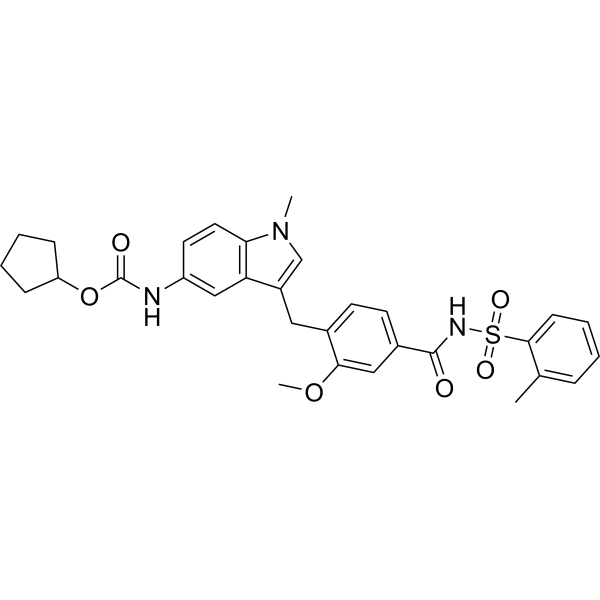
HY-17492
ZafirlukastLeukotriene Receptor Antagonist -
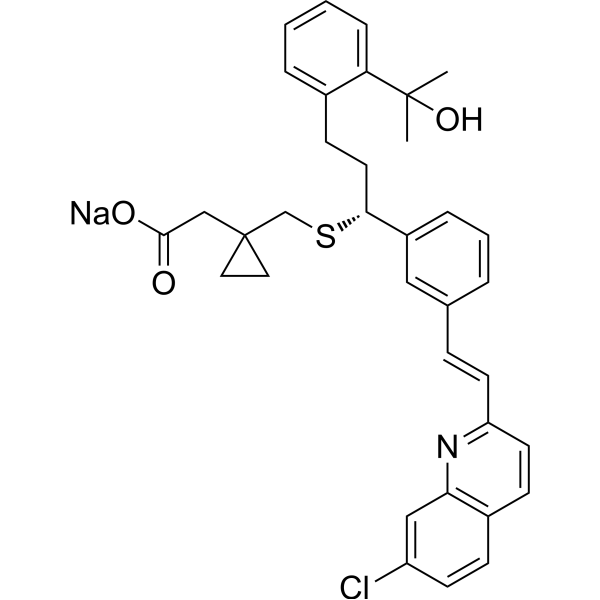
HY-13315
Montelukast sodiumCysltr1 Antagonist -
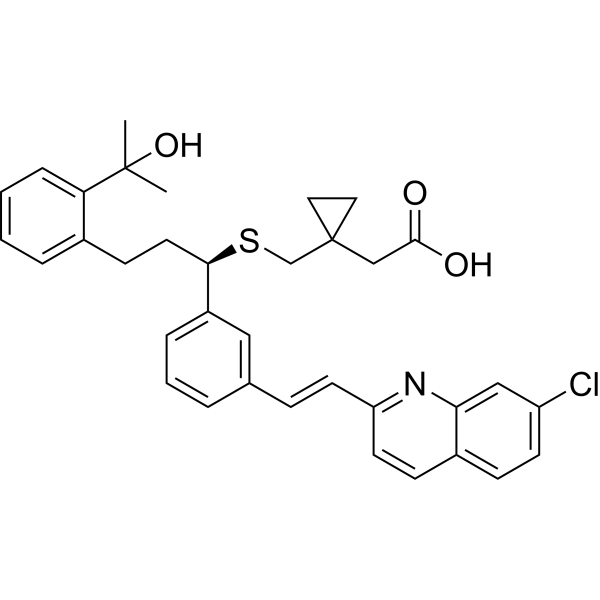
HY-13315A
MontelukastCysLT1 Antagonist -

HY-B0290R
Pranlukast (Standard)Endogenous Metabolite -
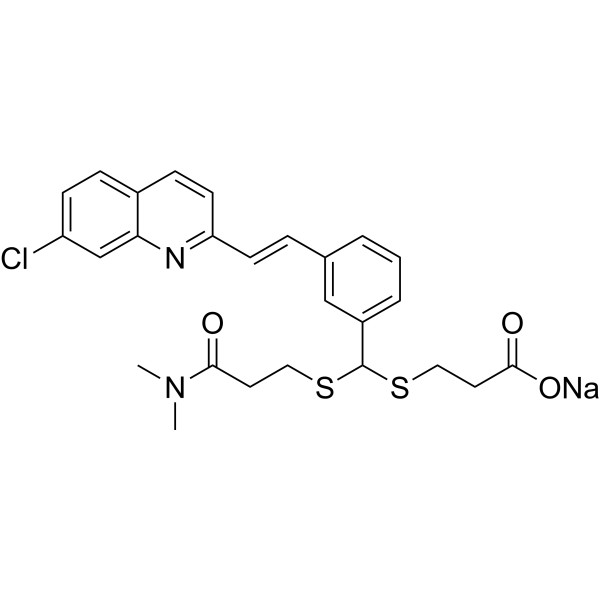
HY-19989A
MK-571 sodiumABCC1/MRP4 Inhibitor -

HY-17492R
Zafirlukast (Standard)Leukotriene Receptor Antagonist -
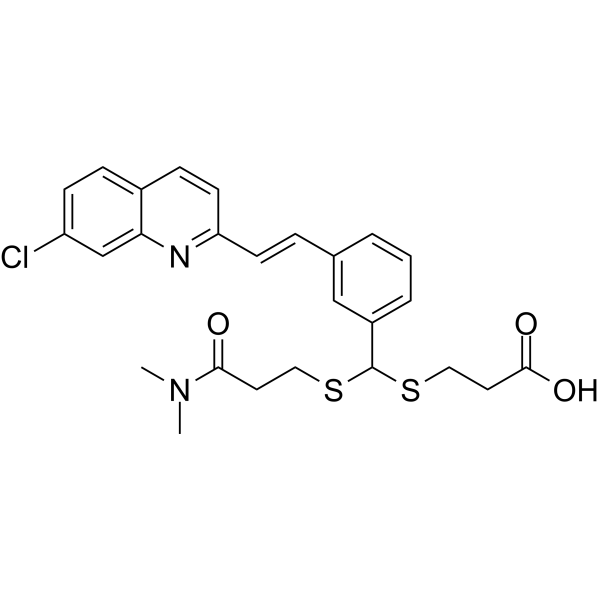
HY-19989
MK-571ABCC1/MRP4 Inhibitor -
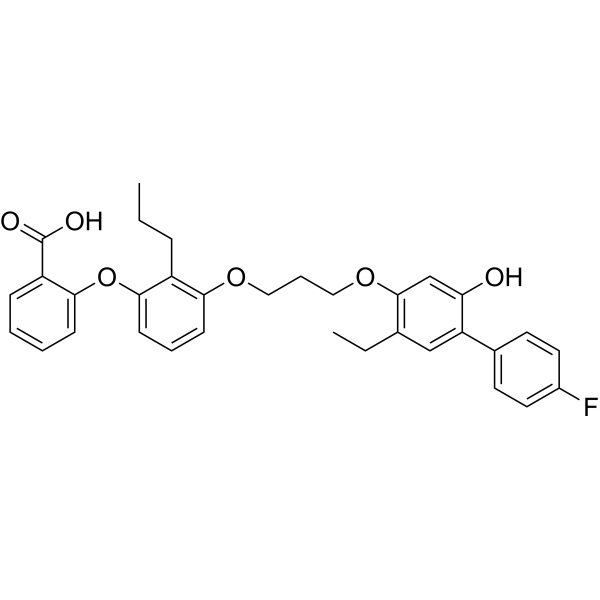
HY-13628
EtalocibLTB4 Receptor Antagonist -
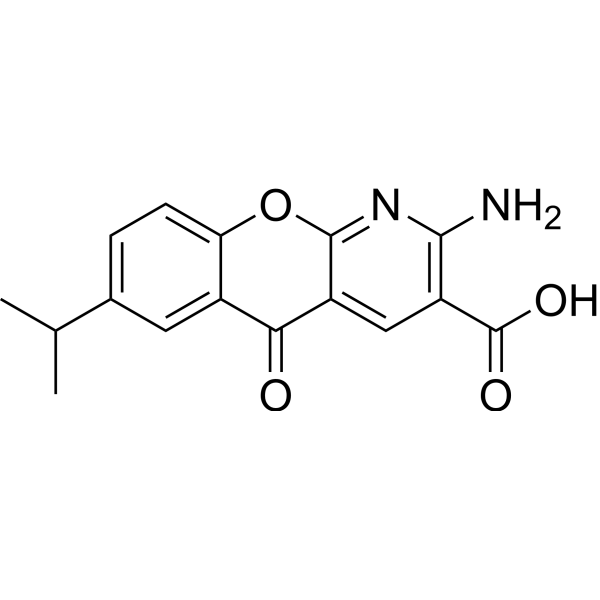
HY-B0713
AmlexanoxIKK Inhibitor -
HY-112248A
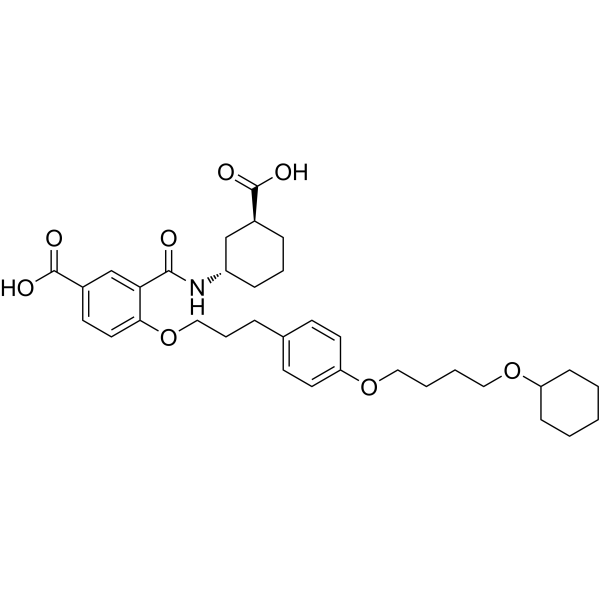
HAMI 3379CysLT2 Receptor Antagonist -
HY-19193
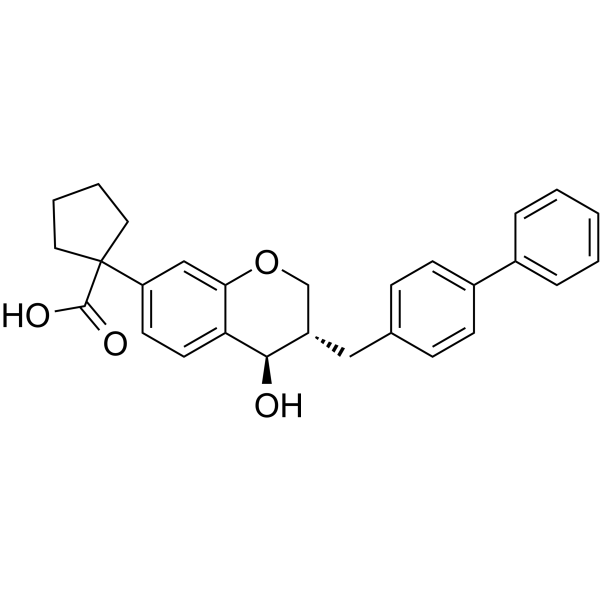
CP-105696LTB4 Receptor Antagonist -
HY-B0174A
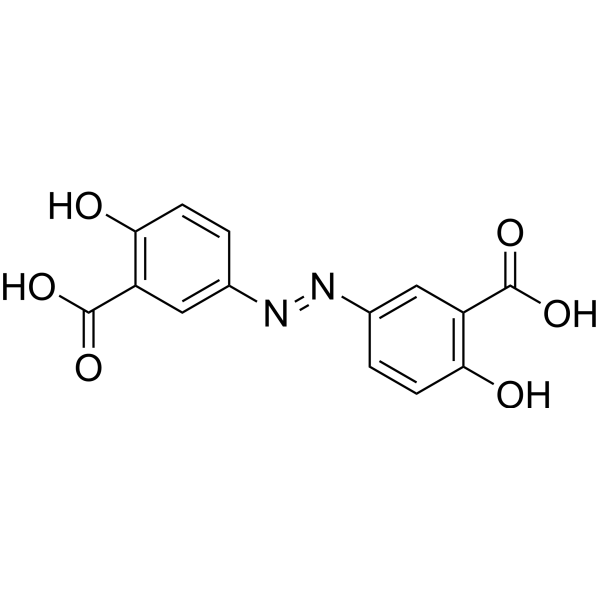
OlsalazineAnticancer/Antiinflammation Agent
Publications Citing Use of MedChemExpress (MCE) Pranlukast
More Customer Validation & Images

-
IF
-
Cell Proliferation/Viability Assay
All Leukotriene Receptor Isoforms
More

Biological Activity
Description
IC50 & Target
[1]|
LTE4 0.63 nM (Ki) |
LTD4 0.99 nM (Ki) |
LTC4 5640 nM (Ki) |
Cellular Effect
|
Cell Line

|
Type | Value | Description | References |
|---|---|---|---|---|
| HEK-293T | IC50 |
3620 nM
Compound: pranlukast
|
Antagonist activity at human CysLT2 expressed in HEK293T cells assessed as inhibition of LTC4-induced effect preincubated for 30 mins prior to LTC4 addition by Aequorin luminescence assay
Antagonist activity at human CysLT2 expressed in HEK293T cells assessed as inhibition of LTC4-induced effect preincubated for 30 mins prior to LTC4 addition by Aequorin luminescence assay
|
[PMID: 26200813] |
| HeLa | EC50 |
15 μM
Compound: Pranlukast
|
Partial agonist activity at human full-length FXR expressed in human HeLa cells co-expressing pSG5-RXR measured after 24 hrs by dual-glo luciferase reporter gene assay
Partial agonist activity at human full-length FXR expressed in human HeLa cells co-expressing pSG5-RXR measured after 24 hrs by dual-glo luciferase reporter gene assay
|
[PMID: 31188588] |
| U-937 | IC50 |
0.001 μM
Compound: 2
|
Compound was evaluated for influx of calcium mobilization in human U937 cells
Compound was evaluated for influx of calcium mobilization in human U937 cells
|
[PMID: 9873435] |
| U-937 | IC50 |
0.001 μM
Compound: 2
|
Compound was tested for its ability to inhibit calcium influx in human U937 cells
Compound was tested for its ability to inhibit calcium influx in human U937 cells
|
[PMID: 9934474] |
| U-937 | IC50 |
1 nM
Compound: Pranlukast
|
In vitro blocking of extracellular calcium mobilization in human U937 cells
In vitro blocking of extracellular calcium mobilization in human U937 cells
|
[PMID: 10509933] |
In Vitro
In the radioligand binding assay, Pranlukast (ONO-1078) inhibits [3H]LTE4, [3H]LTD4, and [3H]LTC4 bindings to lung membranes with Kis of 0.63±0.11, 0.99±0.19, and 5640±680 nM, respectively. The antagonism of Pranlukast against [3H]LTD4 binding is competitive. In functional experiments, Pranlukast shows competitive antagonism against the LTC4- and LTD4-induced contractions of guinea pig trachea and lung parenchymal strips with a pA2 range of 7.70 to 10.71. In the presence of an inhibitor of the bioconversion of LTC4 to LTD4, Pranlukast also antagonizes the LTC4-induced contraction of guinea pig trachea (pA2=7.78). Pranlukast significantly reverses the LTD4-induced prolonged contraction without effect on the KCl- and BaCl2-induced contractions of guinea pig trachea[1]. Oxygen-glucose deprivation (OGD)-induced nuclear translocation of CysLT1 receptors is inhibited by pretreatment with the CysLT1 receptor antagonist Pranlukast (10 μM). Pranlukast protects endothelial cells against ischemia-like injury. The effects of the CysLT1 receptor antagonist Pranlukast and the 5-lipoxygenase inhibitor Zileuton on translocation are also assessed. The results show that Pranlukast, but not Zileuton, inhibits the translocation of the CysLT1 receptor 6 h after OGD[2].
MedChemExpress (MCE) has not independently confirmed the accuracy of these methods. They are for reference only.
In Vivo
MedChemExpress (MCE) has not independently confirmed the accuracy of these methods. They are for reference only.
Clinical Trial
| NCT Number | Sponsor | Condition | Start Date |
Phase
|
|---|---|---|---|---|
| NCT01329991 | 2011-05 | PHASE1 |


Chemical Information
-
CAS No. 103177-37-3
-
Appearance Solid
-
Molecular Weight 481.50
-
Formula C27H23N5O4
-
Color White to off-white
-
SMILES
O=C(NC1=C2C(C(C=C(C3=NNN=N3)O2)=O)=CC=C1)C4=CC=C(OCCCCC5=CC=CC=C5)C=C4
-
Synonyms
ONO-1078
-
Shipping
Room temperature in continental US; may vary elsewhere.
-
Storage
Powder -20°C 3 years 4°C 2 years In solvent -80°C 2 years -20°C 1 year


Publications (3)
-
Journal Impact Factor
-
Most Recent
-
ACS Nano
Single-Molecule-Based, Label-Free Monitoring of Molecular Glue Efficacies for Promoting Protein-Protein Interactions Using YaxAB Nanopores. [Abstract]2024 Nov 12;18(45):31451-31465. PMID: 39482865 -
Int J Mol Sci
2026 Mar 11;27(6):2587. PMID: 41898448 -
J Neurosci
Olig2-Targeted G-Protein-Coupled Receptor Gpr17 Regulates Oligodendrocyte Survival in Response to Lysolecithin-Induced Demyelination. [Abstract]2016 Oct 12;36(41):10560-10573. PMID: 27733608
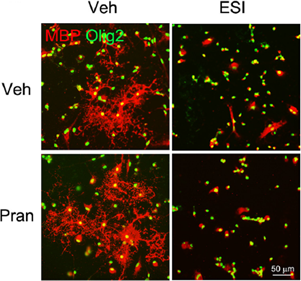
Pranlukast purchased from MedChemExpress. Usage Cited in: J Neurosci. 2016 Oct 12;36(41):10560-10573. [Abstract]
The inhibition of Epac1 activity by ESI-09 reduces oligodendrocyte maturation.
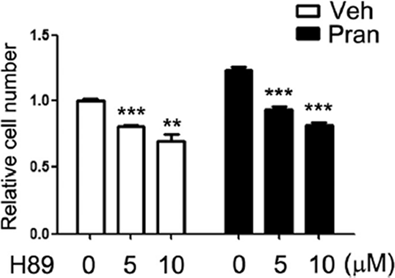
Pranlukast purchased from MedChemExpress. Usage Cited in: J Neurosci. 2016 Oct 12;36(41):10560-10573. [Abstract]
The inhibition of PKA signaling with PKA inhibitor H89 reduces cell viability observed after Pranlukast treatment.


Solvent & Solubility
In Vitro:
DMSO : 33.33 mg/mL (69.22 mM; Need ultrasonic; Hygroscopic DMSO has a significant impact on the solubility of product, please use newly opened DMSO)
H2O : < 0.1 mg/mL (insoluble)
Please refer to the solubility information to select the appropriate solvent. Once prepared, please aliquot and store the solution to prevent product inactivation from repeated freeze-thaw cycles.
Storage method and period of stock solution: -80°C, 2 years; -20°C, 1 year. When stored at -80°C, please use it within 2 years. When stored at -20°C, please use it within 1 year.
Please refer to the solubility information to select the appropriate solvent. Once prepared, please aliquot and store the solution to prevent product inactivation from repeated freeze-thaw cycles.
Storage method and period of stock solution: -80°C, 2 years; -20°C, 1 year. When stored at -80°C, please use it within 2 years. When stored at -20°C, please use it within 1 year.
Concentration (start) × Volume (start) = Concentration (final) × Volume (final)
In Vivo:
Select the appropriate dissolution method based on your experimental animal and administration route.
- For the following dissolution methods, please ensure to first prepare a clear stock solution using an In Vitro approach and then sequentially add co-solvents:
- To ensure reliable experimental results, the clarified stock solution can be appropriately stored based on storage conditions. As for the working solution for In Vivo experiments, it is recommended to prepare freshly and use it on the same day.
- The percentages shown for the solvents indicate their volumetric ratio in the final prepared solution. If precipitation or phase separation occurs during preparation, heat and/or sonication can be used to aid dissolution.
Add each solvent one by one: 10% DMSO 40% PEG300 5% Tween-80 45% Saline
Solubility: 2.75 mg/mL (5.71 mM); Suspended solution; Need ultrasonic
This protocol yields a suspended solution of 2.75 mg/mL. Suspended solution can be used for oral and intraperitoneal injection.
Taking 1 mL working solution as an example, add 100 μL DMSO stock solution (27.5 mg/mL) to 400 μL PEG300, and mix evenly; then add 50 μL Tween-80 and mix evenly; then add 450 μL Saline to adjust the volume to 1 mL.
Preparation of Saline: Dissolve 0.9 g sodium chloride in ddH₂O and dilute to 100 mL to obtain a clear Saline solution.
In Vivo Dissolution Calculator
Please enter the basic information of animal experiments:
-
-
-
-
Recommended: Prepare an additional quantity of animals to account for potential losses during experiments.
Please enter your animal formula composition:
-
%DMSO +
Recommended: Keep the proportion of DMSO in working solution below 2% if your animal is weak.
-
%+
-
+%Tween-80 + +
-
%Saline +
The co-solvents required include: DMSO, . All of co-solvents are available by MedChemExpress (MCE). , Tween 80. All of co-solvents are available by MedChemExpress (MCE).
Working solution concentration: 0.22 mg/mL
Method for preparing stock solution: mg drug dissolved in μL DMSO. Stock solution concentration: mg/mL.
1. Take μL DMSO stock solution;
2. Add μL .
μL , mix evenly;
3. Then add μL Tween 80, mix evenly;
4. Then add μL
Please ensure that the stock solution in the first step is dissolved to a clear state, and add co-solvents in sequence. You can use ultrasonic heating (ultrasonic cleaner, recommended frequency 20-40 kHz), vortexing, etc. to assist dissolution.


Purity & Documentation
-
Data Sheet (288 KB)
-
SDS (393 KB)
- English - EN (393 KB)
- Français - FR (393 KB)
- Deutsch - DE (393 KB)
- Norwegian - NO (393 KB)
- Español - ES (393 KB)
- Swedish - SV (393 KB)
- Italian - IT (393 KB)
- Korean - KR (393 KB)
- Portuguese - PT (393 KB)
-
Handling Instructions (2659 KB)
References
[1]. Obata T, et al. In vitro antagonism of ONO-1078, a newly developed anti-asthma agent, against peptide leukotrienes in isolated guinea pig tissues. Jpn J Pharmacol. 1992 Nov;60(3):227-37. [Content Brief]
[2]. Fang SH, et al. Nuclear translocation of cysteinyl leukotriene receptor 1 is involved in oxygen-glucose deprivation-induced damage to endothelial cells. Acta Pharmacol Sin. 2012 Dec;33(12):1511-7. [Content Brief]
[3]. Ogata M, et al. Protective effects of a leukotriene inhibitor and a leukotriene antagonist on endotoxin-induced mortality in carrageenan-pretreated mice. Infect Immun. 1992 Jun;60(6):2432-7. [Content Brief]


Complete Stock Solution Preparation Table
Please refer to the solubility information to select the appropriate solvent. Once prepared, please aliquot and store the solution to prevent product inactivation from repeated freeze-thaw cycles.
Storage method and period of stock solution: -80°C, 2 years; -20°C, 1 year. When stored at -80°C, please use it within 2 years. When stored at -20°C, please use it within 1 year.
| Optional Solvent | Concentration Solvent Mass | 1 mg | 5 mg | 10 mg | 25 mg |
|---|---|---|---|---|---|
| DMSO | 1 mM | 2.0768 mL | 10.3842 mL | 20.7684 mL | 51.9211 mL |
| 5 mM | 0.4154 mL | 2.0768 mL | 4.1537 mL | 10.3842 mL | |
| 10 mM | 0.2077 mL | 1.0384 mL | 2.0768 mL | 5.1921 mL | |
| 15 mM | 0.1385 mL | 0.6923 mL | 1.3846 mL | 3.4614 mL | |
| 20 mM | 0.1038 mL | 0.5192 mL | 1.0384 mL | 2.5961 mL | |
| 25 mM | 0.0831 mL | 0.4154 mL | 0.8307 mL | 2.0768 mL | |
| 30 mM | 0.0692 mL | 0.3461 mL | 0.6923 mL | 1.7307 mL | |
| 40 mM | 0.0519 mL | 0.2596 mL | 0.5192 mL | 1.2980 mL | |
| 50 mM | 0.0415 mL | 0.2077 mL | 0.4154 mL | 1.0384 mL | |
| 60 mM | 0.0346 mL | 0.1731 mL | 0.3461 mL | 0.8654 mL |


Pranlukast Related Classifications
HY-B0290 Related Classifications
 Powered by Bioz