



αvβ5
αvβ5 integrin is a heterodimeric cell-surface adhesion receptor within the αv integrin family that mediates interactions between cells and extracellular matrix components, thereby regulating cell migration, survival, and tissue remodeling processes[1][2]. Mechanistically, integrin-mediated signaling transduces extracellular cues into intracellular responses, and αvβ5 has been linked to focal adhesion kinase (FAK)-dependent pathways that control cellular migration and angiogenic responses[3][4]. In vascular and tumor biology, αvβ5 participates in endothelial cell functions required for angiogenesis, and experimental inhibition of αvβ5 suppresses angiogenic activity in vitro and in vivo models[5][6]. Disease relevance is particularly evident in cancer, where αvβ5 contributes to tumor angiogenesis through crosstalk with vascular endothelial growth factor (VEGF)-associated signaling networks that support tumor growth and progression[2][1]. Compared with the closely related αvβ3 integrin, αvβ5 belongs to the same RGD-binding αv integrin subgroup and shares roles in angiogenesis, yet these isoforms display distinct signaling interactions and biological responses depending on cellular context and ligand engagement[2][1]. For experimental applications, αvβ5 has been extensively evaluated as a therapeutic target, and monoclonal antibodies, peptide antagonists, and other integrin inhibitors have been used to disrupt αvβ5-mediated adhesion and signaling pathways in angiogenesis and cancer models[5][7]. These characteristics make αvβ5 a relevant molecular target for studies investigating integrin signaling, tumor microenvironment regulation, and anti-angiogenic therapeutic strategies[2][7].
References:
- [1]. Pang X, et al. Targeting integrin pathways: mechanisms and advances in therapy. Signal Transduct Target Ther. 2023 Jan 2;8(1):1. [Content Brief]
- [2]. Huang R, et al. Integrins as therapeutic targets in the organ-specific metastasis of human malignant melanoma. J Exp Clin Cancer Res. 2018 Apr 27;37(1):92. [Content Brief]
- [3]. Roggia MF, et al. αvβ5 Integrin/FAK/PGC-1α Pathway Confers Protective Effects on Retinal Pigment Epithelium. PLoS One. 2015 Aug 5;10(8):e0134870. [Content Brief]
- [4]. Park EJ, et al. Integrin-Ligand Interactions in Inflammation, Cancer, and Metabolic Disease: Insights Into the Multifaceted Roles of an Emerging Ligand Irisin. Front Cell Dev Biol. 2020 Oct 26;8:588066. [Content Brief]
- [5]. Nisato RE, et al. alphav beta 3 and alphav beta 5 integrin antagonists inhibit angiogenesis in vitro. Angiogenesis. 2003;6(2):105-19. [Content Brief]
- [6]. Avraamides CJ, et al. Integrins in angiogenesis and lymphangiogenesis. Nat Rev Cancer. 2008 Aug;8(8):604-17. [Content Brief]
- [7]. Slack RJ, et al. Emerging therapeutic opportunities for integrin inhibitors. Nat Rev Drug Discov. 2022 Jan;21(1):60-78. [Content Brief]
-
αvβ5 Related Products (13)
Related Products (13)

-
Recombinant Proteins (4)
- 1
-
Cilengitide
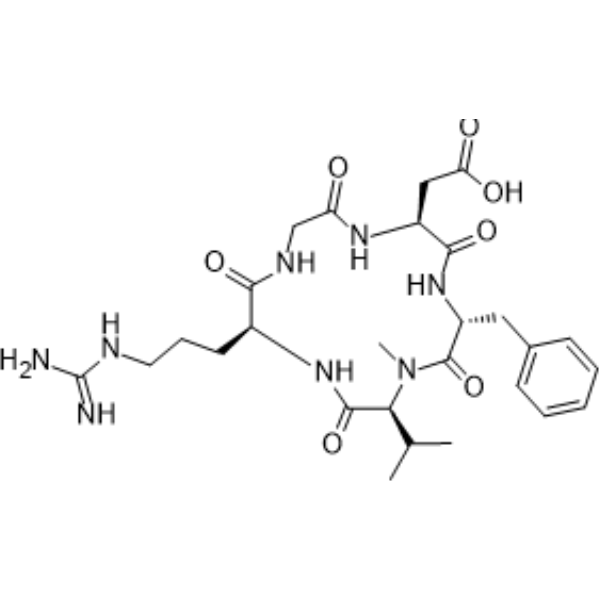 0 ImagesSynonyms: EMD 121974Cilengitide (EMD 121974) is an integrin (integrin) inhibitor with blood-brain barrier permeability, with IC50 values against human targets as follows: 0.61 nM for αvβ3, 8.4 nM for αvβ5, 14.9 nM for α5β1, 5400 nM for αIIbβ3, 2050 nM for αvβ6, 2350 nM for αvβ8. Cilengitide inhibits the binding of integrins to vitronectin, fibronectin, fibrinogen and LAP (TGF-β), and serves as an internal standard for solid-phase integrin binding assays. Cilengitide inhibits tumor cell viability, induces apoptosis, reduces the phosphorylation levels of STAT3, AKT and mTOR, downregulates the expression of PD-L1, inhibits cell viability and angiogenesis, regulates anti-tumor immune responses and slows tumor growth. Cilengitide can be used in research related to glioblastoma, melanoma, advanced solid tumors and refractory brain tumors.
-
Cilengitide TFA
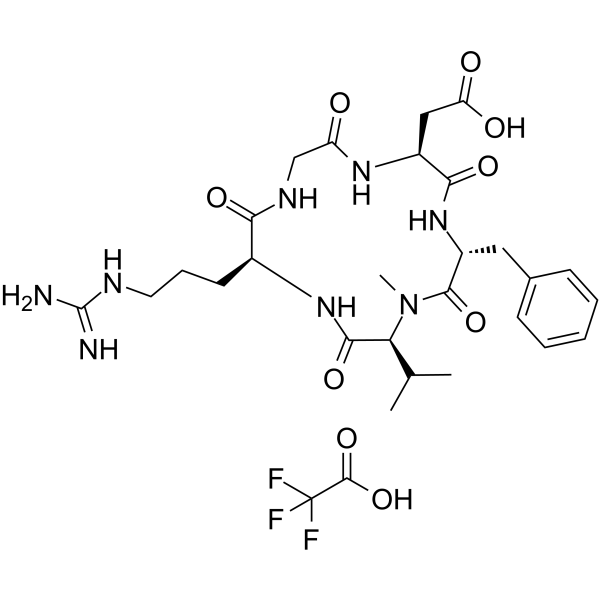 0 ImagesSynonyms: EMD 121974 TFACilengitide TFA (EMD 121974 TFA) is an integrin (integrin) inhibitor with blood-brain barrier permeability, with IC50 values against human targets as follows: 0.61 nM for αvβ3, 8.4 nM for αvβ5, 14.9 nM for α5β1, 5400 nM for αIIbβ3, 2050 nM for αvβ6, 2350 nM for αvβ8. Cilengitide TFA inhibits the binding of integrins to vitronectin, fibronectin, fibrinogen and LAP (TGF-β), and serves as an internal standard for solid-phase integrin binding assays. Cilengitide TFA inhibits tumor cell viability, induces apoptosis, reduces the phosphorylation levels of STAT3, AKT and mTOR, downregulates the expression of PD-L1, inhibits cell viability and angiogenesis, regulates anti-tumor immune responses and slows tumor growth. Cilengitide TFA can be used in research related to glioblastoma, melanoma, advanced solid tumors and refractory brain tumors.
-
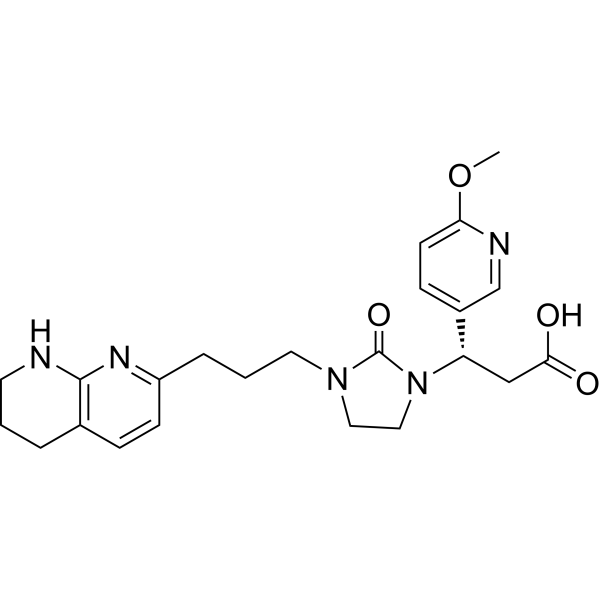
SB-273005
 0 ImagesSB-273005 is an orally active non-peptide αvβ3 integrin antagonist with Ki values of 1.2 nM and 0.3 nM for αvβ3 and αvβ5, respectively. SB-273005 blocks the binding of integrins to the RGD sequence in the extracellular matrix. SB-273005 inhibits Rictor phosphorylation and reduces IL-10 secretion. SB-273005 inhibits inflammation, prevents bone loss, regulates vascular smooth muscle function, and reverses pregnancy-induced immune deviation. SB-273005 can be used in the study of rheumatoid arthritis, osteoporosis, and aneurysms. .
-
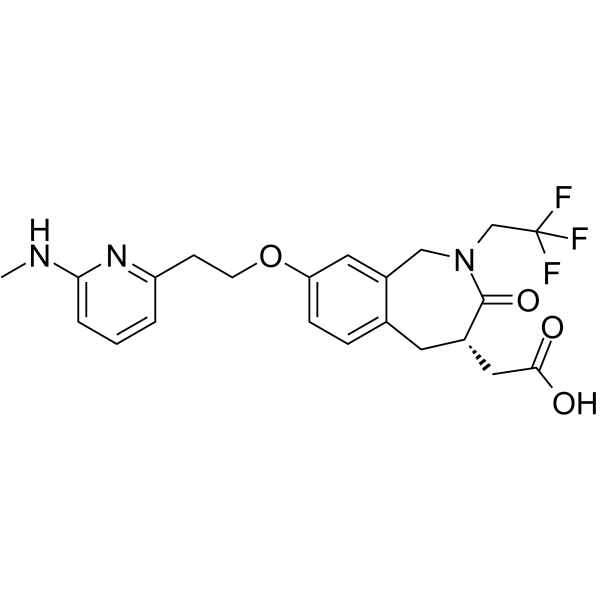
GSK 3008348
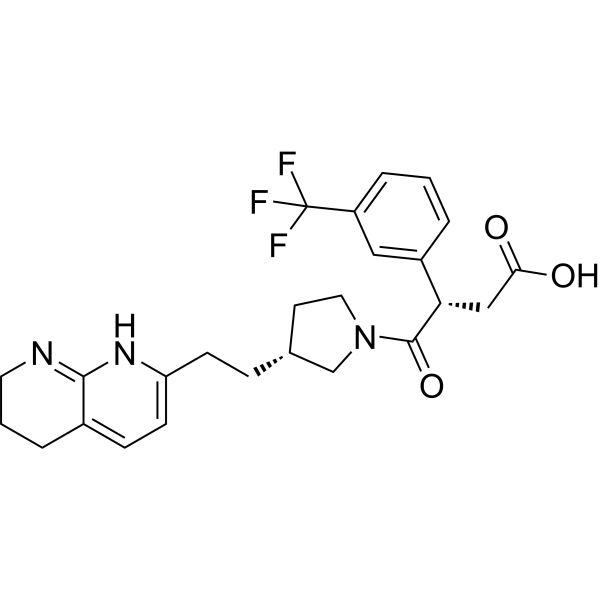
 0 ImagesGSK 3008348 is a small molecule antagonist of integrin αvβ6 with IC50 values for αvβ6, αvβ1, αvβ3, αvβ5, and αvβ8 are 1.50, 2.83, 12.53, 4.00, and 2.26 nM, respectively. GSK 3008348 can target the αvβ6 integrin, inhibit TGF-β activation, and thereby alleviate the fibrotic process. GSK 3008348 prevents the binding of the foot-and-mouth disease virus (FMDV) to the αvβ6 integrin receptor on the surface of host cells, thereby inhibiting the entry of the virus. GSK 3008348 can be used for research on pulmonary fibrosis and various types of cancer.
-
DSPE-PEG2000-iRGD
 0 ImagesCat. No.: HY-172494DSPE-PEG2000-iRGD is a PEG compound which composed of DSPE and an αv-integrins targeting peptide (iRGD). iRGD peptide binds to αv-integrins, and then proteolytically cleaved in the tumor to produce CRGDK/R to interact with neuropilin-1, and has tumor-targeting and tumor-penetrating properties. DSPE-PEG2000-iRGD can be used for agent delivery.
-
GSK 3008348 hydrochloride
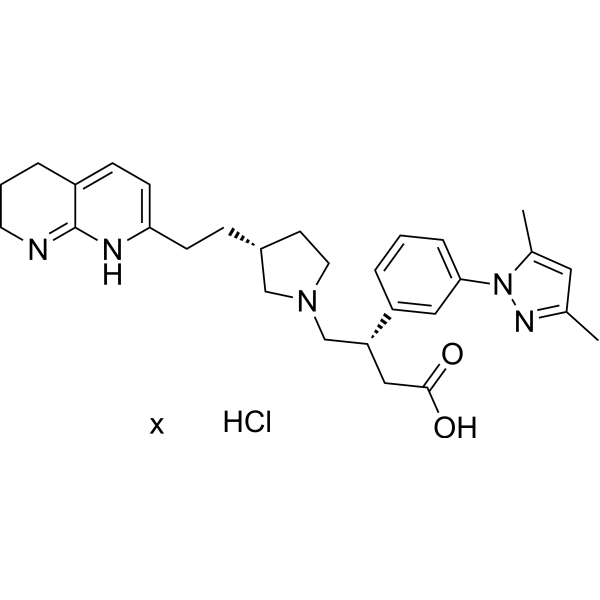 0 ImagesGSK 3008348 hydrochloride is a small molecule antagonist of integrin αvβ6 with IC50 values for αvβ6, αvβ1, αvβ3, αvβ5, and αvβ8 are 1.50, 2.83, 12.53, 4.00, and 2.26 nM, respectively. GSK 3008348 hydrochloride can target the αvβ6 integrin, inhibit TGF-β activation, and thereby alleviate the fibrotic process. GSK 3008348 hydrochloride prevents the binding of the foot-and-mouth disease virus (FMDV) to the αvβ6 integrin receptor on the surface of host cells, thereby inhibiting the entry of the virus. GSK 3008348 hydrochloride can be used for research on pulmonary fibrosis and various types of cancer.
-
PAS-003
 0 ImagesCat. No.: HY-P992436PAS-003 is a humanized monoclonal antibody targerting α5β1 integrin. PAS-003 modulates immune cell migration, immune cell adhesion, improves behavior, and improves survival in ALS mouse models. PAS-003 can be used for the research of amyotrophic lateral sclerosis.
-
SU015
 0 ImagesCat. No.: HY-P3335CAS No.: 250612-06-7Synonyms: DOTA-RGDfK dimerSU015 (DOTA-RGDfK dimer) is a Integrin αvβ5 and αvβ3 antagonist. SU015 exhibits comparable affinity for αvβ5 and αvβ3, with relatively higher potency and specificity compared to other integrins. SU015 inhibits αvβ3-mediated cell adhesion to fibrinogen, αvβ3-mediated adhesion of activated platelets to osteopontin, and αvβ5-mediated cell adhesion to vitronectin. SU015 shows potent inhibitory effects on FGF2-induced angiogenesis in the CAM model. SU015 carries a linker arm available for radioisotope conjugation, and acts as a target-specific radioreagent when labeled with 90Y (i.e., RP697) or 177Lu (i.e., RP688). SU015 can be used in studies related to tumor metastasis and tumors.
-
αvβ5 integrin-IN-3
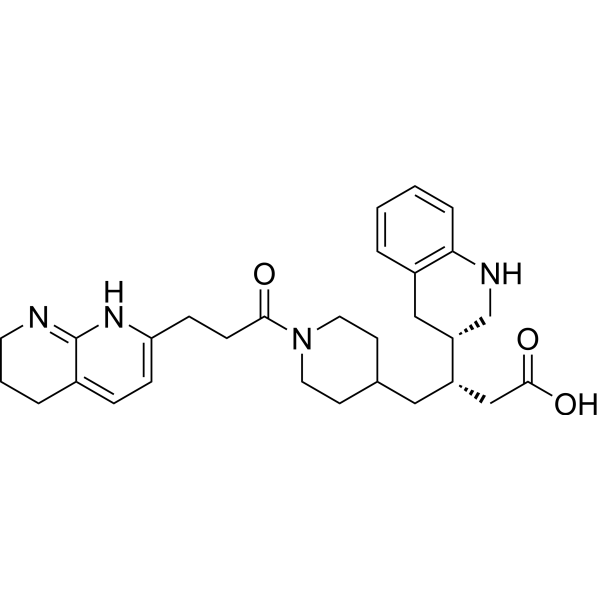
 0 ImagesCat. No.: HY-189093CAS No.: 2226557-15-7αvβ5 integrin-IN-3 is an orally active, selective αVβ5 integrin inhibitor with an IC50 value of 0.61 nM. αvβ5 integrin-IN-3 inhibits αVβ1, αVβ3 and αVβ6 integrins with IC50 values of 21 nM, 5.5 nM and 18 nM, respectively. αvβ5 integrin-IN-3 reduces total Collagen content in a mouse unilateral ureteral obstruction model. αvβ5 integrin-IN-3 can be used for the research of renal fibrosis.
-
Cilengitide hydrochloride
 0 ImagesCat. No.: HY-16142CAS No.: 188969-00-8Synonyms: EMD 121974 hydrochlorideCilengitide hydrochloride (EMD 121974 hydrochloride) is an integrin (integrin) inhibitor with blood-brain barrier permeability, with IC50 values against human targets as follows: 0.61 nM for αvβ3, 8.4 nM for αvβ5, 14.9 nM for α5β1, 5400 nM for αIIbβ3, 2050 nM for αvβ6, 2350 nM for αvβ8. Cilengitide hydrochloride inhibits the binding of integrins to vitronectin, fibronectin, fibrinogen and LAP (TGF-β), and serves as an internal standard for solid-phase integrin binding assays. Cilengitide hydrochloride inhibits tumor cell viability, induces apoptosis, reduces the phosphorylation levels of STAT3, AKT and mTOR, downregulates the expression of PD-L1, inhibits cell viability and angiogenesis, regulates anti-tumor immune responses and slows tumor growth. Cilengitide hydrochloride can be used in research related to glioblastoma, melanoma, advanced solid tumors and refractory brain tumors.
- 1




