



αvβ8
Integrin αvβ8 functions primarily as an activator of latent transforming growth factor β (TGF-β), regulating immune tolerance and inflammatory responses[1][2]. Mechanistically, αvβ8 expressed on regulatory T cells (Tregs) enables the activation of TGF-β, which suppresses effector T-cell-mediated inflammation in ongoing immune responses[1]. Compared with other αv integrins, αvβ8 exhibits distinct cell-type expression and preferentially mediates TGF-β activation in dendritic cells, Tregs, and tumor-associated immune cells[1][3][2]. In tumor biology, αvβ8 supports immune evasion by inhibiting cytotoxic CD8+ T-cell activity and can enhance tumor progression in colon cancer and glioblastoma models[3][4][5]. αvβ8 also contributes to pathological angiogenesis in astrocytoma by modulating latent TGF-β availability and endothelial cell signaling[6]. Experimental models using αvβ8-blocking antibodies or genetic knockouts have demonstrated that selective inhibition restores immune function, reduces tumor growth, and ameliorates fibrosis, indicating its therapeutic potential[7][3][4][2]. Unlike related integrins such as αvβ6, αvβ8 maintains a constitutively extended-closed conformation, allowing highly selective targeting with designed miniprotein inhibitors[8]. Agonist or inhibitor studies in immune thrombocytopenia, fibrosis, and cancer models show that modulating αvβ8 activity can precisely influence TGF-β signaling, cell migration, and immunoregulation[7][2][8]. Collectively, αvβ8 represents a critical node for TGF-β-dependent cellular processes and a distinct pharmacological target among αv integrin isoforms[1][8][5].
References:
- [1]. Worthington JJ, et al. Effector Tregs: middle-men in TGFβ activation. Oncotarget. 2015 Aug 21;6(24):19958-9. [Content Brief]
- [2]. Kanamori M, et al. Selective blockade of latent TGF-β1 activation suppresses tissue fibrosis with good safety. Commun Med (Lond). 2026 Jan 28;6(1):131. [Content Brief]
- [3]. Tchaicha JH, et al. A mosaic mouse model of astrocytoma identifies alphavbeta8 integrin as a negative regulator of tumor angiogenesis. Oncogene. 2010 Aug 5;29(31):4460-72. [Content Brief]
- [4]. Dodagatta-Marri E, et al. Integrin αvβ8 on T cells suppresses anti-tumor immunity in multiple models and is a promising target for tumor immunotherapy. Cell Rep. 2021 Jul 6;36(1):109309. [Content Brief]
- [5]. Hou D, et al. Dual aVß8 Integrin and PD-1 Blockade Overcomes TGFβ-Mediated B-Cell Suppression to Enhance Anti-Tumor Immunity. Neuro Oncol. 2025 Oct 14;27(9):2355-2369. [Content Brief]
- [6]. Mei H, et al. Integrin αvβ8-mediated TGF-β1 activation regulates the sustained response in immune thrombocytopenia after TPO-RA withdrawal. Blood. 2026 Feb 12;147(7):783-799. [Content Brief]
- [7]. Roy A, et al. De novo design of highly selective miniprotein inhibitors of integrins αvβ6 and αvβ8. bioRxiv [Preprint]. 2023 Jun 12:2023.06.12.544624. [Content Brief]
- [8]. Zhou M, et al. Integrin αvβ8 serves as a Novel Marker of Poor Prognosis in Colon Carcinoma and Regulates Cell Invasiveness through the Activation of TGF-β1. J Cancer. 2020 Apr 6;11(13):3803-3815. [Content Brief]
-
αvβ8 Related Products (11)
Related Products (11)

-
Recombinant Proteins (8)
- 1
-
Cilengitide
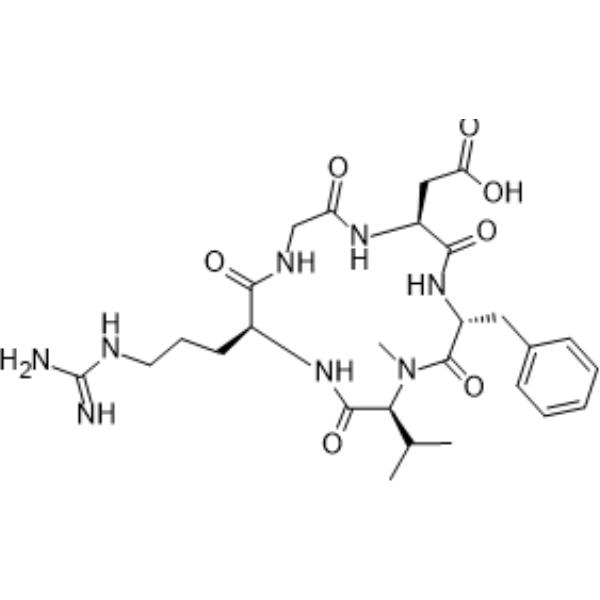 0 ImagesSynonyms: EMD 121974Cilengitide (EMD 121974) is an integrin (integrin) inhibitor with blood-brain barrier permeability, with IC50 values against human targets as follows: 0.61 nM for αvβ3, 8.4 nM for αvβ5, 14.9 nM for α5β1, 5400 nM for αIIbβ3, 2050 nM for αvβ6, 2350 nM for αvβ8. Cilengitide inhibits the binding of integrins to vitronectin, fibronectin, fibrinogen and LAP (TGF-β), and serves as an internal standard for solid-phase integrin binding assays. Cilengitide inhibits tumor cell viability, induces apoptosis, reduces the phosphorylation levels of STAT3, AKT and mTOR, downregulates the expression of PD-L1, inhibits cell viability and angiogenesis, regulates anti-tumor immune responses and slows tumor growth. Cilengitide can be used in research related to glioblastoma, melanoma, advanced solid tumors and refractory brain tumors.
-
Cilengitide TFA
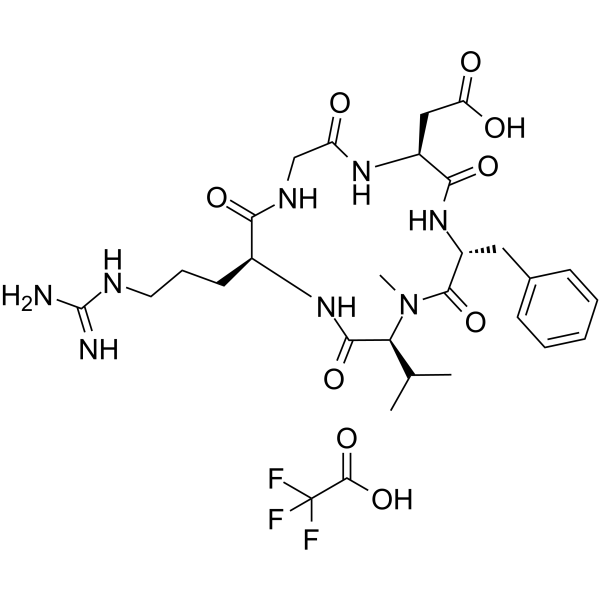 0 ImagesSynonyms: EMD 121974 TFACilengitide TFA (EMD 121974 TFA) is an integrin (integrin) inhibitor with blood-brain barrier permeability, with IC50 values against human targets as follows: 0.61 nM for αvβ3, 8.4 nM for αvβ5, 14.9 nM for α5β1, 5400 nM for αIIbβ3, 2050 nM for αvβ6, 2350 nM for αvβ8. Cilengitide TFA inhibits the binding of integrins to vitronectin, fibronectin, fibrinogen and LAP (TGF-β), and serves as an internal standard for solid-phase integrin binding assays. Cilengitide TFA inhibits tumor cell viability, induces apoptosis, reduces the phosphorylation levels of STAT3, AKT and mTOR, downregulates the expression of PD-L1, inhibits cell viability and angiogenesis, regulates anti-tumor immune responses and slows tumor growth. Cilengitide TFA can be used in research related to glioblastoma, melanoma, advanced solid tumors and refractory brain tumors.
-
GSK 3008348
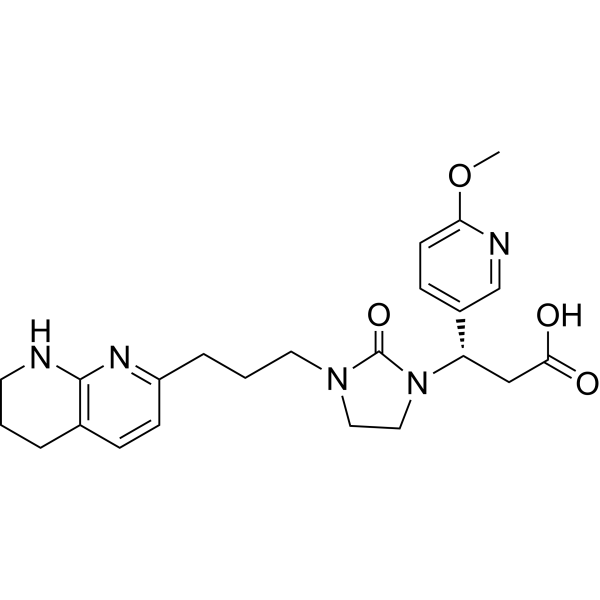
 0 ImagesGSK 3008348 is a small molecule antagonist of integrin αvβ6 with IC50 values for αvβ6, αvβ1, αvβ3, αvβ5, and αvβ8 are 1.50, 2.83, 12.53, 4.00, and 2.26 nM, respectively. GSK 3008348 can target the αvβ6 integrin, inhibit TGF-β activation, and thereby alleviate the fibrotic process. GSK 3008348 prevents the binding of the foot-and-mouth disease virus (FMDV) to the αvβ6 integrin receptor on the surface of host cells, thereby inhibiting the entry of the virus. GSK 3008348 can be used for research on pulmonary fibrosis and various types of cancer.
-
GSK 3008348 hydrochloride
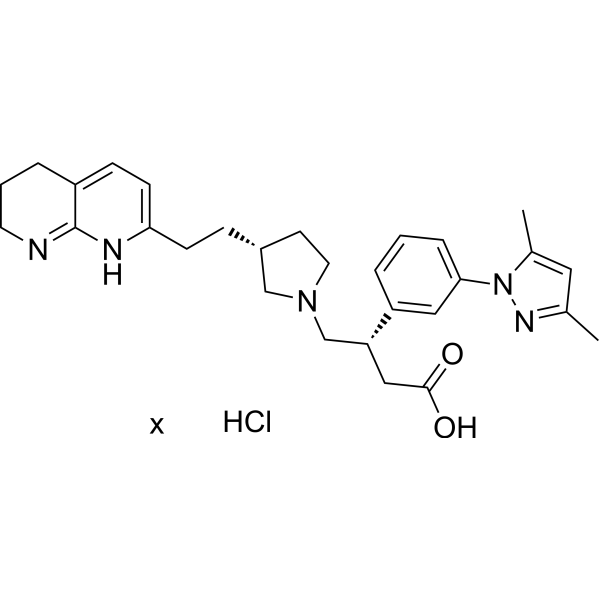 0 ImagesGSK 3008348 hydrochloride is a small molecule antagonist of integrin αvβ6 with IC50 values for αvβ6, αvβ1, αvβ3, αvβ5, and αvβ8 are 1.50, 2.83, 12.53, 4.00, and 2.26 nM, respectively. GSK 3008348 hydrochloride can target the αvβ6 integrin, inhibit TGF-β activation, and thereby alleviate the fibrotic process. GSK 3008348 hydrochloride prevents the binding of the foot-and-mouth disease virus (FMDV) to the αvβ6 integrin receptor on the surface of host cells, thereby inhibiting the entry of the virus. GSK 3008348 hydrochloride can be used for research on pulmonary fibrosis and various types of cancer.
-
DSPE-PEG2000-iRGD
 0 ImagesCat. No.: HY-172494DSPE-PEG2000-iRGD is a PEG compound which composed of DSPE and an αv-integrins targeting peptide (iRGD). iRGD peptide binds to αv-integrins, and then proteolytically cleaved in the tumor to produce CRGDK/R to interact with neuropilin-1, and has tumor-targeting and tumor-penetrating properties. DSPE-PEG2000-iRGD can be used for agent delivery.
-
Anti-Integrin αvβ8 Antibody
 0 ImagesCat. No.: HY-P992085
-
Nesvategrast
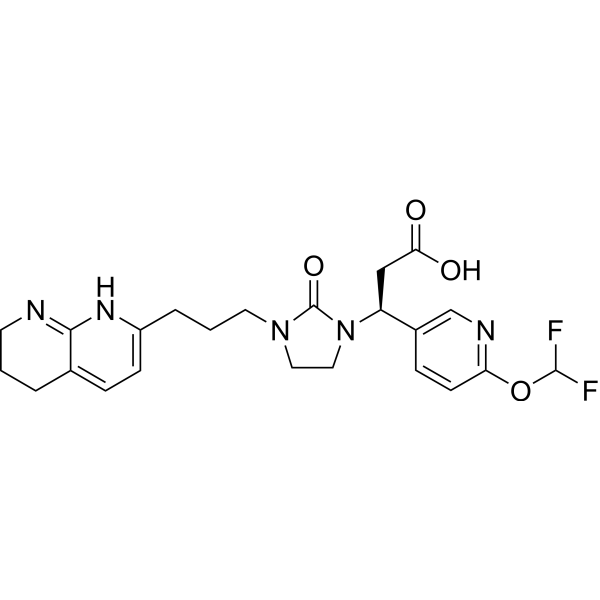 0 ImagesCat. No.: HY-117133CAS No.: 1621332-91-9Synonyms: SF0166Nesvategrast (SF0166) is a potent and selective αvβ3 antagonist with IC50 values of 0.6 nM, 8 nM, and 13 nM for αvβ3, αvβ6, and αvβ8, respectively. Nesvategrast inhibits cellular adhesion to vitronectin across human, rat, rabbit, and dog cell lines with IC50 values of 7.6 pM to 76 nM. Nesvategrast decreases neovascularization in the oxygen-induced retinopathy mouse model.
-
αvβ5 integrin-IN-3
 0 ImagesCat. No.: HY-189093CAS No.: 2226557-15-7αvβ5 integrin-IN-3 is an orally active, selective αVβ5 integrin inhibitor with an IC50 value of 0.61 nM. αvβ5 integrin-IN-3 inhibits αVβ1, αVβ3 and αVβ6 integrins with IC50 values of 21 nM, 5.5 nM and 18 nM, respectively. αvβ5 integrin-IN-3 reduces total Collagen content in a mouse unilateral ureteral obstruction model. αvβ5 integrin-IN-3 can be used for the research of renal fibrosis.
-
PF-06940434
 0 ImagesCat. No.: HY-P992519Synonyms: ADWA-11PF-06940434 (ADWA-11) is a monoclonal antibody targeting integrin αvβ8. PF-06940434 inhibits αvβ8-mediated TGF-β activation. PF-06940434 increases the accumulation of tumor-infiltrating CD8+ T cells and upregulates the expression of granzyme B and TNF-γ. PF-06940434 blocks the inhibitory effect of CD4+CD25+ T cells on the cytotoxic activity of tumor CD8+ T cells. PF-06940434 enhances the anti-tumor efficacy of combination therapies with other immunomodulators or radiotherapy and induces long-term anti-tumor immunity. PF-06940434 can be used in the research of squamous cell carcinoma, breast cancer, colon cancer, and prostate adenocarcinoma.
-
Cilengitide hydrochloride
 0 ImagesCat. No.: HY-16142CAS No.: 188969-00-8Synonyms: EMD 121974 hydrochlorideCilengitide hydrochloride (EMD 121974 hydrochloride) is an integrin (integrin) inhibitor with blood-brain barrier permeability, with IC50 values against human targets as follows: 0.61 nM for αvβ3, 8.4 nM for αvβ5, 14.9 nM for α5β1, 5400 nM for αIIbβ3, 2050 nM for αvβ6, 2350 nM for αvβ8. Cilengitide hydrochloride inhibits the binding of integrins to vitronectin, fibronectin, fibrinogen and LAP (TGF-β), and serves as an internal standard for solid-phase integrin binding assays. Cilengitide hydrochloride inhibits tumor cell viability, induces apoptosis, reduces the phosphorylation levels of STAT3, AKT and mTOR, downregulates the expression of PD-L1, inhibits cell viability and angiogenesis, regulates anti-tumor immune responses and slows tumor growth. Cilengitide hydrochloride can be used in research related to glioblastoma, melanoma, advanced solid tumors and refractory brain tumors.
- 1




