



FFAR3
FFAR3 (free fatty acid receptor 3, or GPR41) is a G protein-coupled receptor (GPCR) primarily activated by gut microbiota-derived short-chain fatty acids (SCFAs)—such as propionate, butyrate, and acetate—thereby linking dietary fiber metabolism to host physiological regulation[1][2]. Functioning as a nutrient-sensing receptor, FFAR3 participates in energy homeostasis, gastrointestinal signaling, and metabolic regulation via SCFA-dependent signaling pathways[1][3]. Mechanistically, FFAR3 mediates cellular responses to microbial metabolites and is involved in sympathetic nervous system activation, hormonal regulation, and adipocyte-related metabolic processes[2][3]. In experimental models, alterations in FFAR3 signaling influence body fat composition, energy expenditure, and metabolic phenotypes, indicating its association with obesity, diabetes, and other metabolic diseases[2][4][5]. Although FFAR3 responds to SCFAs similarly to the closely related FFAR2 (GPR43), distinct differences exist regarding ligand selectivity, signal transduction characteristics, tissue distribution, and physiological functions, suggesting that the two receptors play non-redundant roles in host metabolic regulation[1][3][5]. This distinction is particularly significant for elucidating microbiota-host communication and the biological effects mediated by SCFAs[3][6]. In research applications, FFAR3 can be activated by endogenous SCFAs and selective synthetic agonists, whereas β-hydroxybutyrate and certain research compounds have been reported to antagonize or modulate its activity, thereby providing pharmacological tools for investigating metabolic and neurophysiological signaling pathways[5].
参考文献:
- [1]. Joshi L, et al. Lysophosphatidic Acid Induces Aerobic Glycolysis, Lipogenesis, and Increased Amino Acid Uptake in BV-2 Microglia. Int J Mol Sci. 2021 Feb 17;22(4):1968. [Content Brief]
- [2]. Kimura I, et al. Short-chain fatty acids and ketones directly regulate sympathetic nervous system via G protein-coupled receptor 41 (GPR41). Proc Natl Acad Sci U S A. 2011 May 10;108(19):8030-5. [Content Brief]
- [3]. Mishra SP, et al. Free Fatty Acid Receptors 2 and 3 as Microbial Metabolite Sensors to Shape Host Health: Pharmacophysiological View. Biomedicines. 2020 Jun 8;8(6):154. [Content Brief]
- [4]. Xiong Y, et al. Short-chain fatty acids stimulate leptin production in adipocytes through the G protein-coupled receptor GPR41. Proc Natl Acad Sci U S A. 2004 Jan 27;101(4):1045-50. [Content Brief]
- [5]. Kimura I, et al. Free Fatty Acid Receptors in Health and Disease. Physiol Rev. 2020 Jan 1;100(1):171-210. [Content Brief]
- [6]. Ulven T. Short-chain free fatty acid receptors FFA2/GPR43 and FFA3/GPR41 as new potential therapeutic targets. Front Endocrinol (Lausanne). 2012 Oct 2;3:111. doi: 10.3389/fendo.2012.00111. PMID: 23060857; PMCID: PMC3462324. et al. Short-chain free fatty acid receptors FFA2/GPR43 and FFA3/GPR41 as new potential therapeutic targets. Front Endocrinol (Lausanne). 2012 Oct 2;3:111. [Content Brief]
-
FFAR3 関連製品 (1)
関連製品 (1)

-
GPR41 modulator 2
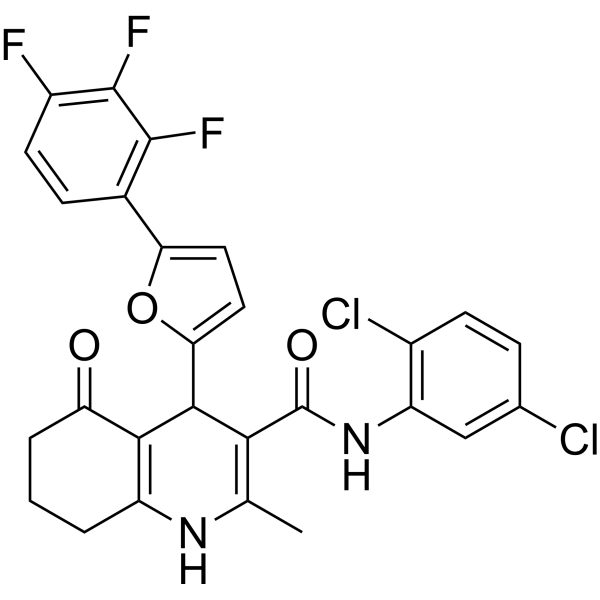 0 Images製品番号: HY-163531CAS 番号: 3050769-11-1GPR41 modulator 2 (Compound 10bx) exhibits agonistic activity for G protein-coupled receptor (GPR41).



