



FFAR1
FFAR1 (free fatty acid receptor 1, also known as GPR40) is a G protein-coupled receptor predominantly expressed in pancreatic β-cells, where it functions as a lipid sensor for medium- and long-chain free fatty acids and amplifies glucose-stimulated insulin secretion (GSIS)[1][2][3]. Mechanistically, FFAR1 activation couples primarily to Gαq/11-dependent signaling, increases intracellular Ca2+ levels, and promotes insulin exocytosis under elevated glucose conditions, thereby linking nutrient sensing to β-cell secretory function[3][4][5]. FFAR1 signaling also contributes to the regulation of incretin hormones, including glucagon-like peptide-1 (GLP-1) and glucose-dependent insulinotropic polypeptide (GIP), supporting coordinated control of glucose homeostasis and energy metabolism[4][6][7]. In disease-relevant contexts, reduced β-cell function and impaired insulin secretion are central features of type 2 diabetes, and FFAR1 has therefore emerged as a key therapeutic target for restoring glucose-dependent insulin release while minimizing hypoglycemia risk[6][8][9]. Compared with the related long-chain fatty acid receptor FFAR4 (GPR120), which is primarily associated with intestinal and macrophage functions, FFAR1 is distinguished by its predominant role in pancreatic β-cell-mediated insulin secretion[10]. For experimental applications, selective FFAR1 agonists such as fasiglifam (TAK-875) and other synthetic ligands have been widely used to investigate receptor pharmacology, β-cell signaling mechanisms, incretin regulation, and anti-diabetic therapeutic strategies[8][9][11].
References:
- [1]. Itoh Y, et al. GPR40, a free fatty acid receptor on pancreatic beta cells, regulates insulin secretion. Hepatol Res. 2005 Oct;33(2):171-3. [Content Brief]
- [2]. Rabezanahary H, et al. Live virus neutralizing antibodies against pre and post Omicron strains in food and retail workers in Québec, Canada. Heliyon. 2024 May 21;10(10):e31026. [Content Brief]
- [3]. Feng XT, et al. GPR40: a therapeutic target for mediating insulin secretion (review). Int J Mol Med. 2012 Dec;30(6):1261-6. [Content Brief]
All Product Categories
-
FFAR1 Related Products (3)
Related Products (3)

-
MK-2305
 0 ImagesCat. No.: HY-153667CAS No.: 2101206-49-7MK-2305 is an orally active GPR40 partial agonist with an EC50 of 6 nM in rats. MK-2305 mediates glucose-stimulated insulin secretion and inhibits endogenous glucose production by reducing gluconeogenesis from tricarboxylic acid (TCA) cycle substrates. MK-2305 increases plasma insulin levels under hyperglycemic and glucose-stimulated conditions, reduces fasting blood glucose, and improves glucose homeostasis. MK-2305 can be used in studies related to type 2 diabetes.
-
Xelaglifam
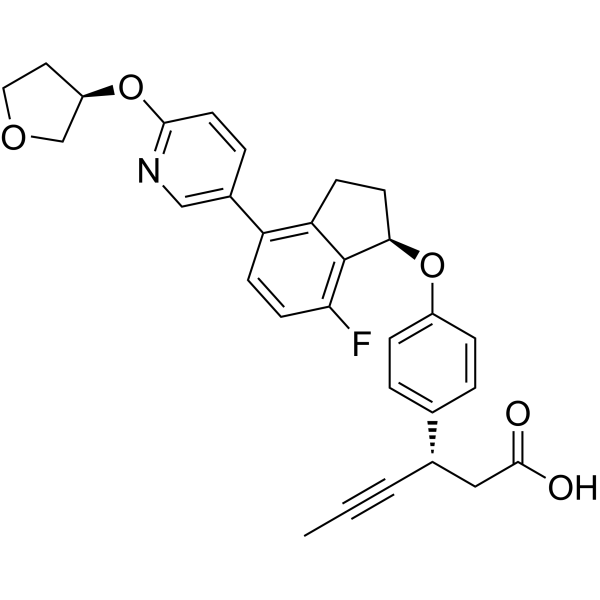 0 ImagesCat. No.: HY-147420CAS No.: 2230597-99-4Synonyms: IDG-16177Xelaglifam is an orally active GPR40/FFAR1 agonist and PPARγ coactivator recruitment inhibitor (IC50 74.7 µM). Xelaglifam activates Gq/IP3/Ca2+ and β-arrestin, stimulates glucose-dependent insulin secretion from pancreatic β cells, improves glucose tolerance, reduces fasting hyperglycemia, protects pancreatic β cells, inhibits DP1, BSEP (IC50 14.3 µM), MRP2 (39.9 µM) and MRP4 (4.4 µM), activates FXR, regulates bile acid homeostasis, and modulates mitochondrial function, membrane potential and cellular ATP. Xelaglifam can be used for research on type 2 diabetes.
-
BMS-986118
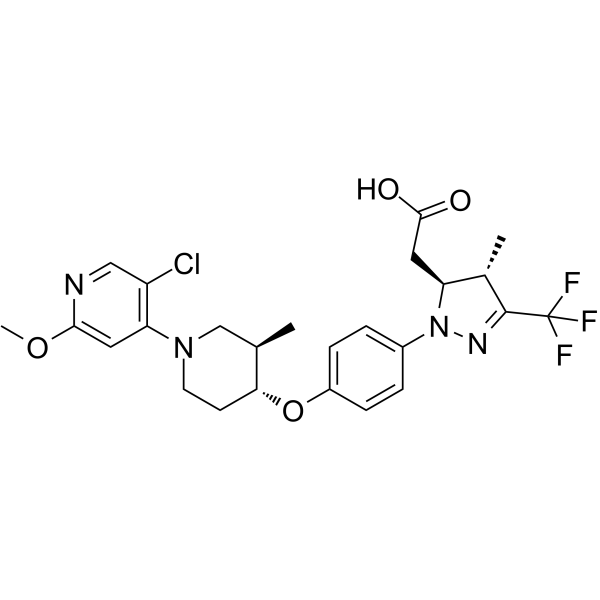 0 ImagesCat. No.: HY-12413ACAS No.: 1610562-74-7BMS-986118 is an orally active and selective GPR40 full agonist (EC50 = 0.07 μM). BMS-986118 induces GLP-1 secretion and increases GLP-1 and insulin levels when combined with DPP-4 inhibitors. BMS-986118 shows sustained glucose-lowering effects. BMS-986118 can be used for research on type 2 diabetes.



