



DSP-4 hydrochloride
Based on 2 publication(s) in Google Scholar
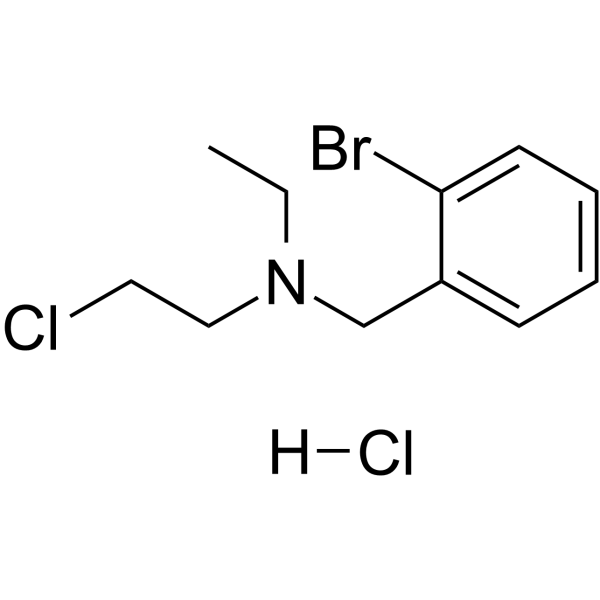
DSP-4 hydrochloride is a highly and selective adrenergic neurotoxin. DSP-4 hydrochloride can cross the blood brain barrier. DSP-4 hydrochloride can be used for the temporary selective degradation of the central and peripheral noradrenergic neurons.
For research use only. We do not sell to patients.
- Purity : 98.0%
- CAS No.: 40616-75-9
- Formula: C11H16BrCl2N
- Molecular Weight:313.06
-
Storage:
4°C, sealed storage, away from moisture
* In solvent : -80°C, 6 months; -20°C, 1 month (sealed storage, away from moisture)

To place orders, for customer services and technical support, please contact: MedChemExpress USA
Tel: 609-228-6898 E-mail: [email protected] [email protected]


-
 Biological Activity
-
Chemical Information
-
Solvent & Solubility
- Purity & Documentation
- References
-
 Help & FAQs


-
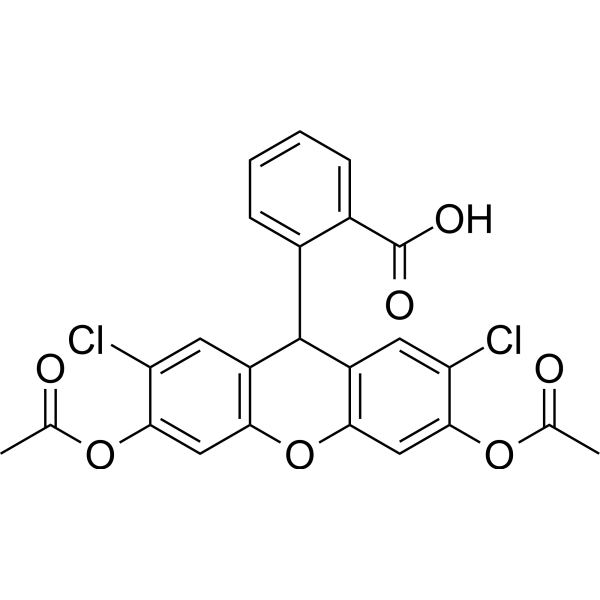
HY-D0940
H2DCFDAROS-Sensitive Probe -

HY-103210R
DSP-4 hydrochloride (Standard)Reference Standard -
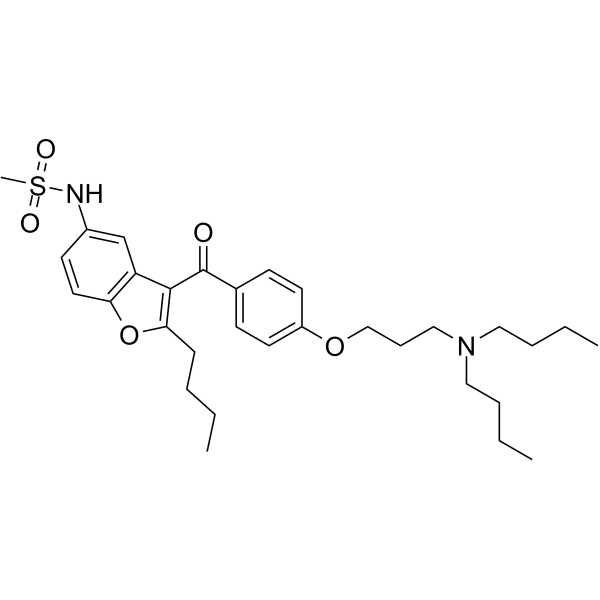
HY-A0016
DronedaroneAntiarrhythmic Agent -
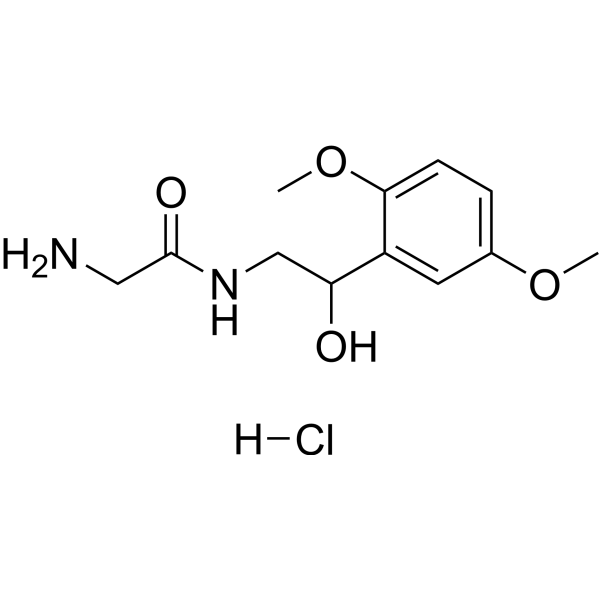
HY-12749A
Midodrine hydrochlorideα1-receptor Agonist -
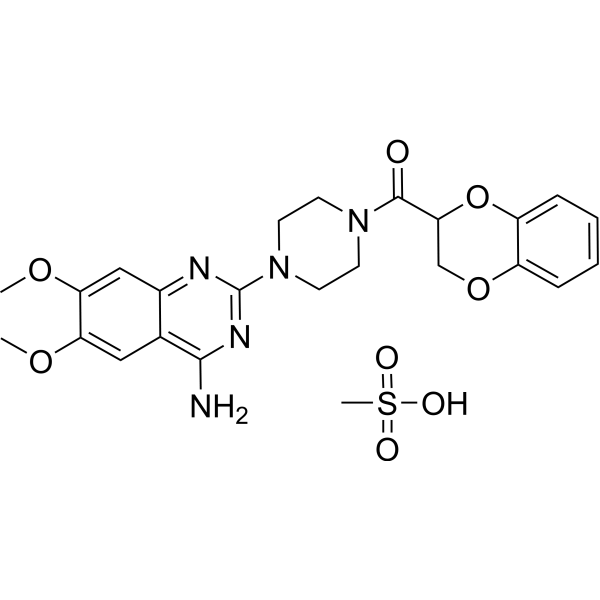
HY-B0098A
Doxazosin mesylateAutophagy Inducer -
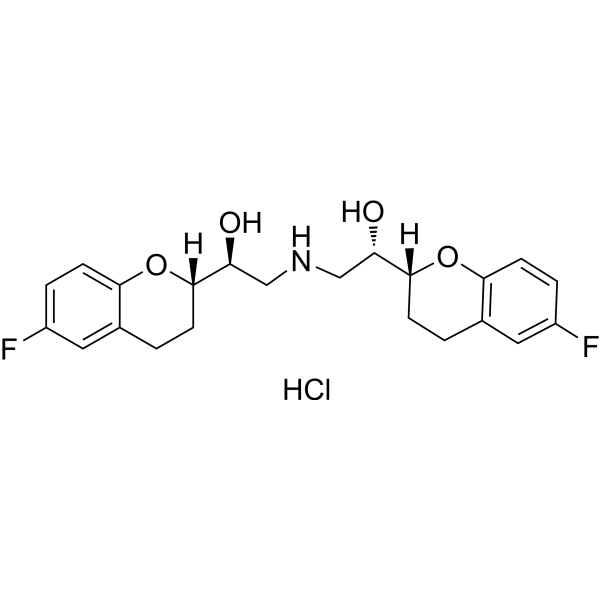
HY-B0203A
Nebivolol hydrochlorideβ Receptor Blocker -
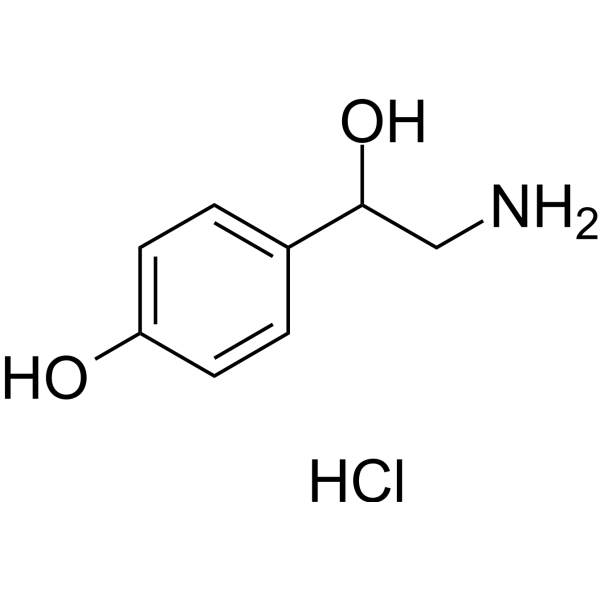
HY-B0528A
Octopamine hydrochlorideNeuromodulator -
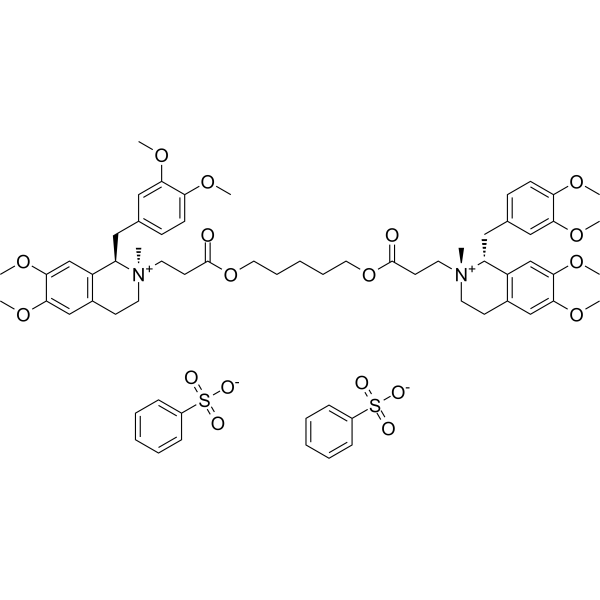
HY-13596
Cisatracurium besylateAutophagy Inducer -
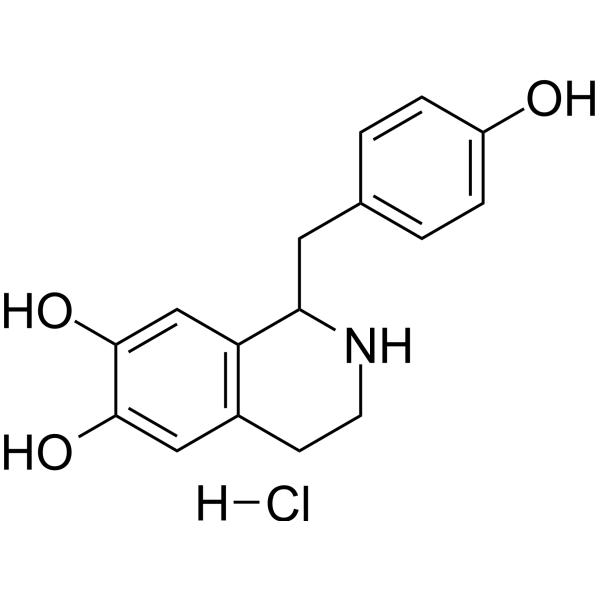
HY-N2037A
Higenamine hydrochlorideLSD1 Inhibitor -
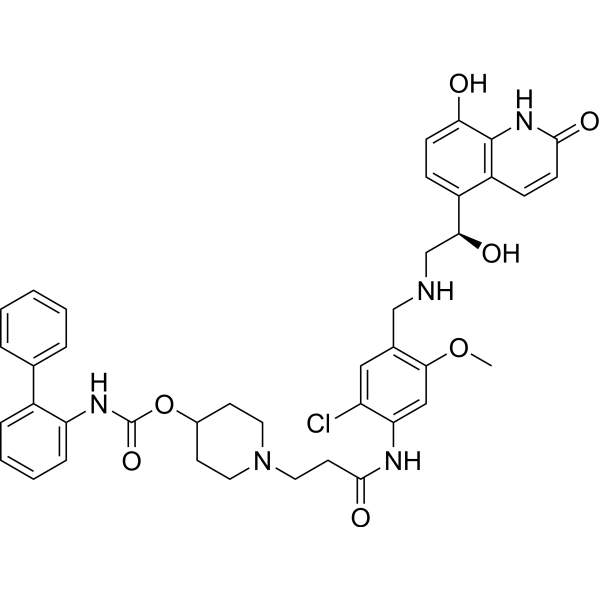
HY-12980
BatefenterolmAChR Antagonist -
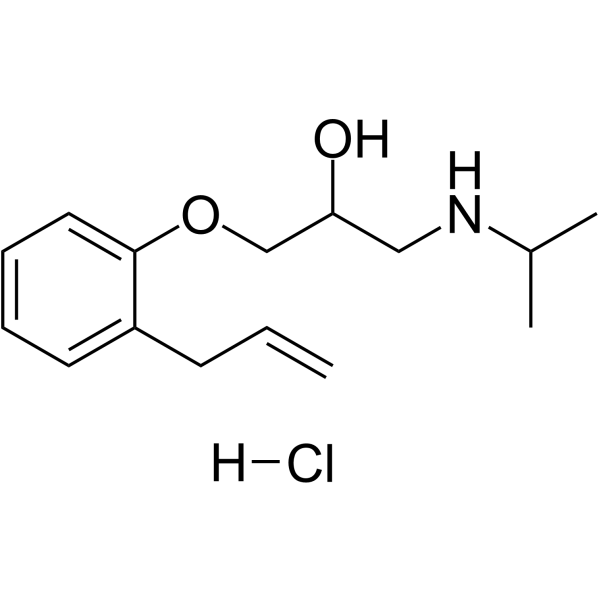
HY-B1517A
Alprenolol hydrochloride5-HT Receptor Antagonist -

HY-B0528AR
Octopamine hydrochloride (Standard)Endogenous Metabolite
Publications Citing Use of MedChemExpress (MCE) DSP-4 hydrochloride
MoreAll Adrenergic Receptor Isoforms
More

Biological Activity
Description
In Vivo
MedChemExpress (MCE) has not independently confirmed the accuracy of these methods. They are for reference only.
-
Animal Model:rats[1]
-
Dosage:50 mg/kg
-
Administration:intraperitoneal , single
-
Result:Not visualized large projection neurons and the fibers of the LC.


Chemical Information
-
CAS No. 40616-75-9
-
Appearance Solid
-
Molecular Weight 313.06
-
Formula C11H16BrCl2N
-
Color White to off-white
-
SMILES
CCN(CCCl)CC1=CC=CC=C1Br.[H]Cl
-
Synonyms
Neurotoxin DSP 4 hydrochloride
-
Shipping
Room temperature in continental US; may vary elsewhere.
-
Storage
4°C, sealed storage, away from moisture
* In solvent : -80°C, 6 months; -20°C, 1 month (sealed storage, away from moisture)


Publications (2)
-
Journal Impact Factor
-
Most Recent
-
Invest Ophthalmol Vis Sci
Activation of Sympathetic Nervous System Drives Dry Eye Onset Via Norepinephrine-β2-Adrenergic Receptor Signaling in Mice. [Abstract]2025 Jun 2;66(6):13. PMID: 40465266 -
Front Mol Neurosci
A Noradrenergic Lesion Attenuates Surgery-Induced Cognitive Impairment in Rats by Suppressing Neuroinflammation. [Abstract]2021 Nov 30:14:752838. PMID: 34916906


Solvent & Solubility
In Vitro:
DMSO : 125 mg/mL (399.28 mM; Need ultrasonic; Hygroscopic DMSO has a significant impact on the solubility of product, please use newly opened DMSO)
H2O : 50 mg/mL (159.71 mM; Need ultrasonic)
Please refer to the solubility information to select the appropriate solvent. Once prepared, please aliquot and store the solution to prevent product inactivation from repeated freeze-thaw cycles.
Storage method and period of stock solution: -80°C, 6 months; -20°C, 1 month (sealed storage, away from moisture). When stored at -80°C, please use it within 6 months. When stored at -20°C, please use it within 1 month.
* Note: If you choose water as the stock solution, please dilute it to the working solution, then filter and sterilize it with a 0.22 μm filter before use.
Please refer to the solubility information to select the appropriate solvent. Once prepared, please aliquot and store the solution to prevent product inactivation from repeated freeze-thaw cycles.
Storage method and period of stock solution: -80°C, 6 months; -20°C, 1 month (sealed storage, away from moisture). When stored at -80°C, please use it within 6 months. When stored at -20°C, please use it within 1 month.
* Note: If you choose water as the stock solution, please dilute it to the working solution, then filter and sterilize it with a 0.22 μm filter before use.
Concentration (start) × Volume (start) = Concentration (final) × Volume (final)
In Vivo:
Select the appropriate dissolution method based on your experimental animal and administration route.
- For the following dissolution methods, please ensure to first prepare a clear stock solution using an In Vitro approach and then sequentially add co-solvents:
- To ensure reliable experimental results, the clarified stock solution can be appropriately stored based on storage conditions. As for the working solution for In Vivo experiments, it is recommended to prepare freshly and use it on the same day.
- The percentages shown for the solvents indicate their volumetric ratio in the final prepared solution. If precipitation or phase separation occurs during preparation, heat and/or sonication can be used to aid dissolution.
Add each solvent one by one: 10% DMSO 40% PEG300 5% Tween-80 45% Saline
Solubility: ≥ 2.08 mg/mL (6.64 mM); Clear solution
This protocol yields a clear solution of ≥ 2.08 mg/mL (saturation unknown).
Taking 1 mL working solution as an example, add 100 μL DMSO stock solution (20.8 mg/mL) to 400 μL PEG300, and mix evenly; then add 50 μL Tween-80 and mix evenly; then add 450 μL Saline to adjust the volume to 1 mL.
Preparation of Saline: Dissolve 0.9 g sodium chloride in ddH₂O and dilute to 100 mL to obtain a clear Saline solution.
Add each solvent one by one: 10% DMSO 90% (20% SBE-β-CD in Saline)
Solubility: ≥ 2.08 mg/mL (6.64 mM); Clear solution
For the following dissolution methods, please prepare the working solution directly:
It is recommended to prepare fresh solutions and use them promptly within a short period of time.
The percentages shown for the solvents indicate their volumetric ratio in the final prepared solution. If precipitation or phase separation occurs during preparation, heat and/or sonication can be used to aid dissolution.
Add each solvent one by one: PBS
Solubility: 50 mg/mL (159.71 mM); Clear solution; Need ultrasonic
In Vivo Dissolution Calculator
Please enter the basic information of animal experiments:
-
-
-
-
Recommended: Prepare an additional quantity of animals to account for potential losses during experiments.
Working solution concentration: 0.22 mg/mL
This product has good water solubility, please refer to the measured solubility data in water/PBS/Saline for details.


Purity & Documentation
-
Data Sheet (274 KB)
-
SDS (481 KB)
- English - EN (481 KB)
- Français - FR (481 KB)
- Deutsch - DE (481 KB)
- Norwegian - NO (481 KB)
- Español - ES (481 KB)
- Swedish - SV (481 KB)
- Italian - IT (481 KB)
- Korean - KR (481 KB)
- Portuguese - PT (481 KB)
-
Handling Instructions (2659 KB)
References
[1]. Hormigo S, et al. The selective neurotoxin DSP-4 impairs the noradrenergic projections from the locus coeruleus to the inferior colliculus in rats. Front Neural Circuits. 2012 Jun 28;6:41. [Content Brief]
[2]. Jaim-Etcheverry G, et al. DSP-4: a novel compound with neurotoxic effects on noradrenergic neurons of adult and developing rats. Brain Res. 1980 Apr 28;188(2):513-23. [Content Brief]


Complete Stock Solution Preparation Table
Please refer to the solubility information to select the appropriate solvent. Once prepared, please aliquot and store the solution to prevent product inactivation from repeated freeze-thaw cycles.
Storage method and period of stock solution: -80°C, 6 months; -20°C, 1 month (sealed storage, away from moisture). When stored at -80°C, please use it within 6 months. When stored at -20°C, please use it within 1 month.
| Optional Solvent | Concentration Solvent Mass | 1 mg | 5 mg | 10 mg | 25 mg |
|---|---|---|---|---|---|
| H2O / DMSO | 1 mM | 3.1943 mL | 15.9714 mL | 31.9428 mL | 79.8569 mL |
| 5 mM | 0.6389 mL | 3.1943 mL | 6.3886 mL | 15.9714 mL | |
| 10 mM | 0.3194 mL | 1.5971 mL | 3.1943 mL | 7.9857 mL | |
| 15 mM | 0.2130 mL | 1.0648 mL | 2.1295 mL | 5.3238 mL | |
| 20 mM | 0.1597 mL | 0.7986 mL | 1.5971 mL | 3.9928 mL | |
| 25 mM | 0.1278 mL | 0.6389 mL | 1.2777 mL | 3.1943 mL | |
| 30 mM | 0.1065 mL | 0.5324 mL | 1.0648 mL | 2.6619 mL | |
| 40 mM | 0.0799 mL | 0.3993 mL | 0.7986 mL | 1.9964 mL | |
| 50 mM | 0.0639 mL | 0.3194 mL | 0.6389 mL | 1.5971 mL | |
| 60 mM | 0.0532 mL | 0.2662 mL | 0.5324 mL | 1.3309 mL | |
| 80 mM | 0.0399 mL | 0.1996 mL | 0.3993 mL | 0.9982 mL | |
| 100 mM | 0.0319 mL | 0.1597 mL | 0.3194 mL | 0.7986 mL |
* Note: If you choose water as the stock solution, please dilute it to the working solution, then filter and sterilize it with a 0.22 μm filter before use.


DSP-4 hydrochloride Related Classifications
HY-103210 Related Classifications
 Powered by Bioz