



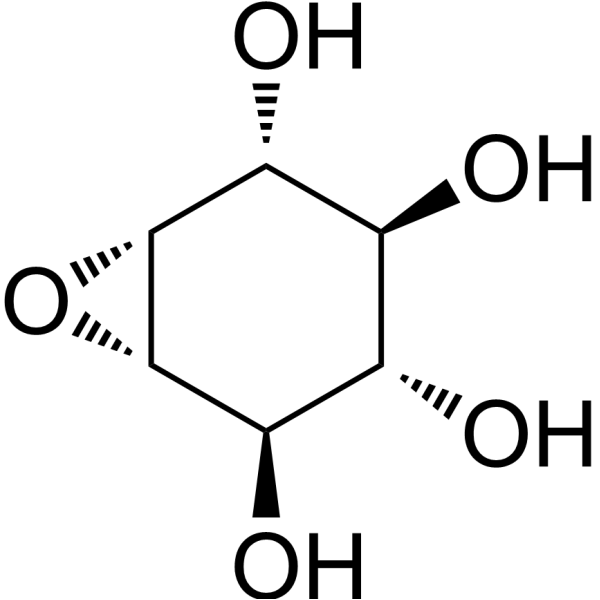
Conduritol B epoxide
Based on 13 publication(s) in Google Scholar
Conduritol B epoxide is an irreversible covalently bound acid β-glucosidase (GCase) inhibitor.
연구목적의 판매만을 진행합니다. 환자를 대상으로 한 판매는 하지 않습니다.
- Purity : 99.92%
- CAS No.: 6090-95-5
- 화학식: C6H10O5
- 분자량:162.14
-
보관:Powder -20°C, 3 years , 4°C, 2 years ; In solvent -80°C, 6 months , -20°C, 1 month

To place orders, for customer services and technical support, please contact: MedChemExpress USA
Tel: 609-228-6898 E-mail: [email protected] [email protected]


-
 Biological Activity
-
Chemical Information
-
용액&용해도
- 순도&문서
- References
-
 Help & FAQs


-
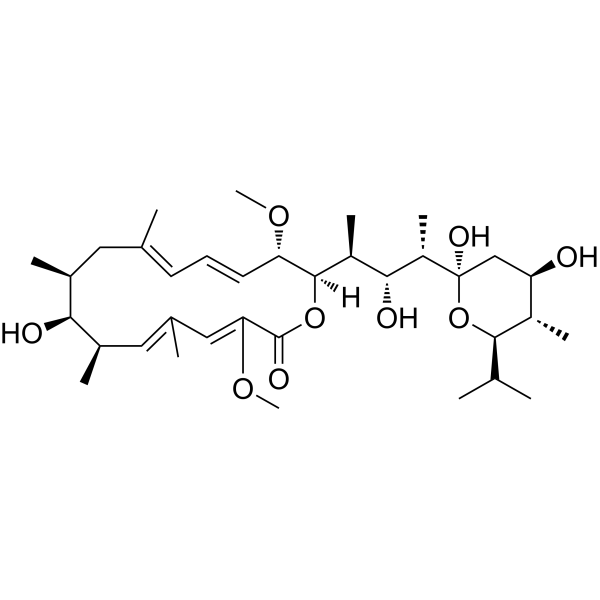
HY-100558
Bafilomycin A1V-ATPase Inhibitor -
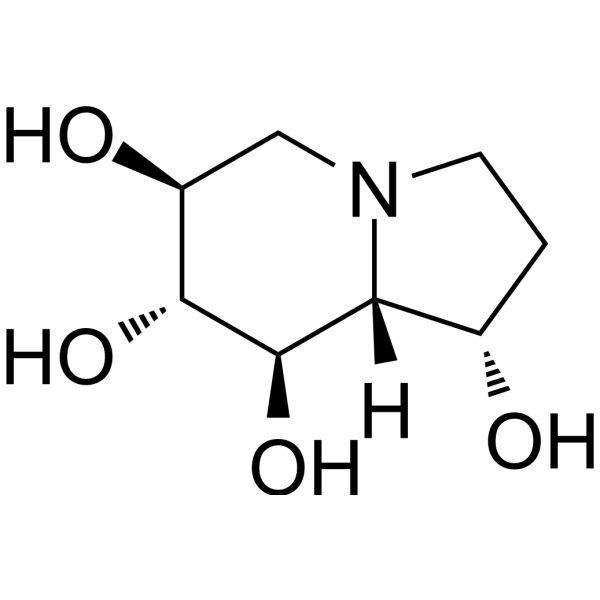
HY-N2022
Castanospermineα/β-Glucosidases Inhibitor -
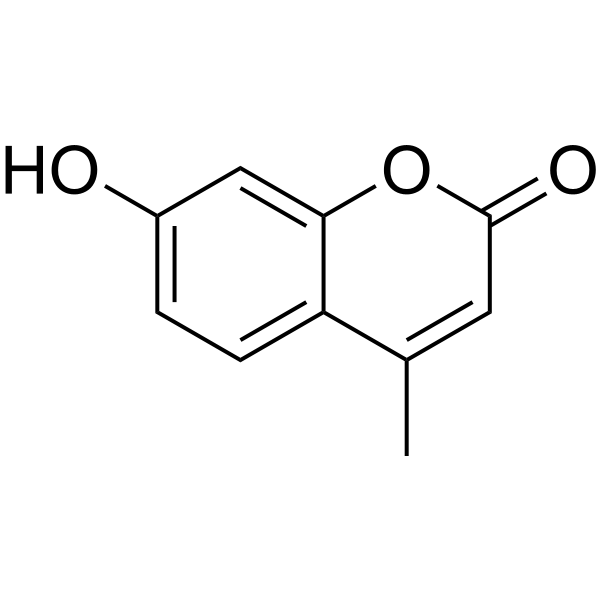
HY-N0187
4-MethylumbelliferoneHyaluronic Acid Biosynthesis Inhibitor -
HY-Y0320
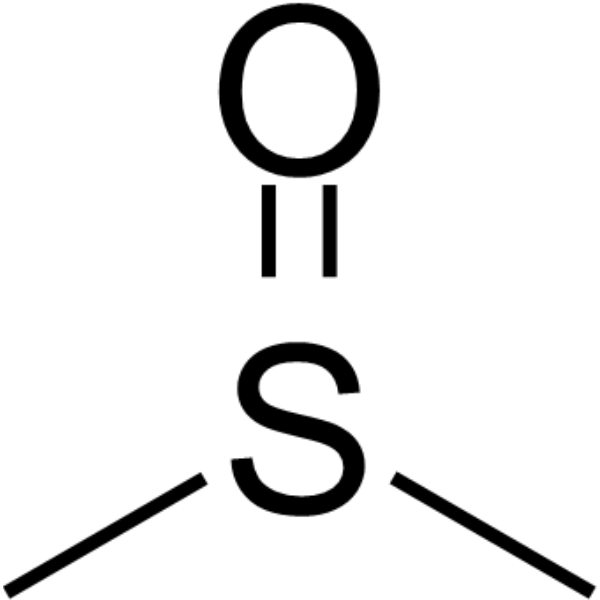
Dimethyl sulfoxide, meets analytical specification of Ch.P.Aprotic Solvent -
HY-Y0873
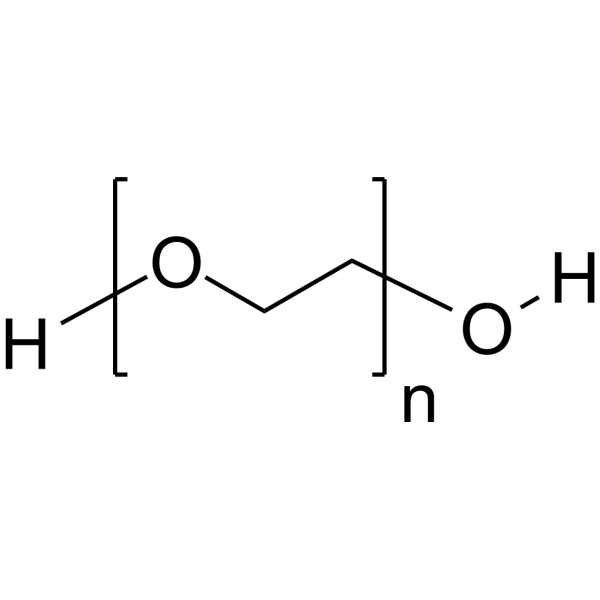
PEG300Neutral Polymer -
HY-104038
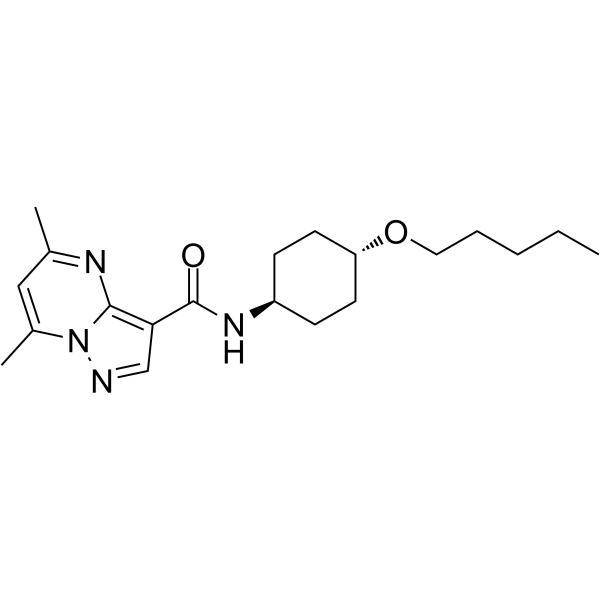
PariceractGCase Activator -
HY-B1756
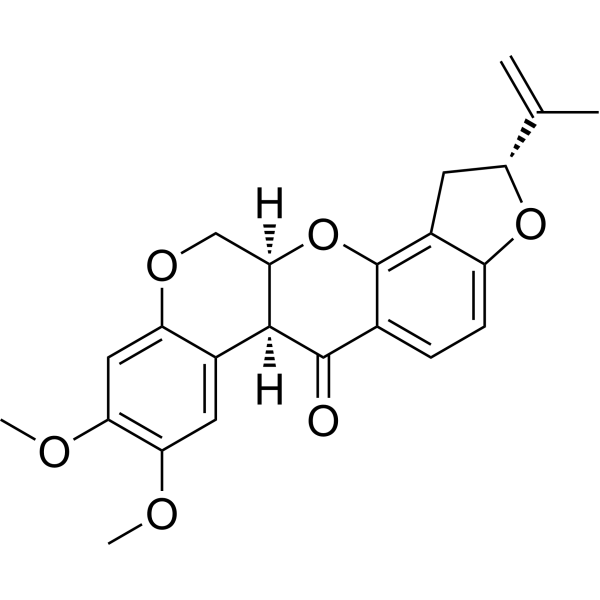
RotenoneMitochondrial Complex I Inhibitor -
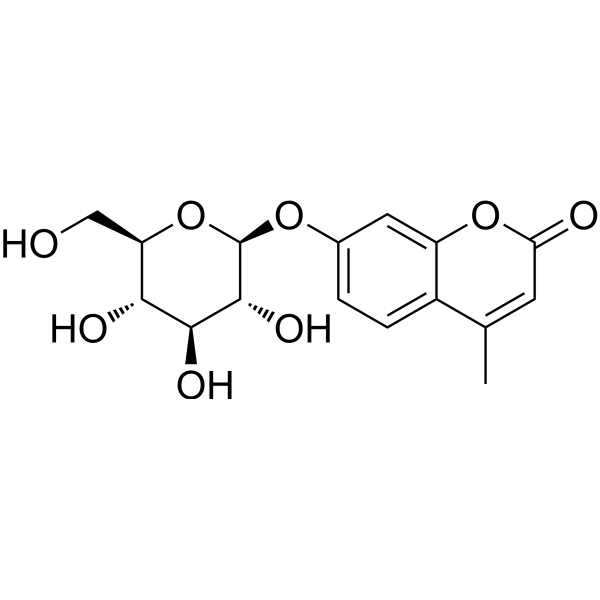
HY-123633
4-Methylumbelliferyl β-D-Glucopyranosideβ-glucosidase fluorogenic substrate -
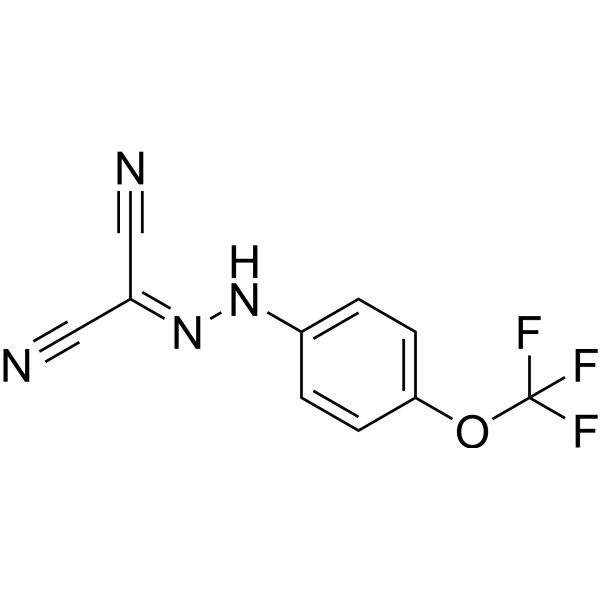
HY-100410
FCCPOXPHOS Uncoupler -
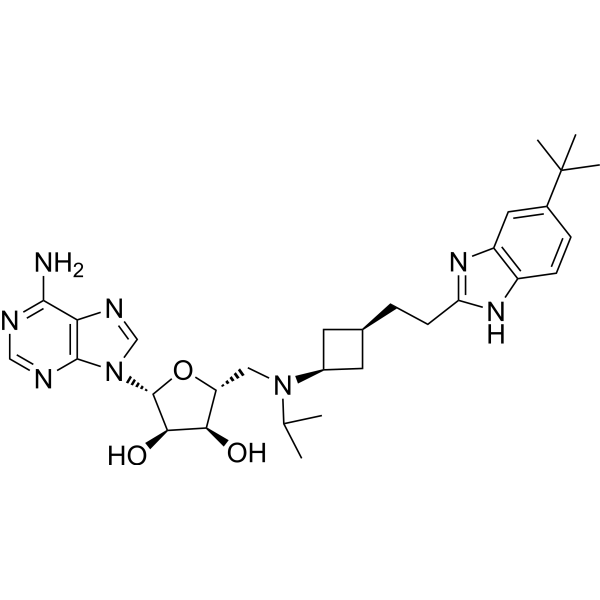
HY-15593
PinometostatDOT1L Inhibitor -
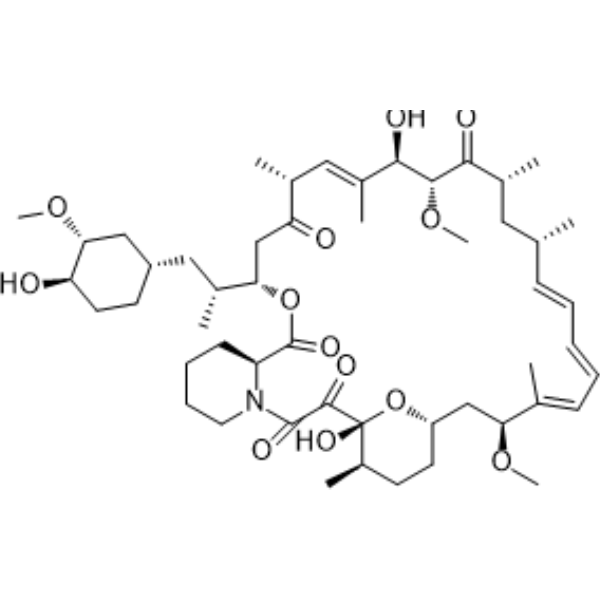
HY-10219
RapamycinmTOR Inhibitor -
HY-13764
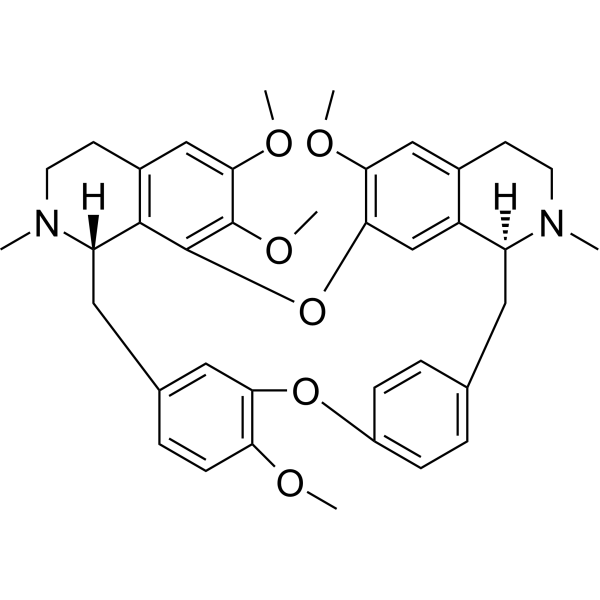
TetrandrineCalcium Channel Inhibitor
Publications Citing Use of MedChemExpress (MCE) Conduritol B epoxide
More- Cell Metab. 2024 Nov 5;36(11):2367-2382.e5. [Abstract]
- Nat Commun. 2024 Feb 16;15(1):1434. [Abstract]
- Neuron. 2020 Mar 4;105(5):822-836.e7. [Abstract]
- Mol Biol Evol. 2022 Mar 2;39(3):msac042. [Abstract]
- RSC Adv. 2018 Feb 23;8(16):8469-8483. [Abstract]
- Inflammation. 2021 Aug;44(4):1592-1606. [Abstract]
- J Neurochem. 2025 Sep;169(9):e70214. [Abstract]
- Curr Issues Mol Biol. 2026 May 1;48(5):473. [Abstract]
- Toxins. 2022 Jul 4;14(7):458. [Abstract]
- Neuromolecular Med. 2025 May 21;27(1):42. [Abstract]
- chemRxiv. 2025 Dec 8.
- bioRxiv. 2025 Feb 18.
- Authorea. 2025 Jan 05.
 Customer Validation & Images

-
Bio/Physico-chemical Assay
-
WB
-
Cell Imaging/Staining
-
Bio/Physico-chemical Assay
-
Bio/Physico-chemical Assay


Biological Activity
제품 설명
In Vitro
Treating N2a and Conduritol B epoxide-N2a cells with G6 gave GC reductions to 7% and 26% of untreated levels, respectively. G6 treated Conduritol B epoxide-N2a also has significantly decreased GS. Co-treatment of G6 and dantrolene of Conduritol B epoxide-N2a cells lead to a similar degree of GC and GS reduction as G6 alone, indicating a specific effect of G6 on inhibition of substrate accumulation, Conduritol B epoxide-N2a cells have higher calcium levels than in N2a cells without caffeine at baseline. Conduritol B epoxide-N2a cells show a significant increase in cytosolic calcium levels compared to N2a cells. Conduritol B epoxide-N2a cells show a significant reduction in OCR as evidenced by approximately 50% in all the parameters, including rate of ATP production, basal respiration, and maximal respiration, compared to N2a cells, indicating reduced mitochondrial function in this nGD cell model. In dantrolene-treated Conduritol B epoxide-N2a cells, levels of Ryr3 are increased to 76% of WT level[1].
MedChemExpress (MCE) has not independently confirmed the accuracy of these methods. They are for reference only.
In Vivo
MedChemExpress (MCE) has not independently confirmed the accuracy of these methods. They are for reference only.


Chemical Information
-
CAS No. 6090-95-5
-
Appearance Solid
-
분자량 162.14
-
화학식 C6H10O5
-
Color White to off-white
-
SMILES
O[C@@H]1[C@@H](O)[C@H](O)[C@@H](O)[C@H]2[C@@H]1O2
-
선적
Room temperature in continental US; may vary elsewhere.
-
보관
Powder -20°C 3 years 4°C 2 years In solvent -80°C 6 months -20°C 1 month


Publications (13)
-
Journal Impact Factor
-
Most Recent
-
Cell Metab
Dietary-timing-induced gut microbiota diurnal oscillations modulate inflammatory rhythms in rheumatoid arthritis. [Abstract]2024 Nov 5;36(11):2367-2382.e5. PMID: 39260371 -
Nat Commun
Reduced progranulin increases tau and α-synuclein inclusions and alters mouse tauopathy phenotypes via glucocerebrosidase. [Abstract]2024 Feb 16;15(1):1434. PMID: 38365772
Conduritol B epoxide purchased from MedChemExpress. Usage Cited in: Nat Commun. 2024 Feb 16;15(1):1434. [Abstract]
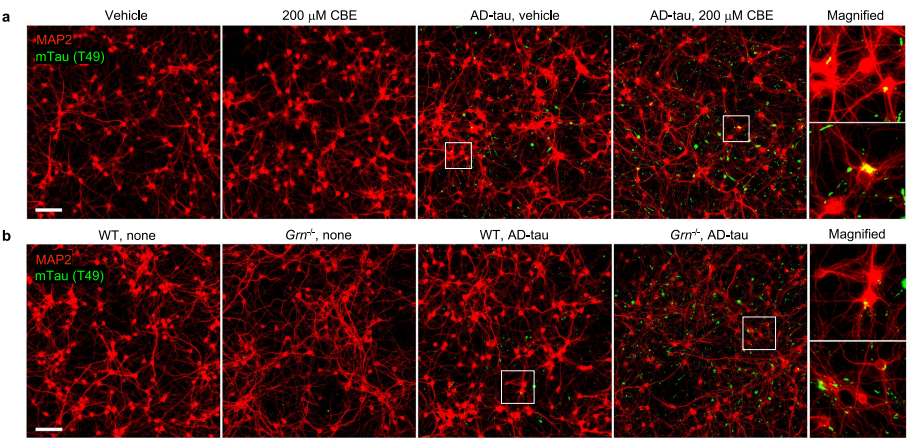
a Representative images of mouse tau (T49) and MAP2 co-staining of WT neurons at DIV21 after ADtau seeding in the presence of vehicle or 200 μM Conduritol B epoxide (CBE). b Representative images of mouse tau (T49) and MAP2 co-staining of WT and Grn−/− neurons at DIV21 after seeding AD-tau.
Conduritol B epoxide purchased from MedChemExpress. Usage Cited in: Nat Commun. 2024 Feb 16;15(1):1434. [Abstract]
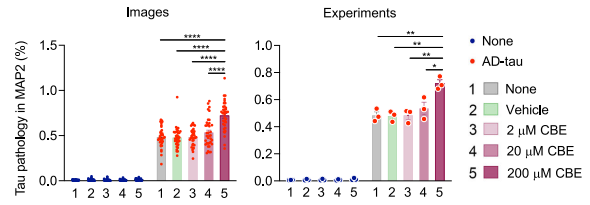
Quantification of endogenous mouse tau-positive area within MAP2 area. Neurons were seeded with AD-tau in the absence or presence of vehicle, 2 μM, 20 μM or 200 μM Conduritol B epoxide (CBE) for 21 days.
-
Neuron
Glucocerebrosidase Activity Modulates Neuronal Susceptibility to Pathological α-Synuclein Insult. [Abstract]2020 Mar 4;105(5):822-836.e7. PMID: 31899072
Conduritol B epoxide purchased from MedChemExpress. Usage Cited in: Neuron. 2020 Mar 4;105(5):822-836.e7. [Abstract]
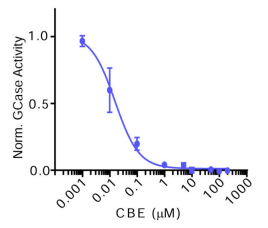
Primary hippocampal neurons treated with Conduritol B epoxide (CBE;0-1000 μM) were lysed to determine GCase activity at 21 DIV. The plotted line is a non-linear fit of values with an estimated IC50 of 15.8 nM (n=3/group).
-
Mol Biol Evol
2022 Mar 2;39(3):msac042. PMID: 35192709 -
RSC Adv
Cytosolic β-glucosidase inhibition and renal blood flow suppression are leading causes for the enhanced systemic exposure of salidroside in hypoxic rats. [Abstract]2018 Feb 23;8(16):8469-8483. PMID: 35539855 -
Inflammation
Acid Sphingomyelinase and Acid β-Glucosidase 1 Exert Opposite Effects on Interleukin-1β-Induced Interleukin 6 Production in Rheumatoid Arthritis Fibroblast-Like Synoviocytes. [Abstract]2021 Aug;44(4):1592-1606. PMID: 33665756 -
J Neurochem
Restoration of Lysosomal Hydrolase Activities by LRRK2 Inhibition in GBA1- and LRRK2-Associated Parkinson's Disease Patient-Derived Cells. [Abstract]2025 Sep;169(9):e70214. PMID: 40899651 -
Curr Issues Mol Biol
mTOR Inhibition Drives Mutation-Specific Remodeling of Lysosomal and Autophagic Pathways and GCase Activity in PBMC-Derived Macrophages from Patients with GBA1-Associated Parkinson's Disease. [Abstract]2026 May 1;48(5):473. PMID: 42193078 -
Toxins
Zearalenone-14-Glucoside Is Hydrolyzed to Zearalenone by β-Glucosidase in Extracellular Matrix to Exert Intracellular Toxicity in KGN Cells. [Abstract]2022 Jul 4;14(7):458. PMID: 35878196 -
Neuromolecular Med
Protective Effect of the LRRK2 Kinase Inhibition in Human Fibroblasts Bearing the Genetic Variant GBA1 K198E: Implications for Parkinson's Disease. [Abstract]2025 May 21;27(1):42. PMID: 40397198
Conduritol B epoxide purchased from MedChemExpress. Usage Cited in: Neuromolecular Med. 2025 May 21;27(1):42. [Abstract]
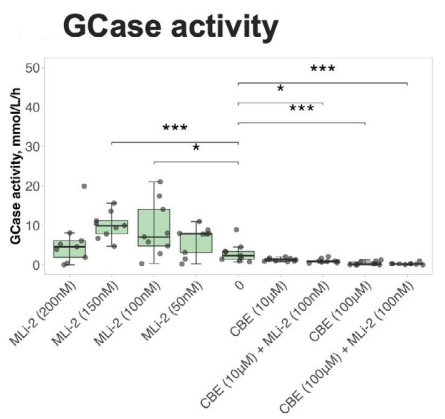
GCase activity. SH-SY5Y cells were treated with Conduritol B epoxide (CBE) at concentrations of 10 and 100 μM to induce GCase dysfunction and cultured for 4days.
Conduritol B epoxide purchased from MedChemExpress. Usage Cited in: Neuromolecular Med. 2025 May 21;27(1):42. [Abstract]
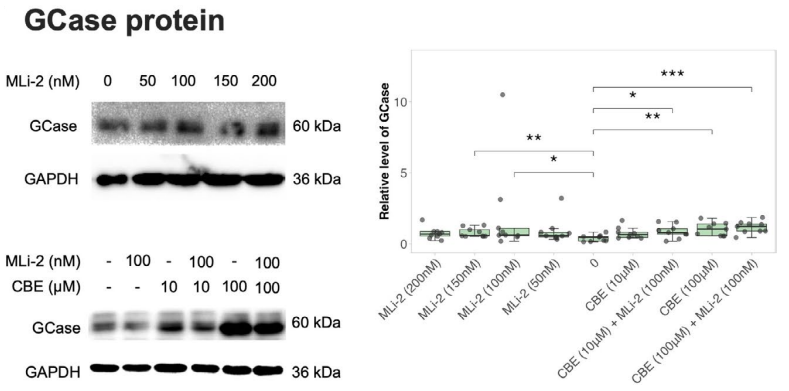
GCase protein level. SH-SY5Y cells were treated with Conduritol B epoxide (CBE) at concentrations of 10 and 100 μM to induce GCase dysfunction and cultured for 4days.
-
-
-


용액&용해도
In Vitro:
H2O : 100 mg/mL (616.75 mM; Need ultrasonic)
DMSO : 50 mg/mL (308.38 mM; Need ultrasonic; Hygroscopic DMSO has a significant impact on the solubility of product, please use newly opened DMSO)
Please refer to the solubility information to select the appropriate solvent. Once prepared, please aliquot and store the solution to prevent product inactivation from repeated freeze-thaw cycles.
Storage method and period of stock solution: -80°C, 6 months; -20°C, 1 month. When stored at -80°C, please use it within 6 months. When stored at -20°C, please use it within 1 month.
* Note: If you choose water as the stock solution, please dilute it to the working solution, then filter and sterilize it with a 0.22 μm filter before use.
Please refer to the solubility information to select the appropriate solvent. Once prepared, please aliquot and store the solution to prevent product inactivation from repeated freeze-thaw cycles.
Storage method and period of stock solution: -80°C, 6 months; -20°C, 1 month. When stored at -80°C, please use it within 6 months. When stored at -20°C, please use it within 1 month.
* Note: If you choose water as the stock solution, please dilute it to the working solution, then filter and sterilize it with a 0.22 μm filter before use.
Concentration (start) × Volume (start) = Concentration (final) × Volume (final)
In Vivo:
Select the appropriate dissolution method based on your experimental animal and administration route.
- For the following dissolution methods, please ensure to first prepare a clear stock solution using an In Vitro approach and then sequentially add co-solvents:
- To ensure reliable experimental results, the clarified stock solution can be appropriately stored based on storage conditions. As for the working solution for In Vivo experiments, it is recommended to prepare freshly and use it on the same day.
- The percentages shown for the solvents indicate their volumetric ratio in the final prepared solution. If precipitation or phase separation occurs during preparation, heat and/or sonication can be used to aid dissolution.
Add each solvent one by one: 10% DMSO 40% PEG300 5% Tween-80 45% Saline
Solubility: ≥ 2 mg/mL (12.34 mM); Clear solution
This protocol yields a clear solution of ≥ 2 mg/mL (saturation unknown).
Taking 1 mL working solution as an example, add 100 μL DMSO stock solution (20.0 mg/mL) to 400 μL PEG300, and mix evenly; then add 50 μL Tween-80 and mix evenly; then add 450 μL Saline to adjust the volume to 1 mL.
Preparation of Saline: Dissolve 0.9 g sodium chloride in ddH₂O and dilute to 100 mL to obtain a clear Saline solution.
Add each solvent one by one: 10% DMSO 90% (20% SBE-β-CD in Saline)
Solubility: ≥ 2 mg/mL (12.34 mM); Clear solution
This protocol yields a clear solution of ≥ 2 mg/mL (saturation unknown).
Taking 1 mL working solution as an example, add 100 μL DMSO stock solution (20.0 mg/mL) to 900 μL 20% SBE-β-CD in Saline, and mix evenly.
Preparation of 20% SBE-β-CD in Saline (4°C, storage for one week): 2 g SBE-β-CD powder is dissolved in 10 mL Saline, completely dissolve until clear.
For the following dissolution methods, please prepare the working solution directly:
It is recommended to prepare fresh solutions and use them promptly within a short period of time.
The percentages shown for the solvents indicate their volumetric ratio in the final prepared solution. If precipitation or phase separation occurs during preparation, heat and/or sonication can be used to aid dissolution.
Add each solvent one by one: PBS
Solubility: 100 mg/mL (616.75 mM); Clear solution; Need ultrasonic
In Vivo Dissolution Calculator
Please enter the basic information of animal experiments:
-
-
-
-
Recommended: Prepare an additional quantity of animals to account for potential losses during experiments.
Working solution concentration: 0.22 mg/mL
This product has good water solubility, please refer to the measured solubility data in water/PBS/Saline for details.


순도&문서
-
Data Sheet (298 KB)
-
SDS (393 KB)
- English - EN (393 KB)
- Français - FR (393 KB)
- Deutsch - DE (393 KB)
- Norwegian - NO (393 KB)
- Español - ES (393 KB)
- Swedish - SV (393 KB)
- Italian - IT (393 KB)
- Korean - KR (393 KB)
- Portuguese - PT (393 KB)
-
Handling Instructions (2659 KB)
References


Complete Stock Solution Preparation Table
Please refer to the solubility information to select the appropriate solvent. Once prepared, please aliquot and store the solution to prevent product inactivation from repeated freeze-thaw cycles.
Storage method and period of stock solution: -80°C, 6 months; -20°C, 1 month. When stored at -80°C, please use it within 6 months. When stored at -20°C, please use it within 1 month.
| Optional Solvent | Concentration Solvent Mass | 1 mg | 5 mg | 10 mg | 25 mg |
|---|---|---|---|---|---|
| DMSO / H2O | 1 mM | 6.1675 mL | 30.8375 mL | 61.6751 mL | 154.1877 mL |
| 5 mM | 1.2335 mL | 6.1675 mL | 12.3350 mL | 30.8375 mL | |
| 10 mM | 0.6168 mL | 3.0838 mL | 6.1675 mL | 15.4188 mL | |
| 15 mM | 0.4112 mL | 2.0558 mL | 4.1117 mL | 10.2792 mL | |
| 20 mM | 0.3084 mL | 1.5419 mL | 3.0838 mL | 7.7094 mL | |
| 25 mM | 0.2467 mL | 1.2335 mL | 2.4670 mL | 6.1675 mL | |
| 30 mM | 0.2056 mL | 1.0279 mL | 2.0558 mL | 5.1396 mL | |
| 40 mM | 0.1542 mL | 0.7709 mL | 1.5419 mL | 3.8547 mL | |
| 50 mM | 0.1234 mL | 0.6168 mL | 1.2335 mL | 3.0838 mL | |
| 60 mM | 0.1028 mL | 0.5140 mL | 1.0279 mL | 2.5698 mL | |
| 80 mM | 0.0771 mL | 0.3855 mL | 0.7709 mL | 1.9273 mL | |
| 100 mM | 0.0617 mL | 0.3084 mL | 0.6168 mL | 1.5419 mL |
* Note: If you choose water as the stock solution, please dilute it to the working solution, then filter and sterilize it with a 0.22 μm filter before use.


Conduritol B epoxide Related Classifications
HY-100944 Related Classifications
 Powered by Bioz