



Desisobutyryl-ciclesonide
Based on 1 publication(s) in Google Scholar
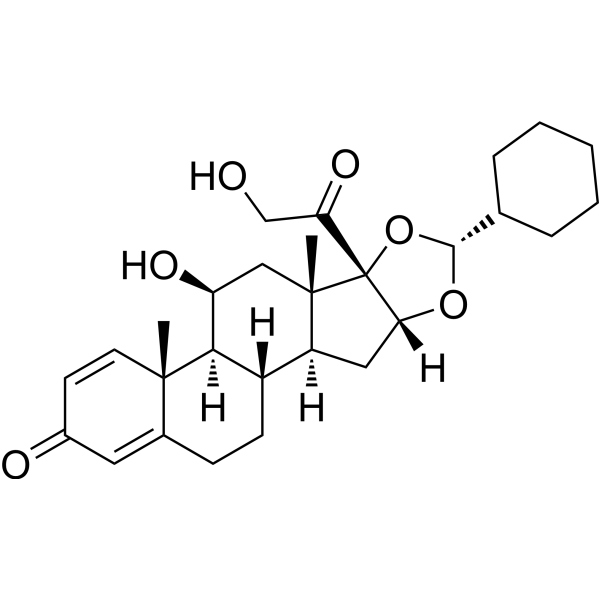
Desisobutyryl-ciclesonide is the active metabolite of Ciclesonide. Desisobutyryl-ciclesonide has affinity for the glucocorticoid receptor.
Nur für Forschungszwecke. Wir verkaufen nicht an Patienten.
- Reinheit : 99.77%
- CAS. Nr.: 161115-59-9
- Formel: C28H38O6
- Molecular Weight:470.60
-
Speicherung:Powder -20°C, 3 years , 4°C, 2 years ; In solvent -80°C, 2 years , -20°C, 1 year

To place orders, for customer services and technical support, please contact: MedChemExpress USA
Tel: 609-228-6898 E-mail: [email protected] [email protected]


-
 Biologische Aktivität
-
Chemical Information
-
Lösungsmittel & Löslichkeit
- Protokoll
- Reinheit & Dokumentation
- Verweise
-
 Help & FAQs


-
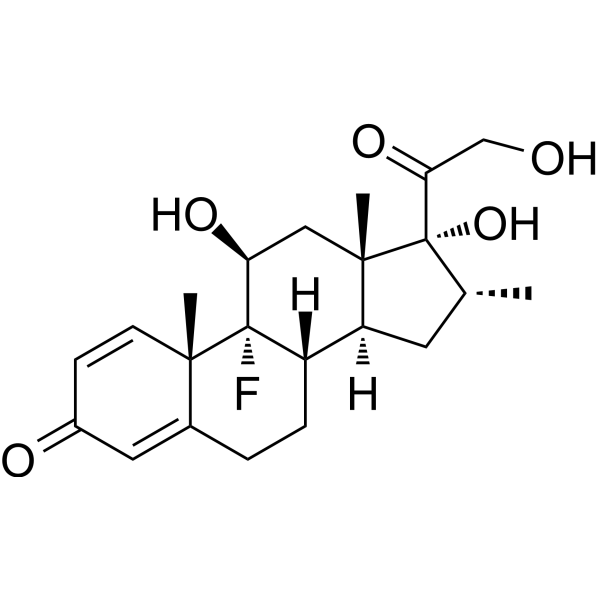
HY-14648
DexamethasoneGR Agonist -
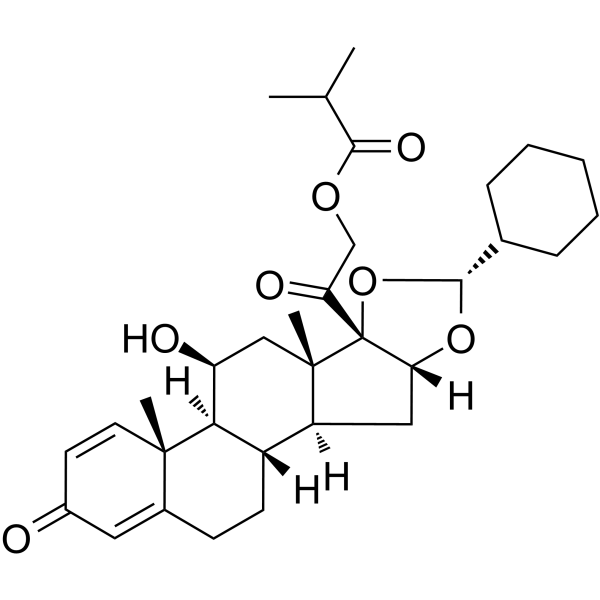
HY-B0625
CiclesonideGlucocorticoid -
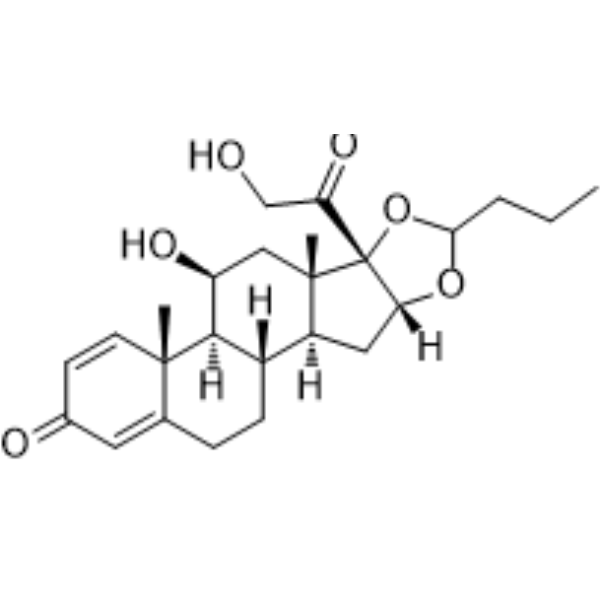
HY-13580
BudesonideGlucocorticoid Receptor Agonist -
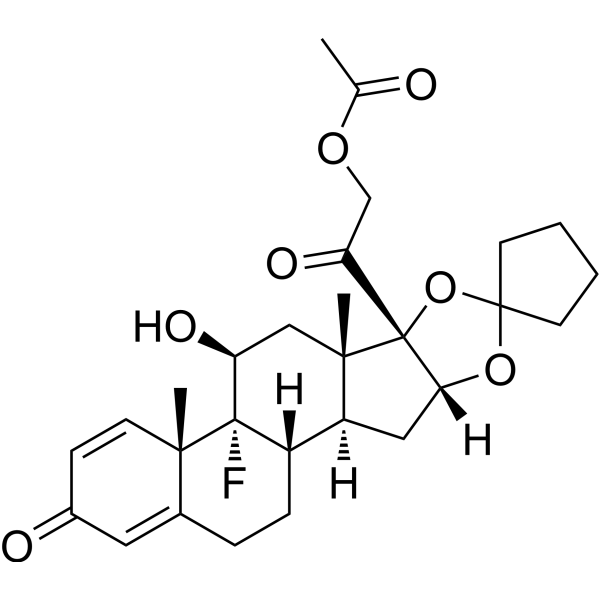
HY-B1197
AmcinonideGlucocorticoid Receptor Agonist -
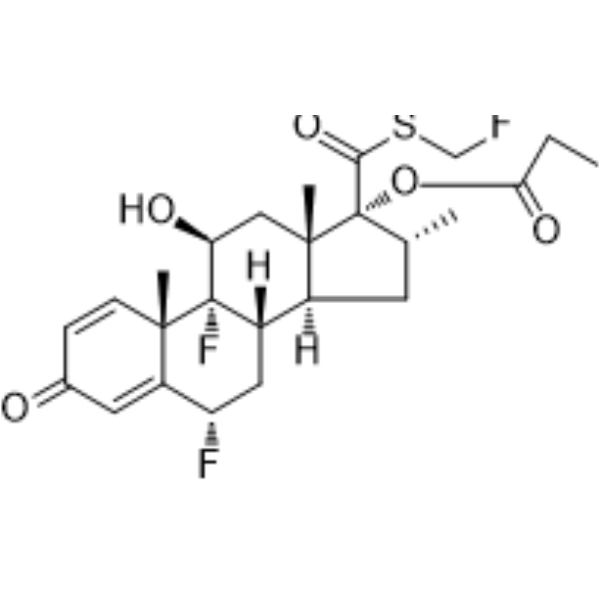
HY-B0154
Fluticasone propionateGlucocorticoid Receptor Agonist -
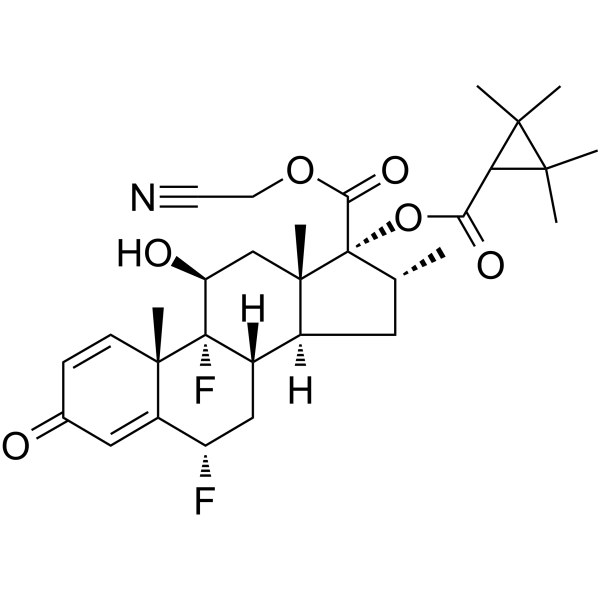
HY-103662
GW-870086Glucocorticoid Receptor Agonist -
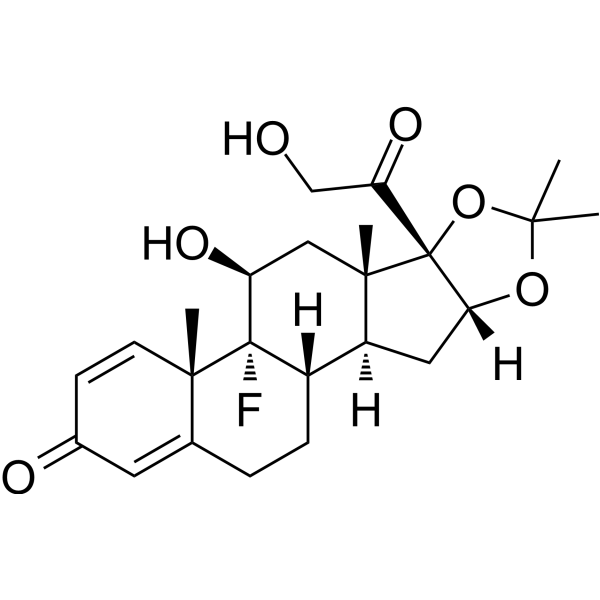
HY-B0636
Triamcinolone acetonideAnti-Inflammatory Agent -
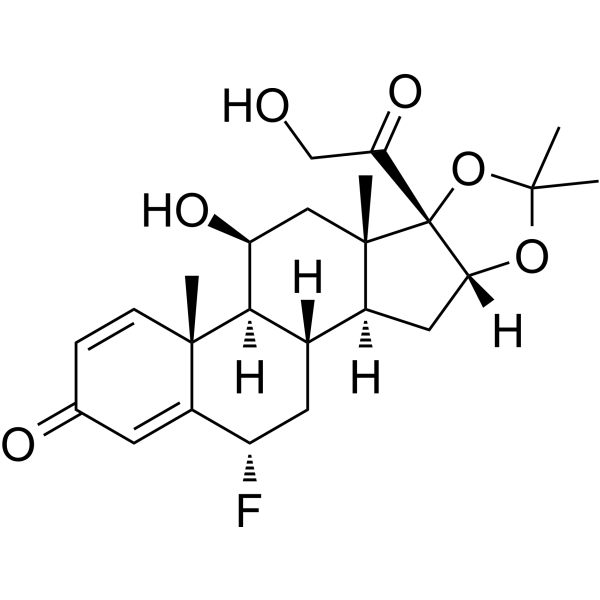
HY-B1121
FlunisolideGlucocorticoid Receptor Activator -
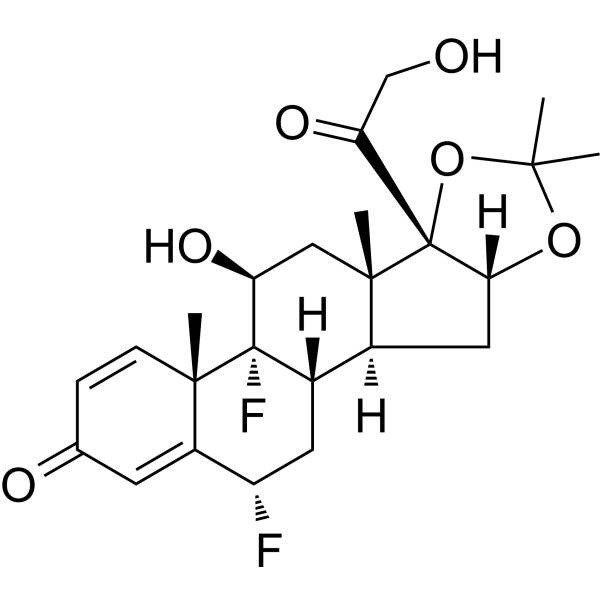
HY-B0415
Fluocinolone (Acetonide)Glucocorticoid Receptor Agonist -
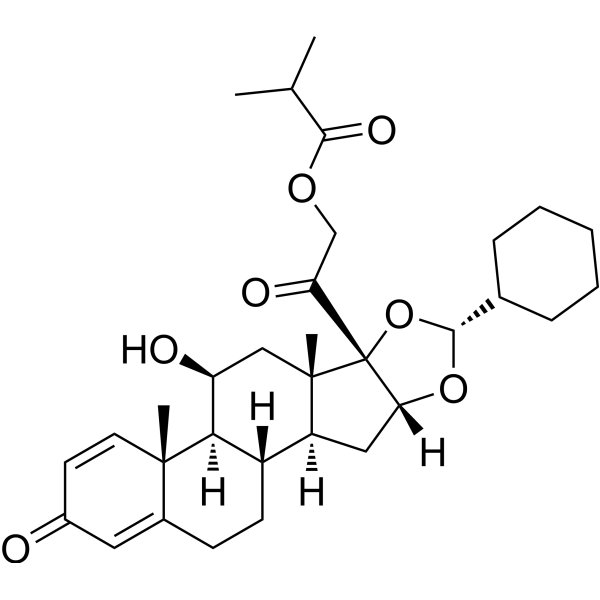
HY-B0625R
Ciclesonide (Standard) -
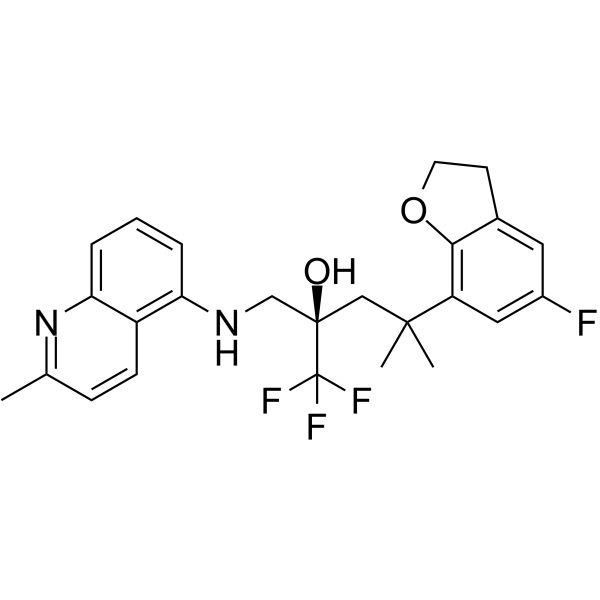
HY-14864
MapracoratGlucocorticoid Receptor Agonist -
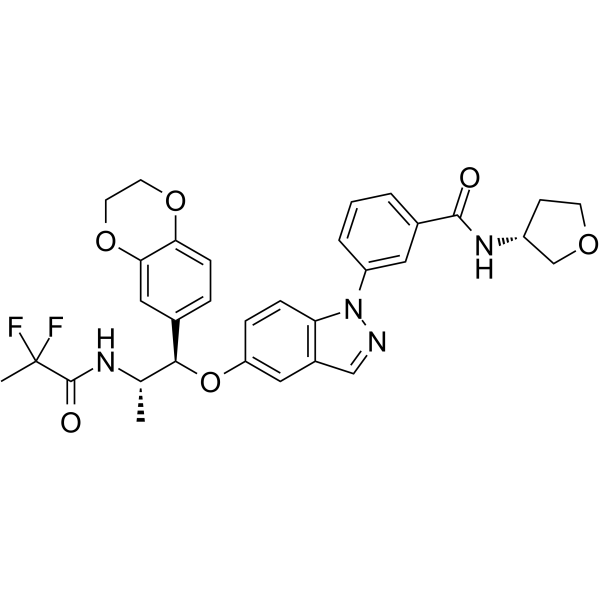
HY-111453
Velsecorat
Publications Citing Use of MedChemExpress (MCE) Desisobutyryl-ciclesonide
More

Biologische Aktivität
Beschreibung
IC50 & Target
Glucocorticoid receptor[1]
In Vitro
Ciclesonide, an inhaled corticosteroid with almost no affinity for the glucocorticoid receptor, is highly effective in downregulating in vitro pro-inflammatory activities of airway parenchymal cells when converted into the active metabolite Desisobutyryl-ciclesonide. Peripheral blood mononuclear cell proliferation to C. albicans is dose-dependently inhibited by 0.3-3.0 μM Ciclesonide and Desisobutyryl-ciclesonide but inhibition by Desisobutyryl-ciclesonide is higher. A significant proliferation to PhlP5 is observed only in cultures from atopic subjects: an effective downregulation is already detected at 0.03 μM Ciclesonide and 0.003 μM Desisobutyryl-ciclesonide (complete inhibition at 3 μM Ciclesonide and 0.03 μM Desisobutyryl-ciclesonide). 3 μM Ciclesonide and Desisobutyryl-ciclesonide reduce the PhlP5-specific T-cell blast proliferation and interleukin 4-producing cell proportion. In PBMCs cultures from atopic patients, both Ciclesonide (CIC) and Desisobutyryl-ciclesonide (des-CIC) induce a dose-dependent downregulation of PhlP5-induced proliferation. The effect is already significantat 0.03 μM Ciclesonide and at 0.003 μM Desisobutyryl-ciclesonide (p<0.001, each comparison),with an early complete inhibition observed at 3μM Ciclesonide and at 0.03 μM Desisobutyryl-ciclesonide. The inhibitory activity toward PhlP5-induced PBMC proliferation is higher for Desisobutyryl-ciclesonide than for Ciclesonide at 0.003 μM (p<0.05), 0.03 μM (p<0.001) and 0.3 μM (p<0.05)[1].
MedChemExpress (MCE) has not independently confirmed the accuracy of these methods. They are for reference only. Further protocols information, click here.


Chemical Information
-
CAS. Nr. 161115-59-9
-
Appearance Solid
-
Molecular Weight 470.60
-
Formel C28H38O6
-
Color White to off-white
-
SMILES
C[C@@]12[C@@]3(C(CO)=O)[C@@](O[C@H](O3)C4CCCCC4)([H])C[C@@]1([H])[C@]5([H])CCC6=CC(C=C[C@]6(C)[C@@]5([H])[C@@H](O)C2)=O
-
Synonyms
CIC-AP; Ciclesonide active principle
-
Versand
Room temperature in continental US; may vary elsewhere.
-
Speicherung
Powder -20°C 3 years 4°C 2 years In solvent -80°C 2 years -20°C 1 year


Publications (1)
-
Journal Impact Factor
-
Most Recent


Lösungsmittel & Löslichkeit
In Vitro:
DMSO : 100 mg/mL (212.49 mM; Need ultrasonic; Hygroscopic DMSO has a significant impact on the solubility of product, please use newly opened DMSO)
Please refer to the solubility information to select the appropriate solvent. Once prepared, please aliquot and store the solution to prevent product inactivation from repeated freeze-thaw cycles.
Storage method and period of stock solution: -80°C, 2 years; -20°C, 1 year. When stored at -80°C, please use it within 2 years. When stored at -20°C, please use it within 1 year.
Please refer to the solubility information to select the appropriate solvent. Once prepared, please aliquot and store the solution to prevent product inactivation from repeated freeze-thaw cycles.
Storage method and period of stock solution: -80°C, 2 years; -20°C, 1 year. When stored at -80°C, please use it within 2 years. When stored at -20°C, please use it within 1 year.
Konzentration (Stammlösung) × Volumen (Stammlösung) = Konzentration (Ziellösung) × Volumen (Ziellösung)
In Vivo:
Select the appropriate dissolution method based on your experimental animal and administration route.
- For the following dissolution methods, please ensure to first prepare a clear stock solution using an In Vitro approach and then sequentially add co-solvents:
- To ensure reliable experimental results, the clarified stock solution can be appropriately stored based on storage conditions. As for the working solution for In Vivo experiments, it is recommended to prepare freshly and use it on the same day.
- The percentages shown for the solvents indicate their volumetric ratio in the final prepared solution. If precipitation or phase separation occurs during preparation, heat and/or sonication can be used to aid dissolution.
Add each solvent one by one: 10% DMSO 40% PEG300 5% Tween-80 45% Saline
Solubility: ≥ 2.5 mg/mL (5.31 mM); Clear solution
This protocol yields a clear solution of ≥ 2.5 mg/mL (saturation unknown).
Taking 1 mL working solution as an example, add 100 μL DMSO stock solution (25.0 mg/mL) to 400 μL PEG300, and mix evenly; then add 50 μL Tween-80 and mix evenly; then add 450 μL Saline to adjust the volume to 1 mL.
Preparation of Saline: Dissolve 0.9 g sodium chloride in ddH₂O and dilute to 100 mL to obtain a clear Saline solution.
Add each solvent one by one: 10% DMSO 90% (20% SBE-β-CD in Saline)
Solubility: ≥ 2.5 mg/mL (5.31 mM); Clear solution
This protocol yields a clear solution of ≥ 2.5 mg/mL (saturation unknown).
Taking 1 mL working solution as an example, add 100 μL DMSO stock solution (25.0 mg/mL) to 900 μL 20% SBE-β-CD in Saline, and mix evenly.
Preparation of 20% SBE-β-CD in Saline (4°C, storage for one week): 2 g SBE-β-CD powder is dissolved in 10 mL Saline, completely dissolve until clear.
In Vivo Dissolution Calculator
Please enter the basic information of animal experiments:
-
-
-
-
Recommended: Prepare an additional quantity of animals to account for potential losses during experiments.
Please enter your animal formula composition:
-
%DMSO +
Recommended: Keep the proportion of DMSO in working solution below 2% if your animal is weak.
-
%+
-
+%Tween-80 + +
-
%Saline +
The co-solvents required include: DMSO, . All of co-solvents are available by MedChemExpress (MCE). , Tween 80. All of co-solvents are available by MedChemExpress (MCE).
Working solution concentration: 0.22 mg/mL
Method for preparing stock solution: mg drug dissolved in μL DMSO. Stock solution concentration: mg/mL.
1. Take μL DMSO stock solution;
2. Add μL .
μL , mix evenly;
3. Then add μL Tween 80, mix evenly;
4. Then add μL
Please ensure that the stock solution in the first step is dissolved to a clear state, and add co-solvents in sequence. You can use ultrasonic heating (ultrasonic cleaner, recommended frequency 20-40 kHz), vortexing, etc. to assist dissolution.

Protokoll
-
Research Protocol for Endocrine Diseases
Endocrine diseases often arise from disrupted hormone production, hormone signaling, or target-tissue responsiveness; for diabetes-focused endocrine disease models, insulin signaling regulates glucose uptake, hepatic glucose output, lipid metabolism, and β-cell compensation. Type 2 diabetes develops through interacting defects in insulin resistance, β-cell dysfunction, adipose inflammation, hepatic glucose overproduction, altered incretin signaling, and ectopic lipid metabolism. A major unresolved question is whether endocrine dysfunction is driven primarily by target-tissue insulin resistance, intrinsic β-cell failure, immune/inflammatory stress, or combined multi-organ failure that differs by disease stage.


Reinheit & Dokumentation
-
Data Sheet (279 KB)
-
SDS (252 KB)
- English - EN (252 KB)
- Français - FR (252 KB)
- Deutsch - DE (252 KB)
- Norwegian - NO (252 KB)
- Español - ES (252 KB)
- Swedish - SV (252 KB)
- Italian - IT (252 KB)
- Korean - KR (252 KB)
- Portuguese - PT (252 KB)
-
Handling Instructions (2659 KB)
Verweise


Complete Stock Solution Preparation Table
Please refer to the solubility information to select the appropriate solvent. Once prepared, please aliquot and store the solution to prevent product inactivation from repeated freeze-thaw cycles.
Storage method and period of stock solution: -80°C, 2 years; -20°C, 1 year. When stored at -80°C, please use it within 2 years. When stored at -20°C, please use it within 1 year.
| Optional Solvent | Concentration Solvent Mass | 1 mg | 5 mg | 10 mg | 25 mg |
|---|---|---|---|---|---|
| DMSO | 1 mM | 2.1249 mL | 10.6247 mL | 21.2495 mL | 53.1237 mL |
| 5 mM | 0.4250 mL | 2.1249 mL | 4.2499 mL | 10.6247 mL | |
| 10 mM | 0.2125 mL | 1.0625 mL | 2.1249 mL | 5.3124 mL | |
| 15 mM | 0.1417 mL | 0.7083 mL | 1.4166 mL | 3.5416 mL | |
| 20 mM | 0.1062 mL | 0.5312 mL | 1.0625 mL | 2.6562 mL | |
| 25 mM | 0.0850 mL | 0.4250 mL | 0.8500 mL | 2.1249 mL | |
| 30 mM | 0.0708 mL | 0.3542 mL | 0.7083 mL | 1.7708 mL | |
| 40 mM | 0.0531 mL | 0.2656 mL | 0.5312 mL | 1.3281 mL | |
| 50 mM | 0.0425 mL | 0.2125 mL | 0.4250 mL | 1.0625 mL | |
| 60 mM | 0.0354 mL | 0.1771 mL | 0.3542 mL | 0.8854 mL | |
| 80 mM | 0.0266 mL | 0.1328 mL | 0.2656 mL | 0.6640 mL | |
| 100 mM | 0.0212 mL | 0.1062 mL | 0.2125 mL | 0.5312 mL |


Desisobutyryl-ciclesonide Related Classifications
HY-111490 Related Classifications
 Powered by Bioz