Others
-
Others Related Products (76562)
Related Products (76562)

-
D-Fructose-3-13C
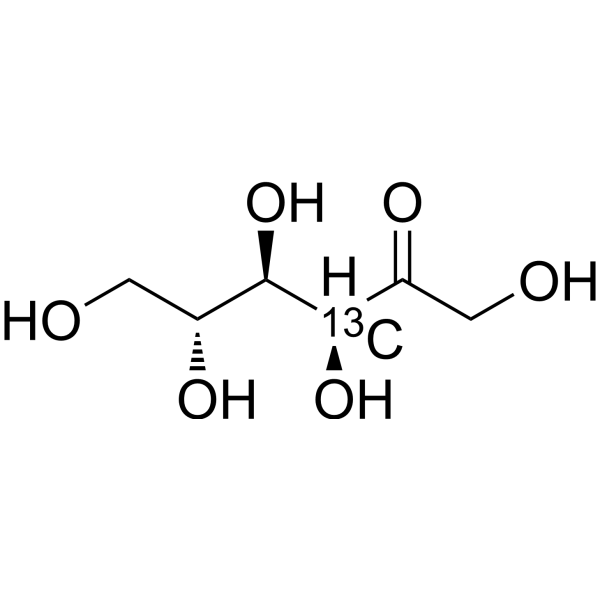 0 ImagesCat. No.: HY-N7092S4CAS No.: 249928-59-4Synonyms: D(-)-Fructose-3-13C
D-Fructose-3-13C is the 13C labeled D-Fructose. D-Fructose (D(-)-Fructose) is a naturally occurring monosaccharide found in many plants.
-
D-Fructose-5-13C
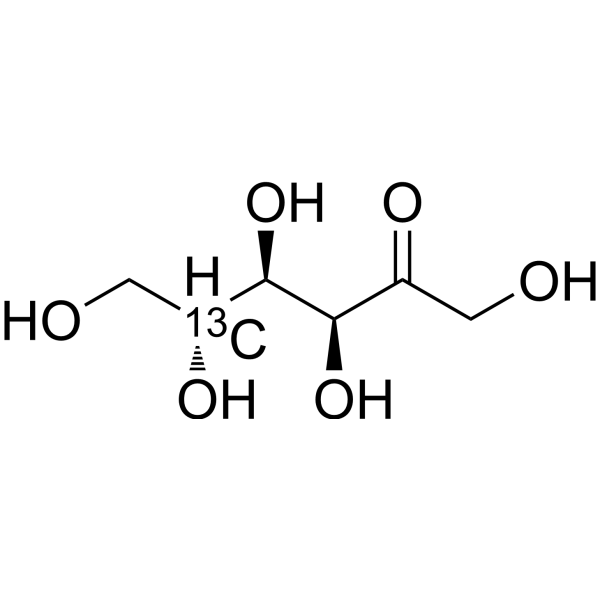 0 ImagesCat. No.: HY-N7092S6CAS No.: 635325-97-2Synonyms: D(-)-Fructose-5-13C
D-Fructose-5-13C is the 13C labeled D-Fructose. D-Fructose (D(-)-Fructose) is a naturally occurring monosaccharide found in many plants.
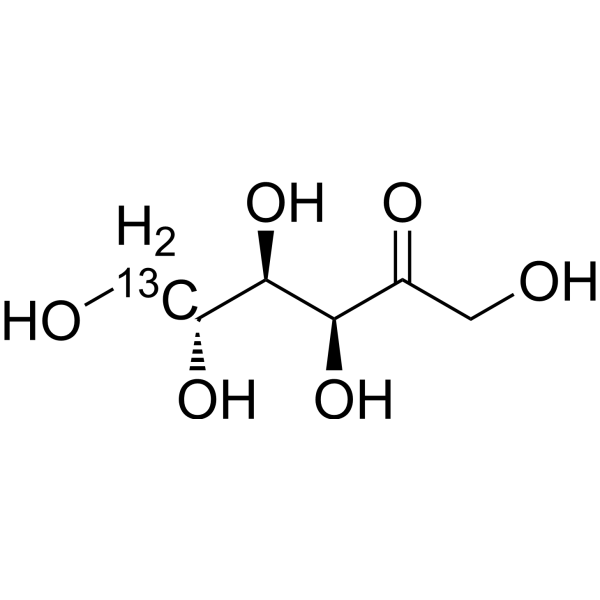
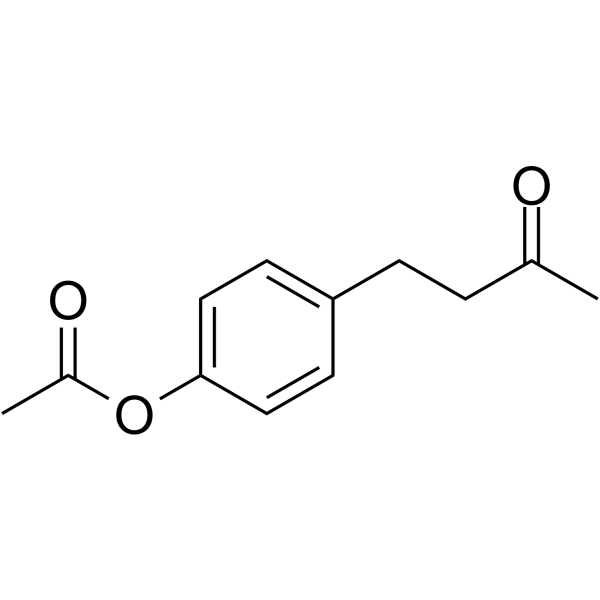
-
Dimethyl phthalate-d6
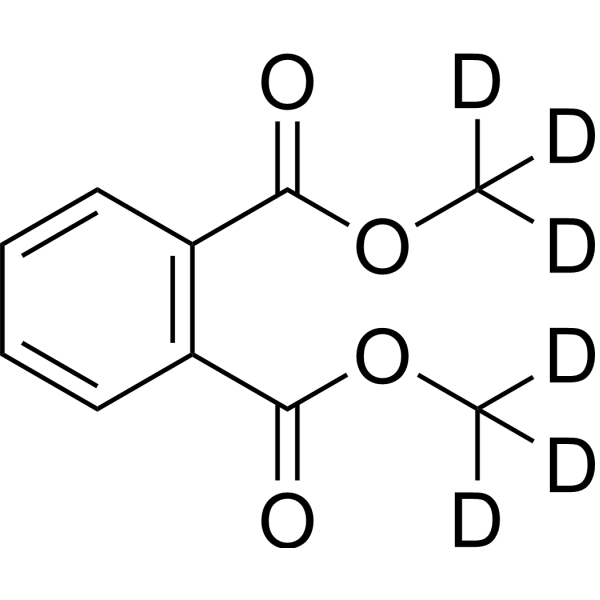 0 ImagesCat. No.: HY-N7106S1CAS No.: 85448-30-2Synonyms: DMP-d6
Dimethyl phthalate-d6 is the deuterium labeled Dimethyl phthalate. Dimethyl phthalate, a known endocrine disruptor and one of the phthalate esters (PAEs), is a ubiquitous pollutant. Dimethyl phthalate is commonly used as a plasticizer to impart flexibility to rigid polyvinylchloride (PVC) resins.
-
Benzyl acetate-d5
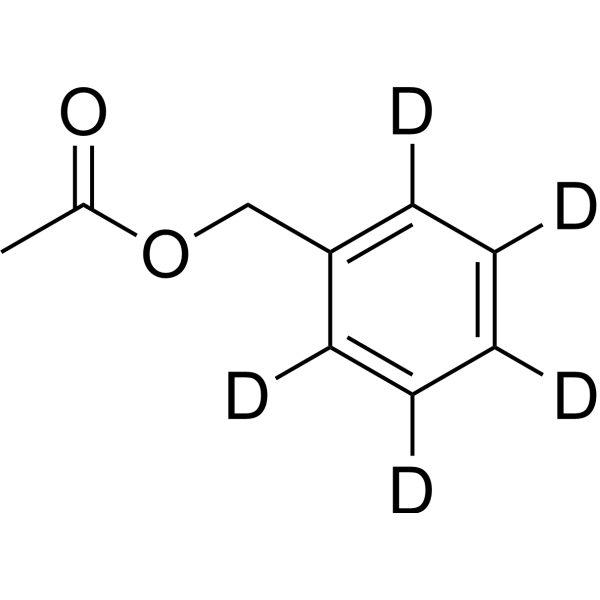 0 ImagesCat. No.: HY-N7124SCAS No.: 1398065-57-0
Benzyl acetate-d5 is the deuterium labeled Benzyl acetate (HY-N7124). Benzyl acetate is an aromatic ester with a jasmine scent. Benzyl acetate found in plants and is commonly used as a base fragrance ingredient in perfumes, cosmetics, and soap fragrances. Benzyl acetate is also one of the largest varieties in the synthetic fragrance industry.
-
3,23-Dioxocycloart-24-en-26-oic acid
 0 ImagesCat. No.: HY-N7159CAS No.: 870456-88-5
3,23-Dioxocycloart-24-en-26-oic acid is a natural triterpene.
-
3-O-(2'E,4'E-Decadienoyl)-ingenol
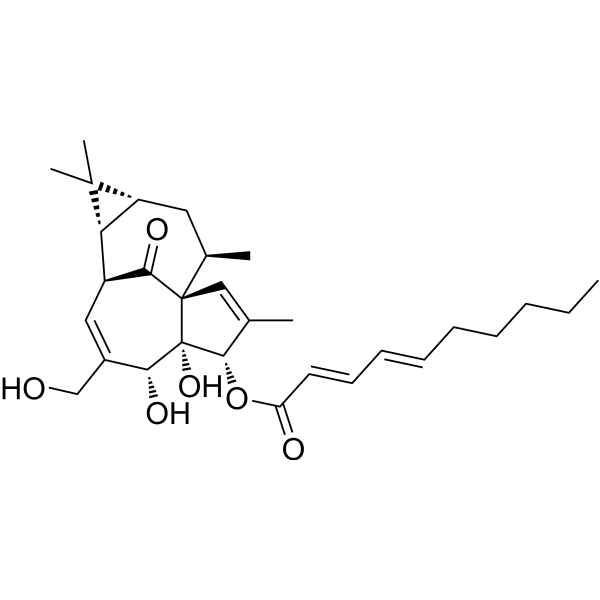 0 ImagesCat. No.: HY-N7161CAS No.: 466663-11-6
3-O-(2'E,4'E-Decadienoyl)-ingenol is a natural diterpenoid that shows cytotoxicity against human normal cell lines L-O2 and GES-1, with IC50s of 8.22 μM and 6.67 μM, respectively.
-
3-Oxo-24,25,26,27-tetranortirucall-7-ene-23(21)-lactone
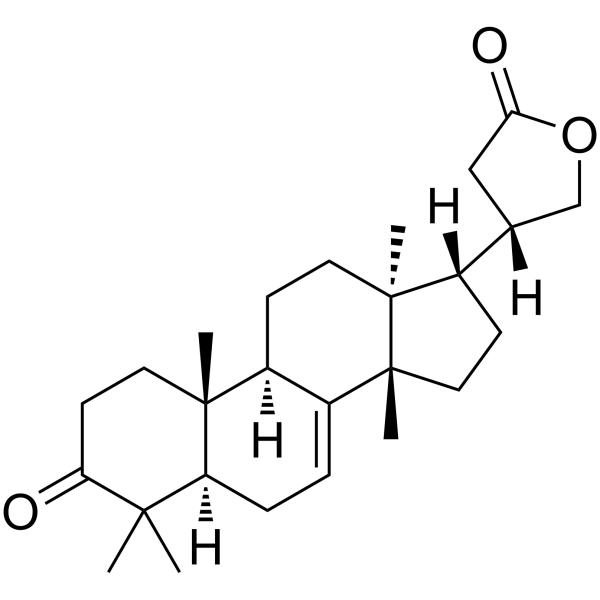 0 ImagesCat. No.: HY-N7164CAS No.: 828935-47-3
3-Oxo-24,25,26,27-tetranortirucall-7-ene-23(21)-lactone is a tetranortirucallane-type triterpenoid that can be isolated from Dysoxylum lenticellatum. 3-Oxo-24,25,26,27-tetranortirucall-7-ene-23(21)-lactone has vasodilative effect with diastolic degree of 43.5% at 10 μg/mL.
-
6''-O-Acetylisovitexin
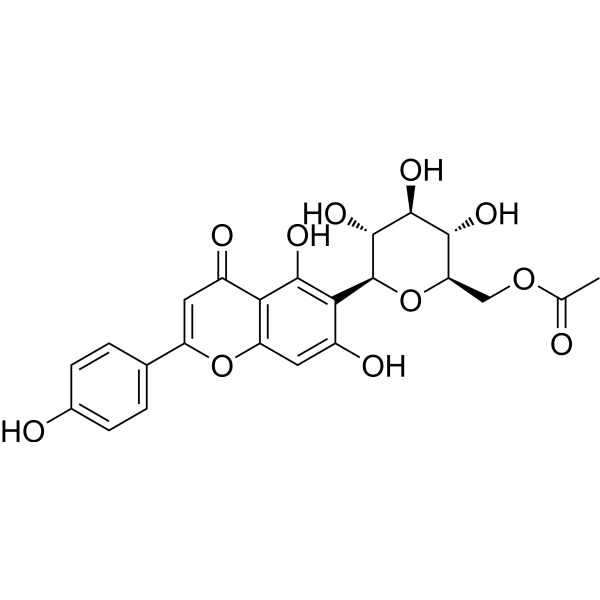 0 ImagesCat. No.: HY-N7167CAS No.: 1223097-20-8
6 "-O-Acetylisovitexin (compound 1) is a natural product that can be isolated from the aboveground part of Lespedeza juncea.
-
3-O-(2'E ,4'E-Decadienoyl)-20-O-acetylingenol
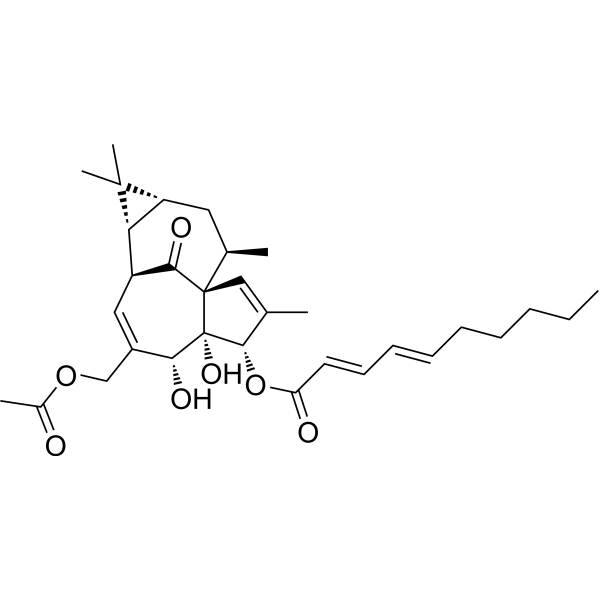 0 ImagesCat. No.: HY-N7168CAS No.: 466663-12-7
3-O-(2'E ,4'E-Decadienoyl)-20-O-acetylingenol is a ingenol-type diterpenoid that contains a 2,4-decadienoyloxy group.
-
Abieta-8,11,13-triene-7α,15,18-triol
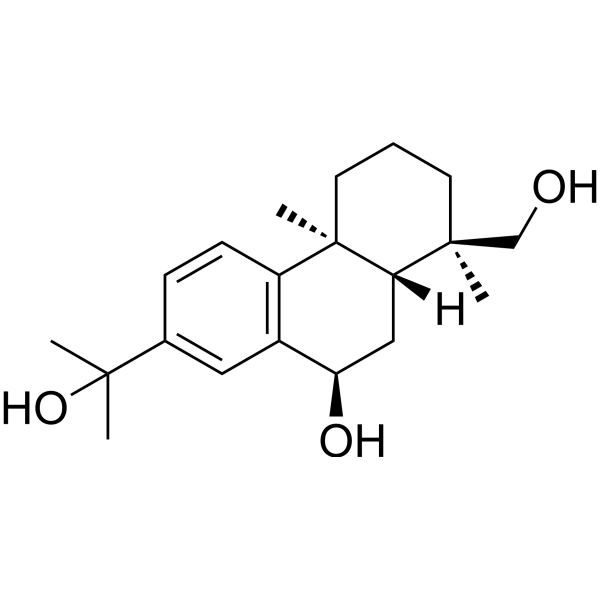 0 ImagesCat. No.: HY-N7178CAS No.: 337527-10-3
Abieta-8,11,13-triene-7α,15,18-triol is an abietane diterpene. Abieta-8,11,13-triene-7α,15,18-triol can be isolated from the CHCl3 extract of the cones of Larix koempferi.
-
9-Hydroxy-13E-labden-15-oic acid
 0 ImagesCat. No.: HY-N7184CAS No.: 132915-47-0
9-Hydroxy-13E-labden-15-oic acid is a natural diterpene.
-
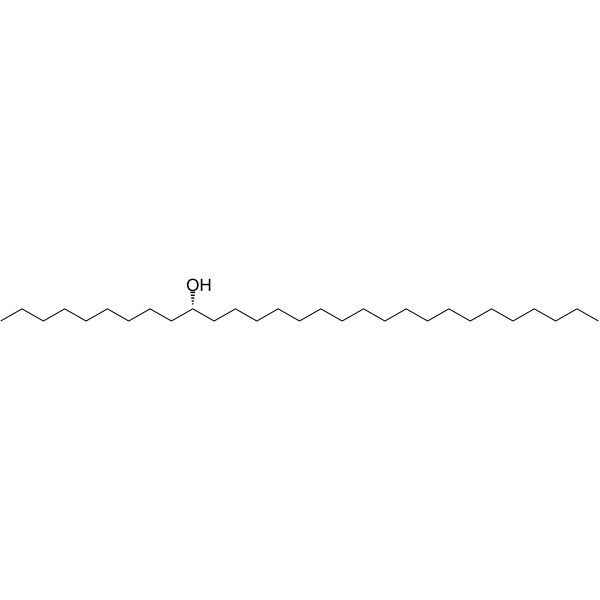
Lumequeic acid
 0 ImagesCat. No.: HY-N7187CAS No.: 67329-09-3
Lumequeic acid is a triacontenoic acid. Lumequeic acid can be isolated from the kernel oil of Ximenia species native to South Africa.
-
Yadanzioside G
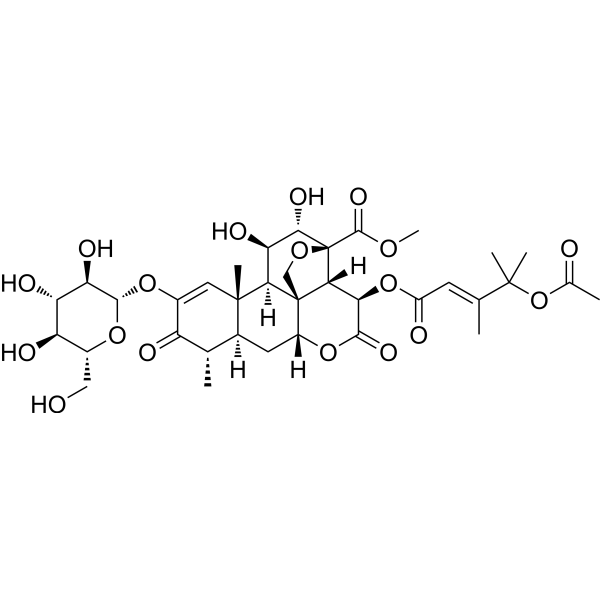 0 ImagesCat. No.: HY-N7191CAS No.: 95258-17-6
Yadanzioside G is a glucoside that can be isolated from Brucu javanica.
-
Stachartin A
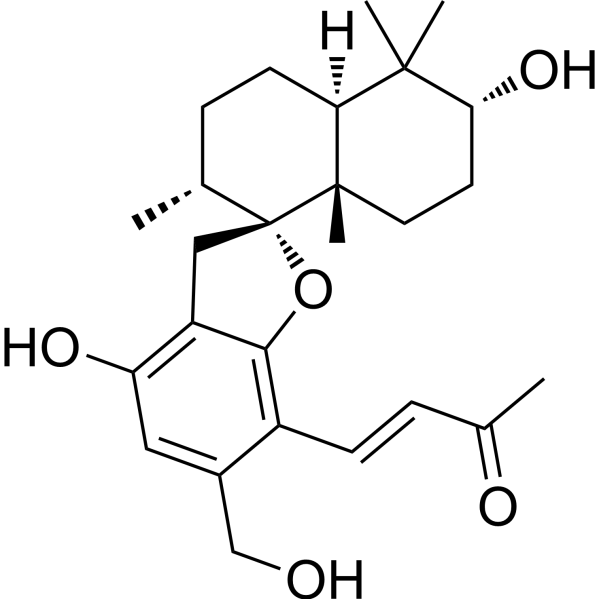 0 ImagesCat. No.: HY-N7251CAS No.: 1978388-54-3Synonyms: Stachybotrysin
Stachartin A is a phenylspirodrimane-type analogue. Stachartin A can be isolated from the tin mine tailings-associated fungus Stachybotrys chartarum.
-
Glucosinalbate potassium
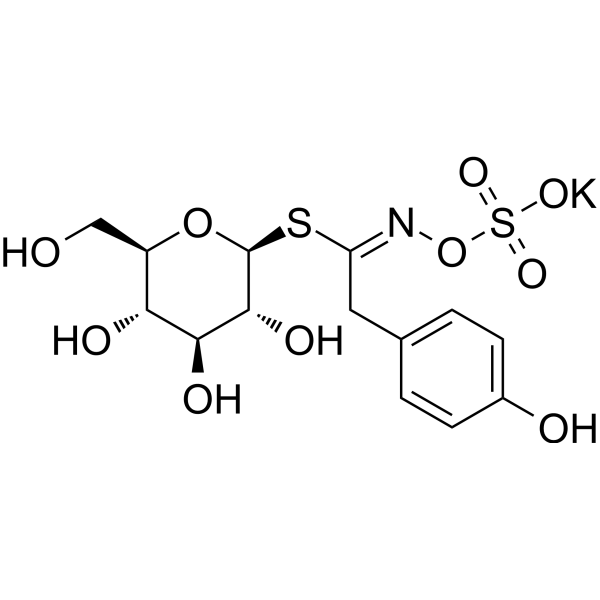 0 ImagesCat. No.: HY-N7257ACAS No.: 16411-05-5
Glucosinalbate potassium is a natural product that can be isolated from Arabidopsis thaliana.
-
Mudanpioside H
 0 ImagesCat. No.: HY-N7280CAS No.: 231280-71-0
Mudanpioside H is a monoterpene glycoside that can be isolated from Paeonia.