



SCH 563705
Based on 4 publication(s) in Google Scholar
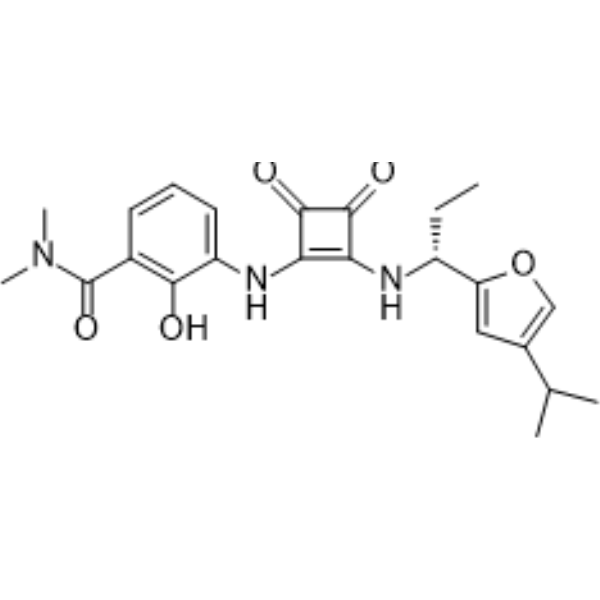
SCH 563705 is a potent and orally available CXCR2 and CXCR1 antagonist, with IC50s of 1.3 nM, 7.3 nM and Kis of 1 and 3 nM, respectively.
연구목적의 판매만을 진행합니다. 환자를 대상으로 한 판매는 하지 않습니다.
- Purity : 99.86%
- CAS No.: 473728-58-4
- 화학식: C23H27N3O5
- 분자량:425.48
-
보관:Powder -20°C, 3 years , 4°C, 2 years ; In solvent -80°C, 2 years , -20°C, 1 year

To place orders, for customer services and technical support, please contact: MedChemExpress USA
Tel: 609-228-6898 E-mail: [email protected] [email protected]


-
 Biological Activity
-
Chemical Information
-
용액&용해도
- 순도&문서
- References
-
 Help & FAQs


-
HY-15251
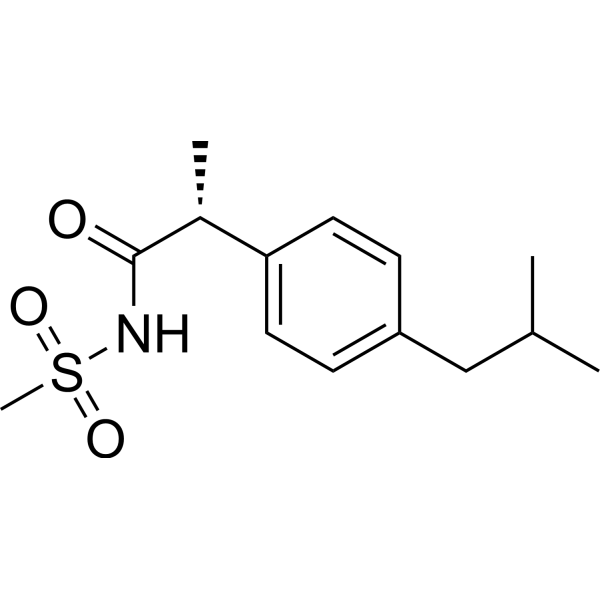
ReparixinCXCR1/2 Inhibitor -
HY-15252
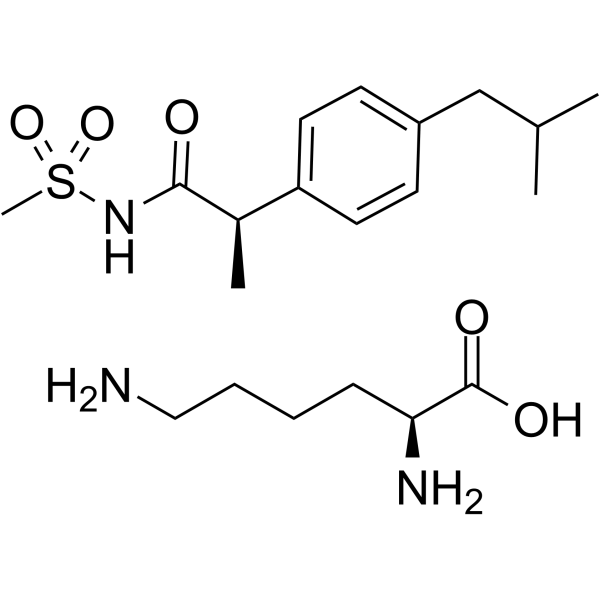
Reparixin L-lysine saltCXCR Inhibitor -
HY-19855
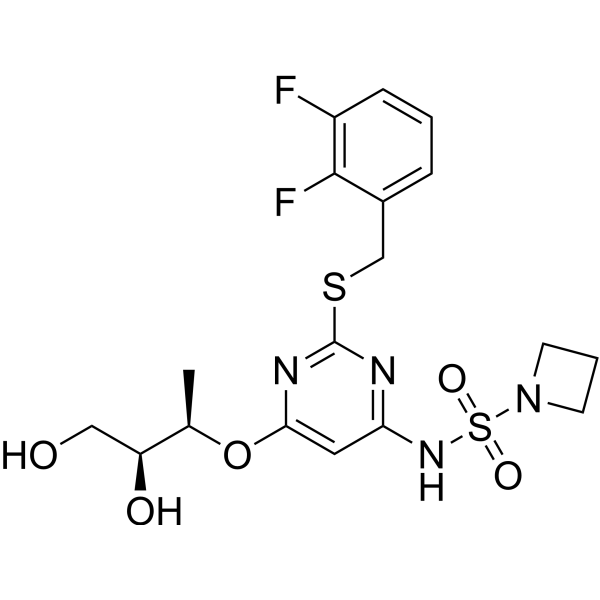
AZD-5069CXCR2 Antagonist -
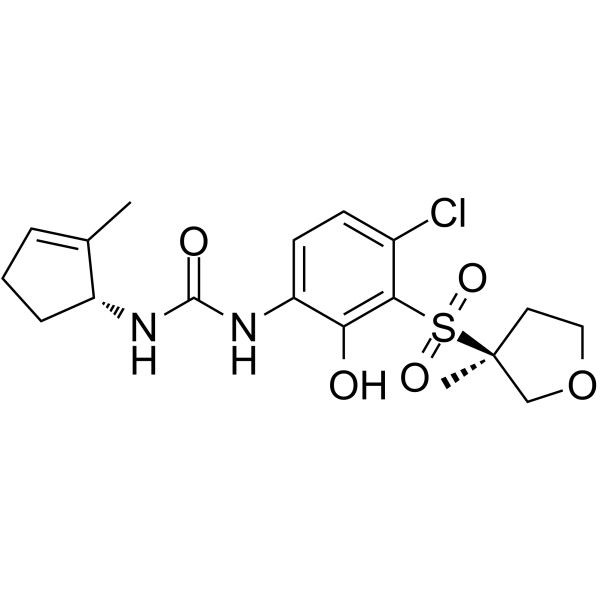
HY-120878
CXCR2-IN-2CXCR2 Antagonist -
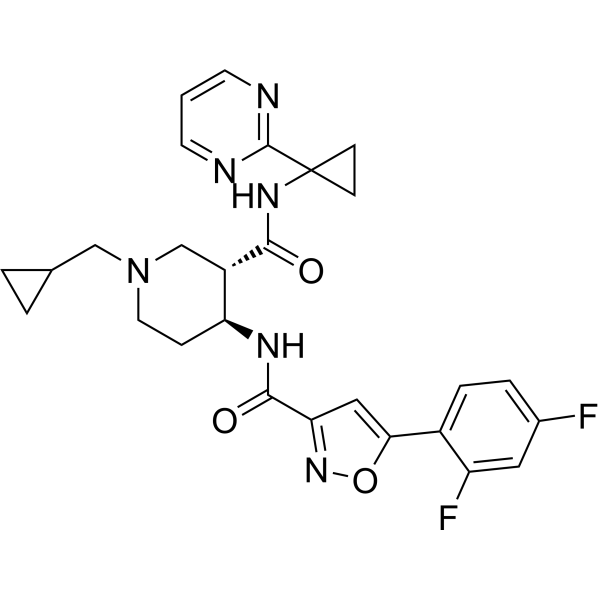
HY-142617
ACT-1004-1239CXCR Antagonist -
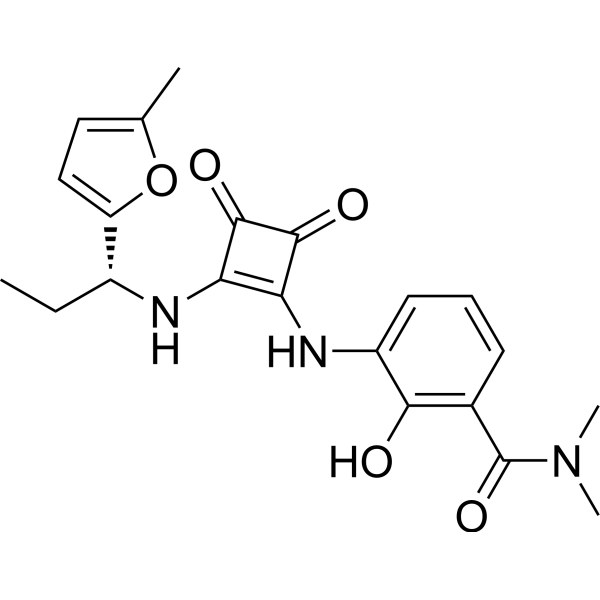
HY-10198
NavarixinCXCR1/2 Antagonist -
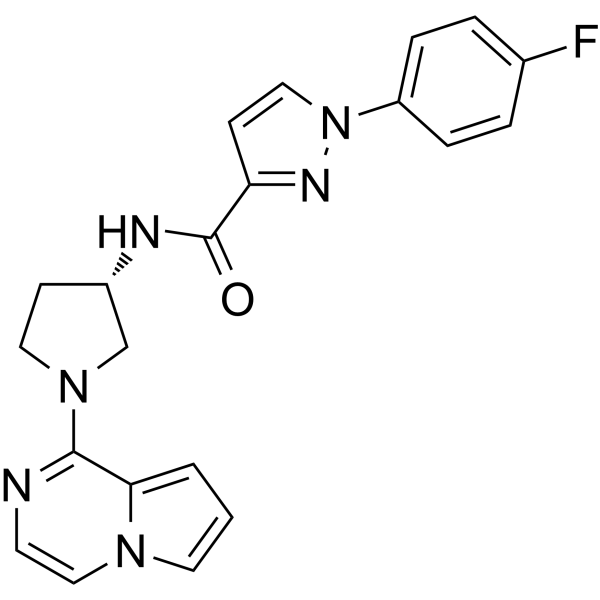
HY-139643
CXCR7 antagonist-1CXCR7 Antagonist -
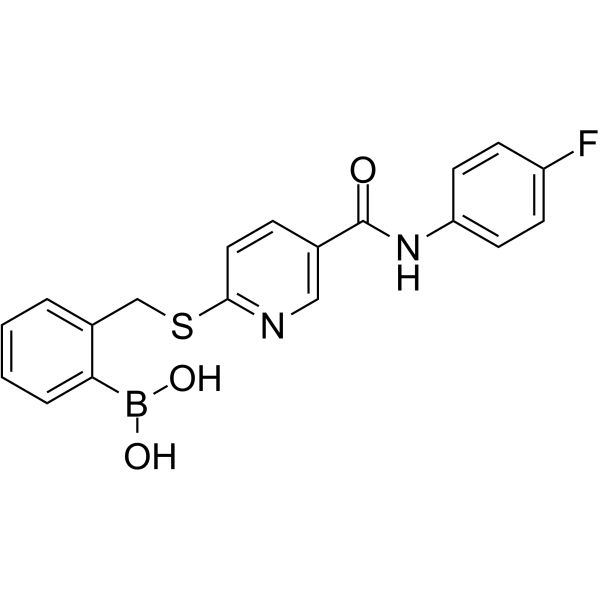
HY-12927
SX-517CXCR2/1 Antagonist -
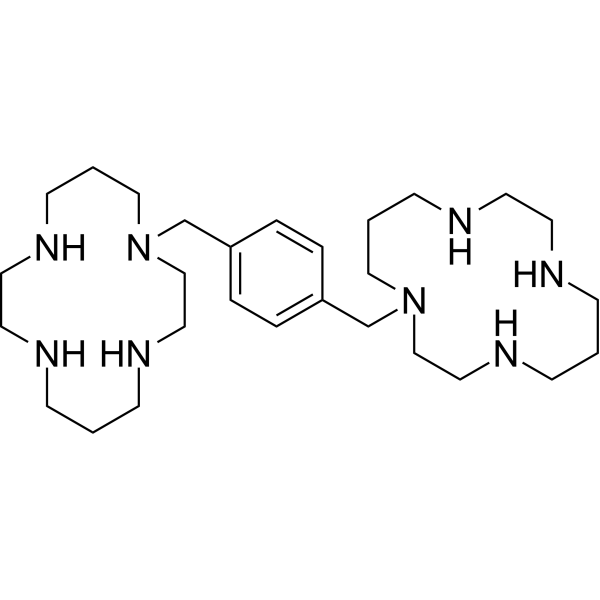
HY-10046
PlerixaforCXCR4 Antagonist -
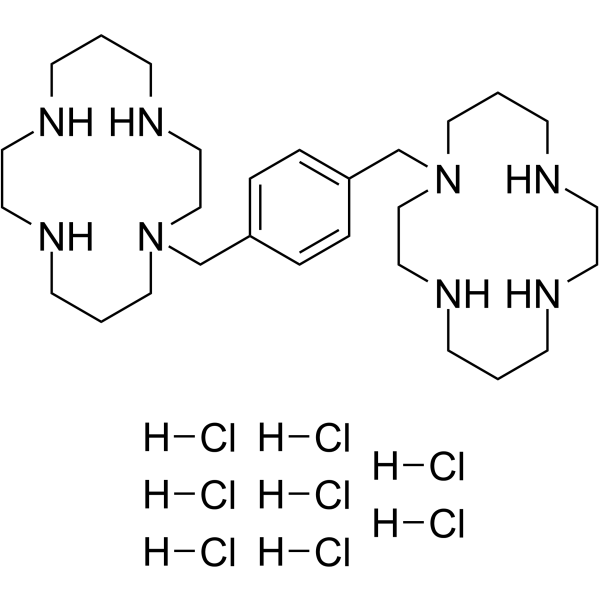
HY-50912
Plerixafor octahydrochlorideCXCR4 Antagonist -
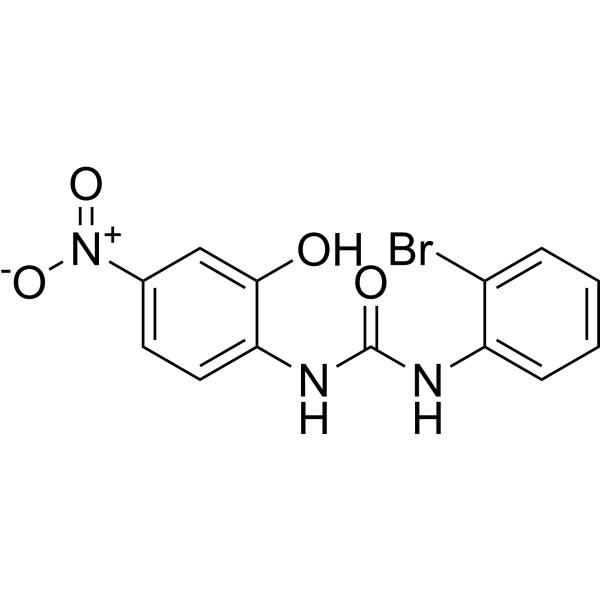
HY-16711
SB225002CXCR2 Antagonist -
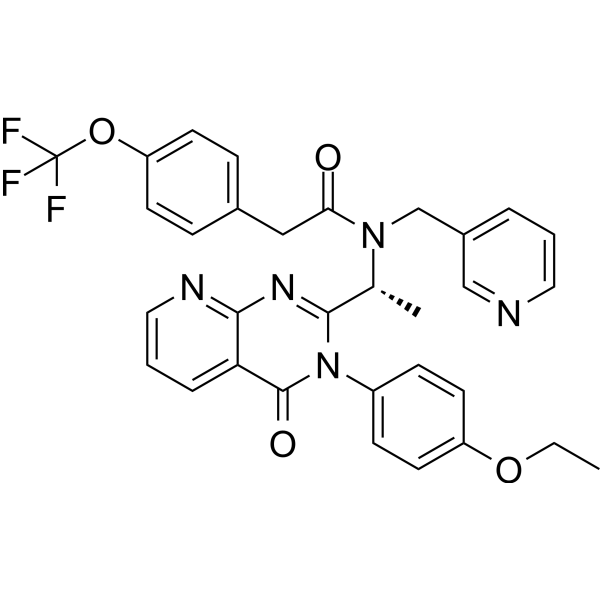
HY-15319
AMG 487CXCR3 Antagonist
Publications Citing Use of MedChemExpress (MCE) SCH 563705
More

Biological Activity
제품 설명
|
CXCR2 1 nM (Ki) |
CXCR1 3 nM (Ki) |
CXCR2 1.3 nM (IC50) |
CXCR1 7.3 nM (IC50) |
Mouse CXCR2 5.2 nM (IC50) |
Cellular Effect
|
Cell Line

|
Type | Value | Description | References |
|---|---|---|---|---|
| CHO | IC50 |
1.3 nM
Compound: 16
|
Displacement of [125I]IL8 from human CXCR2 expressed in CHO cells by SPA
Displacement of [125I]IL8 from human CXCR2 expressed in CHO cells by SPA
|
[PMID: 17459706] |
| CHO | IC50 |
7.3 nM
Compound: 16
|
Displacement of [125I]IL8 from human CXCR1 expressed in CHO cells by SPA
Displacement of [125I]IL8 from human CXCR1 expressed in CHO cells by SPA
|
[PMID: 17459706] |
| Neutrophil | IC50 |
0.5 nM
Compound: 16
|
Inhibition of GROalpha-induced migration of human neutrophils by chemotaxis assay
Inhibition of GROalpha-induced migration of human neutrophils by chemotaxis assay
|
[PMID: 17459706] |
| Neutrophil | IC50 |
37 nM
Compound: 16
|
Inhibition of IL8-induced migration of human neutrophils by chemotaxis assay
Inhibition of IL8-induced migration of human neutrophils by chemotaxis assay
|
[PMID: 17459706] |
In Vitro
SCH 563705 (Compound 16) is a potent and orally available CXCR2 and CXCR1 antagonist, with IC50s of 1.3 nM, 7.3 nM and Kis of 1 and 3 nM, respectively. SCH 563705 shows potent inhibition against both Gro-a and IL-8 induced human neutrophil migration (chemotaxis IC50 = 0.5 nM, against 30 nM of Gro-a; chemotaxis IC50 = 37 nM, against 3 nM of IL-8)[1]. SCH 563705 potently inhibits mouse CXCR2 (IC50 = 5.2 nM)[2].
MedChemExpress (MCE) has not independently confirmed the accuracy of these methods. They are for reference only.
In Vivo
MedChemExpress (MCE) has not independently confirmed the accuracy of these methods. They are for reference only.


Chemical Information
-
CAS No. 473728-58-4
-
Appearance Solid
-
분자량 425.48
-
화학식 C23H27N3O5
-
Color White to off-white
-
SMILES
O=C(C(NC1=CC=CC(C(N(C)C)=O)=C1O)=C2N[C@H](CC)C3=CC(C(C)C)=CO3)C2=O
-
선적
Room temperature in continental US; may vary elsewhere.
-
보관
Powder -20°C 3 years 4°C 2 years In solvent -80°C 2 years -20°C 1 year


Publications (4)
-
Journal Impact Factor
-
Most Recent
-
J Allergy Clin Immunol
IL-10 disrupts the Brd4-docking sites to inhibit LPS-induced CXCL8 and TNF-α expression in monocytes: Implications for chronic obstructive pulmonary disease. [Abstract]2015 Sep;136(3):781-791.e9. PMID: 26044852 -
Dev Cell
2018 Nov 19;47(4):409-424.e9. PMID: 30458137 -
Int Immunopharmacol
Genome-wide screen based on 2DG activated NLRP3 inflammasome reveals the priming signal of TLR2/4 to IKKβ but not IKKα. [Abstract]2025 Jan 3:145:113781. PMID: 39657538 -
Mucosal Immunol
Group 3 innate lymphoid cells regulate neutrophil migration and function in human decidua. [Abstract]2016 Nov;9(6):1372-1383. PMID: 26906405


용액&용해도
In Vitro:
DMSO : 100 mg/mL (235.03 mM; Need ultrasonic; Hygroscopic DMSO has a significant impact on the solubility of product, please use newly opened DMSO)
Please refer to the solubility information to select the appropriate solvent. Once prepared, please aliquot and store the solution to prevent product inactivation from repeated freeze-thaw cycles.
Storage method and period of stock solution: -80°C, 2 years; -20°C, 1 year. When stored at -80°C, please use it within 2 years. When stored at -20°C, please use it within 1 year.
Please refer to the solubility information to select the appropriate solvent. Once prepared, please aliquot and store the solution to prevent product inactivation from repeated freeze-thaw cycles.
Storage method and period of stock solution: -80°C, 2 years; -20°C, 1 year. When stored at -80°C, please use it within 2 years. When stored at -20°C, please use it within 1 year.
Concentration (start) × Volume (start) = Concentration (final) × Volume (final)
In Vivo:
Select the appropriate dissolution method based on your experimental animal and administration route.
- For the following dissolution methods, please ensure to first prepare a clear stock solution using an In Vitro approach and then sequentially add co-solvents:
- To ensure reliable experimental results, the clarified stock solution can be appropriately stored based on storage conditions. As for the working solution for In Vivo experiments, it is recommended to prepare freshly and use it on the same day.
- The percentages shown for the solvents indicate their volumetric ratio in the final prepared solution. If precipitation or phase separation occurs during preparation, heat and/or sonication can be used to aid dissolution.
Add each solvent one by one: 10% DMSO 40% PEG300 5% Tween-80 45% Saline
Solubility: ≥ 5 mg/mL (11.75 mM); Clear solution
This protocol yields a clear solution of ≥ 5 mg/mL (saturation unknown).
Taking 1 mL working solution as an example, add 100 μL DMSO stock solution (50.0 mg/mL) to 400 μL PEG300, and mix evenly; then add 50 μL Tween-80 and mix evenly; then add 450 μL Saline to adjust the volume to 1 mL.
Preparation of Saline: Dissolve 0.9 g sodium chloride in ddH₂O and dilute to 100 mL to obtain a clear Saline solution.
Add each solvent one by one: 10% DMSO 90% (20% SBE-β-CD in Saline)
Solubility: ≥ 5 mg/mL (11.75 mM); Clear solution
This protocol yields a clear solution of ≥ 5 mg/mL (saturation unknown).
Taking 1 mL working solution as an example, add 100 μL DMSO stock solution (50.0 mg/mL) to 900 μL 20% SBE-β-CD in Saline, and mix evenly.
Preparation of 20% SBE-β-CD in Saline (4°C, storage for one week): 2 g SBE-β-CD powder is dissolved in 10 mL Saline, completely dissolve until clear.
In Vivo Dissolution Calculator
Please enter the basic information of animal experiments:
-
-
-
-
Recommended: Prepare an additional quantity of animals to account for potential losses during experiments.
Please enter your animal formula composition:
-
%DMSO +
Recommended: Keep the proportion of DMSO in working solution below 2% if your animal is weak.
-
%+
-
+%Tween-80 + +
-
%Saline +
The co-solvents required include: DMSO, . All of co-solvents are available by MedChemExpress (MCE). , Tween 80. All of co-solvents are available by MedChemExpress (MCE).
Working solution concentration: 0.22 mg/mL
Method for preparing stock solution: mg drug dissolved in μL DMSO. Stock solution concentration: mg/mL.
1. Take μL DMSO stock solution;
2. Add μL .
μL , mix evenly;
3. Then add μL Tween 80, mix evenly;
4. Then add μL
Please ensure that the stock solution in the first step is dissolved to a clear state, and add co-solvents in sequence. You can use ultrasonic heating (ultrasonic cleaner, recommended frequency 20-40 kHz), vortexing, etc. to assist dissolution.


순도&문서
-
Data Sheet (278 KB)
-
SDS (762 KB)
- English - EN (762 KB)
- Français - FR (762 KB)
- Deutsch - DE (762 KB)
- Norwegian - NO (762 KB)
- Español - ES (762 KB)
- Swedish - SV (762 KB)
- Italian - IT (762 KB)
- Korean - KR (762 KB)
- Portuguese - PT (762 KB)
-
Handling Instructions (2659 KB)
References
[1]. Chao J, et al. C(4)-alkyl substituted furanyl cyclobutenediones as potent, orally bioavailable CXCR2 and CXCR1 receptor antagonists. Bioorg Med Chem Lett. 2007 Jul 1;17(13):3778-83. [Content Brief]
[2]. Min SH, et al. Pharmacological targeting reveals distinct roles for CXCR2/CXCR1 and CCR2 in a mouse model of arthritis. Biochem Biophys Res Commun. 2010 Jan 1;391(1):1080-6. [Content Brief]


Complete Stock Solution Preparation Table
Please refer to the solubility information to select the appropriate solvent. Once prepared, please aliquot and store the solution to prevent product inactivation from repeated freeze-thaw cycles.
Storage method and period of stock solution: -80°C, 2 years; -20°C, 1 year. When stored at -80°C, please use it within 2 years. When stored at -20°C, please use it within 1 year.
| Optional Solvent | Concentration Solvent Mass | 1 mg | 5 mg | 10 mg | 25 mg |
|---|---|---|---|---|---|
| DMSO | 1 mM | 2.3503 mL | 11.7514 mL | 23.5029 mL | 58.7572 mL |
| 5 mM | 0.4701 mL | 2.3503 mL | 4.7006 mL | 11.7514 mL | |
| 10 mM | 0.2350 mL | 1.1751 mL | 2.3503 mL | 5.8757 mL | |
| 15 mM | 0.1567 mL | 0.7834 mL | 1.5669 mL | 3.9171 mL | |
| 20 mM | 0.1175 mL | 0.5876 mL | 1.1751 mL | 2.9379 mL | |
| 25 mM | 0.0940 mL | 0.4701 mL | 0.9401 mL | 2.3503 mL | |
| 30 mM | 0.0783 mL | 0.3917 mL | 0.7834 mL | 1.9586 mL | |
| 40 mM | 0.0588 mL | 0.2938 mL | 0.5876 mL | 1.4689 mL | |
| 50 mM | 0.0470 mL | 0.2350 mL | 0.4701 mL | 1.1751 mL | |
| 60 mM | 0.0392 mL | 0.1959 mL | 0.3917 mL | 0.9793 mL | |
| 80 mM | 0.0294 mL | 0.1469 mL | 0.2938 mL | 0.7345 mL | |
| 100 mM | 0.0235 mL | 0.1175 mL | 0.2350 mL | 0.5876 mL |


SCH 563705 Related Classifications
HY-10011 Related Classifications
 Powered by Bioz