



Caspase 3 Inducer
- 1
- 2
-
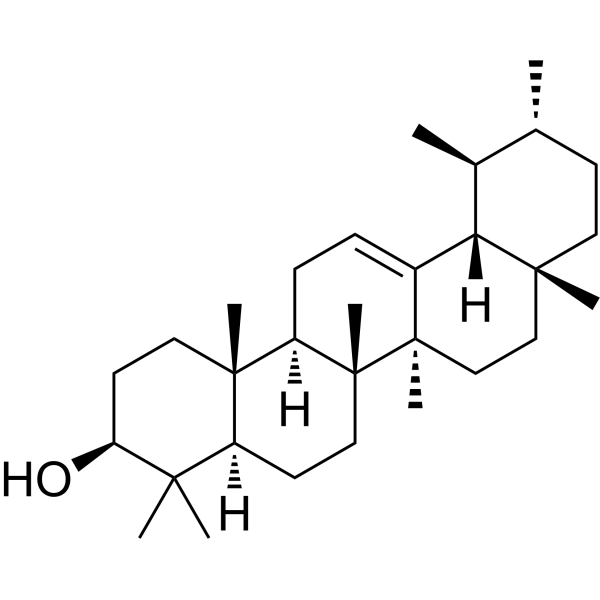
α-Amyrin
 0 Images
α-Amyrin is a pentacyclic triterpenoid compound with oral activity. α-Amyrin activates the ERK and GSK-3β signaling pathways. α-Amyrin can inhibit cancer cells proliferation and induce apoptosis. α-Amyrin shows anti-bacterial and anti-inflammation activity. α-Amyrin can reduce blood glucose level. α-Amyrin can be used for the researches of cancer, infection, inflammation, metabolic disease and neurological disease, such as breast cancer, Streptococcus oralis infection, skin inflammation and diabetes.
-
Elevenostat
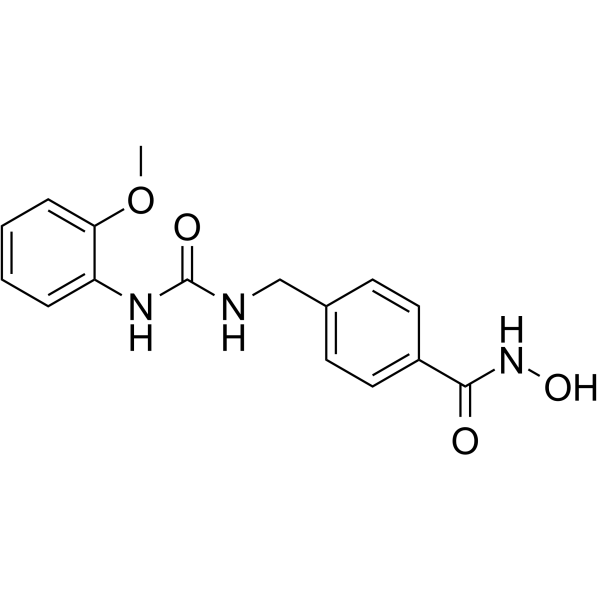 0 ImagesCat. No.: HY-145757CAS No.: 1454902-97-6Synonyms: JB3-22
Elevenostat (JB3-22) is a selective HDAC11 inhibitor with an IC50 of 0.235 µM. Elevenostat can induce apoptosis of multiple myeloma cells and has anti-tumor effect. In addition, Elevenostat inhibits the maturation of mouse oocytes.
-
ALKBH5-IN-5
 0 Images
ALKBH5-IN-5 is a highly selective ALKBH5 (IC50 = 0.62 μM, Kd = 804 nM). ALKBH5-IN-5 disrupts ALKBH5 binding to m6A-RNA and 6mA-DNA substrates. ALKBH5-IN-5 promotes differentiation, induces apoptosis, cause G2-M phase arrest and exerts strong antiproliferative effects in cancer cells. ALKBH5-IN-5 reduces TACC3 and MYC protein levels and increases cleaved caspase-3 levels. ALKBH5-IN-5 exerts antitumor activity in tumor xenograft mice models. ALKBH5-IN-5 can be used for the research of acute myeloid leukemia.
-
ONC213
 0 Images
ONC213 is an orally active αKGDH inhibitor. ONC213 can suppress mitochondrial respiration and elevate α-ketoglutarate levels by inhibiting αKGDH activity. ONC213 can induce cells apoptosis by inducing mitochondrial stress response and inhibiting translation of MCL-1. ONC213 can be used for the research of cancer, such as acute myeloid leukemia research (AML).
-
SK2188
 0 ImagesSynonyms: JB325
SK2188 (JB325) is a selective AURKA PROTAC degrader with a DC50 of 3.9 nM. SK2188 recruits CRBN E3 ubiquitin ligase to target and degrade AURKA, abrogating both its catalytic and non-kinase functions, which leads to the destabilization and degradation of the oncogenic protein MYCN, ultimately inducing replication stress, DNA damage and apoptosis. SK2188 is applicable to research related to neuroblastoma.
-
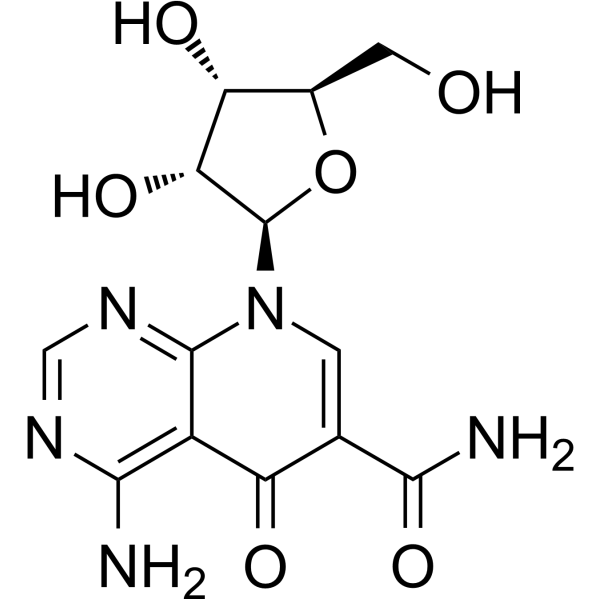
API-1
 0 Images
API-1 is a potent selective Akt/PKB inhibitor that reduces the level of phosphorylated Akt (IC50 = 0.8 μM). API-1 binds to the PH domain and inhibits Akt membrane translocation. API-1 induces c-FLIP degradation. API-1 reduces cell proliferation and induces apoptosis. API-1 decreases tumor growth in mouse xenograft model.
-
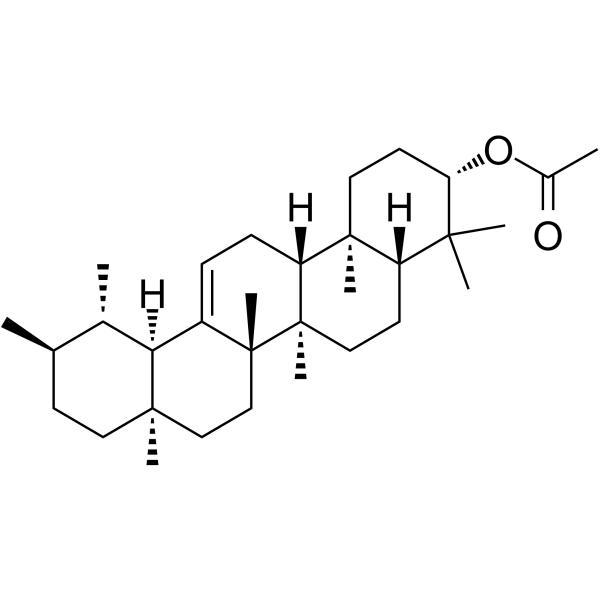
α-Amyrin acetate
 0 Images
α-Amyrin acetate is a pentacyclic triterpenoid compound with oral activity. α-Amyrin acetate can inhibit cancer cells proliferation and induce apoptosis. α-Amyrin acetate can reduce blood glucose level. α-Amyrin acetate can be used for the researches of cancer and metabolic disease, such as breast cancer and diabetes.
-
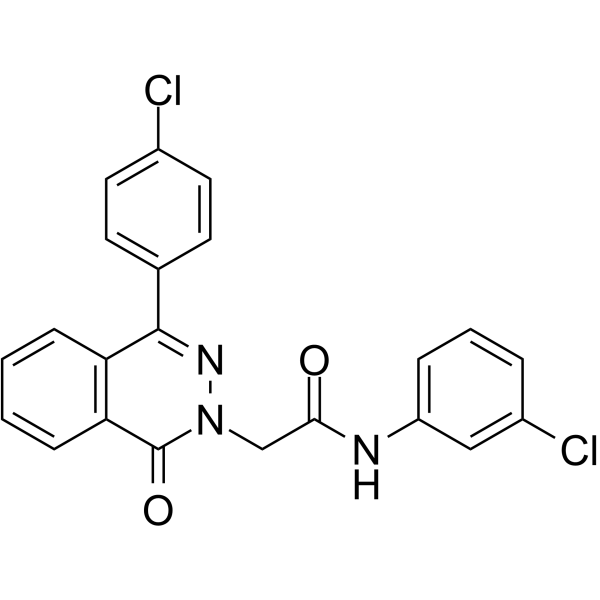
PARP-1-IN-2
 0 Images
PARP-1-IN-2 (compound 11g) is a potent PARP1 inhibitor, with an IC50 of 149 nM, and ADME prediction indicates it has high blood-brain barrier permeability. PARP1-IN-2 shows significantly potent anti-proliferative activity against Human lung adenocarcinoma epithelial cell line A549. PARP1-IN-2 can induce A549 cells apoptosis.
-
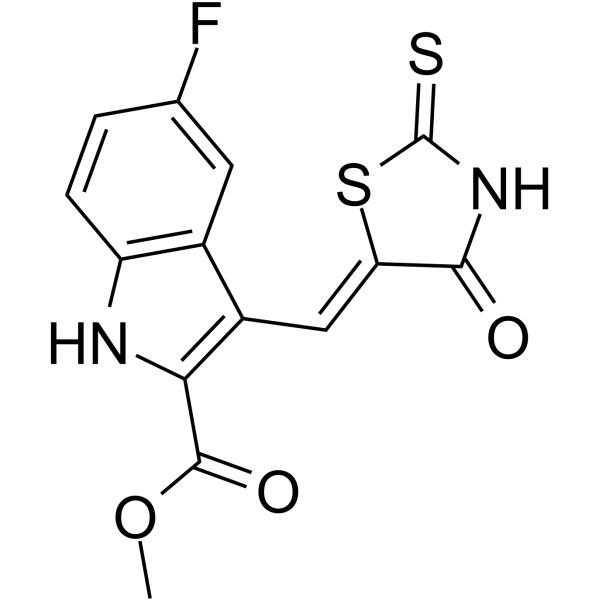
Anticancer agent 43
 0 Images
Anticancer Agent 43 is a potent anticancer agent. Anticancer Agent 43 induces apoptosis by caspase 3, PARP1, and Bax dependent mechanisms. Anticancer Agent 43 induces DNA damage.
-
PROTAC FTO degrader 1
 0 ImagesCat. No.: HY-175885
PROTAC FTO degrader 1 is a Fat Mass and Obesity-associated Protein (FTO) PROTAC degrader. PROTAC FTO degrader 1 selectively degrades FTO depending on VHL E3 ligase and ubiquitin-proteasome system. PROTAC FTO degrader 1 can increase m6A modifications on mRNAs associated with ribosome biogenesis and promote their YTHDF2-mediated decay. PROTAC FTO degrader 1 can inhibit cancer cells proliferation and induce apoptosis. PROTAC FTO degrader 1 can be used for the research of cancer, such as acute myeloid leukemia (AML).
-
Apoptosis inducer 19
 0 Images
Apoptosis inducer 19 (Compound 7g) is an Apoptosis inducer. Apoptosis inducer 19 elevates expression of pro-apoptotic proteins (Bax and caspase-3) and downregulates anti-apoptotic protein (Bcl-2). Apoptosis inducer 19 upregulates cellular reactive oxygen species (ROS) levels and disrupts mitochondrial membrane potential (MMP). Apoptosis inducer 19 can be used for triple-negative breast cancer (TNBC) research.
-
Procyanidin B2-3'-O-gallate
 0 ImagesCat. No.: HY-N16483CAS No.: 109280-47-9
Procyanidin B2-3'-O-gallate is a mono-gallate ester that can be found in grape seed extract. Procyanidin B2-3'-O-gallate induces cleavage of caspase-9, caspase-3, and PARP, reduces levels of Bcl-2, Bcl-Xl, and androgen receptor and induces apoptosis. Procyanidin B2-3'-O-gallate can be used for the research of prostate cancer.
-
BAG3/HSP70-IN-1
 0 ImagesCat. No.: HY-170944
BAG3/HSP70-IN-1 (compound 16) is the first-in-class BAG3 and HSP70 dual inhibitor. BAG3/HSP70-IN-1 binds to BAG3 full-length, BAG3-BD, and HSP70 proteins with Kds of 33.10 μM, 27.90 μM, and 33.80 μM, respectively. BAG3/HSP70-IN-1 inhibits HeLa cells with an IC50 of 49.46 μM. BAG3/HSP70-IN-1 induces apoptosis by activating caspase 3 and caspase 9 levels in HeLa cells. BAG3/HSP70-IN-1 elevates p21 levels while reduces FOXM1 expression in HeLa cells. BAG3/HSP70-IN-1 decreases ATPase activity.
-
ZAK-IN-2
 0 ImagesCat. No.: HY-182103CAS No.: 3033697-19-4
ZAK-IN-2 (Compound 8) is a selective, covalent ZAK inhibitor with an IC50 of 11.5 nM. ZAK-IN-2 forms a covalent bond with Cys22 in the P-loop of ZAK to inhibit its kinase activity. ZAK-IN-2 inhibits the phosphorylation of the downstream target p38. ZAK-IN-2 blocks Doxorubicin (HY-15142A)-induced cleavage of Caspase 3. ZAK-IN-2 is applicable to research related to myocardial hypertrophy.
-
PROTAC PI3K/110β degrader-1
 0 ImagesCat. No.: HY-176421CAS No.: 3070438-85-3
PROTAC PI3K/110β degrader-1 is a VHL-recruiting PROTAC degrader targeting PI3K/110β, with DC50 values of 0.416 μM (MCF-7) and 19.66 μM (A549), respectively. PROTAC PI3K/110β degrader-1 recruits VHL to induce proteasomal degradation of PI3K/110β. It activates endoplasmic reticulum stress (ERS)-mediated mitochondrial apoptosis via the PERK/ATF4/CHOP unfolded protein response (UPR) pathway, downregulates p-AKT and Bcl-2, upregulates Bax, cleaved-caspase-9 and cleaved-caspase-3, inhibits the expression and activity of P-gp, and exerts synergistic anti-tumor effects with Doxorubicin (Adriamycin, ADM) (HY-15142A) and Cisplatin (DDP) (HY-17394). PROTAC PI3K/110β degrader-1 can be used in research related to multidrug-resistant cancers.
-
MA191
 0 ImagesCat. No.: HY-175273
MA191 is a FLT3 PROTAC degrader. MA191 targets and degrades mutant FLT3-ITD protein by recruiting the VHL E3 ligase in a manner dependent on ubiquitination and BIM, thereby blocking aberrant downstream MAPK/STAT5 signaling pathways and inducing apoptosis. MA191 can be used in research related to acute myeloid leukemia.
-
EGFR-IN-197
 0 ImagesCat. No.: HY-181502CAS No.: 3060883-16-8
EGFR-IN-197 is an EGFR inhibitor with IC50 values of 19.5 nM and 12.0 nM against EGFRL858R/T790M and EGFRL858R/T790M/C797S, respectively. EGFR-IN-197 arrests the cell cycle of NCI-H1975 cells at the G2/M phase, while inhibiting their proliferation, colony formation and migration; it also inhibits mitochondrial translocation and upregulates mitochondrial H2S levels. EGFR-IN-197 disrupts anti-apoptotic signaling pathways by regulating apoptosis-related proteins; it induces DNA damage and activates pro-apoptotic pathways to trigger apoptosis. EGFR-IN-197 can be used in studies related to non-small cell lung cancer (NSCLC).
-
Antitumor agent-214
 0 ImagesCat. No.: HY-181720CAS No.: 1911631-77-0
Antitumor agent-214 is a chalcone analogue with anti-tumor activity. Antitumor agent-214 induces cell cycle arrest and apoptosis in tumor cells, disrupts mitochondrial metabolism, and upregulates the expression of caspase 3, caspase 7 and caspase 9, downregulates PARP1. Antitumor agent-214 can be used for anti-tumor research related to colorectal cancer, breast cancer, lung cancer, and cervical cancer.
-
CAIX/CDK-2-IN-1
 0 ImagesCat. No.: HY-179022
CAIX/CDK-2-IN-1 is a dual-acting inhibitor of carbonic anhydrase IX (CA IX) and cyclin-dependent kinase-2 (CDK-2) with IC50 values of 0.29 μM and 0.32 μM. The zein nanoparticls of CAIX/CDK-2-IN-1 can induce cancer cells apoptosis. CAIX/CDK-2-IN-1 can be used for the research of cancer, such as lung cancer.
-
BW-AQ-113
 0 ImagesCat. No.: HY-177208CAS No.: 1537900-10-9
BW-AQ-113 is an Anthraquinone (HY-N0354) derivative. BW-AQ-113 can specifically degrade MDM2 and activate the p53 pathway. BW-AQ-113 can induce apoptosis by downregulating anti-apoptotic gene Bcl-2 and regulating pro-apoptotic gene Bax and CASP3. BW-AQ-113 can be used for research of p53 wild-type hematological malignancies.
- 1
- 2



