



Nav1.6
Naᵥ1.6, encoded by SCN8A, is a major neuronal voltage-gated sodium channel that supports action potential initiation and propagation in the nervous system[1]. Mechanistically, Naᵥ1.6 contributes persistent and resurgent sodium currents, which sustain repetitive firing and shape neuronal excitability[2][3]. Its ankyrinG-binding motif targets the channel to axon initial segments and nodes of Ranvier, linking channel localization to spike initiation and saltatory conduction[4]. In disease models, SCN8A mutations associate with epileptic encephalopathy, intellectual disability, and altered persistent or resurgent current properties[1][5]. Compared with related isoforms, human Naᵥ1.6 generates larger resurgent currents than human Naᵥ1.1, making isoform distinction important in sodium channel electrophysiology[6]. For experimental applications, cannabidiol preferentially reduced resurgent and persistent currents from wild-type and epilepsy-associated mutant Naᵥ1.6 channels, supporting its use as a tool for studying aberrant Naᵥ1.6 activity[7].
References:
- [1]. O'Brien JE, et al. Sodium channel SCN8A (Nav1.6): properties and de novo mutations in epileptic encephalopathy and intellectual disability. Front Genet. 2013 Oct 28;4:213. [Content Brief]
- [2]. Do MT, et al. Sodium currents in subthalamic nucleus neurons from Nav1.6-null mice. J Neurophysiol. 2004 Aug;92(2):726-33. [Content Brief]
- [3]. Levin SI, et al. Impaired motor function in mice with cell-specific knockout of sodium channel Scn8a (NaV1.6) in cerebellar purkinje neurons and granule cells. J Neurophysiol. 2006 Aug;96(2):785-93. [Content Brief]
- [4]. Gasser A, et al. An ankyrinG-binding motif is necessary and sufficient for targeting Nav1.6 sodium channels to axon initial segments and nodes of Ranvier. J Neurosci. 2012 May 23;32(21):7232-43. [Content Brief]
- [5]. Hargus NJ, et al. Evidence for a role of Nav1.6 in facilitating increases in neuronal hyperexcitability during epileptogenesis. J Neurophysiol. 2013 Sep;110(5):1144-57. [Content Brief]
- [6]. Patel RR, et al. Human Nav1.6 Channels Generate Larger Resurgent Currents than Human Nav1.1 Channels, but the Navβ4 Peptide Does Not Protect Either Isoform from Use-Dependent Reduction. PLoS One. 2015 Jul 16;10(7):e0133485. [Content Brief]
- [7]. Patel RR, et al. Aberrant epilepsy-associated mutant Nav1.6 sodium channel activity can be targeted with cannabidiol. Brain. 2016 Aug;139(Pt 8):2164-81. [Content Brief]
All Product Categories
-
Nav1.6 Related Products (13)
Related Products (13)

- 1
-
Zandatrigine
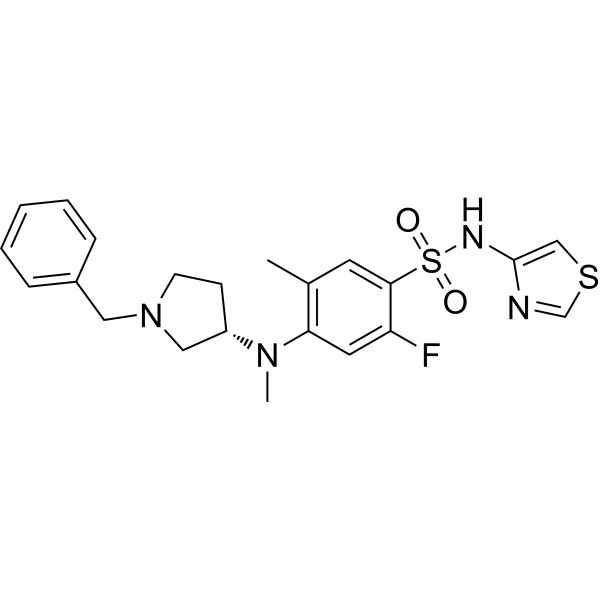 0 ImagesSynonyms: NBI-921352; XEN901Zandatrigine (NBI-921352; XEN901) is a selective, orally active, voltage-gated sodium channel NaV1.6/SCN8A inhibitor that can penetrate the blood-brain barrier. Zandatrigine inhibits sodium influx by non-covalently binding to the VSD4 structure of NaV1.6, blocking the persistent and resuscitative currents under pathological conditions. Zandatrigine can reduce neuronal hyperexcitability and reduce epileptic seizures. Zandatrigine is 134-756-fold selective for other isoforms such as NaV1.1 and NaV1.2, and has minimal effect on NaV1.1 expressed by inhibitory interneurons. Zandatrigine can be used to study NaV1.6-mediated neuroexcitability diseases such as SCN8A-related developmental epileptic encephalopathy (SCN8A-DEE) and adult focal epilepsy.
-
ICA-121431
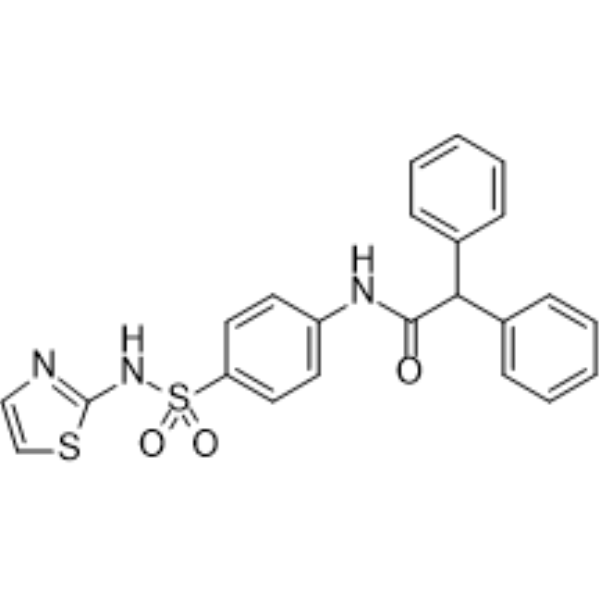 0 ImagesICA-121431 is a nanomolar potent and broad-spectrum voltage-gated sodium channel (Nav) blocker, shows equipotent selectivity for human Nav1.1 and Nav1.3 subtypes with IC50 values of 13 nM and 23 nM, respectively. ICA-121431 shows less potent inhibition of Nav1.2 (IC50=240 nM) and 1,000 fold selectivity against Nav1.4, Nav1.6, and the TTX-resistant human Nav1.5 and Nav1.8 channels (IC50s >10 μM).
-
PF-06456384 trihydrochloride
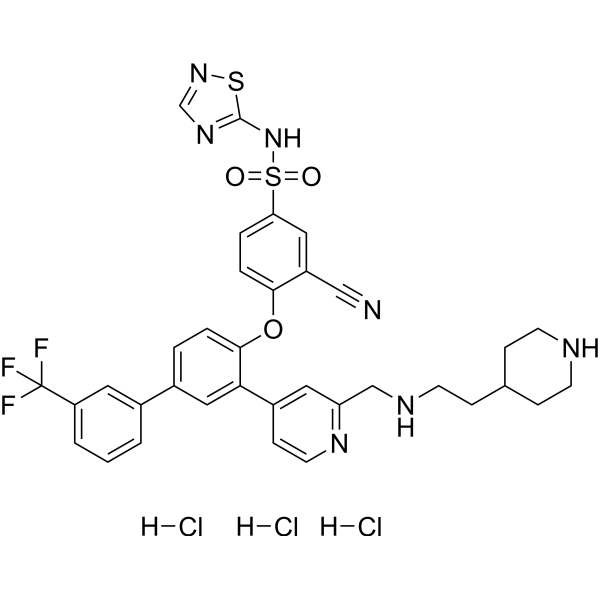 0 ImagesPF-06456384 trihydrochloride is an extremely potent and selective Nav1.7 sodium channel blocker (IC50: 0.01 nM for hNaV1.7; 75 nM for rNaV1.7; <0.1 nM for mNaV1.7). PF-06456384 trihydrochloride shows no significant analgesic efficacy in the mouse Formalin pain model.
-
XPC-5462
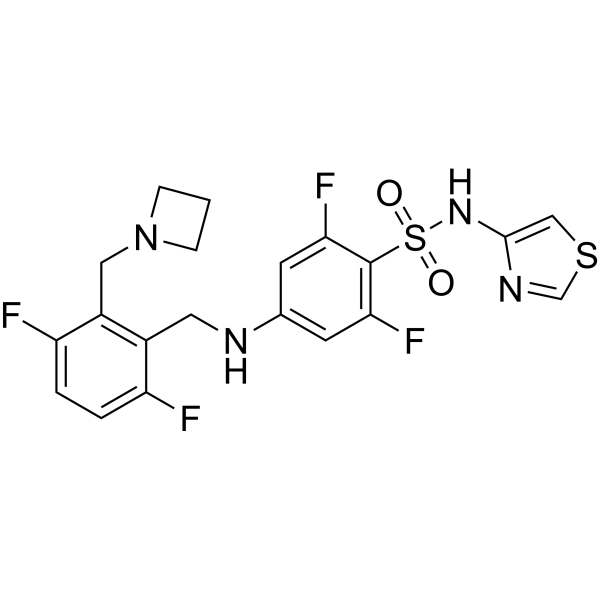 0 ImagesXPC-5462 is a selective NaV1.6/1.2 inhibitor, with an IC50 of 0.0103 μM against hNaV1.6, 0.0137 μM against mNaV1.6, and 0.0109 μM against hNaV1.2. XPC-5462 significantly reduces epileptiform discharges. XPC-5462 is applicable for epilepsy-related research.
-
GDC-0310
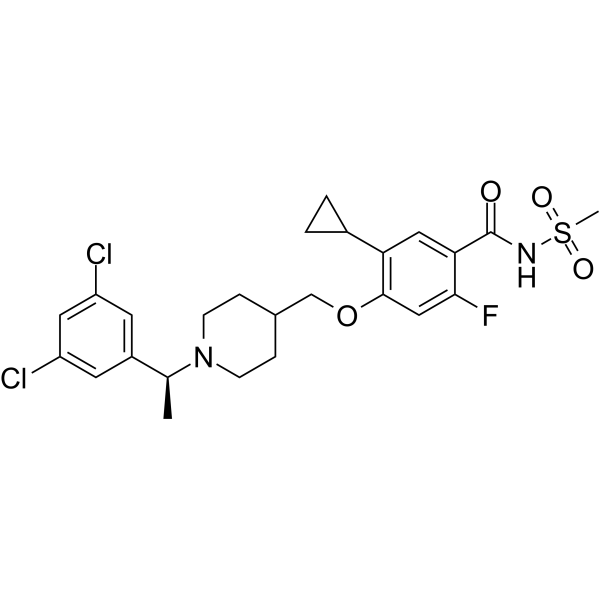 0 ImagesGDC-0310 is a selective acyl-sulfonamide Nav1.7 inhibitor, with an IC50 of 0.6 nM for hNav1.7.
-
Nav1.7-IN-23
 0 ImagesCat. No.: HY-189066CAS No.: 3138159-82-4Nav1.7-IN-23 is an orally active, selective NaV1.7 inhibitor. Nav1.7-IN-23 exhibits electrophysiological regulatory effects in mouse dorsal root ganglion neurons. Nav1.7-IN-23 can be used for the research of acute pain, chronic inflammatory pain and neuropathic pain.
-
XPC-7724
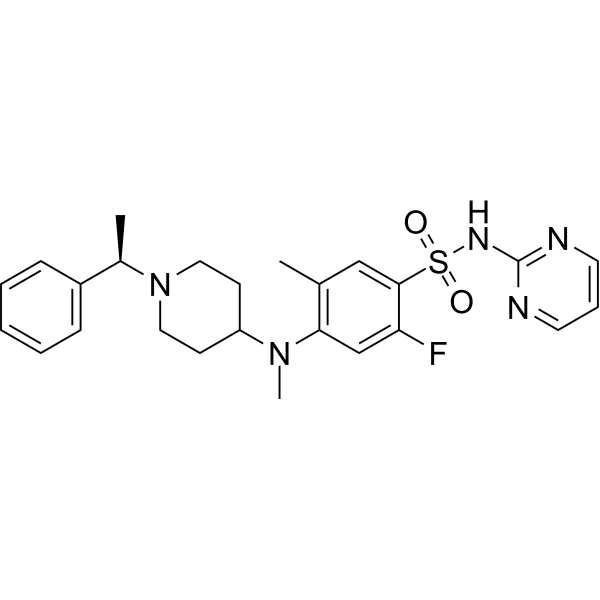 0 ImagesXPC-7724 is a selective Nav1.6 channel inhibitor with a IC50 value of 0.078 μM. XPC-7724 can be used in the study of neurological diseases.
-
Funapide
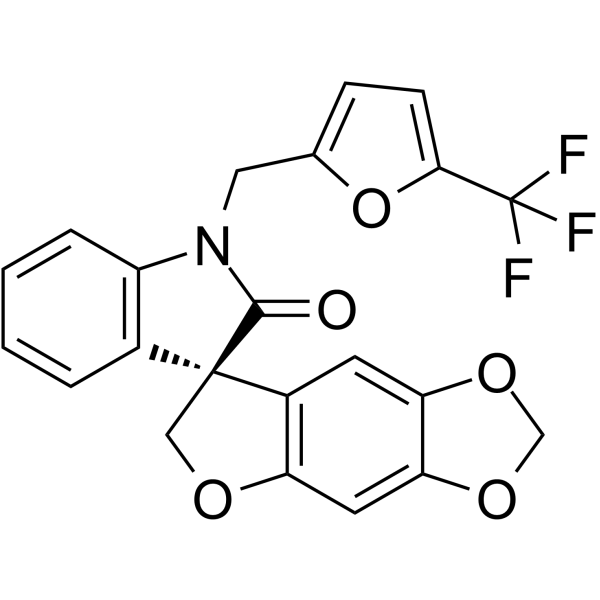 0 ImagesSynonyms: TV 45070; XEN402Funapide (TV 45070; XEN402) is an orally active inhibitor of voltage-gated sodium channels (VGSC) in the peripheral nervous system with IC50 values ??of 84 nM and 54 nM for Nav1.5 and Nav1.7, respectively. Funapide has analgesic effects.
-
NaV1.2/1.6 channel blocker-1
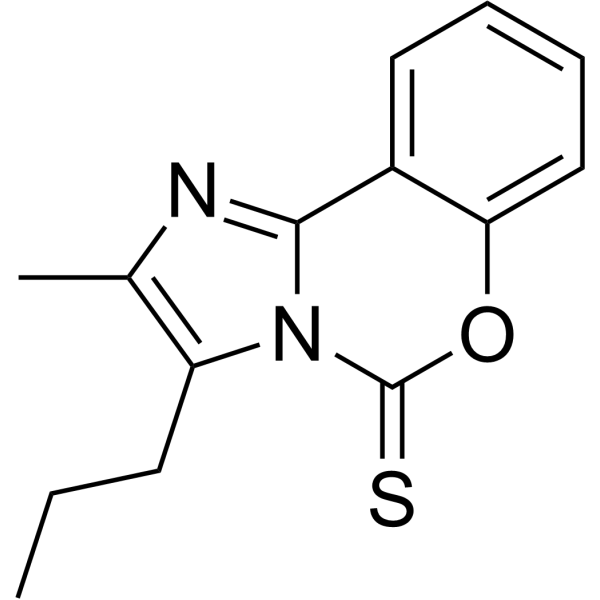 0 ImagesCat. No.: HY-152166CAS No.: 1199944-04-1NaV1.2/1.6 channel blocker-1 is a potent NaV1.2/1.6 channel blocker, with IC50s of 9.8 and 24.4 μM for rNaV1.6 and hNaV1.2, respectively. NaV1.2/1.6 channel blocker-1 can be used for the research of generalized epilepsy.
-
AA43279
 0 ImagesAA43279 is an in gamma-aminobutyric acid (GABA) fast-firing interneurons located activator for Nav1.1 channel (SCN1A) with an EC50 of 9.5 μM. AA43279 enhances specific neuronal firing activity in vitro, and exhibits anticonvulsant activity in rat MEST model.
-
XPC-6444
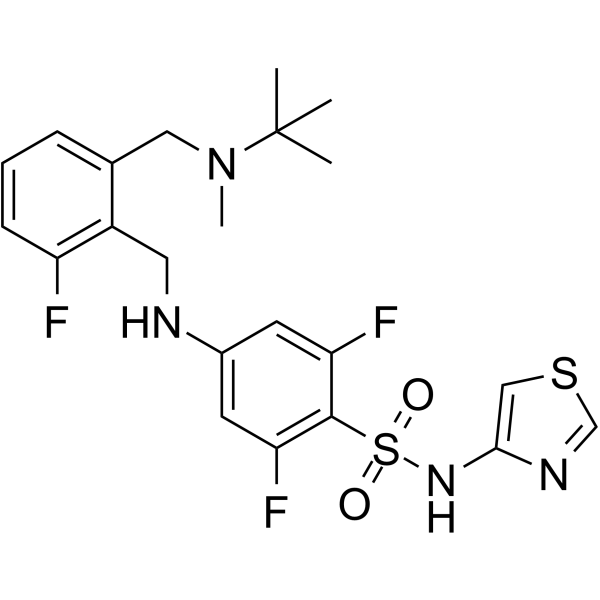 0 ImagesXPC-6444 is a highly potent, isoform-selective, and CNS-penetrant NaV1.6 inhibitor (IC50=41 nM for hNaV1.6). XPC-6444 also displays potent block of NaV1.2 (IC50=125 nM). XPC-6444 shows anticonvulsant activity.
-
ProTx-I
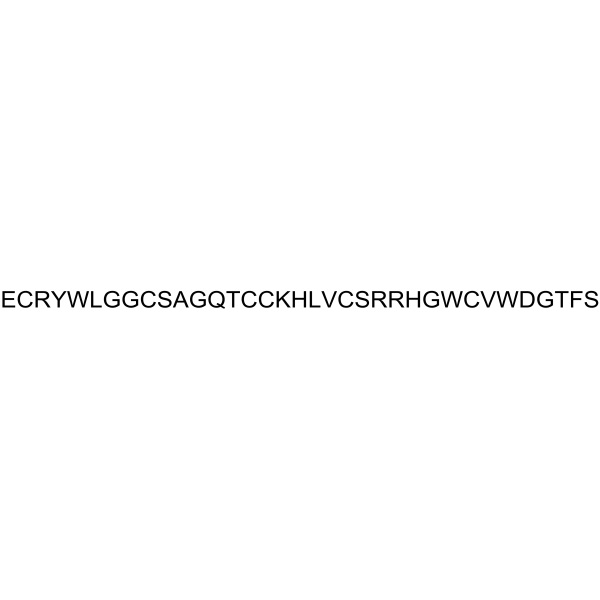 0 ImagesCat. No.: HY-P1073CAS No.: 484598-35-8ProTx-I is a toxin derived from Thrixopelma pruriens and a peptide inhibitor targeting TTX-resistant sodium channels. ProTx-I interacts with voltage sensors of multiple domains such as NaV1.7, reduces neuronal excitability through allosteric modulation of channel gating and alteration of voltage dependence. The IC50 values of ProTx-I against human NaV1.7, NaV1.2, NaV1.6, and NaV1.5 are 95 nM, 104 nM, 21 nM, and 358 nM, respectively; ProTx-I also potently inhibits Ba2+ currents of hCav3.1, while its inhibitory potency against hCav3.2 is approximately 160-fold lower. ProTx-I is applicable to the research of chronic pain.
-
Tefluthrin
 0 ImagesCat. No.: HY-W040171CAS No.: 79538-32-2Tefluthrin is a pyrethroid insecticide. Tefluthrin prolongs the opening time of Nav1.6 sodium channels, leading to membrane depolarization and conductance block in the insect nervous system, thereby disrupting neural function.
- 1



