



Platelet-activating Factor Receptor (PAFR) Antagonist
-
Ginkgolide B
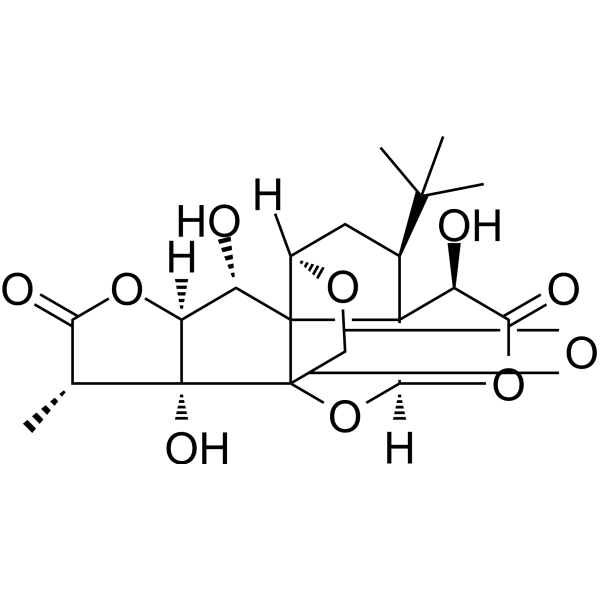 0 ImagesSynonyms: BN-52021
Ginkgolide B (BN-52021), a terpene lactone, is a potent platelet activating factor antagonist. Ginkgolide B protects endothelial cells via the activation of PXR from injuries induced by xeno- and endobiotics. Ginkgolide B can pass through the brain-blood barrier. Ginkgolide B has anti-oxidant, anti-inflammatory, anti-tumor, and anti-apoptotic activity. Ginkgolide B has marked neuroprotective effects against ischemia-induced impairments.
-
Apafant
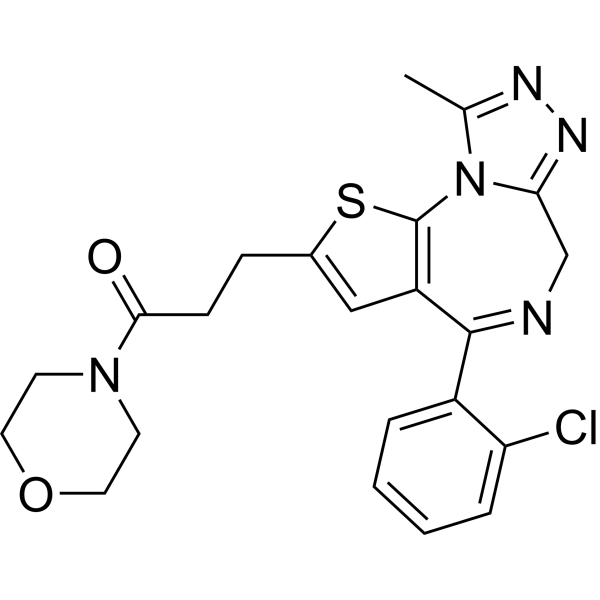 0 ImagesSynonyms: WEB 2086
Apafant (WEB 2086), a chemical probe, is a potent platelet-activating factor (PAF) antagonist, inhibits PAF binding to human PAF receptors with a Ki of 9.9 nM. Apafant increases the gene expression of PAF-r, α-globin, β-globin, decreases the c-myb gene expression. Apafant shows a protective effect on alkyl-PAF-mediated lethalit.
-
Ginkgolide B (Standard)
 0 ImagesSynonyms: BN-52021 (Standard)
Ginkgolide B (Standard) is the analytical standard of Ginkgolide B. This product is intended for research and analytical applications. Ginkgolide B (BN-52021), a terpene lactone, is a potent platelet activating factor antagonist. Ginkgolide B protects endothelial cells via the activation of PXR from injuries induced by xeno- and endobiotics. Ginkgolide B can pass through the brain-blood barrier. Ginkgolide B has anti-oxidant, anti-inflammatory, anti-tumor, and anti-apoptotic activity. Ginkgolide B has marked neuroprotective effects against ischemia-induced impairments.
-
Pregomisin
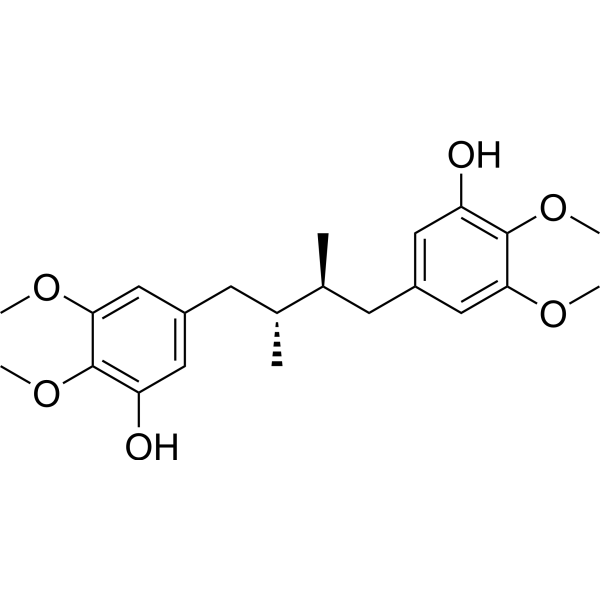 0 Images
Pregomisin is a natural compound isolated from the fruits of Schizandra chinensis Baill. Pregomisin showed PAF antagonistic activity and the IC50 values were 48 μM.
-
Kadsurenone
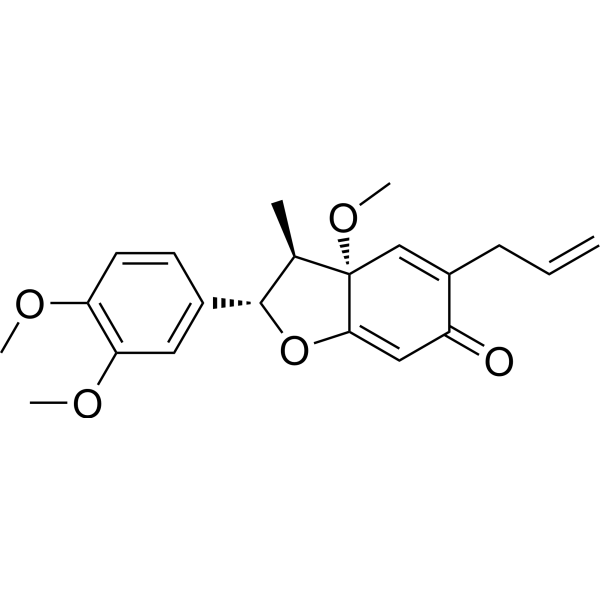 0 Images
Kadsurenone is a lignan with specific antagonistic activity against platelet-activating factor. Kadsurenone can be derived from the stem of Piper kadsura.
-
Hexanolamino PAF C-16
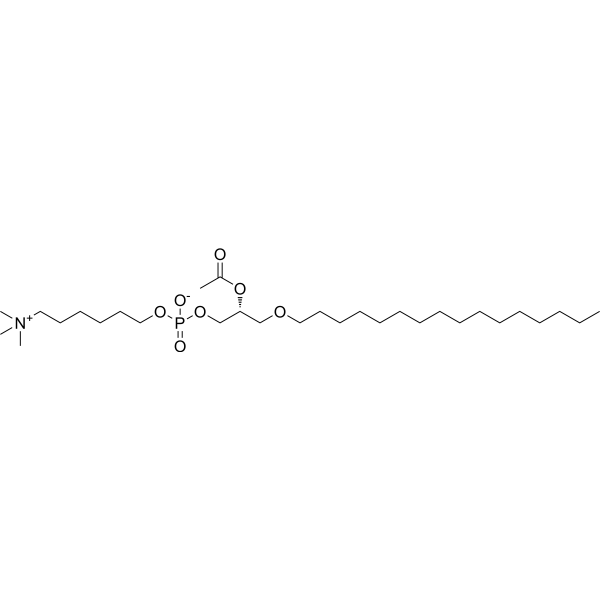 0 ImagesSynonyms: 1-O-Hexa-decyl-2-acetyl-sn-glycero-3-phospho(N,N,N-trimethyl)-hexanolamine
Hexanolamino PAF C-16 (1-O-hexadecyl-2-acetyl-sn-glycero-3-phospho (N,N,N trimethyl) hexanolamine) is a Platelet-activating Factor Receptor (PAFR) Modulator with partial agonist activity. Hexanolamino PAF C-16 induces platelet aggregation and macrophage production but fails to increase [Ca2+]i in platelets, suggesting that PAF receptors may interact with PAF receptors through Ca2+-dependent and -independent pathways. Related to platelet aggregation.
-
CP-96021
 0 Images
CP-96021 is an orally active dual leukotriene D4 (LTD4) and platelet activating factor (PAF) receptor antagonist, featuring a guinea pig LTD4 receptor Ki of 34 nM and a rabbit PAF receptor Ki of 37 nM. CP-96021 blocks ligand binding to its target receptors, inhibits ligand-induced bronchoconstriction, and inhibits antigen-triggered airway obstructive effects. CP-96021 can be used for the research of asthma.
-
Yangambin
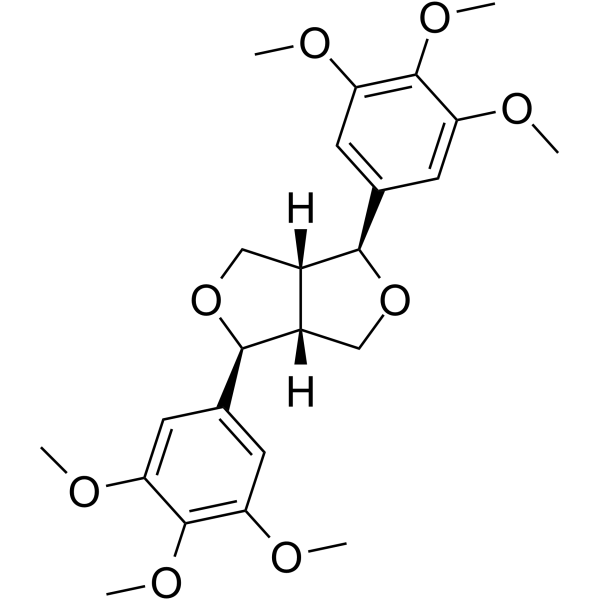 0 Images
Yangambin is a PAF receptor antagonist and UGT1A1/UGT1A3 inhibitor, with an IC50 of 29.7 μM and a Ki of 17.1 μM against human UGT1A1, and an IC50 of 56.5 μM and a Ki of 66.8 μM against human UGT1A3. Yangambin blocks PAF-mediated responses, inhibits LTB4-mediated neutrophil infiltration, and suppresses inflammatory events and anaphylactic contraction. Yangambin acts as a central nervous system inhibitor to reduce spontaneous activity, and also exhibits analgesic, anticonvulsant, antileishmanial, vasodilatory and hypotensive effects. Yangambin blocks voltage-gated Ca2+ channels, reduces the production of NO, TNF-α, IL-6 and PGE2 in cells, increases the production of IL-10, and exerts a protective effect against cardiovascular injury. Yangambin can be used in research related to allergies, cutaneous leishmaniasis, central nervous system diseases and cardiovascular diseases.

-
MK 287
 0 ImagesCat. No.: HY-106899CAS No.: 135947-75-0
MK 287 is a potent, selective and orally active antagonist of platelet-activating factor receptor (PAFR). MK 287 can inhibit [3H]C18-PAF binding to human platelet, polymorphonuclear leukocyte (PMN) and lung membranes with K1 values of 6.1, 3.2, and 5.49 nM, respectively. MK 287 can inhibit PAF-induced aggregation of platelets in plasma or gel-filtered platelets and elastase release from PMNs with ED50 values of 56, 1.5 and 4.4 nM. MK 287 can be used for the research of cardiovascular disease, such as thrombosis.
-
CL-184005
 0 ImagesCat. No.: HY-19126CAS No.: 140466-18-8
CL-184005 is an antagonist for platelet-activating factor (PAF), that inhibits the PAF-induced platelet aggregation with IC50 of 600 nM and 510 nM, in human and rabbit platelet-rich plasma. CL-184005 protects the rats from endotoxin-induced gastrointestinal damage and hypotension. CL-184005 exhibits potential attenuating Gram-negative bacterial sepsis.
-
Clotizolam
 0 ImagesCat. No.: HY-171253CAS No.: 54123-06-7
Clotizolam is a thienobenzodiazepine derivative that has antagonistic activity against platelet-activating factor (PAF). Clotizolam possesses sedative, anxiolytic, anticonvulsant,and muscle relaxant effects.
-
Sch-40338
 0 ImagesCat. No.: HY-116435CAS No.: 117796-62-0
Sch-40338 is a dual antagonist of platelet-activating factor (PAF) and histamine with an IC50 of 0.59 μM (PAF-induced platelet aggregation) and a Ki of 5.4 μM (Histamine H₁ receptor binding). Sch-40338 can be used for the study of allergic disease.
-
Kadsurin A
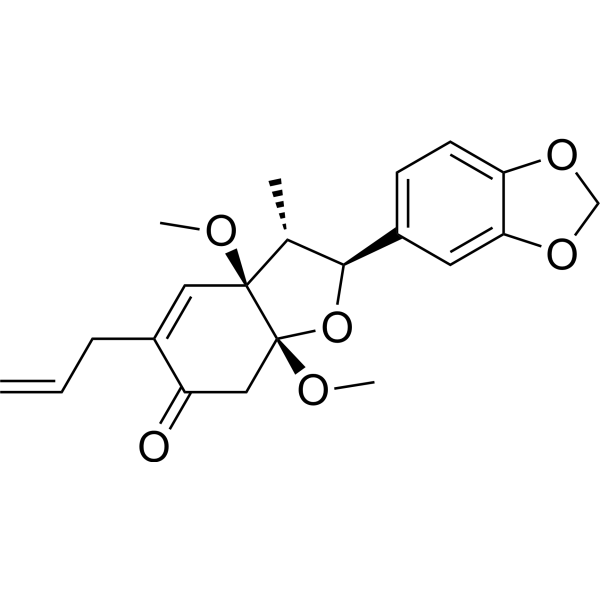 0 ImagesCat. No.: HY-N3436CAS No.: 99340-07-5
Kadsurin A is a new lignan can be isolated from Piper futokadsura. Kadsurin A is a platelet activating factor (PAF) receptor antagonist that weakly inhibits the binding of PAF to its receptor.
-
BN52115
 0 ImagesCat. No.: HY-136791CAS No.: 120908-94-3
BN 52115, a platelet-activating factor antagonist, has demonstrated the ability to mitigate bronchopulmonary changes in vivo.
-
Selenotifen
 0 ImagesCat. No.: HY-116481CAS No.: 135472-91-2Synonyms: BN 52256
Selenotifen (BN 52256) is an antiallergic agent. Selenotifen is a highly potent antagonist to PAF receptors. Selenotifen exhibits a statistically significant antiarrhythmic effect.
-
SDZ-62-434 free base
 0 ImagesCat. No.: HY-106833CAS No.: 115621-81-3
SDZ-62-434 free base is a platelet-activating factor (PAF) antagonist. SDZ-62-434 free base has antiproliferative activity in human solid and haematological malignancies.
-
7-epi-Ginkgolide C
 0 ImagesCat. No.: HY-187884CAS No.: 502421-87-6
7-epi-Ginkgolide C is a PAFR antagonist with a Ki value of 4.26 μM. 7-epi-Ginkgolide C can be used in research on neurodegenerative diseases.
-
Epiyangambin
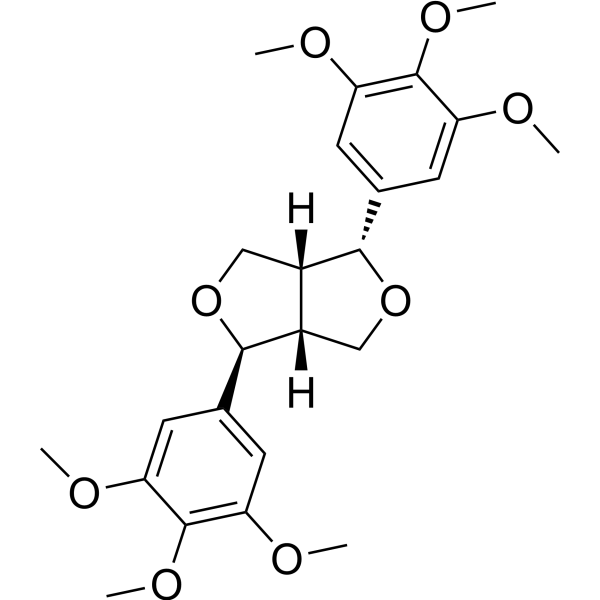 0 ImagesCat. No.: HY-121377CAS No.: 24192-64-1
Epiyangambin is a competitive platelet activating factor receptor (PAF) antagonist that dose-dependently inhibits PAF-induced platelet aggregation. Epiyangambin also inhibits the growth of human colon cancer cells (SW480 cells).



