



Vildagliptin dihydrate
Based on 5 publication(s) in Google Scholar
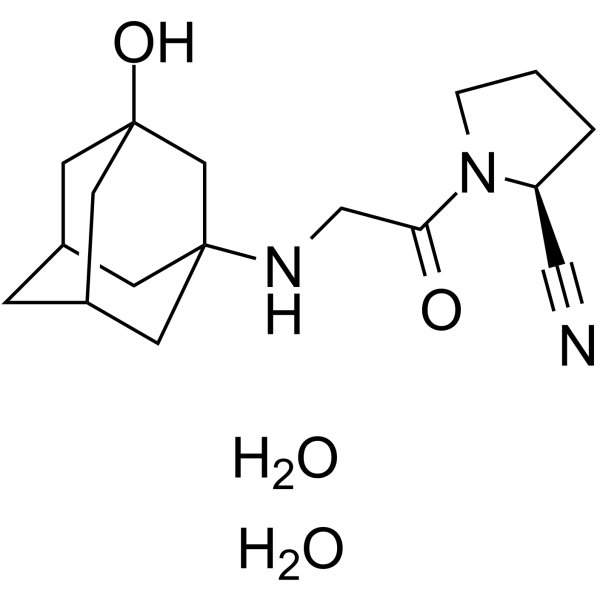
Vildagliptin dihydrate (LAF237 dihydrate) is a potent, stable, selective dipeptidyl peptidase IV (DPP-IV) inhibitor with an IC50 of 3.5 nM in human Caco-2 cells. Vildagliptin dihydrate possesses excellent oral bioavailability and potent antihyperglycemic activity.
For research use only. We do not sell to patients.
- CAS No.: 2133364-01-7
- Formula: C17H29N3O4
- Molecular Weight:339.43
-
Storage:
Please store the product under the recommended conditions in the Certificate of Analysis.

To place orders, for customer services and technical support, please contact: MedChemExpress USA
Tel: 609-228-6898 E-mail: [email protected] [email protected]


-
 Biological Activity
-
Chemical Information
- Protocols
- Purity & Documentation
- References
-
 Help & FAQs


-
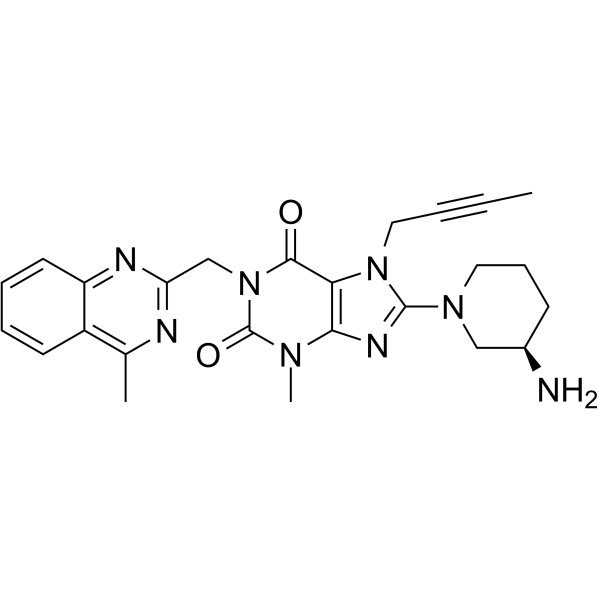
HY-10284
LinagliptinDPP-4 Inhibitor -
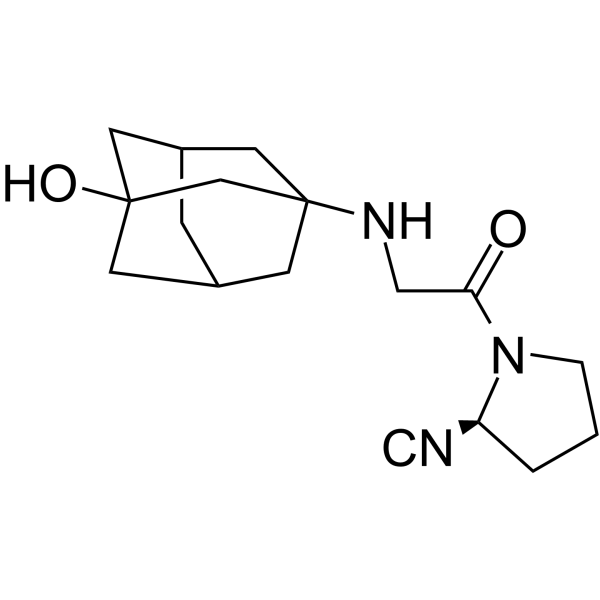
HY-14291
VildagliptinDPP-IV Inhibitor -
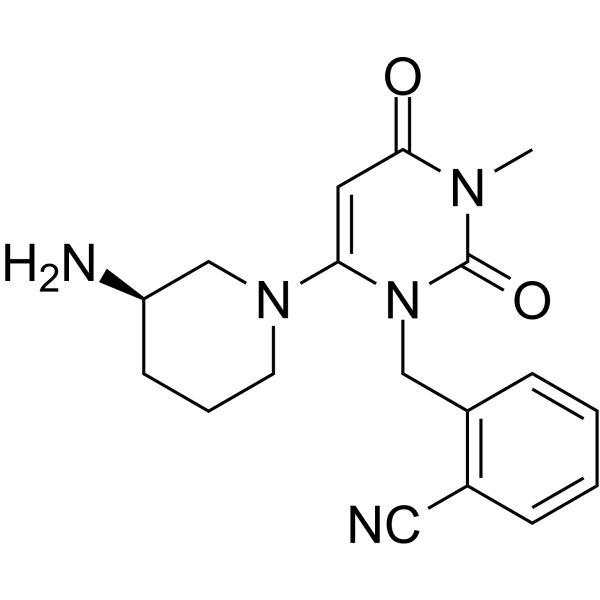
HY-A0023A
AlogliptinDPP-4 Inhibitor -
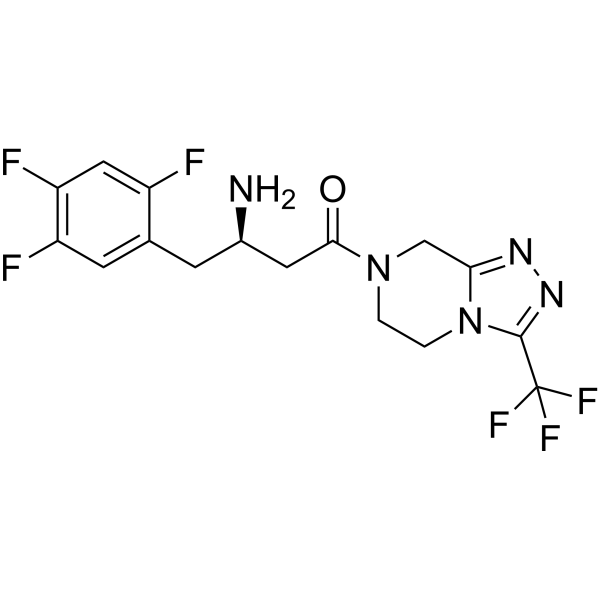
HY-13749
SitagliptinDPP4 Inhibitor -
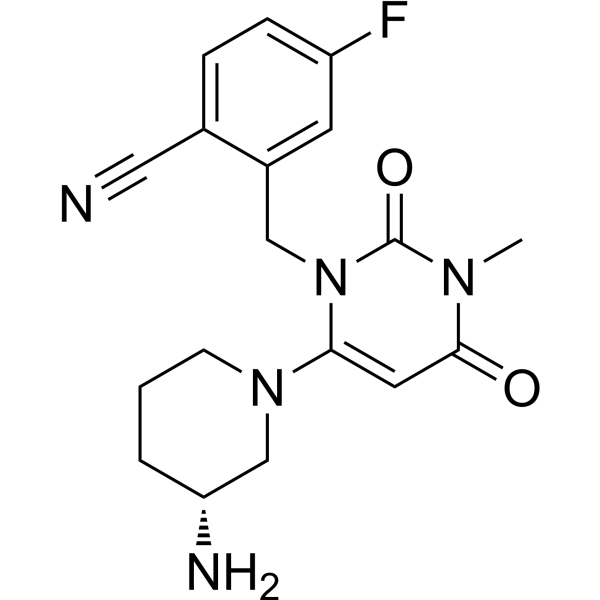
HY-15408
TrelagliptinDPP-4 Inhibitor -
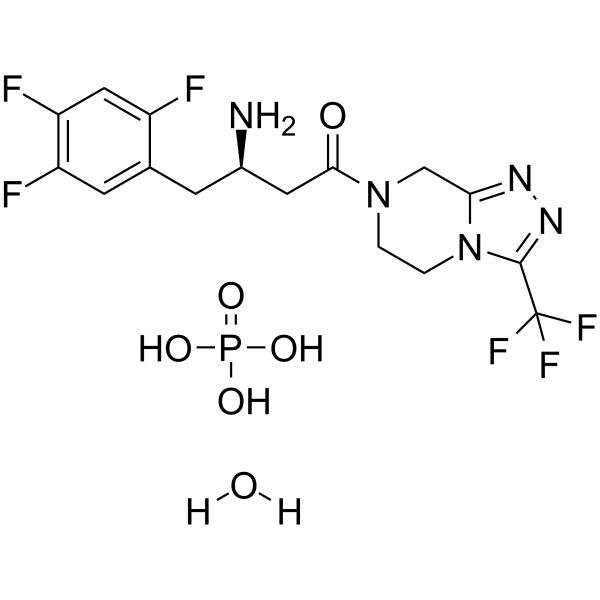
HY-13749B
Sitagliptin phosphate monohydrateDPP4 Inhibitor -
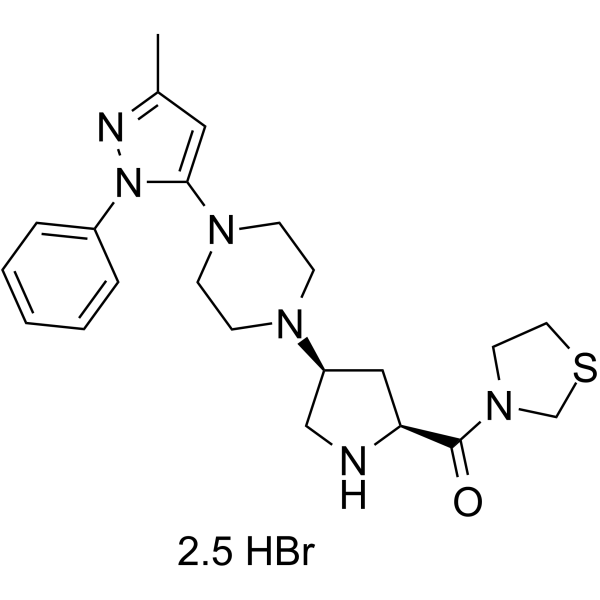
HY-14806A
Teneligliptin hydrobromideDipeptidyl Peptidase Inhibitor -
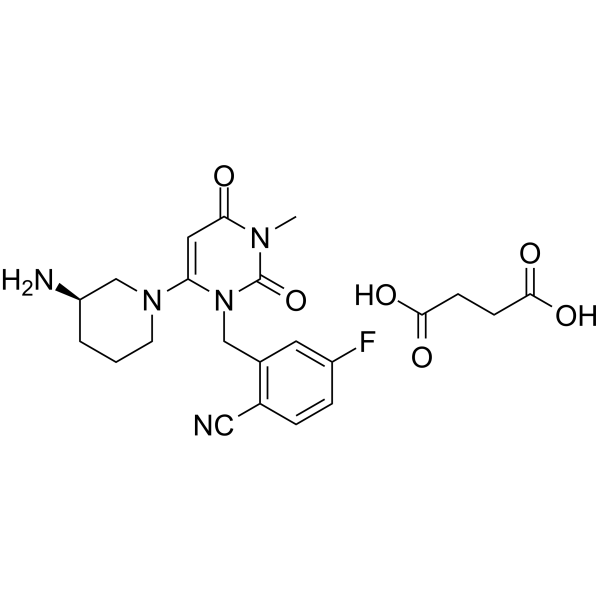
HY-15408A
Trelagliptin succinateDPP-4 Inhibitor -
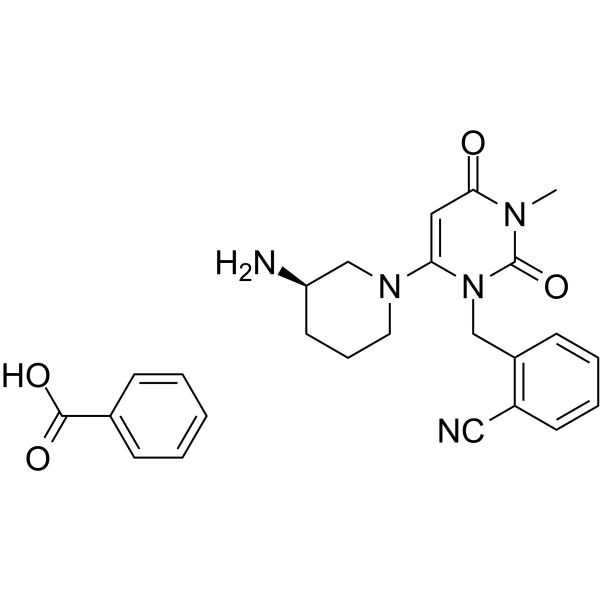
HY-A0023
Alogliptin BenzoateDPP-4 Inhibitor -
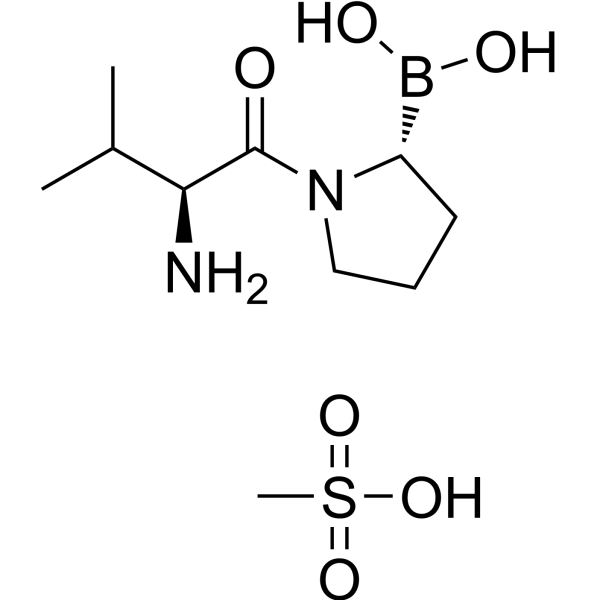
HY-13233A
Talabostat mesylateDipeptidyl Peptidase Inhibitor -
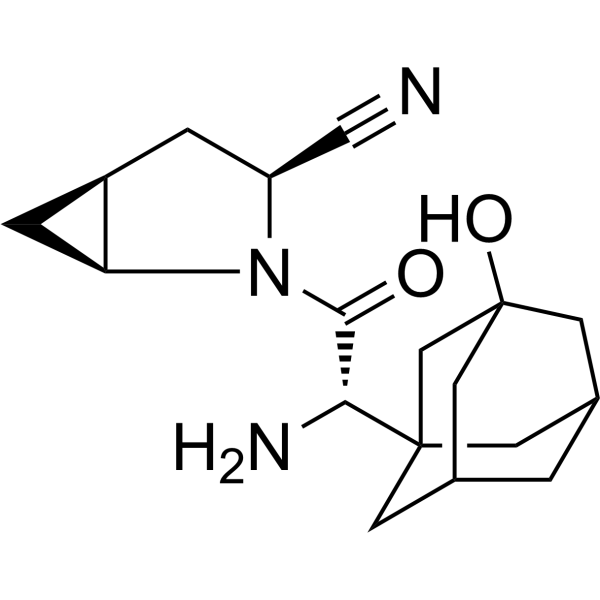
HY-10285
SaxagliptinDPP-4 Inhibitor -

HY-10284R
Linagliptin (Standard)DPP-4 Inhibitor
Publications Citing Use of MedChemExpress (MCE) Vildagliptin dihydrate
More Customer Validation & Images

-
Cell Proliferation/Viability Assay
-
Bio/Physico-chemical Assay
-
RT-PCR
-
IF


Biological Activity
Description
IC50 & Target
|
DPP-4 |
In Vitro
In Vivo
Vildagliptin (10 µmol/kg; orally) significantly decreases glucose excursions and stimulate insulin secretion in obese male Zucker rats[1].
MedChemExpress (MCE) has not independently confirmed the accuracy of these methods. They are for reference only.
-
Animal Model:Male db/db mice (BKS) and wildtype mice[2]
-
Dosage:35 mg/kg
-
Administration:Oral gavage; once daily; for 6 weeks
-
Result:Increased plasma active GLP-1 levels (22.63±1.19 vs. 11.69±0.44).
-
Animal Model:Obese male Zucker rats[1]
-
Dosage:10 µmol/kg (Pharmacokinetic Analysis)
-
Administration:Orally
-
Result:Significantly decreased glucose excursions and stimulate insulin secretion.


Chemical Information
-
CAS No. 2133364-01-7
-
Molecular Weight 339.43
-
Formula C17H29N3O4
-
SMILES
O[C@@]1(C[C@H](C2)C3)C[C@H]3C[C@@]2(NCC(N4CCC[C@H]4C#N)=O)C1.O.O
-
Synonyms
LAF237 dihydrate; NVP-LAF 237 dihydrate
-
Shipping
Room temperature in continental US; may vary elsewhere.
-
Storage
Please store the product under the recommended conditions in the Certificate of Analysis.


Publications (5)
-
Journal Impact Factor
-
Most Recent
-
Cancer Lett
Inhibition of dipeptidyl peptidase IV prevents high fat diet-induced liver cancer angiogenesis by downregulating chemokine ligand 2. [Abstract]2018 Apr 28:420:26-37. PMID: 29409972
Vildagliptin dihydrate purchased from MedChemExpress. Usage Cited in: Cancer Lett. 2018 Apr 28:420:26-37. [Abstract]
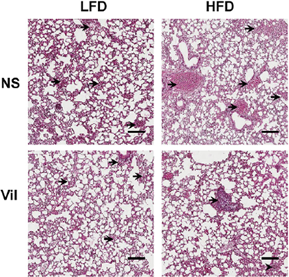
Representative images showing visible metastatic nodules in the lungs of mice treated with Vildagliptin and fed an high-fat diet (HFD).
-
Cell Rep
Dipeptidylpeptidase 4 promotes survival and stemness of acute myeloid leukemia stem cells. [Abstract]2023 Feb 28;42(2):112105. PMID: 36807138
Vildagliptin dihydrate purchased from MedChemExpress. Usage Cited in: Cell Rep. 2023 Feb 28;42(2):112105. [Abstract]
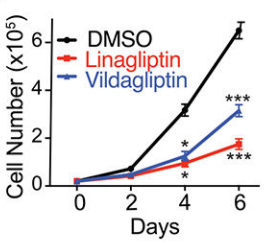
DPP4 inhibitors (linagliptin 200 nM, vildagliptin 300 nM) suppress the growth of THP1 cells (n = 3 wells).
Vildagliptin dihydrate purchased from MedChemExpress. Usage Cited in: Cell Rep. 2023 Feb 28;42(2):112105. [Abstract]
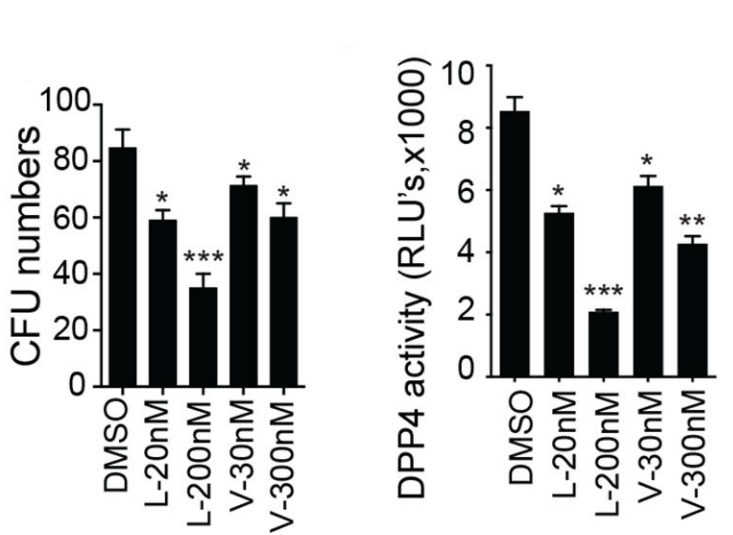
Comparative efficacies of two different DPP4 inhibitors at indicated concentrations in suppression of mouse MLL-AF9 cell CFU numbers (2,000 cells/well, n = 3 wells) and DPP4 enzyme activity of 1 × 10⁶ cells (n = 3 repeats). L, linagliptin; V, vildagliptin.
-
Int J Mol Sci
Dipeptidyl Peptidase-4 Inhibitor-Related Bullous Pemphigoid: Clinical, Laboratory, and Histological Features, and Possible Pathogenesis. [Abstract]2022 Nov 15;23(22):14101. PMID: 36430582
Vildagliptin dihydrate purchased from MedChemExpress. Usage Cited in: Int J Mol Sci. 2022 Nov 15;23(22):14101. [Abstract]
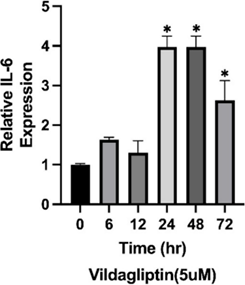
qPCR Assay. Vildagliptin (5 µM; 0, 6, 12, 24, 48, 72 h) stimulates the expression of IL-6 in HaCaT cells.
-
J Biol Chem
Human DPP9 represses NLRP1 inflammasome and protects against autoinflammatory diseases via both peptidase activity and FIIND domain binding. [Abstract]2018 Dec 7;293(49):18864-18878. PMID: 30291141 -
3 Biotech
Neuroprotective effects of DPP-4 inhibitors sitagliptin and vildagliptin in Parkinson's disease via autophagy modulation. [Abstract]2026 Apr;16(4):146. PMID: 41853215


Purity & Documentation
References
[1]. Cheng Q, et al. Combination of the dipeptidyl peptidase IV inhibitor LAF237 [(S)-1-[(3-hydroxy-1-adamantyl)ammo]acetyl-2-cyanopyrrolidine] with the angiotensin II type 1 receptor antagonist valsartan [N-(1-oxopentyl)-N-[[2'-(1H-tetrazol-5-yl)-[1,1'-biphenyl]-4-yl]methyl]-L-valine] enhances pancreatic islet morphology and function in a mouse model of type 2 diabetes. J Pharmacol Exp Ther. 2008 Dec;327(3):683-91. [Content Brief]
[2]. Shen M, et al. The synergistic effect of valsartan and LAF237 [(S)-1-[(3-hydroxy-1-adamantyl)ammo]acetyl-2-cyanopyrrolidine] on vascular oxidative stress and inflammation in type 2 diabetic mice. Exp Diabetes Res. 2012;2012:146194. [Content Brief]
[3]. Abdelhamid AM, et al. Vildagliptin/Pioglitazone Combination Improved The Overall Glycemic Control In Type I Diabetic Rats. Can J Physiol Pharmacol. 2018 Mar 6. doi: 10.1139/cjpp-2017-0680. [Content Brief]

Calculators
Concentration (start) × Volume (start) = Concentration (final) × Volume (final)


Vildagliptin dihydrate Related Classifications
HY-14291A Related Classifications
 Powered by Bioz