



Lupus Erythematosus
-
Lupus Erythematosus (3)

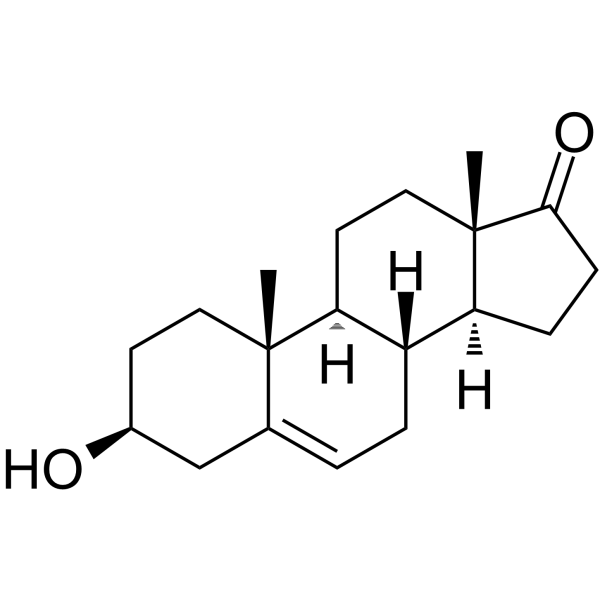
- Formula: C19H28O2
- Molecular Weight: 288.42
DHEA (Prasterone) is one of the most abundant steroid hormones. DHEA (Prasterone) mediates its action via multiple signaling pathways involving specific membrane receptors and via transformation into androgen and estrogen derivatives (e.g., androgens, estrogens, 7α and 7β DHEA, and 7α and 7β epiandrosterone derivatives) acting through their specific receptors.

- Molecular Weight: 213.781 kDa
Ebribafusp alfa (ADX-097) comprising a humanized anti-C3d monoclonal antibody linked to two moieties of the first five consensus repeats of factor H (fH1-5). Ebribafusp alfa binds C3d and related fragments, catalyzes AP convertase dissociation, acts as a factor I co-factor for C3b cleavage, and delivers fH1-5 moieties to C3d-deposited tissues for local complement inhibition without systemic blockade. Ebribafusp alfa reduces glomerular C3 deposition, proteinuria, urine albumin-creatinine ratios, and urine soluble C5b-9 levels, preserves podocyte foot-process architecture, inhibits skin complement activation, and localizes to UVB-damaged primate skin. Ebribafusp alfa can be used for the research of membranous nephropathy, bullous pemphigoid, discoid lupus erythematosus, C3 glomerulopathy, IgA nephropathy, and lupus nephritis.

mNOX-E36 is a murine-specific analogue of NOX-E36 (HY-148100), an anti-CCL-2 L-RNA aptamer that binds and neutralises the mouse chemokine CCL-2. mNOX-E36 reduces scarring in an experimental murine model of glaucoma filtration surgery (GFS). mNOX-E36 ameliorates lupus nephritis in mice. mNOX-E36 can be used for GFS and lupus nephritis research.



