



Metastatic Colorectal Cancer
-
Metastatic Colorectal Cancer (16)

- 1
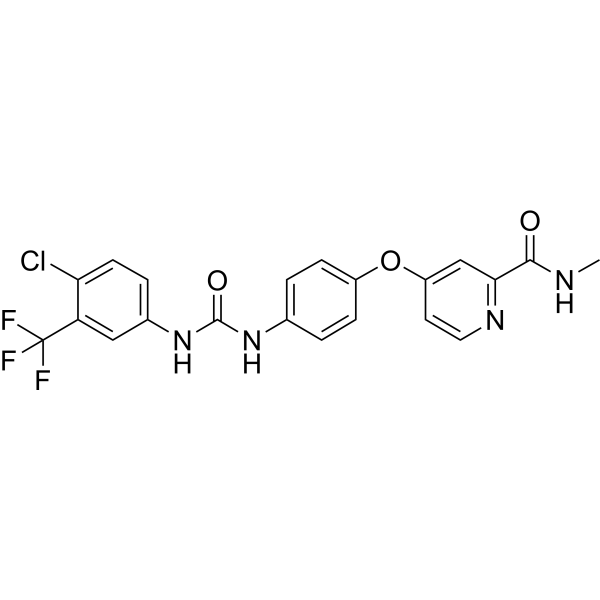
- Formula: C21H16ClF3N4O3
- Molecular Weight: 464.83
Sorafenib (Bay 43-9006) is a potent oral active multikinase inhibitor. Sorafenib blocks autophosphorylation and activity of receptor tyrosine kinases (VEGFR-2, VEGFR-3) and RAF family kinases, thereby suppressing the RAF/MEK/ERK and PI3K/Akt pathways, inhibiting STAT3 phosphorylation, and selectively inhibiting the MAPK pathway in cancer cells. Sorafenib induces cell cycle arrest, autophagy, apoptosis, and PARP cleavage, reduces Bcl-2, Bcl-XL, cyclin D1 levels, and activates Bak and Bax. Sorafenib inhibits tumor growth and metastasis in mouse and rat models. Sorafenib can be used for cancer research, such as colon, breast, non-small-cell lung cancer (NSCLC), ovarian, pancreatic, melanoma, colorectal and hepatocellular carcinoma.

- Molecular Weight: 146.56 kDa
Bevacizumab (Anti-Human VEGF, Humanized Antibody) is a humanized monoclonal antibody against VEGF-A and an angiogenesis inhibitor. Bevacizumab blocks the interaction between VEGF-A and VEGF receptors. Bevacizumab possesses immunomodulatory properties. Bevacizumab can be used in research on metastatic colorectal cancer, metastatic breast cancer, and non-small cell lung cancer.

- Molecular Weight: 144.32 kDa

- Molecular Weight: 146.86 kDa
Patritumab (Human Anti-ERBB3 Recombinant Antibody) is a neutralizing monoclonal antibody to ERBB3. Patritumab shows a synergy with Cetuximab (HY-P9905), potently inhibits the phosphorylation of EGFR, HER2, HER3, ERK, and AKT. Patritumab also induces cell apoptosis and suppresses the growth of pancreatic, non-small cell lung cancer, and colorectal cancer xenograft tumors.

- Molecular Weight: 146.56 kDa
Bevacizumab (Anti-VEGFA) is a humanized monoclonal antibody against VEGF-A and an angiogenesis inhibitor. Bevacizumab (Anti-VEGFA) blocks the interaction between VEGF-A and VEGF receptors. Bevacizumab (Anti-VEGFA) possesses immunomodulatory properties. Bevacizumab (Anti-VEGFA) can be used in research on metastatic colorectal cancer, metastatic breast cancer, and non-small cell lung cancer.

- Molecular Weight: 147.3 kDa
Toripalimab is a selective, recombinant, humanized monoclonal antibody against PD-1. Toripalimab is able to bind to PD-1 and block the interaction with its ligands. Toripalimab has exhibited primary anti-tumor effects in tumors such as melanoma, lung cancer, digestive tract tumors, hepatobiliary and pancreatic tumors, neuroendocrine neoplasms, nasopharyngeal carcinoma and urothelial carcinoma.

- Formula: C30H24Br2N4O6
- Molecular Weight: 696.34
Tubulin/PARP1-IN-1 is a dual inhibitor of tubulin and PARP1, with IC50 values of 1.86 μM and 0.88 μM, respectively. Tubulin/PARP1-IN-1 arrests cancer cells at the G2/M phase, induces cancer cell apoptosis, enhances cellular DNA damage, inhibits tumor angiogenesis, reduces cancer cell colonization and dissemination, and exhibits antiproliferative activity against colorectal cancer cells. Tubulin/PARP1-IN-1 can be used in the research of colorectal cancer and colorectal cancer lung metastasis.

- Formula: C28H29N7O2S
- Molecular Weight: 527.64
APO-50815 is a WEE1 kinase inhibitor with a human IC50 of 9 nM. APO-50815 induces DNA damage, replication stress, S-phase cell accumulation, and apoptosis. APO-50815 can be used for the research of metastatic colorectal cancer.

- Molecular Weight: 145.5 kDa
Petosemtamab (MCLA 158) is an anti- EGFR (Kd: 0.22 nM) and anti-LGR5 (Kd: 0.86 nM) monoclonal antibody (mAb). Petosemtamab leads to EGFR signaling blockade and receptor degradation in LGR5+ cancer cells. Petosemtamab can be used in the research of solid tumors, such as head and neck squamous cell carcinoma (HNSCC), metastatic colorectal cancer (CRC).
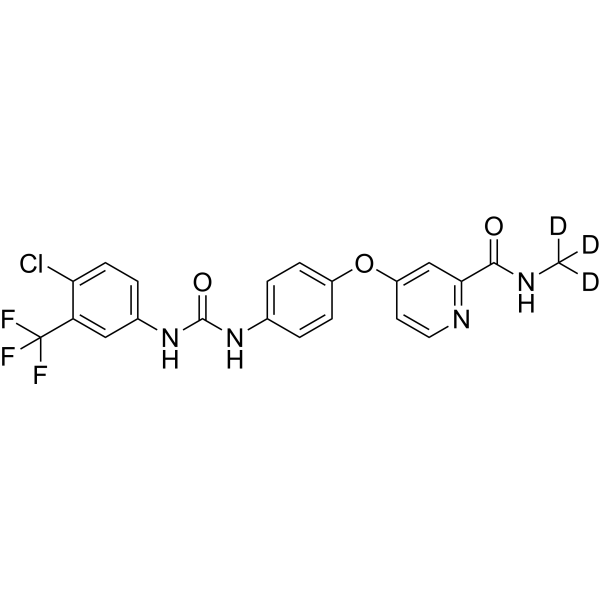
- Formula: C21H13D3ClF3N4O3
- Molecular Weight: 467.84
Sorafenib-d3 (Donafenib) is the deuterated-labeled Sorafenib (HY-10201). Sorafenib (Bay 43-9006) is a potent oral active multikinase inhibitor. Sorafenib blocks autophosphorylation and activity of receptor tyrosine kinases (VEGFR-2, VEGFR-3) and RAF family kinases, thereby suppressing the RAF/MEK/ERK and PI3K/Akt pathways, inhibiting STAT3 phosphorylation, and selectively inhibiting the MAPK pathway in cancer cells. Sorafenib induces cell cycle arrest, autophagy, apoptosis, and PARP cleavage, reduces Bcl-2, Bcl-XL, cyclin D1 levels, and activates Bak and Bax. Sorafenib inhibits tumor growth and metastasis in mouse and rat models. Sorafenib can be used for cancer research, such as colon, breast, non-small-cell lung cancer (NSCLC), ovarian, pancreatic, melanoma, colorectal and hepatocellular carcinoma.

- Molecular Weight: 144.471 kDa
Precemtabart is a humanized IgG1 antibody targeting CEACAM5, with selectivity for CEACAM5-positive cells. Precemtabart binds to CEACAM5 on tumor cells to deliver the topoisomerase 1 inhibitor Exatecan (HY-13631), and induces cell death by inhibiting the function of TOP1. Precemtabart inhibits the growth of CEACAM5-positive cancer cells. Precemtabart causes dose-dependent hematolymphoid and intestinal-related effects in cynomolgus monkeys. Precemtabart can be used in research related to metastatic colorectal cancer, metastatic pancreatic ductal carcinoma, advanced gastric cancer, advanced non-small cell lung cancer, and advanced pancreatic adenocarcinoma.

- Molecular Weight: 150 kDa
Brontictuzumab (OMP 52M51) is a monoclonal antibody (MAb) that inhibits Notch1 signal. Brontictuzumab selectively binds the negative regulatory region of the Notch1. Brontictuzumab inhibits tumor cell proliferation. Brontictuzumab can be used in the research of leukemia and lymphoma.

- Formula: C21H16ClF3N4O3
- Molecular Weight: 464.83
Sorafenib (Standard) (Bay 43-9006 (Standard)) is the analytical standard of Sorafenib (HY-10201). This product is intended for research and analytical applications. Sorafenib (Bay 43-9006) is a potent oral active multikinase inhibitor. Sorafenib blocks autophosphorylation and activity of receptor tyrosine kinases (VEGFR-2, VEGFR-3) and RAF family kinases, thereby suppressing the RAF/MEK/ERK and PI3K/Akt pathways, inhibiting STAT3 phosphorylation, and selectively inhibiting the MAPK pathway in cancer cells. Sorafenib induces cell cycle arrest, autophagy, apoptosis, and PARP cleavage, reduces Bcl-2, Bcl-XL, cyclin D1 levels, and activates Bak and Bax. Sorafenib inhibits tumor growth and metastasis in mouse and rat models. Sorafenib can be used for cancer research, such as colon, breast, non-small-cell lung cancer (NSCLC), ovarian, pancreatic, melanoma, colorectal and hepatocellular carcinoma.

- Molecular Weight: 143.06 kDa
Drozitumab (PRO 95780) is a human agonistic monoclonal antibody which binds the death receptor DR5. Drozitumab has potent antitumor activity against rhabdomyosarcoma.
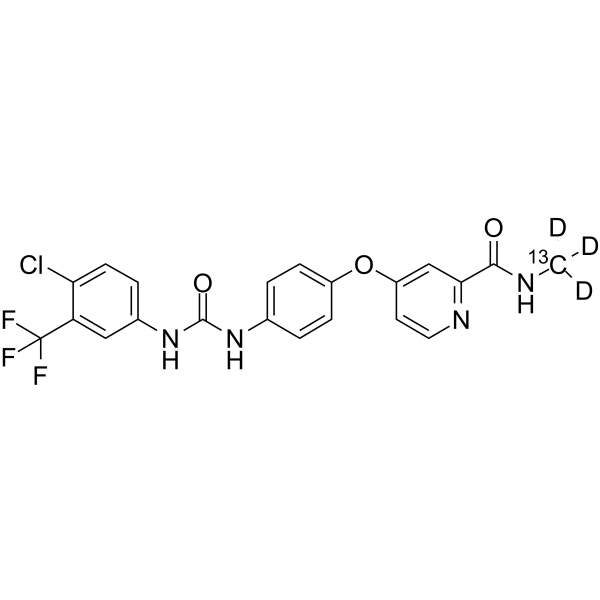
- Formula: C2013CH13D3ClF3N4O3
- Molecular Weight: 468.84
Sorafenib-13C,d3 (Bay 43-9006-13C,d3) is the 13C, deuterated-labeled Sorafenib (HY-10201). Sorafenib (Bay 43-9006) is a potent oral active multikinase inhibitor. Sorafenib blocks autophosphorylation and activity of receptor tyrosine kinases (VEGFR-2, VEGFR-3) and RAF family kinases, thereby suppressing the RAF/MEK/ERK and PI3K/Akt pathways, inhibiting STAT3 phosphorylation, and selectively inhibiting the MAPK pathway in cancer cells. Sorafenib induces cell cycle arrest, autophagy, apoptosis, and PARP cleavage, reduces Bcl-2, Bcl-XL, cyclin D1 levels, and activates Bak and Bax. Sorafenib inhibits tumor growth and metastasis in mouse and rat models. Sorafenib can be used for cancer research, such as colon, breast, non-small-cell lung cancer (NSCLC), ovarian, pancreatic, melanoma, colorectal and hepatocellular carcinoma.
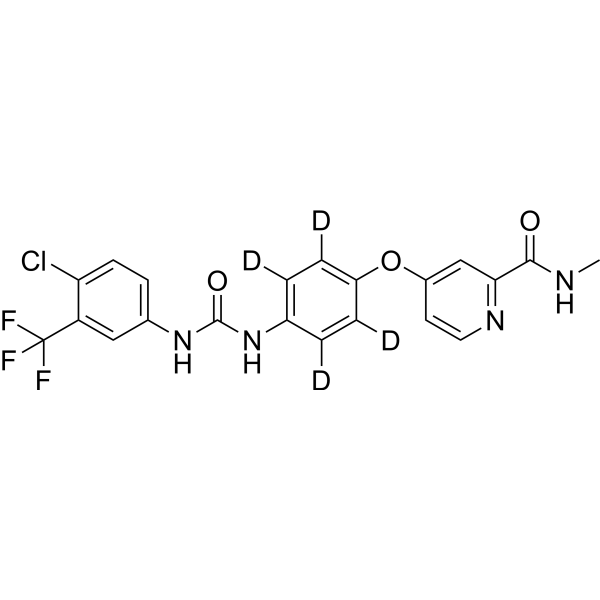
- Formula: C21H12D4ClF3N4O3
- Molecular Weight: 468.85
Sorafenib-d4 (Bay 43-9006-d4) is the deuterated-labeled Sorafenib (HY-10201). Sorafenib (Bay 43-9006) is a potent oral active multikinase inhibitor. Sorafenib blocks autophosphorylation and activity of receptor tyrosine kinases (VEGFR-2, VEGFR-3) and RAF family kinases, thereby suppressing the RAF/MEK/ERK and PI3K/Akt pathways, inhibiting STAT3 phosphorylation, and selectively inhibiting the MAPK pathway in cancer cells. Sorafenib induces cell cycle arrest, autophagy, apoptosis, and PARP cleavage, reduces Bcl-2, Bcl-XL, cyclin D1 levels, and activates Bak and Bax. Sorafenib inhibits tumor growth and metastasis in mouse and rat models. Sorafenib can be used for cancer research, such as colon, breast, non-small-cell lung cancer (NSCLC), ovarian, pancreatic, melanoma, colorectal and hepatocellular carcinoma.
- 1



