



IL-4 Protein, Mouse
Based on 27 publication(s) in Google Scholar
IL-4 Protein is a pleiotropic cytokine secreted by immune cells such as Th2. IL-4 Protein is involved in various processes, including humoral immunity, Th cell differentiation, allergic reactions, and inflammatory responses. IL-4 Protein plays a key role in immune responses and inflammatory reactions. IL-4 Protein, Mouse is a recombinant IL-4 protein expressed by E. coli without a tag.
- Species: Mouse
- Source: E. coli
-
Storage:Stored at -20°C for 2 years from date of receipt. After reconstitution, it is stable at 4°C for 1 week or -20°C for longer (with carrier protein). It is recommended to freeze aliquots at -20°C or -80°C for extended storage.


To place orders, for customer services and technical support, please contact: MedChemExpress USA
Tel: 609-228-6898 E-mail: [email protected] [email protected]


-
 Biological Activity
-
Technical Parameters
-
Product Properties
- Documentation
- References
- Help & FAQs


-

HY-P70460
IL-13 Protein, Mouse -
HY-P7071
IFN-gamma Protein, Mouse -
HY-P7361
GM-CSF Protein, Mouse -
HY-18739
Phorbol 12-myristate 13-acetate -
HY-P7085
M-CSF Protein, Mouse -

HY-D1056
Lipopolysaccharides, from E. coli O55:B5 -
HY-P70445
IL-4 Protein, Human -
HY-P70517
IL-10 Protein, Mouse -
HY-P72795
IL-13 Protein, Human -
HY-P7025
IFN-gamma Protein, Human -
HY-P7077
IL-2 Protein, Mouse -
HY-P70667
IFN-gamma Protein, Mouse (HEK293)


Biological Activity
Description
IL-4 Protein is a pleiotropic cytokine secreted by immune cells such as Th2. IL-4 Protein is involved in various processes, including humoral immunity, Th cell differentiation, allergic reactions, and inflammatory responses. IL-4 Protein plays a key role in immune responses and inflammatory reactions. IL-4 Protein, Mouse is a recombinant IL-4 protein expressed by E. coli without a tag[1][2][3].
Background
IL-4 is a core cytokine of the Th2-type immune response. As a pleiotropic cytokine, IL-4 is secreted by various cells such as Th2 cells, NKT cells, and mast cells. By binding to type I and type II receptors, IL-4 activates signaling pathways including JAK-STAT6, playing a central role in Th2 cell differentiation, B-cell immunoglobulin class switching (such as the production of IgE and IgG1), and M2 macrophage polarization. Aberrant expression of IL-4 is closely associated with allergic diseases like asthma and atopic dermatitis, as well as immune responses to parasitic infections[1][2][3].
In Vitro
IL-4 Protein (Mouse; 0-10 ng/mL; 0-10 days) can prolong the survival time of mouse peritoneal exudate macrophages (PEM) in vitro. When used in combination with M-CSF (HY-P7050), it promotes cell proliferation, while when used in combination with GM-CSF (HY-P7361), it inhibits cell proliferation[4].
IL-4 Protein (Mouse; 0-50 ng/mL; 48-120 h) can induce the proliferation of lymph node cells in BALB/c mice and induce Th2 differentiation and IL-4 production in CD4+ T cells of BALB/c mice[5].
In Vivo
IL-4 protein (Mouse; 0.5-5 μg/kg; subcutaneous injection; 30 days) can improve psoriatic-like phenotypes, reduce inflammatory cell infiltration, decrease the expression of adhesion molecules, and exhibit activities in improving angiogenesis and inflammation in K14-VEGF transgenic mice[6].
Verified Bioactivity
1. Measured in a cell proliferation assay using M-NFS-60 mouse lymphoblast cells. The ED50 for this effect is ≤250 pg/mL.
2. Measured in a cell proliferation assay using HT-2 cells. The ED50 for this effect is ≤1.437 ng/mL, corresponding to a specific activity is ≥6.96×10⁵ units/mg.
MCE Validation Data
-
Purity - SDS-PAGE
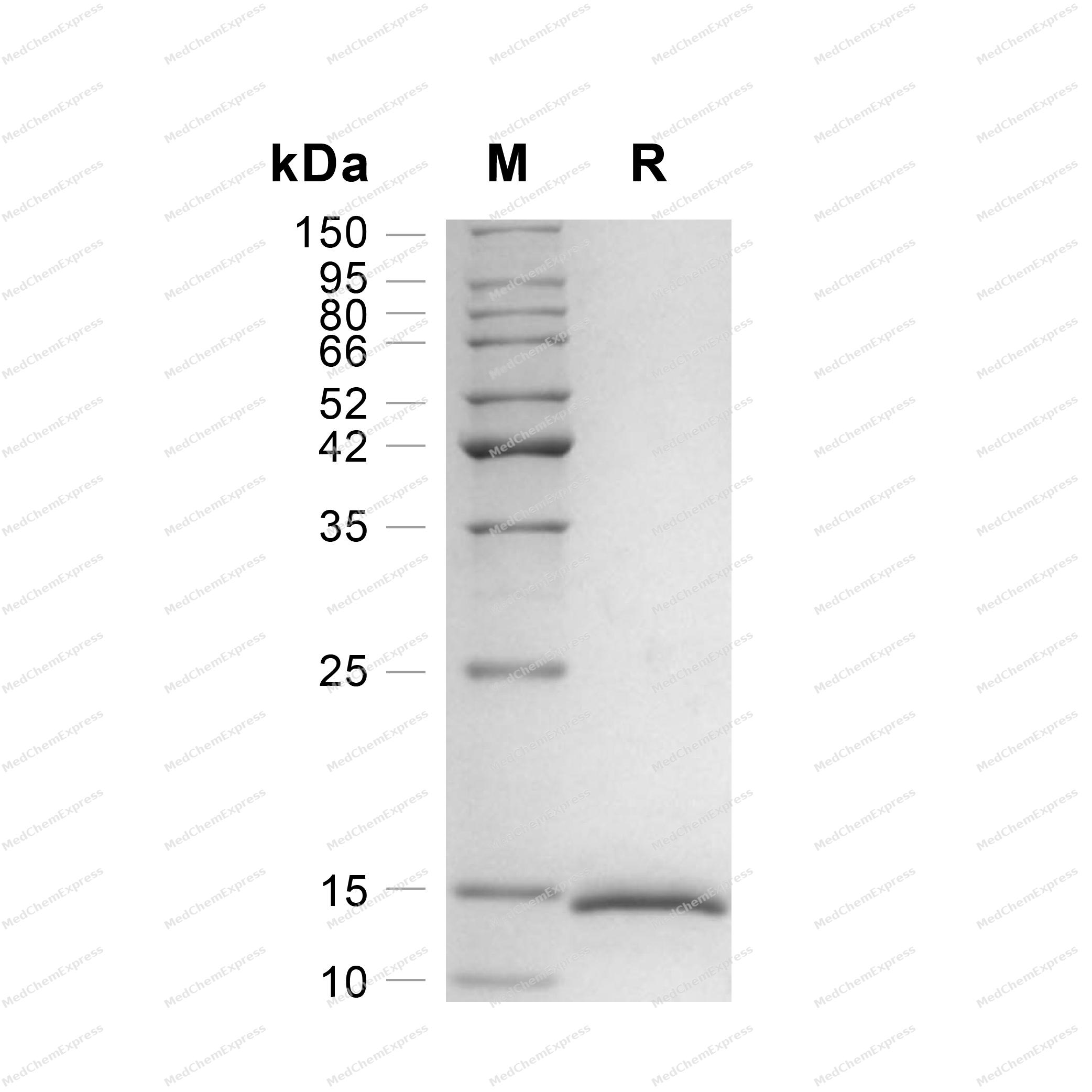
Purity - SDS-PAGE
-
Bioactivity - Cell-Based Assay
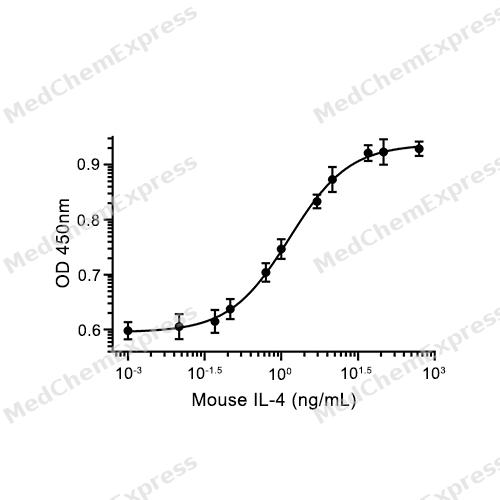
Bioactivity - Cell-Based Assay


Publications (27)
-
Journal Impact Factor
-
Most Recent
-
Adv Mater
Nanoadjuvant-Mediated Electro-Immunotherapy Enhances Irreversible Electroporation for Pancreatic Cancer Treatment. [Abstract]2026 Apr;38(19):e20546. PMID: 41803617 -
Cell Host Microbe
Engineered probiotics recruit CAR macrophages and establish immune memory to eradicate heterogeneous glioblastoma in mice. [Abstract]2026 Feb 11;34(2):212-229.e7. PMID: 41605215 -
Nat Commun
Neoantigens combined with in situ cancer vaccination induce personalized immunity and reshape the tumor microenvironment. [Abstract]2025 May 31;16(1):5074. PMID: 40450037 -
J Nanobiotechnology
New insights into allergic rhinitis treatment: MSC nanovesicles targeting dendritic cells. [Abstract]2024 Sep 19;22(1):575. PMID: 39294599 -
Adv Sci (Weinh)
A pH-Responsive Biomimetic Antioxidant Nanoplatform with Dual Renal Targeting for Synergistic Therapy of Acute Kidney Injury. [Abstract]2025 Nov 6:e15664. PMID: 41199144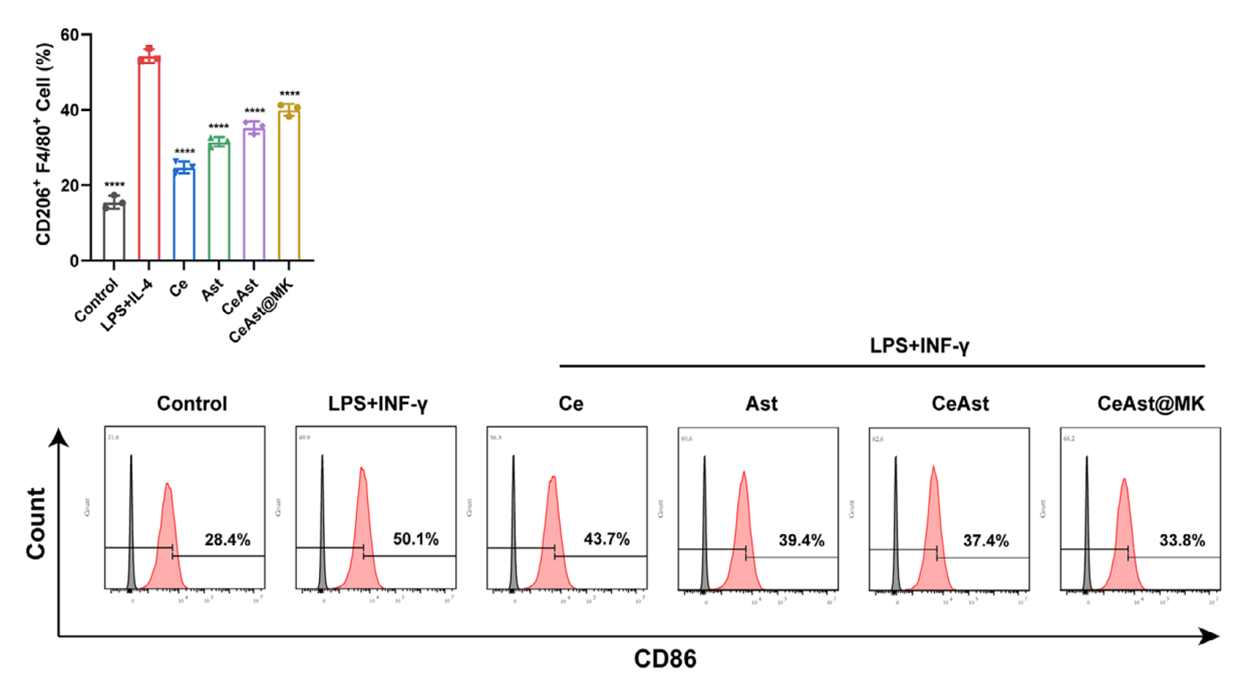
IL-4 Protein, Mouse purchased from MedChemExpress. Usage Cited in: Adv Sci (Weinh). 2025 Nov 6:e15664. [Abstract]
Flow cytometric analysis of CD86 and CD206 expression in RAW264.7 cells and corresponding quantification (n = 3). M2 polarization of RAW264.7 cells was induced by treatment with recombinant IL-4 (20 ng/mL) for 24 h.
-
Adv Sci (Weinh)
Tailoring Tumor Cell Golgi Apparatus-Targeting Self-Assembled Peptide for Effective Immunotherapy via Reshaping MIF-Mediated Immunosuppressive Network. [Abstract]2025 Mar;12(12):e2415133. PMID: 39908165 -
Adv Sci (Weinh)
Bacteroides Fragilis Exacerbates T2D Vascular Calcification by Secreting Extracellular Vesicles to Induce M2 Macrophages. [Abstract]2025 Feb;12(5):e2410495. PMID: 39665119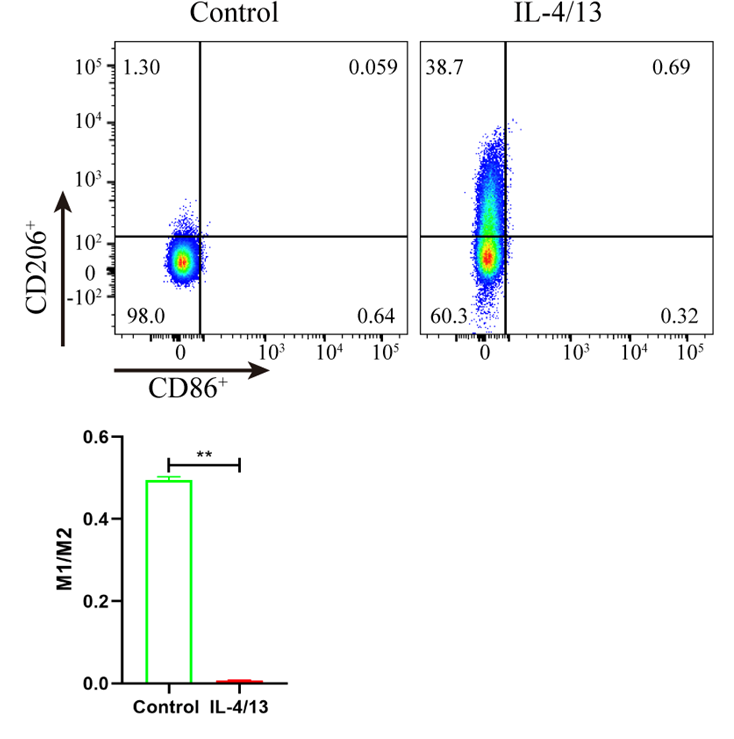
IL-4 Protein, Mouse purchased from MedChemExpress. Usage Cited in: Adv Sci (Weinh). 2025 Feb;12(5):e2410495. [Abstract]
Flow cytometric analyzed the effect of IL-4 (20 ng/mL; 48 h)/IL-13 (40 ng/mL; 48 h) stimulation on M2 polarization of macrophages , and statistical analysis.
-
Cell Rep Med
Ultrabright ratiometric Raman-guided epilepsy surgery by intraoperatively visualizing proinflammatory microglia. [Abstract]2025 Jun 17;6(6):102155. PMID: 40449482 -
Cancer Lett
Targeting C/EBPβ/SCD1/C16:1 loop-driven macrophage M2 polarization by Bruceine D improves anti-PD-1 immunotherapy in colorectal cancer. [Abstract]2026 Sep 28:656:218655. PMID: 42250753 -
Adv Healthc Mater
Salmonella Bacteria Membrane-Fusion Paclitaxel Loaded Liposomes for Enhanced Therapy of Intraperitoneal Metastatic Ovarian Cancer. [Abstract]2026 Apr;15(15):e05868. PMID: 41612733 -
Adv Healthc Mater
Copper Peroxide-Ring Stabilized Bicelle Loaded with GSH-Responsive Derivative of Doxorubicin to Induce Amplified Cuproptosis. [Abstract]2025 Jul;14(18):e2500691. PMID: 40424095 -
-
ACS Appl Mater Interfaces
Reshaped Local and Systemic Immune Responses Triggered by a Biomimetic Multifunctional Nanoplatform Coordinating Multi-Pathways for Cancer Therapy. [Abstract]2024 Oct 16;16(41):55881-55898. PMID: 39356986 -
Cell Rep
Adoptive macrophages suppress glioblastoma growth by reversing immunosuppressive microenvironment through programmed phenotype repolarization. [Abstract]2025 Sep 26;44(10):116350. PMID: 41014558 -
Cell Rep
2025 Apr 9;44(4):115542. PMID: 40215166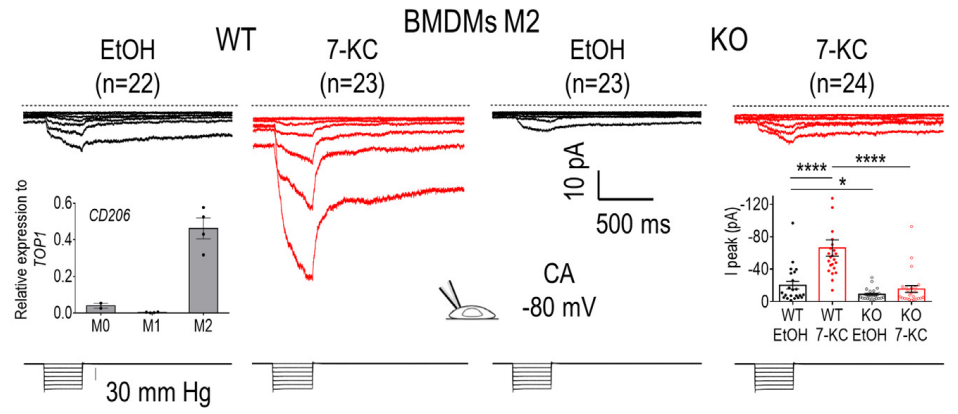
IL-4 Protein, Mouse purchased from MedChemExpress. Usage Cited in: Cell Rep. 2025 Apr 9;44(4):115542. [Abstract]
Mean currents elicited by membrane stretch (bottom traces) and recorded in the cell-attached configuration at −80 mV in BMDMs polarized to M2. BMDM M0 cells were first polarized to M2 in complete medium supplemented with IL-4 (20 ng/mL, HY-P70644) and IL-13 (20 ng/mL) cocktail for 24 h, and then treated with either EtOH (black traces) or 10 μM 7-KC (in red) for an additional 24 h in LDL-free medium. Left inset: M2 polarization was confirmed by CD206 gene expression and is represented as relative expression to TOP1. Right insets: peak current amplitude in EtOH (in black) or 7-KC (in red) condition, comparing WT and KO macrophages. n, number of individual recordings are shown above the traces. N = 2, number of animals from each genotype used for isolation of bone marrow mesenchymal stem cells and differentiation to macrophages.
-
Br J Pharmacol
Berberine alleviates pre-eclampsia by modulating M1/M2 macrophage polarization and T helper (Th1/Th2) cells cytokine balance. [Abstract]2026 Jun;183(11):2761-2782. PMID: 41671580 -
J Agric Food Chem
Quercetin Inhibits Neuronal Pyroptosis and Ferroptosis by Modulating Microglial M1/M2 Polarization in Atherosclerosis. [Abstract]2024 May 29;72(21):12156-12170. PMID: 38755521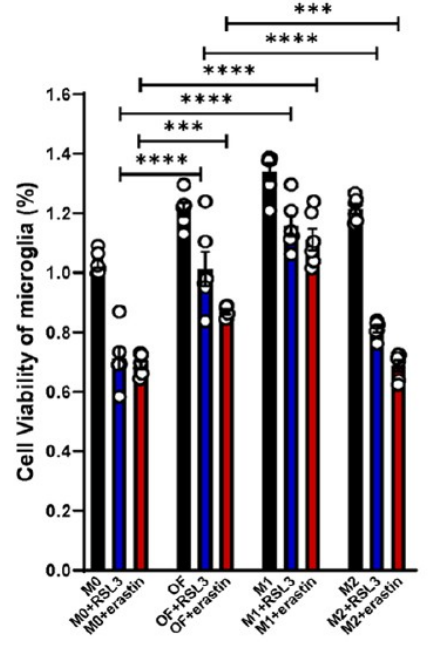
IL-4 Protein, Mouse purchased from MedChemExpress. Usage Cited in: J Agric Food Chem. 2024 May 29;72(21):12156-12170. [Abstract]
Cell viability of microglia treated with ox-LDL (12.5 μg/mL), FAC (200 μM), RSL3 (1 μM), erastin (5 μM), LPS (10 ng/mL), or IL-4 (10 ng/mL) for 24 h.
-
Biochem Pharmacol
ATF5 activates LPAR5 to enhance macrophage pro-inflammatory responses to exacerbate rheumatoid arthritis. [Abstract]2026 May:247:117804. PMID: 41690415 -
Cancer Gene Ther
SDCBP modulates tumor microenvironment, tumor progression and anti-PD1 efficacy in colorectal cancer. [Abstract]2024 May;31(5):755-765. PMID: 38555398 -
Inflamm Res
Gngt2 promotes inflammatory dendritic cell programming through an ATG5-NF-κB signaling axis in neutrophilic asthma. [Abstract]2026 Jun 2;75(1):126. PMID: 42228185 -
-
Biol Proced Online
Piperlongumine Inhibits Lung Cancer Growth by Inducing Endoplasmic Reticulum Stress Leading to Suppression of M2 Macrophage Polarization. [Abstract]2025 May 22;27(1):18. PMID: 40405091 -
Cell Signal
Nintedanib improves bleomycin-induced pulmonary fibrosis by inhibiting the Clec7a/SPP1 pathway in interstitial macrophages. [Abstract]2025 Apr:128:111635. PMID: 39892726 -
J Biomed Mater Res A
Hyaluronic Acid-Chitosan Nanoparticles Encapsulating Gal-9 Alleviate Severe Acute Pancreatitis by Promoting M2 Macrophage Polarization. [Abstract]2025 Dec;113(12):e70006. PMID: 41307175 -
Mol Immunol
Sophora tonkinensis reprograms tumor-associated macrophages to M1-like phenotype and exerts anti-hepatocellular carcinoma effects. [Abstract]2026 Mar:191:49-59. PMID: 41666700 -
Animals (Basel)
Development of a Mucosal Immune-Enhancing Oral Vaccine Candidate Against Porcine Epidemic Diarrhea Virus Using Lactobacillus paracasei. [Abstract]2026 Feb 3;16(3):471. PMID: 41681452 -
PLoS One
Xiao Qing Long Tang ameliorates neutrophil extracellular trap-dendritic cells-T helper 17 cell axis in Neutrophilic Asthma. [Abstract]2025 Nov 6;20(11):e0336333. PMID: 41196933


Technical Parameters
-
Species Mouse
-
Source E. coli
-
Tag Tag Free
-
Accession
P07750 (H23-S140)
-
Molecular Construction
-
N-term
-
IL-4 (H23-S140)
Accession # P07750 -
C-term
-
-
Protein Length
Full Length of Mature Protein
-
Synonyms
IL4; B_cell Stimulatory Factor 1; Interleukin 4; B-Cell Stimulatory Factor 1; IL-4; B Cell Growth Factor 1; Lymphocyte Stimulatory Factor 1; Binetrakin; Interleukin-4; Pitrakinra; BCGF-1; MGC79402; BCGF1; BSF-1; BSF1
-
AA Sequence
HGCDKNHLREIIGILNEVTGEGTPCTEMDVPNVLTATKNTTESELVCRASKVLRIFYLKHGKTPCLKKNSSVLMELQRLFRAFRCLDSSISCTMNESKSTSLKDFLESLKSIMQMDYS
-
Predicted Molecular Mass
13.4 kDa
-
Molecular Weight
Approximately 14 kDa, based on SDS-PAGE under reducing conditions.
-
Purity
≥ 95%, as determined by reducing SDS-PAGE.


Product Properties
Lyophilized powder
1.Lyophilized from a 0.22 μm filtered solution of 20 mM PB, 300 mM NaCl, 5% trehalose, pH 6.5.
2.Lyophilized from a 0.22 μm filtered solution of PBS, pH 7.4, 5% trehalose.
Please refer to the lot-specific COA for specific buffer information.
<1 EU/μg, determined by LAL method.
It is not recommended to reconstitute to a concentration less than 100 μg/mL in ddH2O.
Stored at -20°C for 2 years from date of receipt. After reconstitution, it is stable at 4°C for 1 week or -20°C for longer (with carrier protein). It is recommended to freeze aliquots at -20°C or -80°C for extended storage.
Room temperature in continental US; may vary elsewhere.


Documentation
-
Data Sheet (262 KB)
-
SDS (252 KB)
- English - EN (252 KB)
- Français - FR (252 KB)
- Deutsch - DE (252 KB)
- Norwegian - NO (252 KB)
- Español - ES (252 KB)
- Swedish - SV (252 KB)
- Italian - IT (252 KB)
- Korean - KR (252 KB)
- Portuguese - PT (252 KB)
-
Handling Instructions (2659 KB)


References
[1]. I-Cheng Ho,et al. Regulation of IL-4 Expression in Immunity and Diseases. Adv Exp Med Biol. 2016;941:31-77. [Content Brief]
[2]. Keegan AD, et al. Recent advances in understanding the role of IL-4 signaling. Fac Rev. 2021 Sep 7;10:71. [Content Brief]
[3]. Choi P, et al. IL-4: role in disease and regulation of production. Clin Exp Immunol. 1998 Sep;113(3):317-9. [Content Brief]
[4]. Chen BD, et al. Murine recombinant IL-4 is a bifunctional regulator of macrophage growth induced by colony-stimulating factors. J Immunol. 1992 Feb 1;148(3):753-9. [Content Brief]
[5]. Myburgh E, et al. Murine IL-4 is able to signal via chimeric human IL-4Ralpha/mouse gamma-chain receptor. Mol Immunol. 2008 Mar;45(5):1327-36. [Content Brief]
[6]. Ren X,et al. Recombinant murine interleukin 4 protein therapy for psoriasis in a transgenic VEGF mouse model. Dermatology. 2009;219(3):232-8. [Content Brief]

Calculators
Concentration (start) × Volume (start) = Concentration (final) × Volume (final)


 Powered by Bioz

