



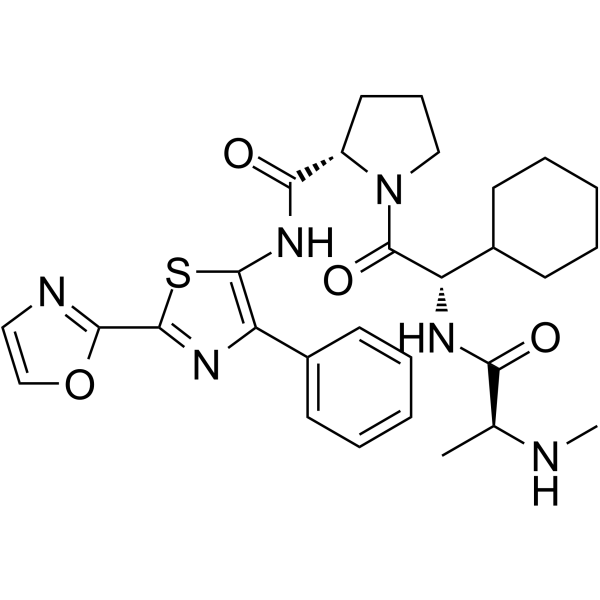
CUDC-427
Based on 5 publication(s) in Google Scholar
CUDC-427 is a potent second-generation pan-selective IAP antagonist, used for treatment of various cancers.
Nur für Forschungszwecke. Wir verkaufen nicht an Patienten.
- Reinheit : 99.32%
- CAS. Nr.: 1446182-94-0
- Formel: C29H36N6O4S
- Molecular Weight:564.70
-
Speicherung:Powder -20°C, 3 years , 4°C, 2 years ; In solvent -80°C, 2 years , -20°C, 1 year

To place orders, for customer services and technical support, please contact: MedChemExpress USA
Tel: 609-228-6898 E-mail: [email protected] [email protected]


-
 Biologische Aktivität
-
Chemical Information
-
Lösungsmittel & Löslichkeit
- Reinheit & Dokumentation
- Verweise
-
 Help & FAQs


-
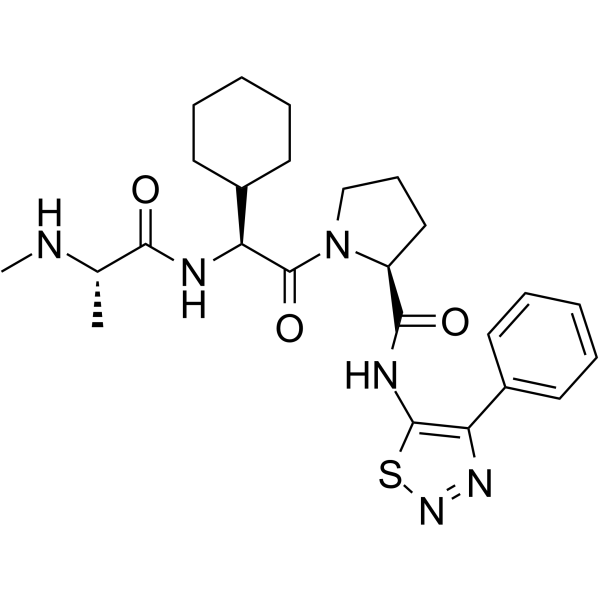
HY-13638
GDC-0152IAP Inhibitor -
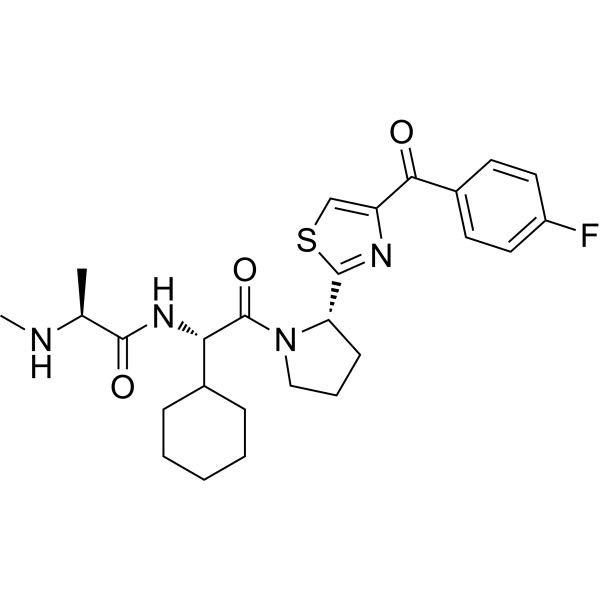
HY-15518
LCL161IAP Inhibitor -
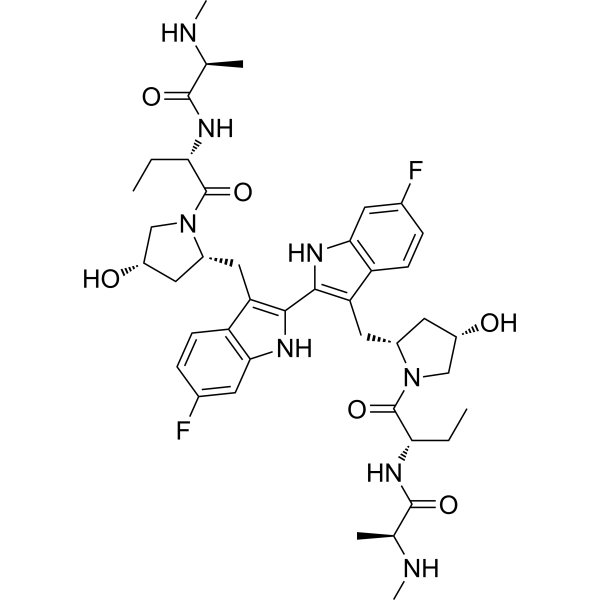
HY-16591
BirinapantXIAP/cIAP1 Antagonist -
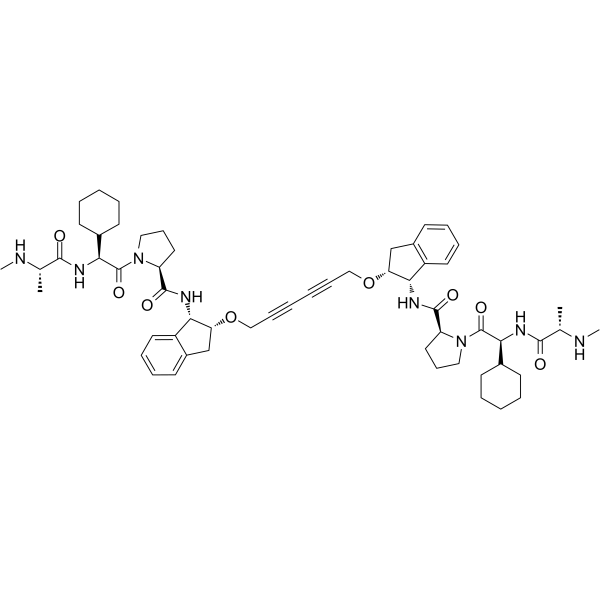
HY-12600
AZD5582 -
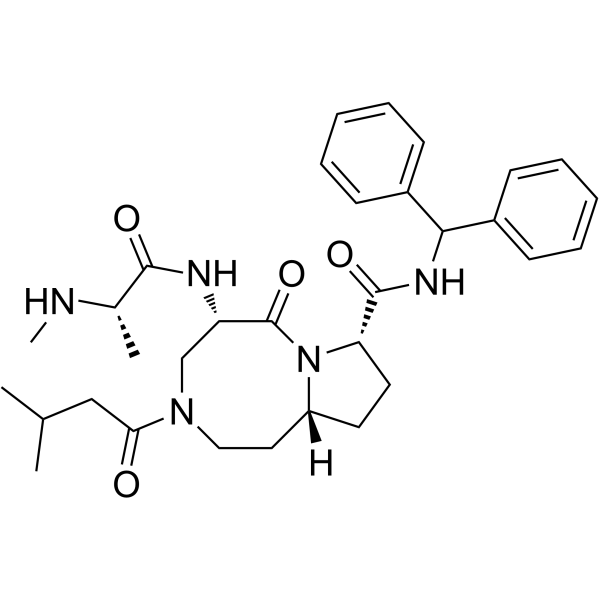
HY-15454
XevinapantSmac Mimetic/IAPs Antagonist -
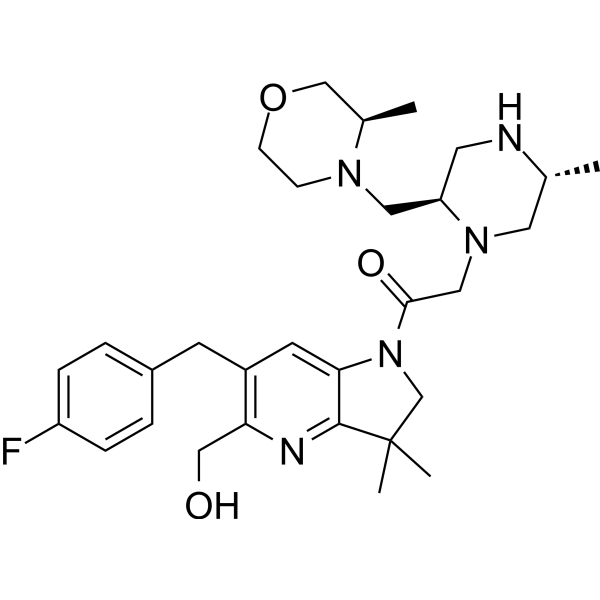
HY-109565
TolinapantIAP Antagonist -
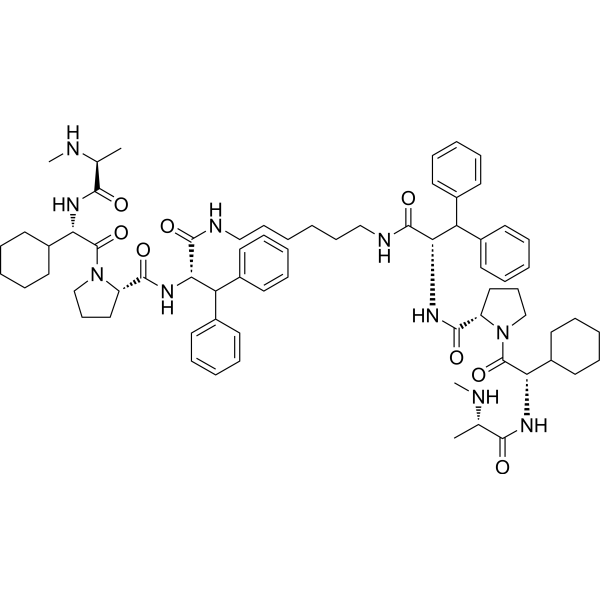
HY-16701
BV6cIAP1/XIAP Antagonist -
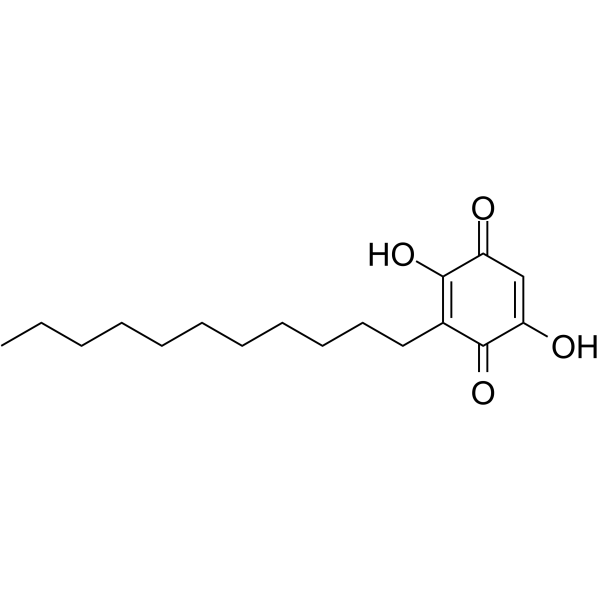
HY-17473
EmbelinXIAP Inhibitor -
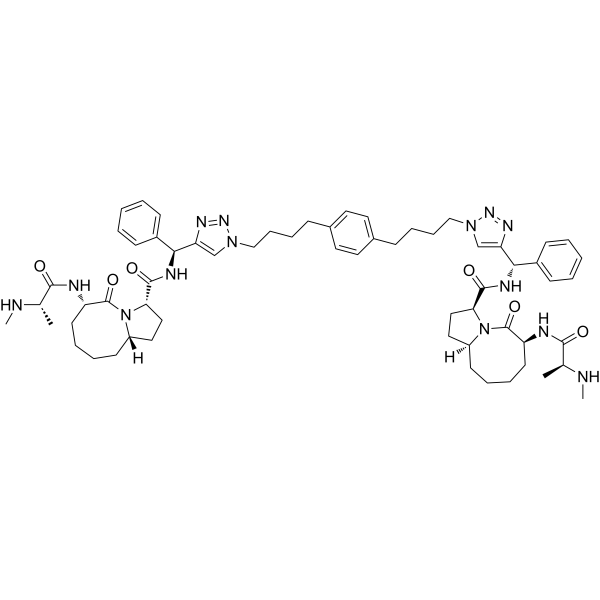
HY-15989
SM-164IAP Antagonist -
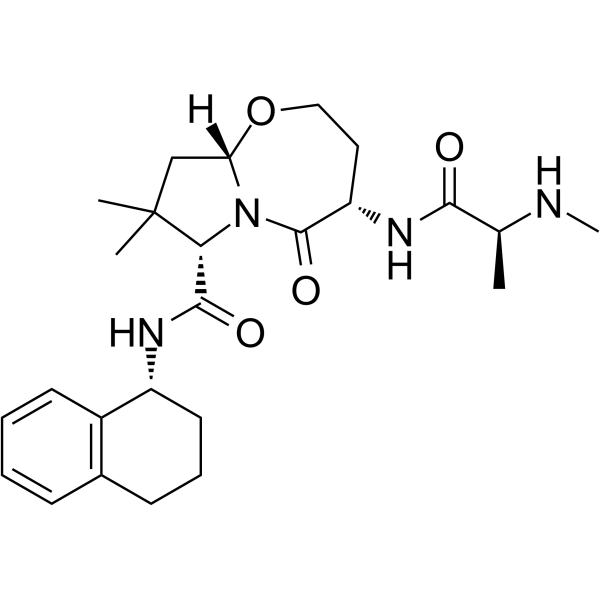
HY-125378
SBP-0636457SMAC Mimetic -
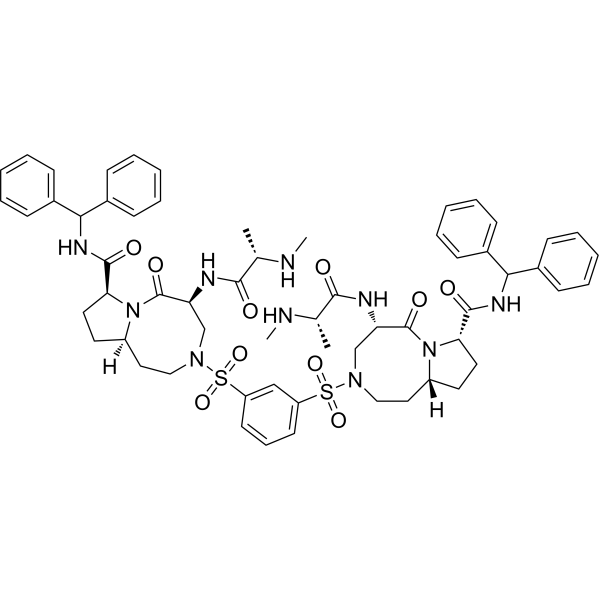
HY-125593
DasminapantIAP Antagonist -
HY-12842
UC-112XIAP Inhibitor
Publications Citing Use of MedChemExpress (MCE) CUDC-427
More

Biologische Aktivität
Beschreibung
In Vitro
GDC-0917 (0.1 nM-10 μM) induces reduction of cIAP1 levels in PBMCs in a concentration-dependent manner showing greater than 80% inhibition at concentrations greater than 0.1 μM (56.5 ng/mL)[1].
MedChemExpress (MCE) has not independently confirmed the accuracy of these methods. They are for reference only.
In Vivo
MedChemExpress (MCE) has not independently confirmed the accuracy of these methods. They are for reference only.
Clinical Trial
| NCT Number | Sponsor | Condition | Start Date |
Phase

|
|---|---|---|---|---|
| NCT01329991 | 2011-05 | PHASE1 |


Chemical Information
-
CAS. Nr. 1446182-94-0
-
Appearance Solid
-
Molecular Weight 564.70
-
Formel C29H36N6O4S
-
Color Light yellow to yellow
-
SMILES
O=C([C@H](CCC1)N1C([C@H](C2CCCCC2)NC([C@H](C)NC)=O)=O)NC3=C(C4=CC=CC=C4)N=C(C5=NC=CO5)S3
-
Synonyms
GDC-0917
-
Versand
Room temperature in continental US; may vary elsewhere.
-
Speicherung
Powder -20°C 3 years 4°C 2 years In solvent -80°C 2 years -20°C 1 year


Publications (5)
-
Journal Impact Factor
-
Most Recent
-
Cell Death Differ
Membrane-bound TNF mediates microtubule-targeting chemotherapeutics-induced cancer cytolysis via juxtacrine inter-cancer-cell death signaling. [Abstract]2020 May;27(5):1569-1587. PMID: 31645676 -
Clin Transl Med
Functional genomic analysis of epithelioid sarcoma reveals distinct proximal and distal subtype biology. [Abstract]2022 Jul;12(7):e961. PMID: 35839307 -
Br J Cancer
Functional genomics of human clear cell sarcoma: genomic, transcriptomic and chemical biology landscape for clear cell sarcoma. [Abstract]2023 May;128(10):1941-1954. PMID: 36959380 -
bioRxiv
Potentiating CAR-T bystander killing by enhanced Fas/FasL signaling mitigates antigen escape in heterogeneous tumors. [Abstract]2025 Sep 24:2025.09.22.677496. PMID: 41040218 -
bioRxiv
2024 Nov 28:2024.11.25.625306. PMID: 39651304


Lösungsmittel & Löslichkeit
In Vitro:
DMSO : 50 mg/mL (88.54 mM; Need ultrasonic; Hygroscopic DMSO has a significant impact on the solubility of product, please use newly opened DMSO)
Please refer to the solubility information to select the appropriate solvent. Once prepared, please aliquot and store the solution to prevent product inactivation from repeated freeze-thaw cycles.
Storage method and period of stock solution: -80°C, 2 years; -20°C, 1 year. When stored at -80°C, please use it within 2 years. When stored at -20°C, please use it within 1 year.
Please refer to the solubility information to select the appropriate solvent. Once prepared, please aliquot and store the solution to prevent product inactivation from repeated freeze-thaw cycles.
Storage method and period of stock solution: -80°C, 2 years; -20°C, 1 year. When stored at -80°C, please use it within 2 years. When stored at -20°C, please use it within 1 year.
Konzentration (Stammlösung) × Volumen (Stammlösung) = Konzentration (Ziellösung) × Volumen (Ziellösung)
In Vivo:
Select the appropriate dissolution method based on your experimental animal and administration route.
- For the following dissolution methods, please ensure to first prepare a clear stock solution using an In Vitro approach and then sequentially add co-solvents:
- To ensure reliable experimental results, the clarified stock solution can be appropriately stored based on storage conditions. As for the working solution for In Vivo experiments, it is recommended to prepare freshly and use it on the same day.
- The percentages shown for the solvents indicate their volumetric ratio in the final prepared solution. If precipitation or phase separation occurs during preparation, heat and/or sonication can be used to aid dissolution.
Add each solvent one by one: 10% DMSO 40% PEG300 5% Tween-80 45% Saline
Solubility: ≥ 2.5 mg/mL (4.43 mM); Clear solution
This protocol yields a clear solution of ≥ 2.5 mg/mL (saturation unknown).
Taking 1 mL working solution as an example, add 100 μL DMSO stock solution (25.0 mg/mL) to 400 μL PEG300, and mix evenly; then add 50 μL Tween-80 and mix evenly; then add 450 μL Saline to adjust the volume to 1 mL.
Preparation of Saline: Dissolve 0.9 g sodium chloride in ddH₂O and dilute to 100 mL to obtain a clear Saline solution.
In Vivo Dissolution Calculator
Please enter the basic information of animal experiments:
-
-
-
-
Recommended: Prepare an additional quantity of animals to account for potential losses during experiments.
Please enter your animal formula composition:
-
%DMSO +
Recommended: Keep the proportion of DMSO in working solution below 2% if your animal is weak.
-
%+
-
+%Tween-80 + +
-
%Saline +
The co-solvents required include: DMSO, . All of co-solvents are available by MedChemExpress (MCE). , Tween 80. All of co-solvents are available by MedChemExpress (MCE).
Working solution concentration: 0.22 mg/mL
Method for preparing stock solution: mg drug dissolved in μL DMSO. Stock solution concentration: mg/mL.
1. Take μL DMSO stock solution;
2. Add μL .
μL , mix evenly;
3. Then add μL Tween 80, mix evenly;
4. Then add μL
Please ensure that the stock solution in the first step is dissolved to a clear state, and add co-solvents in sequence. You can use ultrasonic heating (ultrasonic cleaner, recommended frequency 20-40 kHz), vortexing, etc. to assist dissolution.


Reinheit & Dokumentation
-
Data Sheet (281 KB)
-
SDS (252 KB)
- English - EN (252 KB)
- Français - FR (252 KB)
- Deutsch - DE (252 KB)
- Norwegian - NO (252 KB)
- Español - ES (252 KB)
- Swedish - SV (252 KB)
- Italian - IT (252 KB)
- Korean - KR (252 KB)
- Portuguese - PT (252 KB)
-
Handling Instructions (2659 KB)
Verweise


Complete Stock Solution Preparation Table
Please refer to the solubility information to select the appropriate solvent. Once prepared, please aliquot and store the solution to prevent product inactivation from repeated freeze-thaw cycles.
Storage method and period of stock solution: -80°C, 2 years; -20°C, 1 year. When stored at -80°C, please use it within 2 years. When stored at -20°C, please use it within 1 year.
| Optional Solvent | Concentration Solvent Mass | 1 mg | 5 mg | 10 mg | 25 mg |
|---|---|---|---|---|---|
| DMSO | 1 mM | 1.7709 mL | 8.8543 mL | 17.7085 mL | 44.2713 mL |
| 5 mM | 0.3542 mL | 1.7709 mL | 3.5417 mL | 8.8543 mL | |
| 10 mM | 0.1771 mL | 0.8854 mL | 1.7709 mL | 4.4271 mL | |
| 15 mM | 0.1181 mL | 0.5903 mL | 1.1806 mL | 2.9514 mL | |
| 20 mM | 0.0885 mL | 0.4427 mL | 0.8854 mL | 2.2136 mL | |
| 25 mM | 0.0708 mL | 0.3542 mL | 0.7083 mL | 1.7709 mL | |
| 30 mM | 0.0590 mL | 0.2951 mL | 0.5903 mL | 1.4757 mL | |
| 40 mM | 0.0443 mL | 0.2214 mL | 0.4427 mL | 1.1068 mL | |
| 50 mM | 0.0354 mL | 0.1771 mL | 0.3542 mL | 0.8854 mL | |
| 60 mM | 0.0295 mL | 0.1476 mL | 0.2951 mL | 0.7379 mL | |
| 80 mM | 0.0221 mL | 0.1107 mL | 0.2214 mL | 0.5534 mL |


CUDC-427 Related Classifications
HY-15835 Related Classifications
 Powered by Bioz