



HA130
Based on 4 publication(s) in Google Scholar
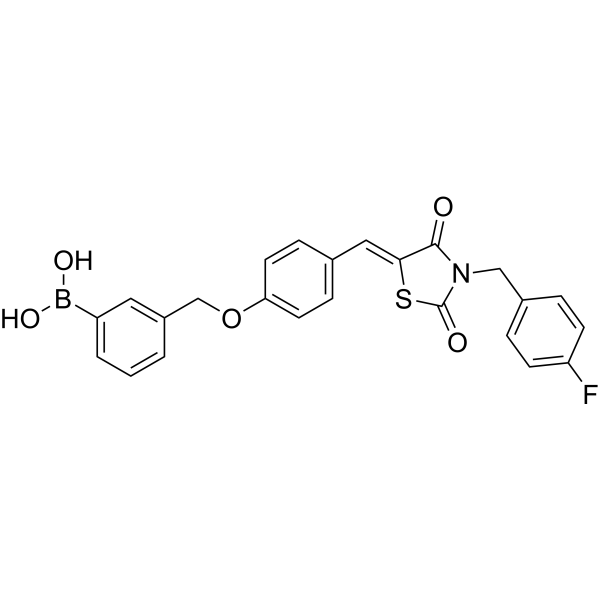
HA130 is a selective autotaxin (ATX) inhibitor with an IC50 of 28 nM.
For research use only. We do not sell to patients.
- Purity : 98.79%
- CAS No.: 1229652-21-4
- Formula: C24H19BFNO5S
- Molecular Weight:463.29
-
Storage:Powder -20°C, 3 years , 4°C, 2 years ; In solvent -80°C, 2 years , -20°C, 1 year

To place orders, for customer services and technical support, please contact: MedChemExpress USA
Tel: 609-228-6898 E-mail: [email protected] [email protected]


-
 Biological Activity
-
Chemical Information
-
Solvent & Solubility
- Purity & Documentation
- References
-
 Help & FAQs


-
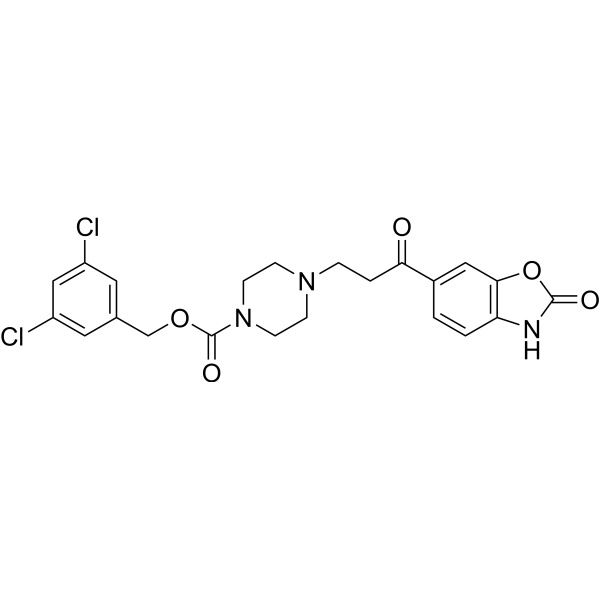
HY-13344
PF-8380Autotaxin Inhibitor -
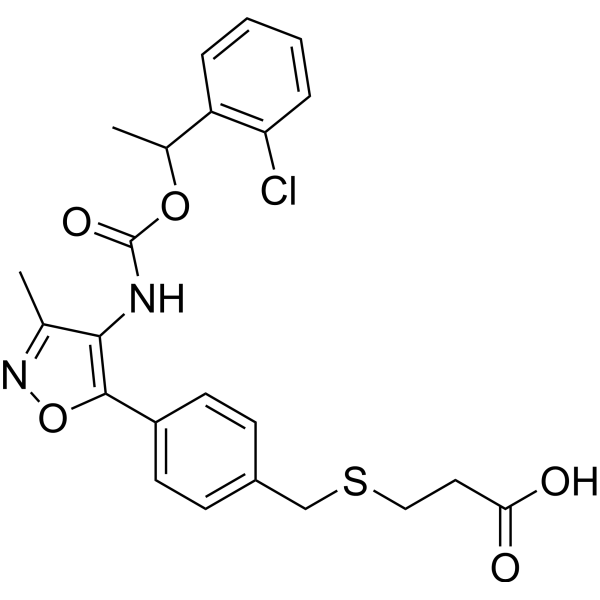
HY-13285
Ki16425LPA1/3 Antagonist -
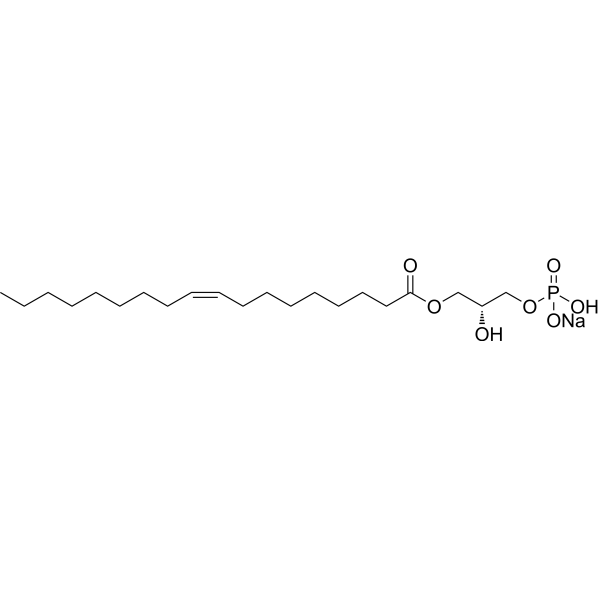
HY-107614
1-Oleoyl lysophosphatidic acid sodiumLPA Receptor Activator -
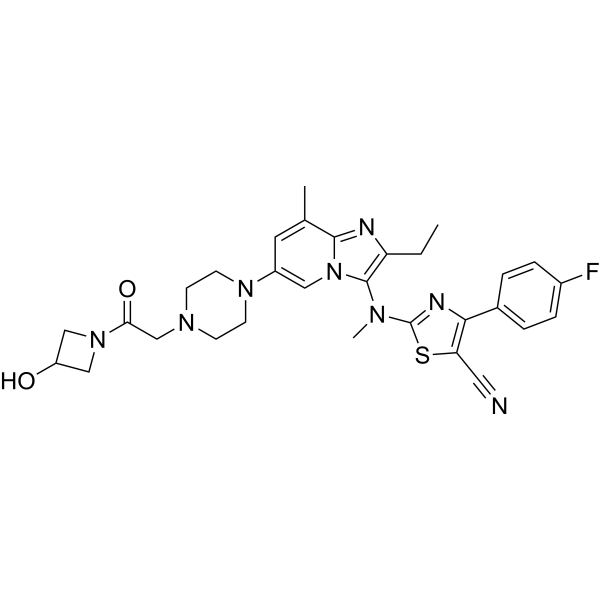
HY-101772
ZiritaxestatAutotaxin Inhibitor -
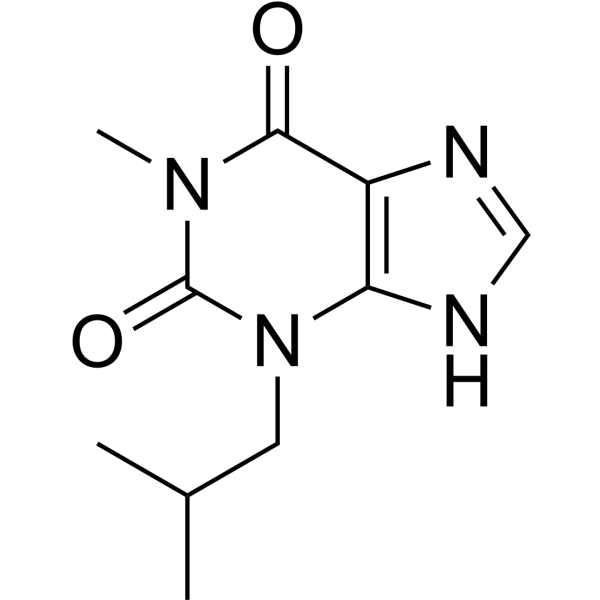
HY-12318
IBMXPDE Inhibitor -
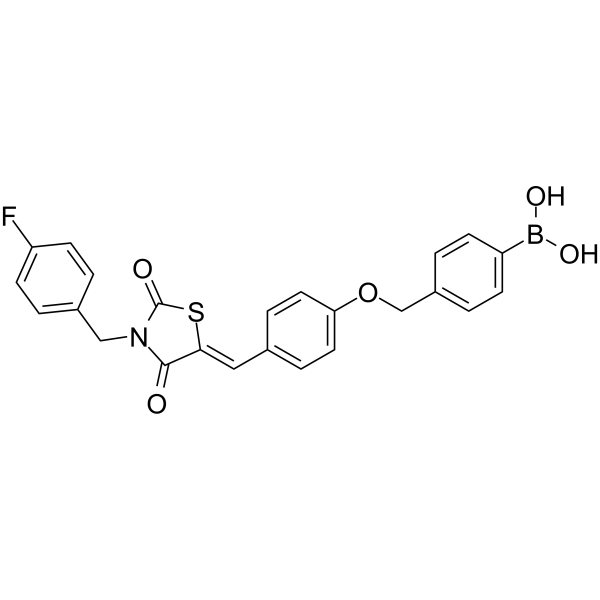
HY-116100
(E/Z)-HA155Autotaxin Inhibitor -

HY-13344R
PF-8380 (Standard)Autotaxin Inhibitor -
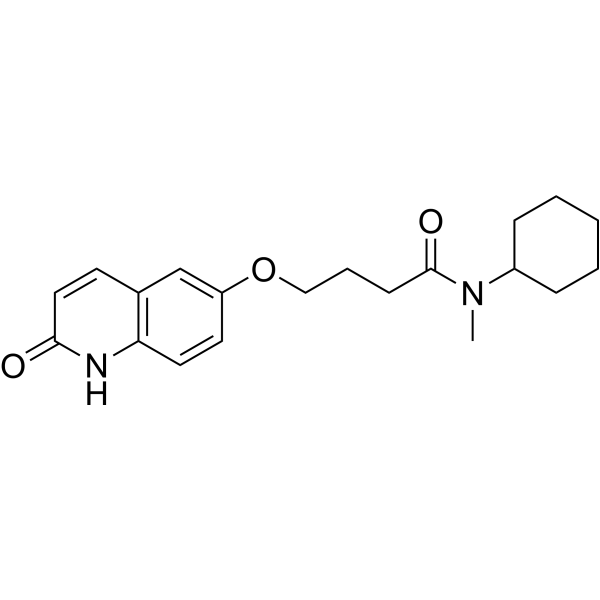
HY-101312
CilostamidePDE3 Inhibitor -

HY-12318R
IBMX (Standard)PDE Inhibitor -
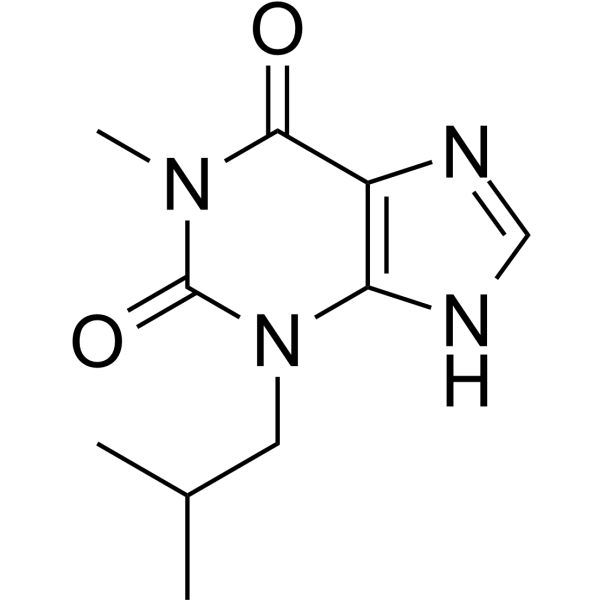
HY-12318G
IBMX (GMP)PDE Inhibitor -
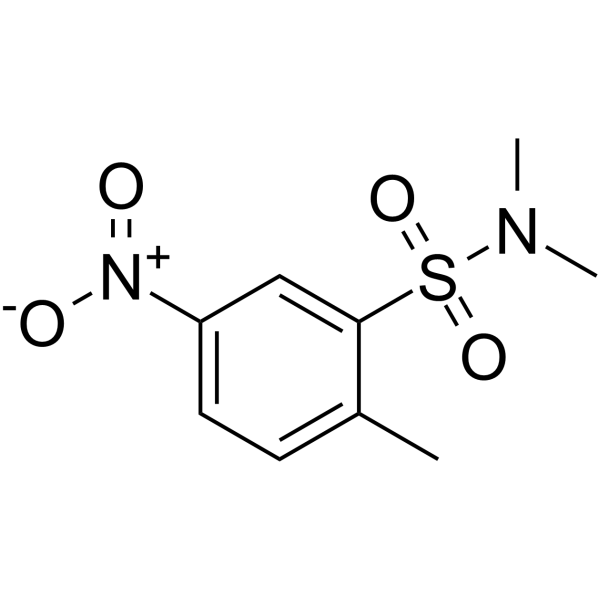
HY-109586
BRL-50481PDE Inhibitor -
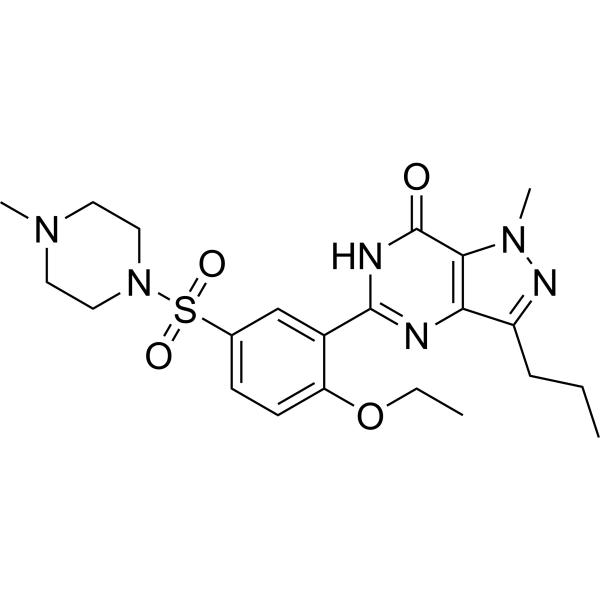
HY-15025
SildenafilPDE5 Inhibitor
Publications Citing Use of MedChemExpress (MCE) HA130
More Customer Validation & Images

-
WB


Biological Activity
Description
IC50 & Target
[1]|
Autotaxin 28 nM (IC50) |
Cellular Effect
|
Cell Line

|
Type | Value | Description | References |
|---|---|---|---|---|
| HEK293 | IC50 |
28.3 nM
Compound: 72
|
Inhibition of 6x-histidine-tagged human recombinant ATX expressed in HEK293 cells assessed as lysophosphatidulcholine release
Inhibition of 6x-histidine-tagged human recombinant ATX expressed in HEK293 cells assessed as lysophosphatidulcholine release
|
[PMID: 20536182] |
In Vitro
HA130 completely blocks the ability of ATX to promote TEM (transendothelial migration). HA130 at 0.3 μM completely ablates the activity of ATX on TK1 uropod formation[1].
MedChemExpress (MCE) has not independently confirmed the accuracy of these methods. They are for reference only.
In Vivo
The s.c. administration of HA130 induces marked lymphocyte accumulation within the endothelial cell (EC) and sub-EC layers of HEVs in draining lymph nodes (LNs)[2].
MedChemExpress (MCE) has not independently confirmed the accuracy of these methods. They are for reference only.


Chemical Information
-
CAS No. 1229652-21-4
-
Appearance Solid
-
Molecular Weight 463.29
-
Formula C24H19BFNO5S
-
Color Off-white to yellow
-
SMILES
O=C1N(CC2=CC=C(F)C=C2)C(S/C1=C\C3=CC=C(OCC4=CC(B(O)O)=CC=C4)C=C3)=O
-
Shipping
Room temperature in continental US; may vary elsewhere.
-
Storage
Powder -20°C 3 years 4°C 2 years In solvent -80°C 2 years -20°C 1 year


Publications (4)
-
Journal Impact Factor
-
Most Recent
-
EBioMedicine
A SNP of bacterial blc disturbs gut lysophospholipid homeostasis and induces inflammation through epithelial barrier disruption. [Abstract]2020 Feb:52:102652. PMID: 32058942 -
J Crohns Colitis
Mesenteric Adipose Tissue Contributes to Intestinal Fibrosis in Crohn's Disease Through the ATX-LPA Axis. [Abstract]2022 Aug 4;16(7):1124-1139. PMID: 35104318 -
Basic Res Cardiol
Lysophosphatidic acid contributes to myocardial ischemia/reperfusion injury by activating TRPV1 in spinal cord. [Abstract]2024 Apr;119(2):329-348. PMID: 38236300 -
Cell Mol Life Sci
NSun2 regulates aneurysm formation by promoting autotaxin expression and T cell recruitment. [Abstract]2021 Feb;78(4):1709-1727. PMID: 32734582
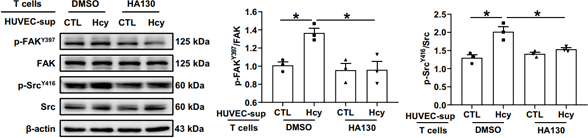
HA130 purchased from MedChemExpress. Usage Cited in: Cell Mol Life Sci. 2021 Feb;78(4):1709-1727. [Abstract]
Supernatant (sup) from HUVECs stimulated with or without Hcy (100 μM) for 24 h are transferred to T cell and cultured with or without HA130 (1 μM) for 24 h. HA130 suppresses the activation of FAK and Src in T cells caused by Hcy-stimulated HUVEC supernatant.


Solvent & Solubility
In Vitro:
DMSO : ≥ 100 mg/mL (215.85 mM; Hygroscopic DMSO has a significant impact on the solubility of product, please use newly opened DMSO)
* "≥" means soluble, but saturation unknown.
Please refer to the solubility information to select the appropriate solvent. Once prepared, please aliquot and store the solution to prevent product inactivation from repeated freeze-thaw cycles.
Storage method and period of stock solution: -80°C, 2 years; -20°C, 1 year. When stored at -80°C, please use it within 2 years. When stored at -20°C, please use it within 1 year.
Please refer to the solubility information to select the appropriate solvent. Once prepared, please aliquot and store the solution to prevent product inactivation from repeated freeze-thaw cycles.
Storage method and period of stock solution: -80°C, 2 years; -20°C, 1 year. When stored at -80°C, please use it within 2 years. When stored at -20°C, please use it within 1 year.
Concentration (start) × Volume (start) = Concentration (final) × Volume (final)
In Vivo:
Select the appropriate dissolution method based on your experimental animal and administration route.
- For the following dissolution methods, please ensure to first prepare a clear stock solution using an In Vitro approach and then sequentially add co-solvents:
- To ensure reliable experimental results, the clarified stock solution can be appropriately stored based on storage conditions. As for the working solution for In Vivo experiments, it is recommended to prepare freshly and use it on the same day.
- The percentages shown for the solvents indicate their volumetric ratio in the final prepared solution. If precipitation or phase separation occurs during preparation, heat and/or sonication can be used to aid dissolution.
Add each solvent one by one: 10% DMSO 40% PEG300 5% Tween-80 45% Saline
Solubility: ≥ 2.5 mg/mL (5.40 mM); Clear solution
This protocol yields a clear solution of ≥ 2.5 mg/mL (saturation unknown).
Taking 1 mL working solution as an example, add 100 μL DMSO stock solution (25.0 mg/mL) to 400 μL PEG300, and mix evenly; then add 50 μL Tween-80 and mix evenly; then add 450 μL Saline to adjust the volume to 1 mL.
Preparation of Saline: Dissolve 0.9 g sodium chloride in ddH₂O and dilute to 100 mL to obtain a clear Saline solution.
In Vivo Dissolution Calculator
Please enter the basic information of animal experiments:
-
-
-
-
Recommended: Prepare an additional quantity of animals to account for potential losses during experiments.
Please enter your animal formula composition:
-
%DMSO +
Recommended: Keep the proportion of DMSO in working solution below 2% if your animal is weak.
-
%+
-
+%Tween-80 + +
-
%Saline +
The co-solvents required include: DMSO, . All of co-solvents are available by MedChemExpress (MCE). , Tween 80. All of co-solvents are available by MedChemExpress (MCE).
Working solution concentration: 0.22 mg/mL
Method for preparing stock solution: mg drug dissolved in μL DMSO. Stock solution concentration: mg/mL.
1. Take μL DMSO stock solution;
2. Add μL .
μL , mix evenly;
3. Then add μL Tween 80, mix evenly;
4. Then add μL
Please ensure that the stock solution in the first step is dissolved to a clear state, and add co-solvents in sequence. You can use ultrasonic heating (ultrasonic cleaner, recommended frequency 20-40 kHz), vortexing, etc. to assist dissolution.


Purity & Documentation
-
Data Sheet (273 KB)
-
SDS (392 KB)
- English - EN (392 KB)
- Français - FR (392 KB)
- Deutsch - DE (392 KB)
- Norwegian - NO (392 KB)
- Español - ES (392 KB)
- Swedish - SV (392 KB)
- Italian - IT (392 KB)
- Korean - KR (392 KB)
- Portuguese - PT (392 KB)
-
Handling Instructions (2659 KB)
References
[1]. Zhang Y, et al. Autotaxin through lysophosphatidic acid stimulates polarization, motility, and transendothelial migration of naive T cells. J Immunol. 2012 Oct 15;189(8):3914-3924. [Content Brief]
[2]. Bai Z, et al. Constitutive lymphocyte transmigration across the basal lamina of high endothelial venules is regulated by theautotaxin/lysophosphatidic acid axis. J Immunol. 2013 Mar 1;190(5):2036-2048. [Content Brief]


Complete Stock Solution Preparation Table
Please refer to the solubility information to select the appropriate solvent. Once prepared, please aliquot and store the solution to prevent product inactivation from repeated freeze-thaw cycles.
Storage method and period of stock solution: -80°C, 2 years; -20°C, 1 year. When stored at -80°C, please use it within 2 years. When stored at -20°C, please use it within 1 year.
| Optional Solvent | Concentration Solvent Mass | 1 mg | 5 mg | 10 mg | 25 mg |
|---|---|---|---|---|---|
| DMSO | 1 mM | 2.1585 mL | 10.7924 mL | 21.5848 mL | 53.9619 mL |
| 5 mM | 0.4317 mL | 2.1585 mL | 4.3170 mL | 10.7924 mL | |
| 10 mM | 0.2158 mL | 1.0792 mL | 2.1585 mL | 5.3962 mL | |
| 15 mM | 0.1439 mL | 0.7195 mL | 1.4390 mL | 3.5975 mL | |
| 20 mM | 0.1079 mL | 0.5396 mL | 1.0792 mL | 2.6981 mL | |
| 25 mM | 0.0863 mL | 0.4317 mL | 0.8634 mL | 2.1585 mL | |
| 30 mM | 0.0719 mL | 0.3597 mL | 0.7195 mL | 1.7987 mL | |
| 40 mM | 0.0540 mL | 0.2698 mL | 0.5396 mL | 1.3490 mL | |
| 50 mM | 0.0432 mL | 0.2158 mL | 0.4317 mL | 1.0792 mL | |
| 60 mM | 0.0360 mL | 0.1799 mL | 0.3597 mL | 0.8994 mL | |
| 80 mM | 0.0270 mL | 0.1349 mL | 0.2698 mL | 0.6745 mL | |
| 100 mM | 0.0216 mL | 0.1079 mL | 0.2158 mL | 0.5396 mL |


HA130 Related Classifications
HY-19329 Related Classifications
 Powered by Bioz