



NOD-IN-1
Based on 8 publication(s) in Google Scholar
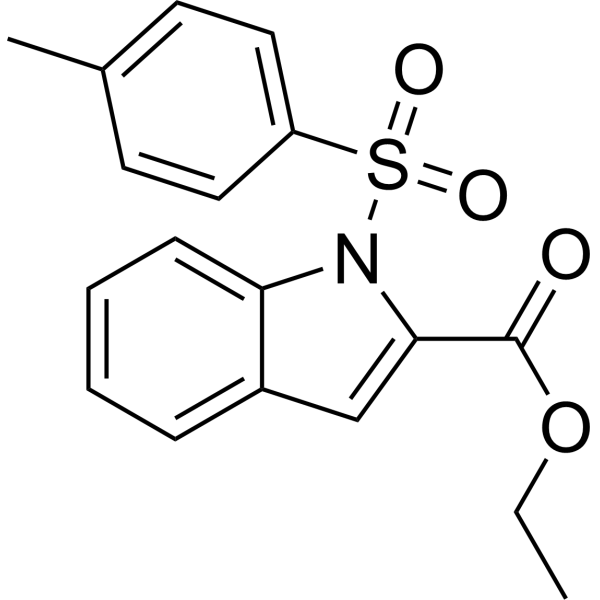
NOD-IN-1 is a potent mixed inhibitor of nucleotide-binding oligomerization domain (NOD)-like receptors, NOD1 and NOD2, with IC50 of 5.74 μM and 6.45 μM, respectively.
For research use only. We do not sell to patients.
- Purity : 99.48%
- CAS No.: 132819-92-2
- Formula: C18H17NO4S
- Molecular Weight:343.40
-
Storage:Powder -20°C, 3 years , 4°C, 2 years ; In solvent -80°C, 2 years , -20°C, 1 year

To place orders, for customer services and technical support, please contact: MedChemExpress USA
Tel: 609-228-6898 E-mail: [email protected] [email protected]


-
 Biological Activity
-
Chemical Information
-
Solvent & Solubility
- Purity & Documentation
- References
-
 Help & FAQs


-
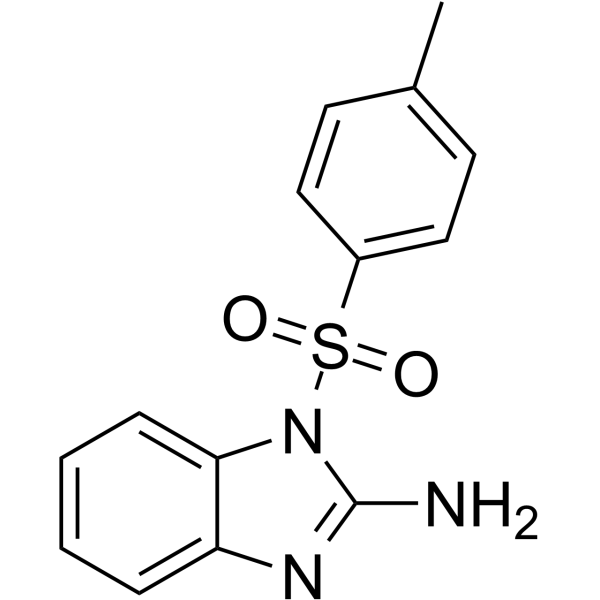
HY-18639
Nodinitib-1NOD-like Receptor (NLR) Inhibitor -
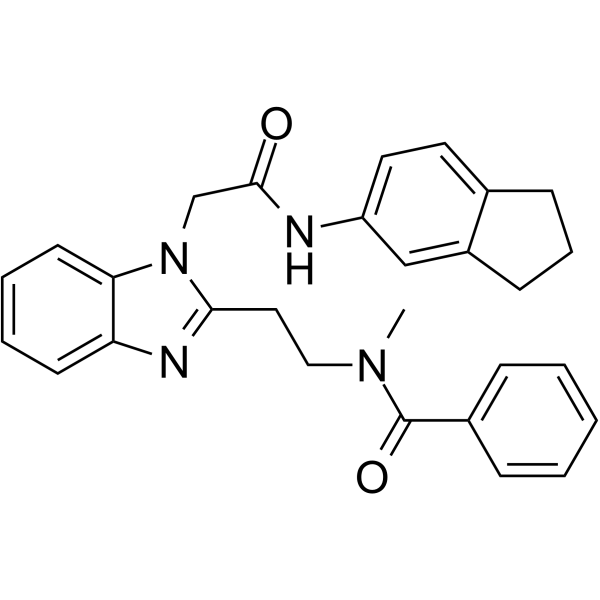
HY-136555
GSK717NOD2 Inhibitor -
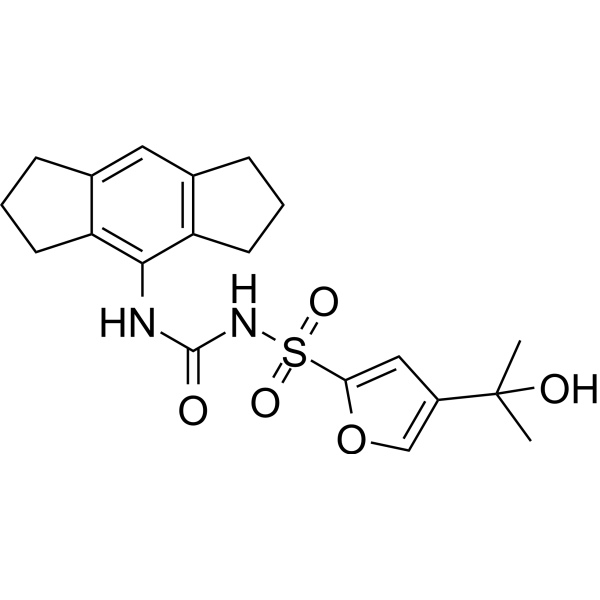
HY-12815
MCC950NLRP3 Inhibitor -
HY-12815A
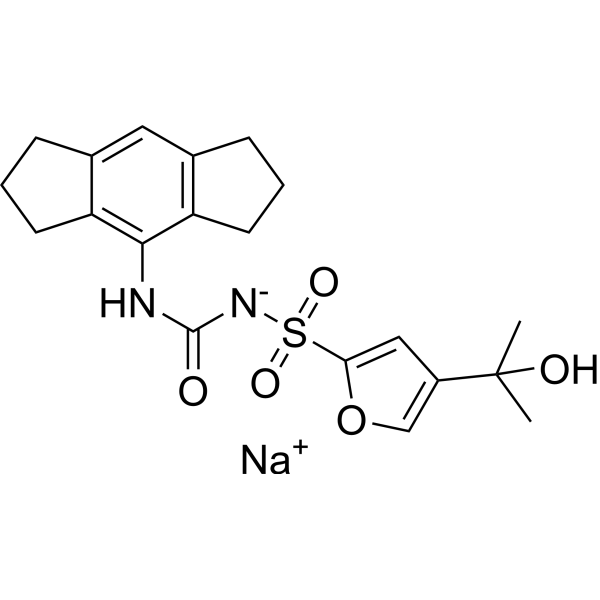
MCC950 sodiumNLRP3 Inhibitor -
HY-114180
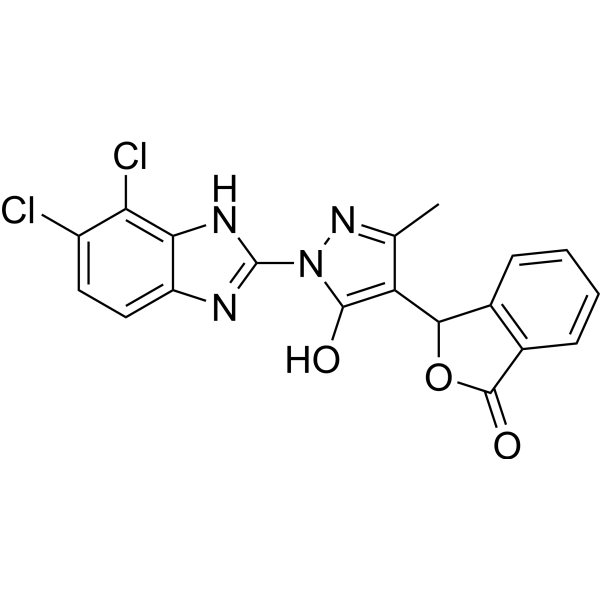
RU.521cGAS Inhibitor -
HY-112693
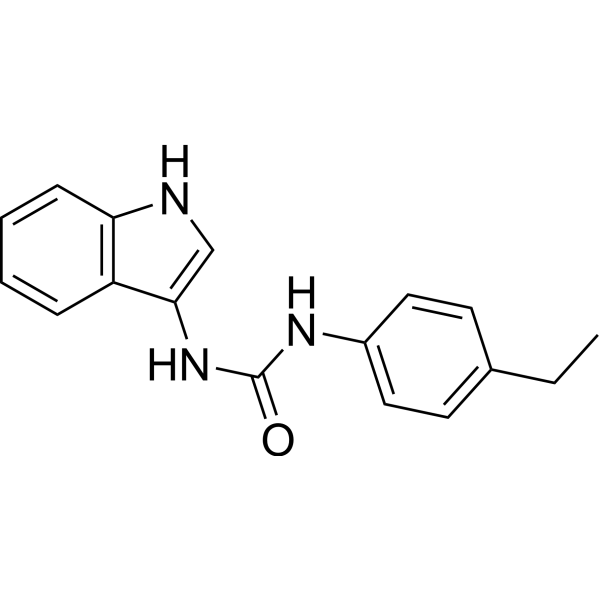
H-151STING Antagonist -
HY-112906
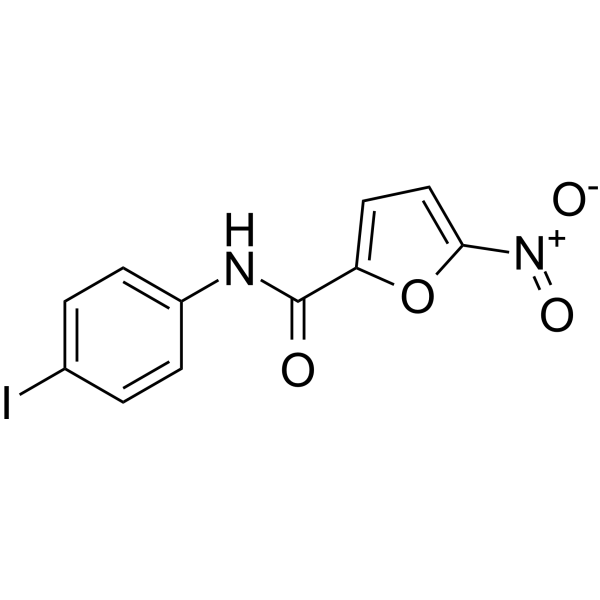
C-176STING Inhibitor -
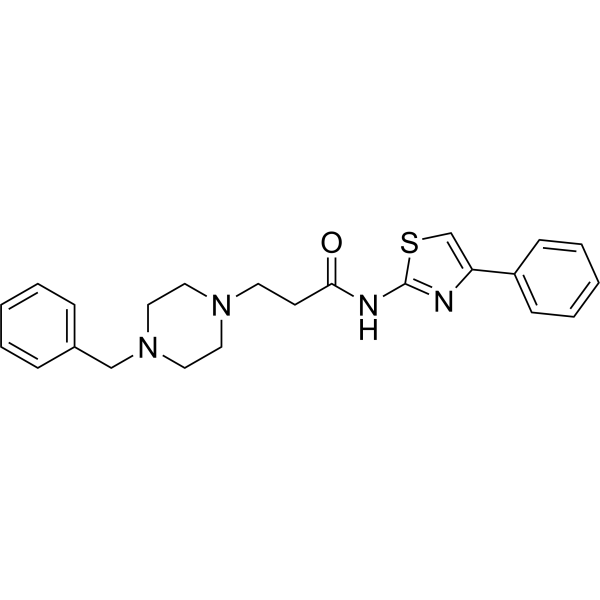
HY-139397
TJ-M2010-5MyD88 Inhibitor -
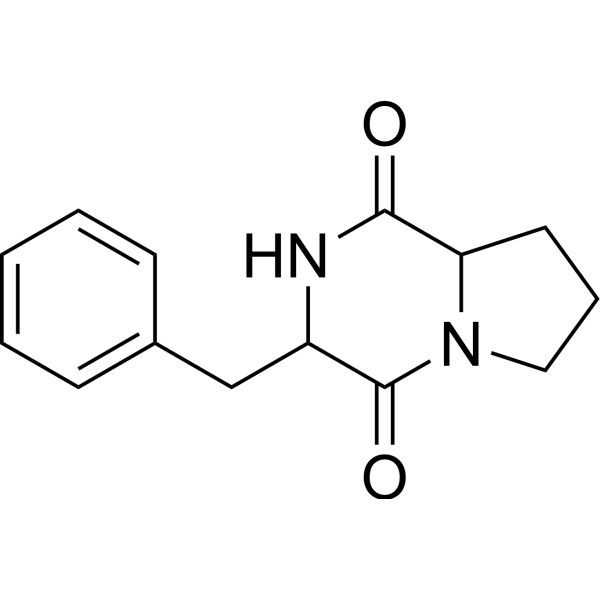
HY-P1934
Cyclo(Phe-Pro)Antifungal Cyclic Dipeptide -
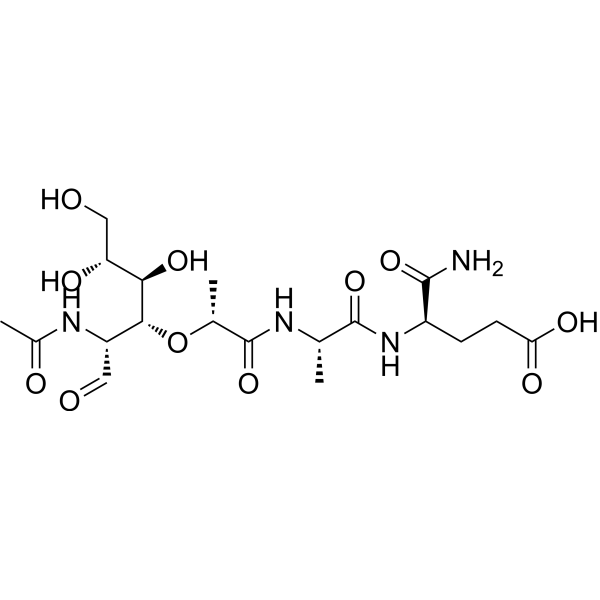
HY-127090
Muramyl dipeptideImmunoreactive Peptide -
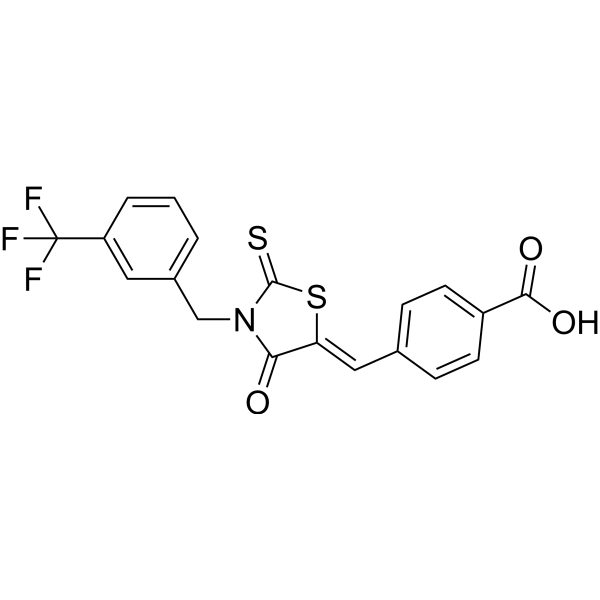
HY-103666
CY-09NLRP3 Inhibitor -
HY-101868
INF39NLRP3 Inhibitor
Publications Citing Use of MedChemExpress (MCE) NOD-IN-1
More- Exploration. 2025 Dec 18;5(6):20240396. [Abstract]
- Nat Biomed Eng. 2022 Jan;6(1):32-43. [Abstract]
- J Hazard Mater. 2021 Jan 15:402:123527. [Abstract]
- Precis Clin Med. 2024 Jun 6;7(2):pbae013. [Abstract]
- Front Cell Infect Microbiol. 2020 May 5:10:196. [Abstract]
- Cell Signal. 2022 May:93:110283. [Abstract]
- Mol Oral Microbiol. 2021 Jun;36(3):172-181. [Abstract]
- Gastroenterol Res Pract. 2023 Mar 27:2023:6078308. [Abstract]
 Customer Validation & Images

-
WB
-
WB


Biological Activity
Description
IC50 & Target
|
NOD1 |
NOD2 |
In Vitro
NOD-IN-1 (compound 4) is potent mixed inhibitor of NOD1 and NOD2, displaying a balanced inhibitory activity on both targets in the low micromolar range. NOD-IN-1 (IC50 (NOD1)=5.74 μM; IC50 (NOD2)=6.45 μM) is identified as the best of the series, possessing NOD1- and NOD2-inhibitory activities in the lower micromolar range. These results show that NOD-IN-1 is 7-fold less potent than Noditinib-1 in terms of NOD1 inhibition and completely devoid of selective activity for NOD1 or NOD2 as opposed to Noditinib-1. NOD-IN-1 exhibits balanced dual activities of less than 10 μM on the two targets[1].
MedChemExpress (MCE) has not independently confirmed the accuracy of these methods. They are for reference only.


Chemical Information
-
CAS No. 132819-92-2
-
Appearance Solid
-
Molecular Weight 343.40
-
Formula C18H17NO4S
-
Color White to off-white
-
SMILES
O=S(N1C(C(OCC)=O)=CC2=CC=CC=C21)(C3=CC=C(C)C=C3)=O
-
Shipping
Room temperature in continental US; may vary elsewhere.
-
Storage
Powder -20°C 3 years 4°C 2 years In solvent -80°C 2 years -20°C 1 year


Publications (8)
-
Journal Impact Factor
-
Most Recent
-
Exploration
A Bioorthogonal and Programmable Bacterial Delivery System for Spatiotemporally Targeted Therapy of Solid Tumors. [Abstract]2025 Dec 18;5(6):20240396. PMID: 41476656 -
Nat Biomed Eng
Biomaterial-mediated modulation of oral microbiota synergizes with PD-1 blockade in mice with oral squamous cell carcinoma. [Abstract]2022 Jan;6(1):32-43. PMID: 34750535 -
J Hazard Mater
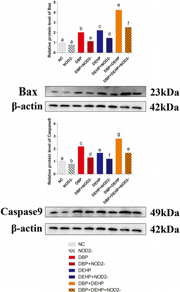
Mixed plasticizers aggravated apoptosis by NOD2-RIP2-NF-κB pathway in grass carp hepatocytes. [Abstract]2021 Jan 15:402:123527. PMID: 32712359
NOD-IN-1 purchased from MedChemExpress. Usage Cited in: J Hazard Mater. 2021 Jan 15:402:123527. [Abstract]
Under the condition of DBP and DEHP exposure alone, the protein levels of Bax and Caspase9 are significantly increased, and the increased levels are more significantly after DBP and DEHP exposure together. But, in DBP + NOD2- group, DEHP + NOD2- group and DBP + DEHP + NOD2- group, the increase levels of Bax and Caspase9 have been significantly alleviated, respectively.
-
Precis Clin Med
Suppression of MyD88 disturbs gut microbiota and activates the NLR pathway and hence fails to ameliorate DSS-induced colitis. [Abstract]2024 Jun 6;7(2):pbae013. PMID: 38946731 -
Front Cell Infect Microbiol
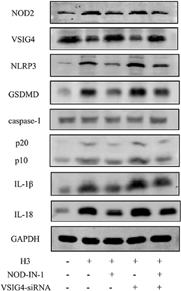
Extracellular Histone H3 Induces Pyroptosis During Sepsis and May Act Through NOD2 and VSIG4/NLRP3 Pathways. [Abstract]2020 May 5:10:196. PMID: 32432055
NOD-IN-1 purchased from MedChemExpress. Usage Cited in: Front Cell Infect Microbiol. 2020 May 5:10:196. [Abstract]
The western blotting shows that the protein levels of NLRP3, caspase-1, GSDMD, IL-1β, IL-18 are decreased in NOD-IN-1 group compared with H3 group.
-
Cell Signal
2022 May:93:110283. PMID: 35176453 -
Mol Oral Microbiol
2021 Jun;36(3):172-181. PMID: 33715305 -
Gastroenterol Res Pract
Astaxanthin Alleviates Inflammatory Response in Neonatal Necrotizing Enterocolitis Rats by Regulating NOD2/TLR4 Pathway. [Abstract]2023 Mar 27:2023:6078308. PMID: 37021078


Solvent & Solubility
In Vitro:
DMSO : 100 mg/mL (291.21 mM; Need ultrasonic; Hygroscopic DMSO has a significant impact on the solubility of product, please use newly opened DMSO)
Please refer to the solubility information to select the appropriate solvent. Once prepared, please aliquot and store the solution to prevent product inactivation from repeated freeze-thaw cycles.
Storage method and period of stock solution: -80°C, 2 years; -20°C, 1 year. When stored at -80°C, please use it within 2 years. When stored at -20°C, please use it within 1 year.
Please refer to the solubility information to select the appropriate solvent. Once prepared, please aliquot and store the solution to prevent product inactivation from repeated freeze-thaw cycles.
Storage method and period of stock solution: -80°C, 2 years; -20°C, 1 year. When stored at -80°C, please use it within 2 years. When stored at -20°C, please use it within 1 year.
Concentration (start) × Volume (start) = Concentration (final) × Volume (final)
In Vivo:
Select the appropriate dissolution method based on your experimental animal and administration route.
- For the following dissolution methods, please ensure to first prepare a clear stock solution using an In Vitro approach and then sequentially add co-solvents:
- To ensure reliable experimental results, the clarified stock solution can be appropriately stored based on storage conditions. As for the working solution for In Vivo experiments, it is recommended to prepare freshly and use it on the same day.
- The percentages shown for the solvents indicate their volumetric ratio in the final prepared solution. If precipitation or phase separation occurs during preparation, heat and/or sonication can be used to aid dissolution.
Add each solvent one by one: 10% DMSO 40% PEG300 5% Tween-80 45% Saline
Solubility: ≥ 2.5 mg/mL (7.28 mM); Clear solution
This protocol yields a clear solution of ≥ 2.5 mg/mL (saturation unknown).
Taking 1 mL working solution as an example, add 100 μL DMSO stock solution (25.0 mg/mL) to 400 μL PEG300, and mix evenly; then add 50 μL Tween-80 and mix evenly; then add 450 μL Saline to adjust the volume to 1 mL.
Preparation of Saline: Dissolve 0.9 g sodium chloride in ddH₂O and dilute to 100 mL to obtain a clear Saline solution.
Add each solvent one by one: 10% DMSO 90% (20% SBE-β-CD in Saline)
Solubility: ≥ 2.5 mg/mL (7.28 mM); Clear solution
This protocol yields a clear solution of ≥ 2.5 mg/mL (saturation unknown).
Taking 1 mL working solution as an example, add 100 μL DMSO stock solution (25.0 mg/mL) to 900 μL 20% SBE-β-CD in Saline, and mix evenly.
Preparation of 20% SBE-β-CD in Saline (4°C, storage for one week): 2 g SBE-β-CD powder is dissolved in 10 mL Saline, completely dissolve until clear.
In Vivo Dissolution Calculator
Please enter the basic information of animal experiments:
-
-
-
-
Recommended: Prepare an additional quantity of animals to account for potential losses during experiments.
Please enter your animal formula composition:
-
%DMSO +
Recommended: Keep the proportion of DMSO in working solution below 2% if your animal is weak.
-
%+
-
+%Tween-80 + +
-
%Saline +
The co-solvents required include: DMSO, . All of co-solvents are available by MedChemExpress (MCE). , Tween 80. All of co-solvents are available by MedChemExpress (MCE).
Working solution concentration: 0.22 mg/mL
Method for preparing stock solution: mg drug dissolved in μL DMSO. Stock solution concentration: mg/mL.
1. Take μL DMSO stock solution;
2. Add μL .
μL , mix evenly;
3. Then add μL Tween 80, mix evenly;
4. Then add μL
Please ensure that the stock solution in the first step is dissolved to a clear state, and add co-solvents in sequence. You can use ultrasonic heating (ultrasonic cleaner, recommended frequency 20-40 kHz), vortexing, etc. to assist dissolution.


Purity & Documentation
-
Data Sheet (285 KB)
-
SDS (393 KB)
- English - EN (393 KB)
- Français - FR (393 KB)
- Deutsch - DE (393 KB)
- Norwegian - NO (393 KB)
- Español - ES (393 KB)
- Swedish - SV (393 KB)
- Italian - IT (393 KB)
- Korean - KR (393 KB)
- Portuguese - PT (393 KB)
-
Handling Instructions (2659 KB)
References


Complete Stock Solution Preparation Table
Please refer to the solubility information to select the appropriate solvent. Once prepared, please aliquot and store the solution to prevent product inactivation from repeated freeze-thaw cycles.
Storage method and period of stock solution: -80°C, 2 years; -20°C, 1 year. When stored at -80°C, please use it within 2 years. When stored at -20°C, please use it within 1 year.
| Optional Solvent | Concentration Solvent Mass | 1 mg | 5 mg | 10 mg | 25 mg |
|---|---|---|---|---|---|
| DMSO | 1 mM | 2.9121 mL | 14.5603 mL | 29.1206 mL | 72.8014 mL |
| 5 mM | 0.5824 mL | 2.9121 mL | 5.8241 mL | 14.5603 mL | |
| 10 mM | 0.2912 mL | 1.4560 mL | 2.9121 mL | 7.2801 mL | |
| 15 mM | 0.1941 mL | 0.9707 mL | 1.9414 mL | 4.8534 mL | |
| 20 mM | 0.1456 mL | 0.7280 mL | 1.4560 mL | 3.6401 mL | |
| 25 mM | 0.1165 mL | 0.5824 mL | 1.1648 mL | 2.9121 mL | |
| 30 mM | 0.0971 mL | 0.4853 mL | 0.9707 mL | 2.4267 mL | |
| 40 mM | 0.0728 mL | 0.3640 mL | 0.7280 mL | 1.8200 mL | |
| 50 mM | 0.0582 mL | 0.2912 mL | 0.5824 mL | 1.4560 mL | |
| 60 mM | 0.0485 mL | 0.2427 mL | 0.4853 mL | 1.2134 mL | |
| 80 mM | 0.0364 mL | 0.1820 mL | 0.3640 mL | 0.9100 mL | |
| 100 mM | 0.0291 mL | 0.1456 mL | 0.2912 mL | 0.7280 mL |


NOD-IN-1 Related Classifications
HY-100691 Related Classifications
 Powered by Bioz