



Juglandaceae
-
- Cyclocarya paliurus (Batal.) Iljinsk. (12)
- Juglans regia Linn. (6)
- Juglans mandshurica (5)
- Carya cathayensis Sarg. (3)
- Juglans sigillata Dode (3)
- Carya illinoinensis (Wangenheim) K. Koch (2)
- Rhoiptelea chiliantha Diels et Hand.-Mazz. (2)
- Engelhardia roxburghiana Wall. (1)
- Juglans hopeiensis Hu (1)
- Juglans nigra L. (1)
- Platycarya strobilacea Siebold & Zucc. (1)
- Pterocarya stenoptera C. DC. (1)
-
Juglandaceae (38)

- 1
- 2
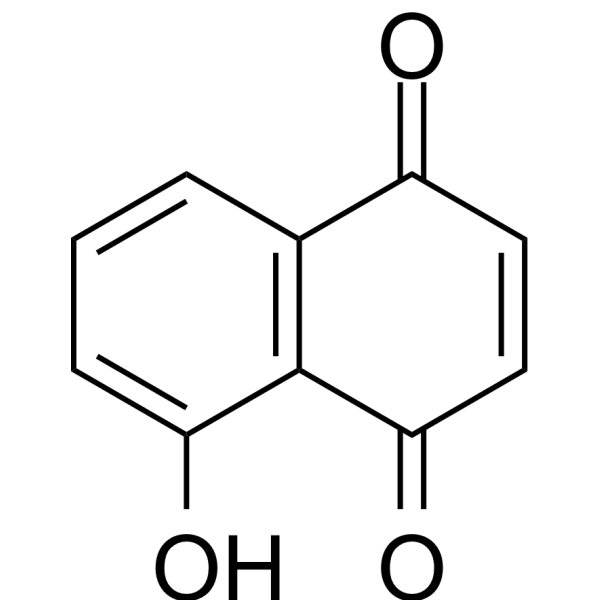
- Formula: C10H6O3
- Molecular Weight: 174.16
Juglone (5-hydroxy-1,4-naphthalenedione) is a yellow dye that can be extracted from Juglans regia. Juglone induces apoptosis through the mitochondrial pathway. Juglone has antibacterial and antitumor activity .
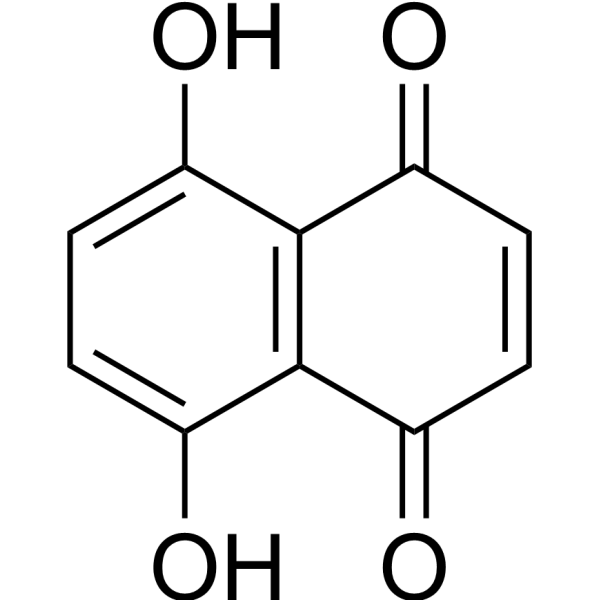
- Formula: C10H6O4
- Molecular Weight: 190.15
Naphthazarin (DHNQ) is a microtubule depolymerizing agent. Naphthazarin can improve motor function and reduce neuroinflammation in mouse models of Parkinson's disease. Naphthazarin can induce tumor cell apoptosis, autophagy, and cell cycle arrest. Naphthazarin can also induce erythrocyte apoptosis. Naphthazarin can be used in the research of tumors and neurodegenerative diseases.
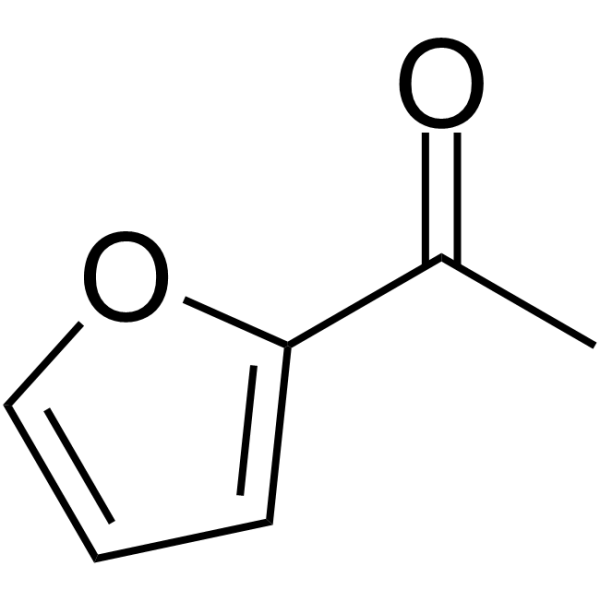
- Formula: C6H6O2
- Molecular Weight: 110.11
2-Acetylfuran (2-Furyl methyl ketone), an important flavour compound or intermediate in foods, is isolated from essential oils, sweet corn products, fruits and flowers. 2-Acetylfuran also can be formed from glucose and glycine by Maillard reaction. 2-Acetylfuran can be used to synthesis Cefuroxime. 2-acetylfuran can be used in the synthesis of reagents with antiamoebic activity.
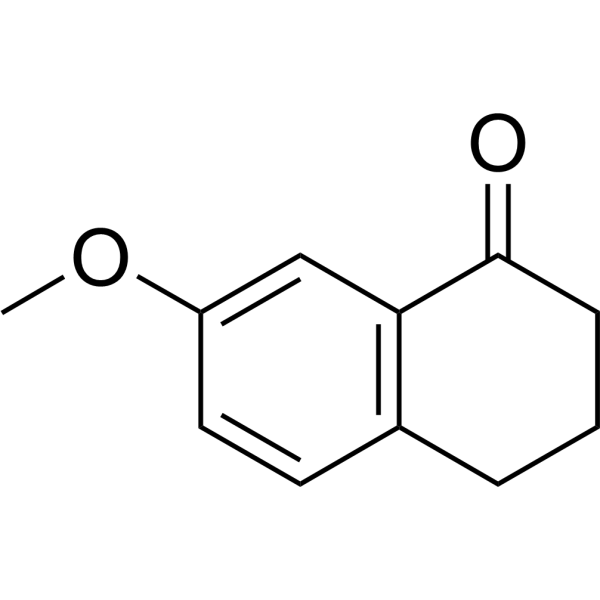
- Formula: C11H12O2
- Molecular Weight: 176.21
7-Methoxy-1-tetralone is a potent antitumor agent. 7-Methoxy-1-tetralone inhibits cancer cell proliferation and migration, and induces hepatocellular carcinoma cell (HCC) apoptosis. 7-Methoxy-1-tetralone decreased the protein levels of NF-κB, matrix metallopeptidase 2 (MMP2)/MMP9, and p-AKT. 7-Methoxy-1-tetralone showed antitumor activity in nude mice and had no effect on body weight and liver, spleen and organ index.
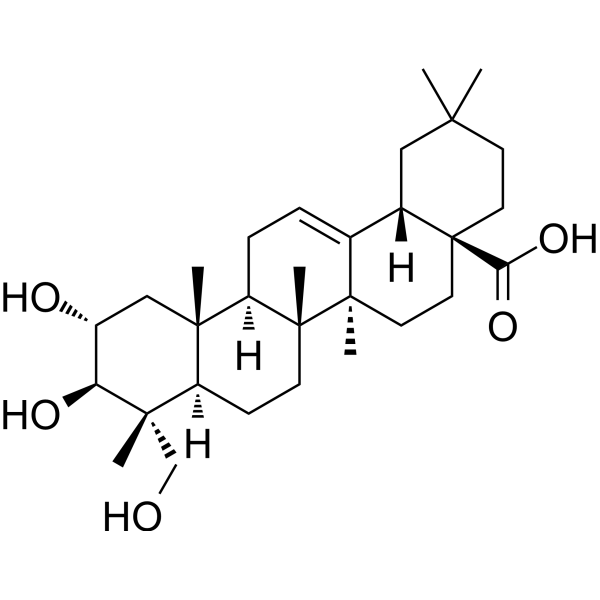
- Formula: C30H48O5
- Molecular Weight: 488.70
Arjunolic acid is an orally active, multifunctional bioactive compound. Arjunolic acid exhibits free radical scavenging activity, as well as fungal and bacterial activities. Arjunolic acid induces apoptosis (Apoptosis) in various cancer cells. Arjunolic acid protects hepatocytes against induced oxidative stress and apoptosis by reducing reactive oxygen species and inhibiting NF-κB activation. Arjunolic acid regulates pancreatic dysfunction in type 2 diabetic rats by blocking the activation of the TLR-4/MyD88 and canonical Wnt pathways. Arjunolic acid inhibits neuroinflammation and ameliorates depressive behaviors via the SIRT1/AMPK/Notch1 signaling pathway in microglia. Arjunolic acid improves Crohn's disease-like colitis by restoring gut microbiota composition and inhibiting TLR4 signaling. Arjunolic acid suppresses osteosarcoma progression by inhibiting Wnt3a-mediated M2 polarization of macrophages. Arjunolic acid ameliorates diabetic retinopathy via the autophagy pathway regulated by AMPK/mTOR/HO-1. Arjunolic acid is applicable to research related to type 2 diabetes, organ toxicity, depression, Crohn's disease, osteosarcoma, diabetic retinopathy, and testicular dysfunction.


- Formula: C10H6O4
- Molecular Weight: 190.15
Naphthazarin (DHNQ) is a naturally occurring compound. Naphthazarin is effective by various cellular mechanisms including oxidative stress, activation of mitochondrial apoptosis-inducing factor (AIF), depolymerization of microtubules, interference with lysosomal function and p53-dependent p21 activation. Naphthazarin triggers apoptosis and has anti-tumor effects.


- Formula: C26H28O14
- Molecular Weight: 564.49

- Formula: C20H22O5
- Molecular Weight: 342.39
Myricatomentogenin is a diarylheptanoid found in the leaves of Juglans mandshurica.

- Formula: C12H14O4
- Molecular Weight: 222.24
4-Ethoxy-5,8-dihydroxy-3,4-dihydronaphthalen-1(2H)-one is a naphthalene derivative and a weak α-glucosidase inhibitor. 4-Ethoxy-5,8-dihydroxy-3,4-dihydronaphthalen-1(2H)-one can be found in the leaves of Cyclocarya paliurus. 4-Ethoxy-5,8-dihydroxy-3,4-dihydronaphthalen-1(2H)-one can be used for the research of diabetes.

- Formula: C11H8O4
- Molecular Weight: 204.18
2-Methoxyjuglone, a naphthoquinone, is an apoptosis inducer. 2-Methoxyjuglone activates caspase-9 and caspase-3 via the mitochondrial cytochrome c-dependent intrinsic apoptosis cascade. 2-Methoxyjuglone increases pro-apoptotic Bax levels, decreases anti-apoptotic Bcl-2 levels, and promotes mitochondrial cytochrome c release. 2-Methoxyjuglone induces apoptosis morphological features, early apoptosis, S-phase and G2/M-phase cell cycle arrest, and DNA double-strand breaks. 2-Methoxyjuglone exerts activity against Gram-positive bacteria, pathogenic fungi, and phytopathogenic fungi. 2-Methoxyjuglone can be used for the research of hepatocellular carcinoma, osteosarcoma, colon adenocarcinoma, breast cancer, fungal infection, bacterial infection.

- Formula: C35H56O8
- Molecular Weight: 604.81
Cyclocarioside I is a natural triterpene.

- Formula: C36H58O8
- Molecular Weight: 618.84
Cyclocarioside K is a triterpene glycoside compound that can be naturally extracted from the dried leaves of Cyclocarya paliurus (Batal.) Iljinsk (Chinese wingnut) from Bozhou, Anhui, China. The leaves of this plant are traditionally used to lower blood sugar and blood pressure.

- Formula: C30H44O3
- Molecular Weight: 452.67
3-Oxooleana-1,12-dien-28-oic acid is a natural product that can be found in Qi Dun Guo.

- Formula: C31H50O4
- Molecular Weight: 486.73
Cyclocarin A is a triterpenoid compound that can be isolated from the leaves of Cyclocarya paliurus. Cyclocarin A shows only weak inhibitory activity against α-glucosidase, lipase, DPP-IV, aldose reductase, and human cancer cell lines (IC50>10 μM).
- 1
- 2



