



Cyclocarya paliurus (Batal.) Iljinsk.
-
Cyclocarya paliurus (Batal.) Iljinsk. (12)

- 1
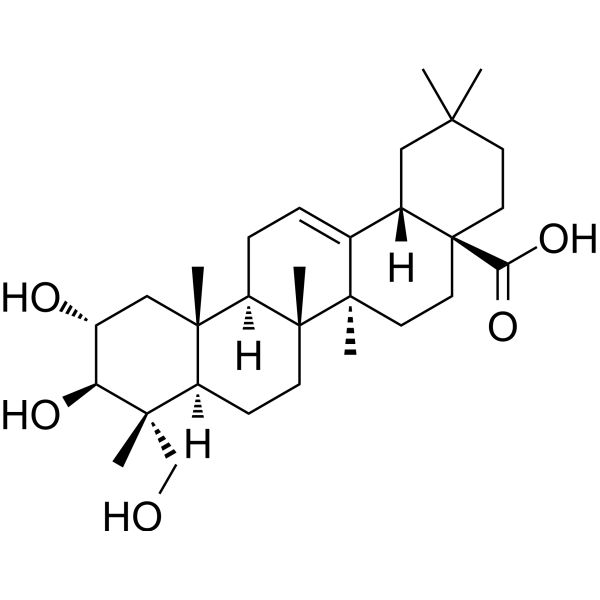
- Formula: C30H48O5
- Molecular Weight: 488.70
Arjunolic acid is an orally active, multifunctional bioactive compound. Arjunolic acid exhibits free radical scavenging activity, as well as fungal and bacterial activities. Arjunolic acid induces apoptosis (Apoptosis) in various cancer cells. Arjunolic acid protects hepatocytes against induced oxidative stress and apoptosis by reducing reactive oxygen species and inhibiting NF-κB activation. Arjunolic acid regulates pancreatic dysfunction in type 2 diabetic rats by blocking the activation of the TLR-4/MyD88 and canonical Wnt pathways. Arjunolic acid inhibits neuroinflammation and ameliorates depressive behaviors via the SIRT1/AMPK/Notch1 signaling pathway in microglia. Arjunolic acid improves Crohn's disease-like colitis by restoring gut microbiota composition and inhibiting TLR4 signaling. Arjunolic acid suppresses osteosarcoma progression by inhibiting Wnt3a-mediated M2 polarization of macrophages. Arjunolic acid ameliorates diabetic retinopathy via the autophagy pathway regulated by AMPK/mTOR/HO-1. Arjunolic acid is applicable to research related to type 2 diabetes, organ toxicity, depression, Crohn's disease, osteosarcoma, diabetic retinopathy, and testicular dysfunction.

- Formula: C26H28O14
- Molecular Weight: 564.49
Kaempferol 3-O-α-L-arabinofuranosyl-7-O-α-L-rhamnopyranoside is a flavonoid glycoside found in the leaves of Olax mannii.


- Formula: C12H14O4
- Molecular Weight: 222.24
4-Ethoxy-5,8-dihydroxy-3,4-dihydronaphthalen-1(2H)-one is a naphthalene derivative and a weak α-glucosidase inhibitor. 4-Ethoxy-5,8-dihydroxy-3,4-dihydronaphthalen-1(2H)-one can be found in the leaves of Cyclocarya paliurus. 4-Ethoxy-5,8-dihydroxy-3,4-dihydronaphthalen-1(2H)-one can be used for the research of diabetes.

- Formula: C35H56O8
- Molecular Weight: 604.81
Cyclocarioside I is a natural triterpene.

- Formula: C36H58O8
- Molecular Weight: 618.84
Cyclocarioside K is a triterpene glycoside compound that can be naturally extracted from the dried leaves of Cyclocarya paliurus (Batal.) Iljinsk (Chinese wingnut) from Bozhou, Anhui, China. The leaves of this plant are traditionally used to lower blood sugar and blood pressure.

- Formula: C31H50O4
- Molecular Weight: 486.73
Cyclocarin A is a triterpenoid compound that can be isolated from the leaves of Cyclocarya paliurus. Cyclocarin A shows only weak inhibitory activity against α-glucosidase, lipase, DPP-IV, aldose reductase, and human cancer cell lines (IC50>10 μM).
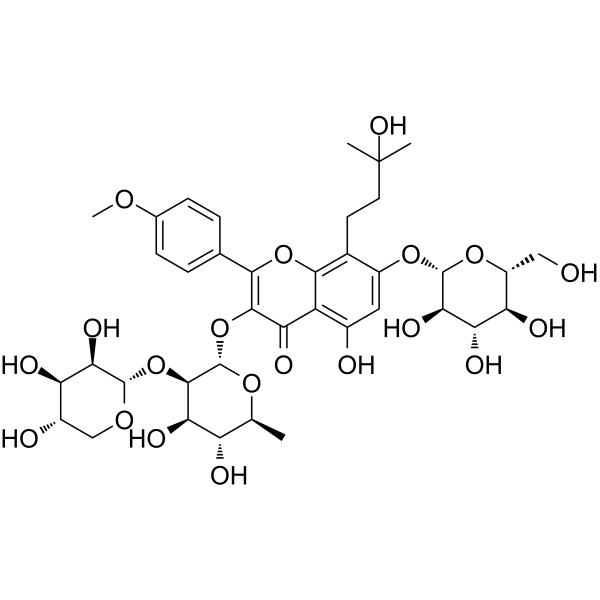
- Formula: C38H50O20
- Molecular Weight: 826.79
Xanthine oxidase-IN-9 (Icarisids E) (Compound 2) is a potent xanthine oxidase (XOD) inhibitor with an IC50 of 31.81 μM.
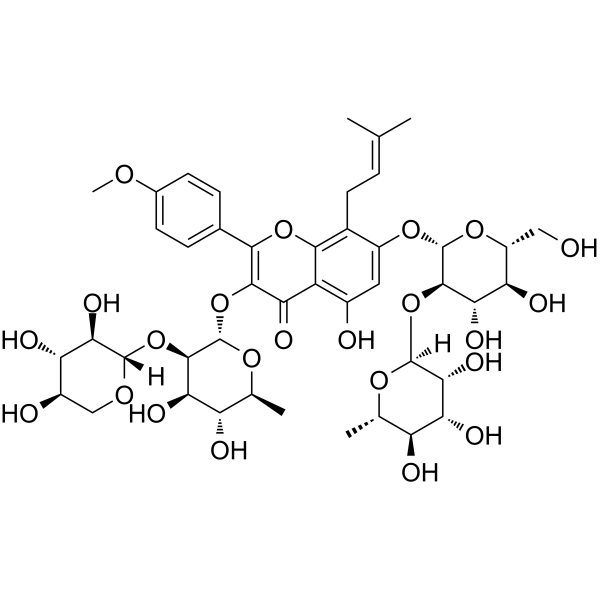
- Formula: C44H58O23
- Molecular Weight: 954.92
Xanthine oxidase-IN-8 (Icarisids J) (Compound 7) is a XOD inhibitor with an IC50 of 29.71 μM.
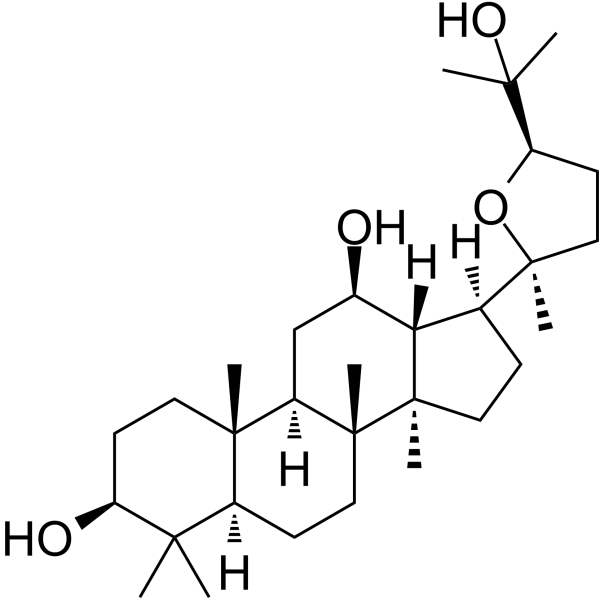
- Formula: C30H52O4
- Molecular Weight: 476.73
Pixinol, a natural glycoside, shows cytotoxicity against the human lung carcinoma GLC4 and adenocarcinoma COLO 320 cell lines (IC50=71 µM and 43 µM, respectively).

- Formula: C43H72O13
- Molecular Weight: 797.04
Cyclocarioside H is an AMPK agonist. Cyclocarioside H suppresses inflammatory insult-induced IKKβ phosphorylation, alleviates IRS-1 serine hyperphosphorylation and restores insulin-triggered Akt activation in differentiated 3T3-L1 adipocytes. Cyclocarioside H enhances insulin-independent and insulin-mediated 2-NBDG glucose uptake to improve adipocyte insulin resistance under inflammatory stress. Cyclocarioside H can be used for research on inflammation-associated type 2 diabetes and insulin resistance.
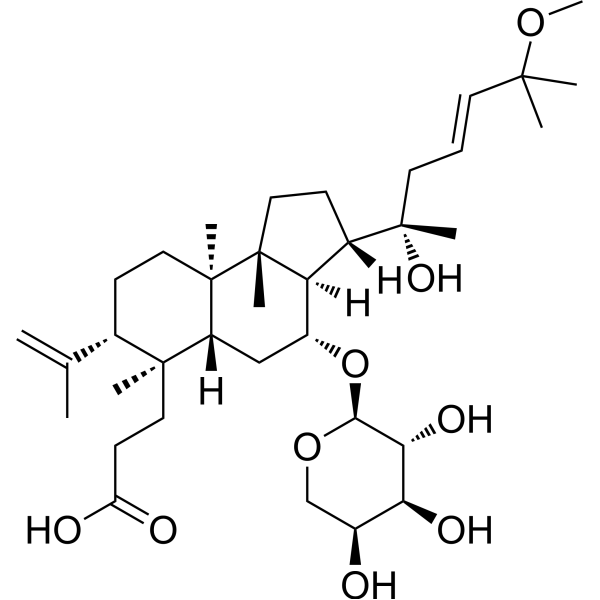
- Formula: C36H60O9
- Molecular Weight: 636.86
Cyclocarioside F is a triterpenoid that can be obtained from the leaves of Cyclocarya paliurus.
- 1



