Endocrinology
-
Endocrinology Related Products (3775)
Related Products (3775)

-
Antibodies (4)
-
Related Compound Screening Libraries (1)
-
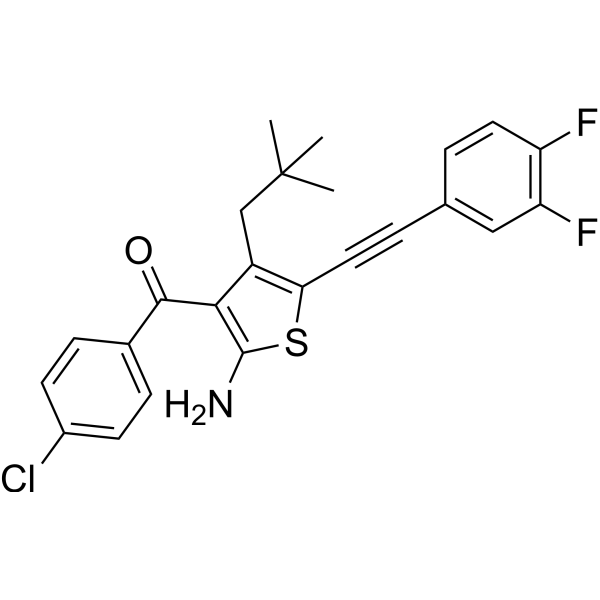
SSTR5 antagonist 1 (Standard)
 0 ImagesCat. No.: HY-102037RCAS No.: 1628741-91-2
SSTR5 antagonist 1 (Standard) is the analytical standard of SSTR5 antagonist 1 (HY-102037). This product is intended for research and analytical applications. SSTR5 antagonist 1 (compound 25a) is a selective and orally available somatostatin receptor subtype 5 (SSTR5) antagonist with IC50s of 9.6 and 57 nM for hSSTR5 and mSSTR5, respectively.
-
Alarelin Acetate (Standard)
 0 ImagesCat. No.: HY-17405RCAS No.: 79561-22-1Synonyms: Alarelin (Standard)
Alarelin (Acetate) (Standard) is the analytical standard of Alarelin (Acetate). This product is intended for research and analytical applications. Alarelin acetate is a synthetic GnRH agonist.
-
PDE11A modulator-1
 0 ImagesCat. No.: HY-180869CAS No.: 312634-95-0
PDE11A modulator-1 is a PDE11A modulator.
-
cis-9-Hexadecen-1-yl formate
 0 ImagesCat. No.: HY-N12912CAS No.: 56218-81-6
cis-9-Hexadecen-1-yl formate is a pheromone analog that can be isolated from noctuid species (Lepidoptera).
-
Cetirizine Impurity D
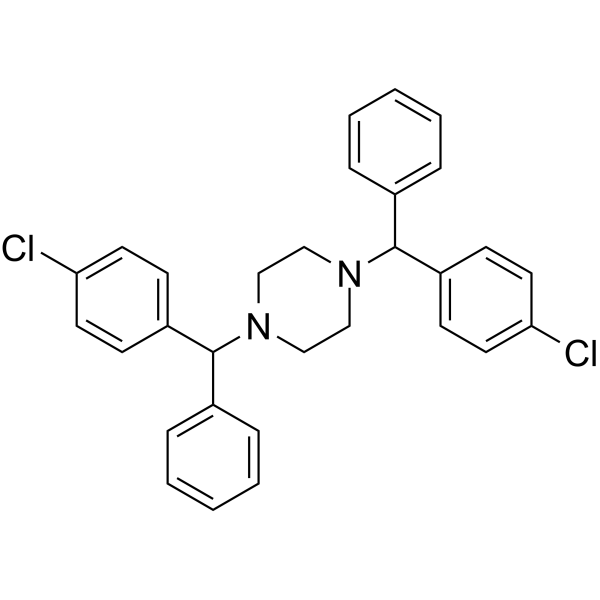 0 ImagesCat. No.: HY-100661CAS No.: 346451-15-8
Cetirizine Impurity D is an impurity of Cetirizine. Cetirizine, a second-generation antihistamine, is a specific, orally active and long-acting histamine H1-receptor antagonist. Cetirizine marks antiallergic properties and inhibits eosinophil chemotaxis during the allergic response.
-
Aloe-emodin-8-O-β-D-glucopyranoside (Standard)
 0 ImagesCat. No.: HY-N2451RCAS No.: 33037-46-6
Aloe-emodin-8-O-β-D-glucopyranoside (Standard) is the analytical standard of Aloe-emodin-8-O-β-D-glucopyranoside. This product is intended for research and analytical applications. Aloe-emodin-8-O-β-D-glucopyranoside, a compound isolated from Saussrurea lappa, is a moderate inhibitor of human protein tyrosine phosphatase 1B (hPTP1B) with an IC50 of 26.6 μM.
-
Icariside I (Standard)
 0 ImagesSynonyms: Icarisid I (Standard)
Icariside I (Standard) is the analytical standard of Icariside I (HY-N1939). This product is intended for research and analytical applications. Icariside I (GH01) is an orally active metabolite of icalin. Icariside I improves estrogen deficiency-induced osteoporosis by simultaneously regulating osteoblast and osteoclast differentiation. Icariside I promotes ATP (HY-B2176) or Nigericin (HY-127019)-induced mtROS production and NLRP3 inflammasome activation and causes idiosyncratic hepatotoxicity. Icariside I does not alter the activation of NLRC4 and AIM2 inflammasomes. Icariside I inhibits breast cancer proliferation, apoptosis, invasion, and metastasis by targeting the IL-6/STAT3 pathway. Icariside I is a kynurenine-AhR pathway inhibitor that alleviates cancer by blocking tumor immune escape.
-
Fenoldopam mesylate (Standard)
 0 ImagesSynonyms: Fenoldopam methanesulfonate (Standard); SKF-82526 mesylate (Standard)
Fenoldopam mesylate (Standard) is the analytical standard of Fenoldopam mesylate (HY-B0735A). This product is intended for research and analytical applications. Fenoldopam (SKF-82526) mesylate is a selective dopamine D1 receptor agonist. Fenoldopam mesylate binds to rat D1B dopamine receptors (Kd = 11 nM) and human D1A receptors (Kd = 17 nM) in COS-7 cell membranes expressing the cloned receptors. Fenoldopam mesylate modulates dopamine receptor expression, induces vasorelaxation in vascular tissues, reverses glomerular hyperfiltration in rat models, increases intracellular cAMP levels, promotes DARPP-32 phosphorylation in small cell lung cancer (SCLC) cells, inhibits cytokine secretion, and downregulates T cell activation markers in activated human T cells. Fenoldopam mesylate can be used for research on hypertension, acute kidney injury, psoriasis, and small cell lung cancer.
-
Propylthiouracil (Standard)
 0 ImagesSynonyms: 6-n-Propylthiouracil (Standard); 6-Propyl-2-thiouracil (Standard); PTU (Standard)
Propylthiouracil (Standard) is the analytical standard of Propylthiouracil. This product is intended for research and analytical applications. Propylthiouracil (6-n-Propylthiouracil), a thioamide antithyroid agent, is an orally active thyroperoxidase and type-1 deiodinase (DIO1) inhibitor. Propylthiouracil can be used for the Graves disease and hyperthyroidism research.
-
Alcaftadine (Standard)
 0 ImagesCat. No.: HY-17039RCAS No.: 147084-10-4Synonyms: R89674 (Standard)
Alcaftadine (Standard) is the analytical standard of Alcaftadine. This product is intended for research and analytical applications. Alcaftadine (R89674) is a histamine H1 receptor antagonist, which is used to prevent eye irritation brought on by allergic conjunctivitis. Alcaftadine is a broad-spectrum antihistamine displaying a high affinity for histamine H1 and H2 receptors and a lower affinity for H4 receptors. Alcaftadine also exhibits modulatory action on immune cell recruitment and mast cell stabilizing effects.
-
6-Methoxynaringenin-7-O-β-D-glucoside
 0 ImagesCat. No.: HY-N12853CAS No.: 1351949-09-1
6-Methoxynaringenin-7-O-β-D-glucoside is a methoxynaringenin that can be isolated from Salvia plebeia.
-
BFE-55
 0 ImagesCat. No.: HY-116888CAS No.: 21151-91-7
BFE-55 is a derivative of befunolol and a β-adrenergic partial agonist.
-
(rac)-Nebivolol-d4
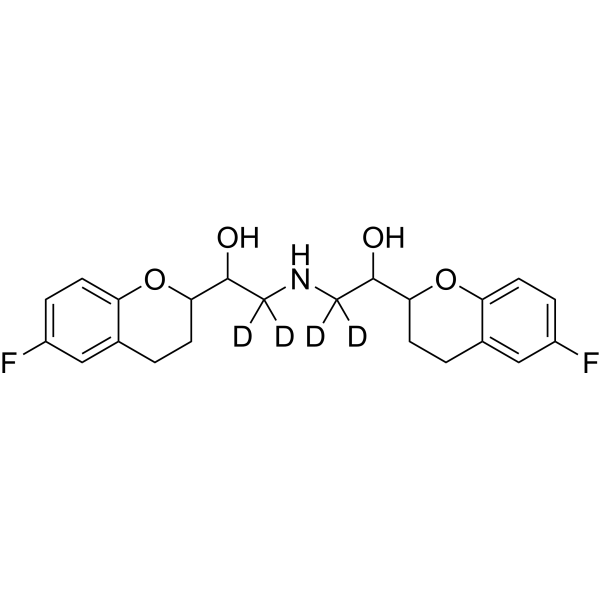 0 ImagesCat. No.: HY-B0203BS1CAS No.: 1219407-55-2
(rac)-Nebivolol-d4 is a labelled racemic Nebivolol. Nebivolol selectively inhibits β1- adrenergic receptor with IC50 of 0.8 nM[1][2].
-
3-Methoxy prostaglandin F1α
 0 ImagesCat. No.: HY-168799CAS No.: 54432-43-8
3-Methoxy prostaglandin F1α is an analog of PGF1α that can be metabolized by naturally occurring extracellular antibiotic resistance genes (eARGs) that enter the intestine via the food chain.
-
Erlotinib mesylate
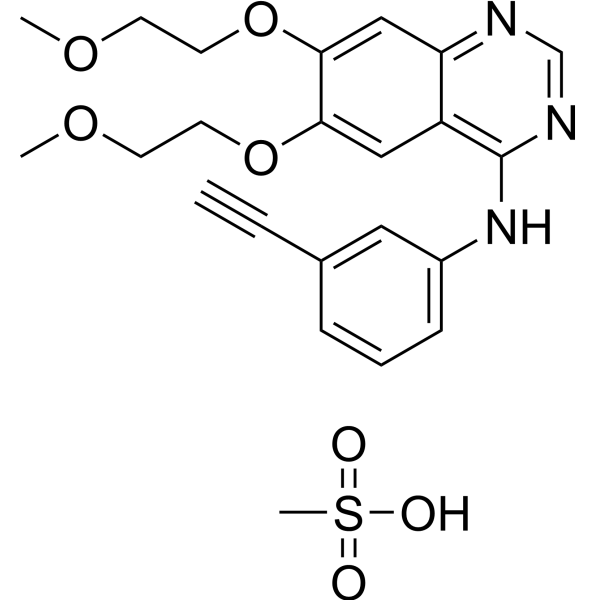 0 ImagesCat. No.: HY-12008ACAS No.: 248594-19-6Synonyms: CP-358774 mesylate; NSC 718781 mesylate; OSI-774 mesylate
Erlotinib (CP-358774) mesylate is a selective, orally active EGFR tyrosine kinase inhibitor. Erlotinib mesylate also acts as a substrate and inhibitor of OATP2B1, with an IC50 of approximately 0.079 μM for inhibiting OATP2B1-mediated uptake of estrone 3-sulfate. Erlotinib mesylate blocks EGFR phosphorylation, downstream signal transduction, as well as the growth and proliferation of cancer cells. Erlotinib mesylate inhibits MMP-10-mediated renal injury, fibrotic lesions, the ERK1/2, GSK-3β and β-catenin signaling pathways, as well as the deposition of fibronectin, α-SMA, collagen and renal injury markers. Erlotinib mesylate is metabolized via CYP3A to produce the active metabolite OSI-420. Erlotinib mesylate can be used in research related to non-small cell lung cancer, gastric cancer, papillary renal cell carcinoma, EGFR inhibitor resistance and renal fibrosis.
-
Iloprost (Standard)
 0 ImagesCat. No.: HY-A0096RCAS No.: 78919-13-8Synonyms: Ciloprost (Standard); ZK 36374 (Standard)
Iloprost (Standard) is the analytical standard of Iloprost. This product is intended for research and analytical applications. Iloprost (ZK 36374; Ciloprost) is a prostacyclin (PGI2) analogue, involves in embryo development and inflammation improvement, and inhibits tumor metastasis. Iloprost can be used for peripheral vascular research.
-
Relugolix (Standard)
 0 ImagesSynonyms: TAK-385 (Standard)
Relugolix (Standard) is the analytical standard of Relugolix. This product is intended for research and analytical applications. Relugolix (TAK-385) is a potent, orally active, nonpeptidic gonadotropin-releasing hormone (GnRH) antagonist. Relugolix possesses high affinity and potent antagonistic activity for human receptor (binding IC50=0.33 nM) and monkey receptor (IC50=0.32 nM) compared with TAK-013 (HY-100209). Relugolix is used for the study of sex-hormone-dependent diseases, such as including endometriosis, uterine fibroids and prostate cancer et al.
-
Batefenterol (Standard)
 0 ImagesCat. No.: HY-12980RCAS No.: 743461-65-6Synonyms: GSK961081 (Standard); TD-5959 (Standard)
Batefenterol (Standard) is the analytical standard of Batefenterol. This product is intended for research and analytical applications. Batefenterol (GSK961081;TD-5959) is a novel muscarinic receptor antagonist and β2-adrenoceptor agonist; displays high affinity for hM2, hM3 muscarinic and hβ2-adrenoceptor with Ki values of 1.4, 1.3 and 3.7 nM, respectively.
-
NVP-ADW742 (Standard)
 0 ImagesCat. No.: HY-10252RCAS No.: 475488-23-4Synonyms: ADW742 (Standard); GSK 552602A (Standard); ADW (Standard)
NVP-ADW742 (Standard) is the analytical standard of NVP-ADW742 (HY-10252). This product is intended for research and analytical applications. NVP-ADW742 (ADW742) is an orally active, selective IGF-1R tyrosine kinase inhibitor with an IC50 of 0.17 μM. NVP-ADW742 inhibits insulin receptor (InsR) with an IC50 of 2.8 μM. NVP-ADW742 induces pleiotropic antiproliferative/proapoptotic biologic sequelae in tumor cells.