



Acid Cleavable Linker
Acid-cleavable linkers function as pH-sensitive covalent connections that release therapeutic payloads when exposed to acidic biological environments[1]. Mechanistically, acidic extracellular tumor pH and endosome/lysosome pH provide key triggers for tumor-targeted drug delivery and intracellular drug release[2]. Hydrazone linkers are widely used because they cleave under cancer-cell conditions near pH 5, supporting controlled anticancer drug delivery[3]. Compared with alkylhydrazone linkers, Spiro Diorthoester (SpiDo) showed fast pH-sensitive hydrolysis under mildly acidic conditions, lysosomal hydrolysis, and high human-plasma stability[1]. In polymer and nanomedicine systems, linker chemistry determines whether a tethered payload remains active while attached or releases at the desired site[4]. For cancer applications, stimuli-responsive prodrug nanosystems use activation mechanisms to improve bioavailability, targeting, and reduced side effects[5]. Therefore, acid-cleavable linker design should prioritize plasma stability, acidic-site cleavage, and compatibility with targeted carriers for drug delivery, imaging, and theranostic research[1][4][6].
References:
- [1]. Leriche G, et al. Spiro Diorthoester (SpiDo), a Human Plasma Stable Acid-Sensitive Cleavable Linker for Lysosomal Release. Bioconjug Chem. 2015 Aug 19;26(8):1461-5. [Content Brief]
- [2]. He X, et al. pH-sensitive drug-delivery systems for tumor targeting. Ther Deliv. 2013 Dec;4(12):1499-510. [Content Brief]
- [3]. Mane SR, et al. ADVANCES OF HYDRAZONE LINKER IN POLYMERIC DRUG DELIVERY. J Crit Rev. 2019;6(2).
- [4]. Yang X, et al. Making smart drugs smarter: The importance of linker chemistry in targeted drug delivery. Med Res Rev. 2020 Nov;40(6):2682-2713. [Content Brief]
- [5]. Ding C, et al. Emerging Strategies in Stimuli-Responsive Prodrug Nanosystems for Cancer Therapy. ACS Nano. 2022 Sep 27;16(9):13513-13553. [Content Brief]
- [6]. Parshad B, et al. Towards precision medicine using biochemically triggered cleavable conjugation. Commun Chem. 2025 Apr 2;8(1):100. [Content Brief]
-
Acid Cleavable Linker Related Products (7)
Related Products (7)

-
Methyltetrazine-PEG4-hydrazone-DBCO
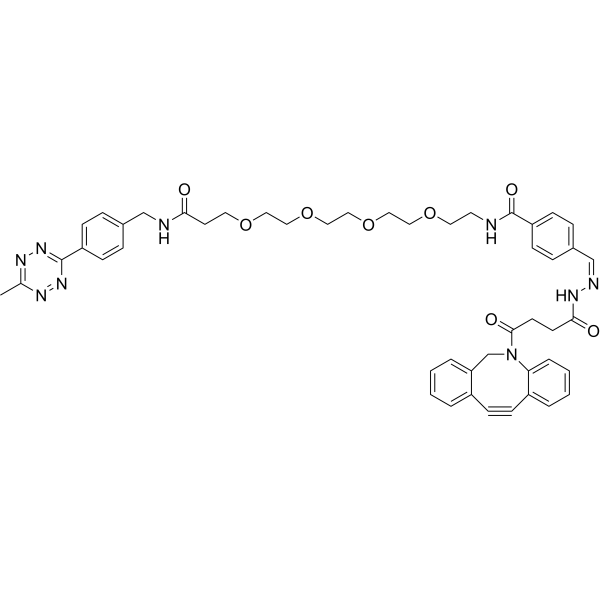 0 ImagesCat. No.: HY-136079Methyltetrazine-PEG4-hydrazone-DBCO is a cleavable 4 unit PEG ADC linker used in the synthesis of antibody-drug conjugates (ADCs). Methyltetrazine-PEG4-hydrazone-DBCO is a click chemistry reagent, it contains a DBCO group that can undergo strain-promoted alkyne-azide cycloaddition (SPAAC) with molecules containing Azide groups. Methyltetrazine-PEG4-hydrazone-DBCO also contains a Tetrazine group that can undergo an inverse electron demand Diels-Alder reaction (iEDDA) with molecules containing TCO groups.
-
BCN-PEG4-HyNic
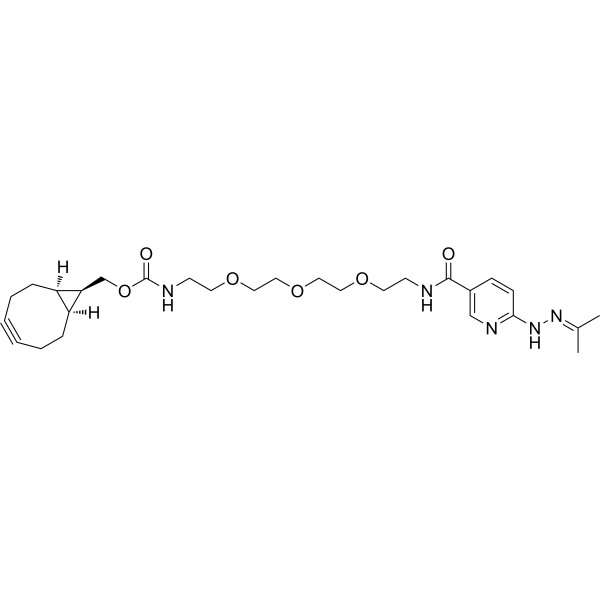 0 ImagesCat. No.: HY-136061CAS No.: 1507370-54-8BCN-PEG4-HyNic is a cleavable 4 unit PEG ADC linker used in the synthesis of antibody-drug conjugates (ADCs). BCN-PEG4-HyNic is a click chemistry reagent, it contains a BCN group that can undergo strain-promoted alkyne-azide cycloaddition (SPAAC) with molecules containing Azide groups.
-
CL2 Linker
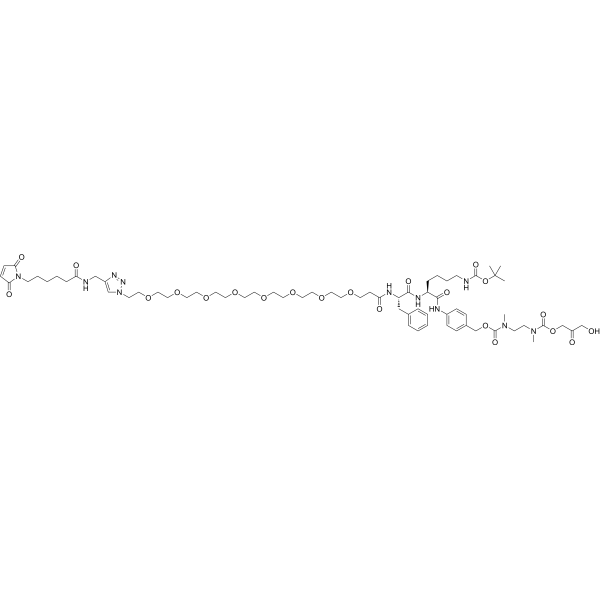 0 ImagesCat. No.: HY-128947CAS No.: 2270986-66-6CL2 Linker is a cleavableADC linker. CL2-SN-38 and CL2A-SN-38 are equivalent in agent substitution (~6), cell binding (Kd ~1.2 nM), cytotoxicity (IC50 ~2.2 nM), and serum stability in vitro (t1/2 ~20 hours).
-
HyNic-PEG4-alkyne
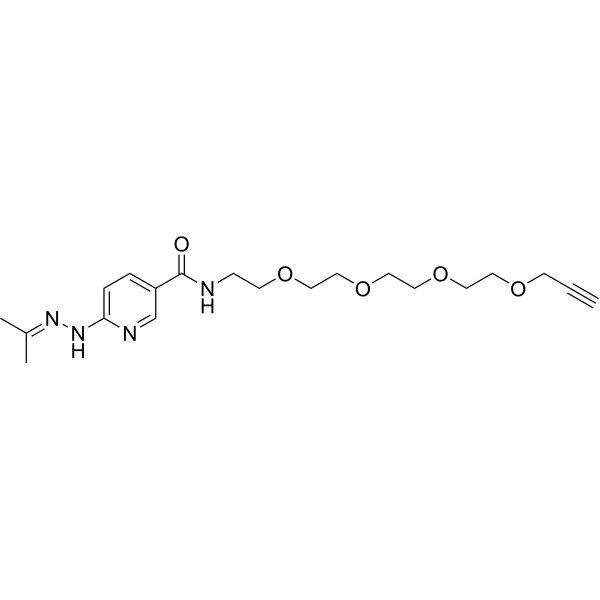 0 ImagesCat. No.: HY-136075HyNic-PEG4-alkyne is a cleavable 4 unit PEG ADC linker used in the synthesis of antibody-drug conjugates (ADCs). HyNic-PEG4-alkyne is a click chemistry reagent, it contains an Alkyne group and can undergo copper-catalyzed azide-alkyne cycloaddition (CuAAc) with molecules containing Azide groups.
-
Propargyl-PEG4-hydrazide
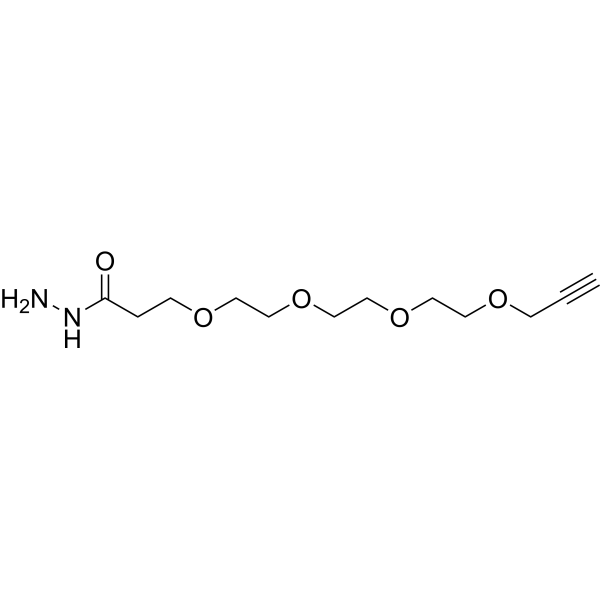 0 ImagesCat. No.: HY-133427CAS No.: 2751958-10-6Propargyl-PEG4-hydrazide is a non-cleavable 4 unit PEG ADC linker used in the synthesis of antibody-drug conjugates (ADCs). Propargyl-PEG4-hydrazide is a click chemistry reagent, it contains an Alkyne group and can undergo copper-catalyzed azide-alkyne cycloaddition (CuAAc) with molecules containing Azide groups.
-
NH2-PEG4-hydrazone-DBCO
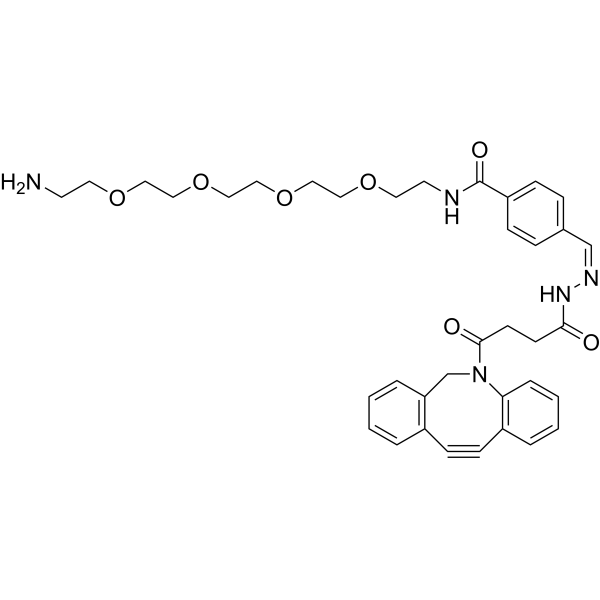 0 ImagesCat. No.: HY-136131NH2-PEG4-hydrazone-DBCO is a cleavable 4 unit PEG ADC linker used in the synthesis of antibody-drug conjugates (ADCs). NH2-PEG4-hydrazone-DBCO is a click chemistry reagent, it contains a DBCO group that can undergo strain-promoted alkyne-azide cycloaddition (SPAAC) with molecules containing Azide groups.
-
Hynic-PEG3-N3
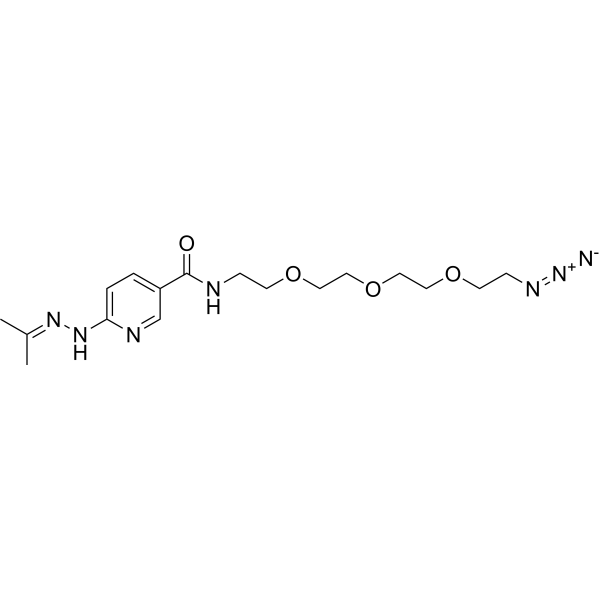 0 ImagesCat. No.: HY-130954Hynic-PEG3-N3 is a cleavable 3 unit PEG ADC linker used in the synthesis of antibody-drug conjugates (ADCs). Hynic-PEG3-N3 is a click chemistry reagent, it contains an Azide group and can undergo copper-catalyzed azide-alkyne cycloaddition reaction (CuAAc) with molecules containing Alkyne groups. It can also undergo strain-promoted alkyne-azide cycloaddition (SPAAC) reactions with molecules containing DBCO or BCN groups.



