



BACE2
BACE2 (β-site APP-cleaving enzyme 2) is a type I transmembrane aspartyl protease that belongs to the β-secretase family and shares substantial sequence homology with BACE1, yet displays distinct substrate selectivity and physiological functions.[1][2] Mechanistically, BACE2 predominantly cleaves amyloid precursor protein (APP) within the Aβ region through θ-secretase-like activity, thereby reducing amyloidogenic processing and limiting Aβ generation in multiple experimental systems.[1][3][4] Beyond APP metabolism, BACE2 regulates ectodomain shedding of physiologically relevant substrates, including VEGFR3, and modulates lymphangiogenic VEGFR3 signaling by controlling receptor abundance and soluble VEGFR3 release.[2] In disease-associated contexts, BACE2 has been linked to Alzheimer’s disease, Down syndrome-related amyloid pathology, and age-dependent alterations in APP processing, where substrate conformation and cellular environment influence its proteolytic activity.[3][4][5] Compared with the closely related isoform BACE1, which functions as the principal β-secretase responsible for amyloidogenic APP cleavage, BACE2 generally exhibits anti-amyloidogenic activity and possesses distinct tissue distribution and substrate preferences.[1][2][4] Experimental studies further demonstrate that BACE2-mediated cleavage of TMEM27, PMEL, VEGFR3, and additional membrane proteins contributes to the regulation of glucose homeostasis, pigmentation, lymphatic signaling, and protein shedding pathways.[1][2] For research applications, selective discrimination between BACE1 and BACE2 activity remains essential during inhibitor development, as dual inhibition may alter physiological BACE2-dependent signaling and confound interpretation of therapeutic responses.[1][2]
References:
- [1]. Baudin-Baillieu A, et al. Genome-wide translational changes induced by the prion [PSI+]. Cell Rep. 2014 Jul 24;8(2):439-48. [Content Brief]
- [2]. Schmidt A, et al. The Alzheimer's disease-linked protease BACE2 cleaves VEGFR3 and modulates its signaling. J Clin Invest. 2024 Jun 18;134(16):e170550. [Content Brief]
- [3]. Wang Z, et al. BACE2, a conditional β-secretase, contributes to Alzheimer's disease pathogenesis. JCI Insight. 2019 Jan 10;4(1):e123431. [Content Brief]
- [4]. Reina C, et al. Antioxidant, Pro-Survival and Pro-Regenerative Effects of Conditioned Medium from Wharton's Jelly Mesenchymal Stem Cells on Developing Zebrafish Embryos. Int J Mol Sci. 2023 Aug 25;24(17):13191. [Content Brief]
- [5]. Alić I, et al. Patient-specific Alzheimer-like pathology in trisomy 21 cerebral organoids reveals BACE2 as a gene dose-sensitive AD suppressor in human brain. Mol Psychiatry. 2021 Oct;26(10):5766-5788. doi: 10.1038/s41380-020-0806-5. Epub 2020 Jul 10. Erratum in: Mol Psychiatry. 2021 Oct;26(10):5789. doi: 10.1038/s41380-021-01206-x. PMID: 32647257; PMCID: PMC8190957.
All Product Categories
-
BACE2 Related Products (11)
Related Products (11)

- 1
-
Verubecestat
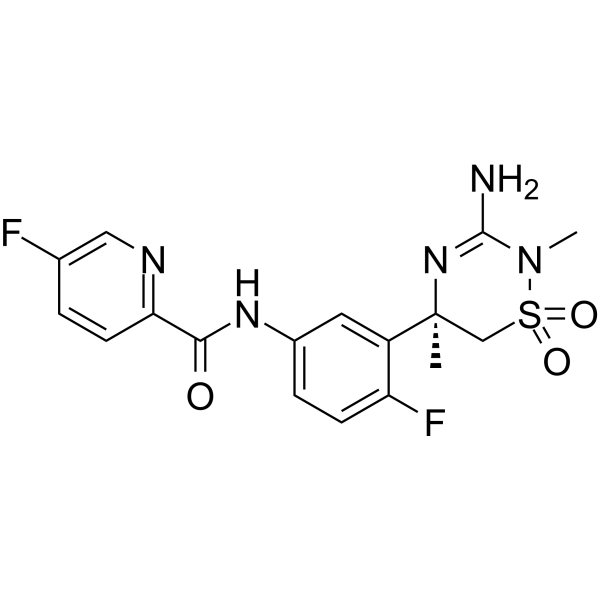 0 ImagesSynonyms: MK-8931Verubecestat (MK-8931) is an orally active, high-affinity BACE1 and BACE2 inhibitor with Ki values of 2.2 nM and 0.38 nM. Verubecestat effectively reduces Aβ40 and has the potential for Alzheimer's Disease.
-
Umibecestat
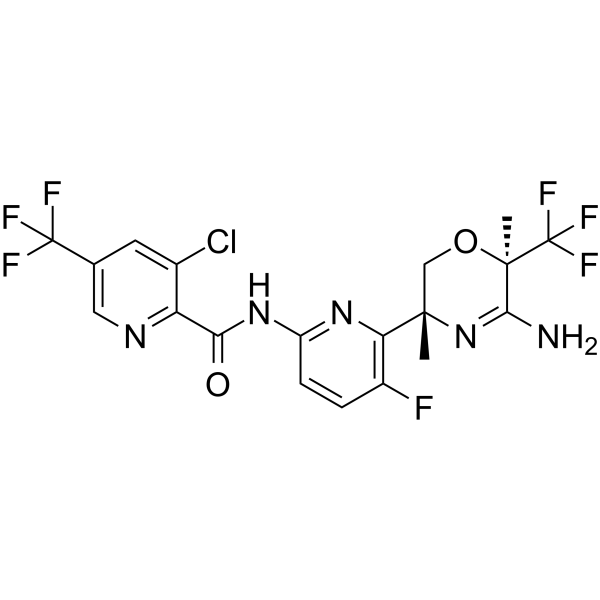 0 ImagesSynonyms: CNP520Umibecestat (CNP520) is a selective, orally active BACE inhibitor, with an IC50 of 11 nM for hBACE-1, 10 nM for mouse BACE-1, and 30 nM for hBACE-2. Umibecestat reduces β-Amyloid levels in the brain and cerebrospinal fluid, decreases β-amyloid plaque deposition, and inhibits plaque-associated neuroinflammation. Umibecestat is used in research related to Alzheimer's disease.
-
BACE2-IN-1
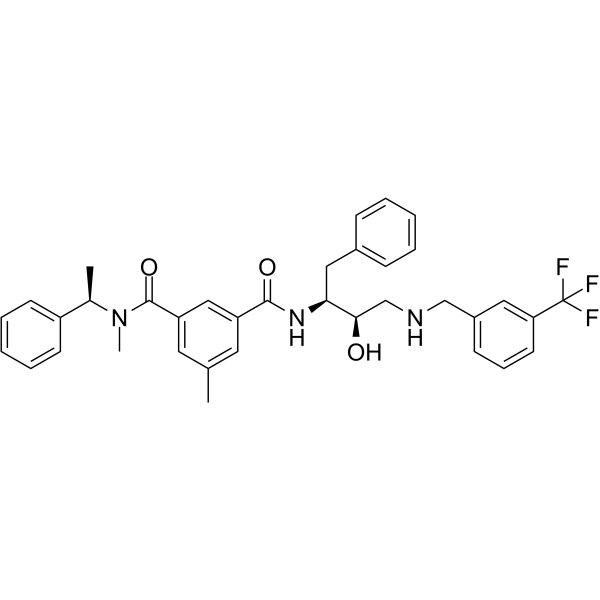 0 ImagesBACE2-IN-1 (compound 3l) is a highly selective BACE2 inhibitor with a Ki value of 1.6 nM. BACE2 inhibitors can be used to research of Type 2 Diabetes.
-
NB-360
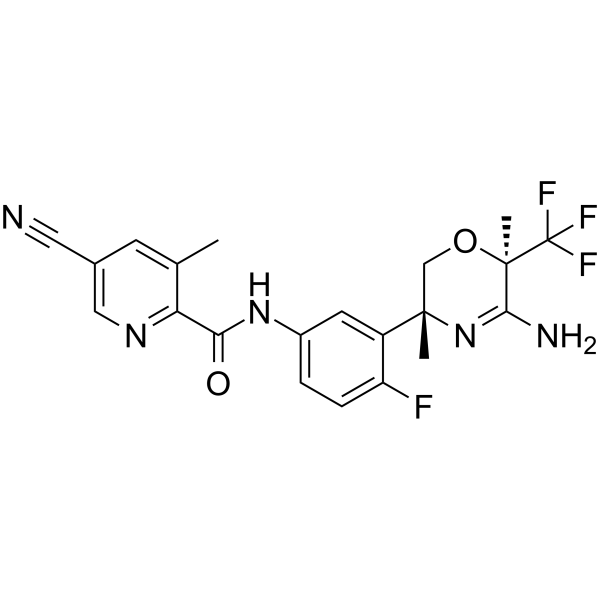 0 ImagesNB-360 is a potent, brain penetrable and orally active β‐secretase 1/2 (BACE1/BACE2) dual inhibitor with IC50 values of 5 and 6 nM. NB-360 can inhibit amyloid-β protein accumulation. NB-360 can be used for the researches of inflammation and neurological disease, such as Alzheimer's disease.
-
BACE1-IN-1
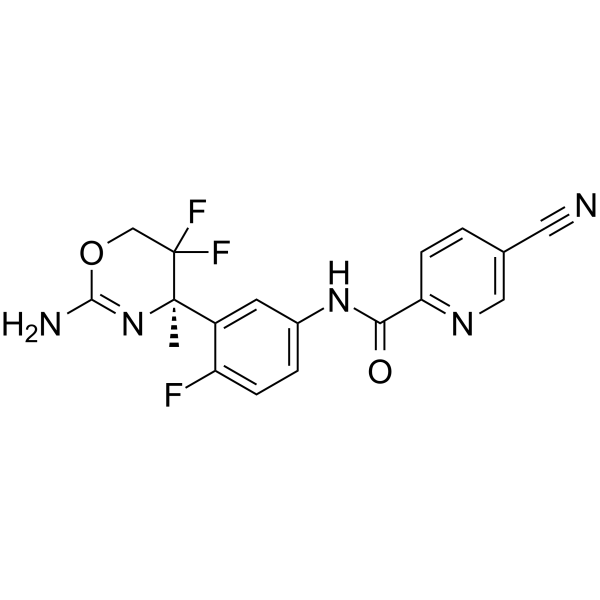 0 ImagesBACE1-IN-1 is an orally active, blood-brain barrier penetrant dual-target inhibitor of BACE1/2, with IC50 values of 23 nM and 24 nM against human BACE1 and BACE2, respectively. BACE1-IN-1 reduces cerebral Aβ40 levels in mice. BACE1-IN-1 can be used in studies related to Alzheimer's disease and type 2 diabetes.
-
BACE1-IN-1 hydrochloride
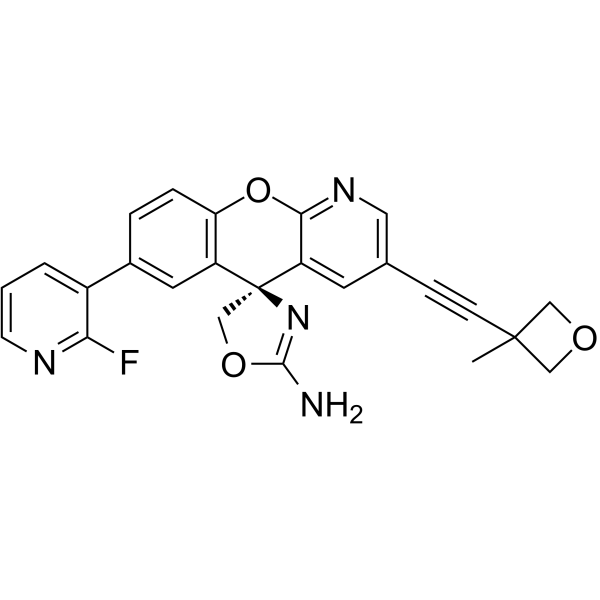
 0 ImagesCat. No.: HY-100182ACAS No.: 1310349-35-9BACE1-IN-1 hydrochloride is an orally active, blood-brain barrier penetrant dual-target inhibitor of BACE1/2, with IC50 values of 23 nM and 24 nM against human BACE1 and BACE2, respectively. BACE1-IN-1 hydrochloride reduces cerebral Aβ40 levels in mice. BACE1-IN-1 hydrochloride can be used in studies related to Alzheimer's disease and type 2 diabetes.
-
BACE1/2-IN-1
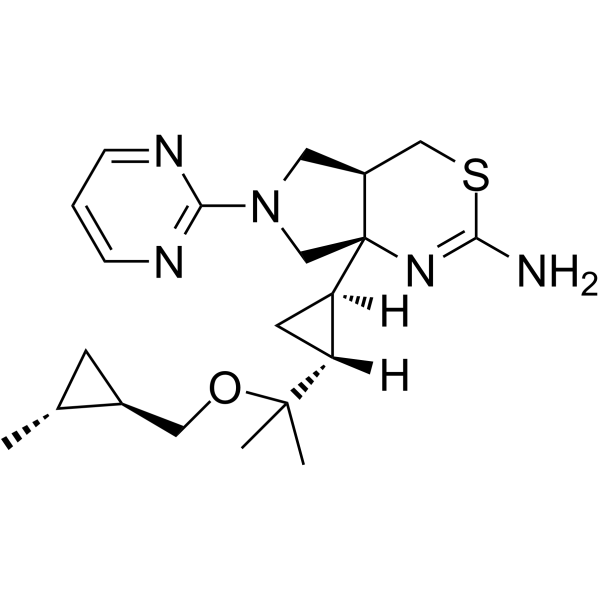 0 ImagesCat. No.: HY-147758CAS No.: 2671036-34-1
-
BACE1-IN-1 (Standard)
 0 ImagesCat. No.: HY-100182RCAS No.: 1310347-50-2BACE1-IN-1 (Standard) is the analytical standard of BACE1-IN-1 (HY-100182). This product is intended for research and analytical applications. BACE1-IN-1 is an orally active, blood-brain barrier penetrant dual-target inhibitor of BACE1/2, with IC50 values of 23 nM and 24 nM against human BACE1 and BACE2, respectively. BACE1-IN-1 reduces cerebral Aβ40 levels in mice. BACE1-IN-1 can be used in studies related to Alzheimer's disease and type 2 diabetes.
-
Umibecestat hydrochloride
 0 ImagesCat. No.: HY-119689ACAS No.: 2365306-62-1Synonyms: CNP520 hydrochlorideUmibecestat hydrochloride (CNP520 hydrochloride) is a selective, orally active BACE inhibitor, with an IC50 of 11 nM for hBACE-1, 10 nM for mouse BACE-1, and 30 nM for hBACE-2. Umibecestat hydrochloride reduces β-Amyloid levels in the brain and cerebrospinal fluid, decreases β-amyloid plaque deposition, and inhibits plaque-associated neuroinflammation. Umibecestat hydrochloride is used in research related to Alzheimer's disease.
- 1



