



SphK2
SphK2 catalyzes phosphorylation of sphingosine to generate sphingosine-1-phosphate (S1P), a bioactive lipid linked to extracellular, cytosolic, and nuclear signaling[1][2]. Mechanistically, the SPHK2/S1P pathway regulates transcription, telomere maintenance, and mitochondrial respiration, while S1P also signals through S1PR1-5 receptors[1][3]. In disease models, SphK2 appears in studies of cancer, fibrosis, sickle cell disease, renal fibrosis, neuroinflammation, and neoplastic mast-cell growth[3][4][5][6]. Compared with SphK1, SphK2 shows distinct tissue distribution, later embryonic expression, larger protein size, different catalytic properties, and localization to the nucleus, endoplasmic reticulum, and mitochondria[1][2]. This isoform distinction supports selective inhibitor design, because SphK2 remains less understood than SphK1 and lacks sufficiently selective chemical tools in earlier studies[7][8]. For experimental applications, SphK2-selective inhibitors have reduced S1P levels in U937 cells, increased blood or circulating S1P after in vivo administration, and enabled structure-activity studies of potency, selectivity, and target engagement[4][9][10].
Références:
- [1]. Diaz Escarcega R, et al. The Functional Role of Sphingosine Kinase 2. Front Mol Biosci. 2021 May 14;8:683767. [Content Brief]
- [2]. Liu H, et al. Molecular cloning and functional characterization of a novel mammalian sphingosine kinase type 2 isoform. J Biol Chem. 2000 Jun 30;275(26):19513-20. [Content Brief]
- [3]. Santos WL, et al. Drugging sphingosine kinases. ACS Chem Biol. 2015 Jan 16;10(1):225-33. [Content Brief]
- [4]. Mócsai A, et al. Adhesion-dependent degranulation of neutrophils requires the Src family kinases Fgr and Hck. J Immunol. 1999 Jan 15;162(2):1120-6. [Content Brief]
- [5]. Bandara G, et al. Targeting Sphingosine Kinase Isoforms Effectively Reduces Growth and Survival of Neoplastic Mast Cells With D816V-KIT. Front Immunol. 2018 Mar 28;9:631. [Content Brief]
- [6]. Standoli S, et al. Sphingosine Kinases at the Intersection of Pro-Inflammatory LPS and Anti-Inflammatory Endocannabinoid Signaling in BV2 Mouse Microglia Cells. Int J Mol Sci. 2023 May 9;24(10):8508. [Content Brief]
- [7]. Knott K, et al. Effect of alkyl chain length on sphingosine kinase 2 selectivity. Bioorg Med Chem Lett. 2012 Nov 15;22(22):6817-20. [Content Brief]
- [8]. Congdon MD, et al. Structure-activity relationship studies of the lipophilic tail region of sphingosine kinase 2 inhibitors. Bioorg Med Chem Lett. 2015 Nov 1;25(21):4956-4960. [Content Brief]
- [9]. Patwardhan NN, et al. Structure-activity relationship studies and in vivo activity of guanidine-based sphingosine kinase inhibitors: discovery of SphK1- and SphK2-selective inhibitors. J Med Chem. 2015 Feb 26;58(4):1879-1899. [Content Brief]
- [10]. Pashikanti S, et al. Sphingosine Kinase 2 Inhibitors: Rigid Aliphatic Tail Derivatives Deliver Potent and Selective Analogues. ACS Bio Med Chem Au. 2022 Oct 19;2(5):469-489. [Content Brief]
All Product Categories
-
SphK2 Produits associés (17)
Produits associés (17)

- 1
-
SKI II
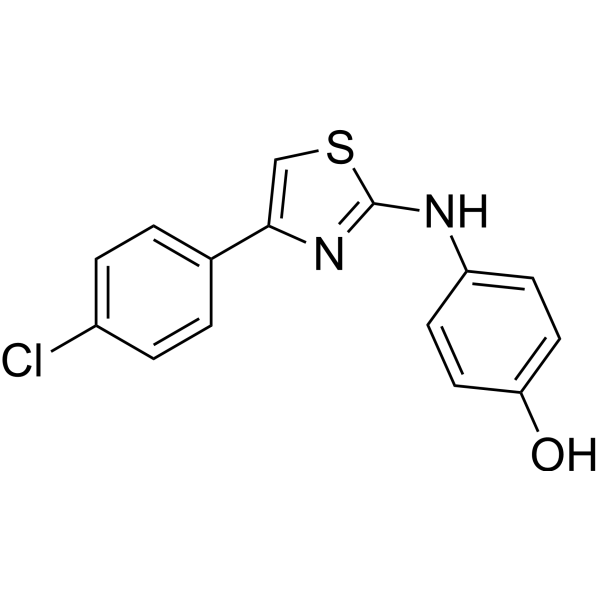 0 ImagesSKI-II is an orally active dual-target inhibitor of SphK1/2 and DES1, with Ki values of 16 µM and 0.3 µM against SphK1 and DES1, respectively. SKI-II activates the PERK-Nrf2 antioxidant pathway by stabilizing Nrf2, and synergizes with Temozolomide (HY-17364) to induce oxidative/endoplasmic reticulum stress and cancer cell death under hypoxic conditions. In vivo, SKI-II inhibits SphK activity, promotes ceramide accumulation and apoptosis, and synergizes with Cisplatin (HY-17394) to reverse drug resistance via the ras/MAPK pathway. SKI-II reduces measles virus replication by inhibiting mTORC1 activity. SKI-II binds to VCP to induce M1 polarization, enhances host tolerance to Staphylococcus aureus infection, and exerts radioprotective effects through Nrf2 activation and accelerated DNA repair. SKI-II can be used in research related to glioblastoma, acute myeloid leukemia, gastric cancer, measles virus infection, Staphylococcus aureus infection, and acute radiation syndrome.
-
SKI-178
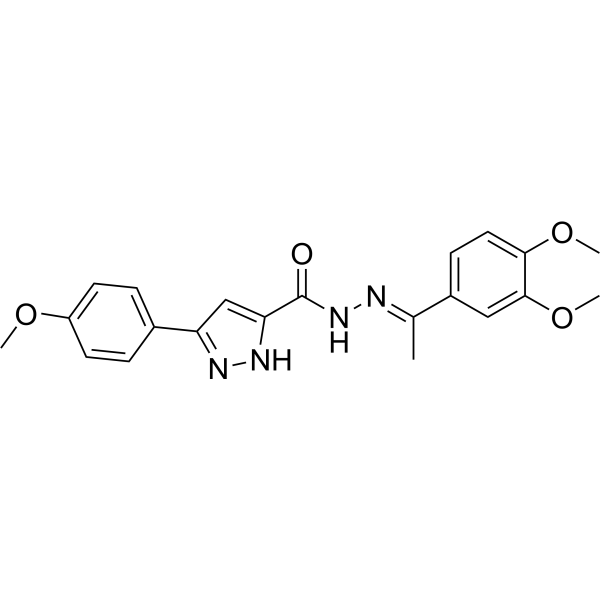 0 ImagesSKI-178 is a potent sphingosine kinase-1 (SphK1) and SphK2 inhibitor. SKI-178 is cytotoxic at IC50 concentrations ranging from 1.8 to 0.1 μM in both agent sensitive and multi-agent resistant cancer cell lines (i.e., MTR3, NCI-ADR and HL60/VCR cells). SKI-178 induces apoptosis in a CDK1-dependent manner in human acute myeloid leukemia cell lines.
-
SLM6031434 hydrochloride
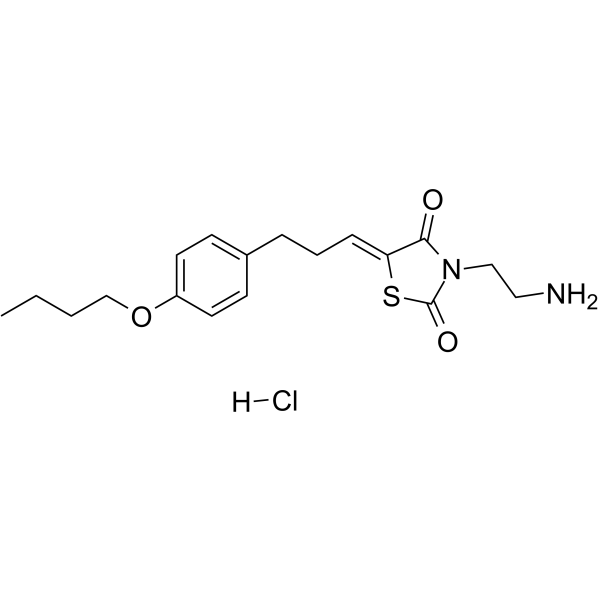
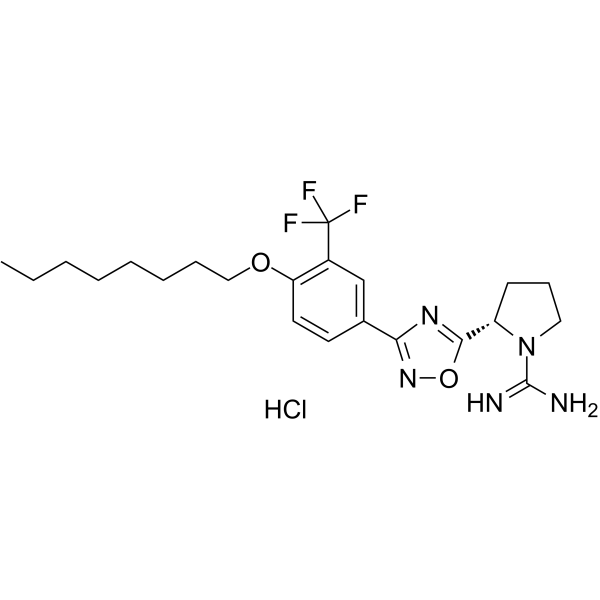 0 ImagesSLM6031434 hydrochloride is the hydrochloride salt form of SLM6031434 (HY-120268). SLM6031434 is a highly selective sphingosine kinase 2 (SphK2) inhibitor with an IC50 value of 0.4 μM for SphK2. SLM6031434 exerts anti-fibrotic effects by increasing sphingosine accumulation and Smad7 expression. SLM6031434 demonstrates effective anti-fibrotic efficacy in a unilateral ureteral obstruction (UUO)-induced tubulointerstitial fibrosis mouse model. SLM6031434 can be used for the study of proteinuric kidney diseases or chronic kidney disease (CKD).
-
RB-042
 0 ImagesCat. No.: HY-124368CAS No.: 1491909-40-0RB-042 is a SK1 and SK2 inhibitor with IC50 values of 5.3 μM and 5.0 μM, respectively. RB-042 is applicable to the research of inflammatory diseases.
-
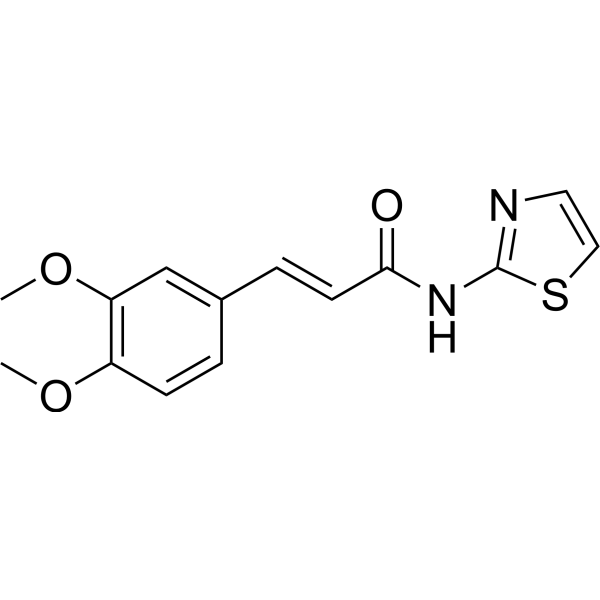
ABC294735
 0 ImagesCat. No.: HY-112385CAS No.: 917236-13-6ABC294735 is an orally active SK1/SK2 inhibitor. Combination of ABC294735 with Sorafenib (HY-10201) reduces pERK. ABC294735 exhibits anticancer activity against pancreatic adenocarcinoma and renal cell carcinoma. ABC294735 can be used in research related to pancreatic adenocarcinoma and renal cell carcinoma.
-
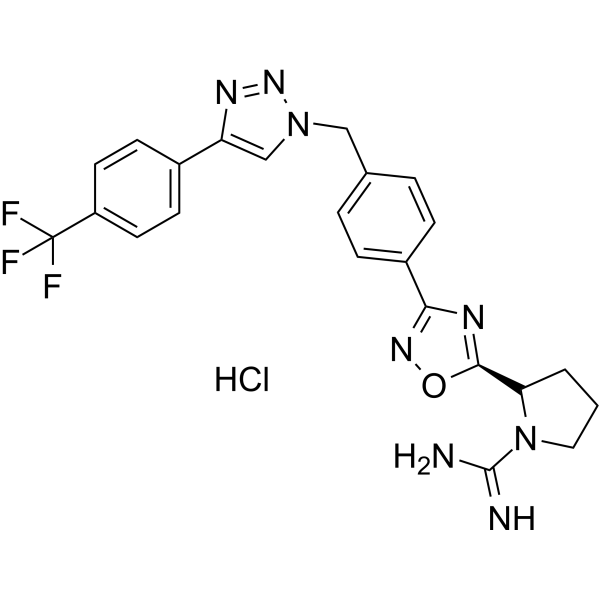
SphK1-IN-2
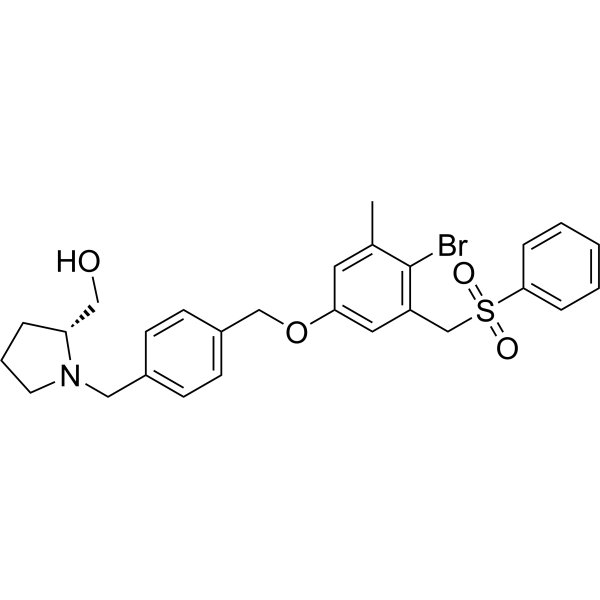 0 ImagesCat. No.: HY-150615CAS No.: 3031483-60-7
-
SLM6031434
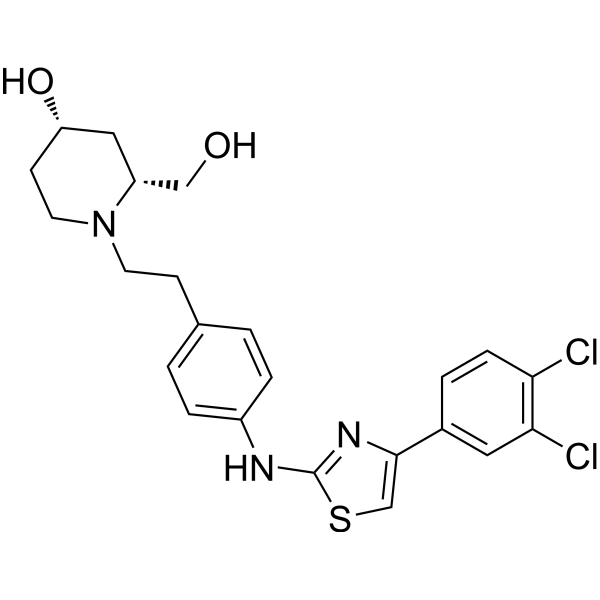
 0 ImagesCat. No.: HY-120268CAS No.: 1897379-33-7SLM6031434 is a highly selective sphingosine kinase 2 (SphK2) inhibitor with an IC50 value of 0.4 μM for SphK2. SLM6031434 exerts anti-fibrotic effects by increasing sphingosine accumulation and Smad7 expression. SLM6031434 demonstrates effective anti-fibrotic efficacy in a unilateral ureteral obstruction (UUO)-induced tubulointerstitial fibrosis mouse model. SLM6031434 can be used for the study of proteinuric kidney diseases or chronic kidney disease (CKD).
-
SLR080811
 0 ImagesCat. No.: HY-12896CAS No.: 1449765-65-4SLR080811 is a guanidine-based selective sphingosine kinase 2 (SphK2) inhibitor with a Ki of 1.3 μM, exhibiting ~10-fold selectivity over SphK1 (Ki = 12 μM). SLR080811 reduces sphingosine 1-phosphate (S1P) levels in vitro, but drives a SphK1-dependent increase in S1P in mice. SLR080811 can be used for cancers and fibrosis research.
-
(R)-FTY720-OMe
 0 ImagesCat. No.: HY-12897CAS No.: 1382486-90-9
-
SphK2-IN-4
 0 ImagesCat. No.: HY-183338CAS No.: 3082221-87-9SphK2-IN-4 is a selective SphK2 inhibitor (IC50=6.2 μM) with extremely low activity against SphK1 (IC50 > 50 μM). SphK2-IN-4 exhibits broad-spectrum antiproliferative activity against colorectal cancer cells and induces apoptosis.
-
VT-ME6
 0 ImagesCat. No.: HY-120440CAS No.: 1353880-00-8VT-ME6 is a selective SphK2 inhibitor with a Ki of 8 µM. VT-ME6 can be used in the research of inflammatory diseases.
-
SphK2-IN-5
 0 ImagesCat. No.: HY-184272SphK2-IN-5 is a selective SphK2 inhibitor with an IC50 of 0.55 μM. SphK2-IN-5 exhibits anticancer activity against colon cancer and liver cancer.
-
SKI II hydrochloride
 0 ImagesCat. No.: HY-112364CAS No.: 1177741-83-1SKI-II hydrochloride is an orally active dual-target inhibitor of SphK1/2 and DES1, with Ki values of 16 µM and 0.3 µM against SphK1 and DES1, respectively. SKI-II hydrochloride activates the PERK-Nrf2 antioxidant pathway by stabilizing Nrf2, and synergizes with Temozolomide (HY-17364) to induce oxidative/endoplasmic reticulum stress and cancer cell death under hypoxic conditions. SKI-II hydrochloride inhibits SphK activity, promotes ceramide accumulation and apoptosis, and synergizes with Cisplatin (HY-17394) to reverse drug resistance via the ras/MAPK pathway in vivo. SKI-II hydrochloride reduces measles virus replication by inhibiting mTORC1 activity. SKI-II hydrochloride binds to VCP to induce M1 polarization, enhances host tolerance to Staphylococcus aureus infection, and exerts radioprotective effects through Nrf2 activation and accelerated DNA repair. SKI-II hydrochloride can be used in research related to glioblastoma, acute myeloid leukemia, gastric cancer, measles virus infection, Staphylococcus aureus infection, and acute radiation syndrome.
- 1



