



Arenavirus
Arenavirus genome includes two ambisense RNA segments that encode only four viral proteins: the envelope glycoprotein precursor, nucle-ocapsid protein, matrix zinc-binding (Z) protein and the large (L) RNA-dependent RNA polymerase (RdRp). The L protein is a multi-domain machinery with both transcription and replication activities. Similar to other segmented negative-sense RNA viruses (sNSVs), the replication of arenavirus genome is de novo initiated and involves a complementary RNA (cRNA) intermediate, whereas the transcription process presumably requires a host mRNA-derived primer captured by the viral polymerase through cap snatching.
Arenaviruses can cause severe haemorrhagic fever and neurological diseases in humans and other animals, exemplified by Lassa mammarenavirus, Machupo mammarenavirus and lymphocytic choriomeningitis virus, posing great threats to public health. These viruses encode a large multi-domain RNA-dependent RNA polymerase for transcription and replication of the viral genome. Viral polymerases are one of the leading antiviral therapeutic targets.
All Product Categories
-
Arenavirus Verwandte Produkte (34)
Verwandte Produkte (34)

- 1
- 2
-
LASV-IN-1
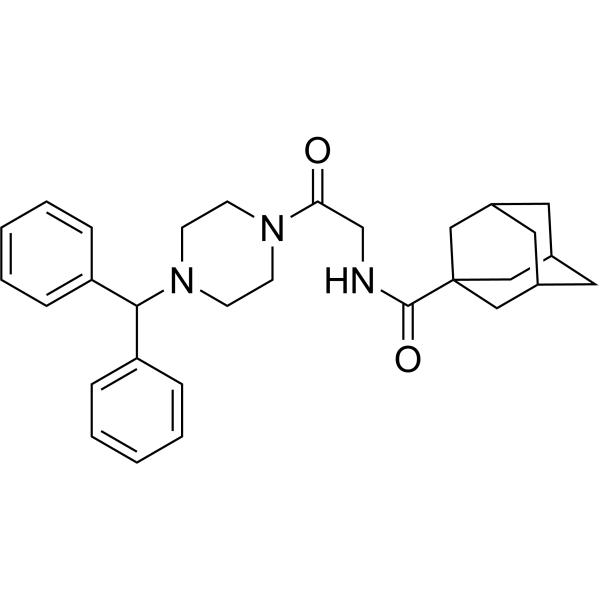 0 ImagesLASV-IN-1 is a Lassa fever virus (LASV) inhibitor. LASV-IN-1 binds with LASV glycoprotein (GP) and promotes virus membrane fusion and infection. LASV-IN-1 can be used for LASV infection research.
-
ST-193 hydrochloride
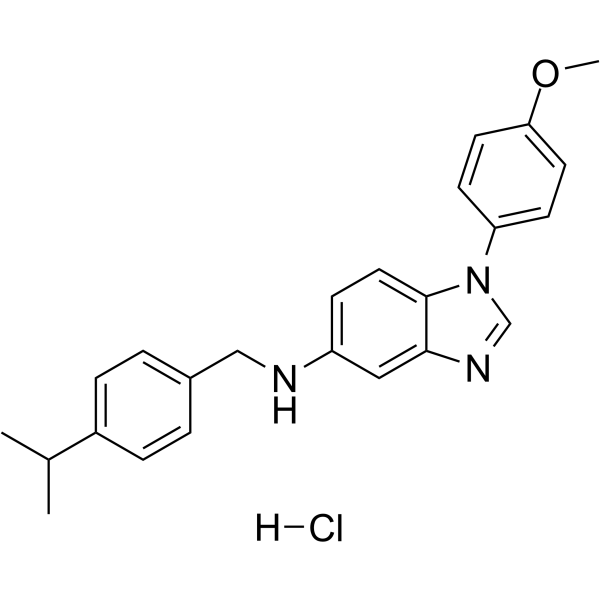 0 ImagesST-193 hydrochloride is a potent broad-spectrum arenavirus inhibitor; inhibits Guanarito, Junin, Lassa and Machupo virus with IC50 values of 0.44, 0.62, 1.4 and 3.1 nM, respectively.
-
Tecovirimat-d4
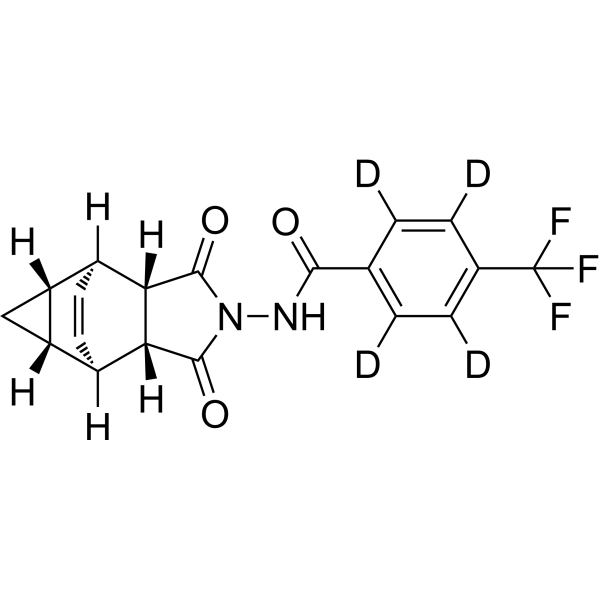 0 ImagesSynonyms: ST-246-d4Tecovirimat-d4 (ST-246-d4) is a deuterium-labelled Tecovirimat (HY-14805). Tecovirimat is an orally bioavailable and selective compound against orthopoxviruses [including vaccinia, monkeypox, camelpox, cowpox, ectromelia (mousepox), smallpox and variola viruses]. Tecovirimat is evaluated against vaccinia, cowpox virus, ectromelia virus with EC50 values of 0.01 μM, 0.48 μM and 0.05 μM, respectively. Tecovirimat targets the orthopoxvirus protein VP37 which is necessary for membrane envelopment of intracellular mature virus particles to form enveloped virus. Tecovirimat exerts antiviral activity on the target of the cowpox virus V061 gene, which is homologous to vaccinia virus F13L, encoding a major envelope protein (p37) required for production of extracellular virus. Tecovirimat could be used in the study for orthopoxvirus-induced diseases.
-
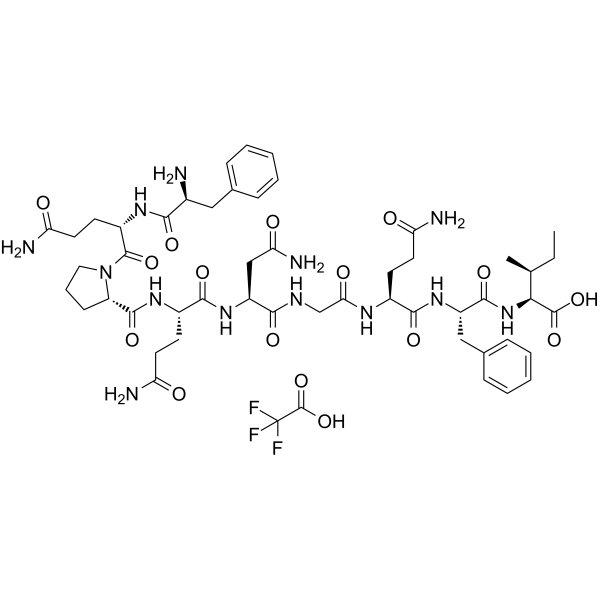
Anti-LCMV Nucleoprotein Antibody (VL-4)
 0 ImagesArt. -Nr.: HY-P990810Reinheit: 99%Anti-LCMV Nucleoprotein Antibody (VL-4) is rat-derived IgG2a κ type antibody inhibitor, targeting to LCMV nucleoprotein. Anti-LCMV Nucleoprotein Antibody (VL-4) reacts with lymphocytic choriomeningitis virus (LCMV) nucleoprotein. Anti-LCMV Nucleoprotein Antibody (VL-4) stain LCMV-infected cell internally with no surface staining. Anti-LCMV Nucleoprotein Antibody (VL-4) can be used for the detections of immunohistochemistry and flow cytometry in LCMV infection.
-
HNC-1664
 0 ImagesArt. -Nr.: HY-170799CAS. Nr.: 2127358-36-3HNC-1664 is the orally active inhibitor for RNA-dependent RNA polymerase (RdRP). HNC-1664 exhibits broad-spectrum antiviral activity against coronavirus (SARS-CoV-2 wildtype and its mutants XBB.1.18, HK.3.1, BF.7.14, BA.1HCoV-229E, HCoV-OC43) and arenavirus. HNC-1664 exhibits anti-infectious activity in SARS-CoV-2 Delta infected mouse models.
-
Glycoprotein (276-286)
 0 ImagesArt. -Nr.: HY-P1843CAS. Nr.: 160543-97-5Glycoprotein (276-286) is a Db-restricted peptide derived from lymphocytic choriomeningitis virus (LCMV) glycoprotein (GP), corresponds to amino acids 276-286[1].
-
LCMV-derived p13 epitope
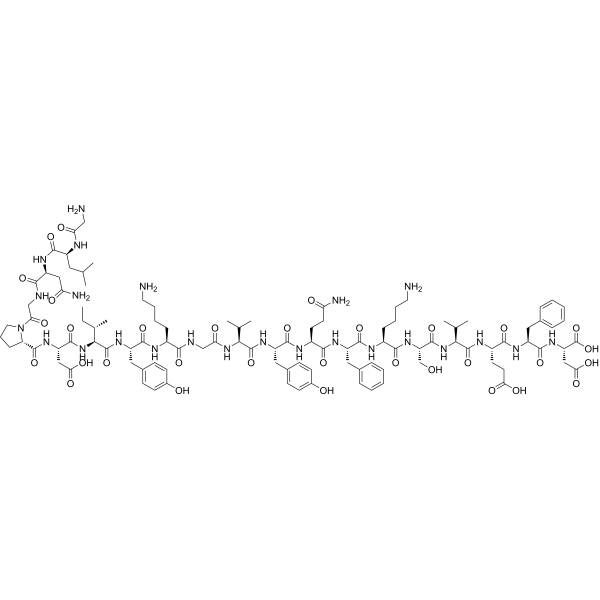 0 ImagesArt. -Nr.: HY-P5505CAS. Nr.: 474105-11-8LCMV-derived p13 epitope is a biological active peptide. (An H-2Db restricted epitope, this peptide is amino acids 61 to 80 fragment of the lymphocytic choriomeningitis virus (LCMV) pre-glycoprotein polyprotein GP complex. LCMV has been routinely used for the study of adaptive immune responses to viral infection.)
-
Losmapimod hydrochloride
 0 ImagesArt. -Nr.: HY-10402ACAS. Nr.: 1246654-84-1Synonyms: GSK-AHAB hydrochloride; GW856553X hydrochloride; SB856553 hydrochlorideLosmapimod (GSK-AHAB; GW856553X) hydrochloride is an orally active p38α/β MAPK inhibitor, with pKi values of 8.1 and 7.6 for p38α and p38β, respectively. Losmapimod hydrochloride reduces DUX4 expression, thus exerting efficacy in facioscapulohumeral muscular dystrophy. By inhibiting MAPK/NF-κB, Losmapimod hydrochloride reduces apoptosis of epileptiform hippocampal neurons, and exhibits anti-allodynia and anti-hyperalgesic activities. Losmapimod hydrochloride blocks the entry and fusion of Lassa fever virus (LASV). Losmapimod hydrochloride overcomes tyrosine kinase inhibitor resistance in non-small cell lung cancer (NSCLC). Losmapimod hydrochloride inhibits myocardial senescence and inflammation, and possesses cardioprotective activity against cardiotoxicity.
-
Antiviral agent 85
 0 ImagesArt. -Nr.: HY-183708CAS. Nr.: 475595-06-3Antiviral agent 85 is a broad-spectrum arenavirus entry inhibitor with an EC90 of 0.13 µM against Junín virus (JUNV). Antiviral agent 85 blocks the entry of various arenaviruses through both hTfR1-dependent and hTfR1-independent pathways, acting on the early and early post-entry stages of infection. Antiviral agent 85 exhibits antiviral activity against a variety of arenaviruses, is well tolerated in hTfR1-expressing JUNV-infected mouse models, but fails to provide protective effects. Antiviral agent 85 can be used in studies related to arenavirus hemorrhagic fevers.
-
ST-193 (Standard)
 0 ImagesArt. -Nr.: HY-101441RCAS. Nr.: 489416-12-8ST-193 (Standard) is the analytical standard of ST-193 (HY-101441). This product is intended for research and analytical applications. ST-193 is a potent broad-spectrum arenavirus inhibitor; inhibits Guanarito, Junin, Lassa and Machupo virus with IC50 values of 0.44, 0.62, 1.4 and 3.1 nM, respectively.
-
Tecovirimat (Standard)
 0 ImagesSynonyms: ST-246 (Standard)Tecovirimat (Standard) is the analytical standard of Tecovirimat. This product is intended for research and analytical applications. Tecovirimat(ST-246) is an orally bioavailable antipoxvirus compound; potent and selective active against multiple orthopoxviruses with EC50 about 10 nM. Tecovirimat could be used in the study for orthopoxvirus-induced diseases.
-
Losmapimod (Standard)
 0 ImagesSynonyms: GSK-AHAB (Standard); GW856553X (Standard); SB856553 (Standard)Losmapimod (GSK-AHAB; GW856553X) (Standard) is the analytical standard of Losmapimod (HY-10402). This product is intended for research and analytical applications. Losmapimod (GSK-AHAB; GW856553X) is an orally active p38α/β MAPK inhibitor, with pKi values of 8.1 and 7.6 for p38α and p38β, respectively. Losmapimod reduces DUX4 expression, thus exerting efficacy in facioscapulohumeral muscular dystrophy. By inhibiting MAPK/NF-κB, Losmapimod reduces apoptosis of epileptiform hippocampal neurons, and exhibits anti-allodynia and anti-hyperalgesic activities. Losmapimod blocks the entry and fusion of Lassa fever virus (LASV). Losmapimod overcomes tyrosine kinase inhibitor resistance in non-small cell lung cancer (NSCLC). Losmapimod inhibits myocardial senescence and inflammation, and possesses cardioprotective activity against cardiotoxicity.
-
GP(33-41)
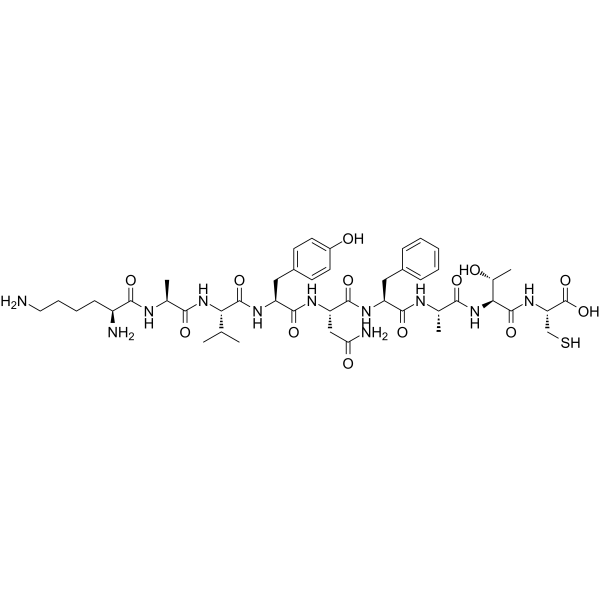 0 ImagesArt. -Nr.: HY-P0323CAS. Nr.: 161928-86-5Synonyms: LCMV GP(33-41) C-peptideGP(33-41), a 9-aa-long peptide, is the optimal sequence of the GP1 epitope of lymphocytic choriomeningitis virus, and can upregulate H-2Db molecules at the RMA-S (Db Kb) cell surface with a SC50 of 344 nM.
- 1
- 2



