



Carnitine Palmitoyltransferase (CPT)
Carnitine O-palmitoyltransferase
Carnitine palmitoyltransferase (CPT) is the central rate-limiting enzyme system for mitochondrial fatty acid β-oxidation, capable of converting palmitoyl-CoA into palmitoylcarnitine[1][2]. CPT transports long-chain acyl-CoA into the mitochondrial matrix, where it undergoes a transesterification reaction with free carnitine to generate acylcarnitine—the sole form in which long-chain fatty acids can traverse the mitochondrial inner membrane. The complete carnitine cycle is cooperatively executed by CPT1 on the mitochondrial outer membrane, CPT2 on the inner face of the inner membrane, and carnitine-acylcarnitine translocase (CACT), which mediates the exchange of acylcarnitine and free carnitine across the inner membrane. The activity of CPT directly determines the efficiency of cellular fatty acid oxidation[3][4].
The CPT1 enzyme system comprises three major isoforms: CPT1A (liver isoform), CPT1B (muscle isoform), and CPT1C (brain isoform). These isoforms exhibit significant differences in tissue distribution, functional regulation, and physiological and pathological roles, collectively constituting a complex metabolic regulatory network. In metabolic diseases (such as non-alcoholic steatohepatitis and obesity), the downregulation of CPT1A expression impairs fatty acid oxidation, thereby triggering lipid accumulation; conversely, in various malignancies, CPT1A is frequently overexpressed, providing energy for tumor cell proliferation and mediating drug resistance, thus serving as a critical node in metabolic reprogramming[3][4]. CPT1A activity is primarily subject to physiological inhibition by malonyl-CoA; however, under pathological conditions, it is subject to transcriptional regulation by various signaling pathways, including JAK2/STAT3 and AMPK. Furthermore, recent studies have revealed that CPT1A possesses non-metabolic functions, such as the regulation of histone acetylation. Intervention strategies targeting CPT vary markedly depending on the specific disease context: in metabolic disorders, activating CPT1A is required to enhance fatty acid oxidation—a process that can be upregulated, for instance, by the traditional Chinese medicine compound *Qushi Huayu* formula; conversely, in anti-tumor research, inhibiting CPT1A may be necessary to disrupt the energy supply, with inhibitors such as DHP-B having already demonstrated promising anti-tumor efficacy[1][2]. The CPT system has emerged as a pivotal molecular link connecting lipid metabolism with cell fate, positioning itself at the nexus—and as a major research hotspot—across diverse fields including metabolism, signal transduction, epigenetics, immunology, tumor biology, and precision medicine[1][2][3][4].
References:
- [1]. Sun Q, et al. Qushi Huayu decoction attenuated hepatic lipid accumulation via JAK2/STAT3/CPT-1A-related fatty acid β-oxidation in mice with non-alcoholic steatohepatitis. Pharm Biol. 2022 Dec;60(1):2124-2133. [Content Brief]
- [2]. Hu A, et al. A novel CPT1A covalent inhibitor modulates fatty acid oxidation and CPT1A-VDAC1 axis with therapeutic potential for colorectal cancer. Redox Biol. 2023 Dec;68:102959. [Content Brief]
- [3]. Qu Q, et al. Fatty acid oxidation and carnitine palmitoyltransferase I: emerging therapeutic targets in cancer. Cell Death Dis. 2016 May 19;7(5):e2226. [Content Brief]
- [4]. Carnitine Palmitoyltransferase Overview. subject area: Medicine and Dentistry. Sciencedirect Topic.
All Product Categories
-
Carnitine Palmitoyltransferase (CPT) Related Products (54)
Related Products (54)

-
Perhexiline-d11 maleate
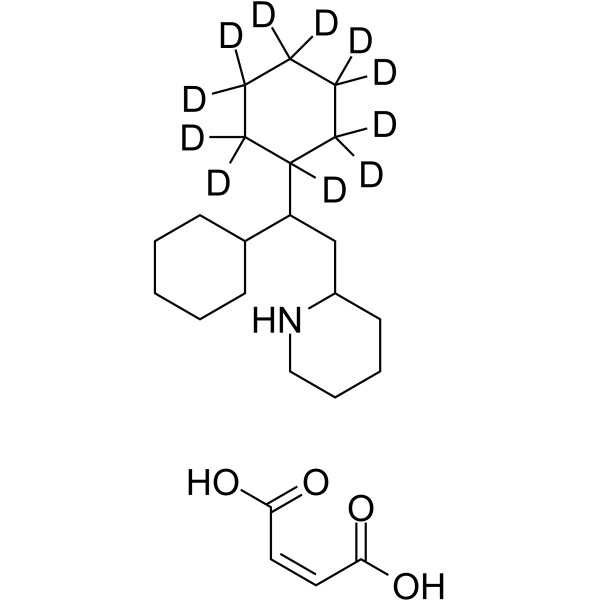 0 ImagesCat. No.: HY-B1334ASPerhexiline-d11 (maleate) is the deuterium labeled Perhexiline maleate. Perhexiline maleate is a potent carnitine palmitoyltransferase 1 (CPT 1) inhibitor with IC50s of 77 and 148 μM for rat heart and liver CPT 1, respectively.
-
Malonyl CoA
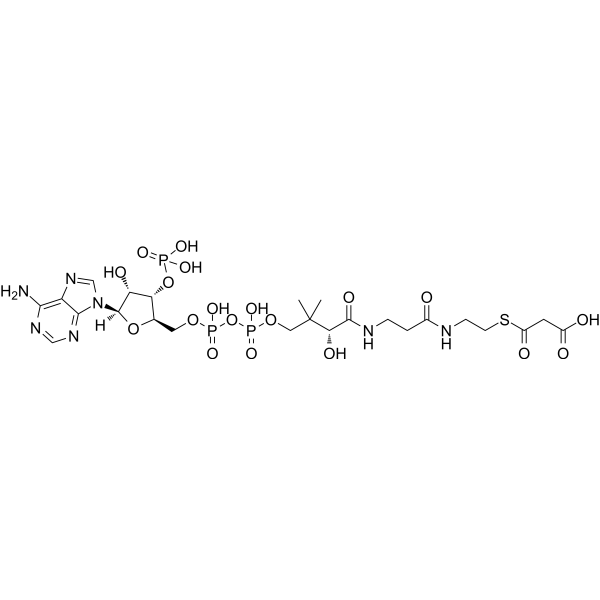 0 ImagesMalonyl CoA is a substrate for fatty acid biosynthesis and an inhibitor of fatty acid oxidation. Malonyl CoA is also a reversible inhibitor of mitochondrial carnitine palmitoyltransferase (CPT) 1.
-
Isorhapontigenin (Standard)
 0 ImagesCat. No.: HY-N2593RCAS No.: 32507-66-7Isorhapontigenin (Standard) is the analytical standard of Isorhapontigenin (HY-N2593). This product is intended for research and analytical applications. Isorhapontigenin is an orally active dietary polyphenol. Isorhapontigenin acts as a potent antioxidant that reduces the production of reactive oxygen species (ROS). Isorhapontigenin promotes the binding of JUN to the AP-1 site on the SESN2 promoter, induces SESN2 transcription, triggers MAPK8-dependent JUN activation, and upregulates the expression of PPAR-α, PGC-1α and CPT-1A to facilitate fatty acid oxidation. Isorhapontigenin induces autophagy, apoptosis and preadipocyte differentiation; it inhibits tumor growth, cell invasion, NF-κB transcriptional activity, the PI3K/Akt signaling pathway, STAT1 phosphorylation and MMP-2 expression. Isorhapontigenin alleviates oxidative stress, inflammatory cytokine release and triglyceride accumulation; it increases intracellular ATP levels and promotes Nrf2 nuclear translocation. Isorhapontigenin improves insulin sensitivity in adipose tissue and glucose tolerance, and reduces postprandial blood glucose, insulin and free fatty acid levels. Isorhapontigenin is applicable to research on bladder cancer, liver injury, chronic obstructive pulmonary disease, acute lung injury and type 2 diabetes.
-
Malonyl CoA-13C3 lithium
 0 ImagesCat. No.: HY-179170SPurity: 99.9%Synonyms: Malonyl coenzyme A-13C3 lithiumMalonyl CoA-13C3 (Malonyl coenzyme A-13C3) lithium is the 13C-labeled Malonyl CoA lithium (HY-136408). Malonyl CoA (Malonyl Coenzyme A) lithium is an inhibitor of carnitine palmitoyl transferase 1 (CPT1). High Malonyl CoA lithium concentrations suppress fatty acid oxidation, while low Malonyl CoA lithium concentrations are permissive for fat oxidation.
-
DGAT-1 inhibitor 2 (Standard)
 0 ImagesCat. No.: HY-50670RCAS No.: 942999-61-3DGAT-1 inhibitor 2 (Standard) is the analytical standard of DGAT-1 inhibitor 2 (HY-50670). This product is intended for research and analytical applications. DGAT-1 inhibitor 2 is an orally active DGAT-1 inhibitor with IC50 values of 15 nM and 9 nM for human DGAT-1 and rat DGAT-1, respectively. DGAT-1 inhibitor 2 increases ROS concentration, GRP78, and PERK protein abundance. DGAT-1 inhibitor 2 increases SREBF1, CPT1A, and MTTP mRNA in fatty acid-treated cells. DGAT-1 inhibitor 2 improves obesity.
-
Clomoxir
 0 ImagesCat. No.: HY-W563489CAS No.: 88431-47-4Synonyms: POCAClomoxir (POCA) is a carnitine palmitoyltransferase I (CPT I) inhibitor with hypoglycemic activity. Clomoxir mediates the inhibition of CPT I via its active form POCA-CoA. Clomoxir inhibits long-chain fatty acid oxidation, ketogenesis, gluconeogenesis, de novo synthesis of cholesterol and fatty acids, and also mildly inhibits acetyl-CoA carboxylase. Clomoxir reduces blood glucose levels in various rodent and porcine models, alters plasma NEFA and cholesterol concentrations, induces hepatic lipid accumulation, peroxisome proliferation and mild myocardial hypertrophy in rats, and stimulates the pentose phosphate pathway in cultured human fibroblasts. Clomoxir can be used in diabetes-related research.
-
Hemiacetylcarnitinium chloride
 0 ImagesCat. No.: HY-176894CAS No.: 141661-39-4Hemiacetylcarnitinium chloride is a inhibitor of fatty acid metabolism, specifically targeting carnitine palmitoyltransferase I (CPT I). Hemiacetylcarnitinium chloride disrupts the conversion of fatty acyl-CoA to fatty acyl carnitine, thereby blocking the subsequent oxidation of long-chain fatty acids and reducing the production of ATP required for energy-dependent cellular processes. Hemiacetylcarnitinium chloride can be used for the study of fatty acid metabolism.
-
(+)-trans-C75
 0 ImagesCat. No.: HY-12364CCAS No.: 1234694-20-2Synonyms: (+)-C75(+)-trans-C75 ((+)-C75) is an enantiomer of C75 (HY-12364) (a fatty acid synthase inhibitor). (+)-trans-C75 is less potent than the racemic mixture or the (-) enantiomer in enhancing the cancer-killing ability of ionizing radiation. (+)-trans-C75 inhibits CPT1 and is an anorectic agent.

-
Cpt1a Rat Pre-designed siRNA Set A
 0 ImagesCat. No.: HY-RS23138
Cpt1a Rat Pre-designed siRNA Set A contains three designed siRNAs for Cpt1a gene (Rat), as well as a negative control, a positive control, and a FAM-labeled negative control.
-
Etomoxir sodium salt (Standard)
 0 ImagesCat. No.: HY-50202ARCAS No.: 828934-41-4Synonyms: (R)-(+)-Etomoxir sodium salt (Standard)Etomoxir sodium salt (Standard) is the analytical standard of Etomoxir sodium salt (HY-50202A). This product is intended for research and analytical applications. Etomoxir((R)-(+)-Etomoxir) sodium salt is an irreversible inhibitor of carnitine palmitoyltransferase 1a (CPT-1a), inhibits fatty acid oxidation (FAO) through CPT-1a and inhibits palmitate β-oxidation in human, rat and guinea pig.
-
C75 (Standard)
 0 ImagesC75 (Standard) is the analytical standard of C75. This product is intended for research and analytical applications. C75 is a synthetic fatty-acid synthase (FASN) inhibitor; inhibits prostate cancer cells PC3 with an IC50 of 35 μM. C75 is a potent CPT1A activator.
-
Perhexiline maleate (Standard)
 0 ImagesPerhexiline (maleate) (Standard) is the analytical standard of Perhexiline (maleate). This product is intended for research and analytical applications. Perhexiline maleate is an orally active CPT1 and CPT2 inhibitor that reduces fatty acid metabolism. Perhexiline maleate induces mitochondrial dysfunction and apoptosis in hepatic cells. Perhexiline maleate can cross the blood brain barrier (BBB) and shows anti-tumor activity. Perhexiline maleate can be used in the research of cancers, and cardiovascular disease like angina.
-
Cpt2 Mouse Pre-designed siRNA Set A
 0 ImagesCat. No.: HY-RS17451
Cpt2 Mouse Pre-designed siRNA Set A contains three designed siRNAs for Cpt2 gene (Mouse), as well as a negative control, a positive control, and a FAM-labeled negative control.



