



PPARδ
PPARδ (peroxisome proliferator-activated receptor delta, PPARD) is a ligand-activated nuclear receptor that functions as a transcription factor and regulates gene networks involved in lipid metabolism, glucose homeostasis, cellular differentiation, proliferation, and survival through heterodimerization with retinoid X receptor (RXR)[1][2]. Mechanistically, PPARδ integrates lipid-derived signaling with transcriptional control and modulates the expression of target genes in a ligand-dependent or ligand-independent manner, thereby influencing energy metabolism and cellular responses across multiple tissues[3][4]. PPARδ is particularly associated with fatty acid utilization, mitochondrial function, and metabolic adaptation, and its activity has been linked to the regulation of cardiac lipid metabolism and fuel switching in metabolically active tissues[5][6]. In disease models, PPARδ has been investigated in metabolic syndrome, cardiovascular disease, neuroinflammation, neurodegeneration, dyslipidemia, diabetes, and cancer, reflecting its broad physiological and pathological relevance[1][7]. Compared with related isoforms, PPARα primarily coordinates fatty-acid β-oxidation in liver and other oxidative tissues, whereas PPARγ is a master regulator of adipogenesis and insulin sensitivity; in contrast, PPARδ exhibits broader tissue distribution and distinct functions in energy metabolism, cell fate determination, and tissue-specific transcriptional regulation[1][3][6]. For experimental applications, selective PPARδ agonists are widely used to investigate metabolic regulation because receptor activation enhances fatty acid metabolism and promotes metabolic adaptations associated with improved energy utilization[7][8]. The availability of synthetic agonists and highly selective ligands has therefore made PPARδ a valuable target for mechanistic studies of metabolic and inflammatory pathways[1][8].
Références:
- [1]. Rabezanahary H, et al. Live virus neutralizing antibodies against pre and post Omicron strains in food and retail workers in Québec, Canada. Heliyon. 2024 May 21;10(10):e31026. [Content Brief]
- [2]. Kiros M, et al. Trends in HIV-1 pretreatment drug resistance and HIV-1 variant dynamics among antiretroviral therapy-naive Ethiopians from 2003 to 2018: a pooled sequence analysis. Virol J. 2023 Oct 25;20(1):243. [Content Brief]
- [3]. Giordano Attianese GM, et al. Integrative and systemic approaches for evaluating PPARβ/δ (PPARD) function. Nucl Recept Signal. 2015 Apr 27;13:e001. [Content Brief]
- [4]. Adhikary T, et al. Genomewide analyses define different modes of transcriptional regulation by peroxisome proliferator-activated receptor-β/δ (PPARβ/δ). PLoS One. 2011 Jan 19;6(1):e16344. [Content Brief]
- [5]. Gilde AJ, et al. Peroxisome proliferator-activated receptor (PPAR) alpha and PPARbeta/delta, but not PPARgamma, modulate the expression of genes involved in cardiac lipid metabolism. Circ Res. 2003 Mar 21;92(5):518-24. [Content Brief]
- [6]. Lonardo A, et al. PPARs in molecular pathogenesis and drug treatment of type 2 diabetes-related MASLD. Explor Dig Dis. 2025;4:100590.
- [7]. Strosznajder AK, et al. Recent Insights on the Role of PPAR-β/δ in Neuroinflammation and Neurodegeneration, and Its Potential Target for Therapy. Neuromolecular Med. 2021 Mar;23(1):86-98. [Content Brief]
- [8]. Da'adoosh B, et al. Discovering highly selective and diverse PPAR-delta agonists by ligand based machine learning and structural modeling. Sci Rep. 2019 Jan 31;9(1):1106. [Content Brief]
-
PPARδ Produits associés (28)
Produits associés (28)

-
Protéines Recombinantes (2)
- 1
- 2
-
Perfluoropentanoic acid
 0 ImagesPerfluoropentanoic acid (PFPeA), a short-chain perfluorinated compound, serves as an important indicator of perfluorinated compound pollution in ecosystems. Perfluoropentanoic acid exhibits certain toxicity to mice.
-
ZLY06
 0 ImagesZLY06 is an orally active dual agonist of peroxisome proliferator-activated receptor (PPAR) δ and γ (PPAR δ: EC50=341 nM; PPAR γ: EC50=237 nM). ZLY06 induces hepatic lipid accumulation by inhibiting the phosphorylation of AKT1, mediating the upregulation of CD36. In addition, ZLY06 significantly improves glucose and lipid metabolism without increasing body weight, and alleviates fatty liver by promoting β-oxidation of fatty acids and inhibiting hepatic lipogenesis.
-
Perfluoroheptanesulfonic acid
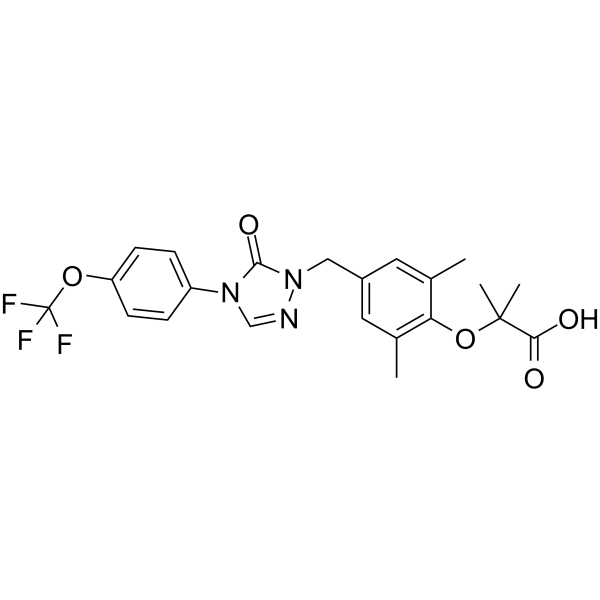
 0 ImagesSynonyms: 1-Perfluoroheptanesulfonic acid; Perfluoroheptanesulphonic acid; PFHpSPerfluoroheptanesulfonic acid (1-Perfluoroheptanesulfonic acid; Perfluoroheptanesulphonic acid; PFHpS) is a per- and polyfluoroalkyl substance (PFAS) that penetrates the skin and induces systemic toxicity and immunotoxicity. Perfluoroheptanesulfonic acid reduces the expression of PPARδ in liver tissue; it induces hepatocyte hypertrophy and necrosis in liver tissue and alters serum biochemical markers associated with liver injury. Perfluoroheptanesulfonic acid upregulates genes related to fatty acid metabolism, cell necrosis and inflammation, reduces the relative weights of the spleen and thymus, suppresses humoral immune responses, and alters the composition of immune cell subsets in the spleen and skin. The plasma concentration of Perfluoroheptanesulfonic acid correlates with food intake. Perfluoroheptanesulfonic acid and perfluorooctanesulfonic acid exhibit synchronous pulse events in influent samples from wastewater treatment plants. Perfluoroheptanesulfonic acid can be used in studies related to liver injury and immune system damage.
-
Pparδ agonist 5
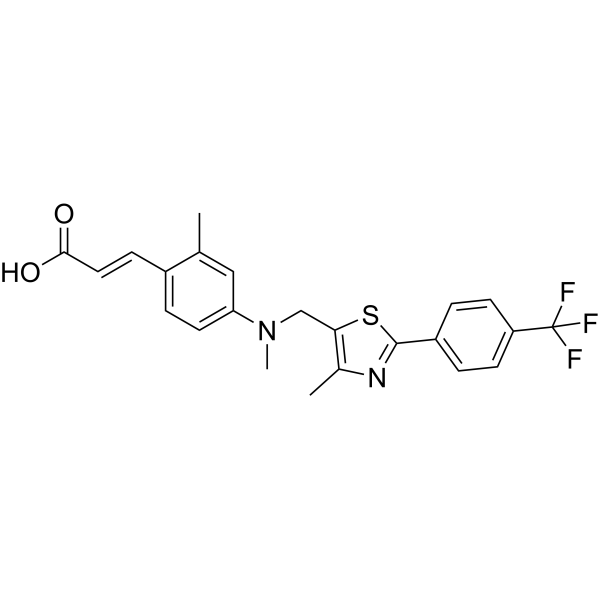 0 ImagesCat. No.: HY-141494Pparδ agonist 5, an orally active PPARδ-selective agonist (EC50=0.335 μM), is much greater than that of the prototypical standard GW0742. Pparδ agonist 5 promotes improvements in bone density and microarchitecture in vivo.
-
PPAR agonist 8
 0 ImagesCat. No.: HY-184312CAS No.: 1031072-40-8PPAR agonist 8 is an orally active pan-PPAR agonist, with KD values of 0.576 μM, 2.06 μM and 1.45 μM for PPARα, PPARγ and PPARδ, respectively. PPAR agonist 8 upregulates the expression of ATP-binding cassette transporter A1 (ABCA1) and promotes cholesterol efflux. PPAR agonist 8 reduces plasma cholesterol levels, decreases cholesterol accumulation in the liver and cholesterol deposition in pancreatic islets, regulates glucose and lipid metabolism, and causes no side effects of weight gain and obesity. PPAR agonist 8 can be used in the research of type 2 diabetes, hepatic steatosis and pancreatic islet dysfunction.
-
AU403
 0 ImagesCat. No.: HY-184474AU403 is a potent, brain-penetrant, isoform-selective LXRβ/PPARδ dual agonist (EC50 ≈ 45 nM for LXRβ and EC50 ≈ 40 nM for PPARδ). AU403 is designed to bypass LXRα-driven hepatotoxicity. AU403 significantly improves cognitive functions and reduces amyloid-β plaque burden in 3xTg-AD mice. AU403 is a promising dual-acting agonist for the research of Alzheimer’s disease.
-
PPARδ agonist 3
 0 ImagesCat. No.: HY-134304CAS No.: 851528-80-8PPARδ agonist 3 is a selective PPARδ agonist that induces PPARδ-mediated transactivation with an EC50 of 25.0 nM. PPARδ agonist 3 can be used in research related to metabolic diseases and inflammation.
-
ABP/PPAR modulator 1
 0 ImagesCat. No.: HY-172883CAS No.: 3104894-76-7ABP/PPAR modulator 1 is an orally active FABP and PPAR multiple modulator (IC50s of 0.65 μM and 1.08 μM for FABP1 and FABP4, EC50 s of 9.19 μM, 2.20 μM and 1.58 μM for PPARα, PPARγ and PPARδ). ABP/PPAR modulator 1 has potent anti-metabolic dysfunction-associated steatohepatitis (MASH) activity. ABP/PPAR modulator 1 dose-dependently ameliorates multiple pathological characteristics of fatty liver in WD + Carbon tetrachloride-induced MASH mice model.
-
Seladelpar (lysine dihydrate)
 0 ImagesSynonyms: MBX-8025 (lysine dihydrate); RWJ-800025 (lysine dihydrate)Seladelpar Lysine dihydrate (MBX-8025 lysine dihydrate) is an orally active, selective PPAR-δ agonist with an EC50 of 2 nM against hPPAR-δ. Seladelpar Lysine dihydrate reduces serum IL-31 and bile acid levels. It alleviates pruritus symptoms. Seladelpar Lysine dihydrate enhances insulin sensitivity, normalizes levels of hyperglycemia, hyperinsulinemia, glucose disposal capacity, serum lipids and hepatic free cholesterol. It reduces steatosis, hepatic inflammation and improves liver fibrosis. Seladelpar Lysine dihydrate reverses the pathological changes of non-alcoholic steatohepatitis (NASH). It is applicable to research related to primary biliary cholangitis and non-alcoholic steatohepatitis (NASH).
-
PPAR agonist 4
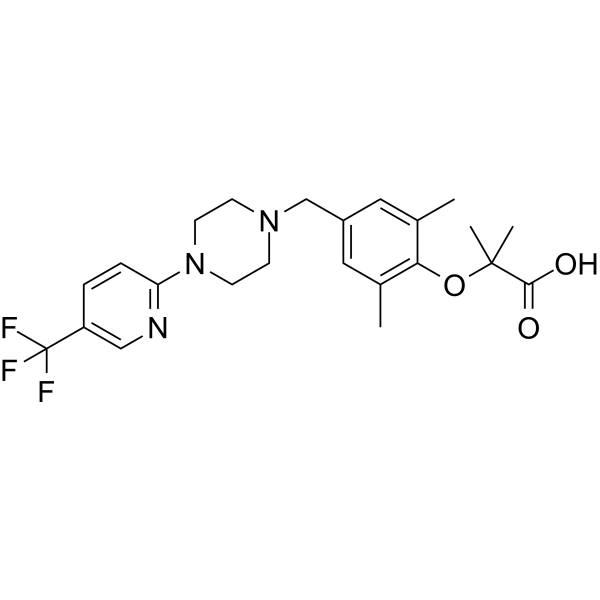 0 ImagesCat. No.: HY-163443PPAR agonist 4 (Compound 12) is an orally active agonist for peroxisome proliferator-activated receptor (PPAR), which activates PPARα, PPARδ and PPARγ with EC50s of 0.7, 0.7 and 1.8 μM, respectively. PPAR agonist 4 exhibits anti-liver fibrosis efficacy.
-
PPARγ/δ modulator 2
 0 ImagesCat. No.: HY-170581CAS No.: 3116771-70-8PPARγ/δ modulator 2 (Compound 3h) is a PPARγ agonist and PPARδ antagonist. The Ki values for PPARγ and PPARδ are 2.8 μM and 43 nM, respectively. PPARγ/δ modulator 2 significantly enhances the production of Adiponectin and promotes adipogenic differentiation of human bone marrow mesenchymal stem cells (hBM-MSCs). PPARγ/δ modulator 2 can be used in the study of metabolic disorders associated with hypoadiponectinemia.
-
PPARγ/δ modulator 1
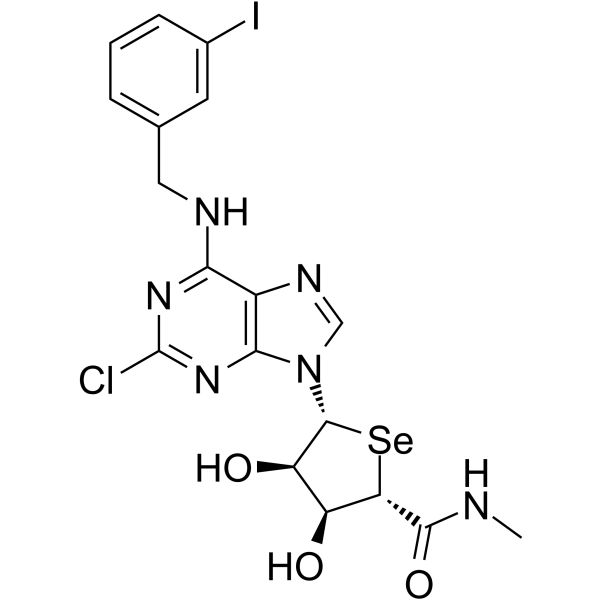 0 ImagesCat. No.: HY-147757CAS No.: 2089159-00-0PPARγ/δ modulator 1 (compound 3e) is a potent PPAR modulator. PPARγ/δ modulator 1 is a PPARδ antagonist and a PPARγ partial agonist , with Ki values of 14.4 nM and 5.31 μM, respectively. PPARγ/δ modulator 1 has the EC50 of 7.3 and 12.6 μM for PPARδ corepression and adiponectin production, respectively.
-
HSD17B13/PPAR modulator-1
 0 ImagesCat. No.: HY-179015HSD17B13/PPAR modulator-1 (Compound 17) is a HSD17B13/PPAR multitarget modulator. HSD17B13/PPAR modulator-1 is an inhibitor of HSD17B13, with its IC50 value being 0.91 μM. HSD17B13/PPAR modulator-1 is a PPAR agonist, with the EC50 values for PPARα, PPARδ, and PPARγ being 1.55, 0.12, and 0.01 μM respectively. HSD17B13/PPAR modulator-1 can significantly improve liver function, regulate lipid metabolism, alleviate fibrosis, and exert antioxidant and anti-inflammatory effects in the model of metabolic dysfunction-related steatohepatitis (MASH). HSD17B13/PPAR modulator-1 can be used for the study of MASH.
-
L-165461
 0 ImagesCat. No.: HY-10839CAS No.: 194608-76-9
-
PPARα/δ agonist 4
 0 ImagesCat. No.: HY-183318CAS No.: 3108258-69-8PPARα/δ agonist 4 is a potent orally active and selective dual peroxisome proliferator-activated receptor (PPAR) α/δ agonist with EC50s of 0.36 and 1.31 nM, respectively. PPARα/δ agonist 4 exhibits >123-fold selectivity over PPARγ (EC50 = 160.84 nM). PPARα/δ agonist 4 upregulates expression of downstream fatty acid oxidation genes PDK4, CPT1A, and ACADVL. PPARα/δ agonist 4 can be used for the research of metabolic dysfunction-associated steatohepatitis.
-
15-Deoxy-Δ12,14-Prostaglandin J2-2-glyceryl ester
 0 ImagesCat. No.: HY-176243CAS No.: 1947405-90-415-Deoxy-Δ12,14-Prostaglandin J2-2-glyceryl ester is a derivate of 15-Deoxy-Δ-12,14-prostaglandin J2 (HY-108568). 15-Deoxy-Δ-12,14-prostaglandin J2 (15d-PGJ2) is a cyclopentenone prostaglandin and a metabolite of PGD2. 15-Deoxy-Δ-12,14-prostaglandin J2 is a selective PPARγ (EC50 of 2 µM) and a covalent PPARδ agonist. 15-Deoxy-Δ-12,14-prostaglandin J2 promotes efficient differentiation of C3H10T1/2 fibroblasts to adipocytes with an EC50 of 7 μM.
-
PPARα agonist 5
 0 ImagesCat. No.: HY-173217PPARα agonist 5 is an orally available, selective partial agonist of PPARα (EC50: 3 nM). PPARα agonist 5 reduces lipid accumulation and upregulates key PPARα target genes, exerting anti-fatty liver effects. PPARα agonist 5 also exhibits significant hypolipidemic and hypoglycemic effects through partial PPARγ agonist activity and mild inhibition of protein tyrosine phosphatase 1B (PTP1B) (IC50: 79.1 μM). PPARα agonist 5 has a good safety profile and can be used in the study of type 2 diabetes with dyslipidemia.
-
PPARδ agonist 10
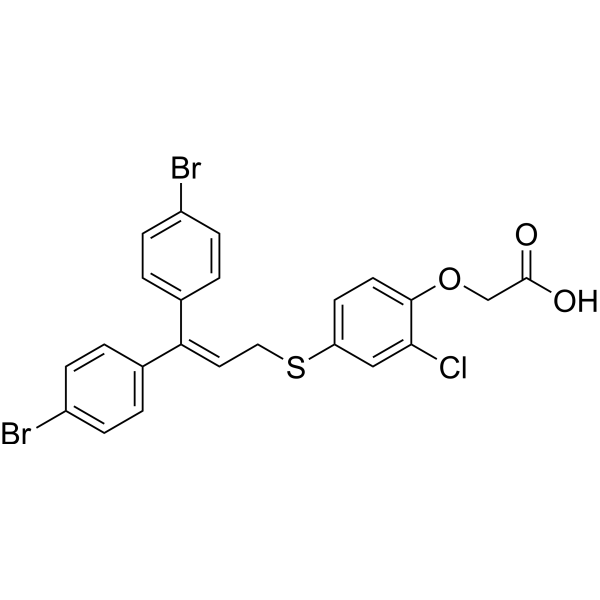 0 ImagesCat. No.: HY-121542CAS No.: 685139-10-0PPARδ agonist 10 (compound 7) is an orally active, selective, and partial agonist of PPARδ, with EC50 values of 0.053 μM and 0.30 µM for hPPARδ(LBD)-GAL4 and mPPARδ, respectively. PPARδ agonist 10 is a partial PPARδ agonist in transactivation assay but a full agonist on free fatty acids (FFA) oxidation in muscle cells both in vitro and in vivo. PPARδ agonist 10 can be used for dyslipidemia research.
-
L-783483
 0 ImagesCat. No.: HY-116597CAS No.: 194608-77-0Synonyms: F3MethylAAL-783483 (F3MethylAA) is an agonist for PPARδ. L-783483 ameliorates Carrageenan (HY-125474)-induced paw edema in mice.
- 1
- 2




