



Cyclophilin G
Cyclophilin G (PPIG) is a nuclear member of the cyclophilin family that contains peptidyl-prolyl cis-trans isomerase (PPIase) activity and binds cyclosporin A, supporting protein folding and proline isomerization-dependent regulatory processes.[1] PPIG is distinguished from canonical cyclophilins such as Cyclophilin A by its serine/arginine-rich (SR) domain and preferential nuclear localization, which links its catalytic activity to transcriptional and RNA-processing machinery rather than predominantly cytoplasmic protein-folding functions.[1][2] Mechanistically, PPIG interacts with the phosphorylated C-terminal domain (CTD) of RNA polymerase II, positioning this cyclophilin within transcription-coupled regulatory pathways that coordinate gene expression and RNA maturation.[1] PPIG also associates with nuclear matrix components and splicing-related factors, supporting a functional role in RNA-processing networks connected to active transcription.[1][3] Compared with related cyclophilin isoforms that primarily regulate mitochondrial permeability, endoplasmic reticulum protein folding, or extracellular signaling, PPIG is characterized by its integration with nuclear transcriptional complexes and SR protein-associated processes.[2][4] For experimental applications, PPIG retains the conserved cyclophilin property of cyclosporin A binding, making cyclophilin-directed inhibitors useful tools for investigating PPIase-dependent regulation and nuclear RNA-processing mechanisms.[1][4]
References:
- [1]. Bourquin JP, et al. A serine/arginine-rich nuclear matrix cyclophilin interacts with the C-terminal domain of RNA polymerase II. Nucleic Acids Res. 1997 Jun 1;25(11):2055-61. [Content Brief]
- [2]. Uniprotkb.
- [3]. Lin CL, et al. Over-expression of SR-cyclophilin, an interaction partner of nuclear pinin, releases SR family splicing factors from nuclear speckles. Biochem Biophys Res Commun. 2004 Aug 27;321(3):638-47. [Content Brief]
- [4]. Stauffer WT, et al. Cyclophilin inhibition as a strategy for the treatment of human disease. Front Pharmacol. 2024 Jul 8;15:1417945. [Content Brief]
All Product Categories
-
Cyclophilin G Related Products (2)
Related Products (2)

-
Rencofilstat
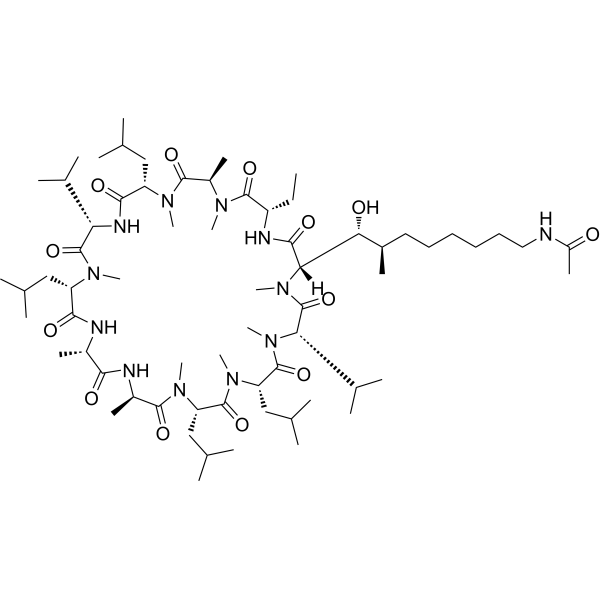 0 ImagesCat. No.: HY-135644CAS No.: 1383420-08-3Synonyms: CRV431Rencofilstat (CRV431) is an orally active pan-cyclophilin inhibitor with IC50 values of 2.5 nM, 3.1 nM, 2.8 nM, 7.3 nM for Cyp A, CypB, Cyp D and Cyp G, respectively. Rencofilstat reduces fibrosis and tumor growth in models of chronic liver disease. Rencofilstat can be used for the study of nonalcoholic steatohepatitis (NASH), hepatocellular carcinoma and viral hepatitis-induced liver disease.
-
CypE-IN-1
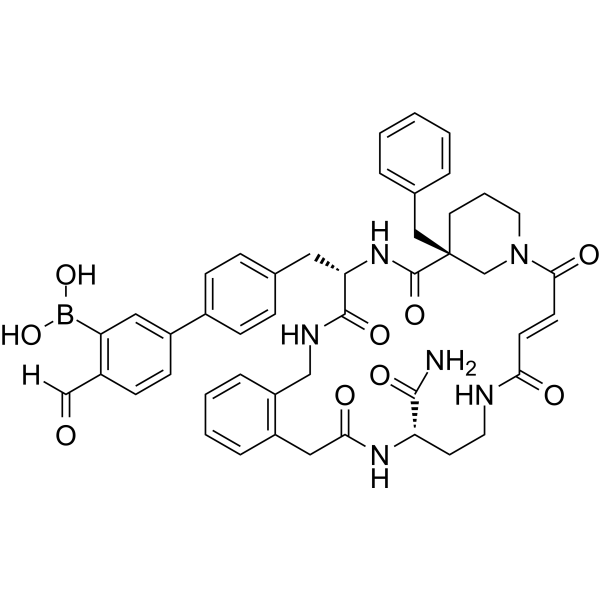 0 ImagesCat. No.: HY-151489CAS No.: 3023438-33-4CypE-IN-1 is a potent and subtype-selective cyclophilin E (CypE) inhibitor. CypE-IN-1 has CypE affinity with IC50 and Ki values of 0.013 μM and 0.072 μM, respectively. CypE-IN-1 can be used for the research of several diseases including oxidative stress, neurodegenerative disorders, liver diseases, aging, autophagy and diabetes.



